







Human Resource Management discusses key concepts related to human resource management including definitions of HRM, objectives of HRM, nature of HRM, training and development objectives and approaches, career management, motivation theories, and performance appraisal. Specifically, it defines HRM as planning, organizing, directing, controlling human resources to achieve individual, organizational and social objectives. It discusses the objectives of HRM at the societal, organizational, functional and individual levels. It also covers major motivation theories like Maslow's hierarchy of needs, Herzberg's two-factor theory, and expectancy theory. Finally, it provides an overview of performance appraisal, including its benefits, applications and timing.
Introduction to HRM in banking and finance at JSS Institute, Noida.
Quotes emphasizing the importance of human resources and human mind as fundamental resources.
Definition of HRM, focusing on systems for managing people in organizations and the roles of HR managers.
Different objectives of HRM including societal, organizational, functional, and personal objectives.
HRM's functions, multidisciplinary approach, and its continuous processes.
Main activities under HRM, focusing on employee development and performance related to organizational profitability.
Differences and similarities between Human Resource Management and Human Resource Development.
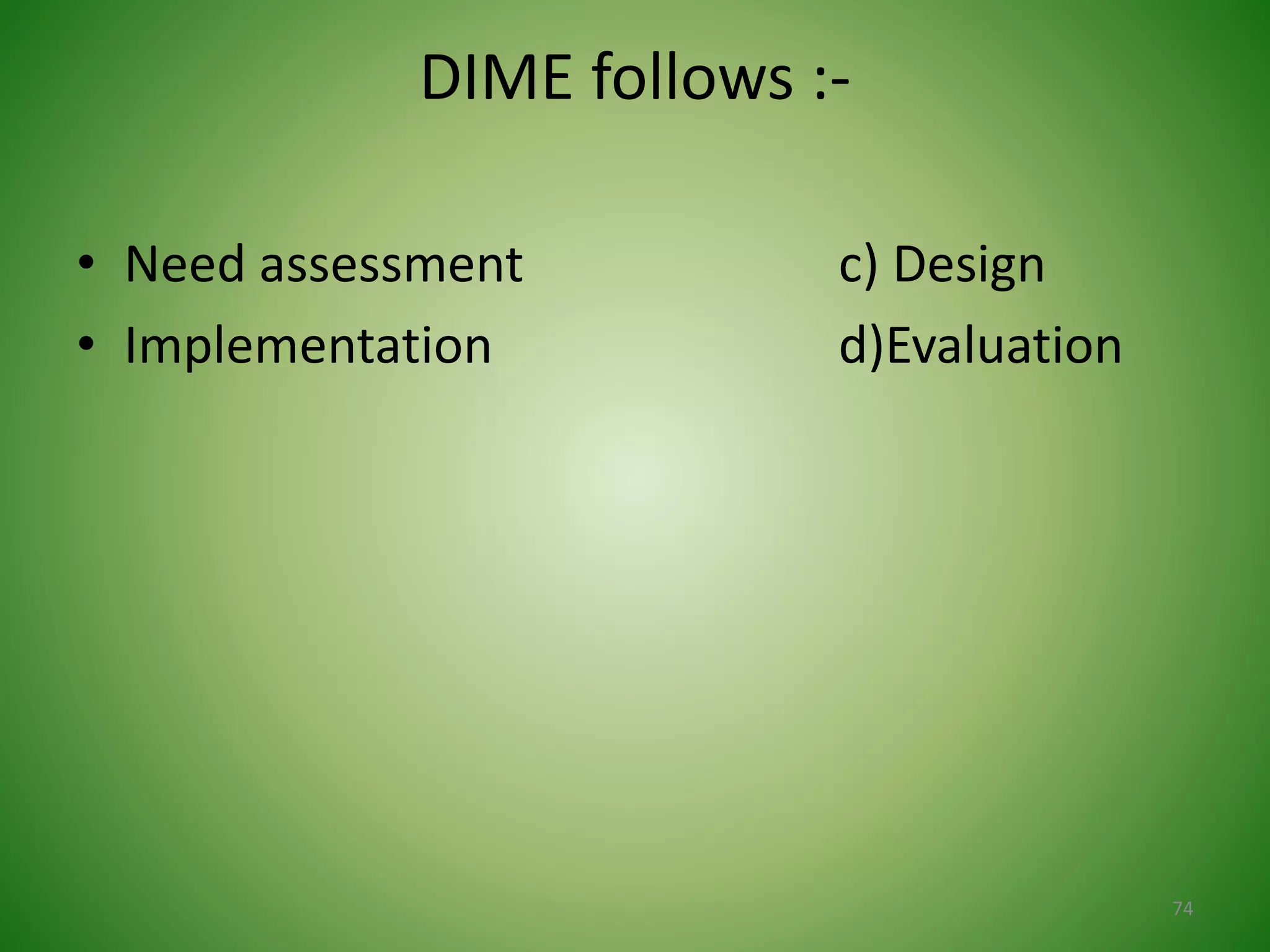
Overview of the A DImE process: needs assessment, design, implementation, and evaluation in HRD.
Challenges faced by the HRD profession in a global economy and the importance of commitment from management.
Discussion on the role of HR professionals as technical specialists and strategic partners in organizations.
Summary emphasizing HRD's role in strategic training and its integration with HRM for productivity.
Overview of training and development as crucial functions of HRM aimed at enhancing individual and group performance.
Contrast between traditional and modern approaches to training, highlighting the shift in perception toward corporate training.
Objectives of training and development: ensuring skilled workforce availability and meeting individual, organizational, functional, and societal needs.
Exploration of career definitions, including external and internal perspectives and their significance in professional development.
Overview of career management as a process enabling individuals to guide their career paths within organizations.
Discussion on the crucial role of motivation in improving employee performance and organizational effectiveness.
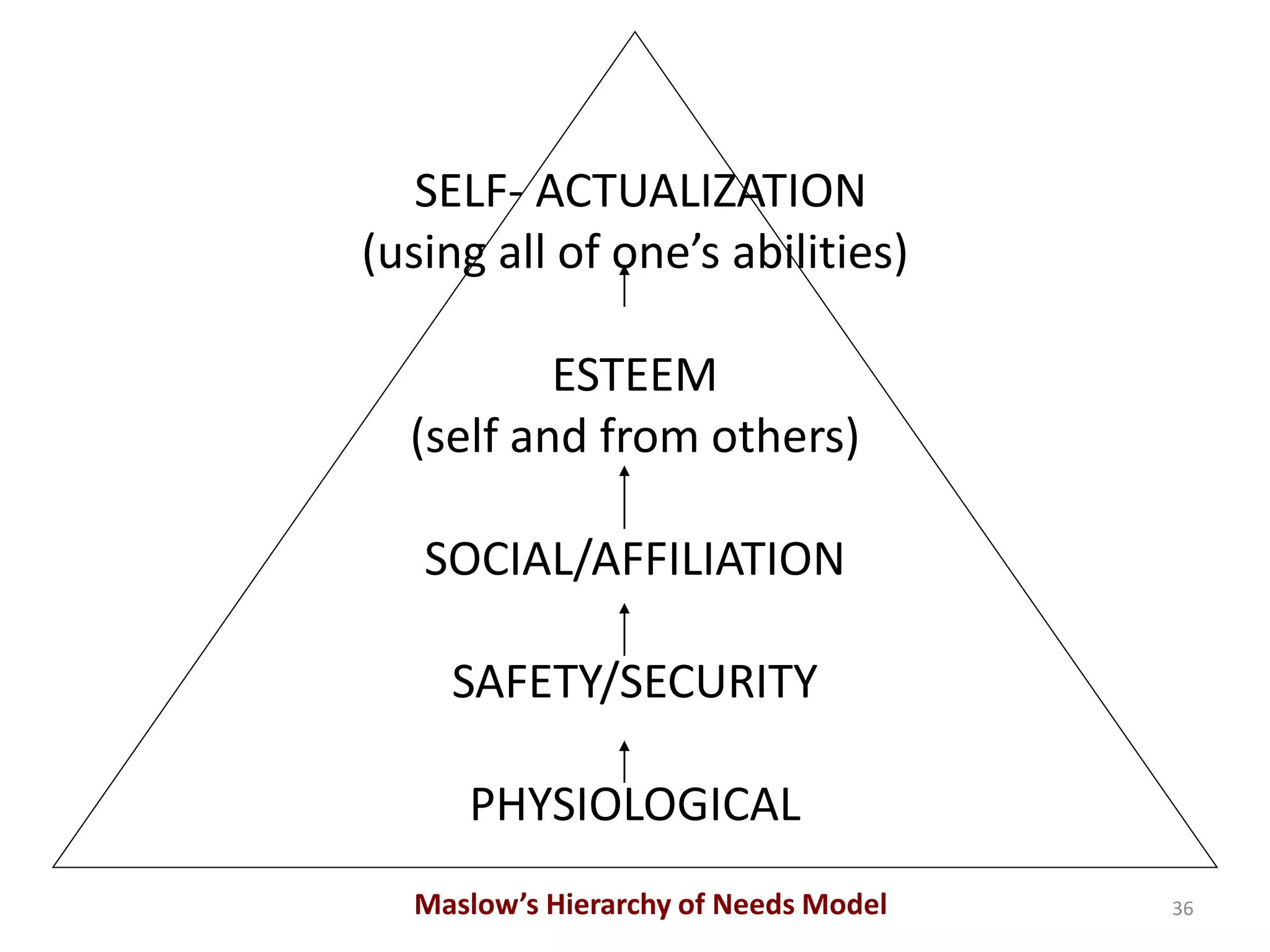
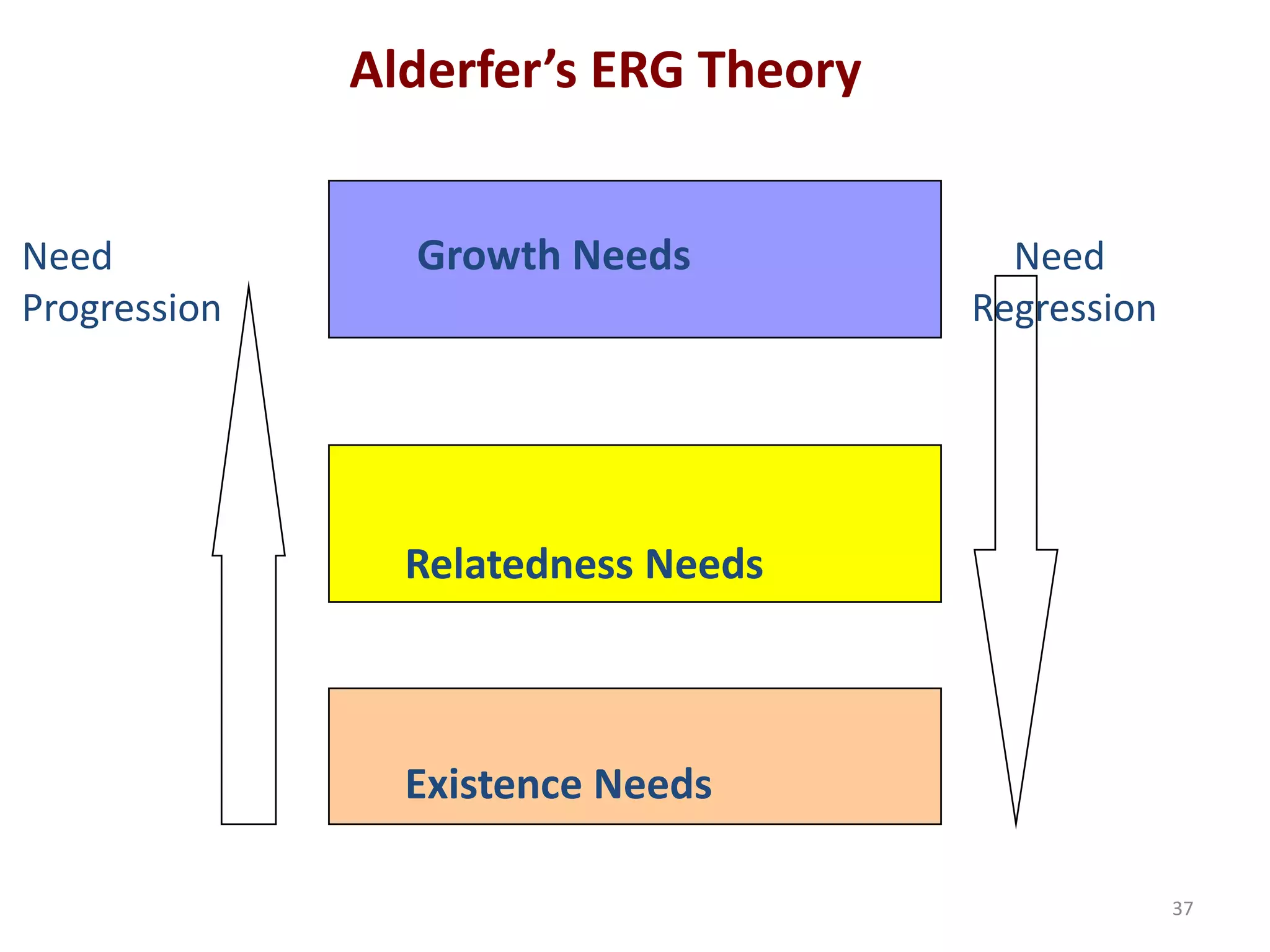
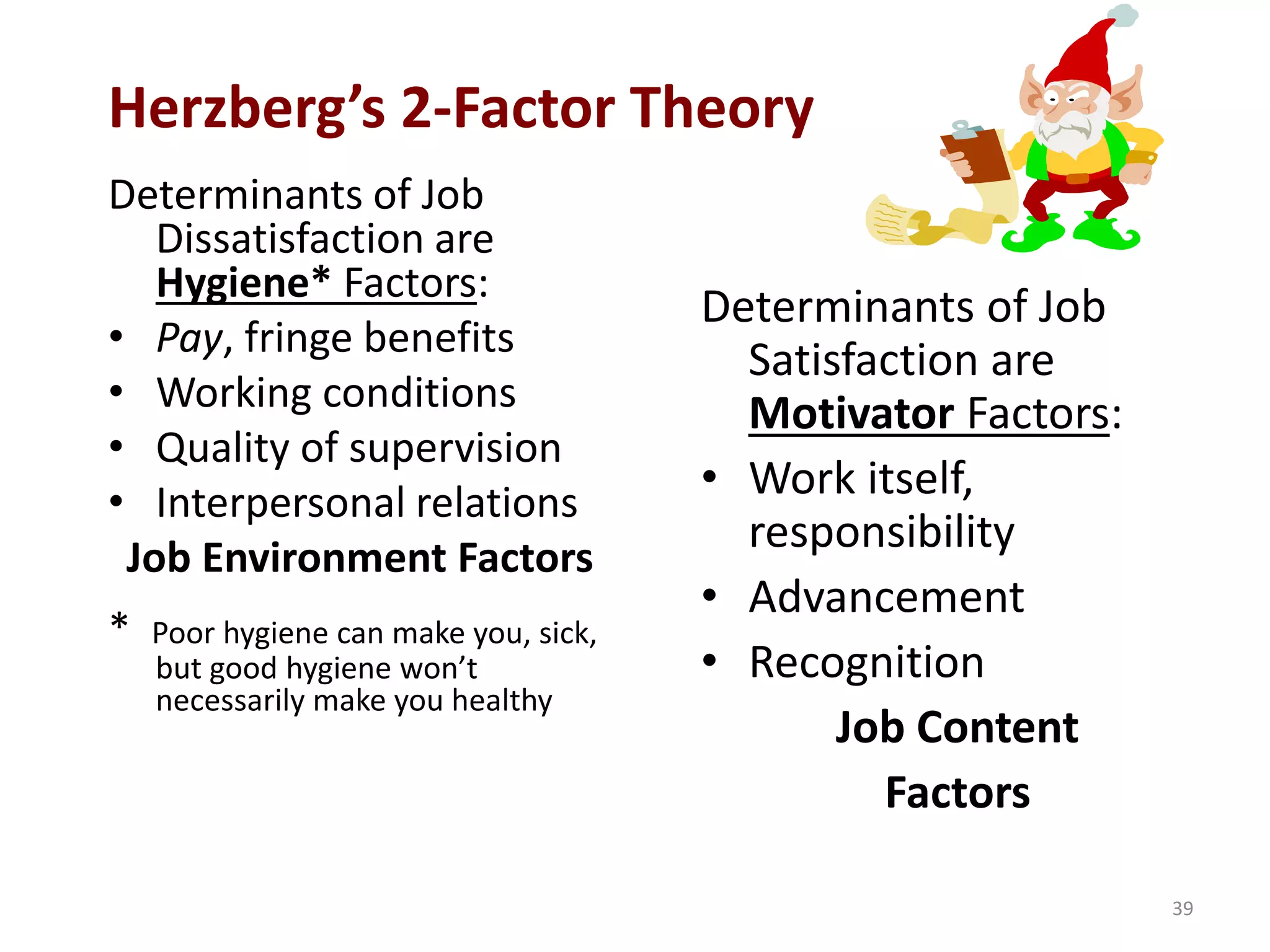
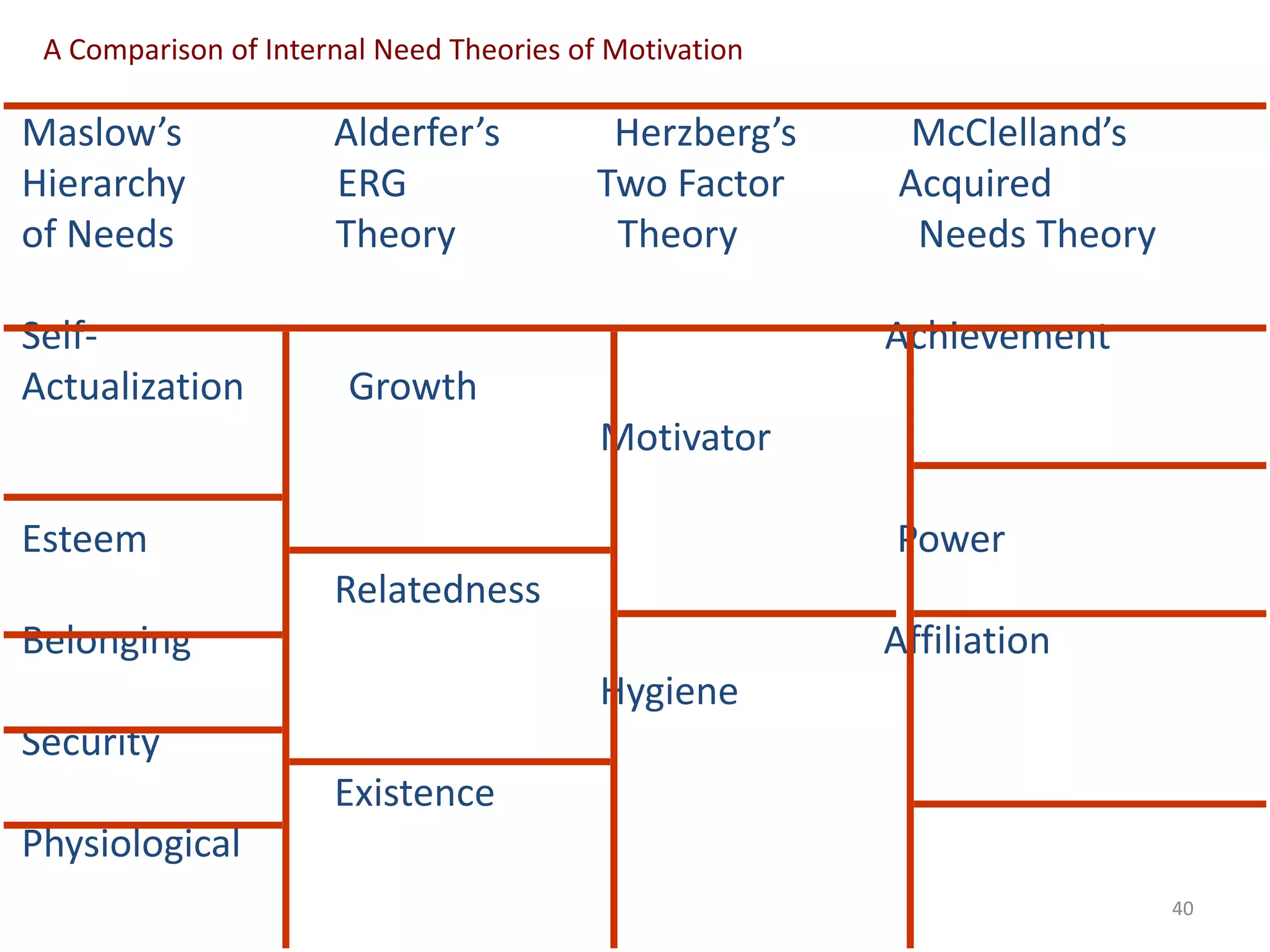
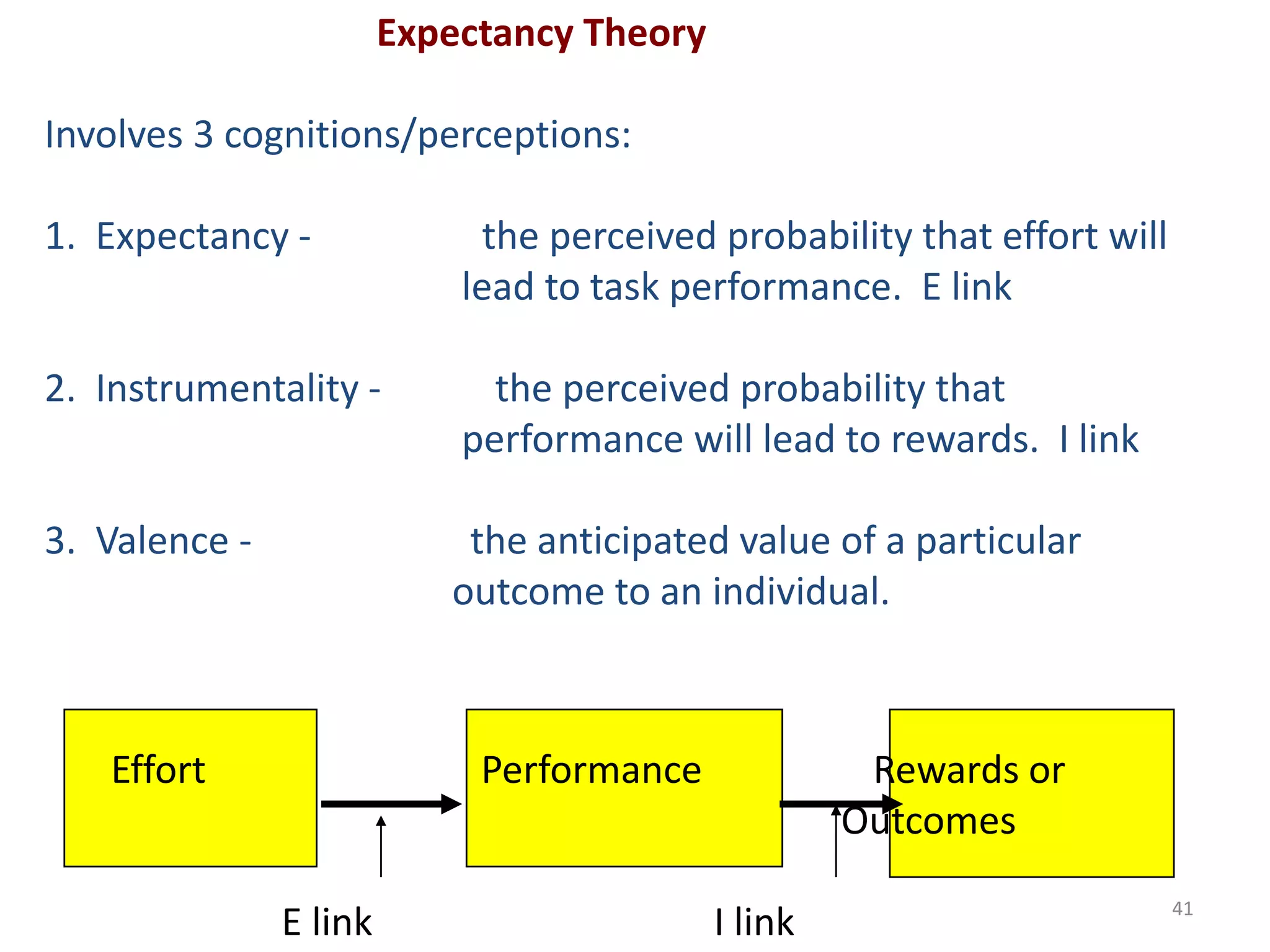
Overview of major motivation theories: Maslow’s Hierarchy, Alderfer’s ERG, Herzberg’s Two Factor, and Expectancy Theory.
Explanation of performance appraisals, their significance in career development, and various methods used for evaluation.
Detailed examination of performance appraisal methods, evaluation frequencies, and best practices in organizations. Discussion on challenges in managing human resources in banking, including talent acquisition, retention, and reform opportunities. Interactive quiz questions assessing understanding of HRM concepts and definitions discussed in the presentation.
Conclusion or additional notes not specified in detail but deemed important for final reflections on the presentation.
• “The greatesttragedy in America is not the
destruction of our natural resources, though that
tragedy is great. The truly great tragedy is the
destruction of our human resources by our failure
to fully utilize our abilities, which means that
most men and women go to their graves with
their music still in them.” - Oliver Wendell
Holmes.
• “The human mind is our fundamental resource.” -
John F. Kennedy
2
3.
Human Resource Management
•Is the term used to describe formal systems
devised for the management of people within
an organization.
• The responsibilities of a human resource
manager fall into three major areas: staffing,
employee compensation and benefits, and
defining/designing work.
3
4.
HRM DEFINED
• EdwinFlippo defines- HRM as “planning,
organizing, directing, controlling of
procurement, development, compensation,
integration , maintenance and separation of
human resources to the end that individual,
organizational and social objectives are
achieved.”
4
5.
• The NationalInstitute of Personal Management
(NIPM) of India has defined human resources –
personal management as “that part of
management which is concerned with people at
work and with their relationship within an
enterprise. Its aim is to bring together and
develop into an effective organization of the men
and women who make up enterprise and having
regard for the well – being of the individuals and
of working groups, to enable them to make their
best contribution to its success”.
5
6.
OBJECTIVES OF HRM
•Societal objective. To be socially responsible to the needs
and challenges of society while minimizing the negative
impact of such demands upon the organization. The failure
of organizations to use their resources for society's benefit
may result in restrictions. For example, societies may pass
laws that limit human resource decisions.
• Organizational objective. To recognize that HRM exists to
contribute to organizational effectiveness. HRM is not an
end in itself; it is only a means to assist the organization
with its primary objectives. Simply stated, the department
exists to serve the rest of the organization.
6
7.
• Functional objective:-To maintain the department's
contribution at a level appropriate to the organisation's
needs. Resources are wasted when HRM is more or less
sophisticated than the organisation demands. A
department's level of service must be appropriate for the
organisation it serves.
• Personal objective:- To assist employees in achieving their
personal goals, at least insofar as these goals enhance the
individual's contribution to the organisation. Personal
objectives of employees must be met if workers are to be
maintained, retained and motivated. Otherwise, employee
performance and satisfaction may decline, and employees
may leave the organisation.
7
8.
Nature of HumanResource
Management
• Human Resource Management involves management
functions like planning, organizing, directing and controlling
• It involves procurement, development, maintenance of
human resource
• It helps to achieve individual, organizational and social
objectives
• Human Resource Management is a multidisciplinary
subject. It includes the study of management, psychology,
communication, economics and sociology.
• It involves team spirit and team work.
• It is a continuous process.
8
9.
HUMAN RESOURCE MANAGEMENT
•Human resource management (HRM) is the
umbrella under which all other human
resource activities are found. Some of the
major activities under the umbrella
are: benefits and compensation, health safety
and security, human resource planning,
staffing, equal employment opportunity, and
human resource development (HRD)
9
10.
Similarities Between HRMand HRD
• Human resource development (HRD) is similar to HRM in
that it too is directly related to employee performance and,
therefore, organization profitability. Werner and DeSimone
describe the activities of HRD as activities that are intended
to ensure that employees have the skills and competencies
the organization needs to fulfill its goals and objectives in
the present and the future. Like HRM, the HRD function is
a strategic function that requires specialists to be
knowledgeable of the strategic plans of the organization,
having the ability to work in concert with line managers,
while functioning throughout an organization in a stand-
alone capacity, or as a major function in a human resources
department
10
11.
Differences between HRMand HRD
• While the overall roles of the HRD specialist are
complex and strategic like that of human resource
managers, many of their functions are more specialized
and narrow.
• According to Werner and DeSimone, the HRD
professional works with strategic decision-makers to
coordinate educational planning and training
programs; they work with HR management in the
design, development, and implementation of HR
programs and intervention strategies. They design and
implement change strategies, and advise management
on the efficient use of human resources.
11
12.
• As alearner program specialist, they identify,
design, and develop learning programs, as well as
selecting the appropriate learning
materials. They also function as learning
instructors. They counsel employees regarding
competencies and career goals, and coach line
managers on interventions to improve individual
and group performance. Research is the tool
they use to statistically determine the
effectiveness of HRD practices and programs
12
13.
The HRD Four-StepProcess
• The complexity of the HRD role necessitates a
systems approach to training and
interventions.
• Werner and DeSimone describe a four-point
process framework they call “A DImE,” that
they believe should be followed when
planning all HRD interventions. The “A DImE”
sequential process is: needs assessment,
design, implementation, and evaluation.
13
14.
• The frameworkproposes that all HRD interventions be
developed to address a specific need or gap within an
organization. The design phase of the intervention
involves selecting the specific objective for the
program, and developing a lesson plan based upon that
specific objective.
• The implementation phase means executing the
intervention using the best and most appropriate
method. The final phase in the HRD process is
evaluation, where the agent measures the
effectiveness of the intervention (Werner, DeSimone,
2012).
14
15.
Present and futureChallenges for the
HRD Profession
• The expanded role of the HRD professional has
developed and expanded as a result of the new
competitive landscape created by the global market
and economy.
• Organizational success today requires doing more with
less resources, which necessitates maximizing the
effectiveness of human capital by developing employee
skills, using technology effectively, creating new
organizational structures that facilitate decision-making
at all levels of the organization, and developing a
learning culture that encourages learning and
innovative thinking
15
16.
• Harris andShort describe a major challenge they call a
“maze of complexity and changing contexts” in
organizations today. They state, “The value of workplace
education and training has become a mantra for business
survival” (Harris, Short, 2010, 358-359).
• Unfortunately, according to Harris and Short, many HRD
programs are considered a lesser important function of
HRM, indicating a lack of understanding, most particularly,
on the part of upper and middle managers of the
importance of true HRD functions. This lack of
understanding is portrayed as the greatest challenge to the
HRD professional because without commitment from the
top, success of HRD programs is unlikely (Short, Harris,
2010) (Rawles, 2013).
16
17.
ROLES OF THEHR PROFESSIONAL
All HR professionals should be a technical
specialist in one or more technical areas. HR
professionals should develop advisor and
strategic partner skills in order to become more
effective in providing technical guidance and
human capital services to their organization.
Leaders can be found in any of the roles.
HR professionals can demonstrate leadership skills
at every organizational level whether or not they
are in a formal leadership roles.
17
18.
Conclusion
HRD is amajor part of the HRM function that
focuses on strategic training and development
for the purpose of impacting profitability by
increasing productivity and performance.
Effective HRD interventions can be
accomplished using a four-phase framework
consisting of a needs assessment, program
design, implementation, and evaluation.
18
19.
Training and development
•It is a subsystem of an organization. It ensures that
randomness is reduced and learning or behavioral
change takes place in structured format.
• It is a function of human resource management
concerned with organizational activity aimed at
bettering the performance of individuals and groups in
organizational settings. It has been known by several
names, including "human resource development", and
"learning and development".
19
20.
Approaches to training
•Traditional Approach – Most of the
organizations before never used to believe in
training. They were holding the traditional
view that managers are born and not made.
• There were also some views that training is a
very costly affair and not worth. Organizations
used to believe more in executive pinching.
But now the scenario seems to be changing.
20
21.
Approaches to training,contd.
• The modern approach of training and
development is that Indian Organizations
have realized the importance of corporate
training. Training is now considered as more of
retention tool than a cost. The training system
in Indian Industry has been changed to create
a smarter workforce and yield the best results
21
22.
TRAINING AND DEVELOPMENT
OBJECTIVES
•The principal objective of training and
development division is to make sure the
availability of a skilled and willing workforce to
an organization.
• In addition to that, there are four other
objectives: Individual, Organizational,
Functional, and Societal.
22
23.
TRAINING AND DEVELOPMENT
OBJECTIVES,contd.
• Individual Objectives – help employees in
achieving their personal goals, which in turn,
enhances the individual contribution to an
organization.
Organizational Objectives – assist the
organization with its primary objective by
bringing individual effectiveness.
23
24.
TRAINING AND DEVELOPMENT
OBJECTIVES,contd.
• Functional Objectives – maintain the
department’s contribution at a level suitable
to the organization’s needs.
Societal Objectives – ensure that an
organization is ethically and socially
responsible to the needs and challenges of the
society.
24
• Career isa sequence of attitudes and
behaviours associated with the series of job
and work related activities over a person’s
lifetime.
26
27.
Career, contd.
• Yetin another way, it may be defined as a
succession of related jobs, arranged in
hierarchical order, through which a person
moves in an organization. As the literal
definition of career focuses on an individually
perceived sequence, to be more accurate,
career may be either individual-centred or
organizational-centred. Therefore, career is
often defined separately as external career
and internal career.
27
28.
Career, contd.
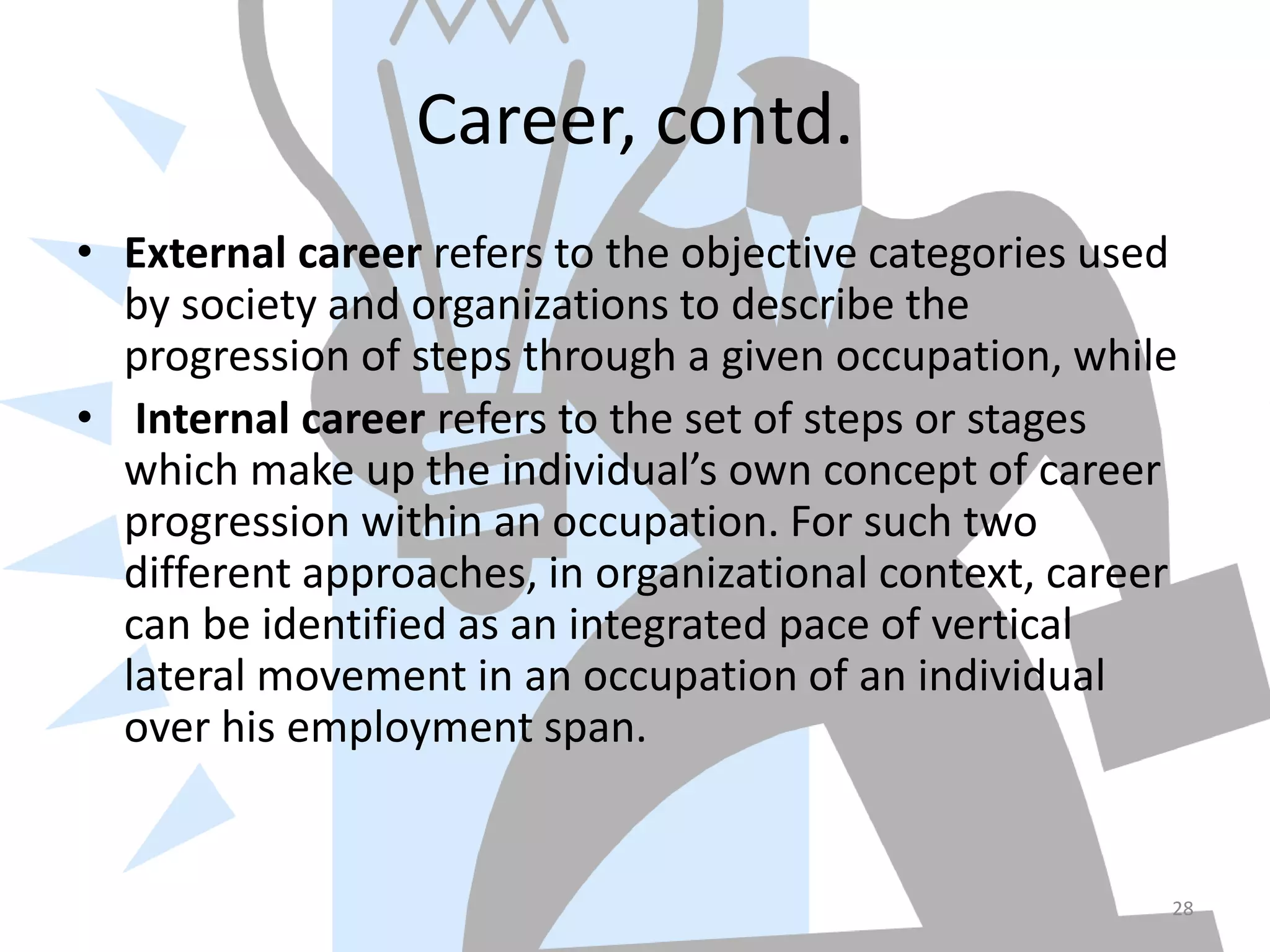
• Externalcareer refers to the objective categories used
by society and organizations to describe the
progression of steps through a given occupation, while
• Internal career refers to the set of steps or stages
which make up the individual’s own concept of career
progression within an occupation. For such two
different approaches, in organizational context, career
can be identified as an integrated pace of vertical
lateral movement in an occupation of an individual
over his employment span.
28
29.
Career management
• Careermanagement is a process by which
individuals can guide, direct and influence the
course of their careers.
29
CAREER PLANNING INAN
ORGANIZATION
• Career planning is the process by which one selects
career goals and the path to these goals. The major
focus of career planning is on assisting the employees
achieve a better match between personal goals and the
opportunities that are realistically available in the
organization. Career programmers should not
concentrate only on career growth opportunities.
Practically speaking, there may not be enough high
level positions to make upward mobility a reality for a
large number of employees. Hence, career-planning
efforts need to pin-point and highlight those areas that
offer psychological success instead of vertical growth.
31
32.
• Career planningis not an event or end in itself,
but a continuous process of developing
• human resources for achieving optimum results.
It must, however, be noted that individual and
organizational careers are not separate and
distinct. A person who is not able to translate his
career plan into action within the organization
may probably quit the job, if he has a choice.
Organizations, therefore, should help employees
in career planning so that both can satisfy each
other’s needs.
32
Why is MotivationImportant?
• Under optimal conditions, effort can often be
increased and sustained
• Delegation without constant supervision is
always necessary
• Employees can become self-motivated
• Motivated employees can provide competitive
advantage by offering suggestions & working
to satisfy customers
34
35.
MAJOR THEORIES OFMOTIVATION
• I. Need Approaches:
• - Maslow’s Hierarchy of Needs
• - Alderfer’s ERG Theory
• - Herzberg’s Two Factor Theory
• - McClelland’s Learned Needs Theory
• II. Cognitive Approaches:
• - Expectancy Theory
• - Equity Theory/ Social Comparison
• - Goal Setting Theory
35
36.
SELF- ACTUALIZATION
(using allof one’s abilities)
ESTEEM
(self and from others)
SOCIAL/AFFILIATION
SAFETY/SECURITY
PHYSIOLOGICAL
Maslow’s Hierarchy of Needs Model 36
Herzberg’s Theory Restson 2 Assumptions
1.) Being satisfied with one’s job is equivalent
to being motivated; “a satisfied worker is a
motivated worker”
2.) Job satisfaction and dissatisfaction are
separate concepts with unique determinants
based on work with accountants and engineers
38
39.
Herzberg’s 2-Factor Theory
Determinantsof Job
Dissatisfaction are
Hygiene* Factors:
• Pay, fringe benefits
• Working conditions
• Quality of supervision
• Interpersonal relations
Job Environment Factors
* Poor hygiene can make you, sick,
but good hygiene won’t
necessarily make you healthy
Determinants of Job
Satisfaction are
Motivator Factors:
• Work itself,
responsibility
• Advancement
• Recognition
Job Content
Factors
39
40.
A Comparison ofInternal Need Theories of Motivation
Maslow’s Alderfer’s Herzberg’s McClelland’s
Hierarchy ERG Two Factor Acquired
of Needs Theory Theory Needs Theory
Self- Achievement
Actualization Growth
Motivator
Esteem Power
Relatedness
Belonging Affiliation
Hygiene
Security
Existence
Physiological
40
41.
Expectancy Theory
Involves 3cognitions/perceptions:
1. Expectancy - the perceived probability that effort will
lead to task performance. E link
2. Instrumentality - the perceived probability that
performance will lead to rewards. I link
3. Valence - the anticipated value of a particular
outcome to an individual.
Effort Performance Rewards or
Outcomes
E link I link 41
• A performanceappraisal (PA), also referred to
as a performance review, performance
evaluation, (career) development discussion,
or employee appraisal is a method by which
the job performance of an employee is
documented and evaluated.
• Performance appraisals are a part of career
development and consist of regular reviews of
employee performance within organizations.
43Dr.Sheetal
44.
• A performanceappraisal is a systematic and
periodic process that assesses an individual
employee’s job performance and productivity
in relation to certain pre-established criteria
and organizational objectives.
44Dr.Sheetal
45.
• Performance managementsystems are
employed “to manage and align" all of an
organization's resources in order to achieve
highest possible performance
45Dr.Sheetal
46.
• Some applicationsof PA are compensation,
performance improvement, promotions,
termination, test validation, and more.
• While there are many potential benefits of PA,
there are also some potential drawbacks. For
example, PA can help facilitate management-
employee communication;
• However, PA may result in legal issues if not
executed appropriately, as many employees tend
to be unsatisfied with the PA process.
46Dr.Sheetal
47.
Other potential benefitsinclude
• Facilitation of communication:
communication in organizations is considered
an essential function of worker motivation.
• Enhancement of employee focus through
promoting trust: behaviors, thoughts, and/or
issues may distract employees from their
work, and trust issues may be among these
distracting factors.
47Dr.Sheetal
48.
• Goal settingand desired performance
reinforcement: organizations find it efficient
to match individual worker’s goals and
performance with organizational goals.
• Performance improvement: well constructed
PAs can be valuable tools for communication
with employees as pertaining to how their job
performance stands with organizational
expectations.
48Dr.Sheetal
49.
• Determination oftraining needs: Employee
training and development are crucial
components in helping an organization
achieve strategic initiatives.
49Dr.Sheetal
50.
When are performanceappraisals
conducted
• Performance appraisals (PAs) are conducted at
least annually, and annual employee
performance reviews appear to be the
standard in most organizations.
• However they can be conducted biannually or
quarterly.
50Dr.Sheetal
51.
Methods of performanceappraisals
• Self-assessments: for self-assessments,
individuals assess and evaluate their own
behavior and job performance
51Dr.Sheetal
52.
• Peer assessments:members of a group
evaluate and appraise the performance of
their fellow group members
52Dr.Sheetal
53.
• 360-degree feedback:360-degree feedback is
multiple evaluations of employees which
often include assessments from superior(s),
peers, and one’s self.
53Dr.Sheetal
• Human ResourceManagement is important for
banks because banking is a service industry.
• Management of people and management of risk
are two key challenges facing banks.
• How you manage the people and how you
manage the risks determines your success in the
banking business. Efficient risk management may
not be possible without efficient and skilled
manpower.
55Dr.Sheetal
56.
Banking has beenand will always be a
"People Business".
• In coming times, the very survival of the banks
would depend on customer satisfaction. Those
who do not meet the customer expectations will
find survival difficult. Banks must articulate and
emphasize the core values to attract and retain
certain customer segments. Values such as
"sound", "reliable", "innovative", "international",
"close", "socially responsible", "Indian", etc. need
to be emphasized through concrete actions on
the ground and it would be the bank’s human
resource that would deliver this.
56Dr.Sheetal
57.
Importance of HRin banks
• It is a common complaint among bank
executives that skilled manpower is in short
supply.
• No two arguments on this, HR resources are
becoming scarce – both in quality and
quantity.
• And, it is quite elementary that any resource
that is in short supply needs to be properly
managed for the benefit of society
57Dr.Sheetal
58.
How to ManageHuman Resources
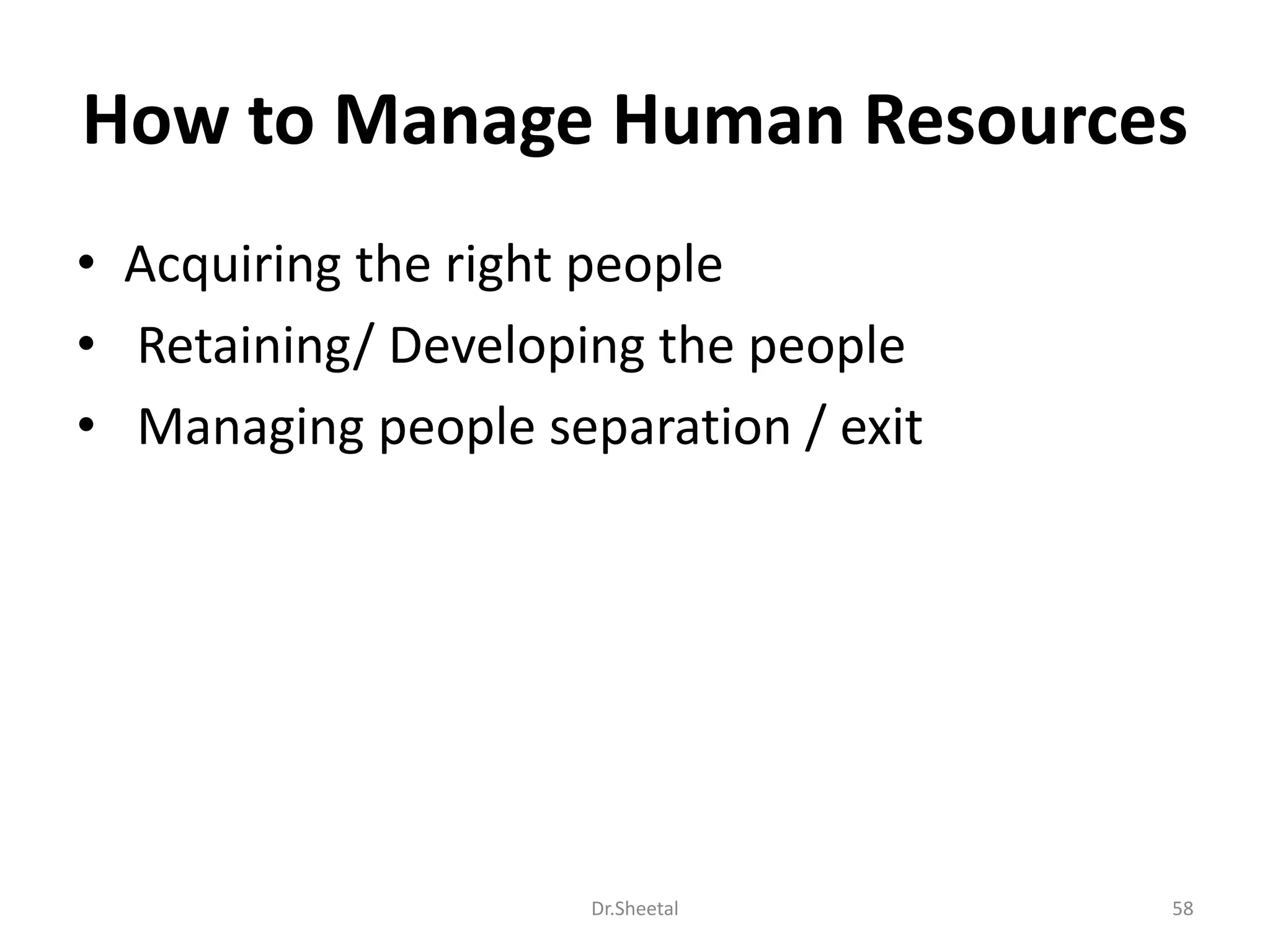
• Acquiring the right people
• Retaining/ Developing the people
• Managing people separation / exit
58Dr.Sheetal
59.
Planning
• As theeconomy grows at a steady rate of around 7–
8%, incomes rise and demographic dividends start
accruing, the Banking industry is expected to take a
quantum leap forward.
• But this growth will need a large number of people and
considering that there are retirements in lakhs, a
defining moment is being presented before the
Nationalized Banks to transform.
• Are the banks ready to handle the new bunch of
employees who will be culturally so different from
their predecessors of the post nationalization era?
59Dr.Sheetal
60.
• It allbegins with having a manpower plan. How
many banks can claim to have a proper
manpower plan that captures the type of people
it requires, the level at which they are required,
clearly defined roles for everyone, etc.
• Manpower plans should follow a lifecycle
approach, that is, from the time of recruitment of
an employee to his retirement. Further, this
needs to be integrated with the Business Plan
and strategy of the bank.
60Dr.Sheetal
61.
Acquiring the rightpeople
• How do we get to acquiring people with the
right kind of talent? Unfortunately, it is the
same limited talent pool that will be targeted
by Banks, Financial Institutions, Insurance,
Telecom and other industries which are on
fast growth track and in need of talented
manpower.
61Dr.Sheetal
62.
• Banks needto seriously look at lateral
recruitment as an option to induct specialists
at various levels with specific skill sets and
experience pool. While we have often heard
of people leaving banks to join finance, legal,
accounting firms, etc. seldom have we heard
of people leaving these professions to join
banks.
62Dr.Sheetal
63.
Retaining/ Developing thePeople:
• Training / Re-skilling: The nature of business
requires massive re-skilling of the existing
workforce and continuous skill up-gradation.
• Khandelwal Committee has recommended
major up-gradation of in-house training
facilities of banks.
63Dr.Sheetal
64.
• Performance Management:This is the most
important area of Human Resource
Management, the foundation of which is
discrimination. Unfortunately, current systems
are unable to discriminate and differentiate
between performers and non-performers. In
fact, it is impossible to identify who are the
performers and who are the non-performers.
64Dr.Sheetal
65.
• A fair,transparent and objective mechanism
for performance management is a must for all
banks because an effective Performance
Management System is the key to talent
management and succession planning.
65Dr.Sheetal
66.
Is it theright time?
• During the 2010 to 2020 decade, Nationalized
Banks are at the cusp of a unique opportunity –
with people retiring in lakhs making it a
“retirement decade”, it is the best time to
transform the HR processes and implement some
new age concepts. This kind of opportunity to
transform HR processes is once-in-a-lifetime
window which, if properly utilized, could help our
banks take giant strides. On the other hand,
those who miss the bus would lag behind. The
kind of HR changes required are a tremendous
challenge and opportunity at the same time.
66Dr.Sheetal
State True orFalse
• HRD is the umbrella under which all other
human resource activities are found
• DIME is a sequential process
• The framework of HRD interventions are need
based
• Training was wasteful activity under
traditional approach
• Motivation is essential because it affects work
performance.
75