Human Genome Project By: Amanda Medina
Basic Principles of Genetics Allele- The different form of a gene-sometimes referred to as a “trait” Simple trait- caused by interaction of only one set of alleles  Complex trait- caused by a interaction of a series of allels  Simple Traits of Alleles Simple trait- eye color Complex- height
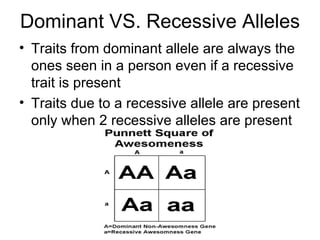
Dominant VS. Recessive Alleles Traits from dominant allele are always the ones seen in a person even if a recessive trait is present Traits due to a recessive allele are present only when 2 recessive alleles are present
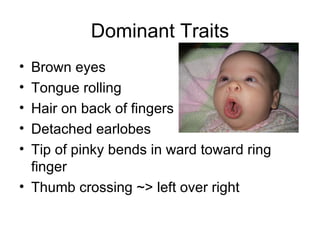
Dominant Traits Brown eyes  Tongue rolling Hair on back of fingers Detached earlobes  Tip of pinky bends in ward toward ring finger  Thumb crossing ~> left over right
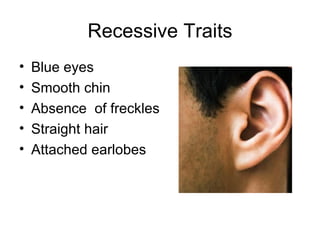
Recessive Traits Blue eyes Smooth chin  Absence  of freckles  Straight hair  Attached earlobes
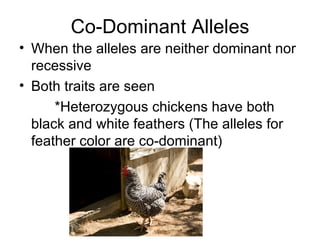
Co-Dominant Alleles When the alleles are neither dominant nor recessive Both traits are seen *Heterozygous chickens have both black and white feathers (The alleles for feather color are co-dominant)
Explain How the Alleles of 2 Parents Combine to Express Traits in Offspring? Children inherit a set of alleles- one from each of parent The 2 combined alleles determined the traits The trait that shows up the dominant trait
Human Genome Project (HGP) Started in October 1990  Was completed on June 26 ,  2000  (2 years earlier than expected) Goals: To Identify all the 30-35,000 genes and make them available for biological study. Determine the complete sequence of DNA in the human genome. Help understand and eventually treat many of the 4,000 genetic diseases.
Social Implications Genetic engineering The HGP product will allow us to determine the genetic basis of many physical and psychological traits of a person creating the possibility of changing those traits by a genetic intervention. How will society view a person once it is known that that individual has a certain gene.
Ethical Implications How will they use the genetic information? What challenges will result from screening for diseases once results are known? Example:  Will the patient’s relatives be informed that they too may be affected by the disease? Cloning? Do we interfere with God’s plan? Do we put ourselves in a position to play God by use of genetic manipulation.
Legal Implications Who owns the genes and the other pieces of DNA once collected? Will patenting DNA sequences limit their accessibility and prevent them from being used the way they were intended?
GINA ( Genetic Information Nondiscrimination Act of 2008) Protects Americans from being discriminated against by health insurance companies and their employers based on their genetic information. This law was necessary because if insurance companies were to find out the results of some of these tests, many people would be denied health care coverage or charged excessively higher fees.  Employers might also not hire someone who tests positive for a disease because they might miss days of work or not be able to work as hard.
Single Gene Disorder Caused by a mutation (when DNA is damaged or changed) of a specific gene in the person’s DNA. Can be passed on to their children Most understood of genetic disorders (based on recessive/dominant genes) Rare but affects millions of people Genetic testing is available
Examples of Single Gene Disorders Cystic Fibrosis  Sickle Cell Anemia Tay-Sachs disease Duchenne Muscular Dystrophy
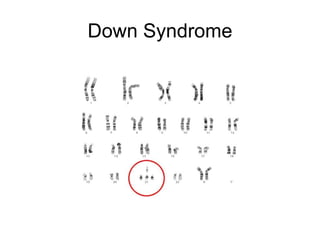
Chromosomal Abnormalities Present in 1 out of every 50 births. Caused by an error in the number of chromosomes. Presents with both mental and physical birth defects. Examples: Down Syndrome: when children are born with 3 chromosomes of ’21’   Turner Syndrome: Girls that are born missing an X chromosome. Klinefelter Syndrome: Boys born with 2 or more X chromosomes. Lets play a game http://learn.genetics.utah.edu/content/begin/traits/predictdisorder/   ( the game is at the bottom)
Down Syndrome
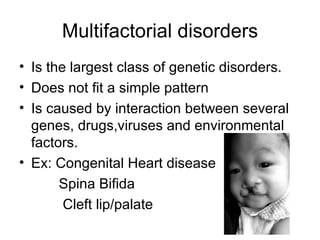
Multifactorial disorders Is the largest class of genetic disorders. Does not fit a simple pattern Is caused by interaction between several genes, drugs,viruses and environmental factors. Ex: Congenital Heart disease   Spina Bifida   Cleft lip/palate
Genetic Counseling Consists of testing each parent’s genetic make up to reveal if the baby is at risk of having a genetic or inherited disease. Parents who have knowledge of genetic diseases in their families can find out if they run the risk of carrying the disease and passing it down to their baby.
Karotypes Definition: is a complete set of chromosomes. Studying karotypes can help determine if there is a genetic birth defect present by seeing if there are Too many or too few chromosomes Missing pieces of chromosomes Mixed up pieces of chrosomes
References Britannica.com Geneticalliance.org/ws_display Reproductivegenetics.com Marchofdimes.com/babybirthdefects Ornl.gov/sci/techresourses/human_genome. Pregnancy.com
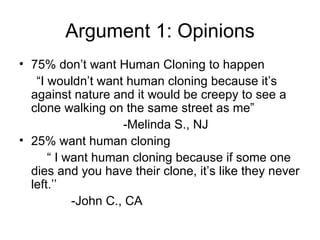
Argument 1: Opinions 75% don’t want Human Cloning to happen “ I wouldn’t want human cloning because it’s against nature and it would be creepy to see a clone walking on the same street as me” -Melinda S., NJ 25% want human cloning “  I want human cloning because if some one dies and you have their clone, it’s like they never left.’’ -John C., CA
Argument 2: Religion Reasons 34% don’t want human cloning because of religious reasons.  The people closer to god say its disturbing God’s Plan
Argument 3: People who want Human Cloning I believe people that want human cloning think that its like organ cloning but it’s not we are cloning a human body not an organ
Argument 4: what I think I am against cloning because it is disturbing nature and it would be creepy finding a clone of me walking on the same street as me

Human genome project[1]

  • 1.
    Human Genome ProjectBy: Amanda Medina
  • 2.
    Basic Principles ofGenetics Allele- The different form of a gene-sometimes referred to as a “trait” Simple trait- caused by interaction of only one set of alleles Complex trait- caused by a interaction of a series of allels Simple Traits of Alleles Simple trait- eye color Complex- height
  • 3.
    Dominant VS. RecessiveAlleles Traits from dominant allele are always the ones seen in a person even if a recessive trait is present Traits due to a recessive allele are present only when 2 recessive alleles are present
  • 4.
    Dominant Traits Browneyes Tongue rolling Hair on back of fingers Detached earlobes Tip of pinky bends in ward toward ring finger Thumb crossing ~> left over right
  • 5.
    Recessive Traits Blueeyes Smooth chin Absence of freckles Straight hair Attached earlobes
  • 6.
    Co-Dominant Alleles Whenthe alleles are neither dominant nor recessive Both traits are seen *Heterozygous chickens have both black and white feathers (The alleles for feather color are co-dominant)
  • 7.
    Explain How theAlleles of 2 Parents Combine to Express Traits in Offspring? Children inherit a set of alleles- one from each of parent The 2 combined alleles determined the traits The trait that shows up the dominant trait
  • 8.
    Human Genome Project(HGP) Started in October 1990 Was completed on June 26 , 2000 (2 years earlier than expected) Goals: To Identify all the 30-35,000 genes and make them available for biological study. Determine the complete sequence of DNA in the human genome. Help understand and eventually treat many of the 4,000 genetic diseases.
  • 9.
    Social Implications Geneticengineering The HGP product will allow us to determine the genetic basis of many physical and psychological traits of a person creating the possibility of changing those traits by a genetic intervention. How will society view a person once it is known that that individual has a certain gene.
  • 10.
    Ethical Implications Howwill they use the genetic information? What challenges will result from screening for diseases once results are known? Example: Will the patient’s relatives be informed that they too may be affected by the disease? Cloning? Do we interfere with God’s plan? Do we put ourselves in a position to play God by use of genetic manipulation.
  • 11.
    Legal Implications Whoowns the genes and the other pieces of DNA once collected? Will patenting DNA sequences limit their accessibility and prevent them from being used the way they were intended?
  • 12.
    GINA ( GeneticInformation Nondiscrimination Act of 2008) Protects Americans from being discriminated against by health insurance companies and their employers based on their genetic information. This law was necessary because if insurance companies were to find out the results of some of these tests, many people would be denied health care coverage or charged excessively higher fees. Employers might also not hire someone who tests positive for a disease because they might miss days of work or not be able to work as hard.
  • 13.
    Single Gene DisorderCaused by a mutation (when DNA is damaged or changed) of a specific gene in the person’s DNA. Can be passed on to their children Most understood of genetic disorders (based on recessive/dominant genes) Rare but affects millions of people Genetic testing is available
  • 14.
    Examples of SingleGene Disorders Cystic Fibrosis Sickle Cell Anemia Tay-Sachs disease Duchenne Muscular Dystrophy
  • 15.
    Chromosomal Abnormalities Presentin 1 out of every 50 births. Caused by an error in the number of chromosomes. Presents with both mental and physical birth defects. Examples: Down Syndrome: when children are born with 3 chromosomes of ’21’ Turner Syndrome: Girls that are born missing an X chromosome. Klinefelter Syndrome: Boys born with 2 or more X chromosomes. Lets play a game http://learn.genetics.utah.edu/content/begin/traits/predictdisorder/ ( the game is at the bottom)
  • 16.
  • 17.
    Multifactorial disorders Isthe largest class of genetic disorders. Does not fit a simple pattern Is caused by interaction between several genes, drugs,viruses and environmental factors. Ex: Congenital Heart disease Spina Bifida Cleft lip/palate
  • 18.
    Genetic Counseling Consistsof testing each parent’s genetic make up to reveal if the baby is at risk of having a genetic or inherited disease. Parents who have knowledge of genetic diseases in their families can find out if they run the risk of carrying the disease and passing it down to their baby.
  • 19.
    Karotypes Definition: isa complete set of chromosomes. Studying karotypes can help determine if there is a genetic birth defect present by seeing if there are Too many or too few chromosomes Missing pieces of chromosomes Mixed up pieces of chrosomes
  • 20.
    References Britannica.com Geneticalliance.org/ws_displayReproductivegenetics.com Marchofdimes.com/babybirthdefects Ornl.gov/sci/techresourses/human_genome. Pregnancy.com
  • 21.
    Argument 1: Opinions75% don’t want Human Cloning to happen “ I wouldn’t want human cloning because it’s against nature and it would be creepy to see a clone walking on the same street as me” -Melinda S., NJ 25% want human cloning “ I want human cloning because if some one dies and you have their clone, it’s like they never left.’’ -John C., CA
  • 22.
    Argument 2: ReligionReasons 34% don’t want human cloning because of religious reasons. The people closer to god say its disturbing God’s Plan
  • 23.
    Argument 3: Peoplewho want Human Cloning I believe people that want human cloning think that its like organ cloning but it’s not we are cloning a human body not an organ
  • 24.
    Argument 4: whatI think I am against cloning because it is disturbing nature and it would be creepy finding a clone of me walking on the same street as me