Endangered and Extinct Animal cloning Patrick Finning  Period 1
Principles of genetics When a dominant allele is their it will always be shown. A recessive allele will only show when there isn’t a dominant. Co-dominance is when the allele is neither dominant nor recessive. You get one trait from your mom and trait from your dad. The pass the traits on chromosomes. Each parent gives you half the number of chromosomes. The passing of traits to parent to offspring is called heredity.
Human Genome project The Human Genome project started in the 1980’s. Scientist’s planned to use this information to find the genetic basis of all disease.  Genomic Research, Genomic Healthcare, Broader Societal issues, Legal, Regulatory Public policy issues.
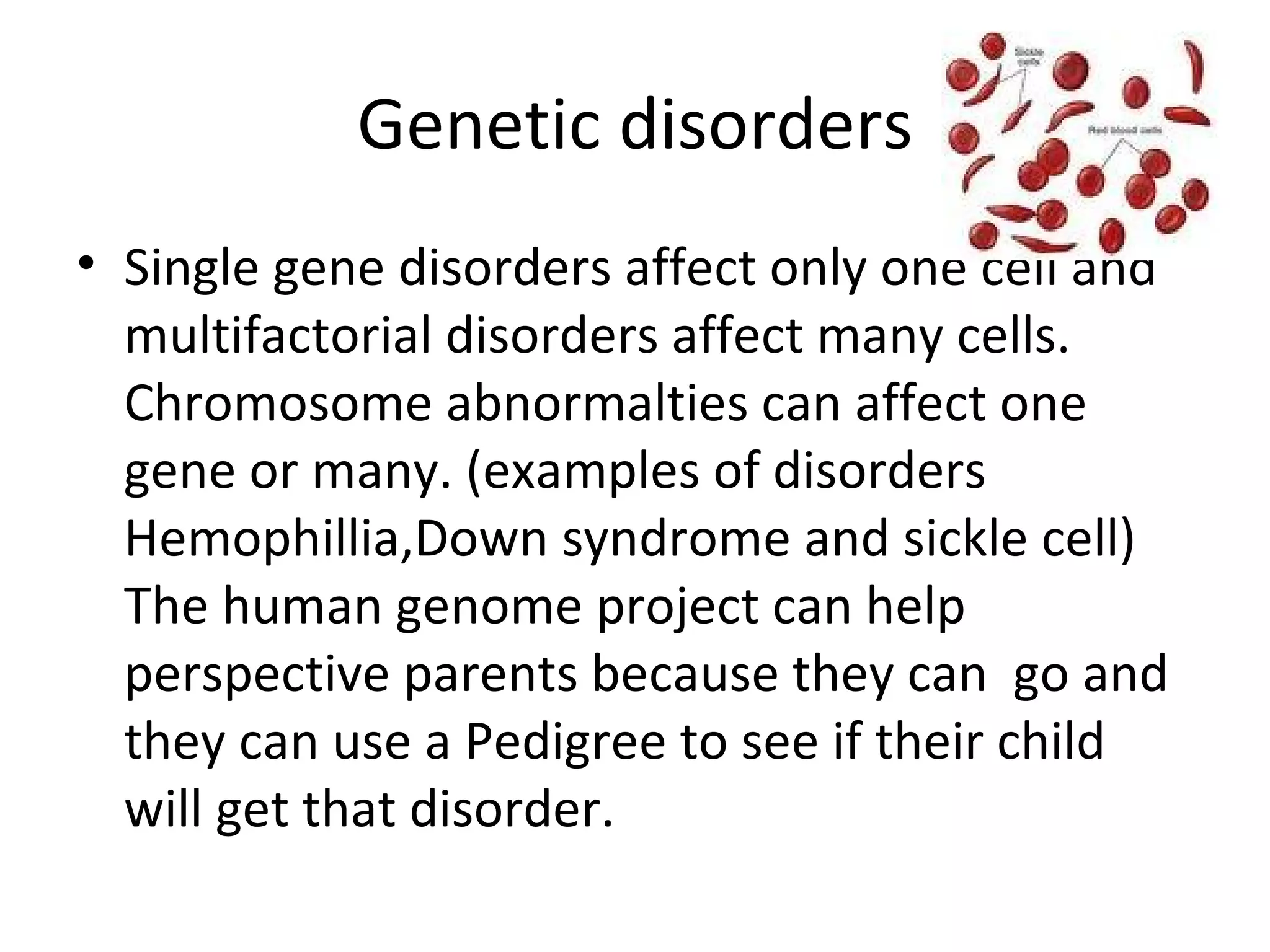
Genetic disorders Single gene disorders affect only one cell and multifactorial disorders affect many cells. Chromosome abnormalties can affect one gene or many. (examples of disorders Hemophillia,Down syndrome and sickle cell) The human genome project can help perspective parents because they can  go and they can use a Pedigree to see if their child will get that disorder.
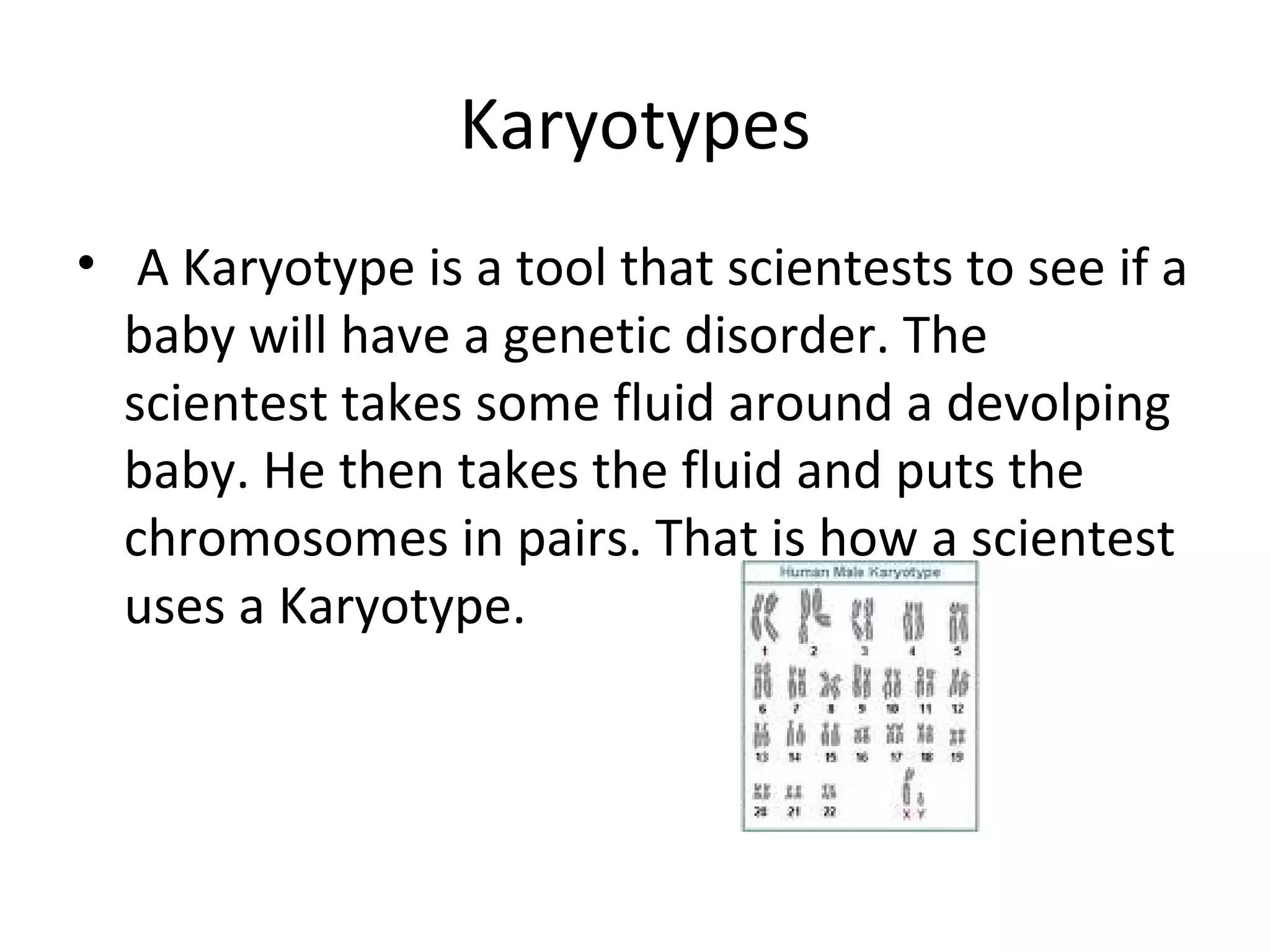
Karyotypes A Karyotype is a tool that scientests to see if a baby will have a genetic disorder. The scientest takes some fluid around a devolping baby. He then takes the fluid and puts the chromosomes in pairs. That is how a scientest uses a Karyotype.
Charts & Graphs
Argument 1 I think that If we clone Endangered animals then we would be doing something good. If one species of animals die out it could disturb the food chain. 1,000 species world wide are endangered and 3,600 are candidates for being endangered. If those animals die the food chain would be a mess. That is why we should clone animals.
Argument 2 Tons of animals in the world are endangered. Humans need animals to survive. They give us food we and they eat bad insects that can give us diseases. A lot of those might be endangered or close. “Cloning will give endangered species a fighting  chance”-Dr Robert Lanza. That is a reason we should clone animals.
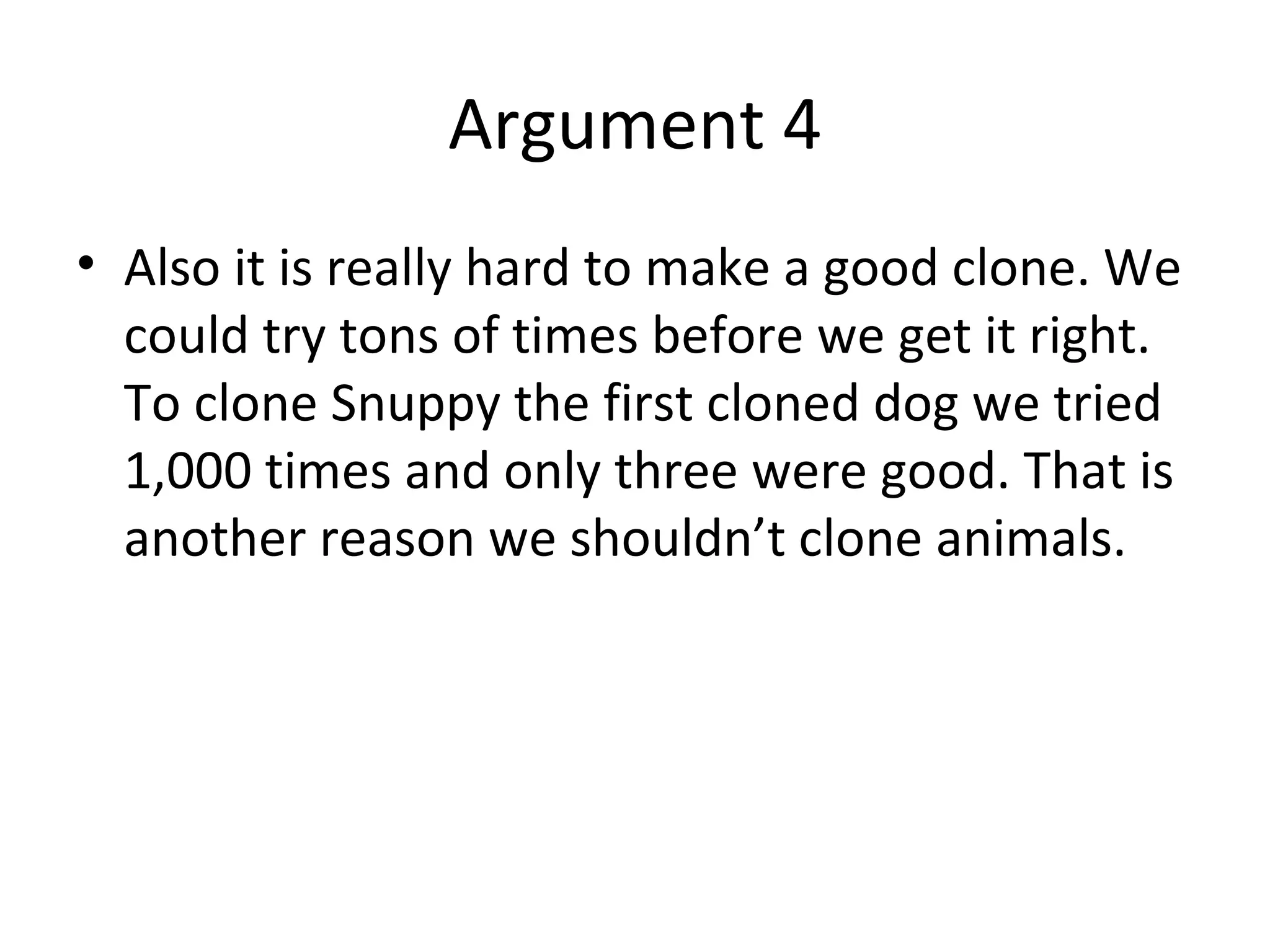
Argument 3 There also many problems to cloning. “ The animals could have defects because of cloning”- Professor Ian Willmut. Dolly the sheep has many defects even arthritis. That is a reason why we shouldn’t clone animals.
Argument 4 Also it is really hard to make a good clone. We could try tons of times before we get it right. To clone Snuppy the first cloned dog we tried 1,000 times and only three were good. That is another reason we shouldn’t clone animals.
Conclusion After all the data I have seen I’m for cloning Endangered and Extinct Animals. I’m for this because animals are important to us. If they die out we could to.
Works Cited
http://www.popsci.com/scitech/article/2a3-05/Face-Should-We-Clone-Fading-Species http:// clemenson.edu/Extension/natural_resources/wildLife publications/FS/Qthreatened_endangered+species.html  http://www.brighthub.com/science/genetics/articles/49216_aspx http://history.nin.gov/exhibits/genetics/sectsF.html http://news.bbc.c.o.uk/2/hj/talking_point/1740491.stm

Genes project2 patrick finning

  • 1.
    Endangered and ExtinctAnimal cloning Patrick Finning Period 1
  • 2.
    Principles of geneticsWhen a dominant allele is their it will always be shown. A recessive allele will only show when there isn’t a dominant. Co-dominance is when the allele is neither dominant nor recessive. You get one trait from your mom and trait from your dad. The pass the traits on chromosomes. Each parent gives you half the number of chromosomes. The passing of traits to parent to offspring is called heredity.
  • 3.
    Human Genome projectThe Human Genome project started in the 1980’s. Scientist’s planned to use this information to find the genetic basis of all disease. Genomic Research, Genomic Healthcare, Broader Societal issues, Legal, Regulatory Public policy issues.
  • 4.
    Genetic disorders Singlegene disorders affect only one cell and multifactorial disorders affect many cells. Chromosome abnormalties can affect one gene or many. (examples of disorders Hemophillia,Down syndrome and sickle cell) The human genome project can help perspective parents because they can go and they can use a Pedigree to see if their child will get that disorder.
  • 5.
    Karyotypes A Karyotypeis a tool that scientests to see if a baby will have a genetic disorder. The scientest takes some fluid around a devolping baby. He then takes the fluid and puts the chromosomes in pairs. That is how a scientest uses a Karyotype.
  • 6.
  • 7.
    Argument 1 Ithink that If we clone Endangered animals then we would be doing something good. If one species of animals die out it could disturb the food chain. 1,000 species world wide are endangered and 3,600 are candidates for being endangered. If those animals die the food chain would be a mess. That is why we should clone animals.
  • 8.
    Argument 2 Tonsof animals in the world are endangered. Humans need animals to survive. They give us food we and they eat bad insects that can give us diseases. A lot of those might be endangered or close. “Cloning will give endangered species a fighting chance”-Dr Robert Lanza. That is a reason we should clone animals.
  • 9.
    Argument 3 Therealso many problems to cloning. “ The animals could have defects because of cloning”- Professor Ian Willmut. Dolly the sheep has many defects even arthritis. That is a reason why we shouldn’t clone animals.
  • 10.
    Argument 4 Alsoit is really hard to make a good clone. We could try tons of times before we get it right. To clone Snuppy the first cloned dog we tried 1,000 times and only three were good. That is another reason we shouldn’t clone animals.
  • 11.
    Conclusion After allthe data I have seen I’m for cloning Endangered and Extinct Animals. I’m for this because animals are important to us. If they die out we could to.
  • 12.
  • 13.
    http://www.popsci.com/scitech/article/2a3-05/Face-Should-We-Clone-Fading-Species http:// clemenson.edu/Extension/natural_resources/wildLifepublications/FS/Qthreatened_endangered+species.html http://www.brighthub.com/science/genetics/articles/49216_aspx http://history.nin.gov/exhibits/genetics/sectsF.html http://news.bbc.c.o.uk/2/hj/talking_point/1740491.stm