Endangered cloning  Perry Dimataris  Nick Tobin  3/8/11 Mrs. Martinez  If you can read this you are awesome
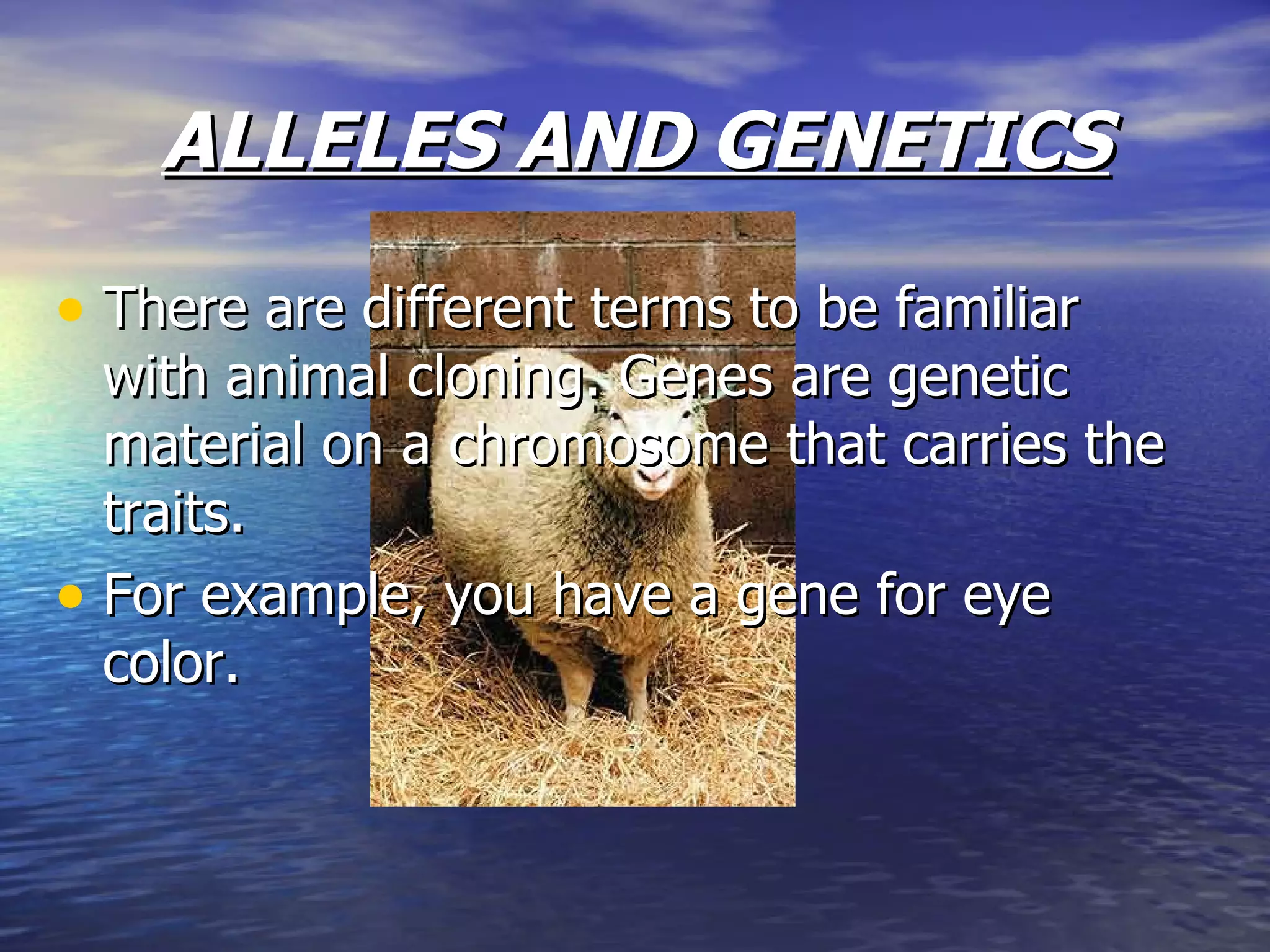
ALLELES AND GENETICS There are different terms to be familiar with animal cloning. Genes are genetic material on a chromosome that carries the traits.  For example, you have a gene for eye color.
FACTS /OPINIONS  Approximately 100 species become extinct a day.  Zoos have come a long way since their beginnings in ancient times as diversions for the rich and powerful. South Korean scientists announced that they duplicated two gray wolves using the same method that produced Dolly the sheep, the first successfully cloned mammal.
TYPES OF CLONING AND HOW IT WORKS  Scientists studying a gene that is  often use bacterial plasmids to generate different copies of the same gene.  Plasmids can carry up to 20,000 bp of foreign DNA. Besides bacterial plasmids, some other cloning vectors include viruses, bacteria artificial chromosomes (BACs), and yeast artificial chromosomes (YACs).
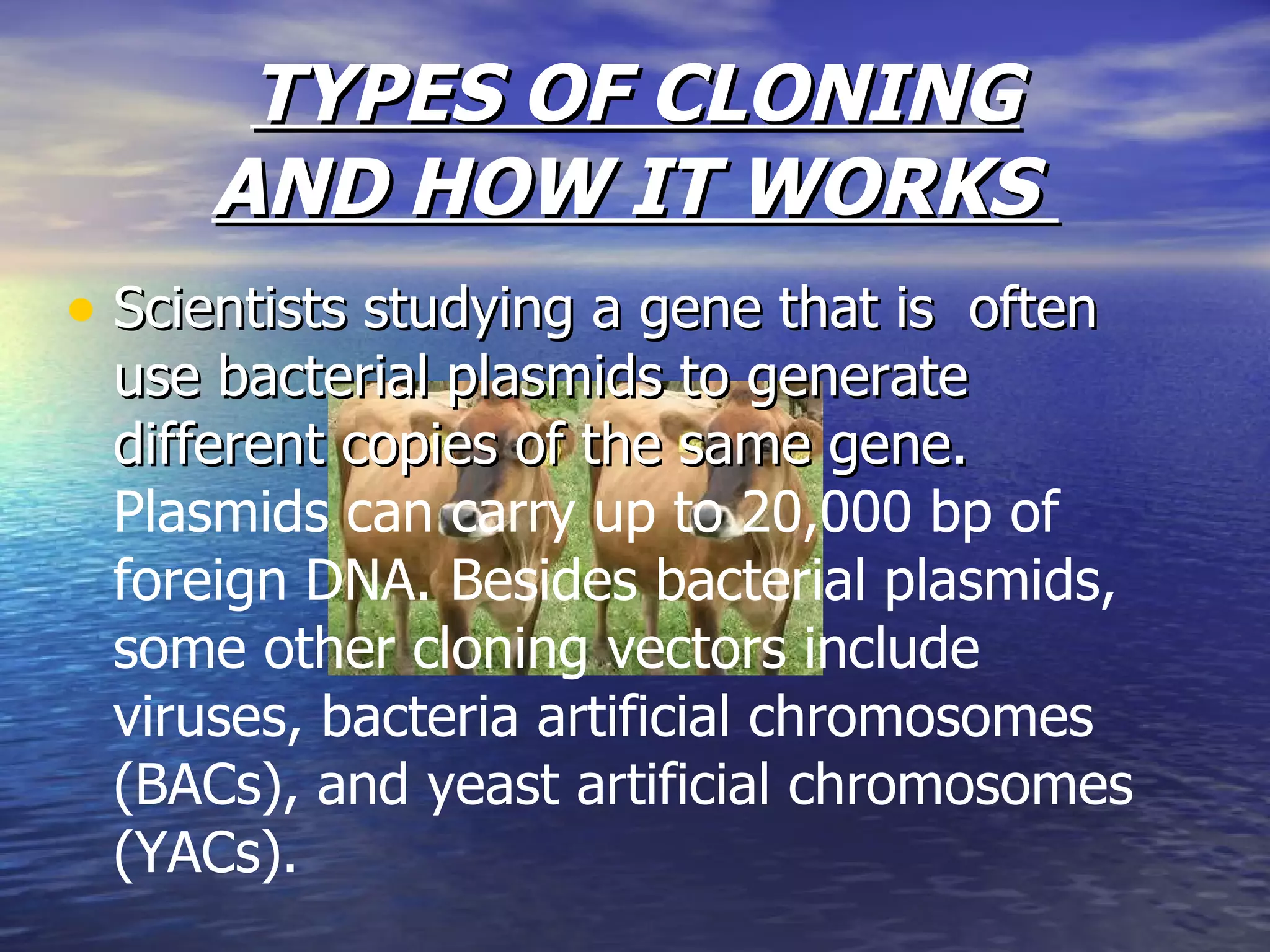
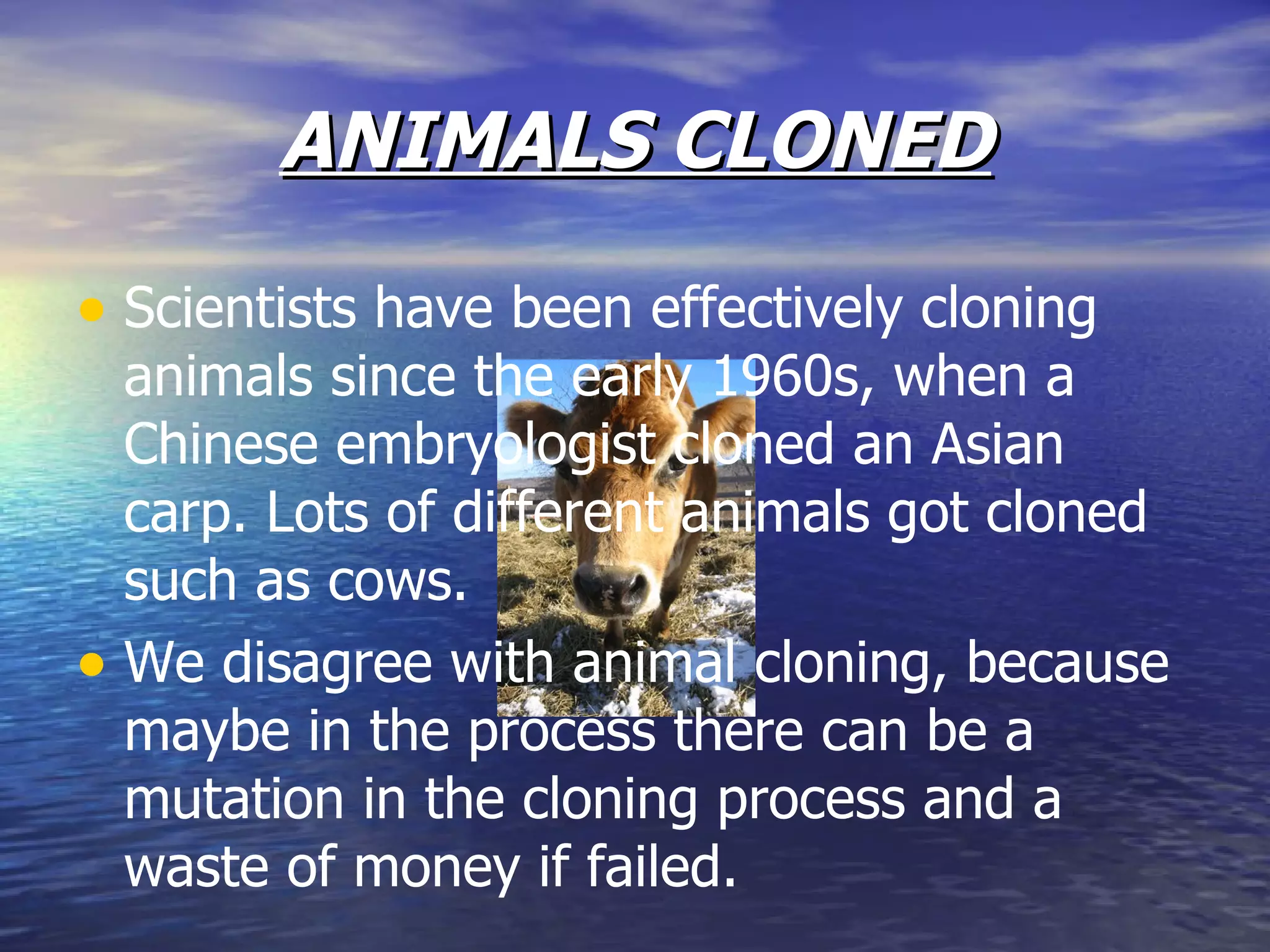
ANIMALS CLONED Scientists have been effectively cloning animals since the early 1960s, when a Chinese embryologist cloned an Asian carp. Lots of different animals got cloned such as cows. We disagree with animal cloning, because maybe in the process there can be a mutation in the cloning process and a waste of money if failed.
HUMAN GENOME PROJECT   /Genetic disorders This process started in 1990, it was completed in 2003. “ We all watched with excitement when the first phase of the Human Genome project was successfully completed in April 2003, as scientists finished the human genome” said Louise M. Slaughter. “ Today, there are over 15,500 recognized genetic disorders, affecting 13 million Americans.  And despite the scientific advances that are helping people prevent these diseases or diagnose them early, those who partake of this innovative technology become potential victims of genetic discrimination”  said Louise M. Slaughter.
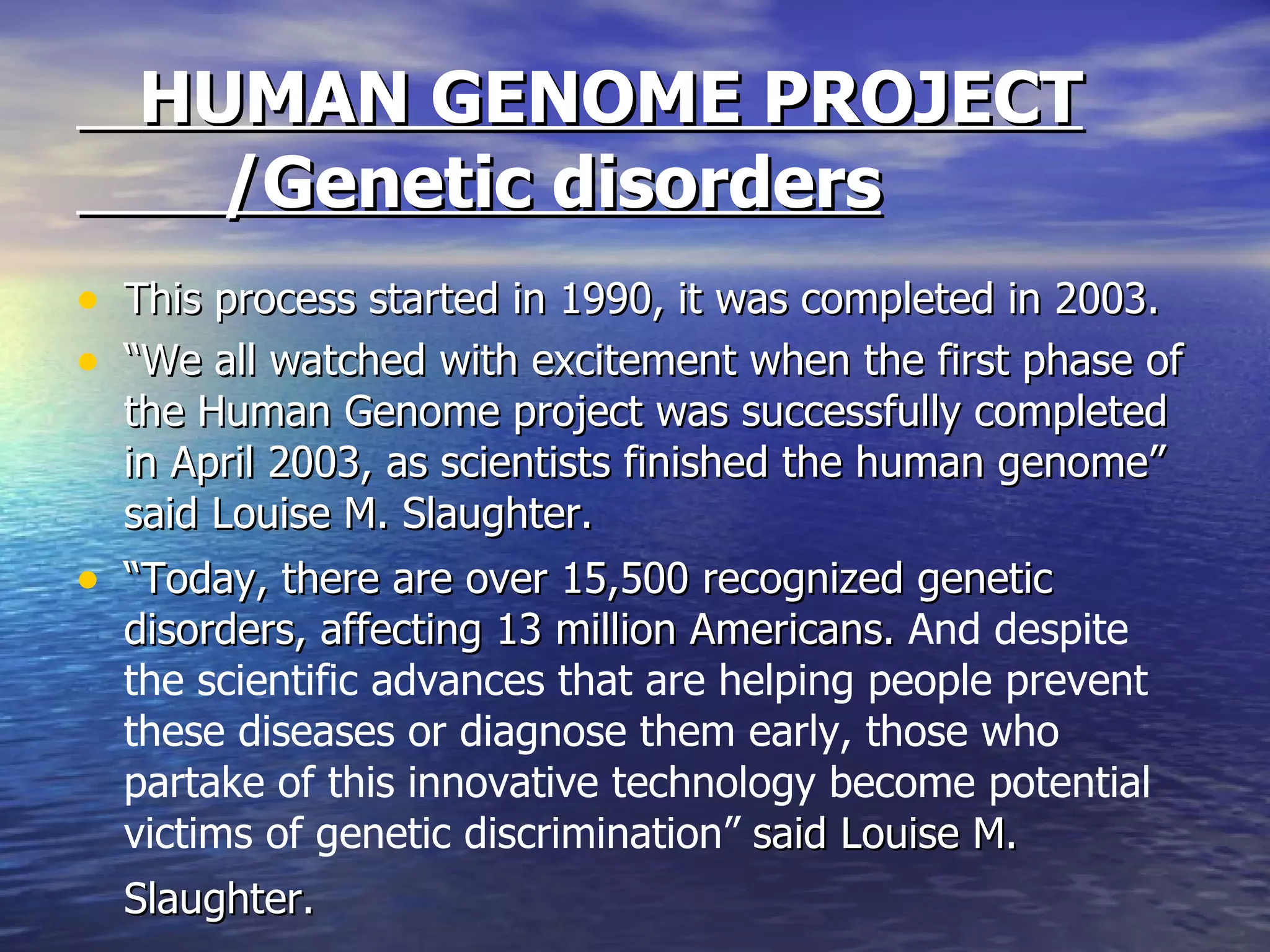
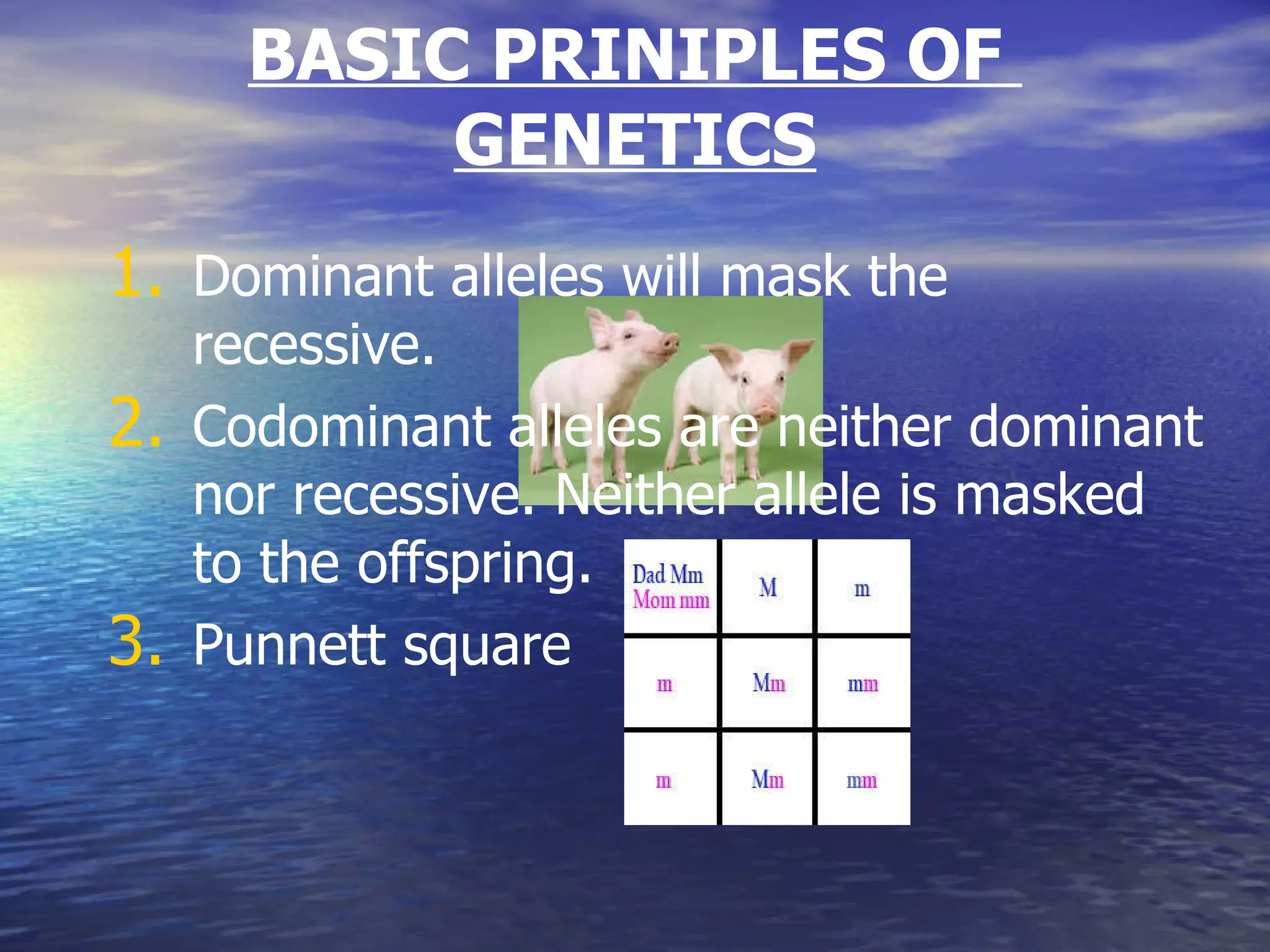
BASIC PRINIPLES OF  GENETICS Dominant alleles will mask the recessive. Codominant alleles are neither dominant nor recessive. Neither allele is masked to the offspring. Punnett square
WORKS CITED  http://library.thinkquest.org/28751/review/heredity/2.html   http://www.ncbi.nlm.nih.gov/pubmed/16218862   http://thomas.loc.gov/cgi-bin/query/R?r110:FLD001:E00121-primary  source

Endangered cloning

  • 1.
    Endangered cloning Perry Dimataris Nick Tobin 3/8/11 Mrs. Martinez If you can read this you are awesome
  • 2.
    ALLELES AND GENETICSThere are different terms to be familiar with animal cloning. Genes are genetic material on a chromosome that carries the traits. For example, you have a gene for eye color.
  • 3.
    FACTS /OPINIONS Approximately 100 species become extinct a day. Zoos have come a long way since their beginnings in ancient times as diversions for the rich and powerful. South Korean scientists announced that they duplicated two gray wolves using the same method that produced Dolly the sheep, the first successfully cloned mammal.
  • 4.
    TYPES OF CLONINGAND HOW IT WORKS Scientists studying a gene that is often use bacterial plasmids to generate different copies of the same gene. Plasmids can carry up to 20,000 bp of foreign DNA. Besides bacterial plasmids, some other cloning vectors include viruses, bacteria artificial chromosomes (BACs), and yeast artificial chromosomes (YACs).
  • 5.
    ANIMALS CLONED Scientistshave been effectively cloning animals since the early 1960s, when a Chinese embryologist cloned an Asian carp. Lots of different animals got cloned such as cows. We disagree with animal cloning, because maybe in the process there can be a mutation in the cloning process and a waste of money if failed.
  • 6.
    HUMAN GENOME PROJECT /Genetic disorders This process started in 1990, it was completed in 2003. “ We all watched with excitement when the first phase of the Human Genome project was successfully completed in April 2003, as scientists finished the human genome” said Louise M. Slaughter. “ Today, there are over 15,500 recognized genetic disorders, affecting 13 million Americans. And despite the scientific advances that are helping people prevent these diseases or diagnose them early, those who partake of this innovative technology become potential victims of genetic discrimination” said Louise M. Slaughter.
  • 7.
    BASIC PRINIPLES OF GENETICS Dominant alleles will mask the recessive. Codominant alleles are neither dominant nor recessive. Neither allele is masked to the offspring. Punnett square
  • 8.
    WORKS CITED http://library.thinkquest.org/28751/review/heredity/2.html http://www.ncbi.nlm.nih.gov/pubmed/16218862 http://thomas.loc.gov/cgi-bin/query/R?r110:FLD001:E00121-primary source