KOREAN AIR CARGO
8509 ACCIDENT : BAD
ATTITUDE
HUMAN FACTOR STUDY CASES
TEAM MEMBERS
• NUR HALIMATUN RADZIAH BT
YAHAYA
• NATASHA NABILA BT RANI
• NUR SHAZA HAZARUL BIN
AIDIL SHAMSUIL
• WAN MUHAMMAD FAMIRUL
BIN WAN ABDUL
• Date : 22 DEC 1999
• Place : Near Great Hallingbury (United Kingdom)
• Time : 18:38 UTC
• Operator : Korean Air
• Aircraft Type : Boeing 747-2B5F(SCD)
• Departure Airport : London-Stansted Airport,
United Kingdom
FIGURE 1: KAL CARGO 8509
• Destination Airport : Milano - Malpensa
Airport, Italy
• Crew : Occupants : 4 / Fatalities : 4
• Passenger : Occupants : 0 / Fatalities : 0
• Aircraft Damage(s) : Written off (damaged
beyond repair)
• Description of the Incident/Accident.
How it Happened
• Previous flight from Tashkent to Stansted arrived at
15.05 UTC.
• The flight engineer made an entry in the Technical Log
prior to leaving the aircraft.
• During turnover repair works on the ADI were carried
out.
• The new crew for the next flight boarded the flight.
• The flight delayed for an hour because ATC had not
receive the flight plan.
• The Flight 8509 was cleared to depart at 18.25 UTC.
• The ADI ‘comparator’ buzzer sound three times when the
flight climbing through 900ft.
•Climbing through 1400ft, ATC instructed the crew to
contact ‘London Control’.
•The aircraft banked left progressively and entered a
descent until struck the ground.
FIGURE 2 : During the impact
1. MECHANICAL ERRORS.
2. HUMAN ERRORS
MECHANICAL ERRORS
 LIVEWARE – HARDWARE (L-H)
 One of its Inertial Navigation Unit (INUs) had partly
failed, providing incorrect roll data to the captain’s
attitude director indicator (ADI).
 Captain ADI was showing the right climbing attitude
but not the roll attitude of aircraft.
 Despite the problem had been reported, but the
maintenance is misdirected by the ground engineer.
 The ground engineer was supposedly replace the no. 1
INUs if he was not misdirected.
MECHANICAL ERRORS
 The no. 1 INUs was not working in providing the
correct roll attitude.
 The pilot ADI was using the no. 1 INU as the roll
attitude.
 When the aircraft was turn to left, the captain ADI
shows no movement in roll attitude.
 But, the commander was failed to realize that his ADI
roll attitude was not functioning.
 He also failed to compare his ADI with the standby ADI
provided at the panel and decide which one is correct
and which is not.
FIGURE 3 : FLIGHT DIRECTOR INDICATOR
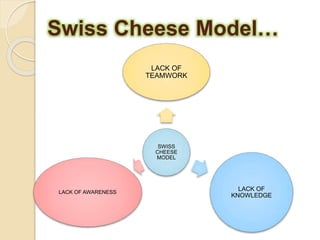
Swiss Cheese Model…
SWISS
CHEESE
MODEL
LACK OF
TEAMWORK
LACK OF
KNOWLEDGE
LACK OF AWARENESS
HUMAN ERRORS
 LACK OF AWARENESS
 Comparator Warning
 Pilot was not properly respond to the warning.
 The comparator warning was triggered for three
times,
 The first triggered was at 17 seconds after
takeoff,
 The second triggered was at 8 seconds (1200 ft
agl) after the first triggered.
HUMAN ERRORS
 But there was no audio response from the crew
about the warning.
 The third triggered was after 5 seconds later,
when the left turn was initiated.
 After that, the horn sounding was cancelled by
the commander.
 The flight engineer had made three comment.
FIGURE 7 : CAPTAIN’S ADI AND THE INST WARN LIGHT
HUMAN ERRORS
 LACK OF TEAMWORK
 FIRST OFFICER ACTION
 The first officer either did not monitor the aircraft
attitude during the climbing turn or, did not alert the
commander to the extreme unsafe attitude that
developed.
 There was a marked difference in age and experience
between the commander and the first officer.
 Also, the first officer was inexperienced. (with 195
hours on type)
 The first officer had been criticized prior to takeoff. (By
the pilot)
HUMAN ERRORS
 Also, because of autocratic organizational
cockpit culture in Korea.
 He felt inhibited to bringing the situation
into the commander concerned.
HUMAN ERRORS
 LACK OF KNOWLEDGE/ REFERENCE
 The maintenance activity at Stansted was misdirected,
despite the fault having been correctly reported using
the Fault Reporting Manual (FRM).
 The Inertial Navigation Unit (INU) no.1 for pilot was
supposedly be replaced, but instead the Attitude
Director Indicator (ADI) was being fixed off.
 Korean Air does not provide a copy of fault isolation
manual (FIM).
HUMAN ERRORS
 He uncertain about the correct course of action
but does not seek for advice from any specialists
at Stansted or contact maintenance control at
Seoul.
 Later, endorse help from local engineer.
 When removing the ADI from panel, the socket
no 2 was pushed back.
 The ground engineer feeling that the problem
was with the connecting pin (asking the local
eng. to replace the pin).
THE WAY THE INCIDENT/
ACCIDENT COULD HAVE BEEN
PREVENTED
• The accident could have been prevented if Korea
Air’s accept The Internal Audit Report (20th
September 1998) written by an external New
Zealand.
• Change their autocratic cockpit culture that has
an endemic level of complacency, arrogance and
incompetence.
•Repair the ADI with having the correct Fault
Isolation Manual and consider to replace INU.
• Do an observation of the maintenance before the
plane took off.
FIGURE 8: DISTANCE FROM AIRPORT TO THE CRASH SITE
ERROR CHAIN
 If any one of the links in this chain had been
broken by building in measures which may
have been prevented a problem at one or more
of these stages.
• The accident could have been prevented if we
break the crew link of the chain.
• The Korean culture. Autocratic cockpit culture.
How the accident has
affected the company
and the aviation
industry?
COMPANY
 Flight operations selection – upgrading system,
stricter requirement.
 Flight crew training and checking – more
training being introduced.
 Organisation and management – improve
standardisation, rationalised documentation.
 Flight Quality Assurance – various audit.
 Maintenance and engineering – manpower,
new system, maintenance training.
AVIATION INDUSTRY
 Safety Recommendation No 2003-62 – KAL update
their training and programmes.
 Safety Recommendation No 2003-63 – KAL review
their policy and procedures.
 Safety Recommendation No 2003-64 – Technical
log must have copied at ground.
 Safety Recommendation No 2003-65 – Carrying
dangerous good must be informed to the Authority.
 Safety Recommendation No 2003-66 – Review the
current methods of tracking air cargo.
 Safety Recommendation No 2003-67 – necessary
data and risk management advice.
What Can Be Learned From
This Incident/Accident
 Flight crew must not using autocratic
organizational culture in their system.
 Flight crew must realize their responsibility
when onboard and they must take and
appropriate action when some problem
occurred.
 All aircraft must have appropriate Fault
Isolation manual to be referred to do the
maintenance.
Organizational Culture
Safety Culture
• ICAO HF -
“a set of beliefs, norms, attitudes, roles, and social
and technical practices concerned with
minimizing exposure of employees, managers,
customers and members of the general public to
conditions considered dangerous or hazardous.”
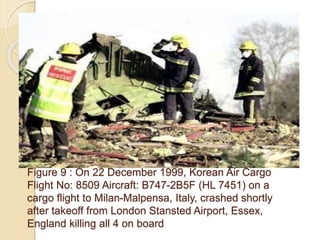
Figure 9 : On 22 December 1999, Korean Air Cargo
Flight No: 8509 Aircraft: B747-2B5F (HL 7451) on a
cargo flight to Milan-Malpensa, Italy, crashed shortly
after takeoff from London Stansted Airport, Essex,
England killing all 4 on board
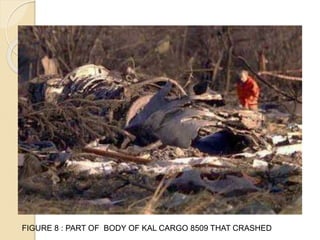
FIGURE 8 : PART OF BODY OF KAL CARGO 8509 THAT CRASHED
FIGURE 9 :AT THE SITE OF THE KAL CARGO 8509 CRASHED
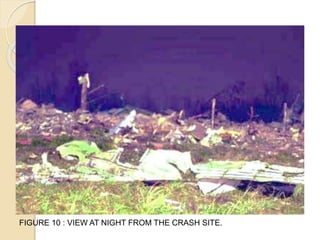
FIGURE 10 : VIEW AT NIGHT FROM THE CRASH SITE.
FIGURE 11: DURING INVESTIGATION AT THE CRASH SITE
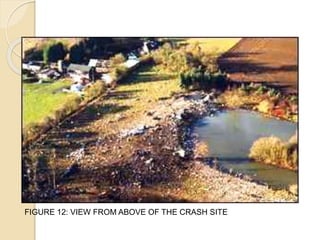
FIGURE 12: VIEW FROM ABOVE OF THE CRASH SITE
REFERENCES
 CINEFLIX (undated). Mayday - Bad Attitude (Korean Air Cargo Flight
8509). Retrieved from YouTube, Retrieved from
http://www.youtube.com/watch?v=aG3_nJYtrO8 on 3 March 2014.
 Khoury, M. (2009, October 1). Korean Airlines Safety Audit Findings.
Retrieved from http://www.flight.org/blog/2009/10/01/korean-airlines-
internal-audit-report-an-airline-waiting-to-happen/ on 4 March 2014.
 Wikipedia. (2012). Korean Air Cargo Flight 8509. Retrieved from
http://en.wikipedia.org/wiki/Korean_Air_Cargo_Flight_8509 on 11
March 2014.
 "Report on the accident to Boeing 747-2B5F, HL-7451 near
London Stansted Airport on 22 December 1999". Air Accident
Investigation Branch(AAIB), Retrieved from
http://www.aaib.gov.uk/cms_resources.cfm?file=/3-2003%20HL-
7451.pdf on 4 March 2014.
Q&A
SESSION
THE END
THANK YOU

Human Factor Study Case

  • 1.
    KOREAN AIR CARGO 8509ACCIDENT : BAD ATTITUDE HUMAN FACTOR STUDY CASES
  • 2.
    TEAM MEMBERS • NURHALIMATUN RADZIAH BT YAHAYA • NATASHA NABILA BT RANI • NUR SHAZA HAZARUL BIN AIDIL SHAMSUIL • WAN MUHAMMAD FAMIRUL BIN WAN ABDUL
  • 3.
    • Date :22 DEC 1999 • Place : Near Great Hallingbury (United Kingdom) • Time : 18:38 UTC • Operator : Korean Air • Aircraft Type : Boeing 747-2B5F(SCD) • Departure Airport : London-Stansted Airport, United Kingdom FIGURE 1: KAL CARGO 8509
  • 4.
    • Destination Airport: Milano - Malpensa Airport, Italy • Crew : Occupants : 4 / Fatalities : 4 • Passenger : Occupants : 0 / Fatalities : 0 • Aircraft Damage(s) : Written off (damaged beyond repair) • Description of the Incident/Accident.
  • 5.
    How it Happened •Previous flight from Tashkent to Stansted arrived at 15.05 UTC. • The flight engineer made an entry in the Technical Log prior to leaving the aircraft. • During turnover repair works on the ADI were carried out. • The new crew for the next flight boarded the flight. • The flight delayed for an hour because ATC had not receive the flight plan. • The Flight 8509 was cleared to depart at 18.25 UTC. • The ADI ‘comparator’ buzzer sound three times when the flight climbing through 900ft.
  • 6.
    •Climbing through 1400ft,ATC instructed the crew to contact ‘London Control’. •The aircraft banked left progressively and entered a descent until struck the ground. FIGURE 2 : During the impact
  • 7.
  • 8.
    MECHANICAL ERRORS  LIVEWARE– HARDWARE (L-H)  One of its Inertial Navigation Unit (INUs) had partly failed, providing incorrect roll data to the captain’s attitude director indicator (ADI).  Captain ADI was showing the right climbing attitude but not the roll attitude of aircraft.  Despite the problem had been reported, but the maintenance is misdirected by the ground engineer.  The ground engineer was supposedly replace the no. 1 INUs if he was not misdirected.
  • 9.
    MECHANICAL ERRORS  Theno. 1 INUs was not working in providing the correct roll attitude.  The pilot ADI was using the no. 1 INU as the roll attitude.  When the aircraft was turn to left, the captain ADI shows no movement in roll attitude.  But, the commander was failed to realize that his ADI roll attitude was not functioning.  He also failed to compare his ADI with the standby ADI provided at the panel and decide which one is correct and which is not.
  • 10.
    FIGURE 3 :FLIGHT DIRECTOR INDICATOR
  • 11.
    Swiss Cheese Model… SWISS CHEESE MODEL LACKOF TEAMWORK LACK OF KNOWLEDGE LACK OF AWARENESS
  • 12.
    HUMAN ERRORS  LACKOF AWARENESS  Comparator Warning  Pilot was not properly respond to the warning.  The comparator warning was triggered for three times,  The first triggered was at 17 seconds after takeoff,  The second triggered was at 8 seconds (1200 ft agl) after the first triggered.
  • 13.
    HUMAN ERRORS  Butthere was no audio response from the crew about the warning.  The third triggered was after 5 seconds later, when the left turn was initiated.  After that, the horn sounding was cancelled by the commander.  The flight engineer had made three comment.
  • 14.
    FIGURE 7 :CAPTAIN’S ADI AND THE INST WARN LIGHT
  • 15.
    HUMAN ERRORS  LACKOF TEAMWORK  FIRST OFFICER ACTION  The first officer either did not monitor the aircraft attitude during the climbing turn or, did not alert the commander to the extreme unsafe attitude that developed.  There was a marked difference in age and experience between the commander and the first officer.  Also, the first officer was inexperienced. (with 195 hours on type)  The first officer had been criticized prior to takeoff. (By the pilot)
  • 16.
    HUMAN ERRORS  Also,because of autocratic organizational cockpit culture in Korea.  He felt inhibited to bringing the situation into the commander concerned.
  • 17.
    HUMAN ERRORS  LACKOF KNOWLEDGE/ REFERENCE  The maintenance activity at Stansted was misdirected, despite the fault having been correctly reported using the Fault Reporting Manual (FRM).  The Inertial Navigation Unit (INU) no.1 for pilot was supposedly be replaced, but instead the Attitude Director Indicator (ADI) was being fixed off.  Korean Air does not provide a copy of fault isolation manual (FIM).
  • 18.
    HUMAN ERRORS  Heuncertain about the correct course of action but does not seek for advice from any specialists at Stansted or contact maintenance control at Seoul.  Later, endorse help from local engineer.  When removing the ADI from panel, the socket no 2 was pushed back.  The ground engineer feeling that the problem was with the connecting pin (asking the local eng. to replace the pin).
  • 19.
    THE WAY THEINCIDENT/ ACCIDENT COULD HAVE BEEN PREVENTED • The accident could have been prevented if Korea Air’s accept The Internal Audit Report (20th September 1998) written by an external New Zealand. • Change their autocratic cockpit culture that has an endemic level of complacency, arrogance and incompetence. •Repair the ADI with having the correct Fault Isolation Manual and consider to replace INU. • Do an observation of the maintenance before the plane took off.
  • 20.
    FIGURE 8: DISTANCEFROM AIRPORT TO THE CRASH SITE
  • 21.
    ERROR CHAIN  Ifany one of the links in this chain had been broken by building in measures which may have been prevented a problem at one or more of these stages. • The accident could have been prevented if we break the crew link of the chain. • The Korean culture. Autocratic cockpit culture.
  • 22.
    How the accidenthas affected the company and the aviation industry?
  • 23.
    COMPANY  Flight operationsselection – upgrading system, stricter requirement.  Flight crew training and checking – more training being introduced.  Organisation and management – improve standardisation, rationalised documentation.  Flight Quality Assurance – various audit.  Maintenance and engineering – manpower, new system, maintenance training.
  • 24.
    AVIATION INDUSTRY  SafetyRecommendation No 2003-62 – KAL update their training and programmes.  Safety Recommendation No 2003-63 – KAL review their policy and procedures.  Safety Recommendation No 2003-64 – Technical log must have copied at ground.  Safety Recommendation No 2003-65 – Carrying dangerous good must be informed to the Authority.  Safety Recommendation No 2003-66 – Review the current methods of tracking air cargo.  Safety Recommendation No 2003-67 – necessary data and risk management advice.
  • 25.
    What Can BeLearned From This Incident/Accident  Flight crew must not using autocratic organizational culture in their system.  Flight crew must realize their responsibility when onboard and they must take and appropriate action when some problem occurred.  All aircraft must have appropriate Fault Isolation manual to be referred to do the maintenance.
  • 26.
    Organizational Culture Safety Culture •ICAO HF - “a set of beliefs, norms, attitudes, roles, and social and technical practices concerned with minimizing exposure of employees, managers, customers and members of the general public to conditions considered dangerous or hazardous.”
  • 27.
    Figure 9 :On 22 December 1999, Korean Air Cargo Flight No: 8509 Aircraft: B747-2B5F (HL 7451) on a cargo flight to Milan-Malpensa, Italy, crashed shortly after takeoff from London Stansted Airport, Essex, England killing all 4 on board
  • 28.
    FIGURE 8 :PART OF BODY OF KAL CARGO 8509 THAT CRASHED
  • 29.
    FIGURE 9 :ATTHE SITE OF THE KAL CARGO 8509 CRASHED
  • 30.
    FIGURE 10 :VIEW AT NIGHT FROM THE CRASH SITE.
  • 31.
    FIGURE 11: DURINGINVESTIGATION AT THE CRASH SITE
  • 32.
    FIGURE 12: VIEWFROM ABOVE OF THE CRASH SITE
  • 33.
    REFERENCES  CINEFLIX (undated).Mayday - Bad Attitude (Korean Air Cargo Flight 8509). Retrieved from YouTube, Retrieved from http://www.youtube.com/watch?v=aG3_nJYtrO8 on 3 March 2014.  Khoury, M. (2009, October 1). Korean Airlines Safety Audit Findings. Retrieved from http://www.flight.org/blog/2009/10/01/korean-airlines- internal-audit-report-an-airline-waiting-to-happen/ on 4 March 2014.  Wikipedia. (2012). Korean Air Cargo Flight 8509. Retrieved from http://en.wikipedia.org/wiki/Korean_Air_Cargo_Flight_8509 on 11 March 2014.  "Report on the accident to Boeing 747-2B5F, HL-7451 near London Stansted Airport on 22 December 1999". Air Accident Investigation Branch(AAIB), Retrieved from http://www.aaib.gov.uk/cms_resources.cfm?file=/3-2003%20HL- 7451.pdf on 4 March 2014.
  • 34.
  • 35.