Building the business case for
investment in energy solutions
Introductions
Ben Higgins, Director - Ignite Energy
Rob Deverson, Business Development
Director - Ignite Energy
James Kokiet, Energy & Sustainability
Manager - Pets At Home
About Ignite..
• Focus on helping large, multi-sited energy users manage
energy across the whole spectrum of use, including:
• Procurement/brokerage
• Bill management and validation
• Finance and management reporting
• Smart metering
• Energy reduction projects
• Customer focussed – tailoring the solution to the individual
business requirements.
• Technology and solution independent, with expertise of the
broader market.
• Consistent delivery of tangible savings for every customer
Who we work with..
•Major clients include:
•Clients with international activities include:
• WH Smith, SSP & New Look
Building the business case for
energy projects
It’s easy – isn’t it?
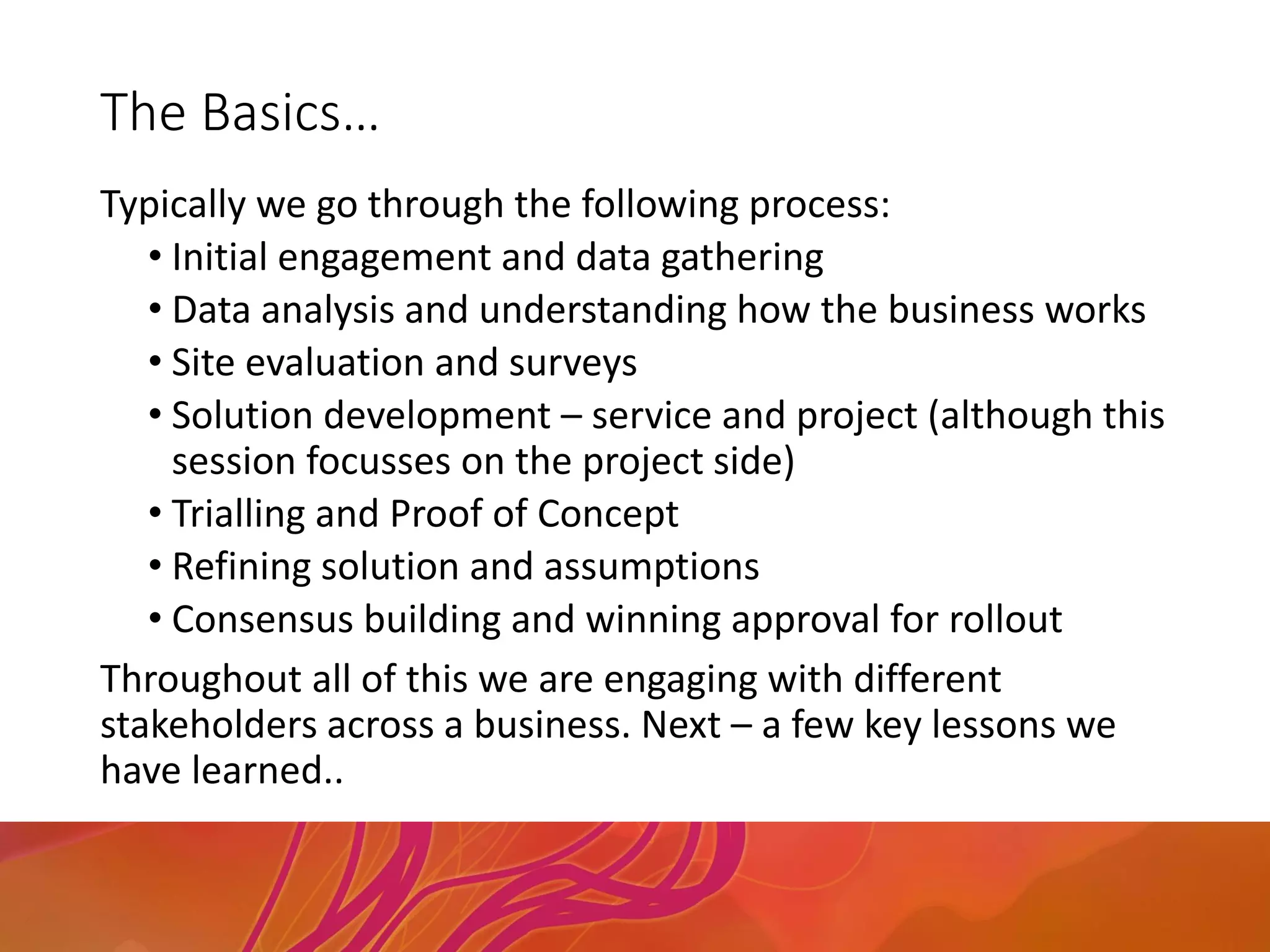
• Why would an organisation not want to invest in something that saves
them money and reduces their impact on the environment?!?
• There are many potential areas where good projects can fail to win
investment approval.
• All of these need to be considered and worked through in order for a
project to get investment and go-ahead.
• Even a great project in an engaged business takes months of hard work
and diligence to move from concept to deployment.
The Basics…
Typically we go through the following process:
• Initial engagement and data gathering
• Data analysis and understanding how the business works
• Site evaluation and surveys
• Solution development – service and project (although this
session focusses on the project side)
• Trialling and Proof of Concept
• Refining solution and assumptions
• Consensus building and winning approval for rollout
Throughout all of this we are engaging with different
stakeholders across a business. Next – a few key lessons we
have learned..
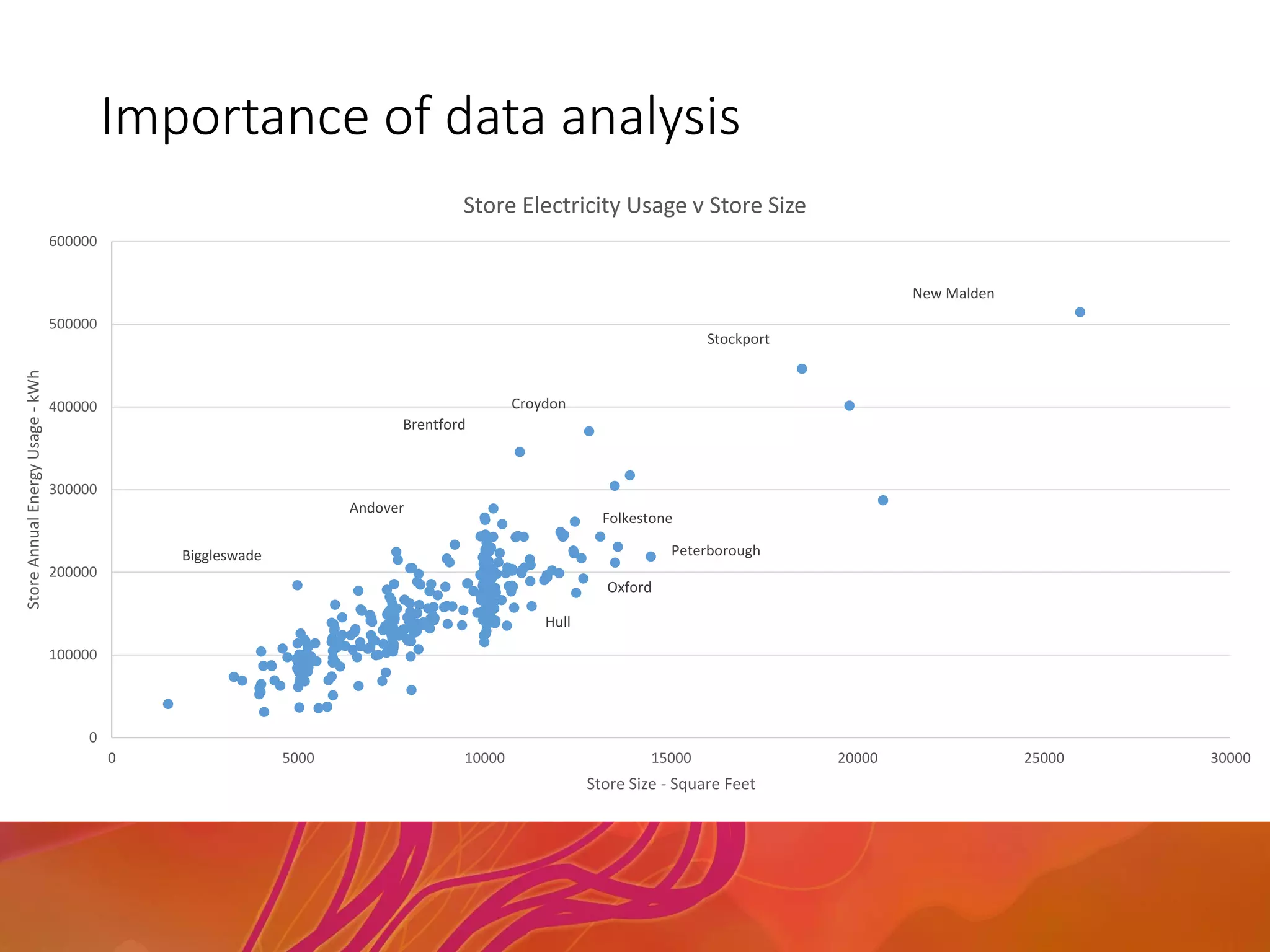
Importance of data analysis
New Malden
Stockport
Croydon
Brentford
Andover
Folkestone
Peterborough
Oxford
Biggleswade
Hull
0
100000
200000
300000
400000
500000
600000
0 5000 10000 15000 20000 25000 30000
StoreAnnualEnergyUsage-kWh
Store Size - Square Feet
Store Electricity Usage v Store Size
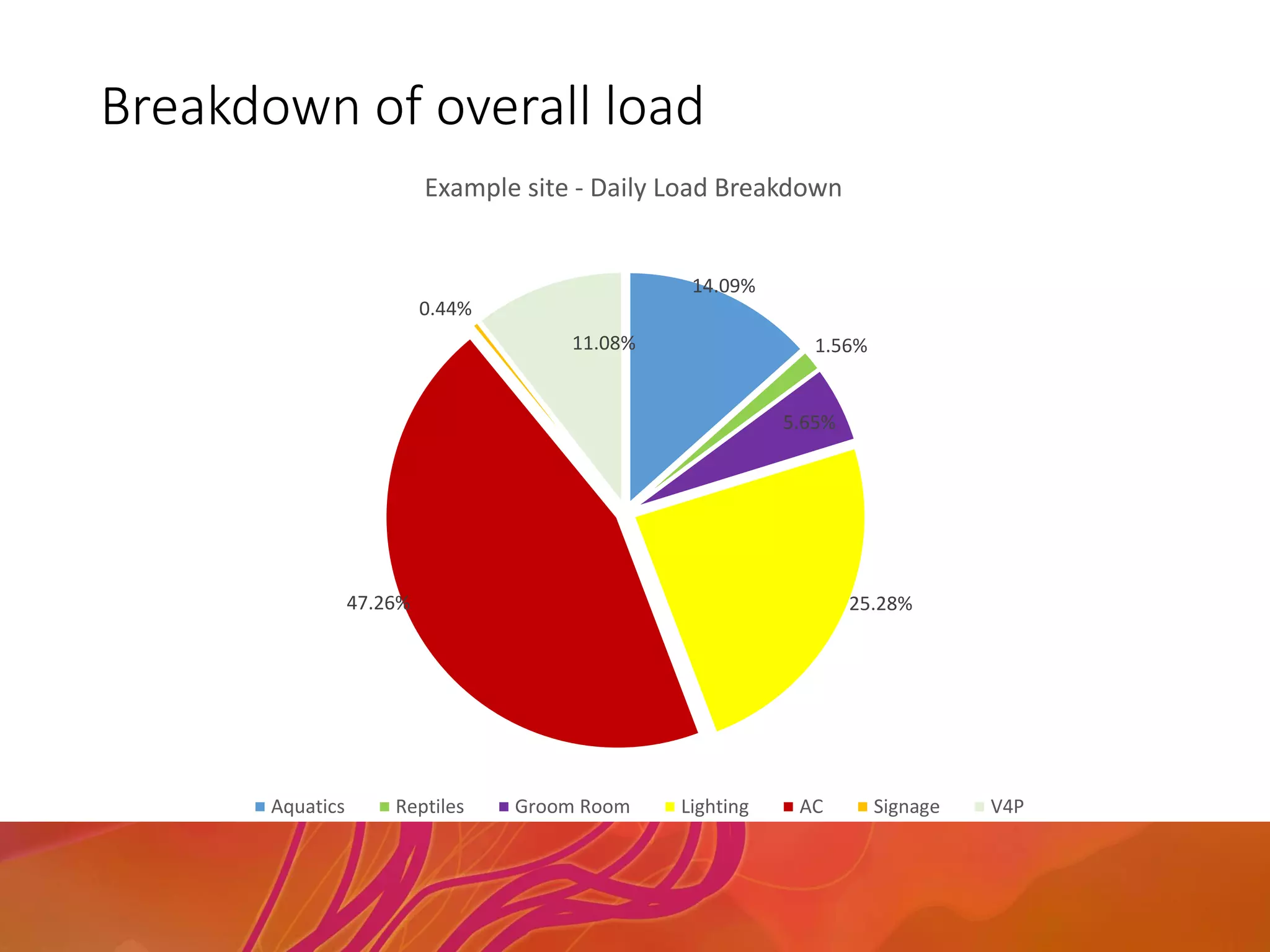
Breakdown of overall load
14.09%
1.56%
5.65%
25.28%47.26%
0.44%
11.08%
Example site - Daily Load Breakdown
Aquatics Reptiles Groom Room Lighting AC Signage V4P
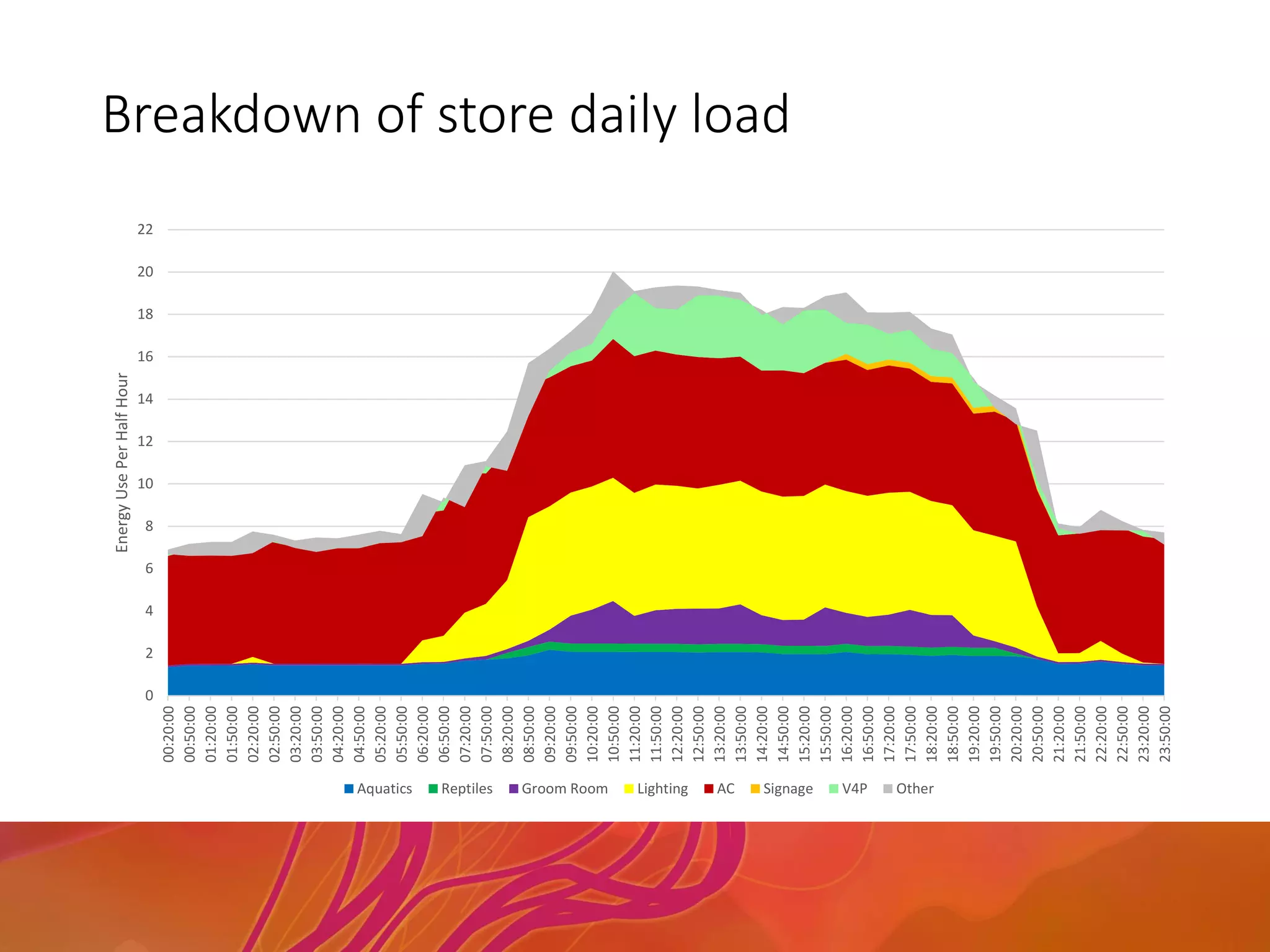
Breakdown of store daily load
0
2
4
6
8
10
12
14
16
18
20
22
00:20:00
00:50:00
01:20:00
01:50:00
02:20:00
02:50:00
03:20:00
03:50:00
04:20:00
04:50:00
05:20:00
05:50:00
06:20:00
06:50:00
07:20:00
07:50:00
08:20:00
08:50:00
09:20:00
09:50:00
10:20:00
10:50:00
11:20:00
11:50:00
12:20:00
12:50:00
13:20:00
13:50:00
14:20:00
14:50:00
15:20:00
15:50:00
16:20:00
16:50:00
17:20:00
17:50:00
18:20:00
18:50:00
19:20:00
19:50:00
20:20:00
20:50:00
21:20:00
21:50:00
22:20:00
22:50:00
23:20:00
23:50:00
EnergyUsePerHalfHour
Aquatics Reptiles Groom Room Lighting AC Signage V4P Other
Stakeholders
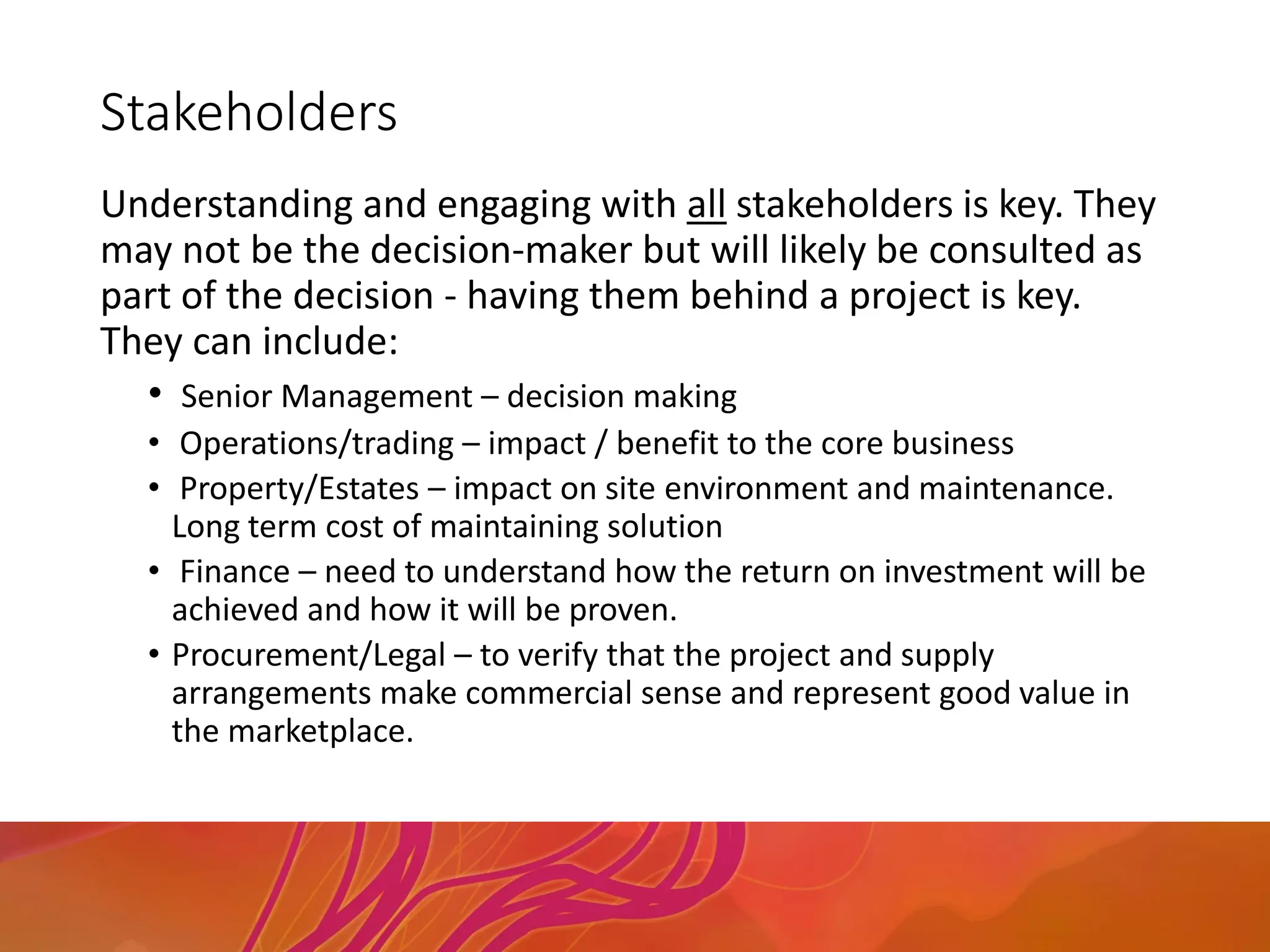
Understanding and engaging with all stakeholders is key. They
may not be the decision-maker but will likely be consulted as
part of the decision - having them behind a project is key.
They can include:
• Senior Management – decision making
• Operations/trading – impact / benefit to the core business
• Property/Estates – impact on site environment and maintenance.
Long term cost of maintaining solution
• Finance – need to understand how the return on investment will be
achieved and how it will be proven.
• Procurement/Legal – to verify that the project and supply
arrangements make commercial sense and represent good value in
the marketplace.
Finance
For a project to gain and maintain credibility, the benefits
must be clear and recognised across the business. Many early
stage projects have come unstuck because the benefits aren’t
clear to all. It helps if…
• Finance can help you understand how the business views investments
such as energy projects – payback criteria, financial rules, discount rate
for NPV etc
• There is constant engagement with finance colleagues to help them
understand and ultimately support the business case. They are the ones
that feed into budgets and financial planning
• The savings from the project are built into the company energy budget –
it sets an expectation.
• Savings are recognised when they are made via the monthly charge and
accrual in the profit and loss (P&L) accounts in the business, rather than
lost in the noise of bills coming in months later
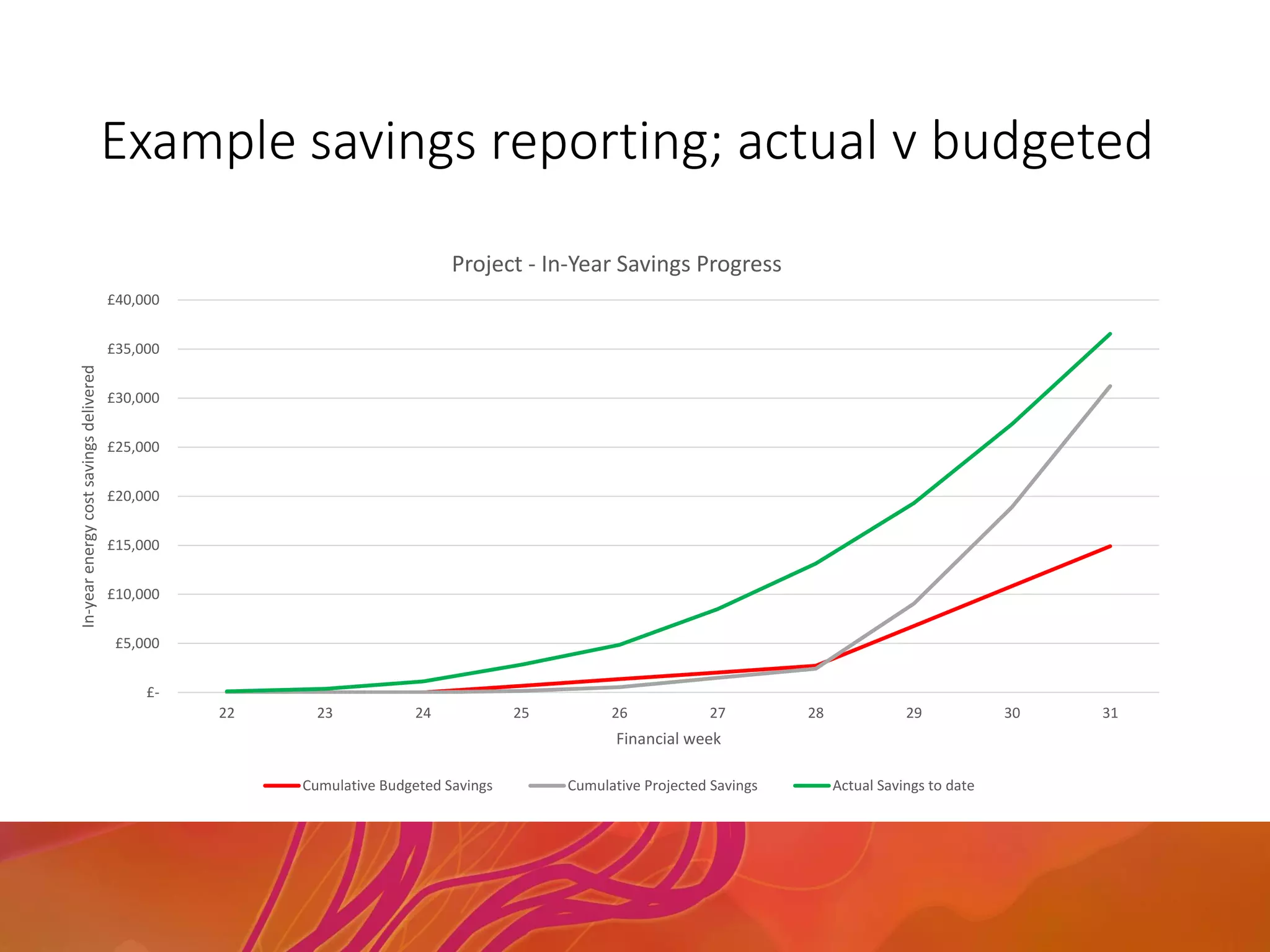
Example savings reporting; actual v budgeted
£-
£5,000
£10,000
£15,000
£20,000
£25,000
£30,000
£35,000
£40,000
22 23 24 25 26 27 28 29 30 31
In-yearenergycostsavingsdelivered
Financial week
Project - In-Year Savings Progress
Cumulative Budgeted Savings Cumulative Projected Savings Actual Savings to date
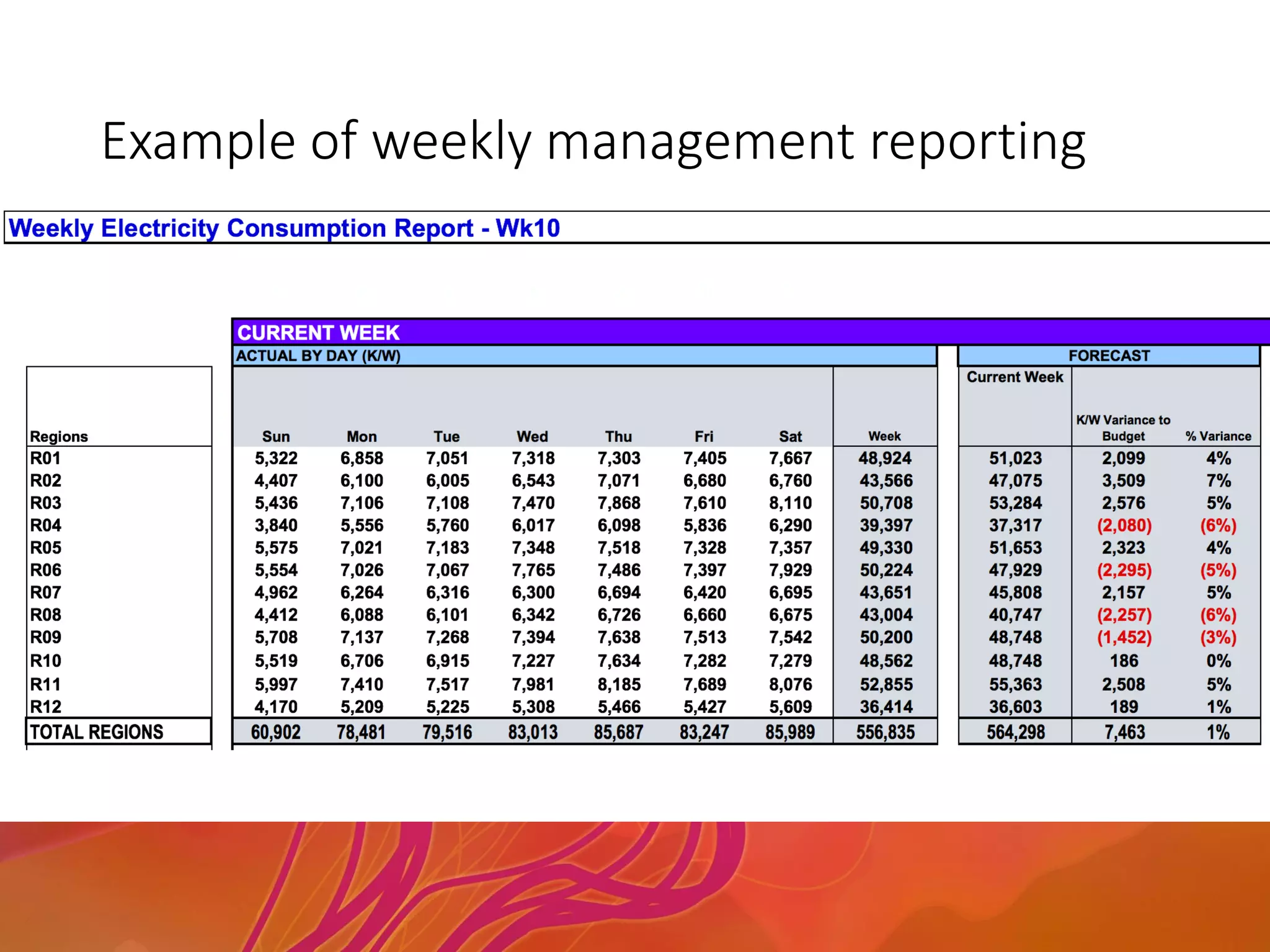
Example of weekly management reporting
Process and competition
• Companies do not have bottomless reserves of capital to invest. There is
usually a medium to long term plan for investment, and this has often
been communicated to investors privately and publically, limiting
flexibility.
• Your project is therefore competing against all the other calls on
investment. It might look attractive, but that’s a relative concept.
• Getting in early and raising project profile are important so as not to
miss the boat.
• ..as is understanding the process that the project will need to go through
for approval. A sponsor can help with both.
• External finance can help, but it’s not a magic bullet
Case Study
Project “Aether”
Project Aether Overview
• Project Aether involves a wholesale change to LED lighting and
installation of Building Energy Management Systems “BEMS” into
420+ Pets at Home stores
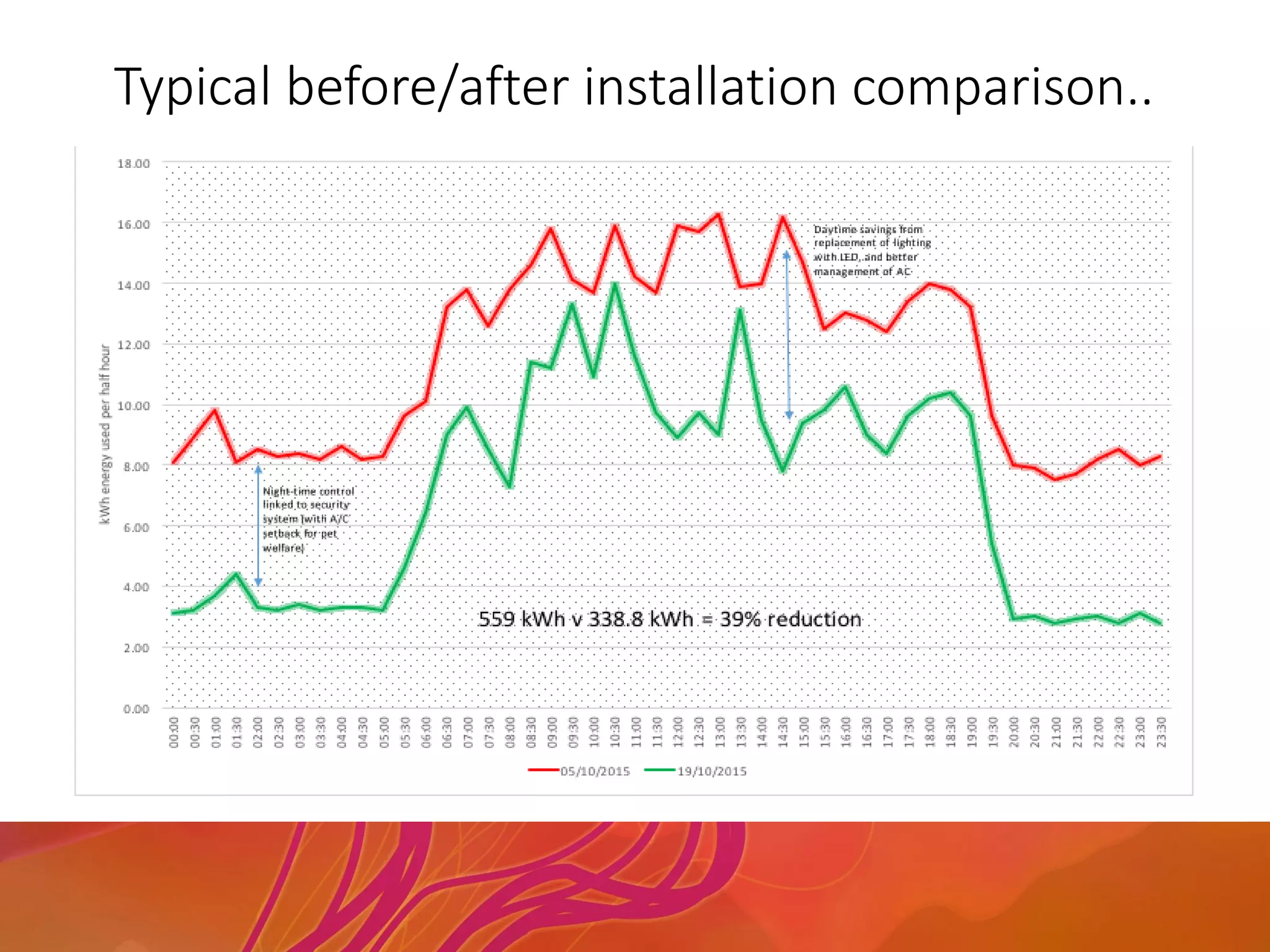
• This is going to result in an energy reduction of 35-40% across the
estate, and be fully deployed by end of Q2 2016. Around 200 stores
have been deployed to date, from a start in mid August.
• It went from concept and pilot to rollout approval in under 12
months.
• It is Pets at Home’s biggest ever single capex project
• How did we overcome some of the challenges in developing and
achieving approval for the business case?
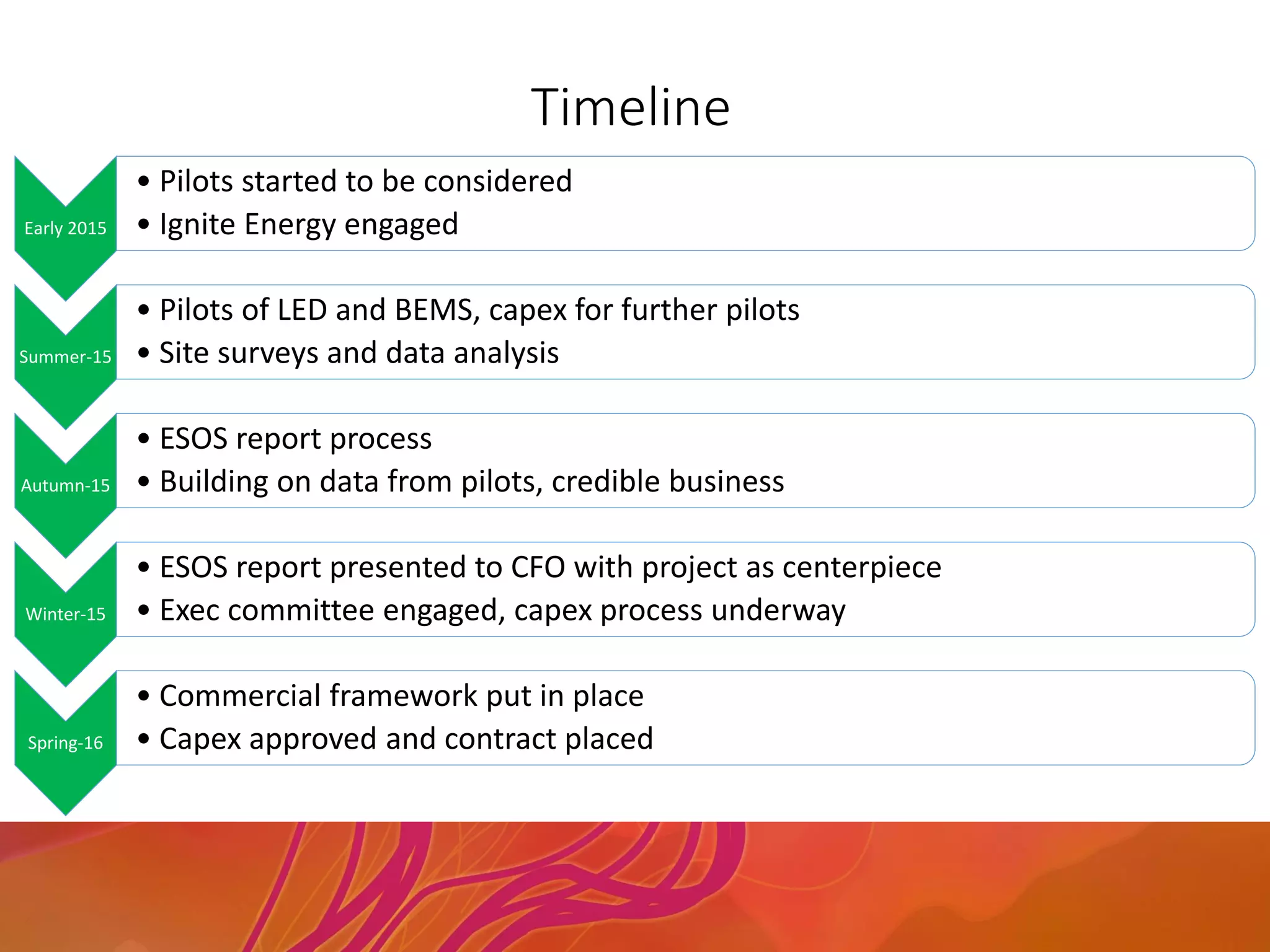
Timeline
Early 2015
• Pilots started to be considered
• Ignite Energy engaged
Summer-15
• Pilots of LED and BEMS, capex for further pilots
• Site surveys and data analysis
Autumn-15
• ESOS report process
• Building on data from pilots, credible business
Winter-15
• ESOS report presented to CFO with project as centerpiece
• Exec committee engaged, capex process underway
Spring-16
• Commercial framework put in place
• Capex approved and contract placed
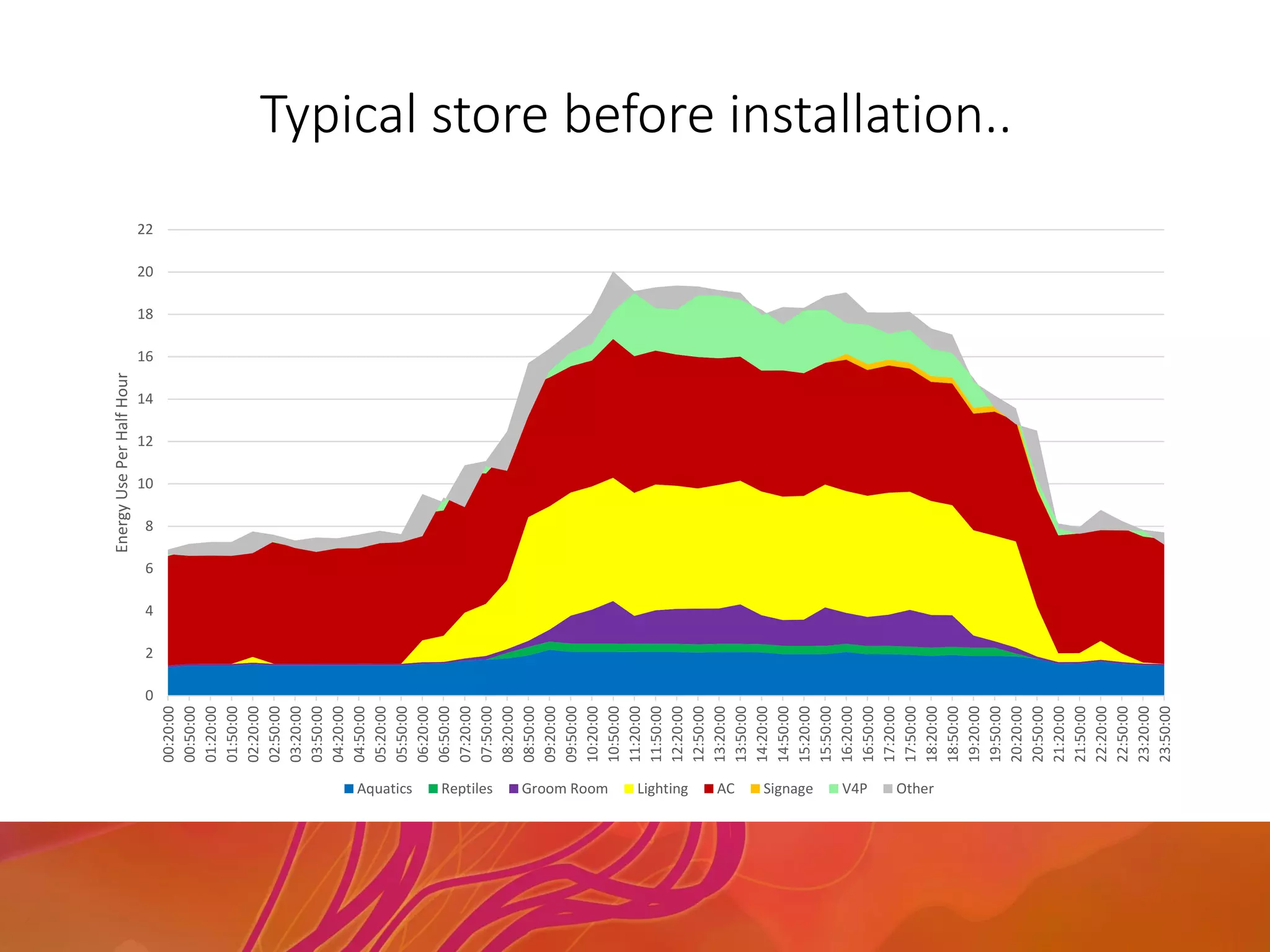
Typical store before installation..
0
2
4
6
8
10
12
14
16
18
20
22
00:20:00
00:50:00
01:20:00
01:50:00
02:20:00
02:50:00
03:20:00
03:50:00
04:20:00
04:50:00
05:20:00
05:50:00
06:20:00
06:50:00
07:20:00
07:50:00
08:20:00
08:50:00
09:20:00
09:50:00
10:20:00
10:50:00
11:20:00
11:50:00
12:20:00
12:50:00
13:20:00
13:50:00
14:20:00
14:50:00
15:20:00
15:50:00
16:20:00
16:50:00
17:20:00
17:50:00
18:20:00
18:50:00
19:20:00
19:50:00
20:20:00
20:50:00
21:20:00
21:50:00
22:20:00
22:50:00
23:20:00
23:50:00
EnergyUsePerHalfHour
Aquatics Reptiles Groom Room Lighting AC Signage V4P Other
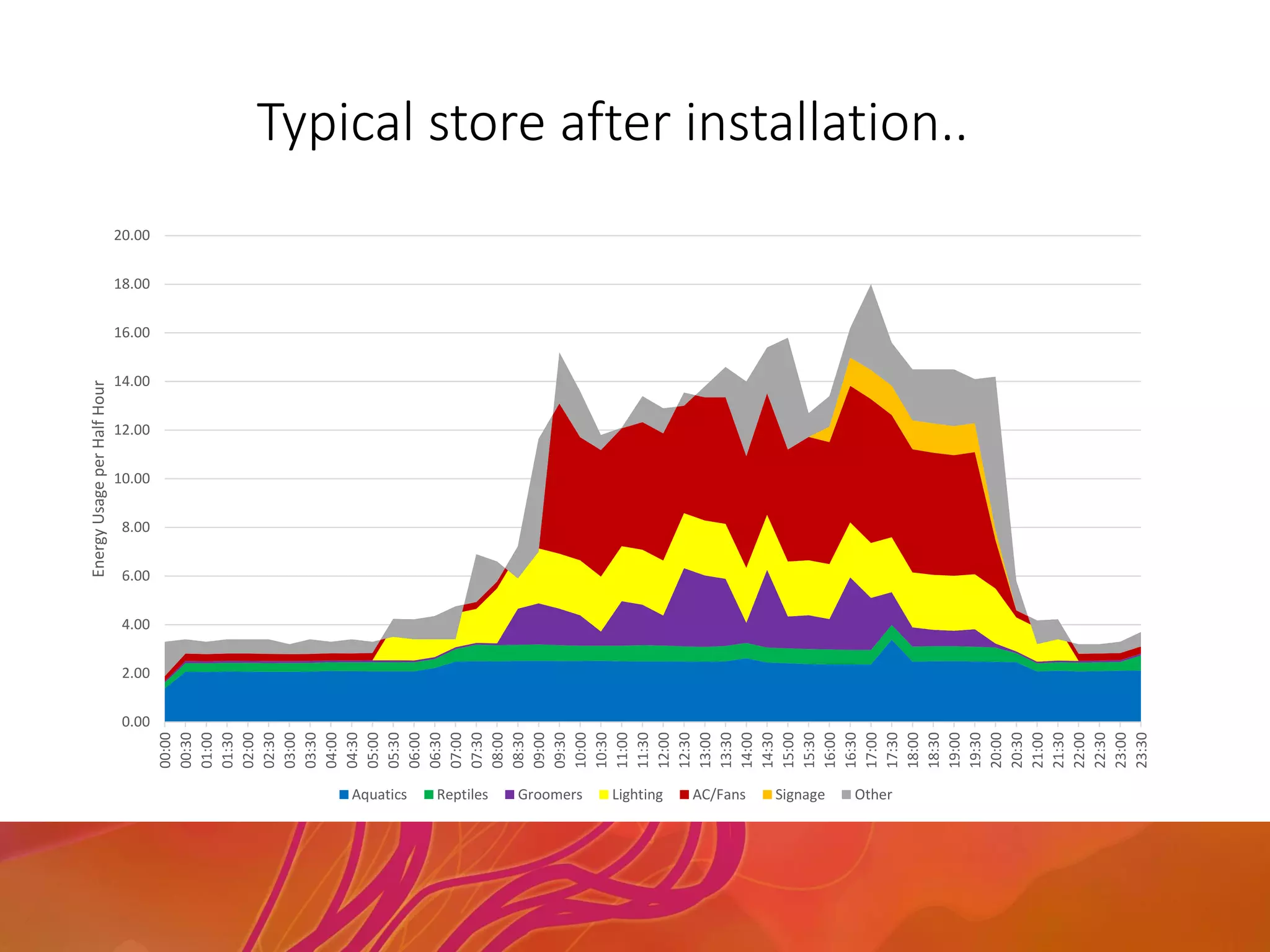
Typical store after installation..
0.00
2.00
4.00
6.00
8.00
10.00
12.00
14.00
16.00
18.00
20.00
00:00
00:30
01:00
01:30
02:00
02:30
03:00
03:30
04:00
04:30
05:00
05:30
06:00
06:30
07:00
07:30
08:00
08:30
09:00
09:30
10:00
10:30
11:00
11:30
12:00
12:30
13:00
13:30
14:00
14:30
15:00
15:30
16:00
16:30
17:00
17:30
18:00
18:30
19:00
19:30
20:00
20:30
21:00
21:30
22:00
22:30
23:00
23:30
EnergyUsageperHalfHour
Aquatics Reptiles Groomers Lighting AC/Fans Signage Other
Typical before/after installation comparison..
What did the business case look like?
• The initial business case was based on audits from a sample of stores,
early pilots that provided demonstration of the results that could be
achieved, and early stage deployment assumptions. Getting to this point
did not incur any cost to Pets at Home.
• A revised business case used asset data from 20% of stores as a sample
to provide a good degree of certainty, and assumptions from further
work, as well as a better understanding of how the project would be
deployed.
• Before approval, all supplier selections were made, and the Executive
committee approved the type of lighting and control scheme via store
visits to ensure the impact would be a positive one for the business.
Who did we work with?
• Project has been conceived, proposed and now being delivered by
James and Ignite. The project owners at Pets at Home includes both
energy and operational expertise, and reports regularly to a steering
group including an Executive project sponsor.
• Senior Management – engaged as part of ESOS process; fed into
investment planning to provide scope for the project, made ultimate
decision on investment. Having engagement at this level several months
before approval allowed it to be considered alongside other candidates
for invesment.
• Operations/trading – the project is helping to enhance Pet Welfare by
monitoring temperatures in sensitive areas. It gives retail operations
more flexibility to change trading hours, and the stores improved, more
consistent lighting.
Who did we work with?
• Property/Estates – the BMS provides information to aid in maintenance
issue diagnosis, and the new equipment is covered by a comprehensive
warranty, providing a maintenance saving.
• Finance – worked with finance all the way to:
• Build savings into budget projections,
• Update on performance and
• Make sure savings are recognised month by month by using actual data to drive
store charges
• Procurement/Legal – worked together on a market evaluation which
resulted in the best solution, and cost savings v project budget, allowing
more stores to be delivered.
Thank–you and Questions

How to Win an Investment Approval from your Board

  • 1.
    Building the businesscase for investment in energy solutions
  • 2.
    Introductions Ben Higgins, Director- Ignite Energy Rob Deverson, Business Development Director - Ignite Energy James Kokiet, Energy & Sustainability Manager - Pets At Home
  • 3.
    About Ignite.. • Focuson helping large, multi-sited energy users manage energy across the whole spectrum of use, including: • Procurement/brokerage • Bill management and validation • Finance and management reporting • Smart metering • Energy reduction projects • Customer focussed – tailoring the solution to the individual business requirements. • Technology and solution independent, with expertise of the broader market. • Consistent delivery of tangible savings for every customer
  • 4.
    Who we workwith.. •Major clients include: •Clients with international activities include: • WH Smith, SSP & New Look
  • 5.
    Building the businesscase for energy projects
  • 6.
    It’s easy –isn’t it? • Why would an organisation not want to invest in something that saves them money and reduces their impact on the environment?!? • There are many potential areas where good projects can fail to win investment approval. • All of these need to be considered and worked through in order for a project to get investment and go-ahead. • Even a great project in an engaged business takes months of hard work and diligence to move from concept to deployment.
  • 7.
    The Basics… Typically wego through the following process: • Initial engagement and data gathering • Data analysis and understanding how the business works • Site evaluation and surveys • Solution development – service and project (although this session focusses on the project side) • Trialling and Proof of Concept • Refining solution and assumptions • Consensus building and winning approval for rollout Throughout all of this we are engaging with different stakeholders across a business. Next – a few key lessons we have learned..
  • 8.
    Importance of dataanalysis New Malden Stockport Croydon Brentford Andover Folkestone Peterborough Oxford Biggleswade Hull 0 100000 200000 300000 400000 500000 600000 0 5000 10000 15000 20000 25000 30000 StoreAnnualEnergyUsage-kWh Store Size - Square Feet Store Electricity Usage v Store Size
  • 9.
    Breakdown of overallload 14.09% 1.56% 5.65% 25.28%47.26% 0.44% 11.08% Example site - Daily Load Breakdown Aquatics Reptiles Groom Room Lighting AC Signage V4P
  • 10.
    Breakdown of storedaily load 0 2 4 6 8 10 12 14 16 18 20 22 00:20:00 00:50:00 01:20:00 01:50:00 02:20:00 02:50:00 03:20:00 03:50:00 04:20:00 04:50:00 05:20:00 05:50:00 06:20:00 06:50:00 07:20:00 07:50:00 08:20:00 08:50:00 09:20:00 09:50:00 10:20:00 10:50:00 11:20:00 11:50:00 12:20:00 12:50:00 13:20:00 13:50:00 14:20:00 14:50:00 15:20:00 15:50:00 16:20:00 16:50:00 17:20:00 17:50:00 18:20:00 18:50:00 19:20:00 19:50:00 20:20:00 20:50:00 21:20:00 21:50:00 22:20:00 22:50:00 23:20:00 23:50:00 EnergyUsePerHalfHour Aquatics Reptiles Groom Room Lighting AC Signage V4P Other
  • 11.
    Stakeholders Understanding and engagingwith all stakeholders is key. They may not be the decision-maker but will likely be consulted as part of the decision - having them behind a project is key. They can include: • Senior Management – decision making • Operations/trading – impact / benefit to the core business • Property/Estates – impact on site environment and maintenance. Long term cost of maintaining solution • Finance – need to understand how the return on investment will be achieved and how it will be proven. • Procurement/Legal – to verify that the project and supply arrangements make commercial sense and represent good value in the marketplace.
  • 12.
    Finance For a projectto gain and maintain credibility, the benefits must be clear and recognised across the business. Many early stage projects have come unstuck because the benefits aren’t clear to all. It helps if… • Finance can help you understand how the business views investments such as energy projects – payback criteria, financial rules, discount rate for NPV etc • There is constant engagement with finance colleagues to help them understand and ultimately support the business case. They are the ones that feed into budgets and financial planning • The savings from the project are built into the company energy budget – it sets an expectation. • Savings are recognised when they are made via the monthly charge and accrual in the profit and loss (P&L) accounts in the business, rather than lost in the noise of bills coming in months later
  • 13.
    Example savings reporting;actual v budgeted £- £5,000 £10,000 £15,000 £20,000 £25,000 £30,000 £35,000 £40,000 22 23 24 25 26 27 28 29 30 31 In-yearenergycostsavingsdelivered Financial week Project - In-Year Savings Progress Cumulative Budgeted Savings Cumulative Projected Savings Actual Savings to date
  • 14.
    Example of weeklymanagement reporting
  • 15.
    Process and competition •Companies do not have bottomless reserves of capital to invest. There is usually a medium to long term plan for investment, and this has often been communicated to investors privately and publically, limiting flexibility. • Your project is therefore competing against all the other calls on investment. It might look attractive, but that’s a relative concept. • Getting in early and raising project profile are important so as not to miss the boat. • ..as is understanding the process that the project will need to go through for approval. A sponsor can help with both. • External finance can help, but it’s not a magic bullet
  • 16.
  • 17.
    Project Aether Overview •Project Aether involves a wholesale change to LED lighting and installation of Building Energy Management Systems “BEMS” into 420+ Pets at Home stores • This is going to result in an energy reduction of 35-40% across the estate, and be fully deployed by end of Q2 2016. Around 200 stores have been deployed to date, from a start in mid August. • It went from concept and pilot to rollout approval in under 12 months. • It is Pets at Home’s biggest ever single capex project • How did we overcome some of the challenges in developing and achieving approval for the business case?
  • 18.
    Timeline Early 2015 • Pilotsstarted to be considered • Ignite Energy engaged Summer-15 • Pilots of LED and BEMS, capex for further pilots • Site surveys and data analysis Autumn-15 • ESOS report process • Building on data from pilots, credible business Winter-15 • ESOS report presented to CFO with project as centerpiece • Exec committee engaged, capex process underway Spring-16 • Commercial framework put in place • Capex approved and contract placed
  • 19.
    Typical store beforeinstallation.. 0 2 4 6 8 10 12 14 16 18 20 22 00:20:00 00:50:00 01:20:00 01:50:00 02:20:00 02:50:00 03:20:00 03:50:00 04:20:00 04:50:00 05:20:00 05:50:00 06:20:00 06:50:00 07:20:00 07:50:00 08:20:00 08:50:00 09:20:00 09:50:00 10:20:00 10:50:00 11:20:00 11:50:00 12:20:00 12:50:00 13:20:00 13:50:00 14:20:00 14:50:00 15:20:00 15:50:00 16:20:00 16:50:00 17:20:00 17:50:00 18:20:00 18:50:00 19:20:00 19:50:00 20:20:00 20:50:00 21:20:00 21:50:00 22:20:00 22:50:00 23:20:00 23:50:00 EnergyUsePerHalfHour Aquatics Reptiles Groom Room Lighting AC Signage V4P Other
  • 20.
    Typical store afterinstallation.. 0.00 2.00 4.00 6.00 8.00 10.00 12.00 14.00 16.00 18.00 20.00 00:00 00:30 01:00 01:30 02:00 02:30 03:00 03:30 04:00 04:30 05:00 05:30 06:00 06:30 07:00 07:30 08:00 08:30 09:00 09:30 10:00 10:30 11:00 11:30 12:00 12:30 13:00 13:30 14:00 14:30 15:00 15:30 16:00 16:30 17:00 17:30 18:00 18:30 19:00 19:30 20:00 20:30 21:00 21:30 22:00 22:30 23:00 23:30 EnergyUsageperHalfHour Aquatics Reptiles Groomers Lighting AC/Fans Signage Other
  • 21.
  • 22.
    What did thebusiness case look like? • The initial business case was based on audits from a sample of stores, early pilots that provided demonstration of the results that could be achieved, and early stage deployment assumptions. Getting to this point did not incur any cost to Pets at Home. • A revised business case used asset data from 20% of stores as a sample to provide a good degree of certainty, and assumptions from further work, as well as a better understanding of how the project would be deployed. • Before approval, all supplier selections were made, and the Executive committee approved the type of lighting and control scheme via store visits to ensure the impact would be a positive one for the business.
  • 23.
    Who did wework with? • Project has been conceived, proposed and now being delivered by James and Ignite. The project owners at Pets at Home includes both energy and operational expertise, and reports regularly to a steering group including an Executive project sponsor. • Senior Management – engaged as part of ESOS process; fed into investment planning to provide scope for the project, made ultimate decision on investment. Having engagement at this level several months before approval allowed it to be considered alongside other candidates for invesment. • Operations/trading – the project is helping to enhance Pet Welfare by monitoring temperatures in sensitive areas. It gives retail operations more flexibility to change trading hours, and the stores improved, more consistent lighting.
  • 24.
    Who did wework with? • Property/Estates – the BMS provides information to aid in maintenance issue diagnosis, and the new equipment is covered by a comprehensive warranty, providing a maintenance saving. • Finance – worked with finance all the way to: • Build savings into budget projections, • Update on performance and • Make sure savings are recognised month by month by using actual data to drive store charges • Procurement/Legal – worked together on a market evaluation which resulted in the best solution, and cost savings v project budget, allowing more stores to be delivered.
  • 25.