Operational Energy Reduction
through Data Analysis & Virtual
Benchmarking
Case Study: Alex Wing, Royal
London Hospital
Darragh Gleeson
Senior Project ConsultantIES
Introduction
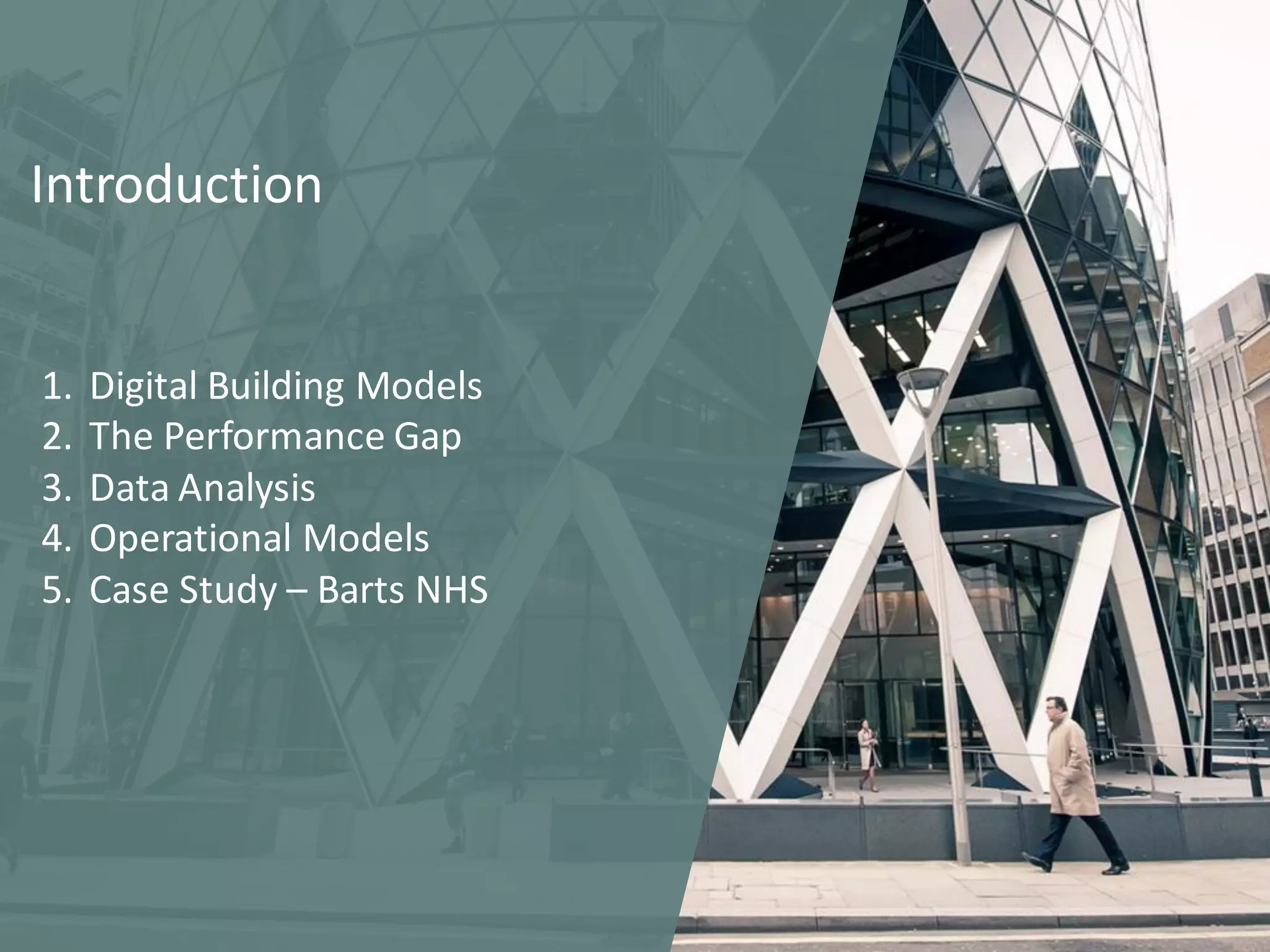
1. Digital Building Models
2. The Performance Gap
3. Data Analysis
4. Operational Models
5. Case Study – Barts NHS
Integrated Environmental
Solutions (IES)
Scottish Green Tech
Company Founded in 1994
• Focused on reducing the energy
& carbon footprint of new and
existing buildings
UK Market Leader and
Globally Established
• 160+ employees
Head Office in Glasgow
• Offices in Dublin, Atlanta &
Pune (Mumbai)
• Presence in Europe, Australia,
Singapore, Middle East & Africa
Over 20 years of Sustainable Design
About IES
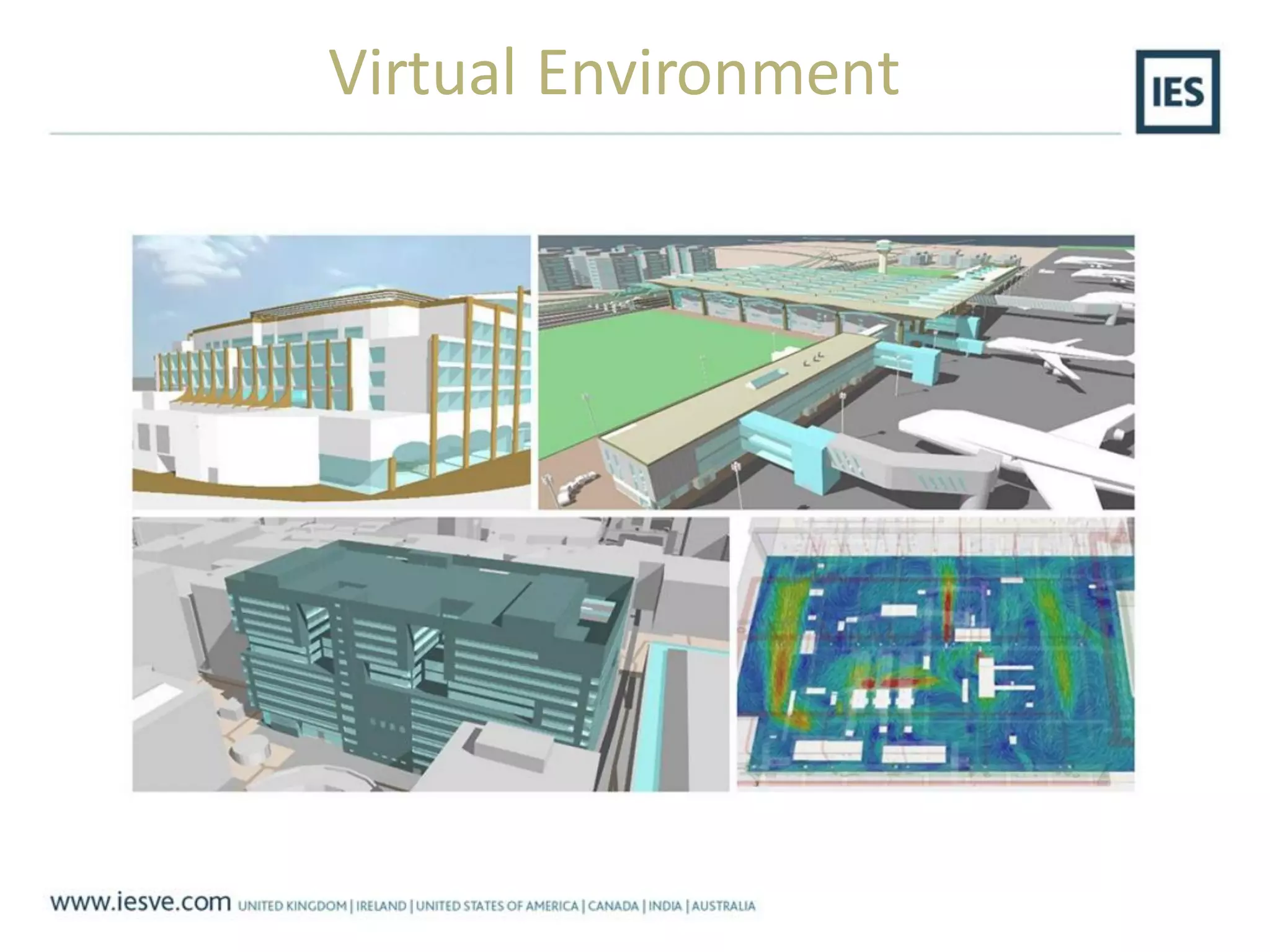
Virtual Environment
The performance gap
There is a mismatch between the expectations
around the performance of new buildings and
the reality of the utility bills.
This difference between expected and realised
energy performance has come to be known as
the “performance gap”
Why is there a performance gap?
• Regulatory/compliance models used for
predictions of in-use energy
• Discrepancies between design documents and
as-built
• Innovative systems not fully understood
• Poor commissioning
• Lack of monitoring and feedback
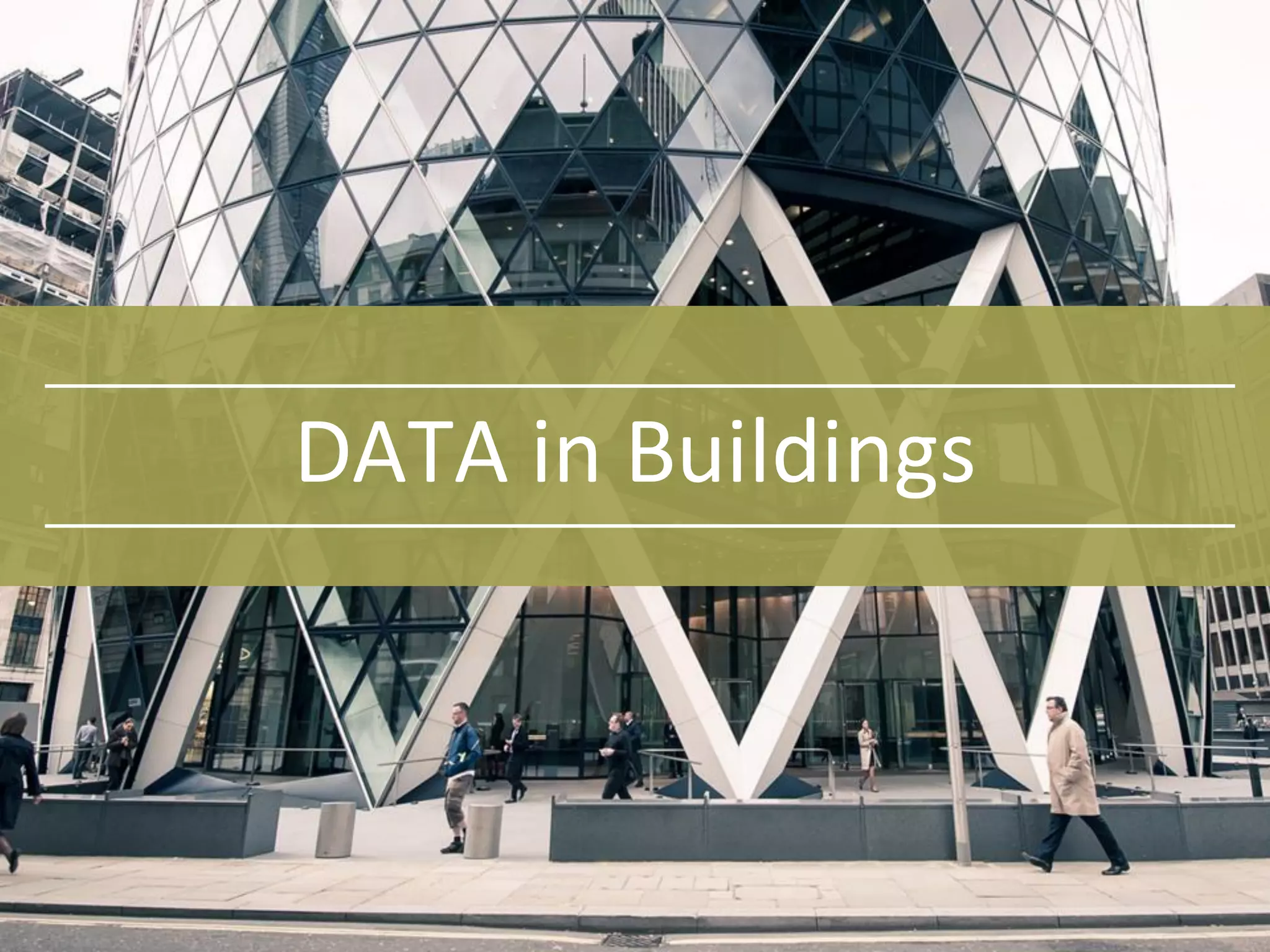
DATA in Buildings
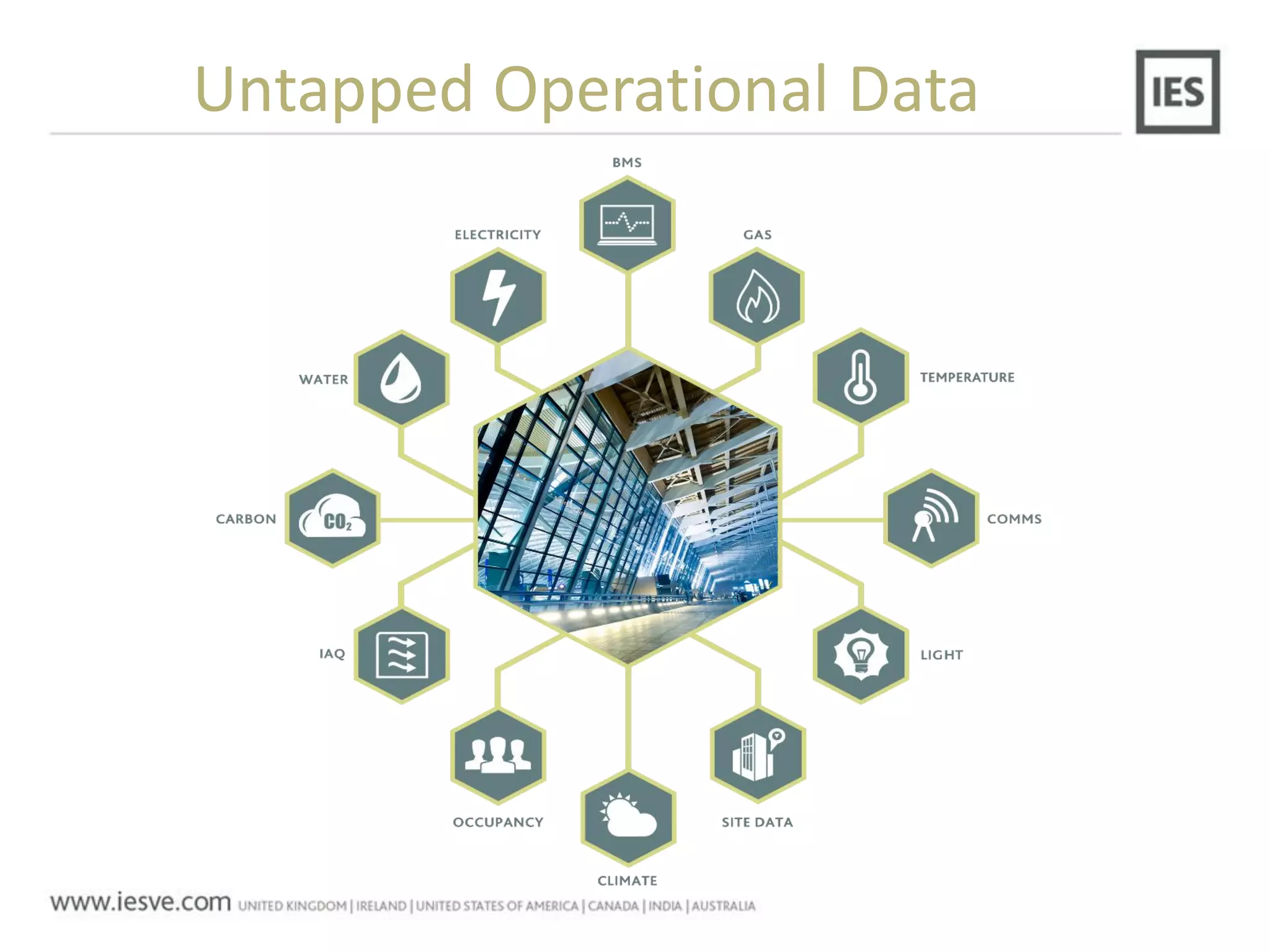
Untapped Operational Data
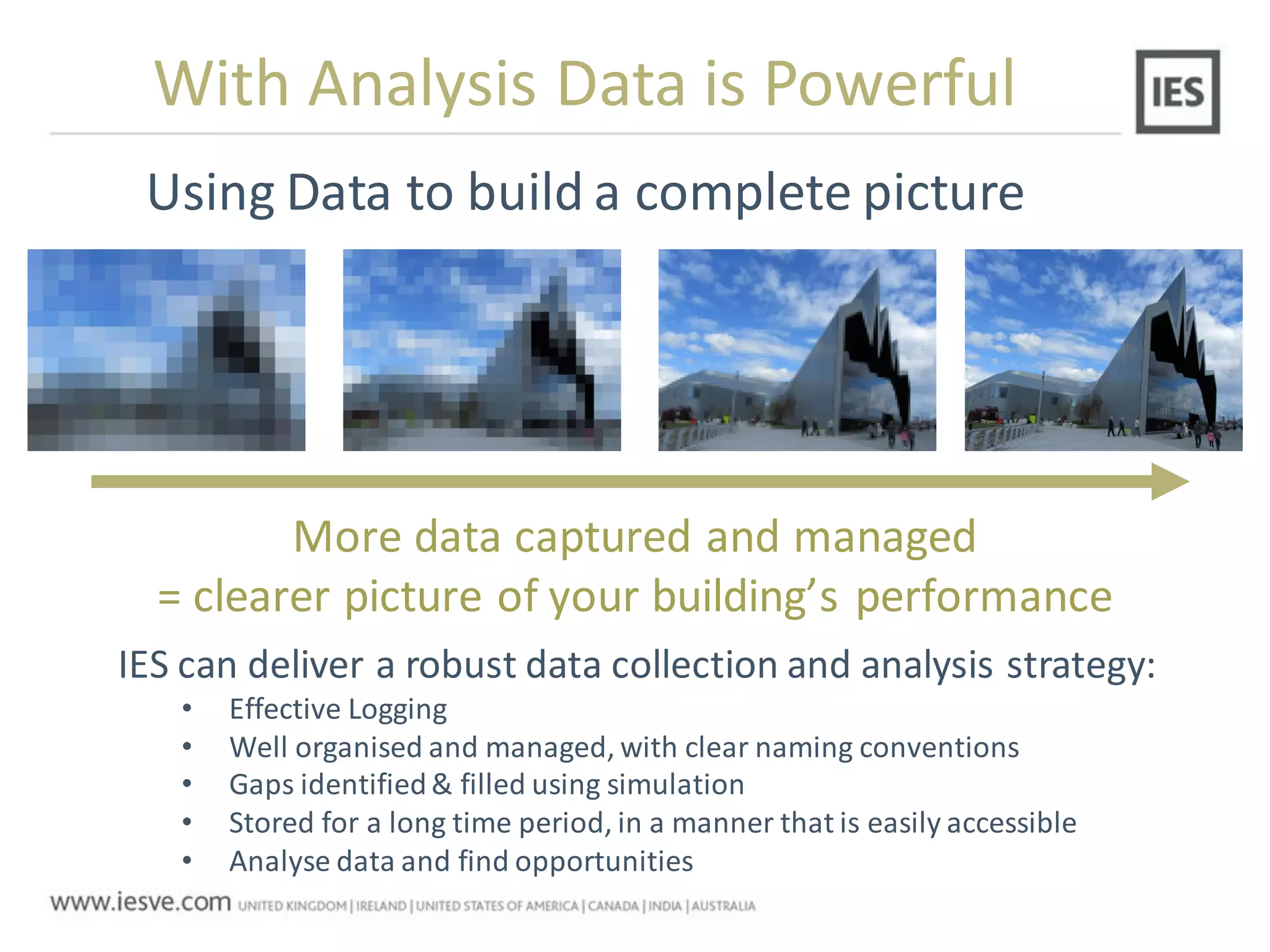
More data captured and managed
= clearer picture of your building’s performance
Using Data to build a complete picture
With Analysis Data is Powerful
IES can deliver a robust data collection and analysis strategy:
• Effective Logging
• Well organised and managed, with clear naming conventions
• Gaps identified& filled using simulation
• Stored for a long time period, in a manner that is easily accessible
• Analyse data and find opportunities
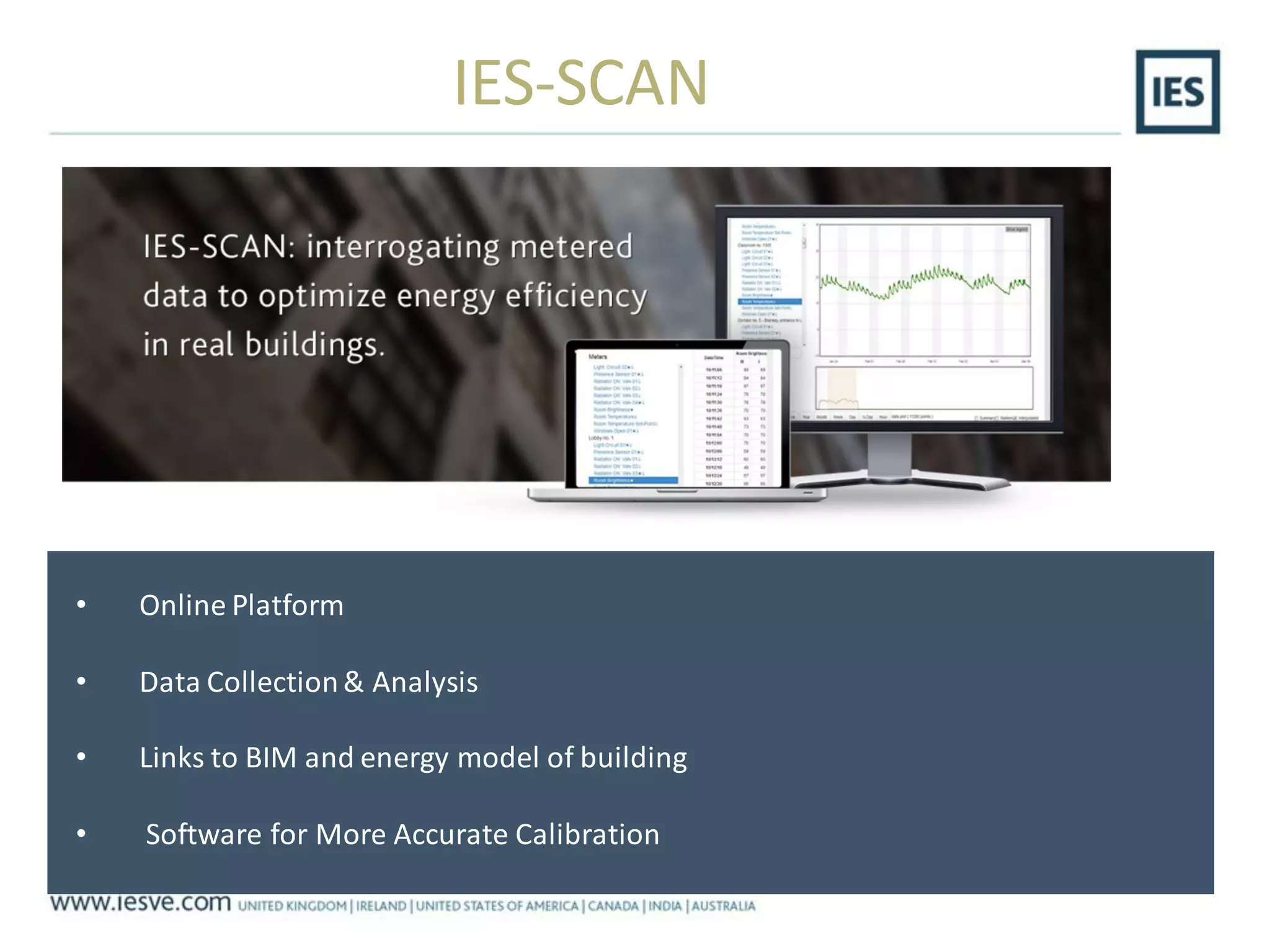
IES-SCAN
• Online Platform
• Data Collection& Analysis
• Links to BIM and energy model of building
• Software for More Accurate Calibration
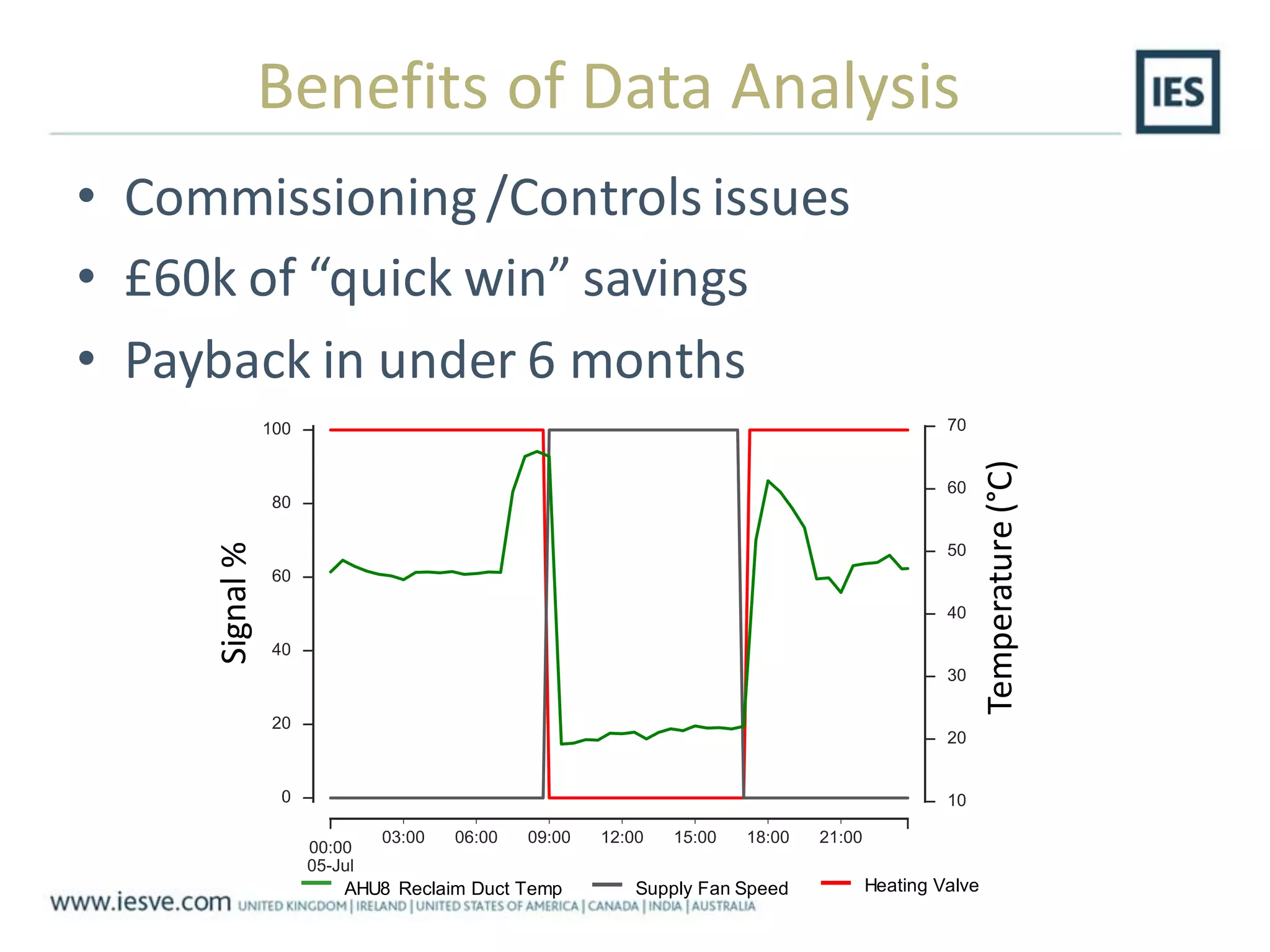
Benefits of Data Analysis
• Commissioning /Controls issues
• £60k of “quick win” savings
• Payback in under 6 months
Signal%
Temperature(°C)
AHU8 Reclaim Duct Temp Supply Fan Speed Heating Valve
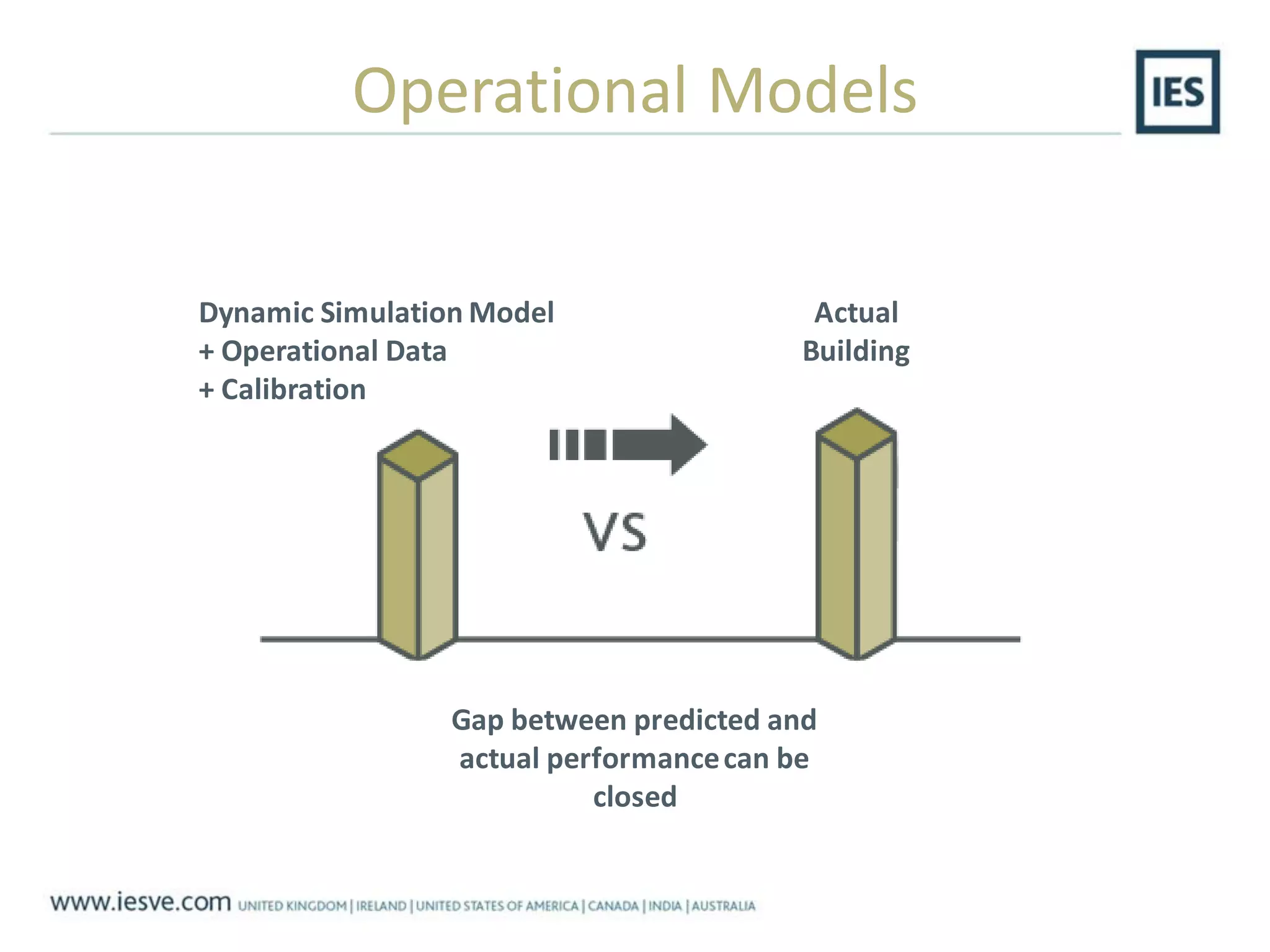
Operational Models
Dynamic Simulation Model
+ Operational Data
+ Calibration
Actual
Building
Gap between predicted and
actual performancecan be
closed
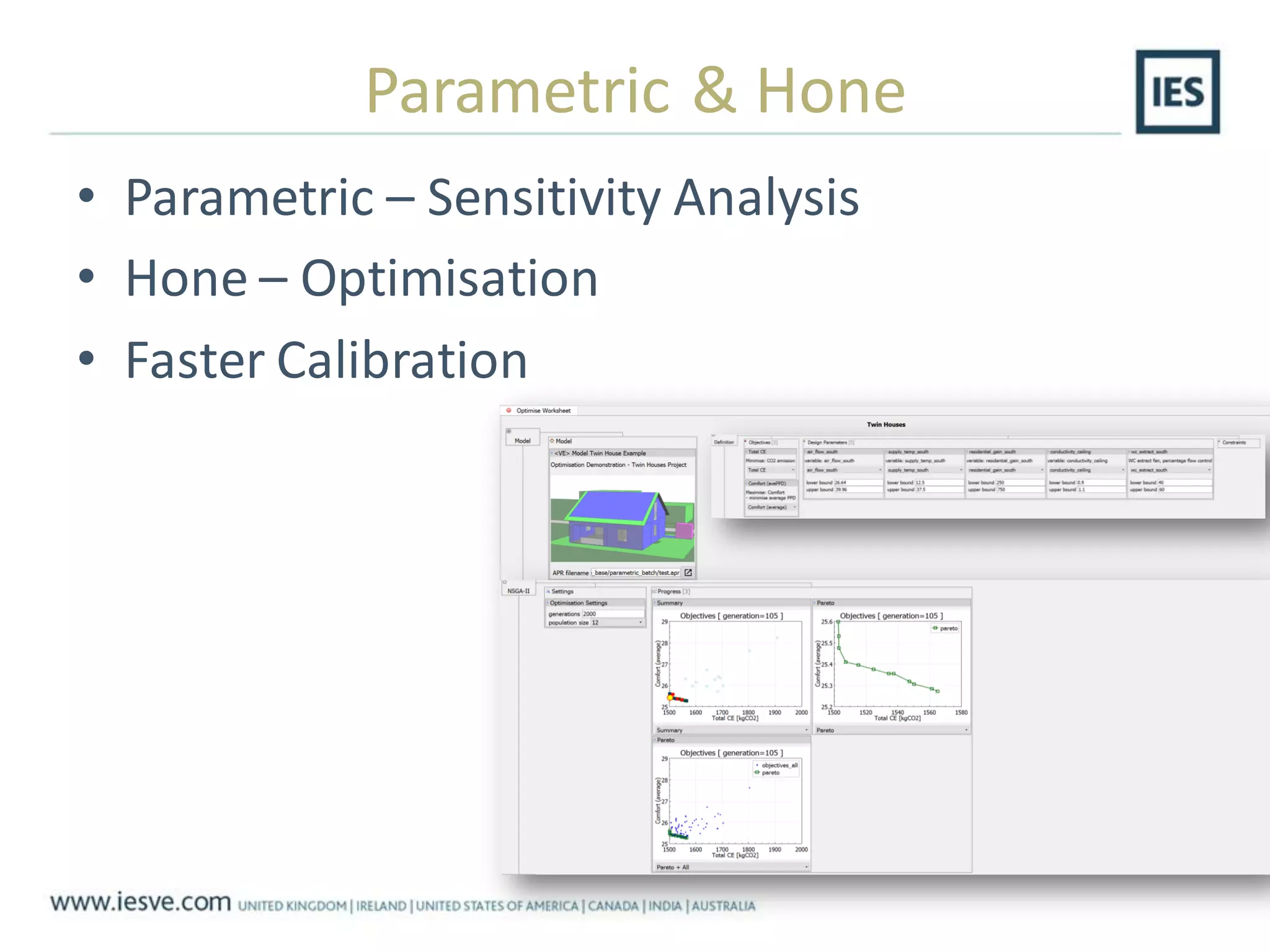
Parametric & Hone
• Parametric – Sensitivity Analysis
• Hone – Optimisation
• Faster Calibration
1. “What if…?” Scenarios
• Savings vs Occupant Comfort Predictions
2. Energy Conservation / Retrofit Measures
• Virtual Testing & Validation
• Measurement & Verification
3. ContinuousCommissioning
• Operational Drift Identification
• Fault Detection
Benefits of Operational Models
CASE STUDY
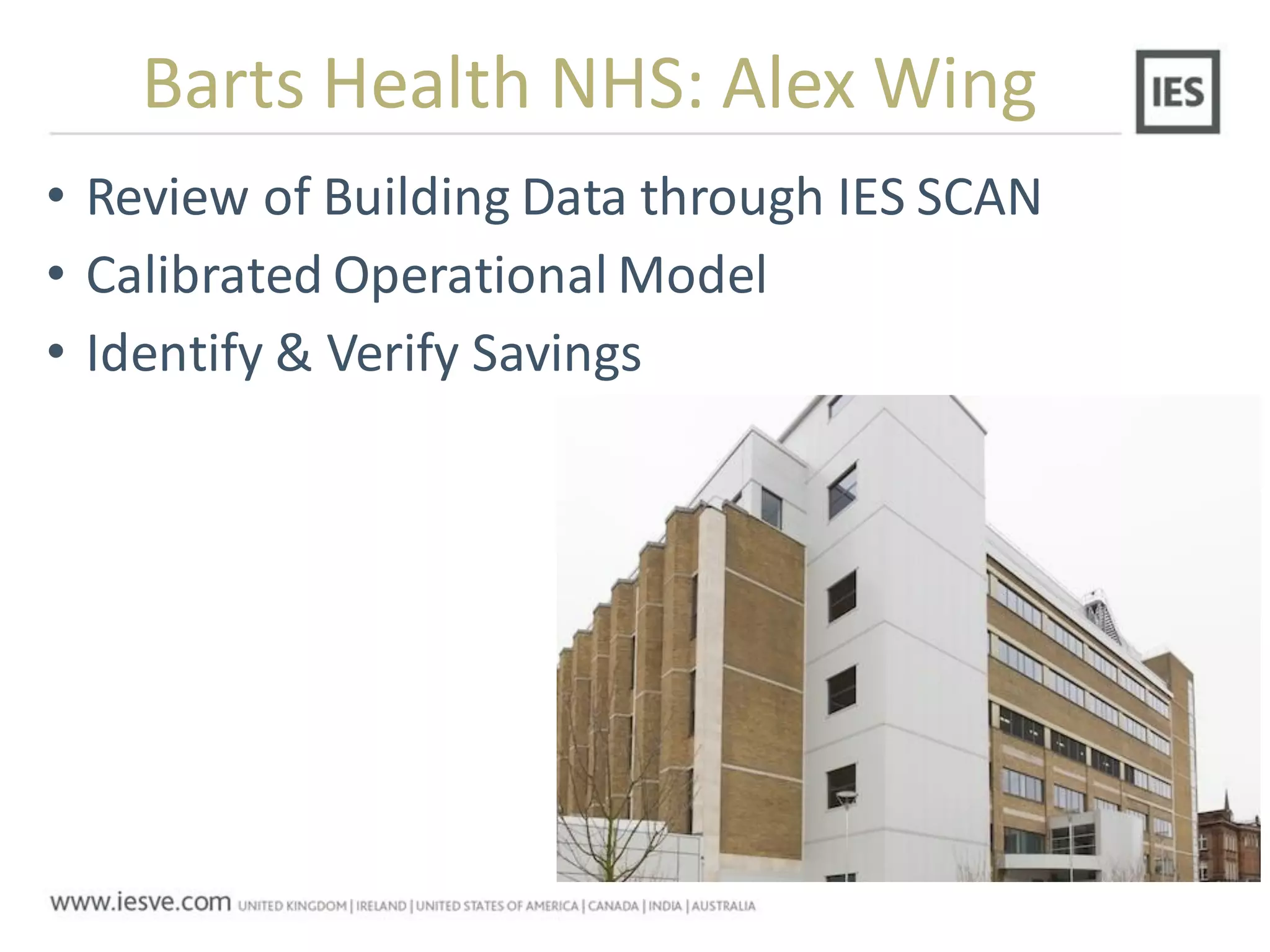
Barts Health NHS: Alex Wing
• Review of Building Data through IES SCAN
• Calibrated Operational Model
• Identify & Verify Savings
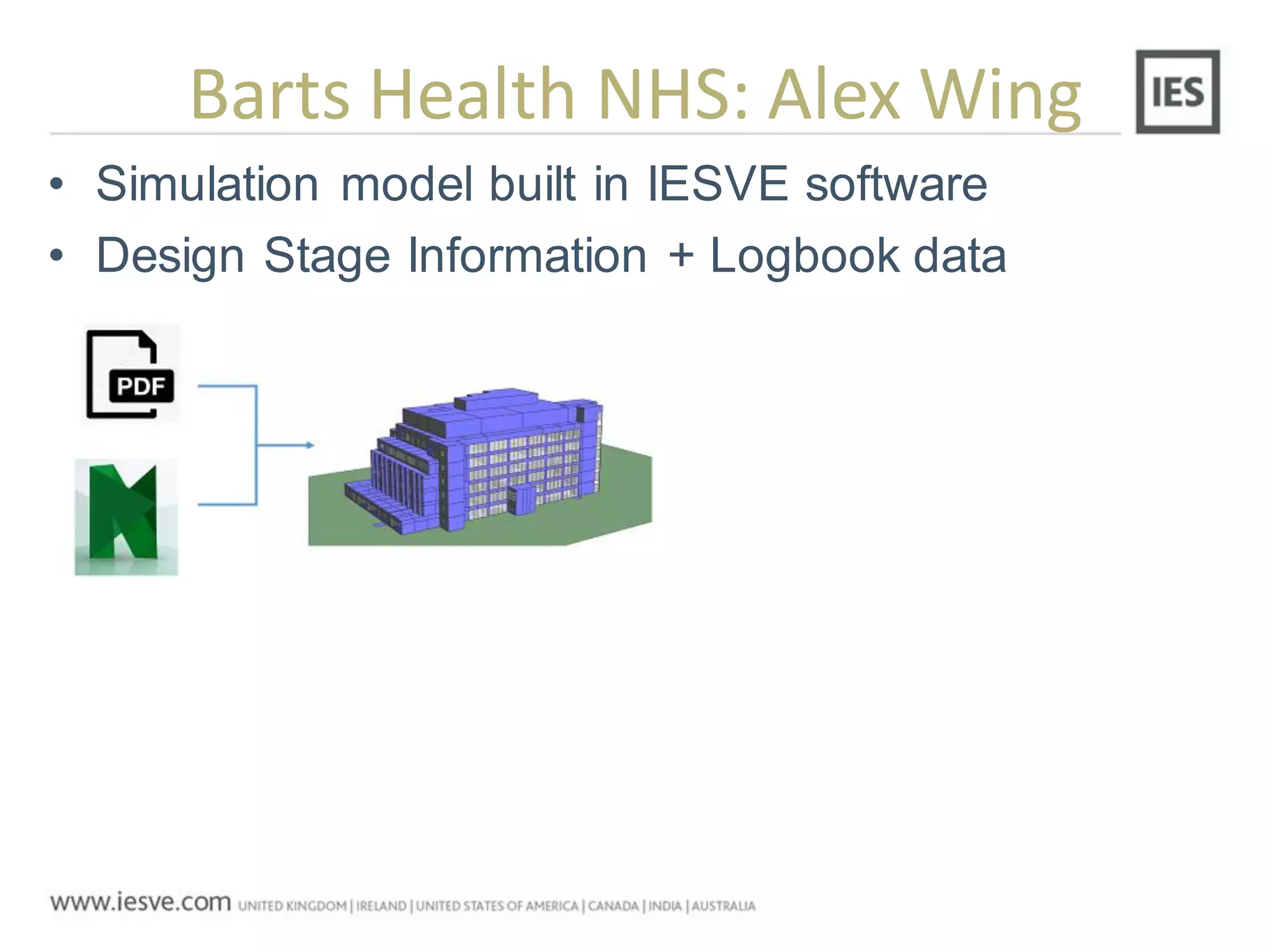
Barts Health NHS: Alex Wing
• Simulation model built in IESVE software
• Design Stage Information + Logbook data
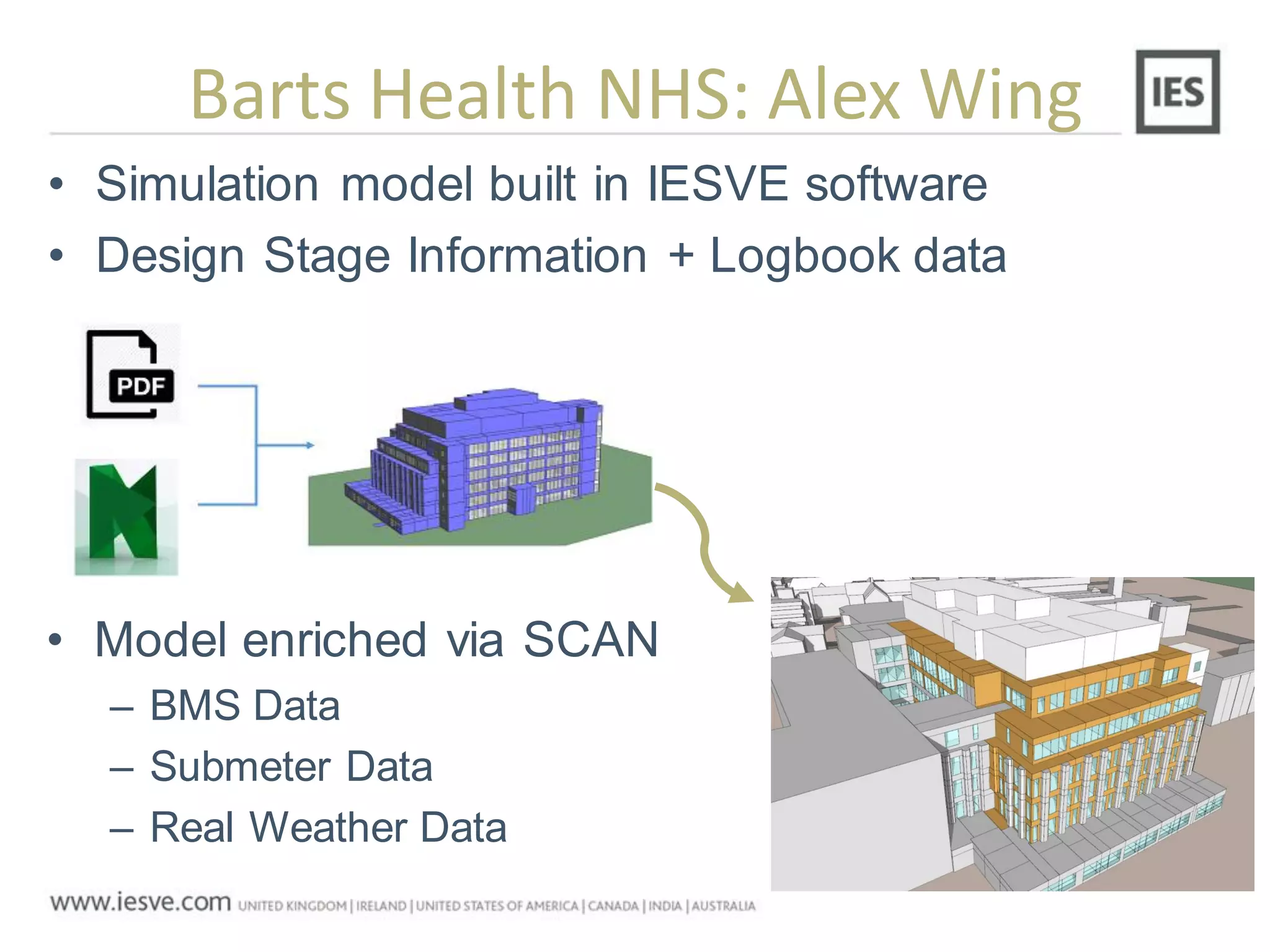
Barts Health NHS: Alex Wing
• Simulation model built in IESVE software
• Design Stage Information + Logbook data
• Model enriched via SCAN
– BMS Data
– Submeter Data
– Real Weather Data
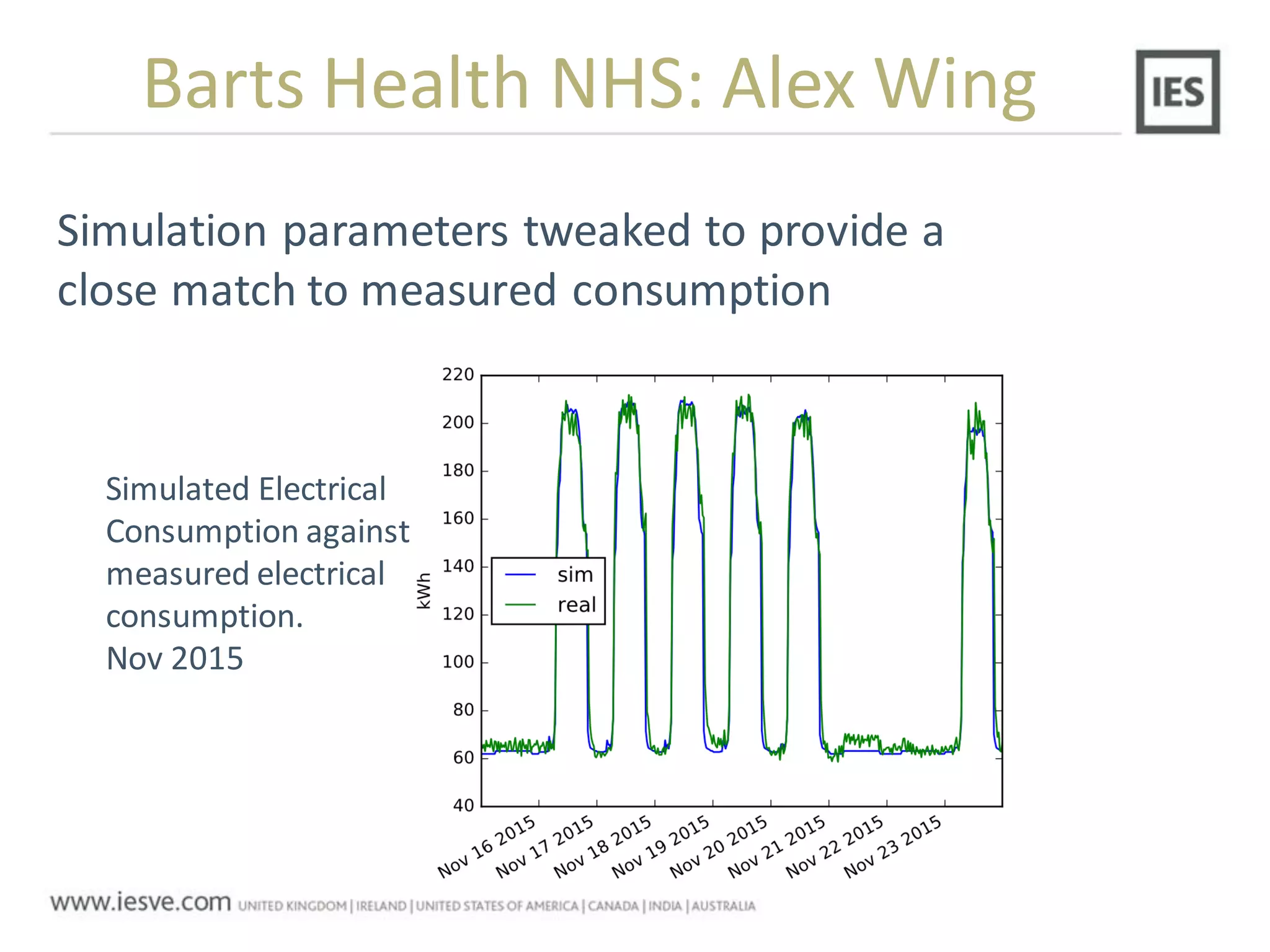
Simulation parameters tweaked to provide a
close match to measured consumption
Simulated Electrical
Consumption against
measured electrical
consumption.
Nov 2015
Barts Health NHS: Alex Wing
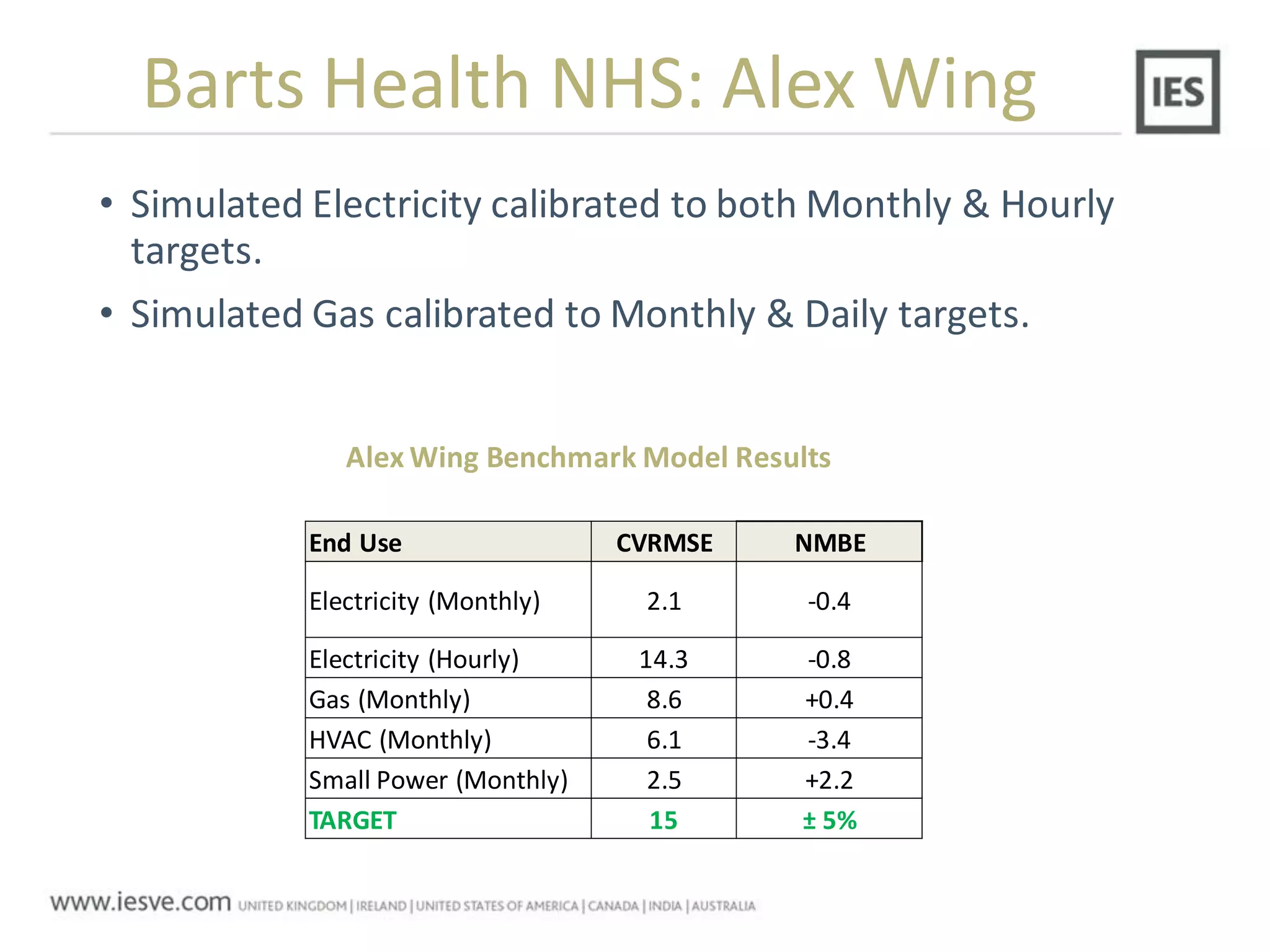
End Use CVRMSE NMBE
Electricity (Monthly) 2.1 -0.4
Electricity (Hourly) 14.3 -0.8
Gas (Monthly) 8.6 +0.4
HVAC (Monthly) 6.1 -3.4
Small Power (Monthly) 2.5 +2.2
TARGET 15 ± 5%
• Simulated Electricity calibrated to both Monthly & Hourly
targets.
• Simulated Gas calibrated to Monthly & Daily targets.
Alex Wing Benchmark Model Results
Barts Health NHS: Alex Wing
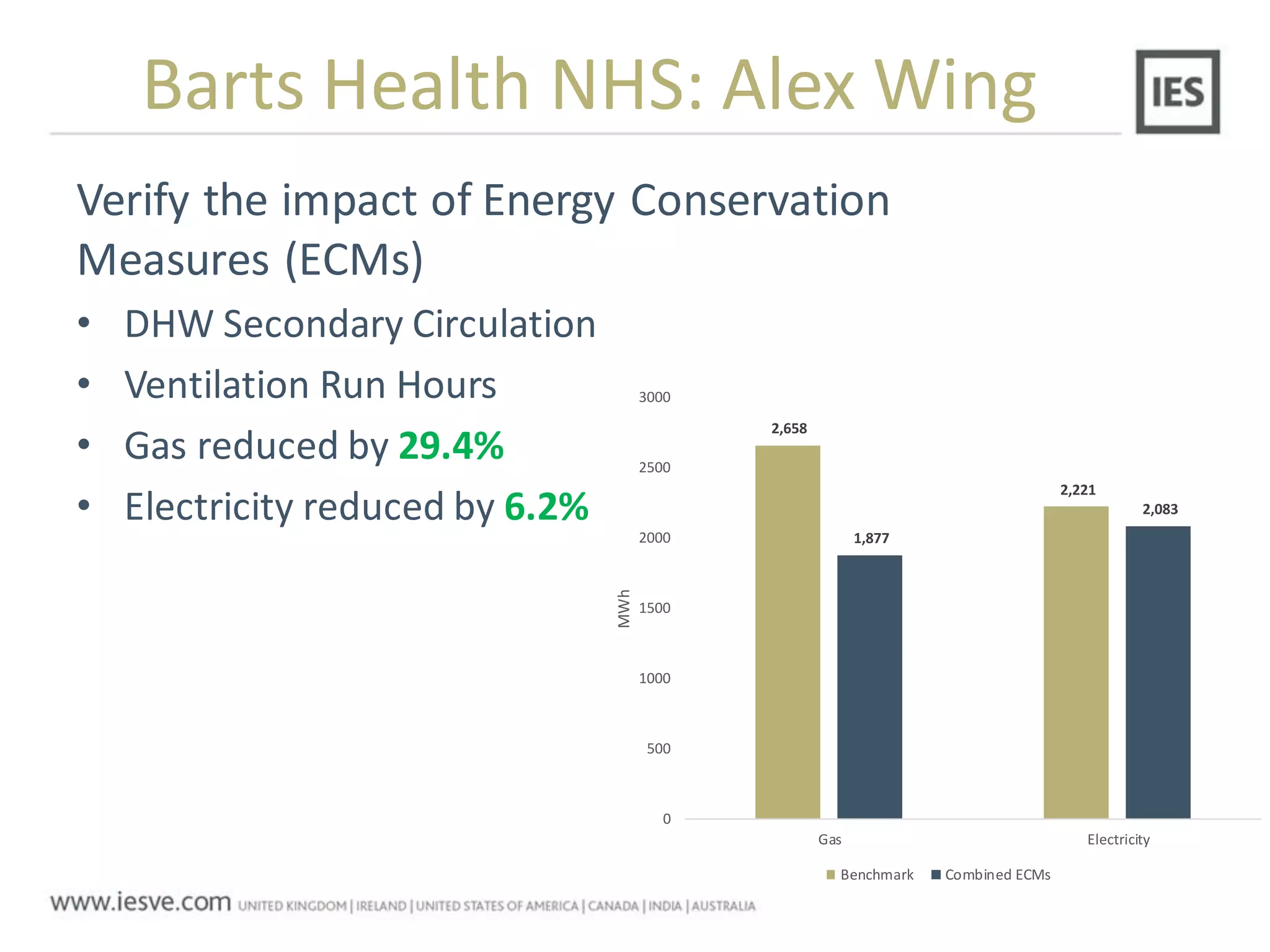
Verify the impact of Energy Conservation
Measures (ECMs)
• DHW Secondary Circulation
• Ventilation Run Hours
• Gas reduced by 29.4%
• Electricity reduced by 6.2%
Barts Health NHS: Alex Wing
2,658
2,221
1,877
2,083
0
500
1000
1500
2000
2500
3000
Gas Electricity
MWh
Benchmark Combined ECMs
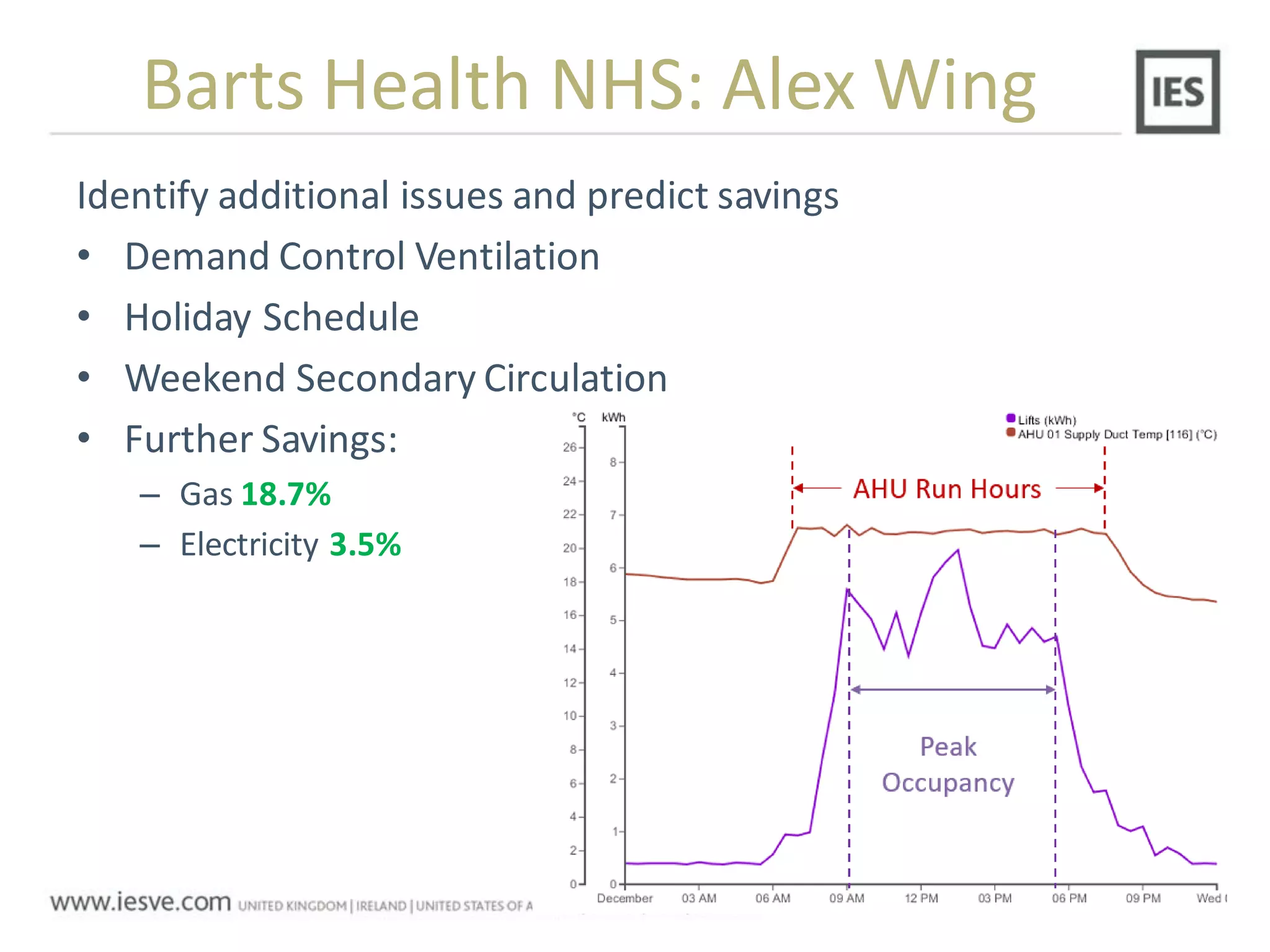
Identify additional issues and predict savings
• Demand Control Ventilation
• Holiday Schedule
• Weekend Secondary Circulation
• Further Savings:
– Gas 18.7%
– Electricity 3.5%
Barts Health NHS: Alex Wing
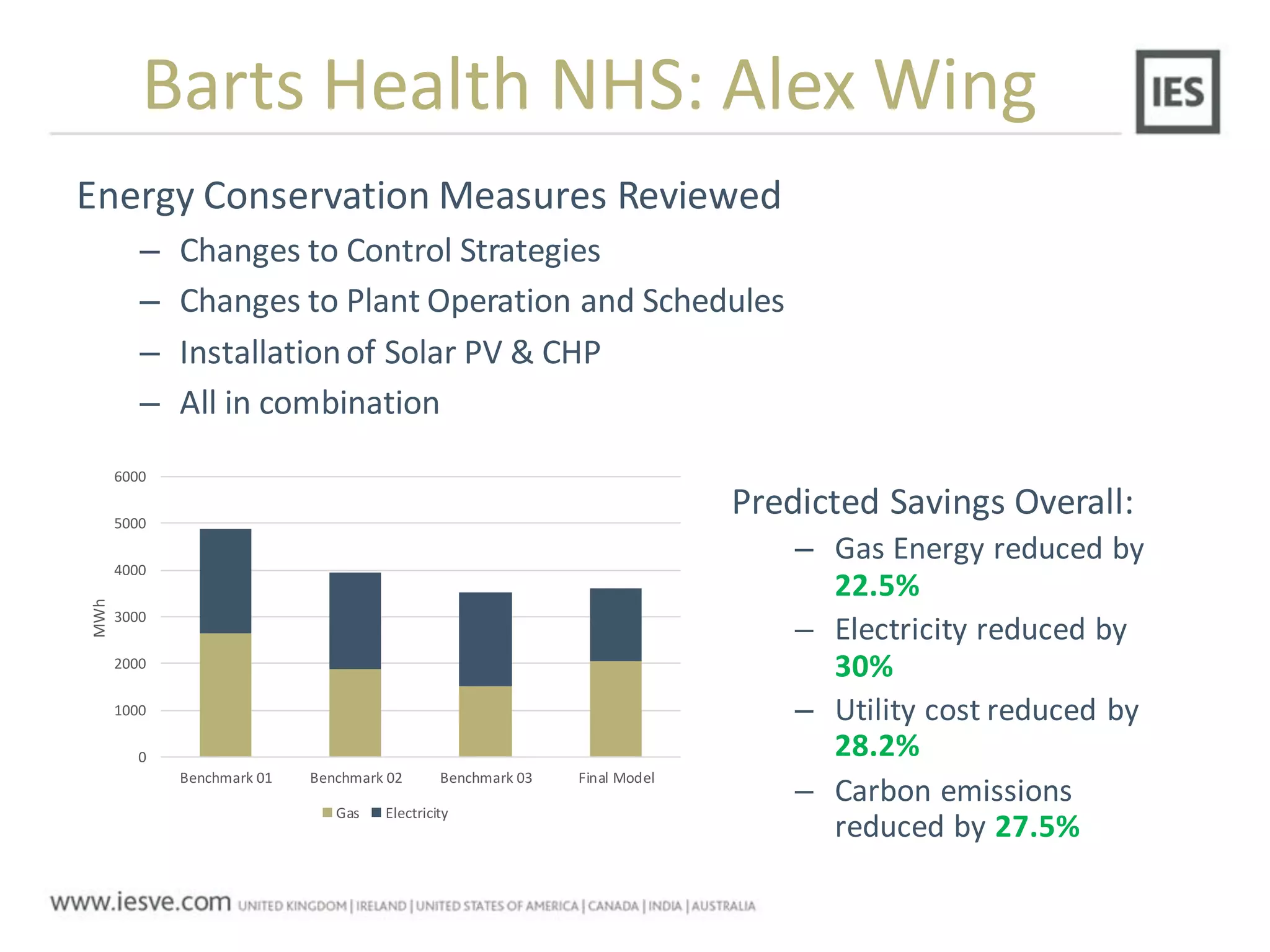
Energy Conservation Measures Reviewed
– Changes to Control Strategies
– Changes to Plant Operation and Schedules
– Installationof Solar PV & CHP
– All in combination
0
1000
2000
3000
4000
5000
6000
Benchmark 01 Benchmark 02 Benchmark 03 Final Model
MWh
Gas Electricity
Barts Health NHS: Alex Wing
Predicted Savings Overall:
– Gas Energy reduced by
22.5%
– Electricity reduced by
30%
– Utility cost reduced by
28.2%
– Carbon emissions
reduced by 27.5%
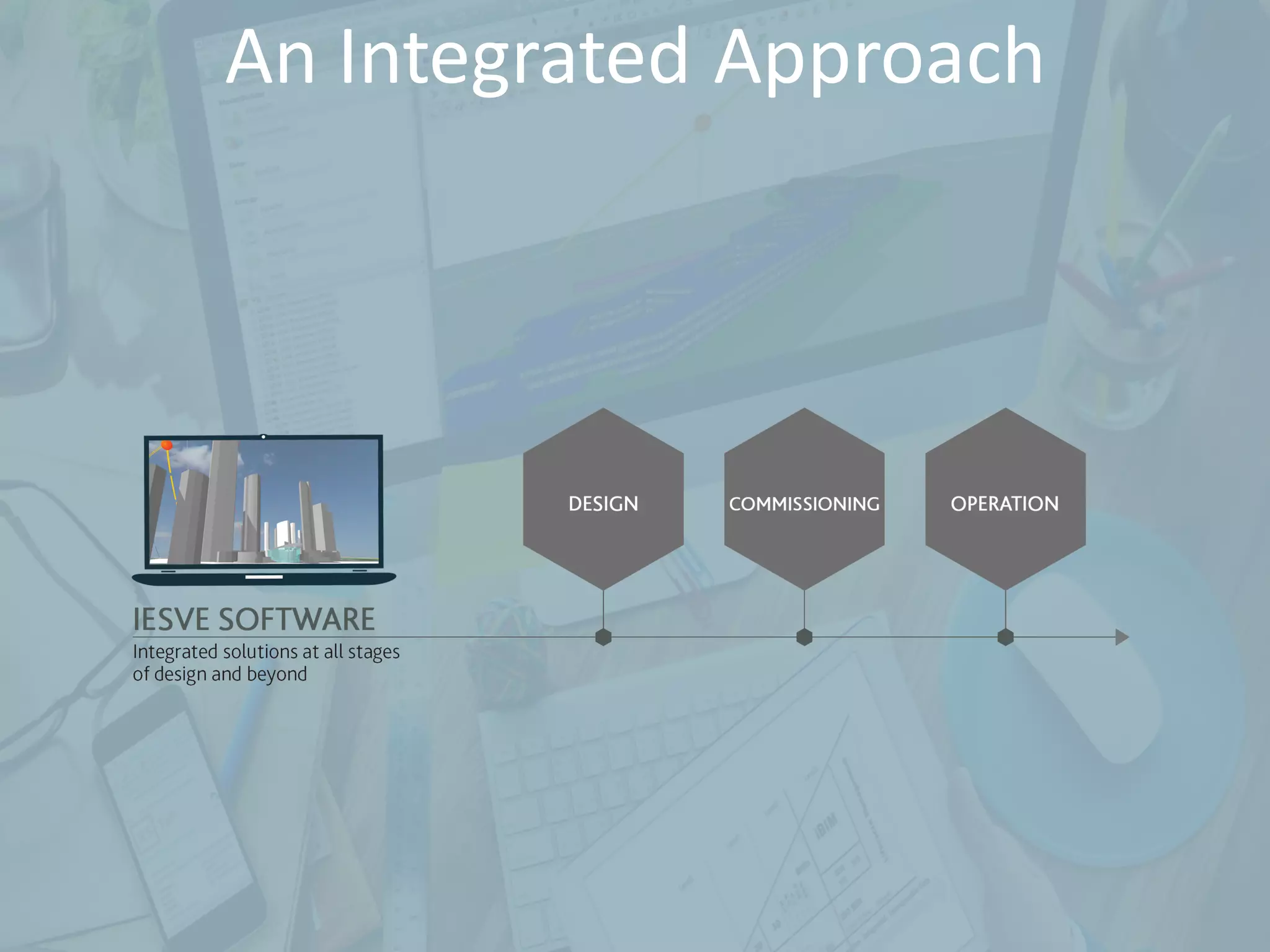
An Integrated Approach
darragh.gleeson@iesve.com
0141 945 8500
www.iesve.com
www.iesve.com/DiscoverIES
Darragh Gleeson
Thank You

Case Study: Operational Energy Reduction through Data Analysis & Virtual Benchmarking

  • 1.
    Operational Energy Reduction throughData Analysis & Virtual Benchmarking Case Study: Alex Wing, Royal London Hospital Darragh Gleeson Senior Project ConsultantIES
  • 2.
    Introduction 1. Digital BuildingModels 2. The Performance Gap 3. Data Analysis 4. Operational Models 5. Case Study – Barts NHS
  • 3.
    Integrated Environmental Solutions (IES) ScottishGreen Tech Company Founded in 1994 • Focused on reducing the energy & carbon footprint of new and existing buildings UK Market Leader and Globally Established • 160+ employees Head Office in Glasgow • Offices in Dublin, Atlanta & Pune (Mumbai) • Presence in Europe, Australia, Singapore, Middle East & Africa Over 20 years of Sustainable Design About IES
  • 4.
  • 5.
    The performance gap Thereis a mismatch between the expectations around the performance of new buildings and the reality of the utility bills. This difference between expected and realised energy performance has come to be known as the “performance gap”
  • 6.
    Why is therea performance gap? • Regulatory/compliance models used for predictions of in-use energy • Discrepancies between design documents and as-built • Innovative systems not fully understood • Poor commissioning • Lack of monitoring and feedback
  • 7.
  • 8.
  • 9.
    More data capturedand managed = clearer picture of your building’s performance Using Data to build a complete picture With Analysis Data is Powerful IES can deliver a robust data collection and analysis strategy: • Effective Logging • Well organised and managed, with clear naming conventions • Gaps identified& filled using simulation • Stored for a long time period, in a manner that is easily accessible • Analyse data and find opportunities
  • 10.
    IES-SCAN • Online Platform •Data Collection& Analysis • Links to BIM and energy model of building • Software for More Accurate Calibration
  • 11.
    Benefits of DataAnalysis • Commissioning /Controls issues • £60k of “quick win” savings • Payback in under 6 months Signal% Temperature(°C) AHU8 Reclaim Duct Temp Supply Fan Speed Heating Valve
  • 12.
    Operational Models Dynamic SimulationModel + Operational Data + Calibration Actual Building Gap between predicted and actual performancecan be closed
  • 13.
    Parametric & Hone •Parametric – Sensitivity Analysis • Hone – Optimisation • Faster Calibration
  • 14.
    1. “What if…?”Scenarios • Savings vs Occupant Comfort Predictions 2. Energy Conservation / Retrofit Measures • Virtual Testing & Validation • Measurement & Verification 3. ContinuousCommissioning • Operational Drift Identification • Fault Detection Benefits of Operational Models
  • 15.
  • 16.
    Barts Health NHS:Alex Wing • Review of Building Data through IES SCAN • Calibrated Operational Model • Identify & Verify Savings
  • 17.
    Barts Health NHS:Alex Wing • Simulation model built in IESVE software • Design Stage Information + Logbook data
  • 18.
    Barts Health NHS:Alex Wing • Simulation model built in IESVE software • Design Stage Information + Logbook data • Model enriched via SCAN – BMS Data – Submeter Data – Real Weather Data
  • 19.
    Simulation parameters tweakedto provide a close match to measured consumption Simulated Electrical Consumption against measured electrical consumption. Nov 2015 Barts Health NHS: Alex Wing
  • 20.
    End Use CVRMSENMBE Electricity (Monthly) 2.1 -0.4 Electricity (Hourly) 14.3 -0.8 Gas (Monthly) 8.6 +0.4 HVAC (Monthly) 6.1 -3.4 Small Power (Monthly) 2.5 +2.2 TARGET 15 ± 5% • Simulated Electricity calibrated to both Monthly & Hourly targets. • Simulated Gas calibrated to Monthly & Daily targets. Alex Wing Benchmark Model Results Barts Health NHS: Alex Wing
  • 21.
    Verify the impactof Energy Conservation Measures (ECMs) • DHW Secondary Circulation • Ventilation Run Hours • Gas reduced by 29.4% • Electricity reduced by 6.2% Barts Health NHS: Alex Wing 2,658 2,221 1,877 2,083 0 500 1000 1500 2000 2500 3000 Gas Electricity MWh Benchmark Combined ECMs
  • 22.
    Identify additional issuesand predict savings • Demand Control Ventilation • Holiday Schedule • Weekend Secondary Circulation • Further Savings: – Gas 18.7% – Electricity 3.5% Barts Health NHS: Alex Wing
  • 23.
    Energy Conservation MeasuresReviewed – Changes to Control Strategies – Changes to Plant Operation and Schedules – Installationof Solar PV & CHP – All in combination 0 1000 2000 3000 4000 5000 6000 Benchmark 01 Benchmark 02 Benchmark 03 Final Model MWh Gas Electricity Barts Health NHS: Alex Wing Predicted Savings Overall: – Gas Energy reduced by 22.5% – Electricity reduced by 30% – Utility cost reduced by 28.2% – Carbon emissions reduced by 27.5%
  • 24.
  • 25.