1
2
3
4
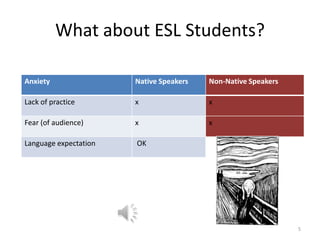
What about ESL Students?
Anxiety

Native Speakers

Non-Native Speakers

Lack of practice

x

x

Fear (of audience)

x

x

Language expectation

OK

5
ESL:
From Speechless to Powerful
Speakers
Carol A. Costello, M.A. TESOL
Adjunct Professor, San Antonio College

6
Objective
Provide you with tools to teach public speaking
to intermediate adult
ESL students

7
Overview
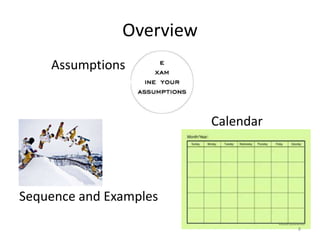
Assumptions

Calendar

Sequence and Examples
8
Assumptions
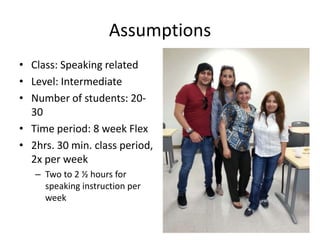
• Class: Speaking related
• Level: Intermediate
• Number of students: 2030
• Time period: 8 week Flex
• 2hrs. 30 min. class period,
2x per week
– Two to 2 ½ hours for
speaking instruction per
week
9
Assumptions
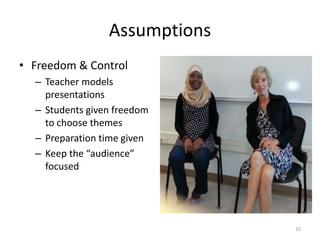
• Freedom & Control
– Teacher models
presentations
– Students given freedom
to choose themes

– Preparation time given
– Keep the “audience”
focused

10
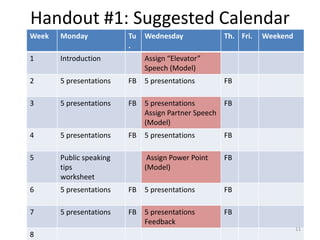
Handout #1: Suggested Calendar
Week

Monday

1

Introduction

2

5 presentations

FB

5 presentations

3

5 presentations

FB

5 presentations
FB
Assign Partner Speech
(Model)

4

5 presentations

FB

5 presentations

FB

5

Public speaking
tips
worksheet

Assign Power Point
(Model)

FB

6

5 presentations

FB

5 presentations

FB

7

5 presentations

FB

5 presentations
Feedback

FB

8

Tu
.

Wednesday

Th. Fri.

Weekend

Assign “Elevator”
Speech (Model)
FB

11
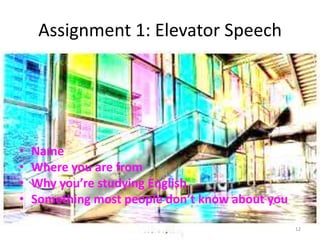
Assignment 1: Elevator Speech

•
•
•
•

Name
Where you are from
Why you’re studying English
Something most people don’t know about you
12
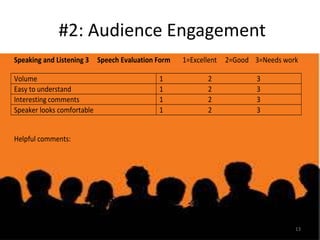
#2: Audience Engagement
Speaking and Listening 3
Volume
Easy to understand
Interesting comments
Speaker looks comfortable

Speech Evaluation Form
1
1
1
1

1=Excellent
2
2
2
2

2=Good 3=Needs work
3
3
3
3

Helpful comments:

13
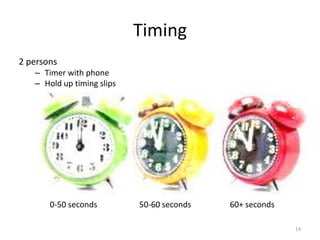
Timing
2 persons
– Timer with phone
– Hold up timing slips

0-50 seconds

50-60 seconds

60+ seconds
14
Any Volunteers?

15
Feedback to Class
Timing
Body language
Organization

Language
16
Audience Comments Returned to
Students

17
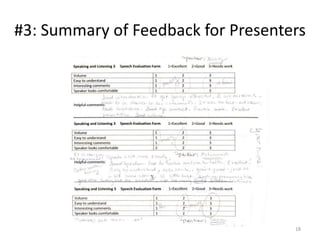
#3: Summary of Feedback for Presenters

18
Optional Activities
http://www.youtube.com/watch?v=YivQYeI0vys

19
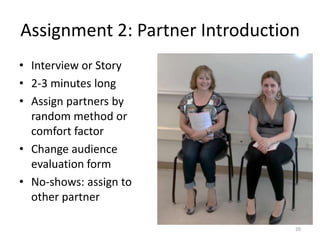
Assignment 2: Partner Introduction
• Interview or Story
• 2-3 minutes long
• Assign partners by
random method or
comfort factor
• Change audience
evaluation form
• No-shows: assign to
other partner
20
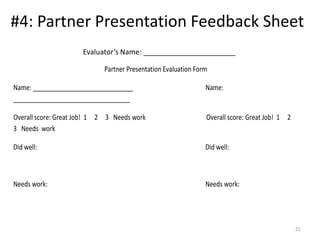
#4: Partner Presentation Feedback Sheet
Evaluator’s Name: _______________________

Partner Presentation Evaluation Form
Name: ______________________________
___________________________________

Name:

Overall score: Great Job! 1 2 3 Needs work
3 Needs work

Overall score: Great Job! 1 2

Did well:

Did well:

Needs work:

Needs work:

21
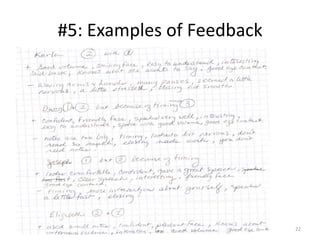
#5: Examples of Feedback

22
Elements of Public Speaking
Content

Delivery

Notes

Feedback

Summary

23
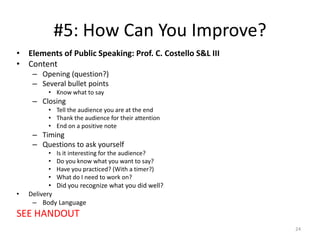
#5: How Can You Improve?
• Elements of Public Speaking: Prof. C. Costello S&L III
• Content
– Opening (question?)
– Several bullet points
• Know what to say

– Closing
• Tell the audience you are at the end
• Thank the audience for their attention
• End on a positive note

– Timing
– Questions to ask yourself
•
•
•
•

•

Is it interesting for the audience?
Do you know what you want to say?
Have you practiced? (With a timer?)
What do I need to work on?

• Did you recognize what you did well?
Delivery
– Body Language

SEE HANDOUT
24
Assignment 3: Power Point
• Model for Students (2-3 minutes)
• Allow them to suggest themes
• Write themes down to check

25
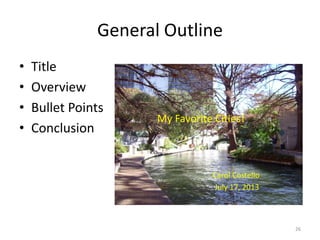
General Outline
•
•
•
•

Title
Overview
Bullet Points
Conclusion

My Favorite Cities!

Carol Costello
July 17, 2013

26
My Favorite Cities!

Carol Costello
July 17, 2013
27
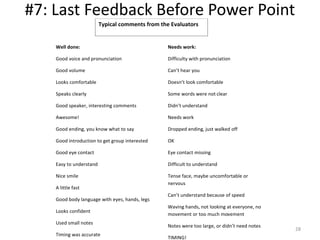
#7: Last Feedback Before Power Point
Typical comments from the Evaluators

Well done:

Needs work:

Good voice and pronunciation

Difficulty with pronunciation

Good volume

Can’t hear you

Looks comfortable

Doesn’t look comfortable

Speaks clearly

Some words were not clear

Good speaker, interesting comments

Didn’t understand

Awesome!

Needs work

Good ending, you know what to say

Dropped ending, just walked off

Good introduction to get group interested

OK

Good eye contact

Eye contact missing

Easy to understand

Difficult to understand

Nice smile

Tense face, maybe uncomfortable or
nervous

A little fast
Good body language with eyes, hands, legs
Looks confident
Used small notes
Timing was accurate

Can’t understand because of speed
Waving hands, not looking at everyone, no
movement or too much movement
Notes were too large, or didn’t need notes
TIMING!

28
Lab Time for PP preparation
• Students help each
other
• Encourage creativity
• Show them how to
choose and
manipulate photos

29
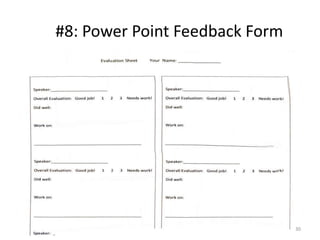
#8: Power Point Feedback Form

30
The Key to Success!

31
Results: Much Discussion!
•
•
•
•
•
•
•

Colombia: Anti-bullfighting
Chile: National Parks and Folklore
Mexico: “The Art of Happyness”
Taiwan: Tae Kwan Do
Iran: My Hometown
Vietnam: How to Make Summer Rolls
Saudi Arabia: Wedding Customs
32
Conclusion

33
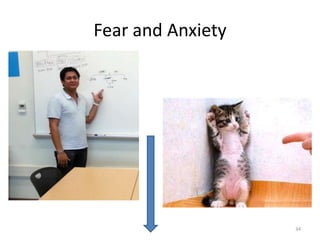
Fear and Anxiety

34
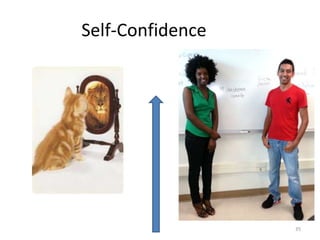
Self-Confidence

35
36
37

How to of public speaking for ESL Students

  • 1.
  • 2.
  • 3.
  • 4.
  • 5.
    What about ESLStudents? Anxiety Native Speakers Non-Native Speakers Lack of practice x x Fear (of audience) x x Language expectation OK 5
  • 6.
    ESL: From Speechless toPowerful Speakers Carol A. Costello, M.A. TESOL Adjunct Professor, San Antonio College 6
  • 7.
    Objective Provide you withtools to teach public speaking to intermediate adult ESL students 7
  • 8.
  • 9.
    Assumptions • Class: Speakingrelated • Level: Intermediate • Number of students: 2030 • Time period: 8 week Flex • 2hrs. 30 min. class period, 2x per week – Two to 2 ½ hours for speaking instruction per week 9
  • 10.
    Assumptions • Freedom &Control – Teacher models presentations – Students given freedom to choose themes – Preparation time given – Keep the “audience” focused 10
  • 11.
    Handout #1: SuggestedCalendar Week Monday 1 Introduction 2 5 presentations FB 5 presentations 3 5 presentations FB 5 presentations FB Assign Partner Speech (Model) 4 5 presentations FB 5 presentations FB 5 Public speaking tips worksheet Assign Power Point (Model) FB 6 5 presentations FB 5 presentations FB 7 5 presentations FB 5 presentations Feedback FB 8 Tu . Wednesday Th. Fri. Weekend Assign “Elevator” Speech (Model) FB 11
  • 12.
    Assignment 1: ElevatorSpeech • • • • Name Where you are from Why you’re studying English Something most people don’t know about you 12
  • 13.
    #2: Audience Engagement Speakingand Listening 3 Volume Easy to understand Interesting comments Speaker looks comfortable Speech Evaluation Form 1 1 1 1 1=Excellent 2 2 2 2 2=Good 3=Needs work 3 3 3 3 Helpful comments: 13
  • 14.
    Timing 2 persons – Timerwith phone – Hold up timing slips 0-50 seconds 50-60 seconds 60+ seconds 14
  • 15.
  • 16.
    Feedback to Class Timing Bodylanguage Organization Language 16
  • 17.
  • 18.
    #3: Summary ofFeedback for Presenters 18
  • 19.
  • 20.
    Assignment 2: PartnerIntroduction • Interview or Story • 2-3 minutes long • Assign partners by random method or comfort factor • Change audience evaluation form • No-shows: assign to other partner 20
  • 21.
    #4: Partner PresentationFeedback Sheet Evaluator’s Name: _______________________ Partner Presentation Evaluation Form Name: ______________________________ ___________________________________ Name: Overall score: Great Job! 1 2 3 Needs work 3 Needs work Overall score: Great Job! 1 2 Did well: Did well: Needs work: Needs work: 21
  • 22.
    #5: Examples ofFeedback 22
  • 23.
    Elements of PublicSpeaking Content Delivery Notes Feedback Summary 23
  • 24.
    #5: How CanYou Improve? • Elements of Public Speaking: Prof. C. Costello S&L III • Content – Opening (question?) – Several bullet points • Know what to say – Closing • Tell the audience you are at the end • Thank the audience for their attention • End on a positive note – Timing – Questions to ask yourself • • • • • Is it interesting for the audience? Do you know what you want to say? Have you practiced? (With a timer?) What do I need to work on? • Did you recognize what you did well? Delivery – Body Language SEE HANDOUT 24
  • 25.
    Assignment 3: PowerPoint • Model for Students (2-3 minutes) • Allow them to suggest themes • Write themes down to check 25
  • 26.
  • 27.
    My Favorite Cities! CarolCostello July 17, 2013 27
  • 28.
    #7: Last FeedbackBefore Power Point Typical comments from the Evaluators Well done: Needs work: Good voice and pronunciation Difficulty with pronunciation Good volume Can’t hear you Looks comfortable Doesn’t look comfortable Speaks clearly Some words were not clear Good speaker, interesting comments Didn’t understand Awesome! Needs work Good ending, you know what to say Dropped ending, just walked off Good introduction to get group interested OK Good eye contact Eye contact missing Easy to understand Difficult to understand Nice smile Tense face, maybe uncomfortable or nervous A little fast Good body language with eyes, hands, legs Looks confident Used small notes Timing was accurate Can’t understand because of speed Waving hands, not looking at everyone, no movement or too much movement Notes were too large, or didn’t need notes TIMING! 28
  • 29.
    Lab Time forPP preparation • Students help each other • Encourage creativity • Show them how to choose and manipulate photos 29
  • 30.
    #8: Power PointFeedback Form 30
  • 31.
    The Key toSuccess! 31
  • 32.
    Results: Much Discussion! • • • • • • • Colombia:Anti-bullfighting Chile: National Parks and Folklore Mexico: “The Art of Happyness” Taiwan: Tae Kwan Do Iran: My Hometown Vietnam: How to Make Summer Rolls Saudi Arabia: Wedding Customs 32
  • 33.
  • 34.
  • 35.
  • 36.
  • 37.