HOW TO EXPAND AND EXPLAIN
YOUR IDEAS EFFECTIVELY.
COMPILED BY MADIOPE J.M
• What is an Essay?
• The Structure of an Essay
• Types of essays
• In essay writing, we want to expand our ideas as much as
possible, while STILL following paragraph structure.
• The only difference is that the THREE REASONS in your
original paragraph get their OWN paragraph
• Additionally, you introduce and conclude your writing into
separate paragraphs
• THIS MEANS YOU ARE WRITING
FIVE PARAGRAPHS
Did you say
FIVE
paragraphs?
• The main purpose of any essay is to
discuss, persuade, describe, explain,
interpret or analyse a particular topic.
• The Introduction: Explains the topic with general ideas. It
also has the thesis statement and comes at or near the
end of the paragraph.
• The Main body: Explain and support the thesis
statement.
• The conclusion: Summarises or restates the thesis and
the supporting ideas of the essay.

Taken from: Academic Writing from Paragraph to Essay, Zemach, D. & Rumisek, L. Macmillan 2005
•
•
•
•

An essay has three main parts:
An introduction (introductory paragraph)
A body (at least one, but usually more paragraphs)
A conclusion (concluding paragraph)
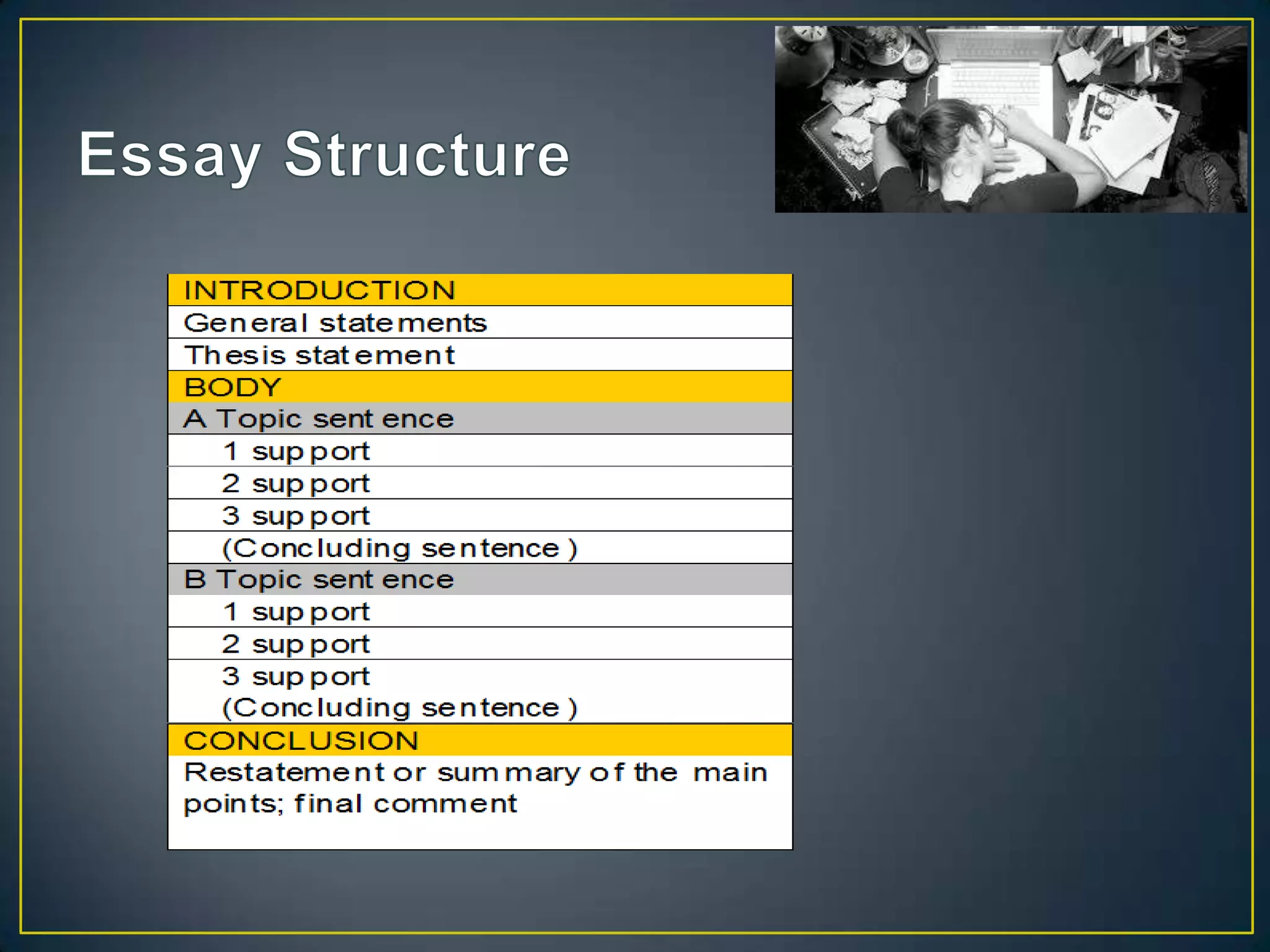
 An introductory paragraph has 2 parts:
• General statement
Introduce the general topic of the essay.
Capture the reader’s interest.
• Thesis statement
States the specific topic.
May list subtopics or subdivisions.
May indicate the pattern of organization.
Is normally the last sentence in the introductory paragraph.
 The body paragraphs are used to:
• Develop your topic.
• Prove your points.
 The body paragraph should have:
• Some sort of pattern (chronological order or
comparison/contrast, or a combination of both)
• A logical division of ideas (division into subtopics and
discussion of these subtopics in separate paragraphs)
• The conclusion is the final paragraph
in an essay. It has three purposes:
• It signals the end of the essay.
• It reminds the reader of your main points. You can do this
in two ways:
• Summarize your subtopics.
• Paraphrase your thesis.
• It leaves the reader with your final thoughts on the topic.
Types
of
Essay

•Descriptive
•Narrative
•Cause and Effect
•Compare and Contrast
•Process
•Expository
•Persuasive/Argumentative
Descriptive Essay
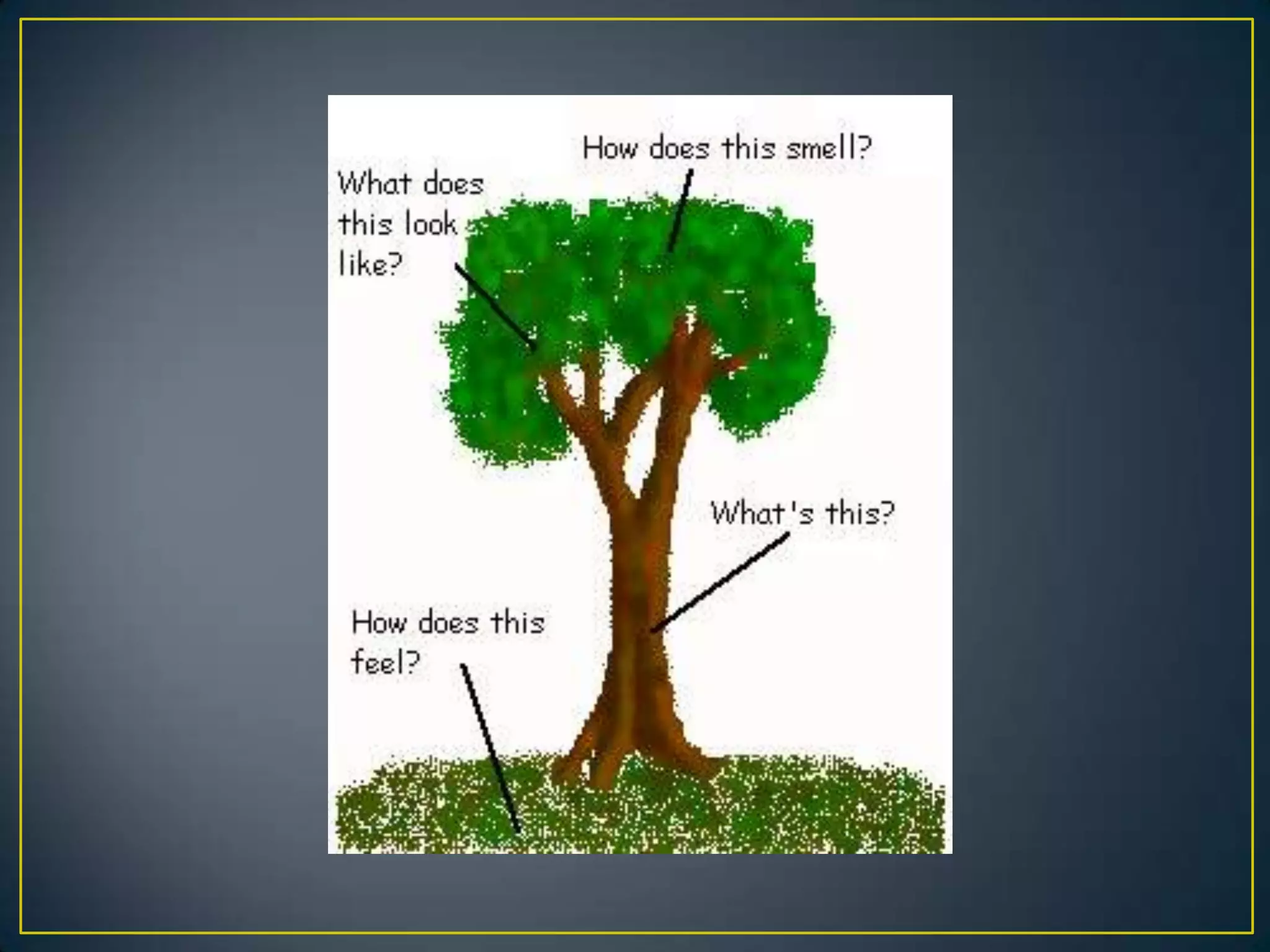
o provides details about how something looks,
feels, tastes, smells, makes one feel, or sounds
o describe what something is, or how something
happened
o could be a list-like description that provides point
by point details
Narrative Essay
o tells a story

o conversational in style, and tells of a personal
experience
o commonly written in the first person (uses I)

o tell of a single, life-shaping event, or simply a
mundane daily experience
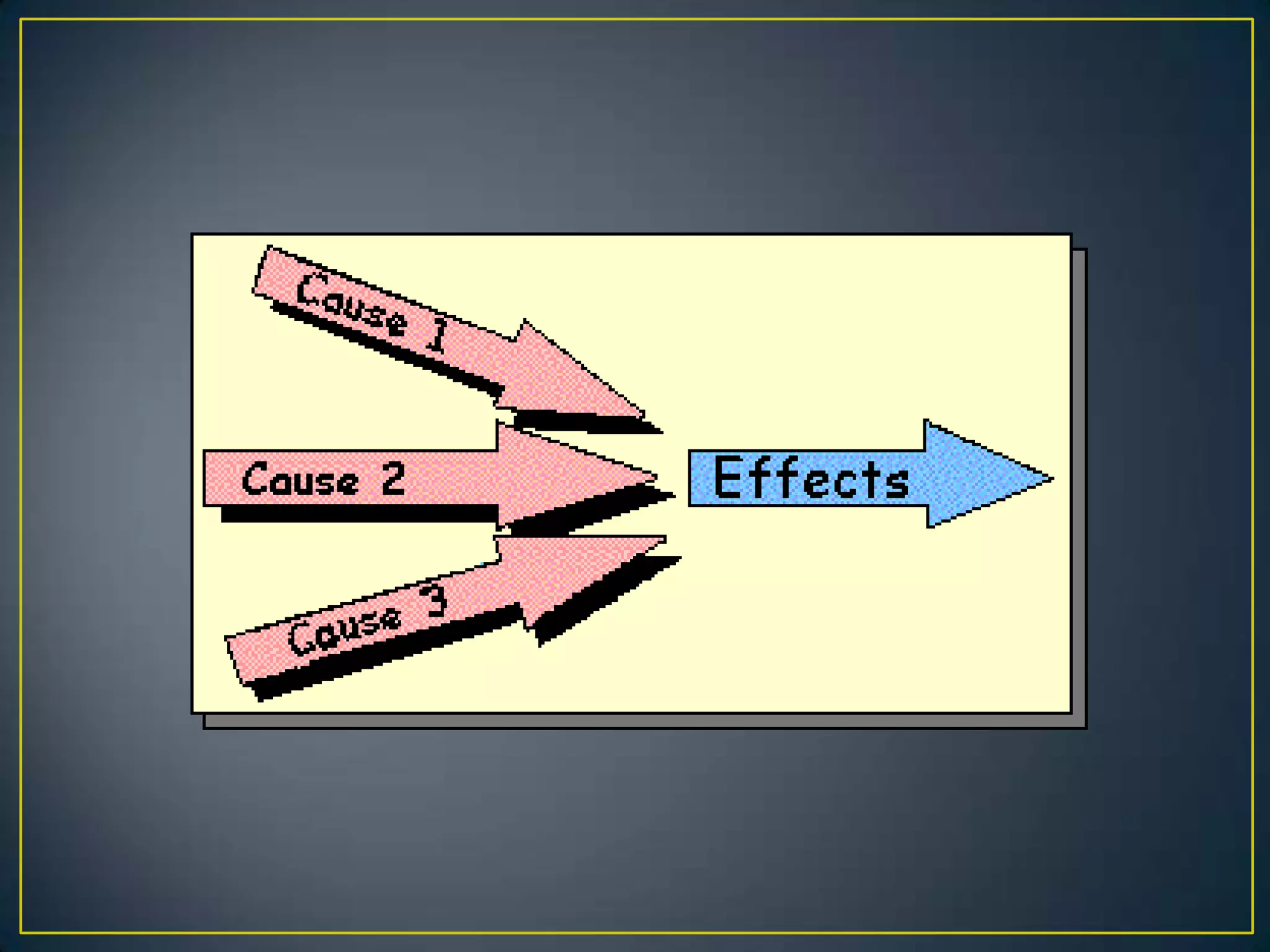
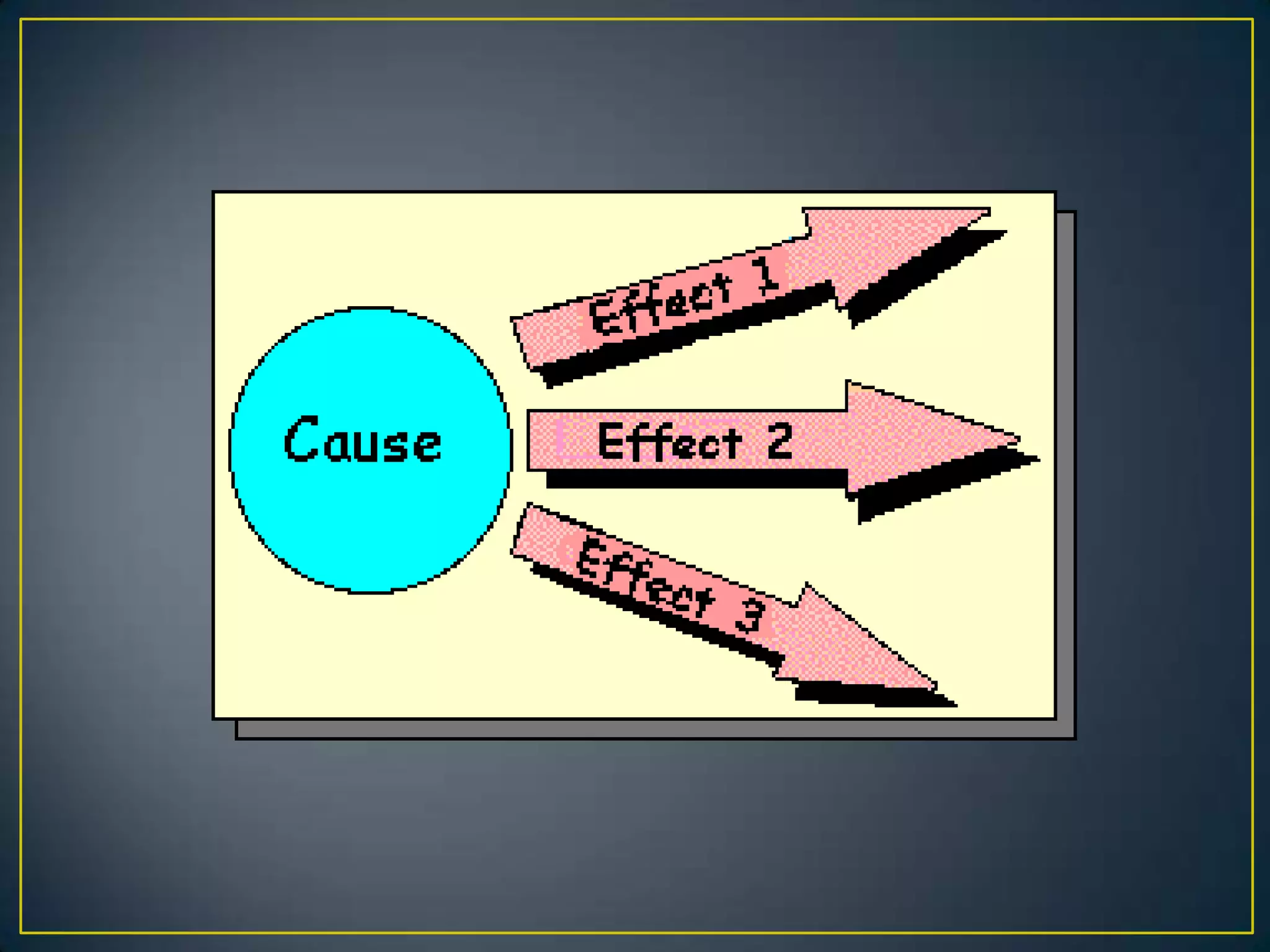
Cause and Effect Essay
o explains why or how some event happened, and what
resulted from the event
o a study of the relationship between two or more events or
experiences
o discuss both causes and effects, or it could simply
address one or the other

o discuss the reasons why something happened
o discuss what happens after a specific event or
circumstance
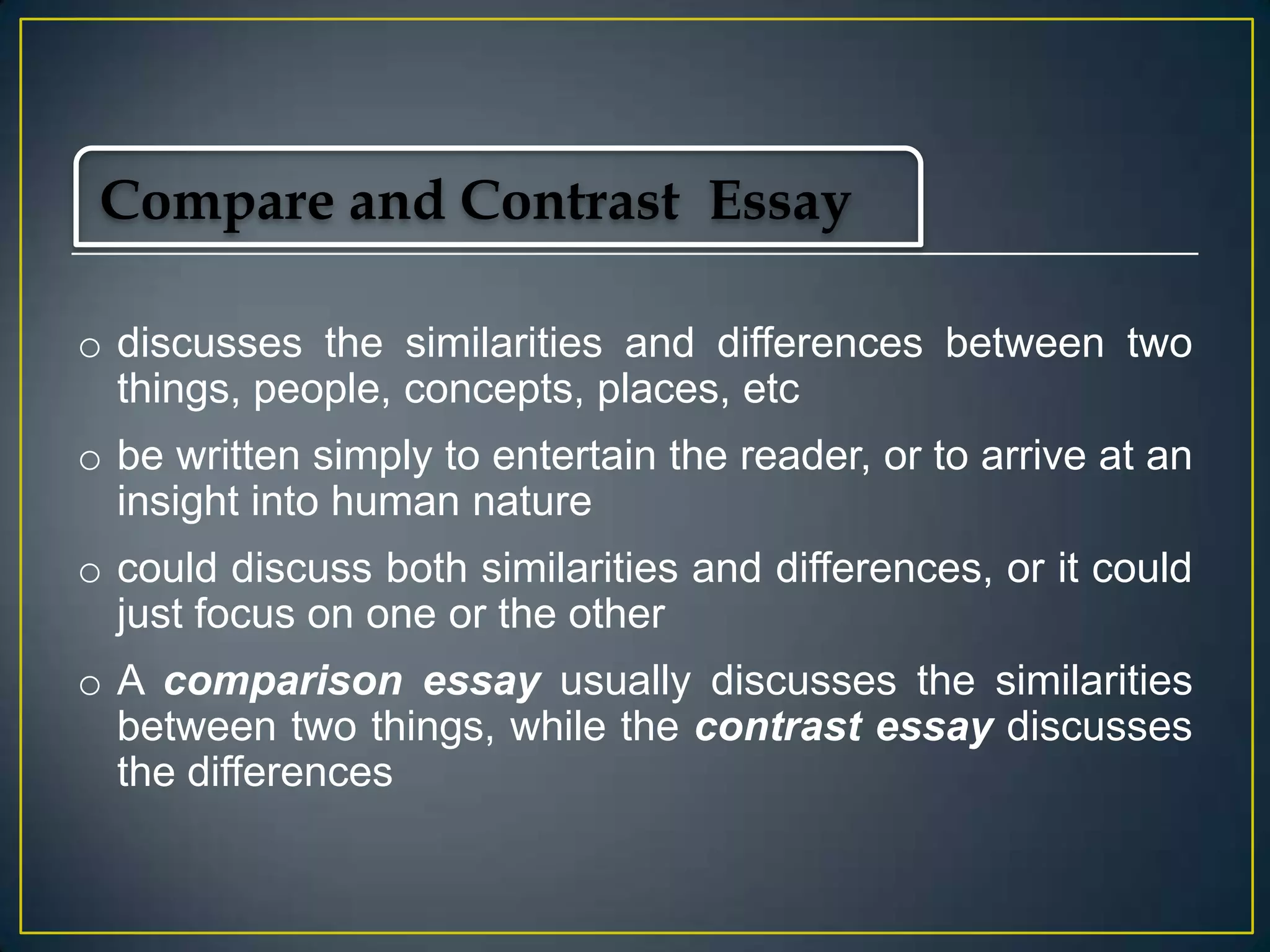
Compare and Contrast Essay
o discusses the similarities and differences between two
things, people, concepts, places, etc
o be written simply to entertain the reader, or to arrive at an
insight into human nature
o could discuss both similarities and differences, or it could
just focus on one or the other

o A comparison essay usually discusses the similarities
between two things, while the contrast essay discusses
the differences
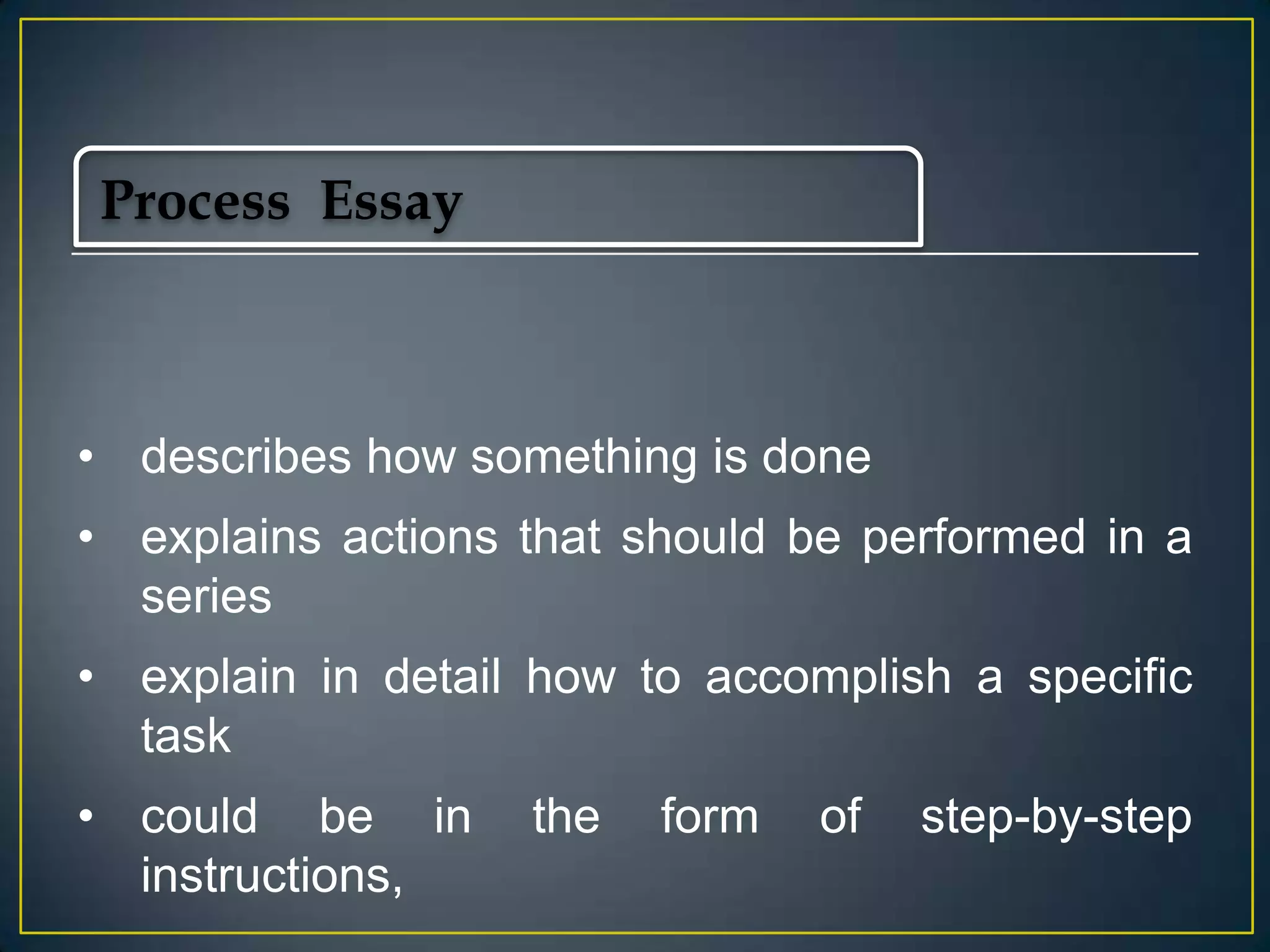
Process Essay

• describes how something is done
• explains actions that should be performed in a
series
• explain in detail how to accomplish a specific
task
• could be in
instructions,

the

form

of

step-by-step
Expository Essay
• explanation of a short theme, idea or issue
• try to pin down the meaning of a specific
word, or define an abstract concept
• to present, completely and fairly, other people's
views or to report about an event or a situation
• presents a subject in detail, apart
criticism, argument, or development

from
• http://www.slideshare.net/legendofsheena/essay-writing29651899?qid=48f2266a-d77e-4b25-812139177edaae27&v=qf1&b=&from_search=2
• http://www.slideshare.net/mumarialuisa/essay-writing23430869?qid=a9169190-6efb-44f9-b3367529d189fa24&v=default&b=&from_search=4
• http://www.slideshare.net/edibrata/essay-writing-5th-types-ofessay?qid=48f2266a-d77e-4b25-812139177edaae27&v=qf1&b=&from_search=3

• http://www.slideshare.net/pietvanderlaan/essay-writingstructure?qid=48f2266a-d77e-4b25-812139177edaae27&v=qf1&b=&from_search=18

Writing better essay

  • 1.
    HOW TO EXPANDAND EXPLAIN YOUR IDEAS EFFECTIVELY. COMPILED BY MADIOPE J.M
  • 2.
    • What isan Essay? • The Structure of an Essay • Types of essays
  • 3.
    • In essaywriting, we want to expand our ideas as much as possible, while STILL following paragraph structure. • The only difference is that the THREE REASONS in your original paragraph get their OWN paragraph • Additionally, you introduce and conclude your writing into separate paragraphs • THIS MEANS YOU ARE WRITING FIVE PARAGRAPHS
  • 4.
  • 5.
    • The mainpurpose of any essay is to discuss, persuade, describe, explain, interpret or analyse a particular topic.
  • 6.
    • The Introduction:Explains the topic with general ideas. It also has the thesis statement and comes at or near the end of the paragraph. • The Main body: Explain and support the thesis statement. • The conclusion: Summarises or restates the thesis and the supporting ideas of the essay. Taken from: Academic Writing from Paragraph to Essay, Zemach, D. & Rumisek, L. Macmillan 2005
  • 7.
    • • • • An essay hasthree main parts: An introduction (introductory paragraph) A body (at least one, but usually more paragraphs) A conclusion (concluding paragraph)
  • 9.
     An introductoryparagraph has 2 parts: • General statement Introduce the general topic of the essay. Capture the reader’s interest. • Thesis statement States the specific topic. May list subtopics or subdivisions. May indicate the pattern of organization. Is normally the last sentence in the introductory paragraph.
  • 10.
     The bodyparagraphs are used to: • Develop your topic. • Prove your points.  The body paragraph should have: • Some sort of pattern (chronological order or comparison/contrast, or a combination of both) • A logical division of ideas (division into subtopics and discussion of these subtopics in separate paragraphs)
  • 11.
    • The conclusionis the final paragraph in an essay. It has three purposes: • It signals the end of the essay. • It reminds the reader of your main points. You can do this in two ways: • Summarize your subtopics. • Paraphrase your thesis. • It leaves the reader with your final thoughts on the topic.
  • 12.
    Types of Essay •Descriptive •Narrative •Cause and Effect •Compareand Contrast •Process •Expository •Persuasive/Argumentative
  • 13.
    Descriptive Essay o providesdetails about how something looks, feels, tastes, smells, makes one feel, or sounds o describe what something is, or how something happened o could be a list-like description that provides point by point details
  • 15.
    Narrative Essay o tellsa story o conversational in style, and tells of a personal experience o commonly written in the first person (uses I) o tell of a single, life-shaping event, or simply a mundane daily experience
  • 16.
    Cause and EffectEssay o explains why or how some event happened, and what resulted from the event o a study of the relationship between two or more events or experiences o discuss both causes and effects, or it could simply address one or the other o discuss the reasons why something happened o discuss what happens after a specific event or circumstance
  • 19.
    Compare and ContrastEssay o discusses the similarities and differences between two things, people, concepts, places, etc o be written simply to entertain the reader, or to arrive at an insight into human nature o could discuss both similarities and differences, or it could just focus on one or the other o A comparison essay usually discusses the similarities between two things, while the contrast essay discusses the differences
  • 20.
    Process Essay • describeshow something is done • explains actions that should be performed in a series • explain in detail how to accomplish a specific task • could be in instructions, the form of step-by-step
  • 21.
    Expository Essay • explanationof a short theme, idea or issue • try to pin down the meaning of a specific word, or define an abstract concept • to present, completely and fairly, other people's views or to report about an event or a situation • presents a subject in detail, apart criticism, argument, or development from
  • 23.
    • http://www.slideshare.net/legendofsheena/essay-writing29651899?qid=48f2266a-d77e-4b25-812139177edaae27&v=qf1&b=&from_search=2 • http://www.slideshare.net/mumarialuisa/essay-writing23430869?qid=a9169190-6efb-44f9-b3367529d189fa24&v=default&b=&from_search=4 •http://www.slideshare.net/edibrata/essay-writing-5th-types-ofessay?qid=48f2266a-d77e-4b25-812139177edaae27&v=qf1&b=&from_search=3 • http://www.slideshare.net/pietvanderlaan/essay-writingstructure?qid=48f2266a-d77e-4b25-812139177edaae27&v=qf1&b=&from_search=18