How to Prevent Falls
Community Education Event: May 16, 2012

             Speaker: Lorie Eber, JD

                    Gerontologist
 Coastline Community College Gerontology Instructor
           NASM Certified Personal Trainer
        Credentialed Senior Fitness Specialist
Have YOU Ever Fallen?

• What were the circumstances?

• Did you tell your doctor?

• Are you afraid you will fall again?

• Did you make any changes to decrease your
  chances of falling again?
Do You Have “Fallophobia”?

• Can lead to more falls even without an
  increased physiological risk

• May cause you to limit your activities which
  can make you weaker and socially isolated

• Solution: make changes to decrease your risk
Fact or Myth?

1. Falling is something normal that happens as
   we get older.

2. If I limit my activity, I won’t fall.

3. As long as I stay home, I can avoid falling.

4. Using a walker or cane will make me more
   dependent.
Some Scary Statistics about Falls
Fall Statistics

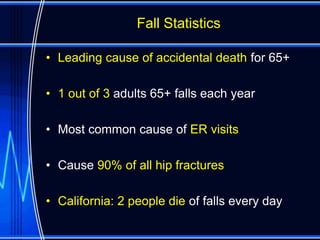
• Leading cause of accidental death for 65+

• 1 out of 3 adults 65+ falls each year

• Most common cause of ER visits

• Cause 90% of all hip fractures

• California: 2 people die of falls every day
Common Risk Factors for Falls

1. Postural hypotension aka orthostatic
   dizziness

2. Use of anti-anxiety and sleep medications

3. Use of 4+ prescription medications

4. Environmental hazards

5. Impairment in muscle strength or range of
   motion
Men are from Mars, Women are from Venus

 • Women are 58% more likely than men to
   suffer a non-fatal fall injury

 • Men have a 46% higher death rate from a fall
   than women

 • Women are twice as likely as men to suffer a
   fracture from a fall
Post-Fall Statistics

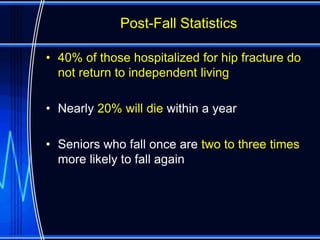
• 40% of those hospitalized for hip fracture do
  not return to independent living

• Nearly 20% will die within a year

• Seniors who fall once are two to three times
  more likely to fall again
Where Do Falls Take Place?


  23%

        55%
  22%
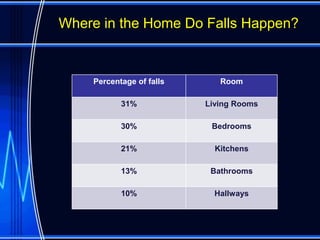
Where in the Home Do Falls Happen?


    Percentage of falls      Room

           31%            Living Rooms

           30%             Bedrooms

           21%              Kitchens

           13%             Bathrooms

           10%              Hallways
Why Do Older Adults Fall?

• Internal Risk Factors
  – Normal aging changes in vision, hearing, bone
    density, reflexes, coordination and strength
  – Diseases such as Parkinson’s, macular
    degeneration, diabetes, heart disease, arthritis,
    stroke


• External Risk Factors
  – Medications
  – Alcohol
  – Environmental hazards
Risks We Can Eliminate

•   Poor lighting
•   Clutter
•   Uneven surfaces
•   Stairways without railings
•   Bathtubs and showers without grab bars
•   Furniture that is too high or too low
•   Throw rugs
•   Loose carpets
•   Wet floors or pavements
Be Proactive!

• Get screened and treated for osteoporosis

• Do weight bearing exercises

• Make sure you have adequate amounts of
  calcium and Vitamin D

• Ask your doctor to review all your medications
Get Assessed

• Annual medical evaluation

• Review of all your medications

• Get an in-home safety evaluation from an
  occupational or physical therapist, care
  manager or home health provider
What if I Fall?
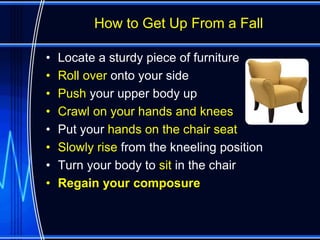
How to Get Up From a Fall

•   Locate a sturdy piece of furniture
•   Roll over onto your side
•   Push your upper body up
•   Crawl on your hands and knees
•   Put your hands on the chair seat
•   Slowly rise from the kneeling position
•   Turn your body to sit in the chair
•   Regain your composure
Illustration of Getting Up from a Fall
What if You Can’t Get Up?

• Cry out

• Bang away

• Slide over to a telephone

• Use your emergency call device

• Get into a comfortable position and wait
Emergency Call Devices

• Cost: ≈ $20 to $40 per month

• Activation fee: ≈ $50

• Cost: not covered by Medicare

• Range: ≈ 200 to 400 feet outside home
Four Things You Can Do to Prevent Falls
1.   Begin a Regular Exercise Program
Types of Exercise

• Exercises that build balance and lower-body
  strength reduce the risk of falls by 33%

• Balance exercises: tai chi, yoga

• Core exercises: to increase strength in deep
  stabilization muscles in trunk

• Balance & Mobility or Fall Proof Classes
Let’s Exercise

 Stand on One Foot

• Stand on right foot behind a
  sturdy chair, holding on for
  balance

• Hold for 10 seconds

• Repeat 3 times

• Repeat with left leg
2.   Have Your Medications Reviewed
Medications

• Some medications, or combinations of
  medications, can make you confused, tired or
  dizzy

• Which meds? blood pressure, anti-anxiety,
  antidepressants (SSRIs), sleeping pills,
  tranquilizers

• Ask your doctor to review all the medications
  you are taking, including over-the-counter
  and homeopathic
3.   Have Your Vision Checked
Vision

• Get your vision checked by an eye doctor at
  least once a year

• You may be wearing the wrong glasses

• You may have macular degeneration,
  glaucoma or cataracts
4.   Make Your Home Safer
Common Home Modifications

• Install handrails on both sides of stairways

• Mark first & last step with tape or paint

• Use non-skid strips in shower or bathtub

• Install grab bars in tub, shower, next to toilet

• Install elevated seat on toilet
Make Sure Contractor is Licensed

• Licensed by CA Contractors State Licensing
  Board

• Call (800) 321-CSLB or

• Internet Search:
  – California Contractors State Licensing Board
  – then click on “check license”
Tips for Hiring a Contractor

• Get a recommendation

• Get 3 estimates

• Sign a written contract

• Don’t pay in cash

• Don’t pay more than 10% or $1,000 upfront
Room-by-Room Safety Tips
Living Room

• Remove throw rugs

• Clear away the clutter

• Position phone conveniently

• Remove all cords and wires

• Make sure lighting is adequate
Bedroom

• Install night-lights

• Make sure you can reach a light from bed

• Make sure you can reach a phone from bed
Kitchen

• Place frequently used items within easy reach

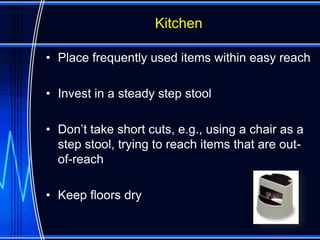
• Invest in a steady step stool

• Don’t take short cuts, e.g., using a chair as a
  step stool, trying to reach items that are out-
  of-reach

• Keep floors dry
Bathroom

• Put a non-slip surface on bathtub or shower

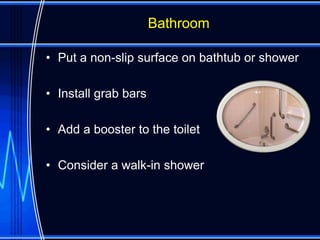
• Install grab bars

• Add a booster to the toilet

• Consider a walk-in shower
Stairs and Steps

• Remove clutter

• Fix broken or uneven steps

• Add light switches to bottom and top of
  staircase

• Make sure carpet is not loose or torn

• Make sure handrails on both sides are secure
THANK YOU!


         Stay Safe
in Your Home or Apartment

How to prevent falls ppt

  • 1.
    How to PreventFalls Community Education Event: May 16, 2012 Speaker: Lorie Eber, JD Gerontologist Coastline Community College Gerontology Instructor NASM Certified Personal Trainer Credentialed Senior Fitness Specialist
  • 2.
    Have YOU EverFallen? • What were the circumstances? • Did you tell your doctor? • Are you afraid you will fall again? • Did you make any changes to decrease your chances of falling again?
  • 3.
    Do You Have“Fallophobia”? • Can lead to more falls even without an increased physiological risk • May cause you to limit your activities which can make you weaker and socially isolated • Solution: make changes to decrease your risk
  • 4.
    Fact or Myth? 1.Falling is something normal that happens as we get older. 2. If I limit my activity, I won’t fall. 3. As long as I stay home, I can avoid falling. 4. Using a walker or cane will make me more dependent.
  • 5.
  • 6.
    Fall Statistics • Leadingcause of accidental death for 65+ • 1 out of 3 adults 65+ falls each year • Most common cause of ER visits • Cause 90% of all hip fractures • California: 2 people die of falls every day
  • 7.
    Common Risk Factorsfor Falls 1. Postural hypotension aka orthostatic dizziness 2. Use of anti-anxiety and sleep medications 3. Use of 4+ prescription medications 4. Environmental hazards 5. Impairment in muscle strength or range of motion
  • 8.
    Men are fromMars, Women are from Venus • Women are 58% more likely than men to suffer a non-fatal fall injury • Men have a 46% higher death rate from a fall than women • Women are twice as likely as men to suffer a fracture from a fall
  • 9.
    Post-Fall Statistics • 40%of those hospitalized for hip fracture do not return to independent living • Nearly 20% will die within a year • Seniors who fall once are two to three times more likely to fall again
  • 10.
    Where Do FallsTake Place? 23% 55% 22%
  • 11.
    Where in theHome Do Falls Happen? Percentage of falls Room 31% Living Rooms 30% Bedrooms 21% Kitchens 13% Bathrooms 10% Hallways
  • 12.
    Why Do OlderAdults Fall? • Internal Risk Factors – Normal aging changes in vision, hearing, bone density, reflexes, coordination and strength – Diseases such as Parkinson’s, macular degeneration, diabetes, heart disease, arthritis, stroke • External Risk Factors – Medications – Alcohol – Environmental hazards
  • 13.
    Risks We CanEliminate • Poor lighting • Clutter • Uneven surfaces • Stairways without railings • Bathtubs and showers without grab bars • Furniture that is too high or too low • Throw rugs • Loose carpets • Wet floors or pavements
  • 14.
    Be Proactive! • Getscreened and treated for osteoporosis • Do weight bearing exercises • Make sure you have adequate amounts of calcium and Vitamin D • Ask your doctor to review all your medications
  • 15.
    Get Assessed • Annualmedical evaluation • Review of all your medications • Get an in-home safety evaluation from an occupational or physical therapist, care manager or home health provider
  • 16.
    What if IFall?
  • 17.
    How to GetUp From a Fall • Locate a sturdy piece of furniture • Roll over onto your side • Push your upper body up • Crawl on your hands and knees • Put your hands on the chair seat • Slowly rise from the kneeling position • Turn your body to sit in the chair • Regain your composure
  • 18.
  • 19.
    What if YouCan’t Get Up? • Cry out • Bang away • Slide over to a telephone • Use your emergency call device • Get into a comfortable position and wait
  • 20.
    Emergency Call Devices •Cost: ≈ $20 to $40 per month • Activation fee: ≈ $50 • Cost: not covered by Medicare • Range: ≈ 200 to 400 feet outside home
  • 21.
    Four Things YouCan Do to Prevent Falls
  • 22.
    1. Begin a Regular Exercise Program
  • 23.
    Types of Exercise •Exercises that build balance and lower-body strength reduce the risk of falls by 33% • Balance exercises: tai chi, yoga • Core exercises: to increase strength in deep stabilization muscles in trunk • Balance & Mobility or Fall Proof Classes
  • 24.
    Let’s Exercise Standon One Foot • Stand on right foot behind a sturdy chair, holding on for balance • Hold for 10 seconds • Repeat 3 times • Repeat with left leg
  • 25.
    2. Have Your Medications Reviewed
  • 26.
    Medications • Some medications,or combinations of medications, can make you confused, tired or dizzy • Which meds? blood pressure, anti-anxiety, antidepressants (SSRIs), sleeping pills, tranquilizers • Ask your doctor to review all the medications you are taking, including over-the-counter and homeopathic
  • 27.
    3. Have Your Vision Checked
  • 28.
    Vision • Get yourvision checked by an eye doctor at least once a year • You may be wearing the wrong glasses • You may have macular degeneration, glaucoma or cataracts
  • 29.
    4. Make Your Home Safer
  • 30.
    Common Home Modifications •Install handrails on both sides of stairways • Mark first & last step with tape or paint • Use non-skid strips in shower or bathtub • Install grab bars in tub, shower, next to toilet • Install elevated seat on toilet
  • 31.
    Make Sure Contractoris Licensed • Licensed by CA Contractors State Licensing Board • Call (800) 321-CSLB or • Internet Search: – California Contractors State Licensing Board – then click on “check license”
  • 32.
    Tips for Hiringa Contractor • Get a recommendation • Get 3 estimates • Sign a written contract • Don’t pay in cash • Don’t pay more than 10% or $1,000 upfront
  • 33.
  • 34.
    Living Room • Removethrow rugs • Clear away the clutter • Position phone conveniently • Remove all cords and wires • Make sure lighting is adequate
  • 35.
    Bedroom • Install night-lights •Make sure you can reach a light from bed • Make sure you can reach a phone from bed
  • 36.
    Kitchen • Place frequentlyused items within easy reach • Invest in a steady step stool • Don’t take short cuts, e.g., using a chair as a step stool, trying to reach items that are out- of-reach • Keep floors dry
  • 37.
    Bathroom • Put anon-slip surface on bathtub or shower • Install grab bars • Add a booster to the toilet • Consider a walk-in shower
  • 38.
    Stairs and Steps •Remove clutter • Fix broken or uneven steps • Add light switches to bottom and top of staircase • Make sure carpet is not loose or torn • Make sure handrails on both sides are secure
  • 39.
    THANK YOU! Stay Safe in Your Home or Apartment