How a bill becomes law in Colorado
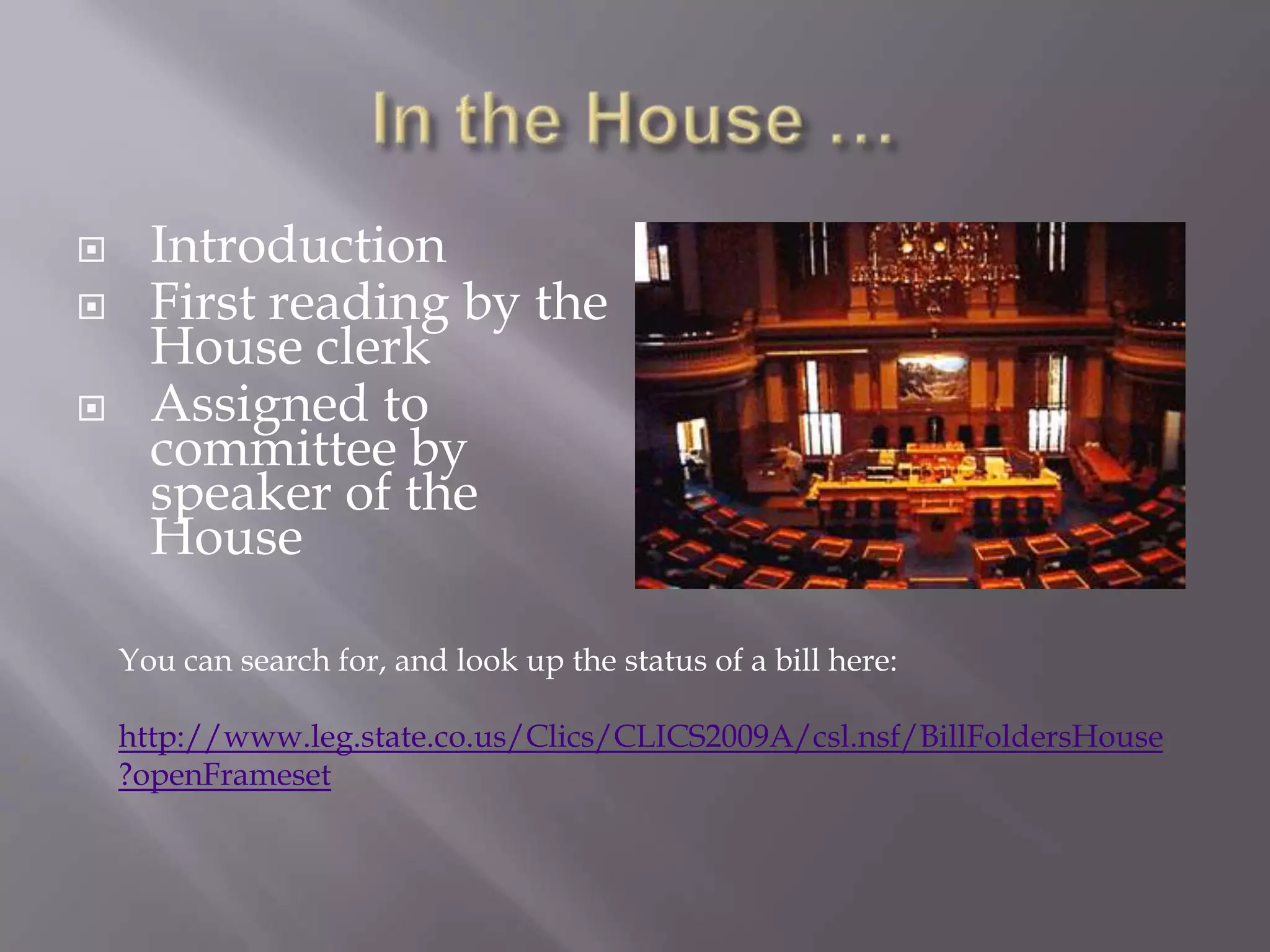
Introducing a billBills are introduced by legislatorsA bill can be introduced in the Colorado House or the Colorado Senate
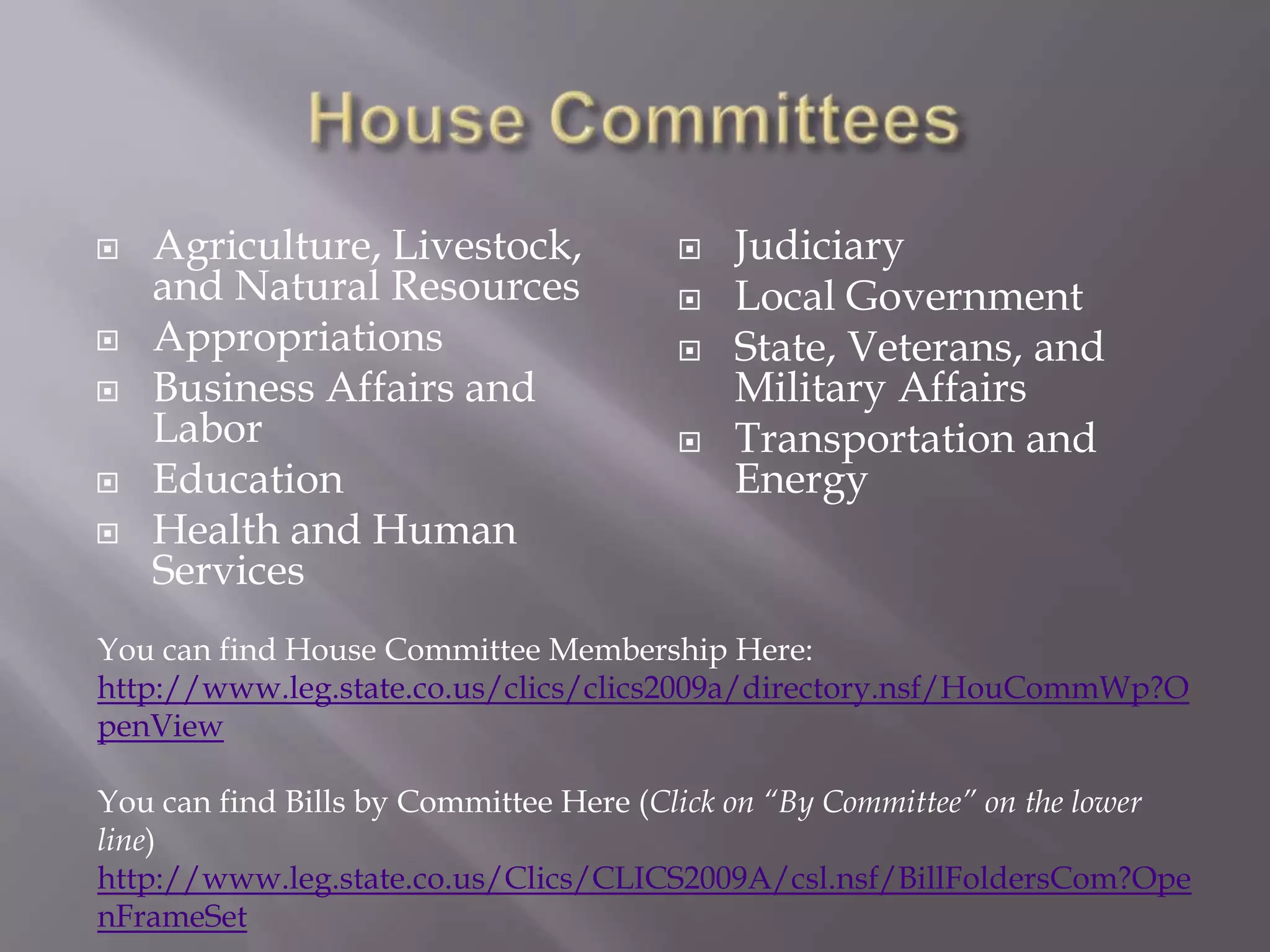
In the House …IntroductionFirst reading by the House clerkAssigned to committee by speaker of the HouseYou can search for, and look up the status of a bill here:http://www.leg.state.co.us/Clics/CLICS2009A/csl.nsf/BillFoldersHouse?openFrameset
House CommitteesAgriculture, Livestock, and Natural ResourcesAppropriationsBusiness Affairs and LaborEducationHealth and Human ServicesJudiciaryLocal GovernmentState, Veterans, and Military AffairsTransportation and EnergyYou can find House Committee Membership Here:http://www.leg.state.co.us/clics/clics2009a/directory.nsf/HouCommWp?OpenViewYou can find Bills by Committee Here (Click on “By Committee” on the lower line)http://www.leg.state.co.us/Clics/CLICS2009A/csl.nsf/BillFoldersCom?OpenFrameSet
In CommitteeCommittee hearingPublic and Expert Testimony Amendments may be offeredA passing vote from the Committee sends the bill back to the HouseCommittees publish their calendars here:http://www.leg.state.co.us/Clics/CLICS2009A/csl.nsf/Calendars?OpenFrameSetYou can listen to committee hearings on a bill here:http://www.leg.state.co.us/clics/clics2009a/cslFrontPages.nsf/Audio?OpenForm
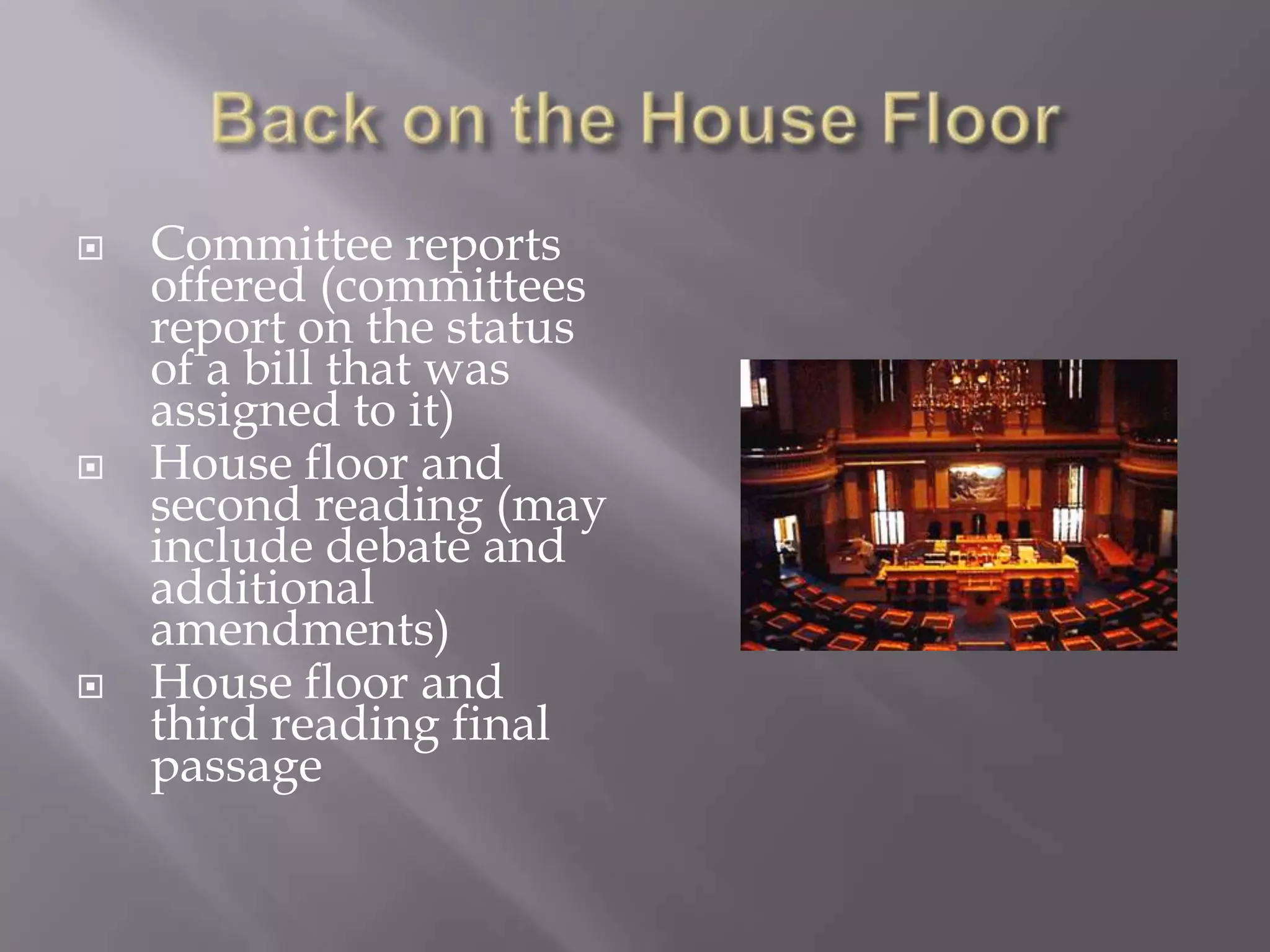
Back on the House FloorCommittee reports offered (committees report on the status of a bill that was assigned to it)House floor and second reading (may include debate and additional amendments)House floor and third reading final passage
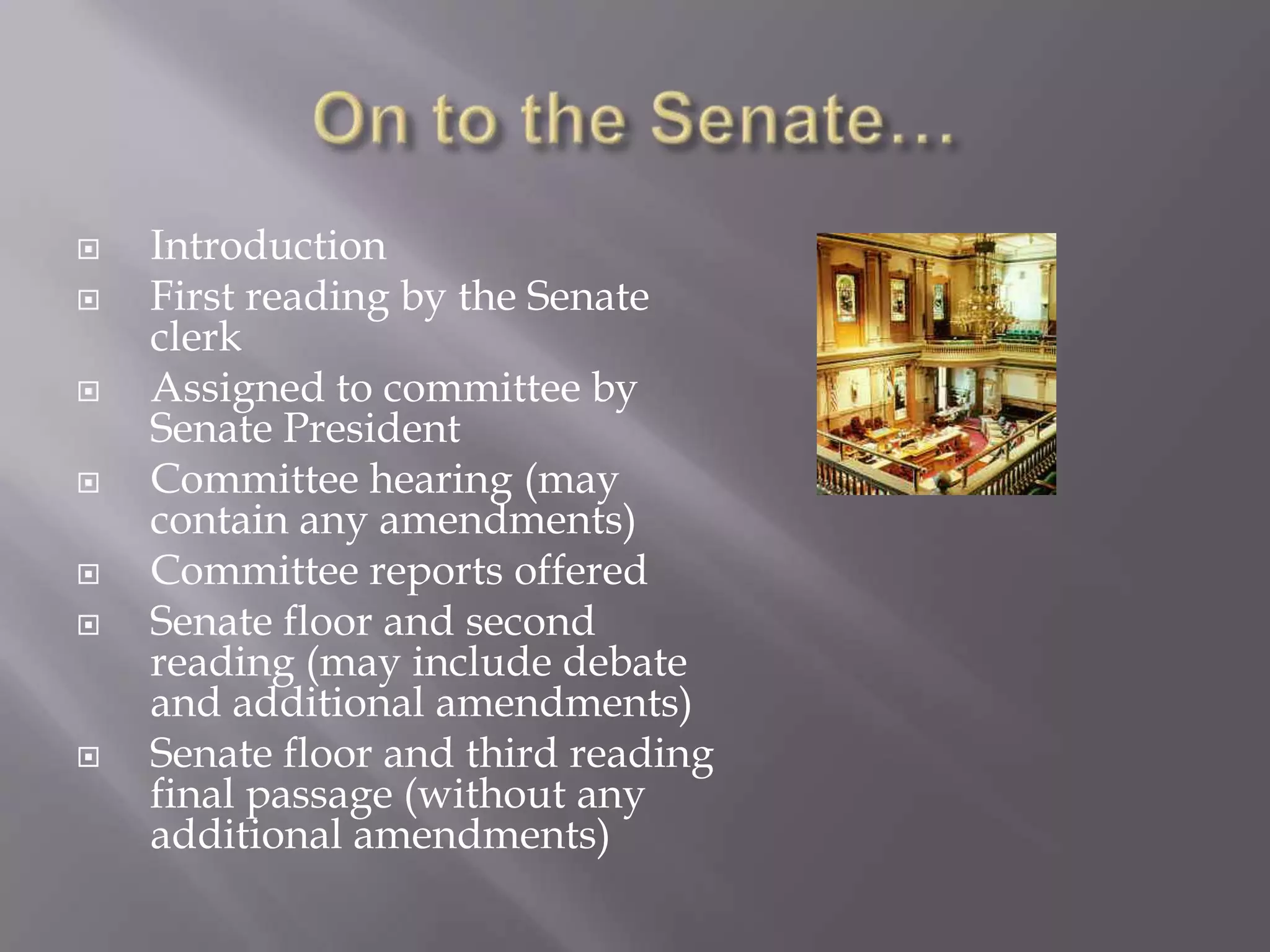
On to the Senate…IntroductionFirst reading by the Senate clerkAssigned to committee by Senate PresidentCommittee hearing (may contain any amendments)Committee reports offeredSenate floor and second reading (may include debate and additional amendments)Senate floor and third reading final passage (without any additional amendments)
Senate CommitteesAgriculture and Natural ResourcesAppropriationsBusiness, Labor, and TechnologyEducationFinanceHealth and Human ServicesJudiciaryLocal Government and EnergyState, Veterans, and Military AffairsTransportation
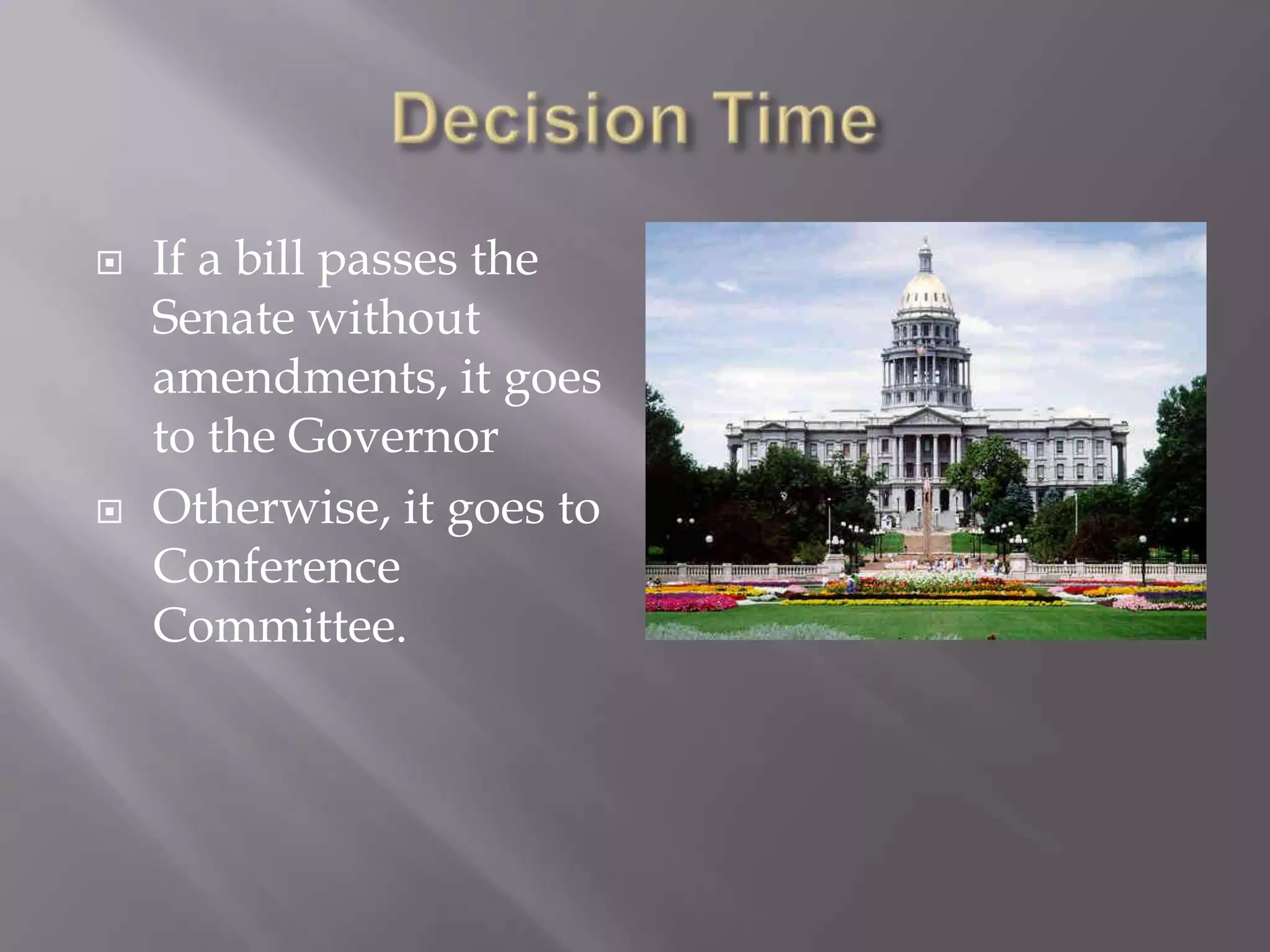
Decision TimeIf a bill passes the Senate without amendments, it goes to the GovernorOtherwise, it goes to Conference Committee.
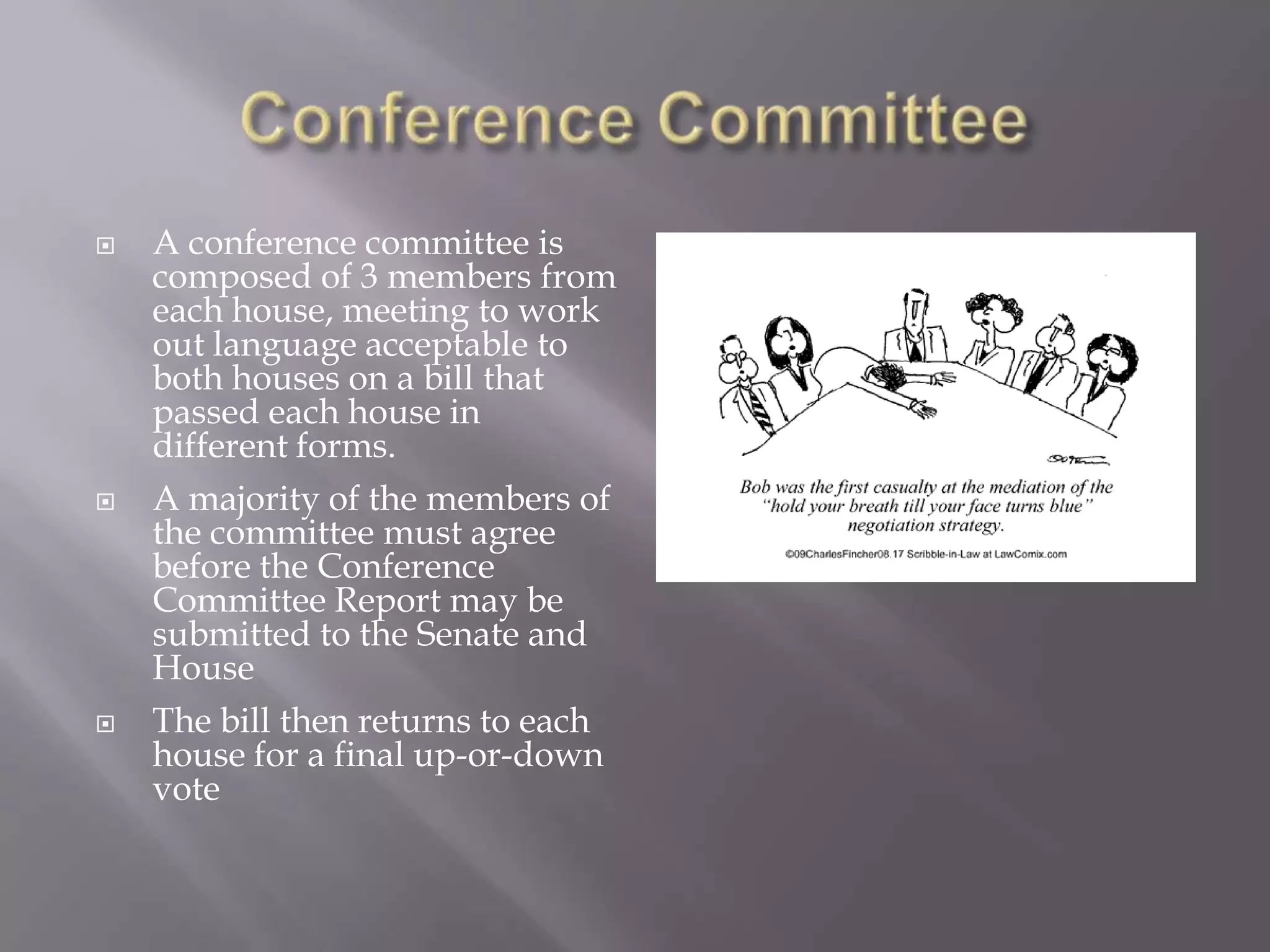
Conference CommitteeA conference committee is composed of 3 members from each house, meeting to work out language acceptable to both houses on a bill that passed each house in different forms.A majority of the members of the committee must agree before the Conference Committee Report may be submitted to the Senate and HouseThe bill then returns to each house for a final up-or-down vote
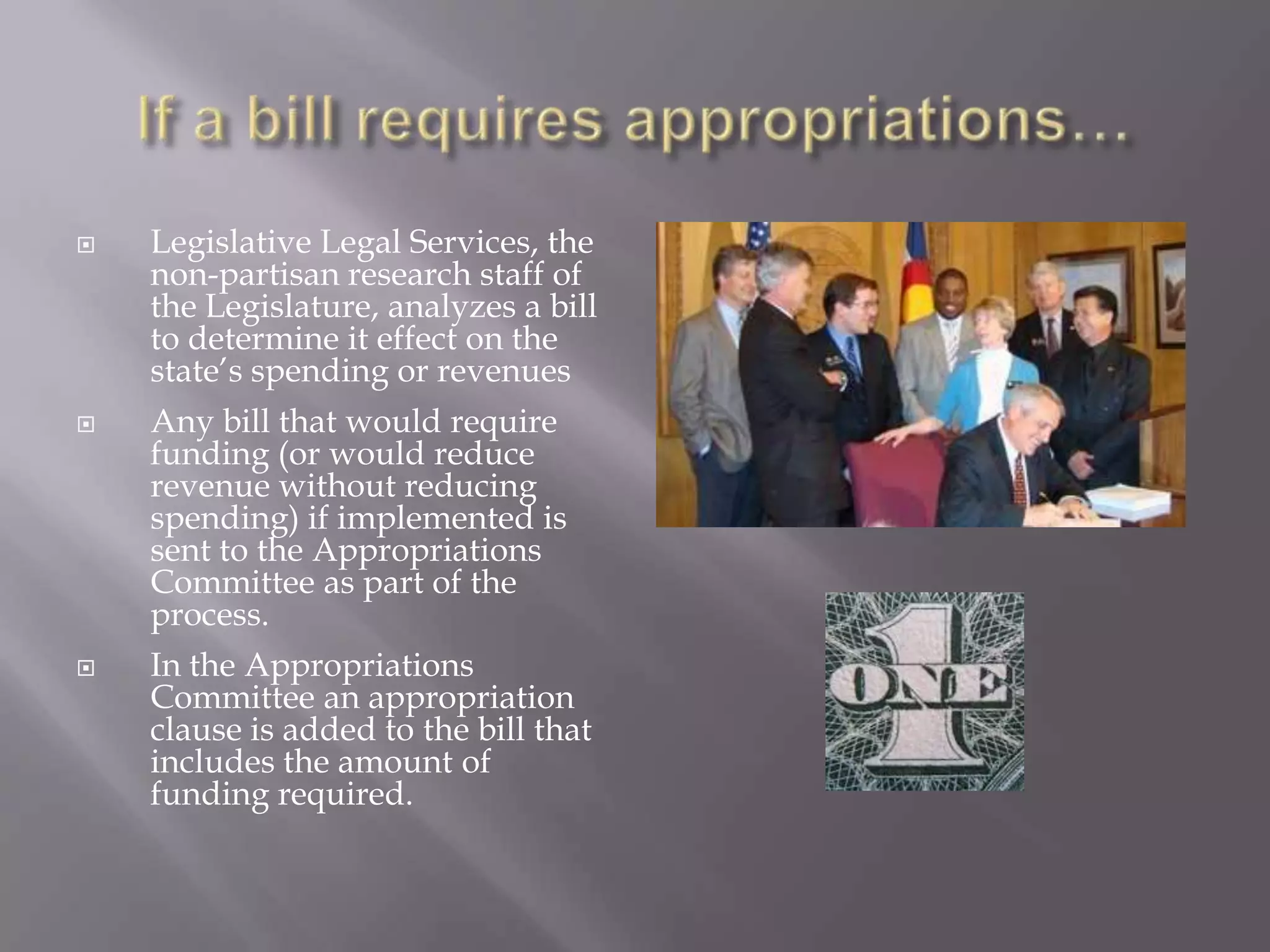
If a bill requires appropriations…Legislative Legal Services, the non-partisan research staff of the Legislature, analyzes a bill to determine it effect on the state’s spending or revenues Any bill that would require funding (or would reduce revenue without reducing spending) if implemented is sent to the Appropriations Committee as part of the process.In the Appropriations Committee an appropriation clause is added to the bill that includes the amount of funding required.
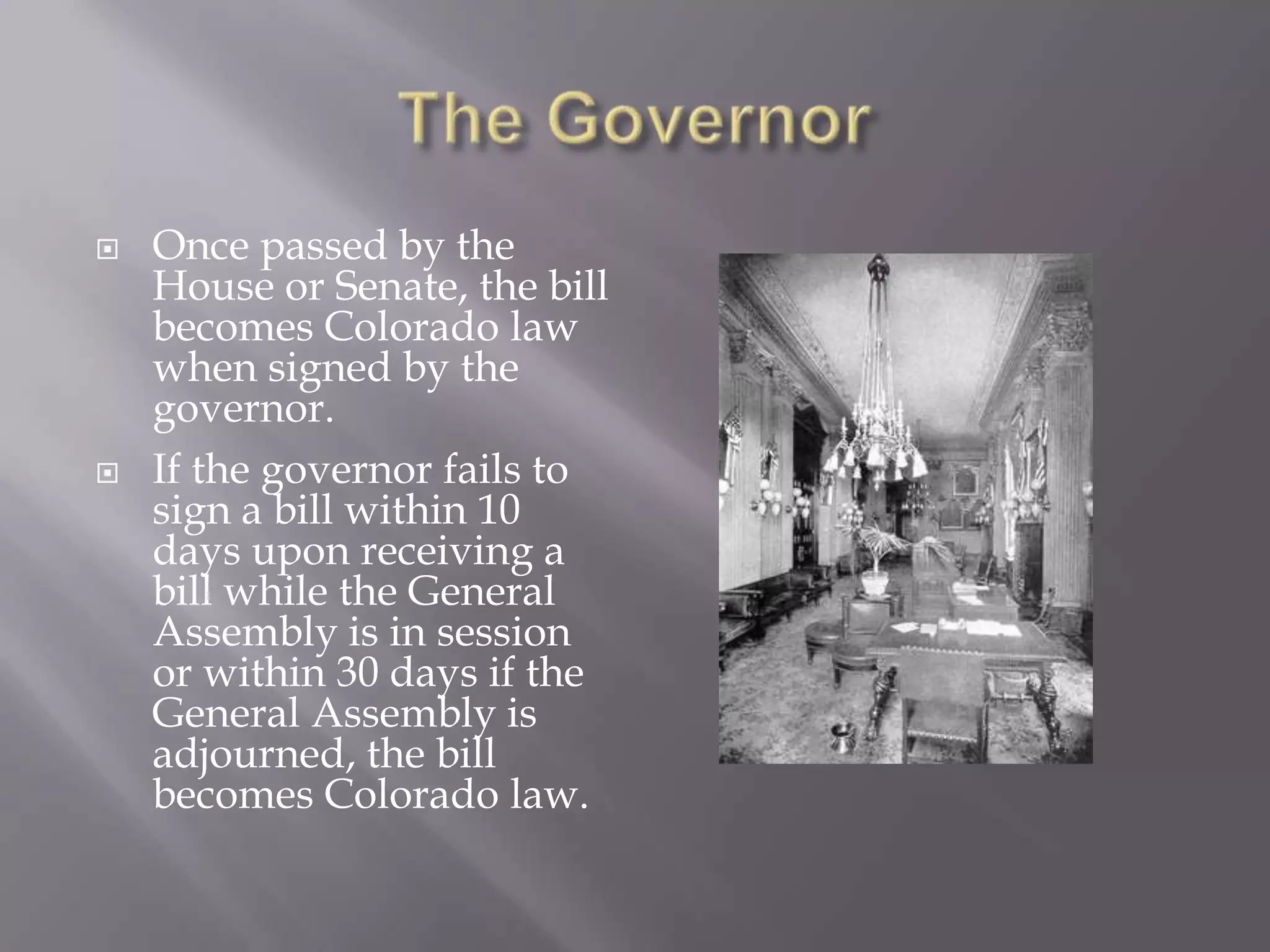
The GovernorOnce passed by the House or Senate, the bill becomes Colorado law when signed by the governor.If the governor fails to sign a bill within 10 days upon receiving a bill while the General Assembly is in session or within 30 days if the General Assembly is adjourned, the bill becomes Colorado law.
If the governor vetoes …If vetoed, the governor sends a veto message to the General AssemblyIf the General Assembly decides to override the governor's veto, it must have two-thirds votes of all members from both the House and Senate.
The PeopleMay approve Constitutional amendments and statutory changes proposed by the legislature (Referenda)May approve Constitutional amendments and statutory changes placed on the ballot by petition (Initiatives)People have the right to review all laws passed by the legislature, unless…
The law has a clause, known as, “The Safety Clause,” that this law is necessary for the public safety.

How A Bill Becomes Law In Colorado

  • 1.
    How a billbecomes law in Colorado
  • 2.
    Introducing a billBillsare introduced by legislatorsA bill can be introduced in the Colorado House or the Colorado Senate
  • 3.
    In the House…IntroductionFirst reading by the House clerkAssigned to committee by speaker of the HouseYou can search for, and look up the status of a bill here:http://www.leg.state.co.us/Clics/CLICS2009A/csl.nsf/BillFoldersHouse?openFrameset
  • 4.
    House CommitteesAgriculture, Livestock,and Natural ResourcesAppropriationsBusiness Affairs and LaborEducationHealth and Human ServicesJudiciaryLocal GovernmentState, Veterans, and Military AffairsTransportation and EnergyYou can find House Committee Membership Here:http://www.leg.state.co.us/clics/clics2009a/directory.nsf/HouCommWp?OpenViewYou can find Bills by Committee Here (Click on “By Committee” on the lower line)http://www.leg.state.co.us/Clics/CLICS2009A/csl.nsf/BillFoldersCom?OpenFrameSet
  • 5.
    In CommitteeCommittee hearingPublicand Expert Testimony Amendments may be offeredA passing vote from the Committee sends the bill back to the HouseCommittees publish their calendars here:http://www.leg.state.co.us/Clics/CLICS2009A/csl.nsf/Calendars?OpenFrameSetYou can listen to committee hearings on a bill here:http://www.leg.state.co.us/clics/clics2009a/cslFrontPages.nsf/Audio?OpenForm
  • 6.
    Back on theHouse FloorCommittee reports offered (committees report on the status of a bill that was assigned to it)House floor and second reading (may include debate and additional amendments)House floor and third reading final passage
  • 7.
    On to theSenate…IntroductionFirst reading by the Senate clerkAssigned to committee by Senate PresidentCommittee hearing (may contain any amendments)Committee reports offeredSenate floor and second reading (may include debate and additional amendments)Senate floor and third reading final passage (without any additional amendments)
  • 8.
    Senate CommitteesAgriculture andNatural ResourcesAppropriationsBusiness, Labor, and TechnologyEducationFinanceHealth and Human ServicesJudiciaryLocal Government and EnergyState, Veterans, and Military AffairsTransportation
  • 9.
    Decision TimeIf abill passes the Senate without amendments, it goes to the GovernorOtherwise, it goes to Conference Committee.
  • 10.
    Conference CommitteeA conferencecommittee is composed of 3 members from each house, meeting to work out language acceptable to both houses on a bill that passed each house in different forms.A majority of the members of the committee must agree before the Conference Committee Report may be submitted to the Senate and HouseThe bill then returns to each house for a final up-or-down vote
  • 11.
    If a billrequires appropriations…Legislative Legal Services, the non-partisan research staff of the Legislature, analyzes a bill to determine it effect on the state’s spending or revenues Any bill that would require funding (or would reduce revenue without reducing spending) if implemented is sent to the Appropriations Committee as part of the process.In the Appropriations Committee an appropriation clause is added to the bill that includes the amount of funding required.
  • 12.
    The GovernorOnce passedby the House or Senate, the bill becomes Colorado law when signed by the governor.If the governor fails to sign a bill within 10 days upon receiving a bill while the General Assembly is in session or within 30 days if the General Assembly is adjourned, the bill becomes Colorado law.
  • 13.
    If the governorvetoes …If vetoed, the governor sends a veto message to the General AssemblyIf the General Assembly decides to override the governor's veto, it must have two-thirds votes of all members from both the House and Senate.
  • 14.
    The PeopleMay approveConstitutional amendments and statutory changes proposed by the legislature (Referenda)May approve Constitutional amendments and statutory changes placed on the ballot by petition (Initiatives)People have the right to review all laws passed by the legislature, unless…
  • 15.
    The law hasa clause, known as, “The Safety Clause,” that this law is necessary for the public safety.
  • 16.
    As a result,most laws now contain the Safety Clause