


Designed and Developed by Poulome Nath 
1
What is the best presentation you have 
been to? 
Why was it so good? 
 Answer these two questions on the 
notepad 
You have 2 minutes for this exercise 
2
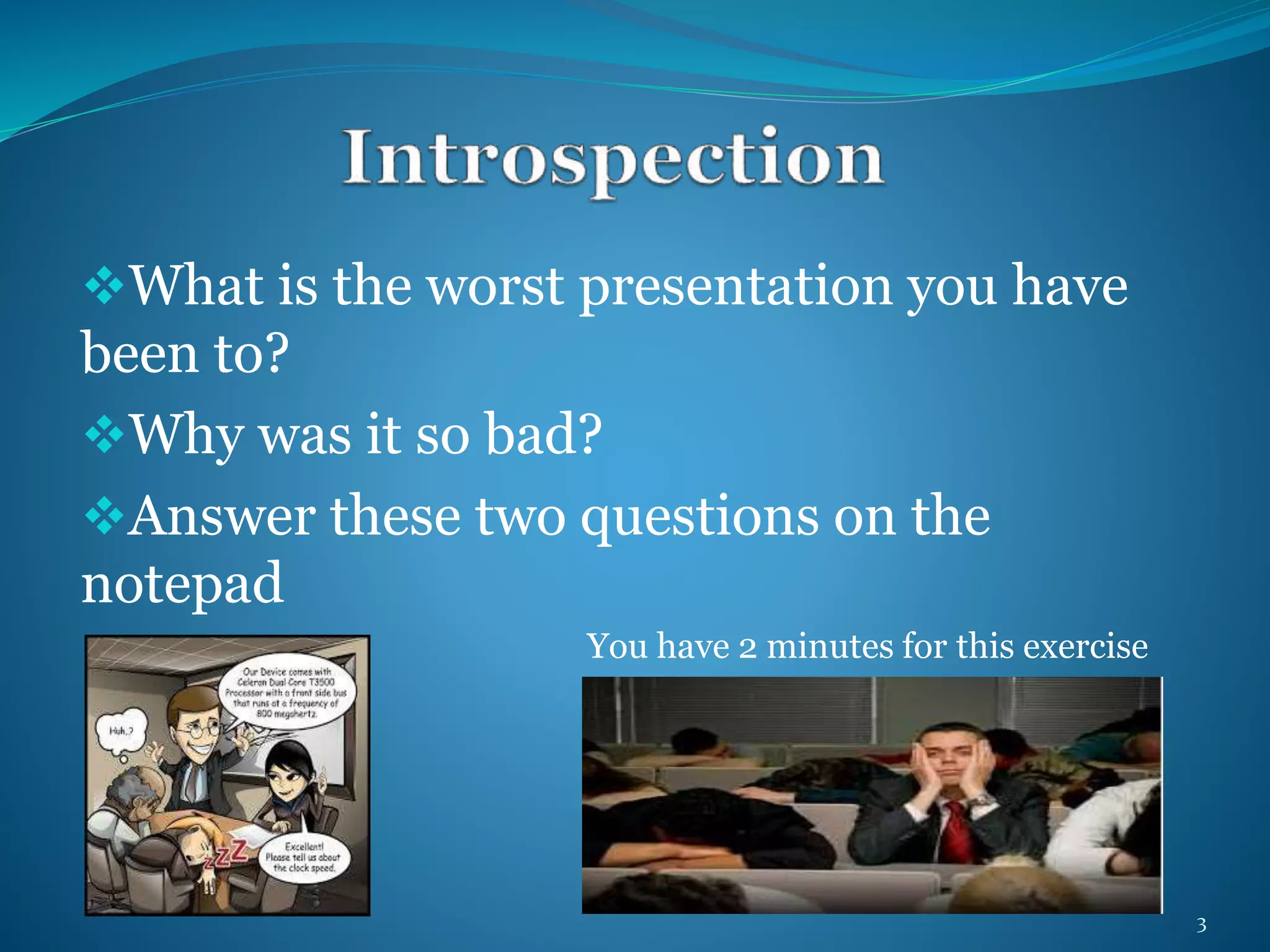
What is the worst presentation you have 
been to? 
Why was it so bad? 
Answer these two questions on the 
notepad 
You have 2 minutes for this exercise 
3
Get into small groups of between 3 and 5 
 Each tell the rest of your group about the 
worst and best presentation you have seen. 
 Be careful to explain why it was so 
good/bad 
You have 10 minutes for this exercise 
4
Recognition of our ability 
Your chance to differentiate 
 It is all about sales 
5
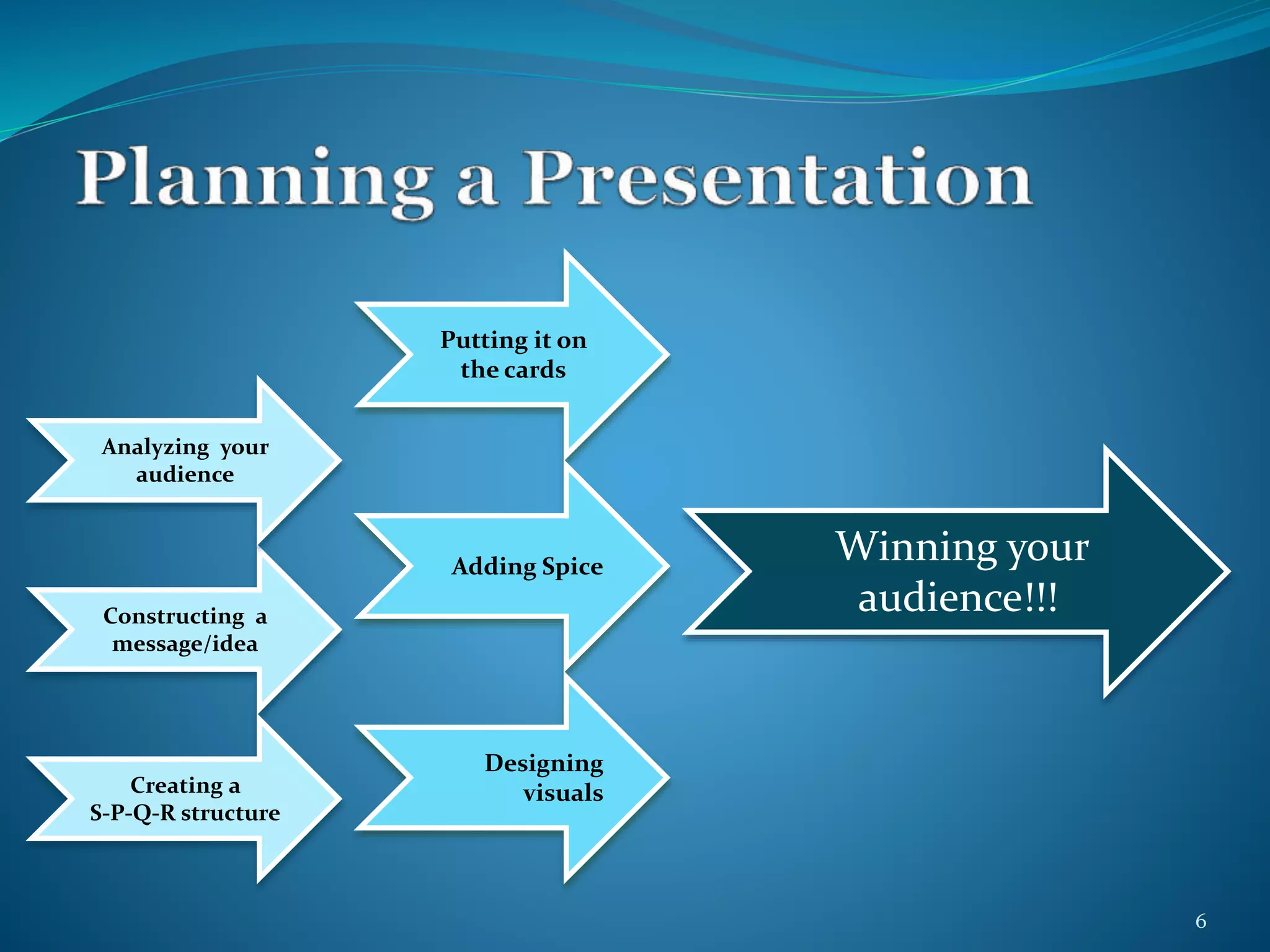
Analyzing your 
audience 
Constructing a 
message/idea 
Creating a 
S-P-Q-R structure 
Putting it on 
the cards 
Adding Spice 
Designing 
visuals 
Winning your 
audience!!! 
6
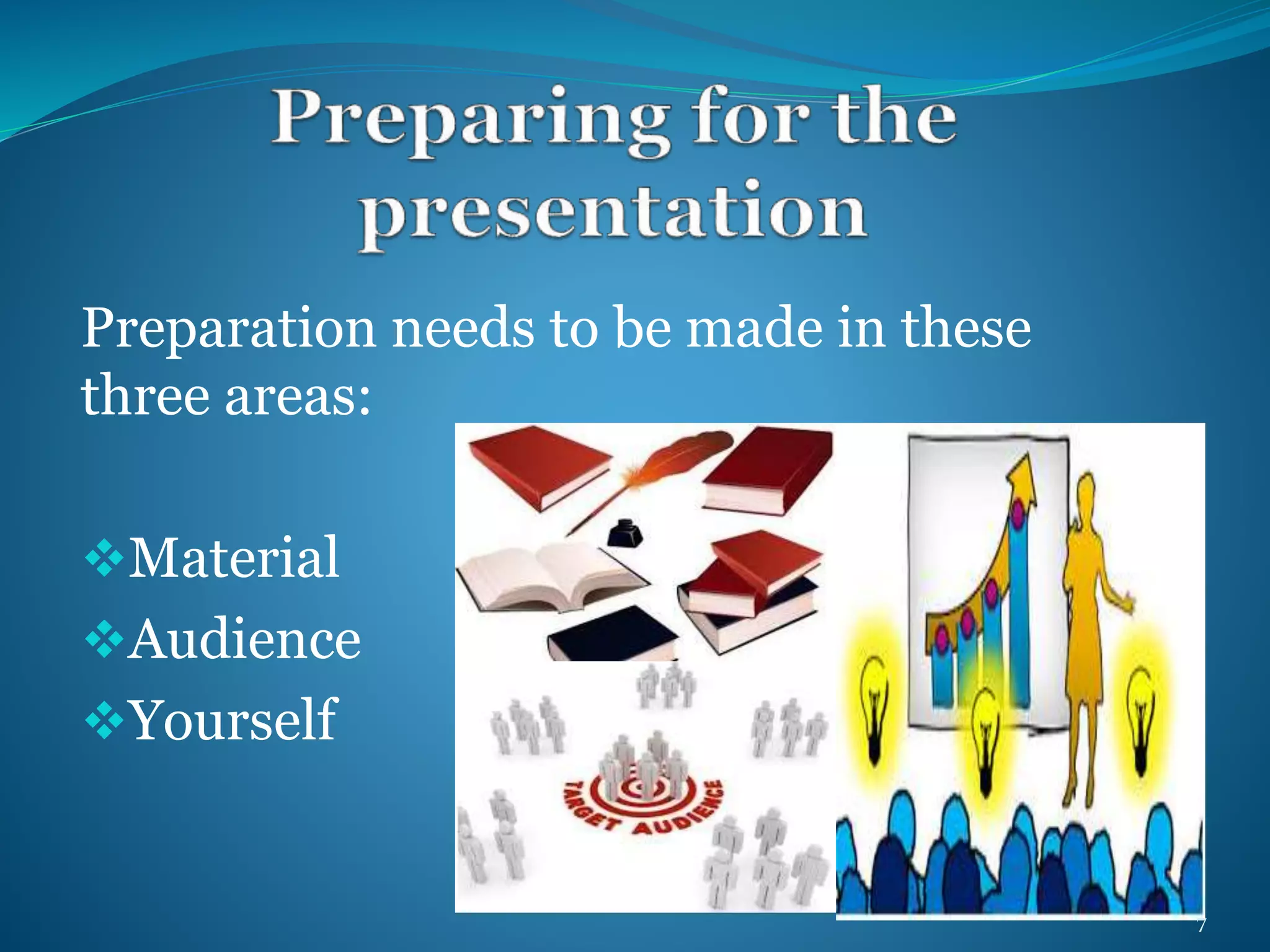
Preparation needs to be made in these 
three areas: 
Material 
Audience 
Yourself 
7
Why are you making this presentation? 
What take away do you want for your audience? 
What do you want them to do? 
How long will the presentation last? 
What visual aids will you use? 
8
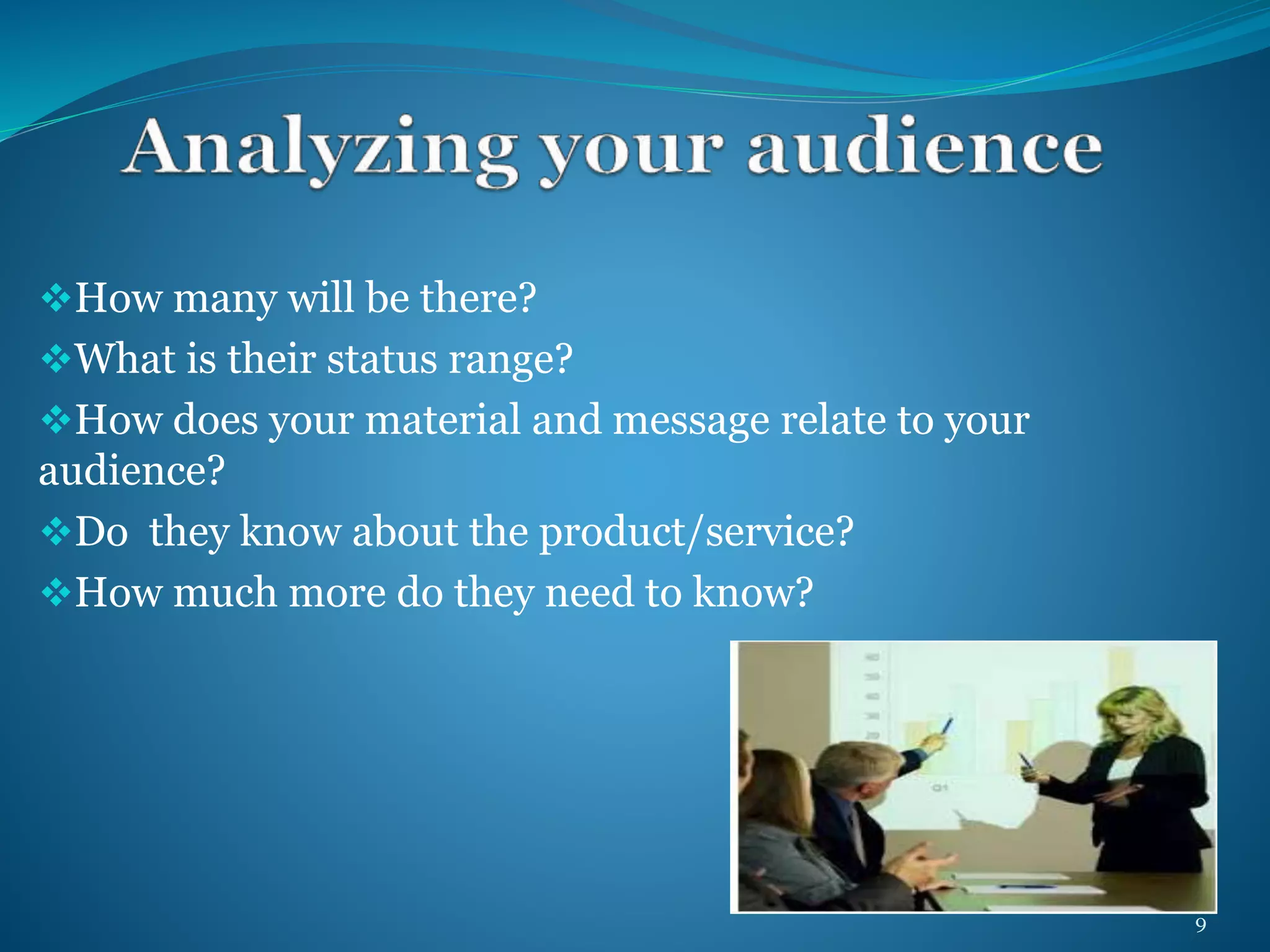
How many will be there? 
What is their status range? 
How does your material and message relate to your 
audience? 
Do they know about the product/service? 
How much more do they need to know? 
9
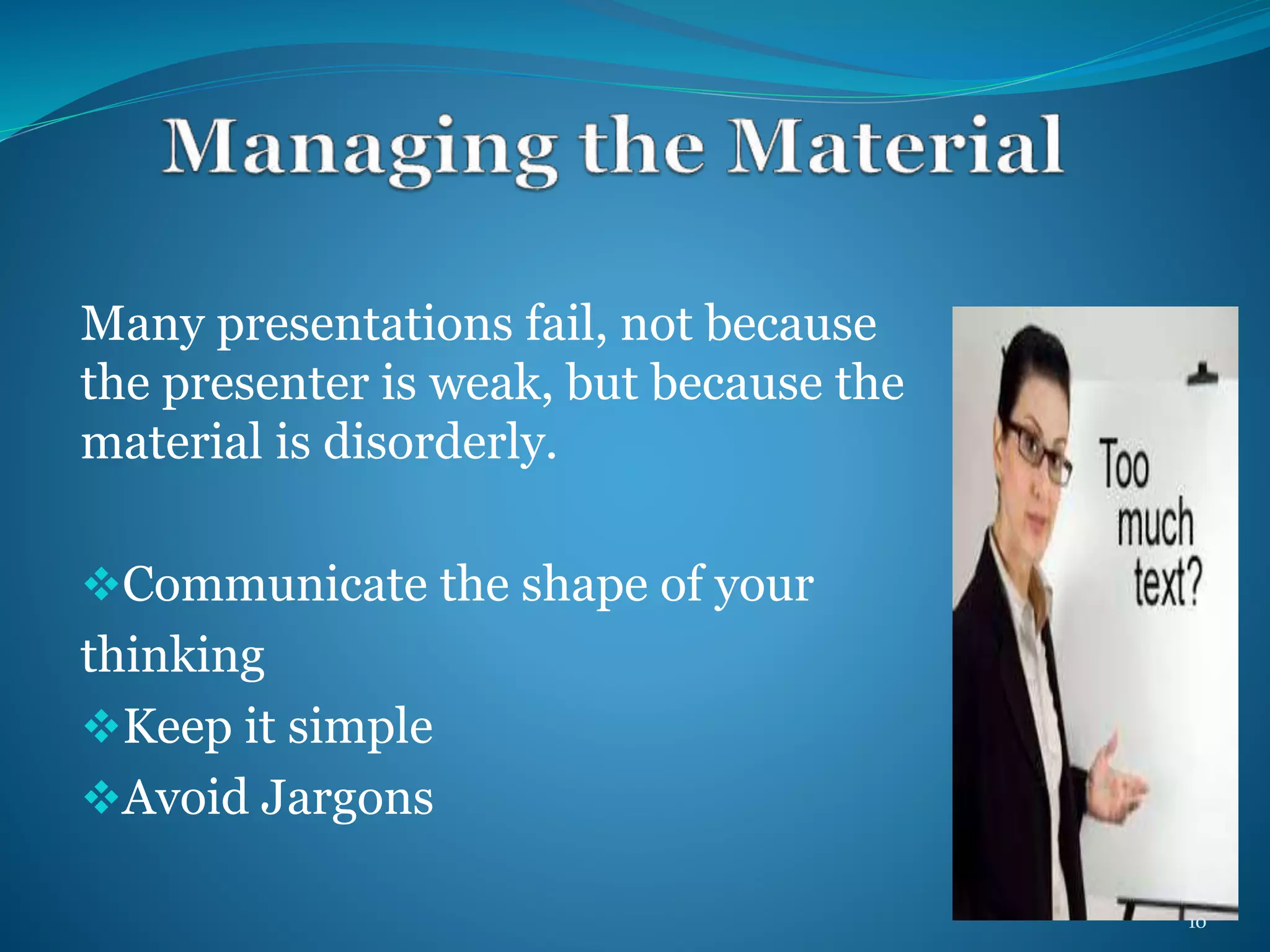
Many presentations fail, not because 
the presenter is weak, but because the 
material is disorderly. 
Communicate the shape of your 
thinking 
Keep it simple 
Avoid Jargons 
10
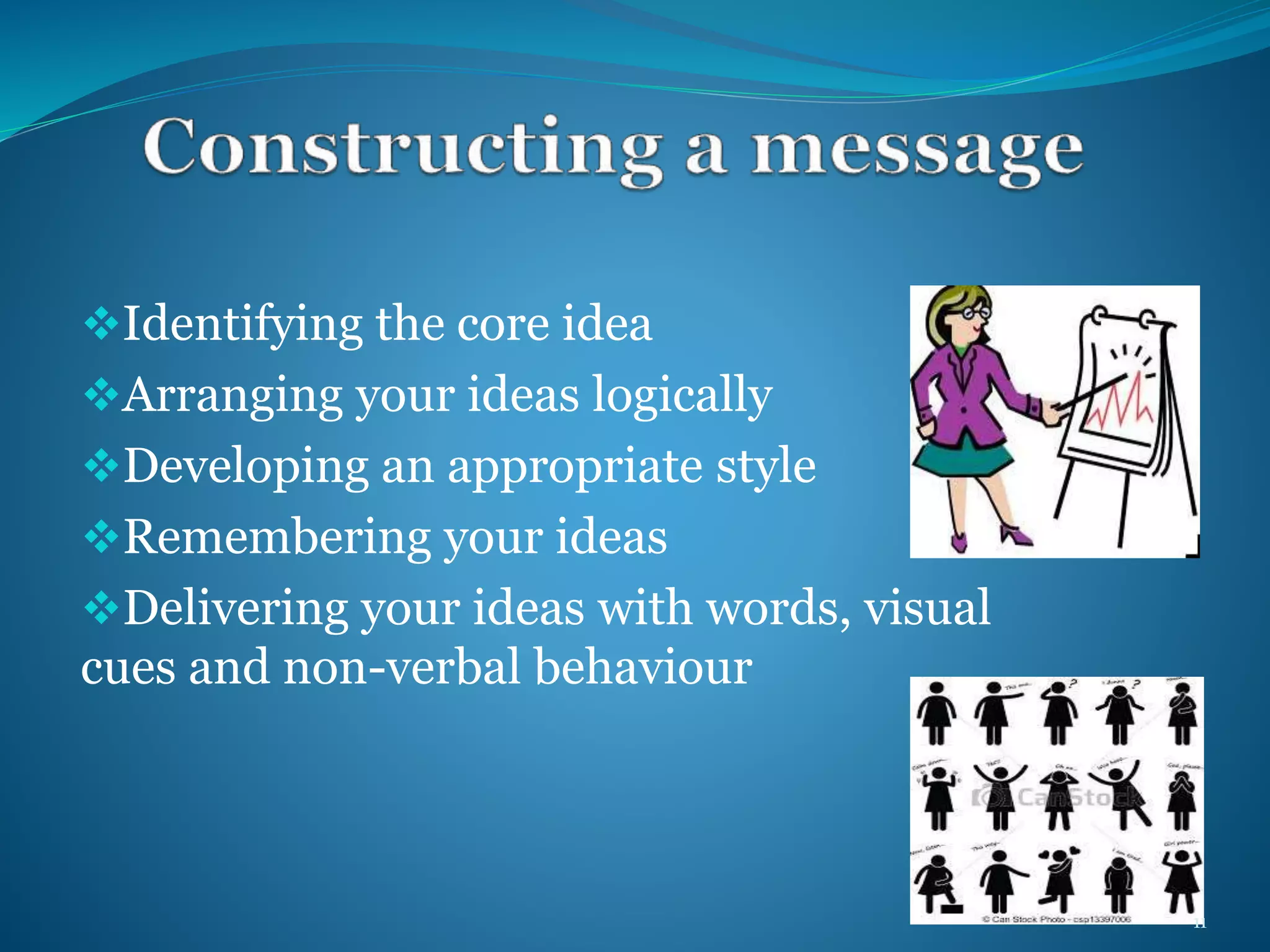
Identifying the core idea 
Arranging your ideas logically 
Developing an appropriate style 
Remembering your ideas 
Delivering your ideas with words, visual 
cues and non-verbal behaviour 
11
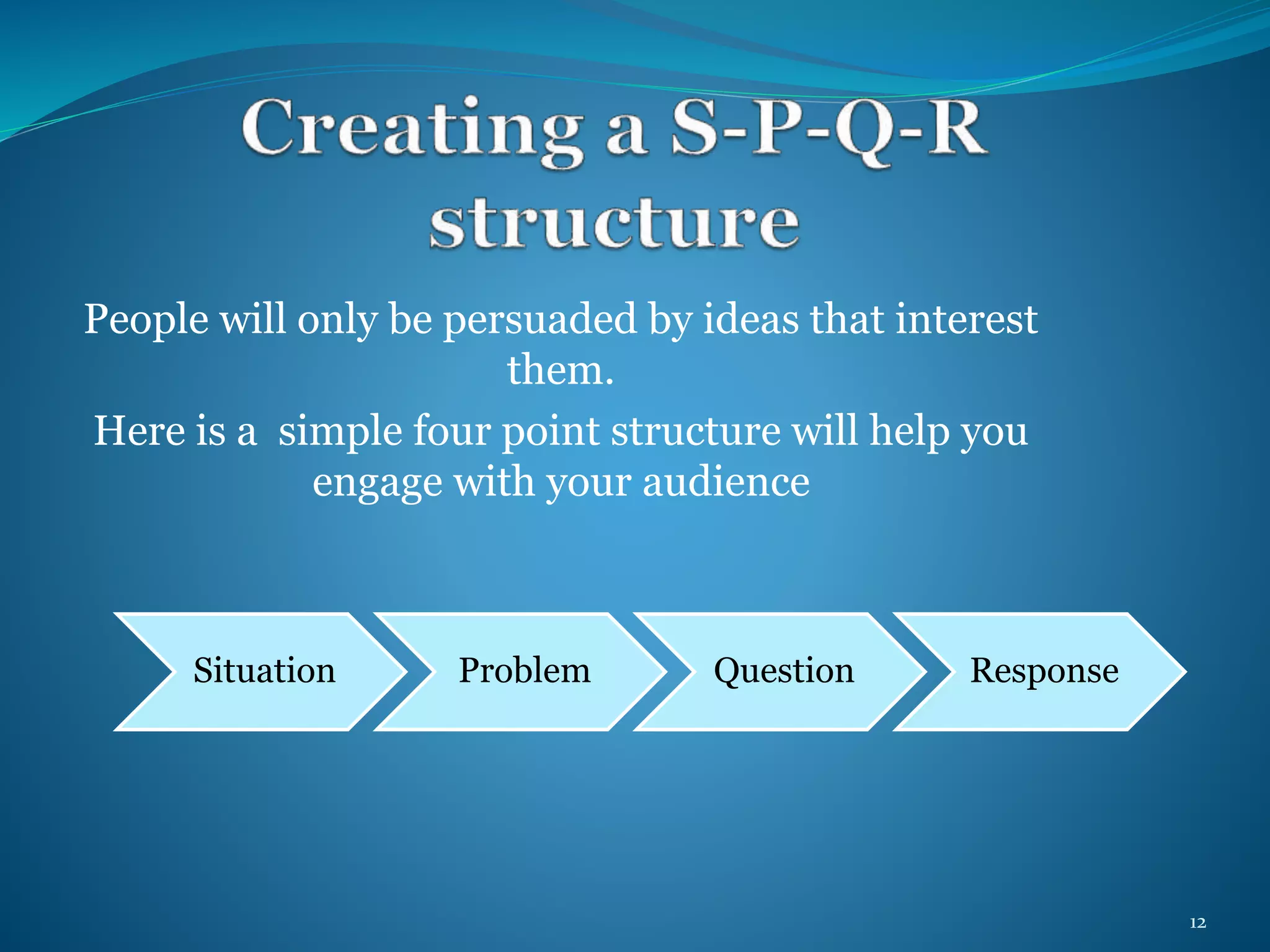
People will only be persuaded by ideas that interest 
them. 
Here is a simple four point structure will help you 
engage with your audience 
Situation Problem Question Response 
12
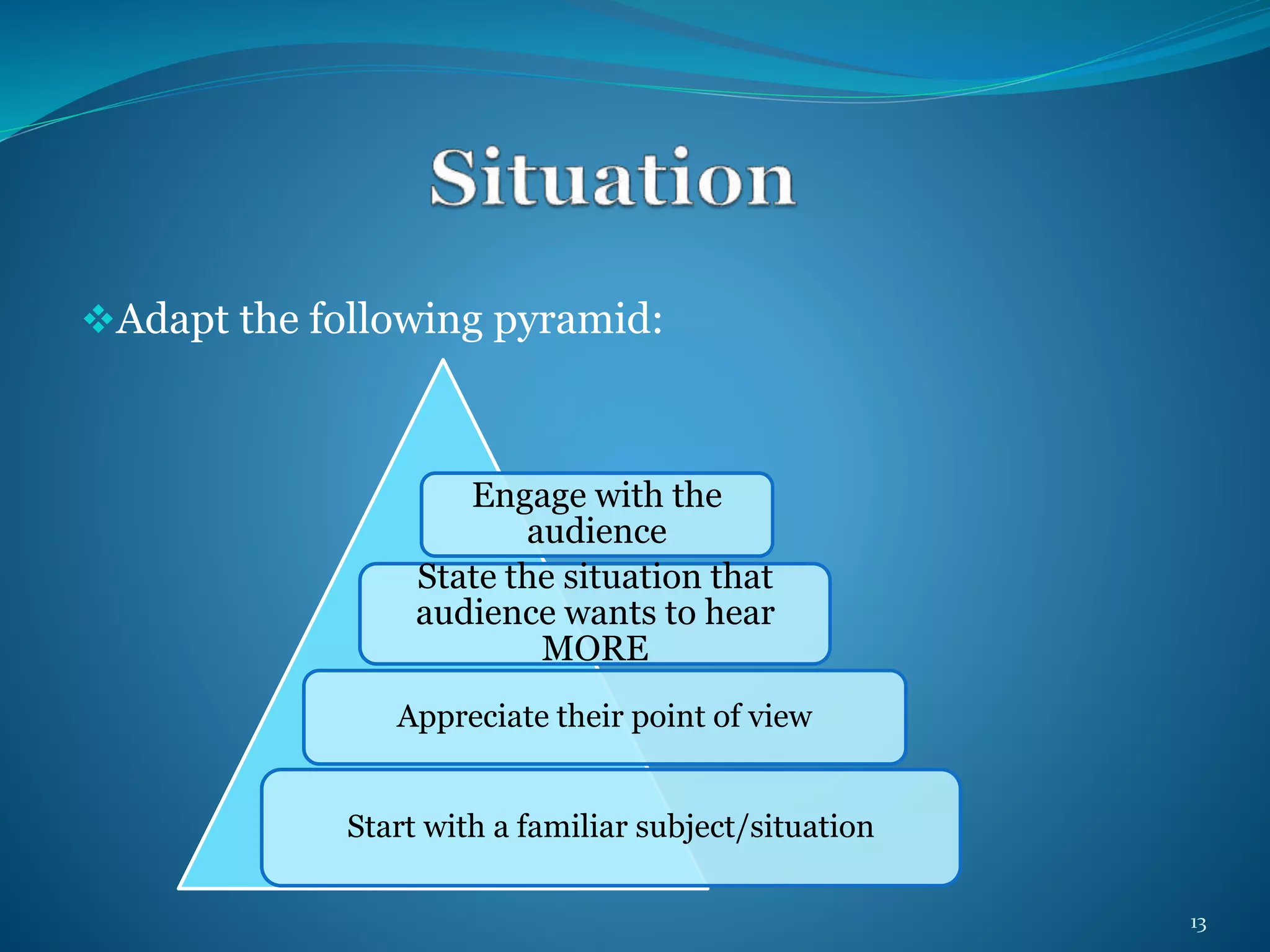
Adapt the following pyramid: 
Engage with the 
audience 
State the situation that 
audience wants to hear 
MORE 
Appreciate their point of view 
Start with a familiar subject/situation 
13
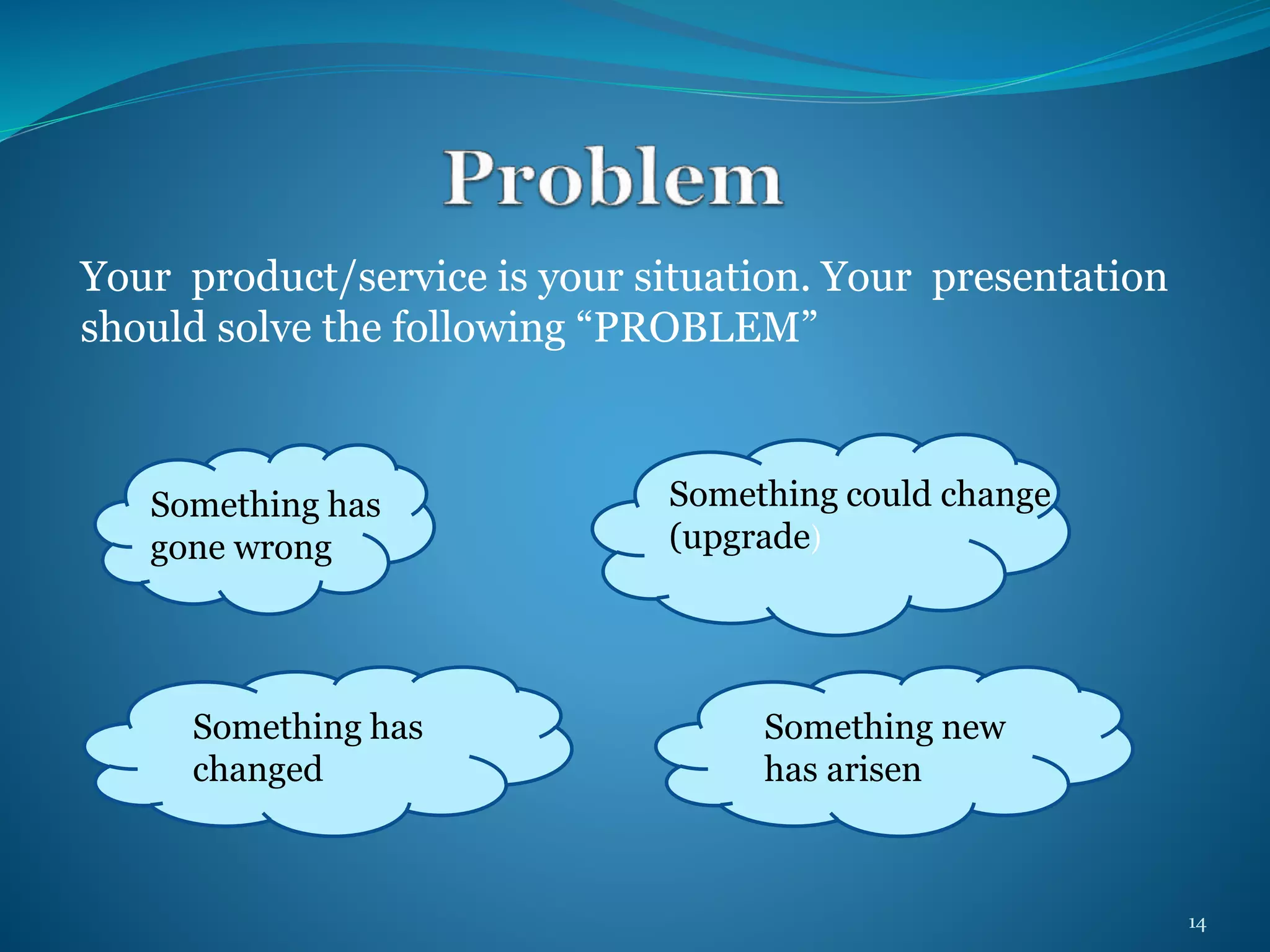
Your product/service is your situation. Your presentation 
should solve the following “PROBLEM” 
Something has 
gone wrong 
Something could change 
(upgrade) 
Something has 
changed 
Something new 
has arisen 
14
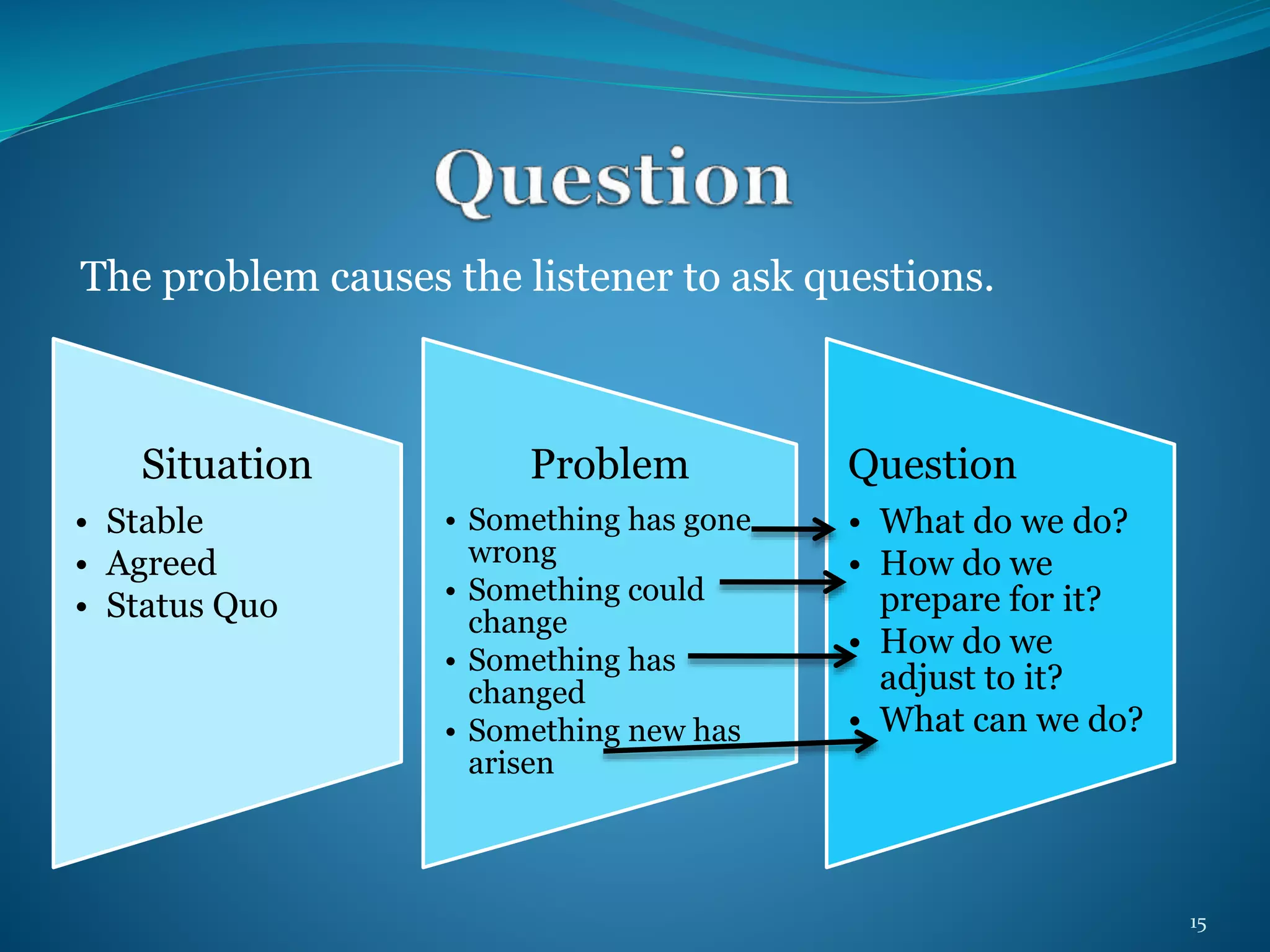
The problem causes the listener to ask questions. 
Situation 
• Stable 
• Agreed 
• Status Quo 
Problem 
• Something has gone 
wrong 
• Something could 
change 
• Something has 
changed 
• Something new has 
arisen 
Question 
• What do we do? 
• How do we 
prepare for it? 
• How do we 
adjust to it? 
• What can we do? 
15
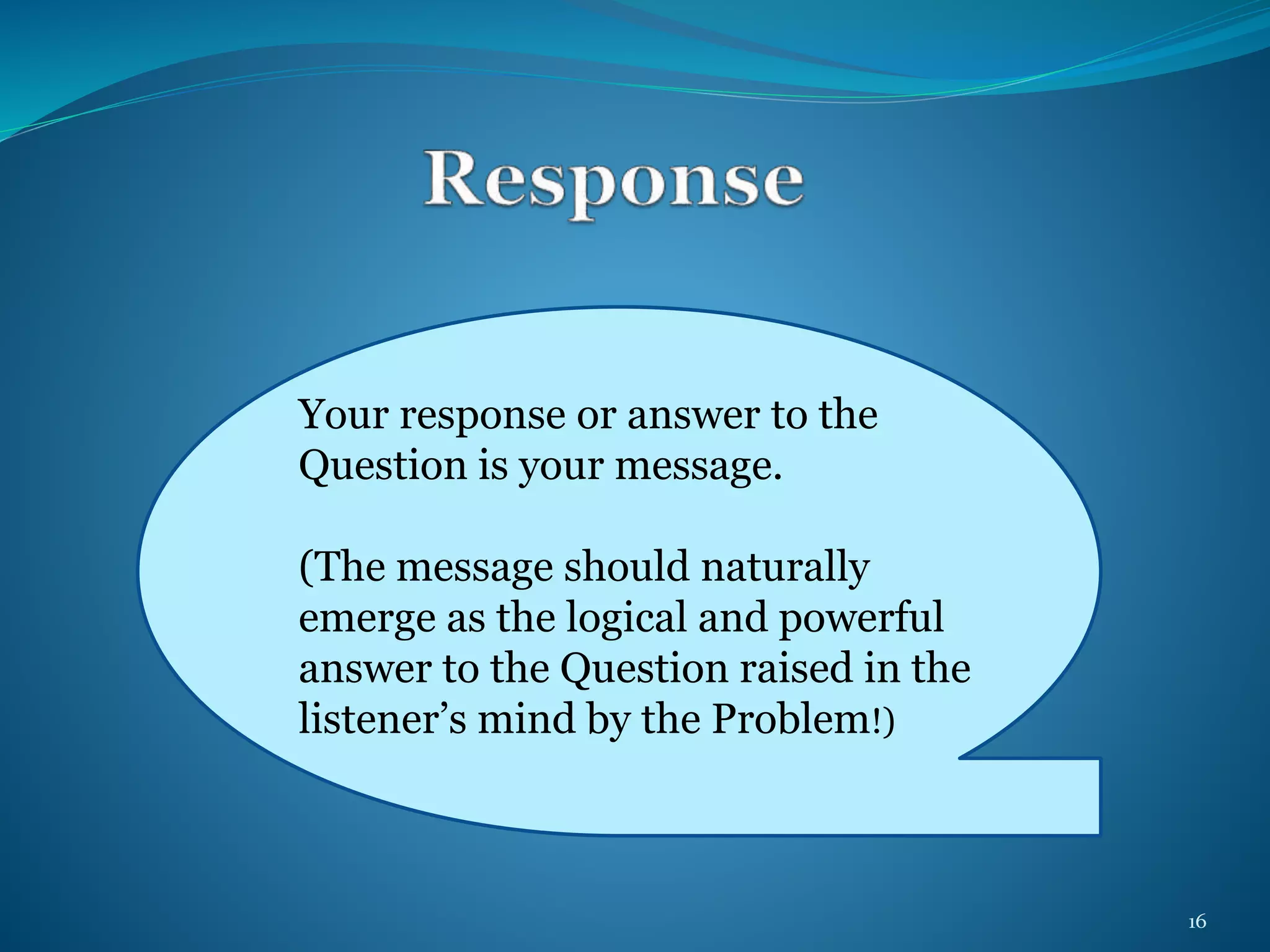
Your response or answer to the 
Question is your message. 
(The message should naturally 
emerge as the logical and powerful 
answer to the Question raised in the 
listener’s mind by the Problem!) 
16
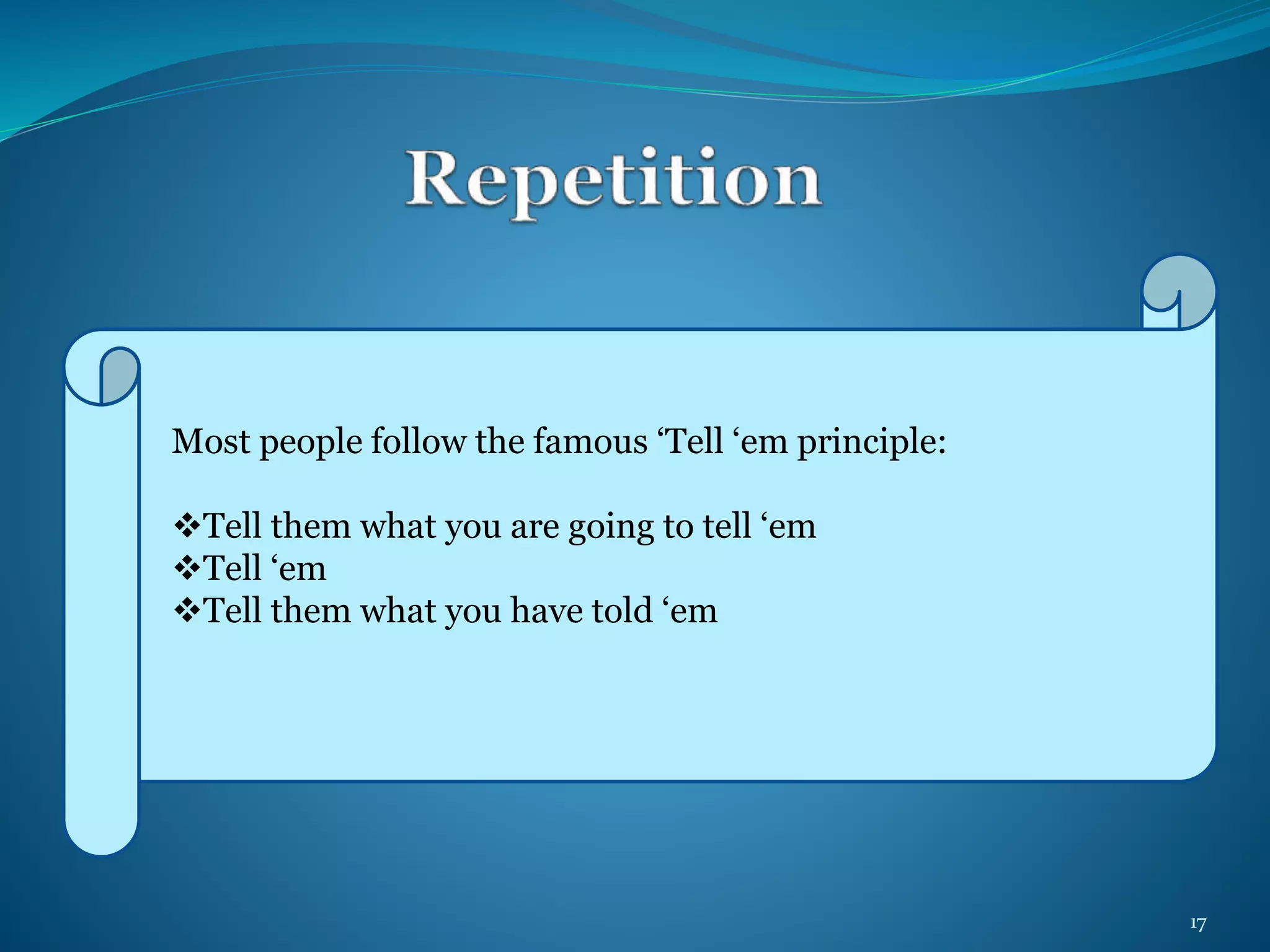
Most people follow the famous ‘Tell ‘em principle: 
Tell them what you are going to tell ‘em 
Tell ‘em 
Tell them what you have told ‘em 
17
Introduce yourself 
Acknowledge the audience 
Express your objective /message clearly 
State the schedule 
Rules and Regulations 
Any Housekeeping items 
At the end, Re-iterate the objective/message 
Thank the Audience for their attention 
18
Put your idea on cards. 
Number the cards sequentially. 
Include the following 
What you MUST say 
What you SHOULD say to support your main idea 
What you COULD say , if you have time 
19
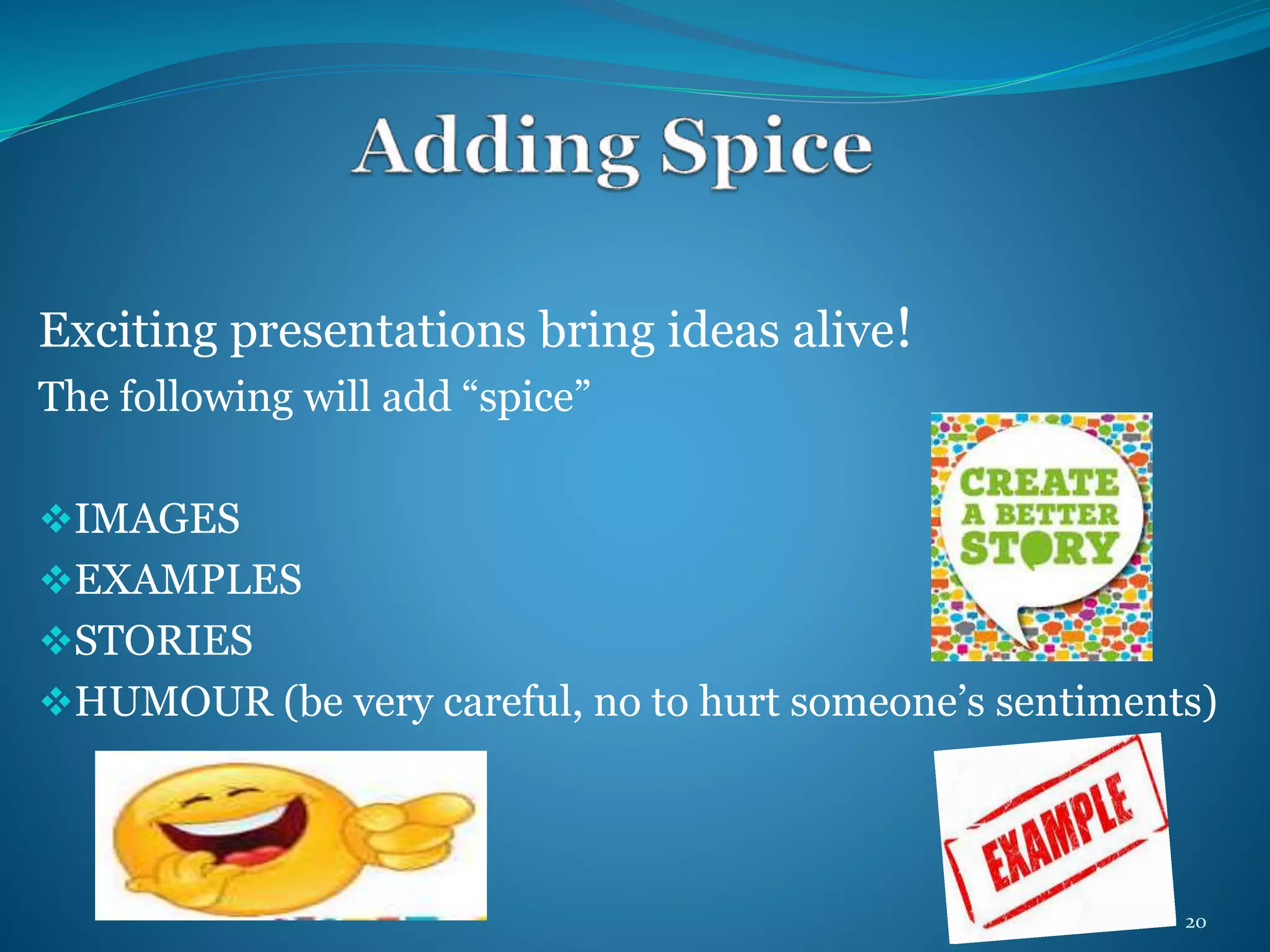
Exciting presentations bring ideas alive! 
The following will add “spice” 
IMAGES 
EXAMPLES 
STORIES 
HUMOUR (be very careful, no to hurt someone’s sentiments) 
20
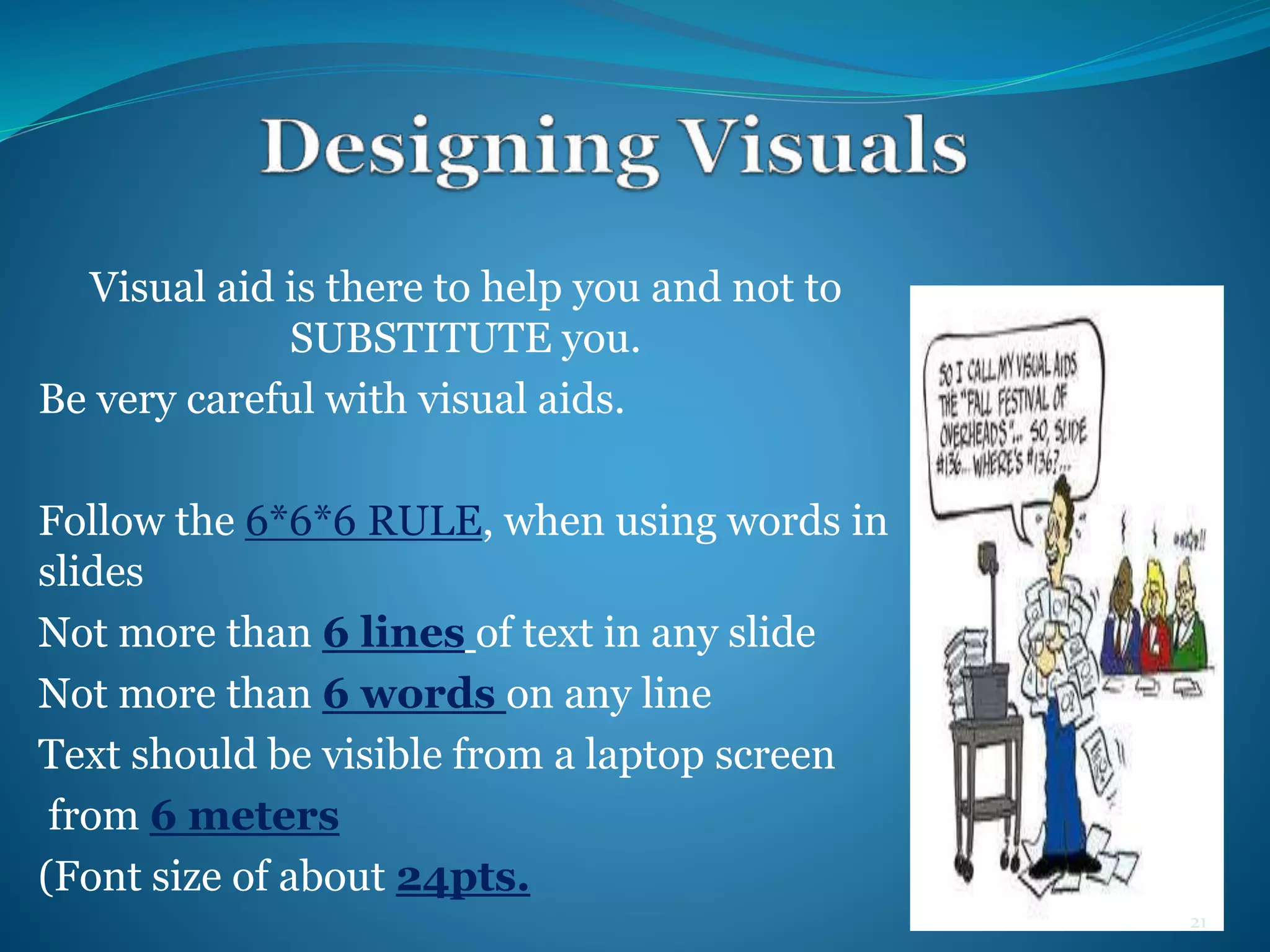
Visual aid is there to help you and not to 
SUBSTITUTE you. 
Be very careful with visual aids. 
Follow the 6*6*6 RULE, when using words in 
slides 
Not more than 6 lines of text in any slide 
Not more than 6 words on any line 
Text should be visible from a laptop screen 
from 6 meters 
(Font size of about 24pts. 
21
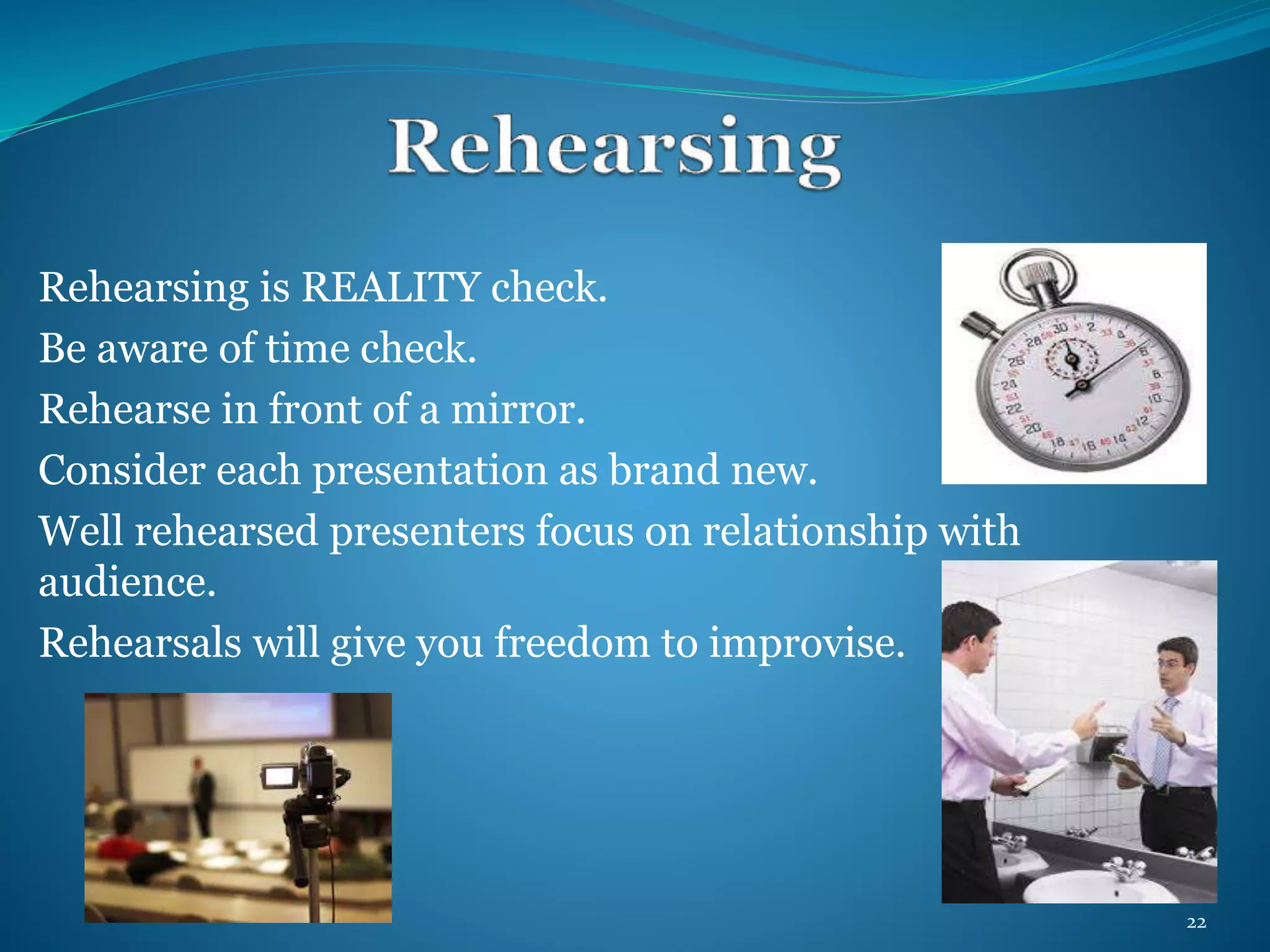
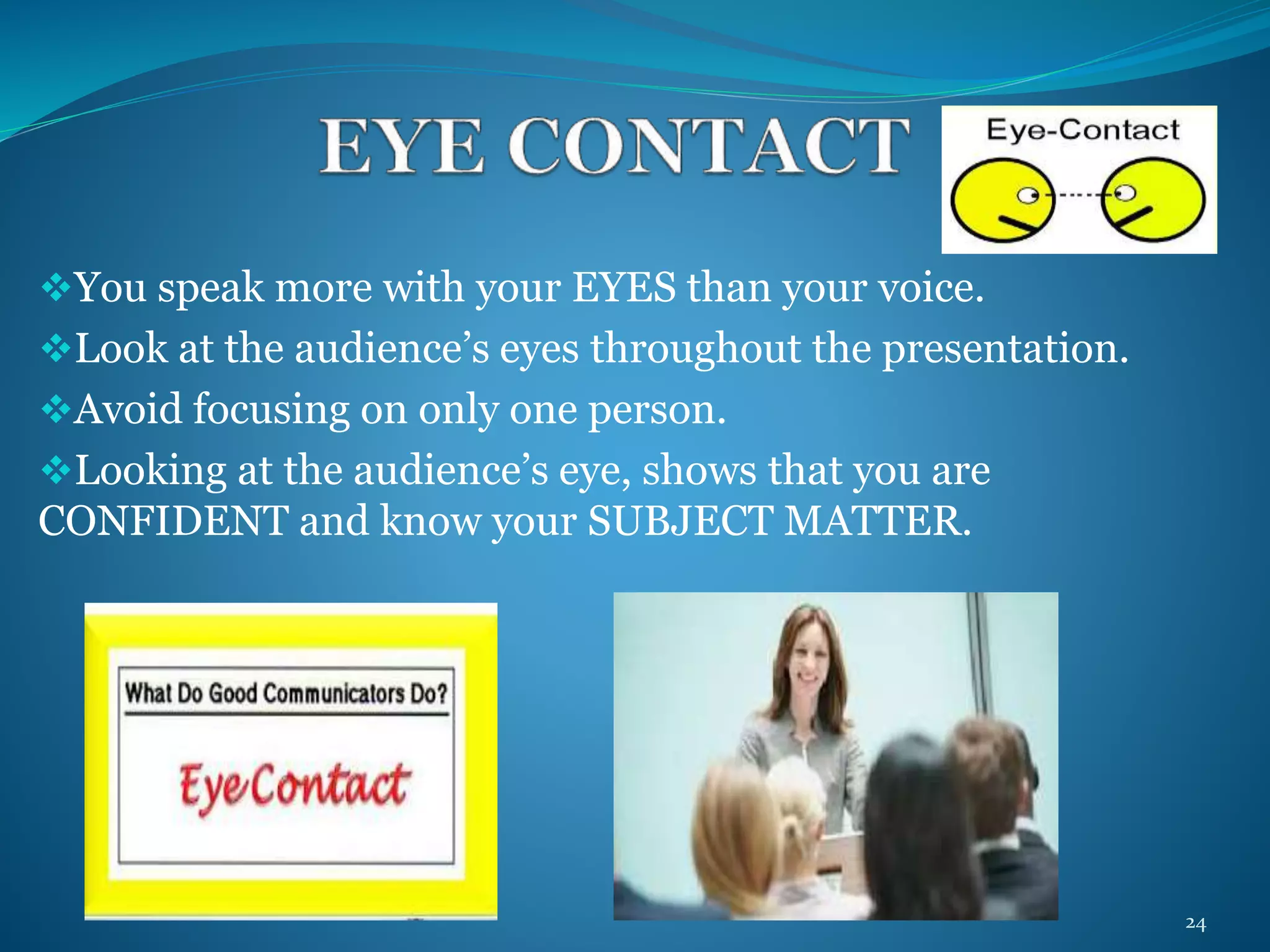
Rehearsing is REALITY check. 
Be aware of time check. 
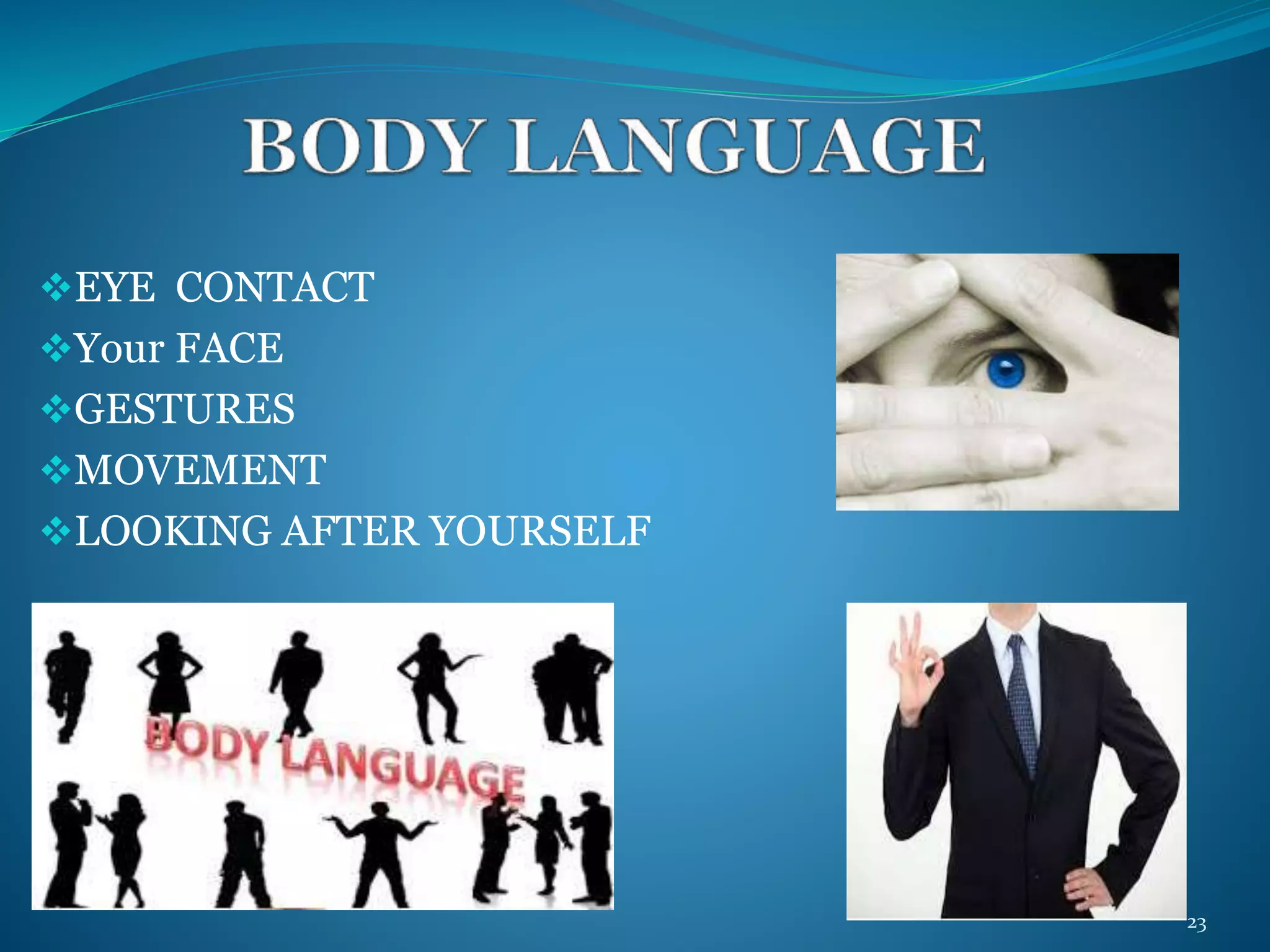
Rehearse in front of a mirror. 
Consider each presentation as brand new. 
Well rehearsed presenters focus on relationship with 
audience. 
Rehearsals will give you freedom to improvise. 
22
EYE CONTACT 
Your FACE 
GESTURES 
MOVEMENT 
LOOKING AFTER YOURSELF 
23
You speak more with your EYES than your voice. 
Look at the audience’s eyes throughout the presentation. 
Avoid focusing on only one person. 
Looking at the audience’s eye, shows that you are 
CONFIDENT and know your SUBJECT MATTER. 
24
SMILING will help you win over your audience. 
A smiling presenter always has an edge over others. 
Smile shows you are happy to be there . 
It adds warmth to your personality. 
Which of these two presenters will make a better impact? 
25
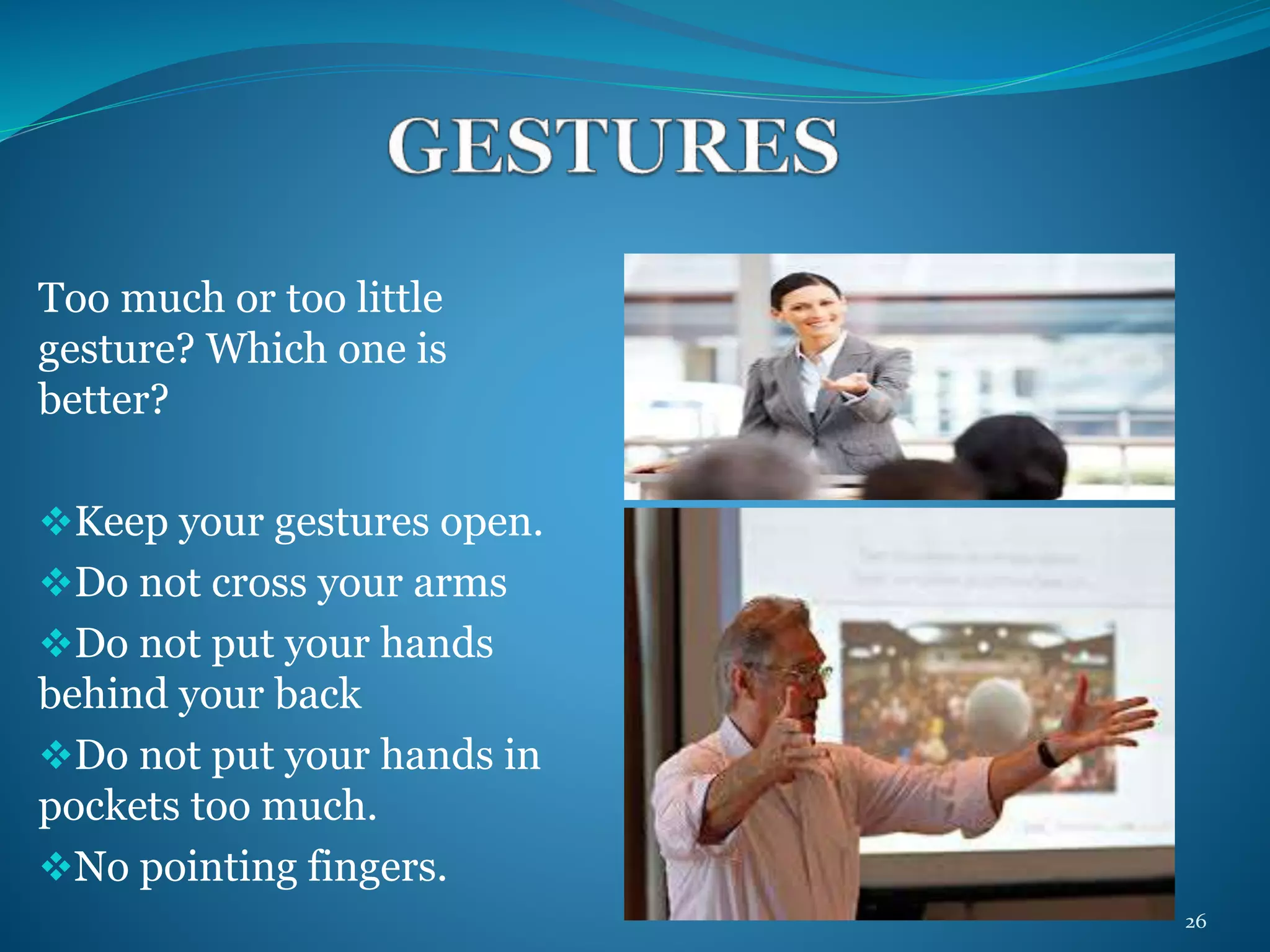
Too much or too little 
gesture? Which one is 
better? 
Keep your gestures open. 
Do not cross your arms 
Do not put your hands 
behind your back 
Do not put your hands in 
pockets too much. 
No pointing fingers. 
26
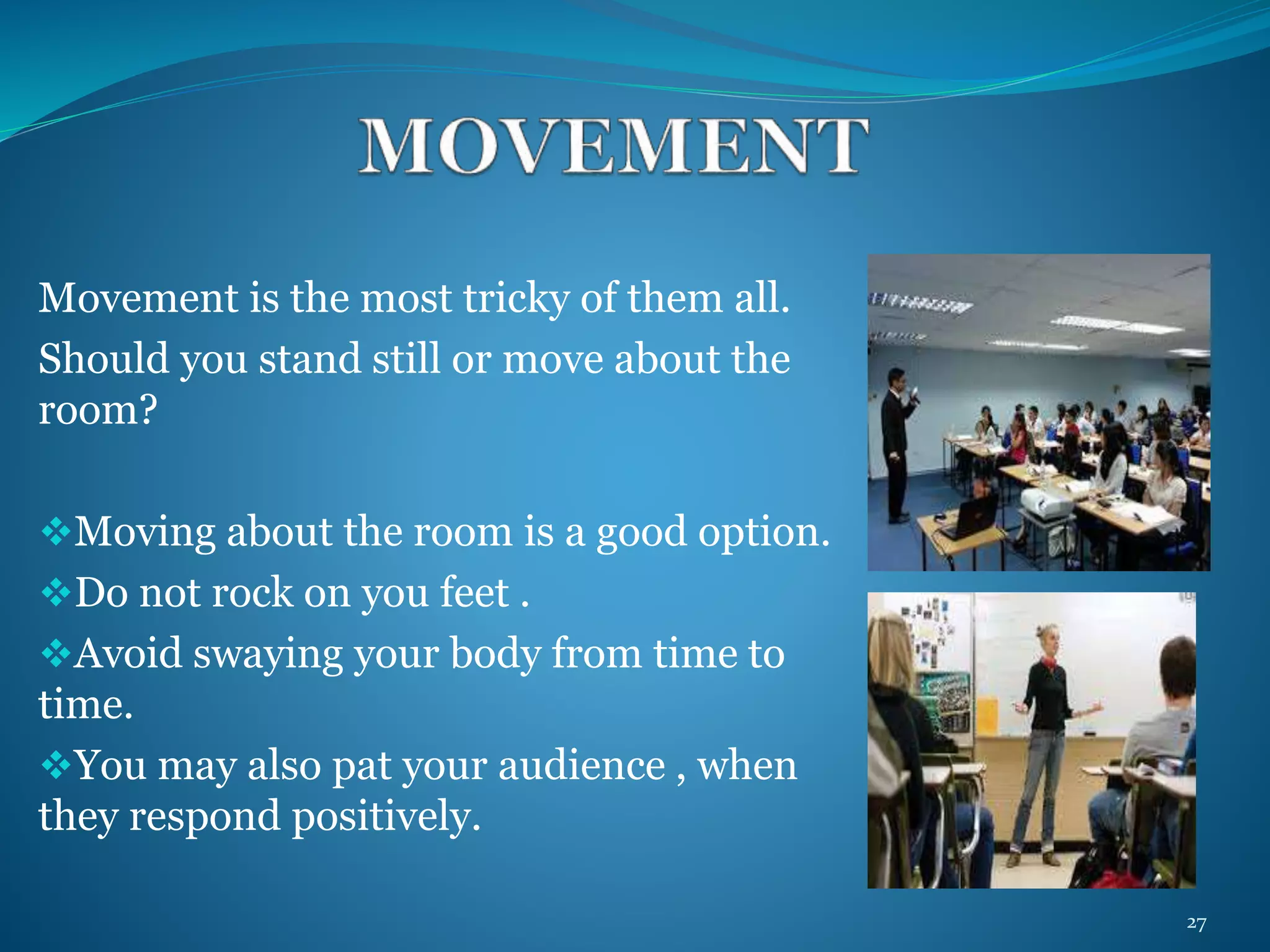
Movement is the most tricky of them all. 
Should you stand still or move about the 
room? 
Moving about the room is a good option. 
Do not rock on you feet . 
Avoid swaying your body from time to 
time. 
You may also pat your audience , when 
they respond positively. 
27
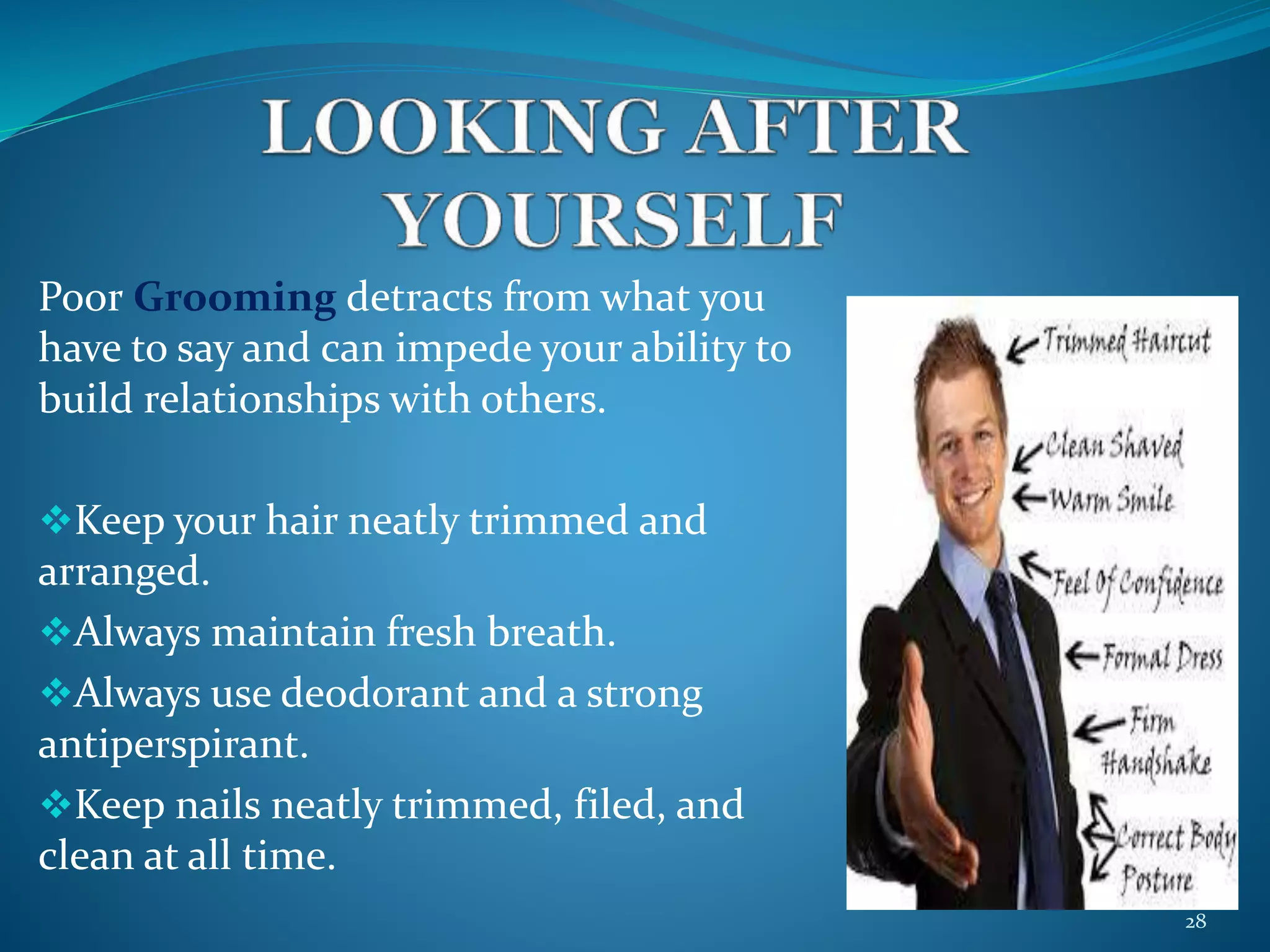
Poor Grooming detracts from what you 
have to say and can impede your ability to 
build relationships with others. 
Keep your hair neatly trimmed and 
arranged. 
Always maintain fresh breath. 
Always use deodorant and a strong 
antiperspirant. 
Keep nails neatly trimmed, filed, and 
clean at all time. 
28
Decide when to take questions. 
Anticipate the most likely questions. 
Answer honestly 
Take questions from the whole audience 
Answer the whole audience. 
If you don’t know, say so 
29
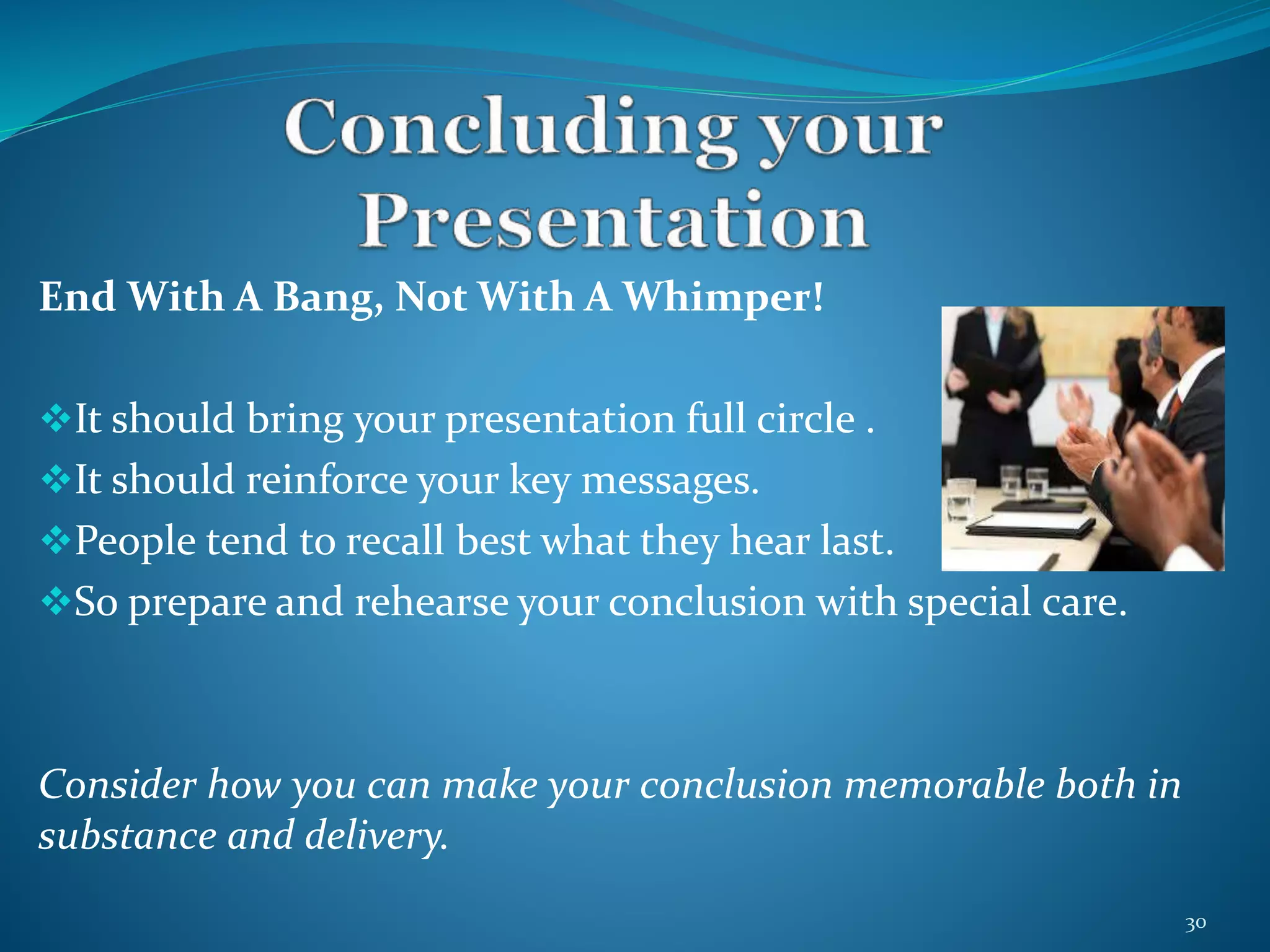
End With A Bang, Not With A Whimper! 
It should bring your presentation full circle . 
It should reinforce your key messages. 
People tend to recall best what they hear last. 
So prepare and rehearse your conclusion with special care. 
Consider how you can make your conclusion memorable both in 
substance and delivery. 
30
31
“Improve your Communication 
Skills” by Alan Barker 
Presentation Skill by Karen Petrie 
http://totalcommunicator.com/vol3 
_5/concluding.html 
32
33 
Contact: 
poulome.nath@englishseekho.info

How to improve your Presentation Skills

  • 1.
    Designed and Developedby Poulome Nath 1
  • 2.
    What is thebest presentation you have been to? Why was it so good?  Answer these two questions on the notepad You have 2 minutes for this exercise 2
  • 3.
    What is theworst presentation you have been to? Why was it so bad? Answer these two questions on the notepad You have 2 minutes for this exercise 3
  • 4.
    Get into smallgroups of between 3 and 5  Each tell the rest of your group about the worst and best presentation you have seen.  Be careful to explain why it was so good/bad You have 10 minutes for this exercise 4
  • 5.
    Recognition of ourability Your chance to differentiate  It is all about sales 5
  • 6.
    Analyzing your audience Constructing a message/idea Creating a S-P-Q-R structure Putting it on the cards Adding Spice Designing visuals Winning your audience!!! 6
  • 7.
    Preparation needs tobe made in these three areas: Material Audience Yourself 7
  • 8.
    Why are youmaking this presentation? What take away do you want for your audience? What do you want them to do? How long will the presentation last? What visual aids will you use? 8
  • 9.
    How many willbe there? What is their status range? How does your material and message relate to your audience? Do they know about the product/service? How much more do they need to know? 9
  • 10.
    Many presentations fail,not because the presenter is weak, but because the material is disorderly. Communicate the shape of your thinking Keep it simple Avoid Jargons 10
  • 11.
    Identifying the coreidea Arranging your ideas logically Developing an appropriate style Remembering your ideas Delivering your ideas with words, visual cues and non-verbal behaviour 11
  • 12.
    People will onlybe persuaded by ideas that interest them. Here is a simple four point structure will help you engage with your audience Situation Problem Question Response 12
  • 13.
    Adapt the followingpyramid: Engage with the audience State the situation that audience wants to hear MORE Appreciate their point of view Start with a familiar subject/situation 13
  • 14.
    Your product/service isyour situation. Your presentation should solve the following “PROBLEM” Something has gone wrong Something could change (upgrade) Something has changed Something new has arisen 14
  • 15.
    The problem causesthe listener to ask questions. Situation • Stable • Agreed • Status Quo Problem • Something has gone wrong • Something could change • Something has changed • Something new has arisen Question • What do we do? • How do we prepare for it? • How do we adjust to it? • What can we do? 15
  • 16.
    Your response oranswer to the Question is your message. (The message should naturally emerge as the logical and powerful answer to the Question raised in the listener’s mind by the Problem!) 16
  • 17.
    Most people followthe famous ‘Tell ‘em principle: Tell them what you are going to tell ‘em Tell ‘em Tell them what you have told ‘em 17
  • 18.
    Introduce yourself Acknowledgethe audience Express your objective /message clearly State the schedule Rules and Regulations Any Housekeeping items At the end, Re-iterate the objective/message Thank the Audience for their attention 18
  • 19.
    Put your ideaon cards. Number the cards sequentially. Include the following What you MUST say What you SHOULD say to support your main idea What you COULD say , if you have time 19
  • 20.
    Exciting presentations bringideas alive! The following will add “spice” IMAGES EXAMPLES STORIES HUMOUR (be very careful, no to hurt someone’s sentiments) 20
  • 21.
    Visual aid isthere to help you and not to SUBSTITUTE you. Be very careful with visual aids. Follow the 6*6*6 RULE, when using words in slides Not more than 6 lines of text in any slide Not more than 6 words on any line Text should be visible from a laptop screen from 6 meters (Font size of about 24pts. 21
  • 22.
    Rehearsing is REALITYcheck. Be aware of time check. Rehearse in front of a mirror. Consider each presentation as brand new. Well rehearsed presenters focus on relationship with audience. Rehearsals will give you freedom to improvise. 22
  • 23.
    EYE CONTACT YourFACE GESTURES MOVEMENT LOOKING AFTER YOURSELF 23
  • 24.
    You speak morewith your EYES than your voice. Look at the audience’s eyes throughout the presentation. Avoid focusing on only one person. Looking at the audience’s eye, shows that you are CONFIDENT and know your SUBJECT MATTER. 24
  • 25.
    SMILING will helpyou win over your audience. A smiling presenter always has an edge over others. Smile shows you are happy to be there . It adds warmth to your personality. Which of these two presenters will make a better impact? 25
  • 26.
    Too much ortoo little gesture? Which one is better? Keep your gestures open. Do not cross your arms Do not put your hands behind your back Do not put your hands in pockets too much. No pointing fingers. 26
  • 27.
    Movement is themost tricky of them all. Should you stand still or move about the room? Moving about the room is a good option. Do not rock on you feet . Avoid swaying your body from time to time. You may also pat your audience , when they respond positively. 27
  • 28.
    Poor Grooming detractsfrom what you have to say and can impede your ability to build relationships with others. Keep your hair neatly trimmed and arranged. Always maintain fresh breath. Always use deodorant and a strong antiperspirant. Keep nails neatly trimmed, filed, and clean at all time. 28
  • 29.
    Decide when totake questions. Anticipate the most likely questions. Answer honestly Take questions from the whole audience Answer the whole audience. If you don’t know, say so 29
  • 30.
    End With ABang, Not With A Whimper! It should bring your presentation full circle . It should reinforce your key messages. People tend to recall best what they hear last. So prepare and rehearse your conclusion with special care. Consider how you can make your conclusion memorable both in substance and delivery. 30
  • 31.
  • 32.
    “Improve your Communication Skills” by Alan Barker Presentation Skill by Karen Petrie http://totalcommunicator.com/vol3 _5/concluding.html 32
  • 33.