HOW TO BE A
GOOD LEARNER
Blanco, Manuela
Sarmiento, Agustina
PRACTICE II – 2017
UNLPAM
Why is it difficult to
describe a good
learner?
Have you ever wonder why...
• Is one study method appropiate for
student A but not for student B?
• Some children succeed without
practising or doing homework?
How important is the
student’s motivation?
•INTEGRATIVE MOTIVATION
•INSTRUMENTAL MOTIVATION
• Main tasks for teachers: To provoke
interest and involvement.
However, they are not totally responsible
for their students’ motivation.
Who is responsible
for learning?
•Teachers have to offer help and
advice, but students are the ones
who have to take responsibility for
their own learning.
What characteristics would
good classroom learners
share?
• Willingness to listen: Not just paying attention
but soaking up with eagerness and intelligence.
• Willingness to experiment: Taking risks, trying
things out.
• Willingness to ask questions: Questions are
always welcomed.
• Willingness to think about how to learn: Good
learners bring or invent their own study skills.
• Willingness to accept correction: Good pupils
take the correction as a constructive criticism.
What’s special about
teaching adults?
• They come to lessons with a long history
of learning experience.
• Adults are more nervous and anxious of
learning than younger pupils are =
Purpose.
• No discipline problems and good
cooperation.
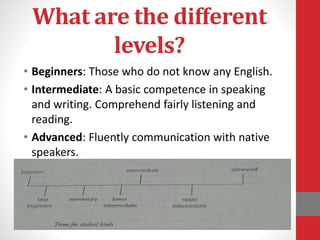
What are the different
levels?
• Beginners: Those who do not know any English.
• Intermediate: A basic competence in speaking
and writing. Comprehend fairly listening and
reading.
• Advanced: Fluently communication with native
speakers.
How should we teach
the different levels?
• For beginners: pronunciation practice, simple
dialogues. Exaggerated voice tone and gestures.
Activities: no abstract discussion
• For advanced : essay writing, formal debating.
Activities: more complex questions, opinions
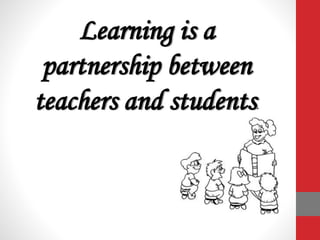
Learning is a
partnership between
teachers and students.

How to be a good learner ppt

  • 1.
    HOW TO BEA GOOD LEARNER Blanco, Manuela Sarmiento, Agustina PRACTICE II – 2017 UNLPAM
  • 2.
    Why is itdifficult to describe a good learner? Have you ever wonder why... • Is one study method appropiate for student A but not for student B? • Some children succeed without practising or doing homework?
  • 3.
    How important isthe student’s motivation? •INTEGRATIVE MOTIVATION •INSTRUMENTAL MOTIVATION • Main tasks for teachers: To provoke interest and involvement. However, they are not totally responsible for their students’ motivation.
  • 4.
    Who is responsible forlearning? •Teachers have to offer help and advice, but students are the ones who have to take responsibility for their own learning.
  • 5.
    What characteristics would goodclassroom learners share? • Willingness to listen: Not just paying attention but soaking up with eagerness and intelligence. • Willingness to experiment: Taking risks, trying things out. • Willingness to ask questions: Questions are always welcomed. • Willingness to think about how to learn: Good learners bring or invent their own study skills. • Willingness to accept correction: Good pupils take the correction as a constructive criticism.
  • 6.
    What’s special about teachingadults? • They come to lessons with a long history of learning experience. • Adults are more nervous and anxious of learning than younger pupils are = Purpose. • No discipline problems and good cooperation.
  • 7.
    What are thedifferent levels? • Beginners: Those who do not know any English. • Intermediate: A basic competence in speaking and writing. Comprehend fairly listening and reading. • Advanced: Fluently communication with native speakers.
  • 8.
    How should weteach the different levels? • For beginners: pronunciation practice, simple dialogues. Exaggerated voice tone and gestures. Activities: no abstract discussion • For advanced : essay writing, formal debating. Activities: more complex questions, opinions
  • 9.
    Learning is a partnershipbetween teachers and students.