AMBRISH DONGRE
AVANI KAPUR &
VIBHU TEWARY
How much does India spend on Elementary
Education (EE)?
Context
 Significant developments in EE in India
 2001: Centrally Sponsored Scheme (CSS) Sarva Shiksha Abhiyan(SSA) launched
 2009: Right to Free and Compulsory Education Act (RTE) passed resulting in
significant increases in allocations for SSA.
 Increasing focus on private provision of education –private schools (36%); private
tutoring (23%)
 2015: Implications of 14th Finance Commission recommendations
 Despite this, updated estimates on total expenditure on EE are not
available
Motivation Questions
 How much does it cost to educate India’s children?
 What are the drivers of public expenditure?
 Unpack the sources of funds (who controls the purse-strings and who has
the decision-making power? )
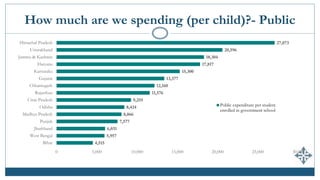
How much are we spending (per child)?- Public
4,515
5,957
6,031
7,577
8,066
8,424
9,255
11,576
12,160
13,377
15,300
17,817
18,304
20,596
27,073
0 5,000 10,000 15,000 20,000 25,000 30,000
Bihar
West Bengal
Jharkhand
Punjab
Madhya Pradesh
Odisha
Uttar Pradesh
Rajasthan
Chhattisgarh
Gujarat
Karnataka
Haryana
Jammu & Kashmir
Uttarakhand
Himachal Pradesh
Public expenditure per student
enrolled in government school
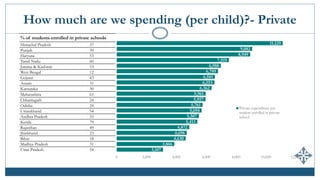
How much are we spending (per child)?- Private
3,107
3,866
4,630
4,696
4,872
5,413
5,507
5,694
5,761
5,957
5,961
6,362
6,553
6,581
6,789
6,988
7,519
8,949
9,082
11,129
0 2,000 4,000 6,000 8,000 10,000 12,000
Uttar Pradesh
Madhya Pradesh
Bihar
Jharkhand
Rajasthan
Kerala
Andhra Pradesh
Uttaranchal
Odisha
Chhattisgarh
Maharashtra
Karnataka
Assam
Gujarat
West Bengal
Jammu & Kashmir
Tamil Nadu
Haryana
Punjab
Himachal Pradesh
Private expenditure per
student enrolled in private
school
% of students enrolled in private schools
Himachal Pradesh 37
Punjab 50
Haryana 53
Tamil Nadu 60
Jammu & Kashmir 53
West Bengal 12
Gujarat 43
Assam 31
Karnataka 50
Maharashtra 61
Chhattisgarh 24
Odisha 24
Uttarakhand 54
Andhra Pradesh 55
Kerala 79
Rajasthan 49
Jharkhand 23
Bihar 18
Madhya Pradesh 31
Uttar Pradesh 54
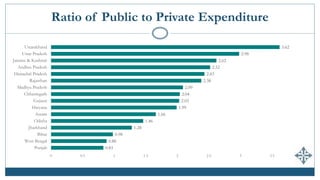
Ratio of Public to Private Expenditure
0.83
0.88
0.98
1.28
1.46
1.66
1.99
2.03
2.04
2.09
2.38
2.43
2.52
2.62
2.98
3.62
0 0.5 1 1.5 2 2.5 3 3.5 4
Punjab
West Bengal
Bihar
Jharkhand
Odisha
Assam
Haryana
Gujarat
Chhattisgarh
Madhya Pradesh
Rajasthan
Himachal Pradesh
Andhra Pradesh
Jammu & Kashmir
Uttar Pradesh
Uttarakhand
85%
5%
5%
4%
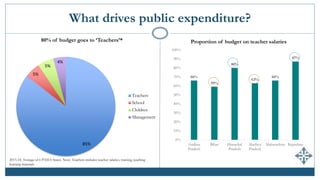
80% of budget goes to ‘Teachers’*
Teachers
School
Children
Management
2013-14: Average of 6 PAISA States. Note: Teachers includes teacher salaries, training, teaching
learning materials
What drives public expenditure?
66%
59%
80%
63%
66%
87%
0%
10%
20%
30%
40%
50%
60%
70%
80%
90%
100%
Andhra
Pradesh
Bihar Himachal
Pradesh
Madhya
Pradesh
Maharashtra Rajasthan
Proportion of budget on teacher salaries
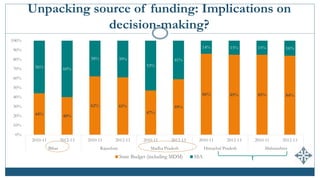
Unpacking source of funding: Implications on
decision-making?
44% 40%
62% 61%
47%
59%
86% 85% 85% 84%
56% 60%
38% 39%
53%
41%
14% 15% 15% 16%
0%
10%
20%
30%
40%
50%
60%
70%
80%
90%
100%
2010-11 2012-13 2010-11 2012-13 2010-11 2012-13 2010-11 2012-13 2010-11 2012-13
Bihar Rajasthan Madha Pradesh Himachal Pradesh Maharashtra
State Budget (including MDM) SSA
AVA N I K A P U R : A K A P U R @ A C C O U N TA B I L I T Y I N D I A . O RG
A M B R I S H D O N G R E : A D O N G R E @ A C C O U N TA B I L I T Y I N D I A . O RG
Thank you

How much does India spend on Elementary Education (EE)

  • 1.
    AMBRISH DONGRE AVANI KAPUR& VIBHU TEWARY How much does India spend on Elementary Education (EE)?
  • 2.
    Context  Significant developmentsin EE in India  2001: Centrally Sponsored Scheme (CSS) Sarva Shiksha Abhiyan(SSA) launched  2009: Right to Free and Compulsory Education Act (RTE) passed resulting in significant increases in allocations for SSA.  Increasing focus on private provision of education –private schools (36%); private tutoring (23%)  2015: Implications of 14th Finance Commission recommendations  Despite this, updated estimates on total expenditure on EE are not available
  • 3.
    Motivation Questions  Howmuch does it cost to educate India’s children?  What are the drivers of public expenditure?  Unpack the sources of funds (who controls the purse-strings and who has the decision-making power? )
  • 4.
    How much arewe spending (per child)?- Public 4,515 5,957 6,031 7,577 8,066 8,424 9,255 11,576 12,160 13,377 15,300 17,817 18,304 20,596 27,073 0 5,000 10,000 15,000 20,000 25,000 30,000 Bihar West Bengal Jharkhand Punjab Madhya Pradesh Odisha Uttar Pradesh Rajasthan Chhattisgarh Gujarat Karnataka Haryana Jammu & Kashmir Uttarakhand Himachal Pradesh Public expenditure per student enrolled in government school
  • 5.
    How much arewe spending (per child)?- Private 3,107 3,866 4,630 4,696 4,872 5,413 5,507 5,694 5,761 5,957 5,961 6,362 6,553 6,581 6,789 6,988 7,519 8,949 9,082 11,129 0 2,000 4,000 6,000 8,000 10,000 12,000 Uttar Pradesh Madhya Pradesh Bihar Jharkhand Rajasthan Kerala Andhra Pradesh Uttaranchal Odisha Chhattisgarh Maharashtra Karnataka Assam Gujarat West Bengal Jammu & Kashmir Tamil Nadu Haryana Punjab Himachal Pradesh Private expenditure per student enrolled in private school % of students enrolled in private schools Himachal Pradesh 37 Punjab 50 Haryana 53 Tamil Nadu 60 Jammu & Kashmir 53 West Bengal 12 Gujarat 43 Assam 31 Karnataka 50 Maharashtra 61 Chhattisgarh 24 Odisha 24 Uttarakhand 54 Andhra Pradesh 55 Kerala 79 Rajasthan 49 Jharkhand 23 Bihar 18 Madhya Pradesh 31 Uttar Pradesh 54
  • 6.
    Ratio of Publicto Private Expenditure 0.83 0.88 0.98 1.28 1.46 1.66 1.99 2.03 2.04 2.09 2.38 2.43 2.52 2.62 2.98 3.62 0 0.5 1 1.5 2 2.5 3 3.5 4 Punjab West Bengal Bihar Jharkhand Odisha Assam Haryana Gujarat Chhattisgarh Madhya Pradesh Rajasthan Himachal Pradesh Andhra Pradesh Jammu & Kashmir Uttar Pradesh Uttarakhand
  • 7.
    85% 5% 5% 4% 80% of budgetgoes to ‘Teachers’* Teachers School Children Management 2013-14: Average of 6 PAISA States. Note: Teachers includes teacher salaries, training, teaching learning materials What drives public expenditure? 66% 59% 80% 63% 66% 87% 0% 10% 20% 30% 40% 50% 60% 70% 80% 90% 100% Andhra Pradesh Bihar Himachal Pradesh Madhya Pradesh Maharashtra Rajasthan Proportion of budget on teacher salaries
  • 8.
    Unpacking source offunding: Implications on decision-making? 44% 40% 62% 61% 47% 59% 86% 85% 85% 84% 56% 60% 38% 39% 53% 41% 14% 15% 15% 16% 0% 10% 20% 30% 40% 50% 60% 70% 80% 90% 100% 2010-11 2012-13 2010-11 2012-13 2010-11 2012-13 2010-11 2012-13 2010-11 2012-13 Bihar Rajasthan Madha Pradesh Himachal Pradesh Maharashtra State Budget (including MDM) SSA
  • 9.
    AVA N IK A P U R : A K A P U R @ A C C O U N TA B I L I T Y I N D I A . O RG A M B R I S H D O N G R E : A D O N G R E @ A C C O U N TA B I L I T Y I N D I A . O RG Thank you

Editor's Notes

  • #3 In the absence of knowing components of exp – many unanswered questions... Dont take space on Methodology – the detailed document is available Analytical questions does this lead one too? What does this mean?- leading into Rules vs Responsiveness How much money comes from centre how much comes from states – purse strings...this is the first step in trying to understand that.. Next ppt will go into it in more detail... Starting point of PAISA District survey... Total Time: 10 minutes
  • #5 Graph of state-wise public exp. on EE per student (excl. TN, MH, KE, KA AS) – tremendous inter-state variation –next slide ->private expenditure per student
  • #6 What can we show here? –% students in private schools and private exp. on those who go to private schools what does this indicate?
  • #7 Ratio of public to private exp? an important finding : - government is spending more per student as compared to the private exp. implications? With the exception of Punjab, WB, Bihar, Jharkhand and Odisha – what drives govt exp - The next slide can be : (a) what drives it? share of teacher / teacher salary in overall budget (preferably, exp);
  • #8 how is public expenditure being spent? Most of money tied to teacher salaries –
  • #9 GoI through SSA has become an important player – even more so for the poorer states – further state funds are mostly tied up in teacher salaries. The above shows budgets. Can we show expenditure? Are the trends more prominent in expenditure?
  • #10 Higher ther per capita income, lower the exp. on EE as a % of state GDP – what does that mean? Can this offer any idea of what would happen due to 14th FC reco? Mwhere do we put this slide? In the next presentation, we will see how this breaks down in practice…