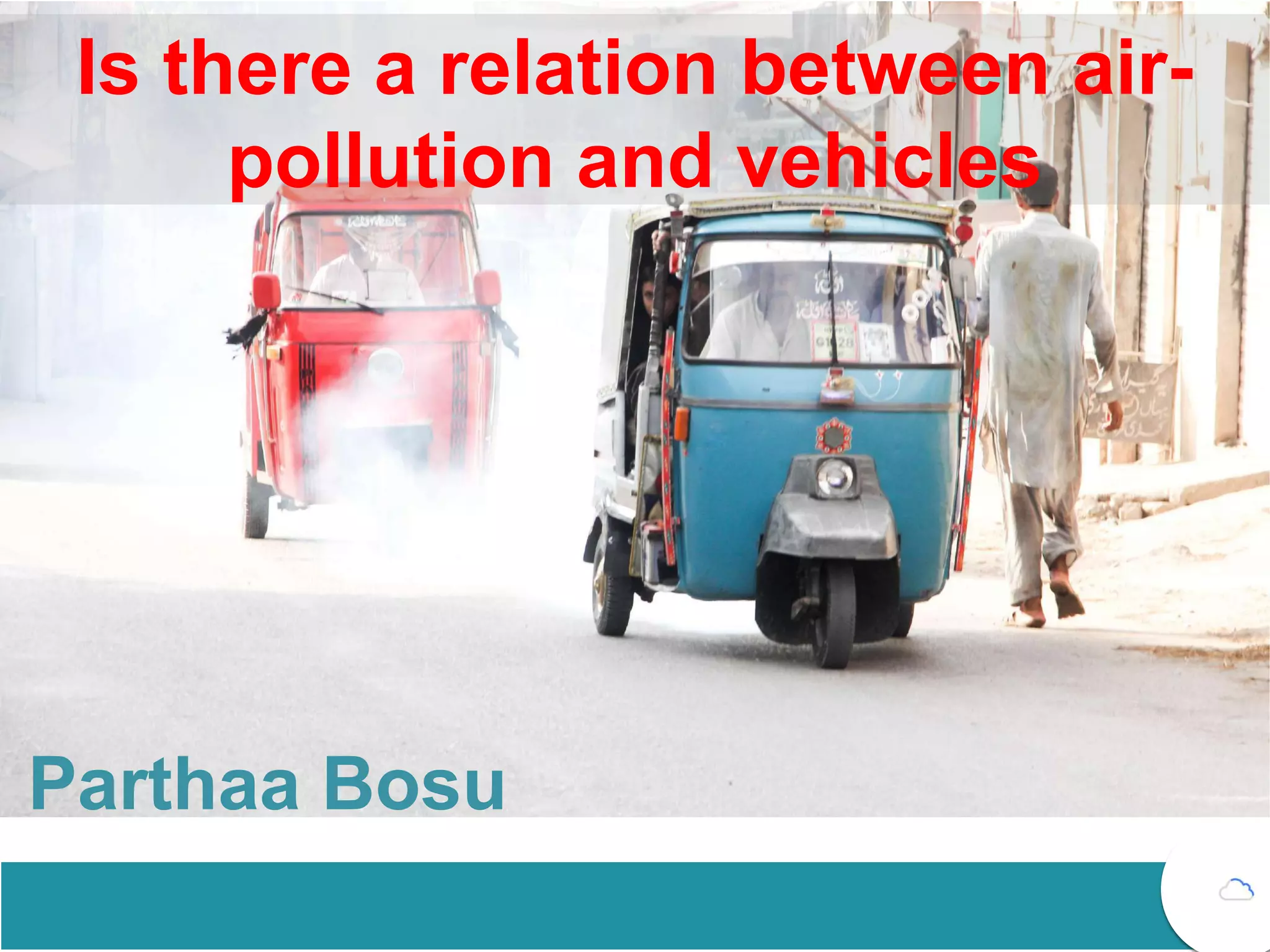
Is there a relation between air-
pollution and vehicles
Parthaa Bosu
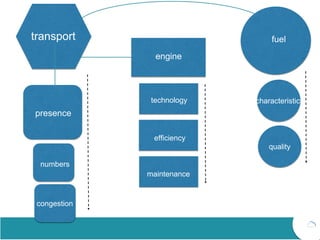
transport
engine
fuel
presence
characteristics
quality
technology
efficiency
maintenance
numbers
congestion
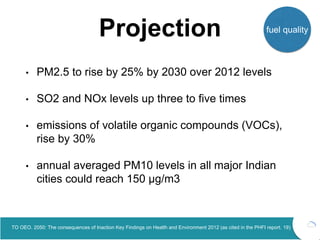
Projection
• PM2.5 to rise by 25% by 2030 over 2012 levels
• SO2 and NOx levels up three to five times
• emissions of volatile organic compounds (VOCs),
rise by 30%
• annual averaged PM10 levels in all major Indian
cities could reach 150 μg/m3
qualityfuel quality
TO OEO. 2050: The consequences of Inaction Key Findings on Health and Environment 2012 (as cited in the PHFI report. 19)
Challenges
• More than 40% of kerosene is lost as leakage
• 51% diesel and 33% of gasoline at retail stations
are adulterated
• None of the accredited labs has the capability to
detect the amount of naphtha and kerosene
qualityfuel quality
Indian Express, Aneesha Mathur | New Delhi | Published: September 3, 2016
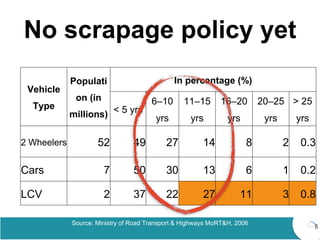
No scrapage policy yet
Vehicle
Type
Populati
on (in
millions)
In percentage (%)
< 5 yrs
6–10
yrs
11–15
yrs
16–20
yrs
20–25
yrs
> 25
yrs
2 Wheelers 52 49 27 14 8 2 0.3
Cars 7 50 30 13 6 1 0.2
LCV 2 37 22 27 11 3 0.8
5
Source: Ministry of Road Transport & Highways MoRT&H, 2006
Challenges
• huge volume of vehicles are still built to BS III standards
and will continue
• use high sulfur fuels: 350 parts per million (ppm) of
diesel and 150 ppm for gasoline
• Absence of an effective inspection and certification
system
• impossible to ensure on-road reduction in emissions
• The difference between the lab emissions and in-use
emissions from vehicles
engine
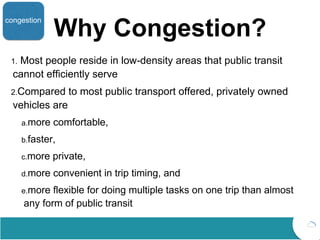
Why Congestion?
1. Most people reside in low-density areas that public transit
cannot efficiently serve
2.Compared to most public transport offered, privately owned
vehicles are
a.more comfortable,
b.faster,
c.more private,
d.more convenient in trip timing, and
e.more flexible for doing multiple tasks on one trip than almost
any form of public transit
congestion
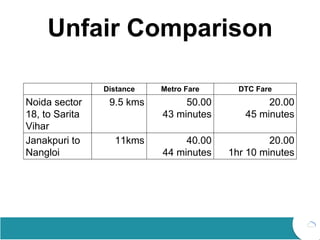
Unfair Comparison
Distance Metro Fare DTC Fare
Noida sector
18, to Sarita
Vihar
9.5 kms 50.00
43 minutes
20.00
45 minutes
Janakpuri to
Nangloi
11kms 40.00
44 minutes
20.00
1hr 10 minutes
India’s love for cars
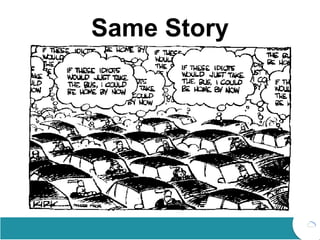
Same Story
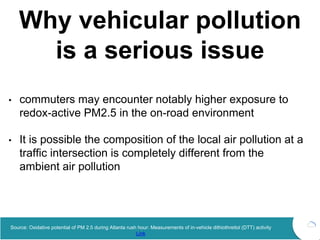
Why vehicular pollution
is a serious issue
• commuters may encounter notably higher exposure to
redox-active PM2.5 in the on-road environment
• It is possible the composition of the local air pollution at a
traffic intersection is completely different from the
ambient air pollution
Source: Oxidative potential of PM 2.5 during Atlanta rush hour: Measurements of in-vehicle dithiothreitol (DTT) activity
Link
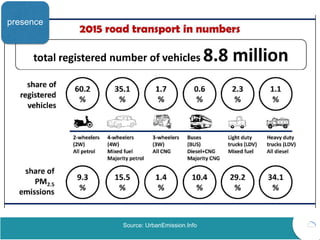
Source: UrbanEmission.Info
presence
13
Source: 1) PwC Transportation and Logistics 2030; 2) IPCC Fourth Assessment Report: Climate Change 2007/ chapter 5 Transportation
[remaining: Light Duty Vehicles 44.5%/ 2-wheelers: 1.6%/ Buses: 6.2%/ Rail: 1.5%
Air
Ocean
Road
Historical Development of vehicle capacities1)
1970 1990 2010 2030
Boeing
747-200F
Max. Freight
101 t
Boeing
747-400 ERF
Max. Freight
112 t
Airbus
380-800F
Max. Freight
150 t
Airbus
380-800F
Max. Freight
150 t
Container Ship
2,600 TEU
-
3,100 TEU
Container Ship
2,800 TEU
-
5,100 TEU
Container Ship
11,000 TEU
-
14,000 TEU
Container Ship
16,000 TEU
-
22,000 TEU
Gross Vehicle
Weight
60-70 t
Gross Vehicle
Weight
60-70 t
Gross Vehicle
Weight
60-70 t
Gross Vehicle
Weight
60-70 t
World transport
energy use2)
11.6%
9.5%
25%
Heavy- and Medium freight
trucks only
Market diversity
~ 300 – 400 airlines
~ 150 shipping lines
> 100,000 trucking
companies
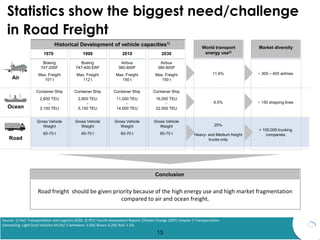
Road freight should be given priority because of the high energy use and high market fragmentation
compared to air and ocean freight.
Conclusion
Statistics show the biggest need/challenge
in Road Freight
Emissions
Fuel
Accidents
VKTNoise
Congestion
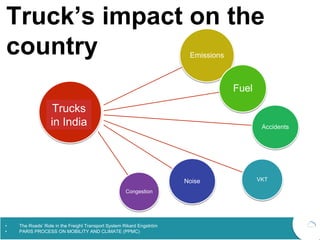
Truck’s impact on the
country
Trucks
in India
• The Roads’ Role in the Freight Transport System Rikard Engström
• PARIS PROCESS ON MOBILITY AND CLIMATE (PPMC)
The Consumption
Economy
• People want to live in urban areas
• About 50% of world population is urban, expected to reach
80% in 20-30 years
• Residents consume prodigious amounts of goods
• The number of deliveries made to key sectors, such as food
and retail, generates more traffic than the one for marine
ports and airports combined
• In terms of freight traffic, deliveries to stores may represent
in excess of 60% of all the freight traffic in a metropolitan
area
Way Forward?
1. Urban Planning is key
2. National Approach
3. In-use vehicles
4. Urban Freight
Follow me on:
Twitter/ Facebook
parthaabosu

Is there a relation between air pollution and vehicles

  • 1.
    Is there arelation between air- pollution and vehicles Parthaa Bosu
  • 2.
  • 3.
    Projection • PM2.5 torise by 25% by 2030 over 2012 levels • SO2 and NOx levels up three to five times • emissions of volatile organic compounds (VOCs), rise by 30% • annual averaged PM10 levels in all major Indian cities could reach 150 μg/m3 qualityfuel quality TO OEO. 2050: The consequences of Inaction Key Findings on Health and Environment 2012 (as cited in the PHFI report. 19)
  • 4.
    Challenges • More than40% of kerosene is lost as leakage • 51% diesel and 33% of gasoline at retail stations are adulterated • None of the accredited labs has the capability to detect the amount of naphtha and kerosene qualityfuel quality Indian Express, Aneesha Mathur | New Delhi | Published: September 3, 2016
  • 5.
    No scrapage policyyet Vehicle Type Populati on (in millions) In percentage (%) < 5 yrs 6–10 yrs 11–15 yrs 16–20 yrs 20–25 yrs > 25 yrs 2 Wheelers 52 49 27 14 8 2 0.3 Cars 7 50 30 13 6 1 0.2 LCV 2 37 22 27 11 3 0.8 5 Source: Ministry of Road Transport & Highways MoRT&H, 2006
  • 6.
    Challenges • huge volumeof vehicles are still built to BS III standards and will continue • use high sulfur fuels: 350 parts per million (ppm) of diesel and 150 ppm for gasoline • Absence of an effective inspection and certification system • impossible to ensure on-road reduction in emissions • The difference between the lab emissions and in-use emissions from vehicles engine
  • 7.
    Why Congestion? 1. Mostpeople reside in low-density areas that public transit cannot efficiently serve 2.Compared to most public transport offered, privately owned vehicles are a.more comfortable, b.faster, c.more private, d.more convenient in trip timing, and e.more flexible for doing multiple tasks on one trip than almost any form of public transit congestion
  • 8.
    Unfair Comparison Distance MetroFare DTC Fare Noida sector 18, to Sarita Vihar 9.5 kms 50.00 43 minutes 20.00 45 minutes Janakpuri to Nangloi 11kms 40.00 44 minutes 20.00 1hr 10 minutes
  • 9.
  • 10.
  • 11.
    Why vehicular pollution isa serious issue • commuters may encounter notably higher exposure to redox-active PM2.5 in the on-road environment • It is possible the composition of the local air pollution at a traffic intersection is completely different from the ambient air pollution Source: Oxidative potential of PM 2.5 during Atlanta rush hour: Measurements of in-vehicle dithiothreitol (DTT) activity Link
  • 12.
  • 13.
    13 Source: 1) PwCTransportation and Logistics 2030; 2) IPCC Fourth Assessment Report: Climate Change 2007/ chapter 5 Transportation [remaining: Light Duty Vehicles 44.5%/ 2-wheelers: 1.6%/ Buses: 6.2%/ Rail: 1.5% Air Ocean Road Historical Development of vehicle capacities1) 1970 1990 2010 2030 Boeing 747-200F Max. Freight 101 t Boeing 747-400 ERF Max. Freight 112 t Airbus 380-800F Max. Freight 150 t Airbus 380-800F Max. Freight 150 t Container Ship 2,600 TEU - 3,100 TEU Container Ship 2,800 TEU - 5,100 TEU Container Ship 11,000 TEU - 14,000 TEU Container Ship 16,000 TEU - 22,000 TEU Gross Vehicle Weight 60-70 t Gross Vehicle Weight 60-70 t Gross Vehicle Weight 60-70 t Gross Vehicle Weight 60-70 t World transport energy use2) 11.6% 9.5% 25% Heavy- and Medium freight trucks only Market diversity ~ 300 – 400 airlines ~ 150 shipping lines > 100,000 trucking companies Road freight should be given priority because of the high energy use and high market fragmentation compared to air and ocean freight. Conclusion Statistics show the biggest need/challenge in Road Freight
  • 14.
    Emissions Fuel Accidents VKTNoise Congestion Truck’s impact onthe country Trucks in India • The Roads’ Role in the Freight Transport System Rikard Engström • PARIS PROCESS ON MOBILITY AND CLIMATE (PPMC)
  • 15.
    The Consumption Economy • Peoplewant to live in urban areas • About 50% of world population is urban, expected to reach 80% in 20-30 years • Residents consume prodigious amounts of goods • The number of deliveries made to key sectors, such as food and retail, generates more traffic than the one for marine ports and airports combined • In terms of freight traffic, deliveries to stores may represent in excess of 60% of all the freight traffic in a metropolitan area
  • 16.
    Way Forward? 1. UrbanPlanning is key 2. National Approach 3. In-use vehicles 4. Urban Freight
  • 17.
    Follow me on: Twitter/Facebook parthaabosu