Introduction
With the ever-growing population of the country, the future of India
promises to be exciting. Youth has the largest share in the demographics of
India, and that makes education the most vital sector for India. When we
talk about education, one can’t help but think and bemoan at the current
state of primary education in India. Primary education forms the most basic
stage of formal education that is preceded by preschool. It gives children a
basic understanding of various subjects. It is at this stage that India lags
behind, especially in rural areas, where the level of literacy among adults is
poor. According to the Census of India, the rural literacy rate still stands at
just 69%, which is far below the world average of 86%.
However, all of this promises to change in the coming years. With the
advent of technology, the process of teaching as well as learning is bound to
become more interesting and practical. Of course, there are cons to it as
well, but use technology the right way and there’s nothing that one cannot
achieve.
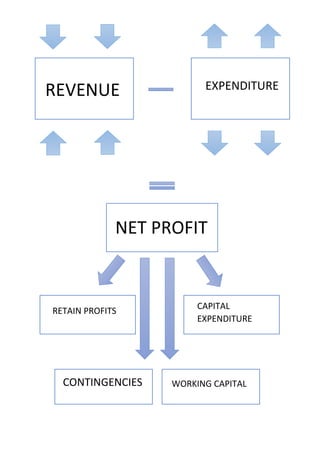
REVENUE EXPENDITURE
NET PROFIT
RETAIN PROFITS
CAPITAL
EXPENDITURE
CONTINGENCIES WORKING CAPITAL
Revenue sources for schools: -
• Government Subsidies / Schemes
Government is largest contributor to the education sector in India. The Government of India has
initiated a number of programmes and projects. Integrated approaches implemented by various
centrally sponsored schemes ensures education to all. Some of the remarkable schemes are
 Sarva Shiksha Abhiyan
 Rashtriya Madhyamamik Shiksha Abhiyan
 Scheme of ICT @ School
 Pre-matric Scholarship Scheme
Subsidies also promote growth by increasing the level of education in India. Government is also
providing subsidies like monetary scholarships, books and stationery free or at concessional prices,
transport concessions
• Government grants: -
The Union Budget, 2018-19, has proposed to treat school education without segmentation from
prenursery to Class 12. Samagra Shiksha - an overarching programme for the school education
sector extending from pre-school to class 12 has been, therefore, prepared with the broader goal of
improving school effectiveness measured in terms of equal opportunities for schooling and
equitable learning outcomes. This scheme will continue from 1 April 2018 to 31 March 2020 with
total estimated outlay of Rs. 75,000 crores.
• Fees: -
Schools Fees in India differ according to various parameters and there are several different
attributes that contribute to the fees structure as well as revenue to the school. There are several
different boards of institutions that are available and each has its own fee structure and they are
regulated. In recent years there has been a significant rise in the cost of education.
• FDI’s
The Government of India has allowed for 100% Foreign Direct Investment in the education sector
under the automatic route. Recently, GOI also allowed for 100% FDI in the Construction
Development projects which would also include educational institutions. These investments are
also carried through the automatic route. As per the Department of Industrial Policy and
Promotion’s recent statistics on foreign direct investment, the India education sector has
received a cumulative foreign investment of around USD 1.67 billion
• Awards: -
Government gives many cash awards to schools and their students for their achievements.
• Renting Schools on Sundays/ renting school ground: -
Many schools rent their ground on Sundays for functions like wedding, engagement, corporate
events, team outings, birthday parties, get together etc. This are extra incomes for schools.
schools rent their grounds for sports activities to generate funds.
Education
Others
EnvironmentInfrastructure
Health
Agriculture
BUDGET BY GOVERNMENT
Funds allocated to
education.
Sources
Public FDI PRIVATE
• Government
grants
• Government
Subsidies
• Grants from local
authorities
• Donation
• NGO’s
• Fees
Foreign
Direct
Investments.
Foreign
Donations.
• Private
foundations
• Official
development
assistance
• Business/Private
individuals.
Nature of
allocations
(capital/current)
Expenditure: -
• Building Management: -
This expense are incurred by schools to keep school building in working condition as well as creating aan
environment where student could easily focus on studies.
• Electricity: -
This is the major expenses incurred by schools.
• Salary to Teachers: -
This is other major expenses incurred by the schools. Salary to teachers depend upon various factors such
as no of students, no of teachers in school, size of school, location of school etc.
• Salary to Non-Teaching Staff: -
This staff consists of Admin staff, Cleaners, Peons, Watchmen. This staff help in school maintenance and
working.
• Water supply & Sanitation Maintenance
This are one of the important expenses incurred by the school. As it Clean drinking water and clean
sanitation are most important things in schools
Some of the other expenses incurred by schools are: -
• Taxes
• Other Audit Fees
• Activities Expenses
• Office Expenses
• Consultant Charges
• Library Expenses
• Insurance
After Paying all expenses the net profit could be use for various other things such as: -
• Retaining the profit: -
Retained profits could be used in for various future project such as expansions, Staff Development
programmes, scholarships for underprivileged students and other development programmes etc.
• Contingencies: -
Schools have more expenses then income and thus has to keep aside some amount of profits for
contingencies. This money could be used in time of uncertainties.
• Working Capital: -
Schools don’t have much of current assets and liabilities and thus has to keep some amount aside as
working capital for their day to day activities.
• Capital Expenditure: -
With development of technology and science, even schools have to update them self by keep upgrading
teaching techniques and new things so that their students will stay updated with world. School has to
keep some amount aside for such upgradation like New computer software, projectors, science labs,
school buildings etc.
Government Initiatives: -
India stepped up its spending on school education by 9.35% from 2014-15 (Rs 45,722.41 crore) to
2018-19 (Rs 50,000 crore). the first allocation for the new Samagra Shiksha scheme. Under the scheme,
grants will be allocated on the basis of learning outcomes and steps taken for quality improvement. There
will be increased focus on capacity of teachers and digital education, and efforts to improved infrastructure.
An allocation of Rs 75,000 crore for April 2018, 2020 has been approved, a 20% increase over
current amounts. Also, Rs 33,000 has been already allocated for 2018-19. Allocations are likely to increase
to 41,000 in keeping with the approvals. It is meant to give flexibility to states in choosing which
components to prioritise based on their needs. We are seeing significant differences in how states are
prioritising elementary education.
Expenditure of other developing countries as compare to India as a percentage of GDP
Source: United Nations Educational, Scientific and Cultural Organization (UNESCO) data; Analysis of Budgeted Expenditure on Education (2014-18)

Sumeet final BCS NMO 2019

  • 1.
    Introduction With the ever-growingpopulation of the country, the future of India promises to be exciting. Youth has the largest share in the demographics of India, and that makes education the most vital sector for India. When we talk about education, one can’t help but think and bemoan at the current state of primary education in India. Primary education forms the most basic stage of formal education that is preceded by preschool. It gives children a basic understanding of various subjects. It is at this stage that India lags behind, especially in rural areas, where the level of literacy among adults is poor. According to the Census of India, the rural literacy rate still stands at just 69%, which is far below the world average of 86%. However, all of this promises to change in the coming years. With the advent of technology, the process of teaching as well as learning is bound to become more interesting and practical. Of course, there are cons to it as well, but use technology the right way and there’s nothing that one cannot achieve.
  • 2.
    REVENUE EXPENDITURE NET PROFIT RETAINPROFITS CAPITAL EXPENDITURE CONTINGENCIES WORKING CAPITAL
  • 3.
    Revenue sources forschools: - • Government Subsidies / Schemes Government is largest contributor to the education sector in India. The Government of India has initiated a number of programmes and projects. Integrated approaches implemented by various centrally sponsored schemes ensures education to all. Some of the remarkable schemes are  Sarva Shiksha Abhiyan  Rashtriya Madhyamamik Shiksha Abhiyan  Scheme of ICT @ School  Pre-matric Scholarship Scheme Subsidies also promote growth by increasing the level of education in India. Government is also providing subsidies like monetary scholarships, books and stationery free or at concessional prices, transport concessions • Government grants: - The Union Budget, 2018-19, has proposed to treat school education without segmentation from prenursery to Class 12. Samagra Shiksha - an overarching programme for the school education sector extending from pre-school to class 12 has been, therefore, prepared with the broader goal of improving school effectiveness measured in terms of equal opportunities for schooling and equitable learning outcomes. This scheme will continue from 1 April 2018 to 31 March 2020 with total estimated outlay of Rs. 75,000 crores. • Fees: - Schools Fees in India differ according to various parameters and there are several different attributes that contribute to the fees structure as well as revenue to the school. There are several different boards of institutions that are available and each has its own fee structure and they are regulated. In recent years there has been a significant rise in the cost of education. • FDI’s The Government of India has allowed for 100% Foreign Direct Investment in the education sector under the automatic route. Recently, GOI also allowed for 100% FDI in the Construction Development projects which would also include educational institutions. These investments are also carried through the automatic route. As per the Department of Industrial Policy and Promotion’s recent statistics on foreign direct investment, the India education sector has received a cumulative foreign investment of around USD 1.67 billion • Awards: - Government gives many cash awards to schools and their students for their achievements. • Renting Schools on Sundays/ renting school ground: - Many schools rent their ground on Sundays for functions like wedding, engagement, corporate events, team outings, birthday parties, get together etc. This are extra incomes for schools. schools rent their grounds for sports activities to generate funds.
  • 4.
    Education Others EnvironmentInfrastructure Health Agriculture BUDGET BY GOVERNMENT Fundsallocated to education. Sources Public FDI PRIVATE • Government grants • Government Subsidies • Grants from local authorities • Donation • NGO’s • Fees Foreign Direct Investments. Foreign Donations. • Private foundations • Official development assistance • Business/Private individuals. Nature of allocations (capital/current)
  • 5.
    Expenditure: - • BuildingManagement: - This expense are incurred by schools to keep school building in working condition as well as creating aan environment where student could easily focus on studies. • Electricity: - This is the major expenses incurred by schools. • Salary to Teachers: - This is other major expenses incurred by the schools. Salary to teachers depend upon various factors such as no of students, no of teachers in school, size of school, location of school etc. • Salary to Non-Teaching Staff: - This staff consists of Admin staff, Cleaners, Peons, Watchmen. This staff help in school maintenance and working. • Water supply & Sanitation Maintenance This are one of the important expenses incurred by the school. As it Clean drinking water and clean sanitation are most important things in schools Some of the other expenses incurred by schools are: - • Taxes • Other Audit Fees • Activities Expenses • Office Expenses • Consultant Charges • Library Expenses • Insurance After Paying all expenses the net profit could be use for various other things such as: - • Retaining the profit: - Retained profits could be used in for various future project such as expansions, Staff Development programmes, scholarships for underprivileged students and other development programmes etc. • Contingencies: - Schools have more expenses then income and thus has to keep aside some amount of profits for contingencies. This money could be used in time of uncertainties. • Working Capital: - Schools don’t have much of current assets and liabilities and thus has to keep some amount aside as working capital for their day to day activities. • Capital Expenditure: - With development of technology and science, even schools have to update them self by keep upgrading teaching techniques and new things so that their students will stay updated with world. School has to keep some amount aside for such upgradation like New computer software, projectors, science labs, school buildings etc. Government Initiatives: - India stepped up its spending on school education by 9.35% from 2014-15 (Rs 45,722.41 crore) to 2018-19 (Rs 50,000 crore). the first allocation for the new Samagra Shiksha scheme. Under the scheme, grants will be allocated on the basis of learning outcomes and steps taken for quality improvement. There will be increased focus on capacity of teachers and digital education, and efforts to improved infrastructure.
  • 6.
    An allocation ofRs 75,000 crore for April 2018, 2020 has been approved, a 20% increase over current amounts. Also, Rs 33,000 has been already allocated for 2018-19. Allocations are likely to increase to 41,000 in keeping with the approvals. It is meant to give flexibility to states in choosing which components to prioritise based on their needs. We are seeing significant differences in how states are prioritising elementary education. Expenditure of other developing countries as compare to India as a percentage of GDP Source: United Nations Educational, Scientific and Cultural Organization (UNESCO) data; Analysis of Budgeted Expenditure on Education (2014-18)