How to Teach Grammar

   Maria Kristina Pingkan
       1021150015
1. What is Grammar?


•   Texts, sentences, words, sounds
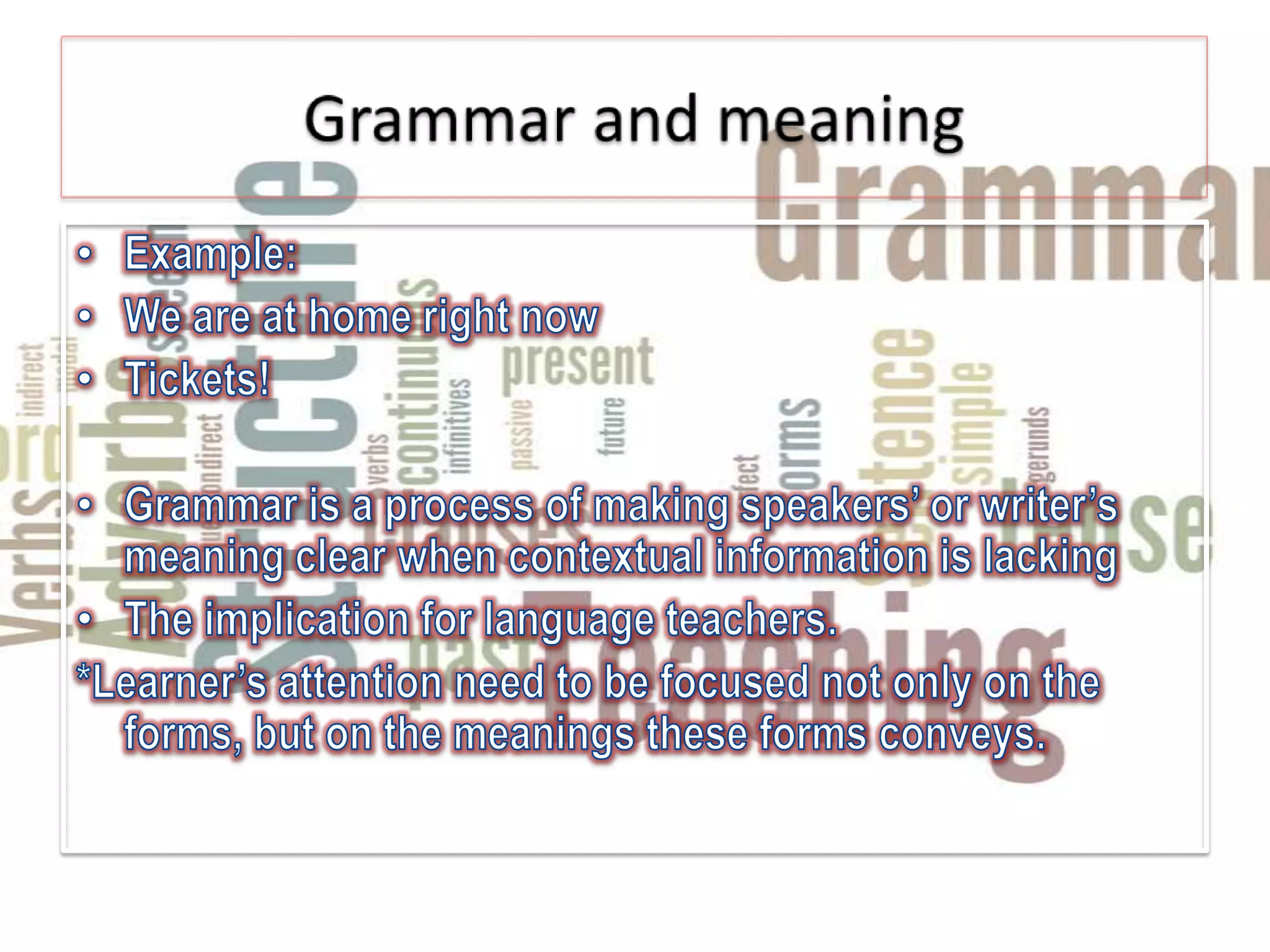
•   Grammar and meaning
•   Two kinds of meaning
•   Grammar and function
•   Spoken grammar and written grammar
•   Grammar syllabuses
•   Grammar rules
Texts, sentences, words, sounds
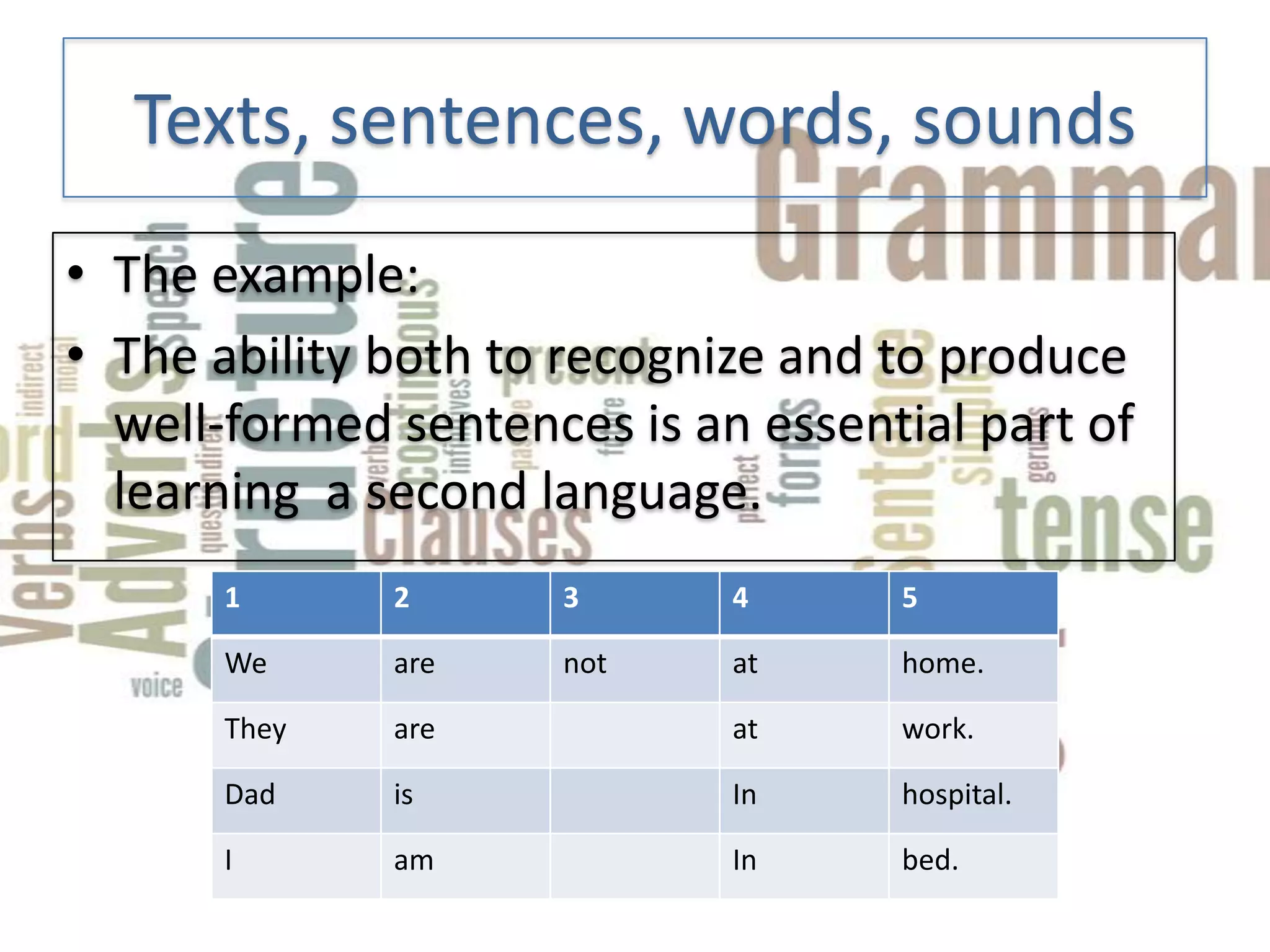
• The example:
• The ability both to recognize and to produce
  well-formed sentences is an essential part of
  learning a second language.
      1       2      3       4      5

      We      are    not     at     home.

      They    are            at     work.

      Dad     is             In     hospital.

      I       am             In     bed.
• What was he misunderstood?
*The function of the question.
• What we do when we process the language?
*Make sense the words and the grammar.
*infer the speaker’s intention (the function of
  what they are saying or writing)
Spoken grammar and written grammar
Grammar syllabuses
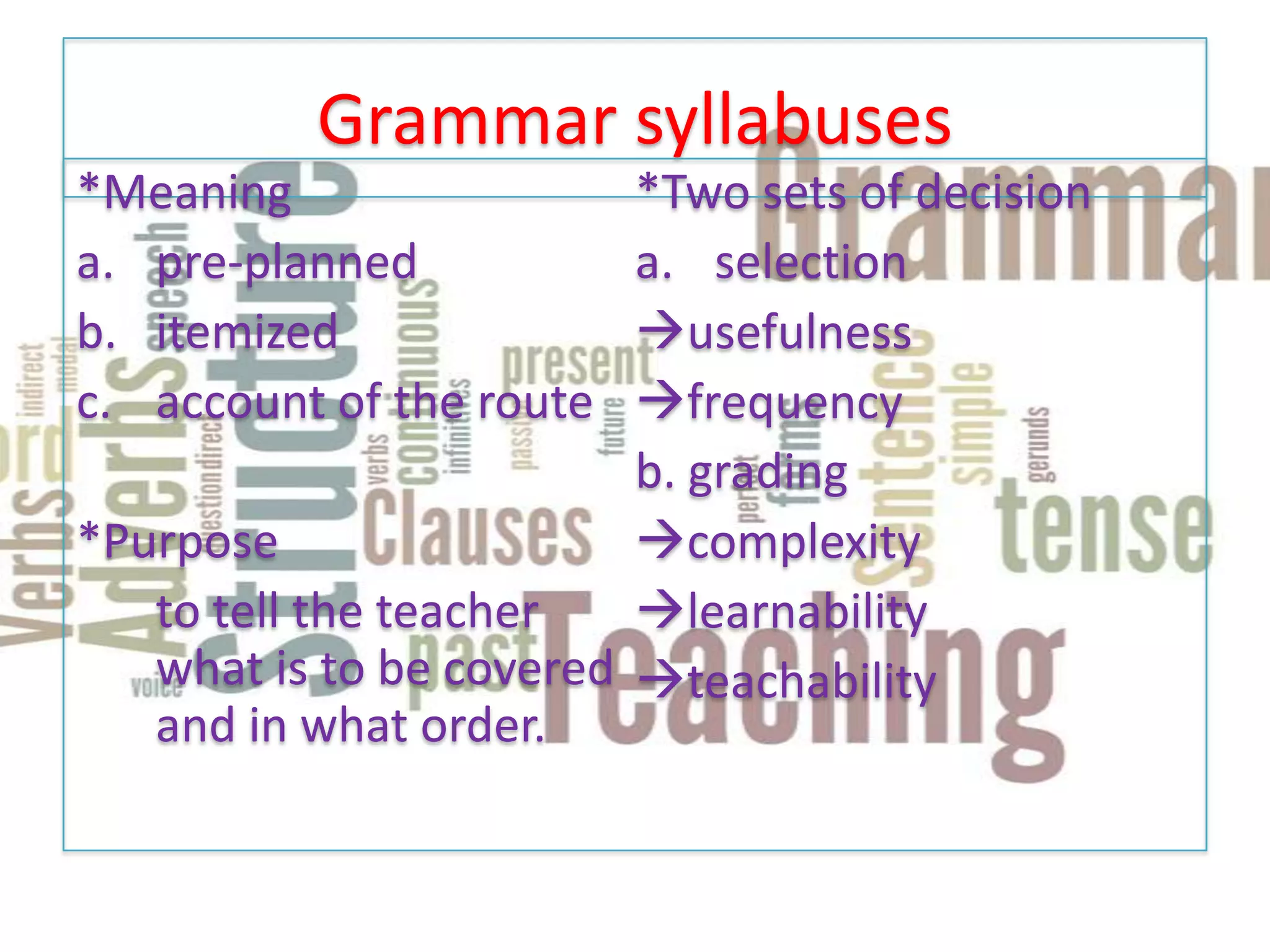
*Meaning                 *Two sets of decision
a. pre-planned           a. selection
b. itemized              usefulness
c. account of the route  frequency
                         b. grading
*Purpose                 complexity
   to tell the teacher   learnability
   what is to be covered teachability
   and in what order.
Grammar syllabuses
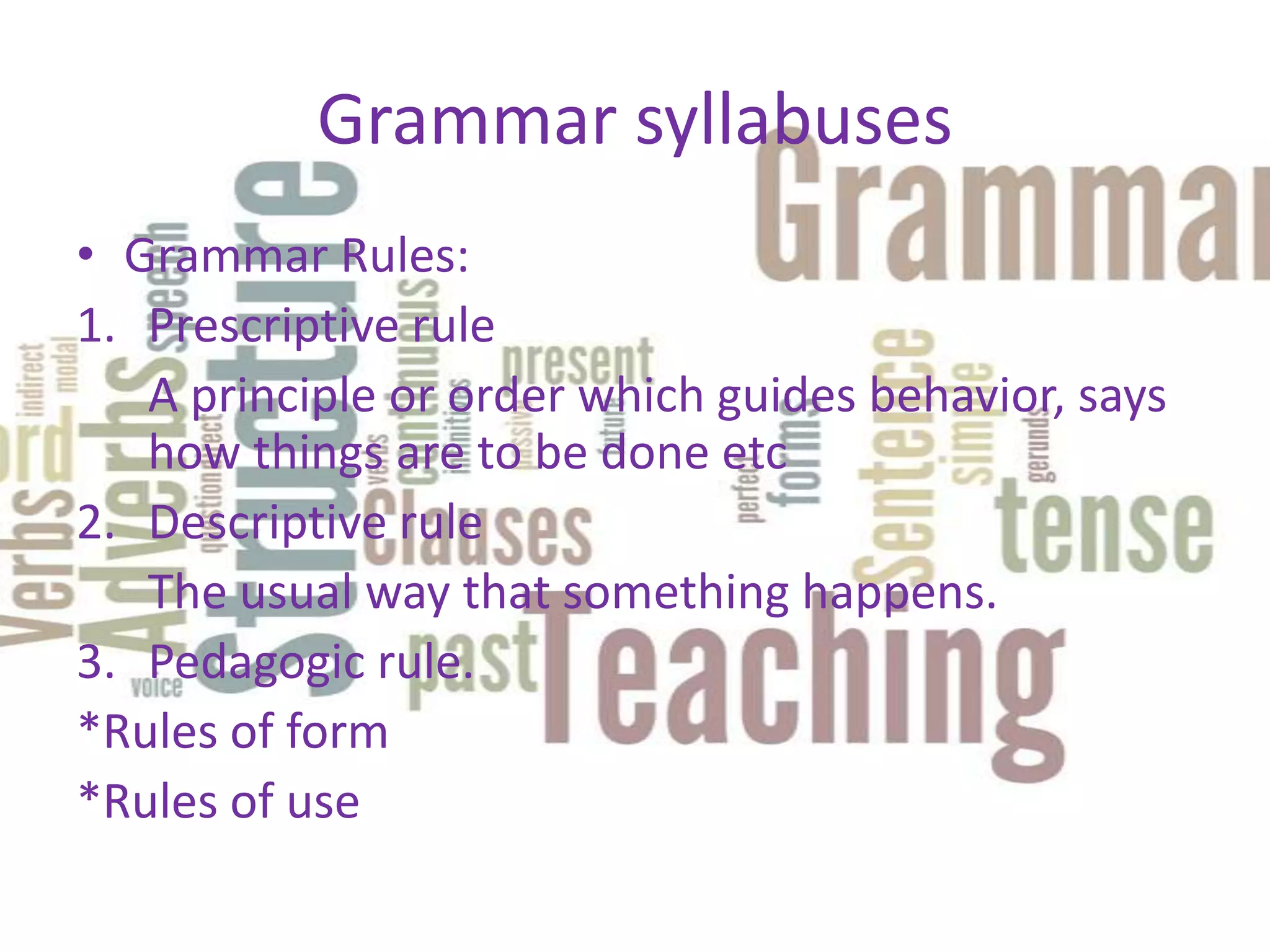
• Grammar Rules:
1. Prescriptive rule
   A principle or order which guides behavior, says
   how things are to be done etc
2. Descriptive rule
   The usual way that something happens.
3. Pedagogic rule.
*Rules of form
*Rules of use
4.How to Teach Grammar from
               Examples
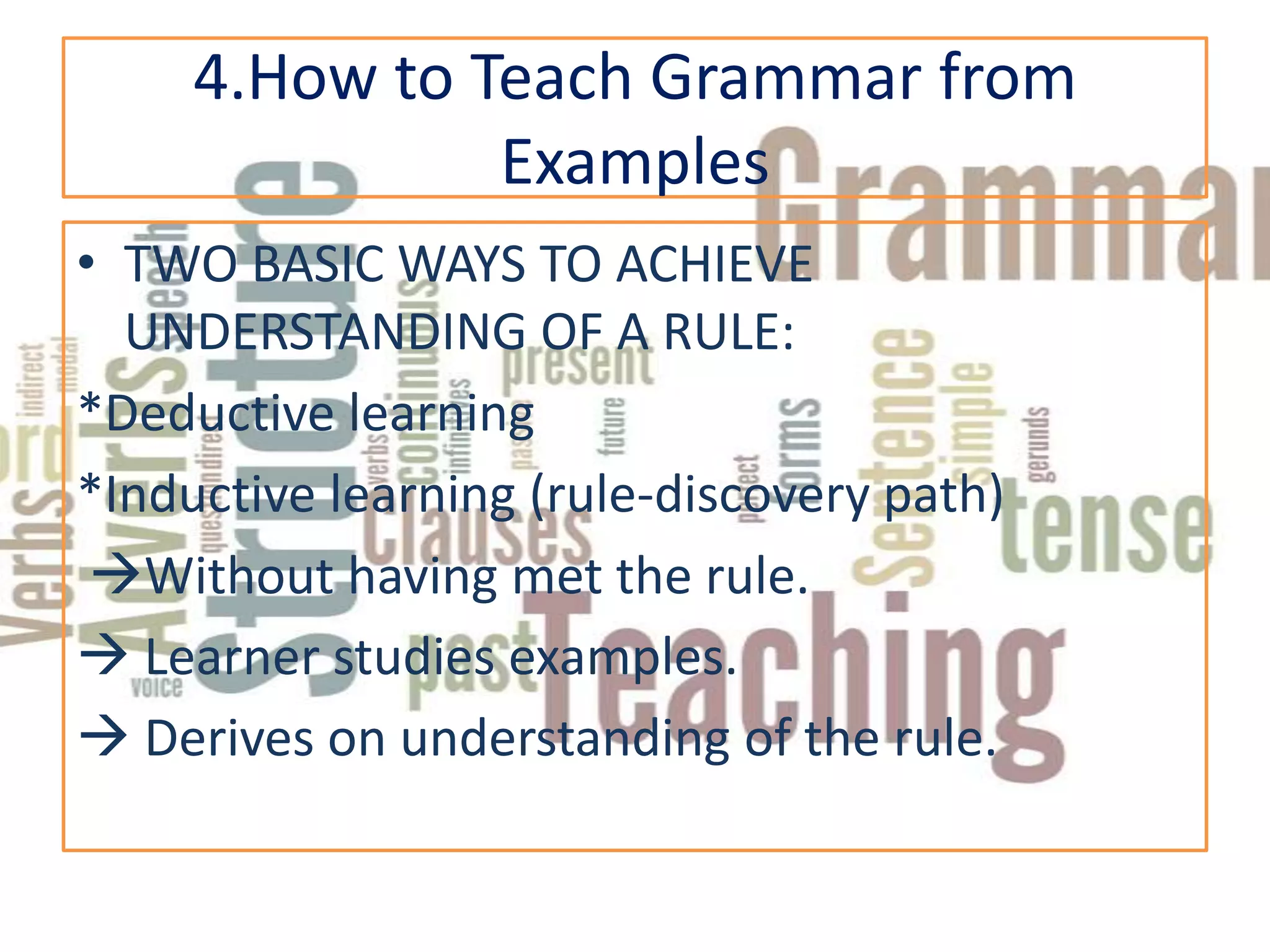
• TWO BASIC WAYS TO ACHIEVE
  UNDERSTANDING OF A RULE:
*Deductive learning
*Inductive learning (rule-discovery path)
 Without having met the rule.
 Learner studies examples.
 Derives on understanding of the rule.
Inductive learning
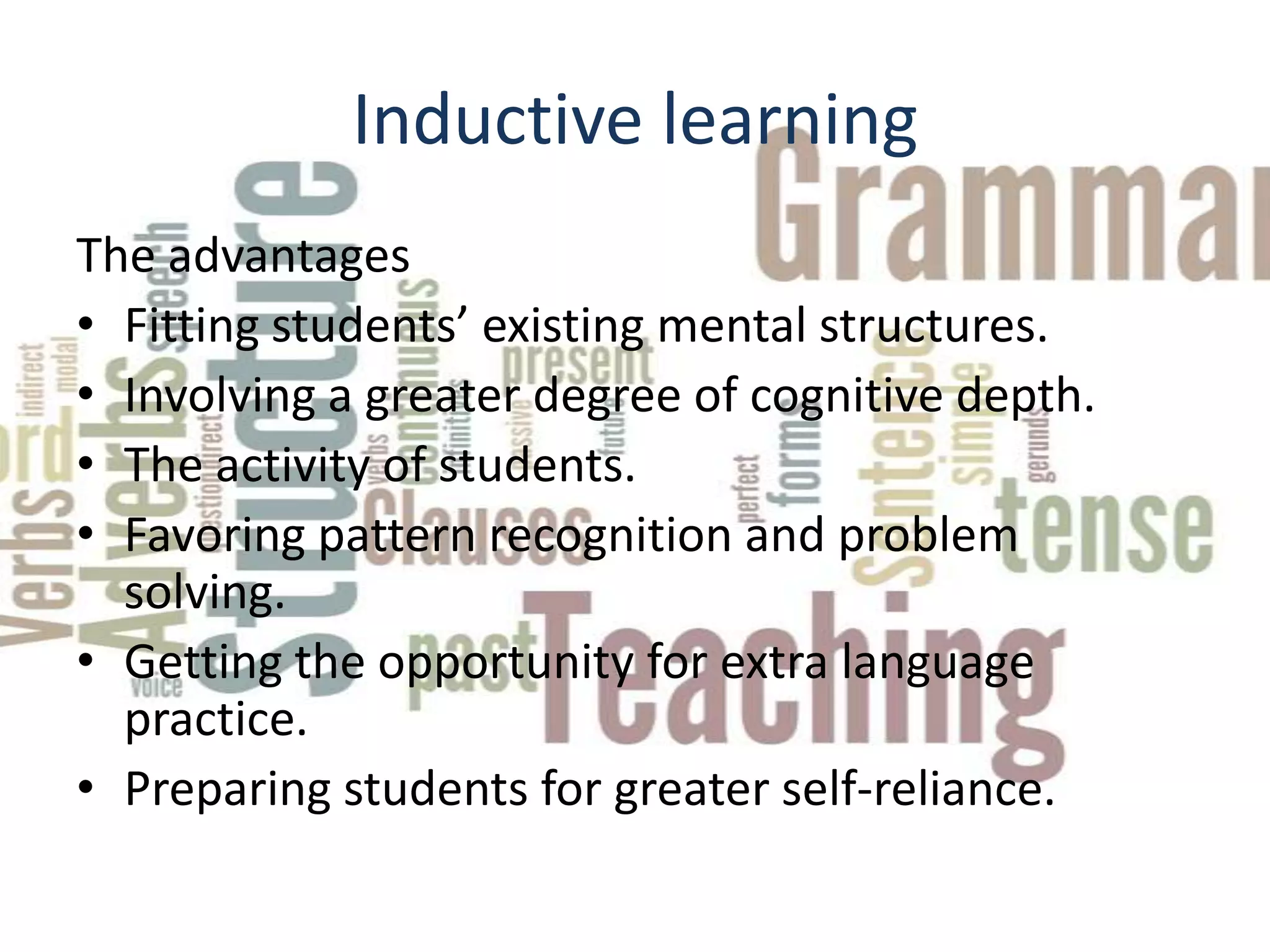
The advantages
• Fitting students’ existing mental structures.
• Involving a greater degree of cognitive depth.
• The activity of students.
• Favoring pattern recognition and problem
  solving.
• Getting the opportunity for extra language
  practice.
• Preparing students for greater self-reliance.
Inductive learning
The disadvantages
• Misleading students
• The effectiveness of time
• Wrong conclusion
• Heavy demanding in planning lesson
• Resisting easy rule-formulation
• Frustates students.
5.How to teach Grammar through
                texts.
Texts and contexts.
• Language is context-sensitive.
Kind of context.
• Co-text
• Context of situation
• Context of culture
  The term text will be used from now on to
  refer to both written and spoken English.
5.How to teach Grammar through
                texts.
The forms of texts:
• Postcards
• Novels
• Sermons
• Football commentaries
• Street signs
• Jokes
• Air safety instructions
So, it is easier to use examples taken out of context.
5.How to teach Grammar through
                texts.
Sources of texts
At least 4 possible sources of texts
• Course books
• Authentic sources (
  Newspapers, songs, literary texts, the
  internet)
• Teacher
• The students

How to teach grammar

  • 1.
    How to TeachGrammar Maria Kristina Pingkan 1021150015
  • 2.
    1. What isGrammar? • Texts, sentences, words, sounds • Grammar and meaning • Two kinds of meaning • Grammar and function • Spoken grammar and written grammar • Grammar syllabuses • Grammar rules
  • 3.
  • 4.
    Texts, sentences, words,sounds • The example: • The ability both to recognize and to produce well-formed sentences is an essential part of learning a second language. 1 2 3 4 5 We are not at home. They are at work. Dad is In hospital. I am In bed.
  • 7.
    • What washe misunderstood? *The function of the question. • What we do when we process the language? *Make sense the words and the grammar. *infer the speaker’s intention (the function of what they are saying or writing)
  • 8.
    Spoken grammar andwritten grammar
  • 9.
    Grammar syllabuses *Meaning *Two sets of decision a. pre-planned a. selection b. itemized usefulness c. account of the route frequency b. grading *Purpose complexity to tell the teacher learnability what is to be covered teachability and in what order.
  • 10.
    Grammar syllabuses • GrammarRules: 1. Prescriptive rule A principle or order which guides behavior, says how things are to be done etc 2. Descriptive rule The usual way that something happens. 3. Pedagogic rule. *Rules of form *Rules of use
  • 11.
    4.How to TeachGrammar from Examples • TWO BASIC WAYS TO ACHIEVE UNDERSTANDING OF A RULE: *Deductive learning *Inductive learning (rule-discovery path) Without having met the rule.  Learner studies examples.  Derives on understanding of the rule.
  • 12.
    Inductive learning The advantages •Fitting students’ existing mental structures. • Involving a greater degree of cognitive depth. • The activity of students. • Favoring pattern recognition and problem solving. • Getting the opportunity for extra language practice. • Preparing students for greater self-reliance.
  • 13.
    Inductive learning The disadvantages •Misleading students • The effectiveness of time • Wrong conclusion • Heavy demanding in planning lesson • Resisting easy rule-formulation • Frustates students.
  • 14.
    5.How to teachGrammar through texts. Texts and contexts. • Language is context-sensitive. Kind of context. • Co-text • Context of situation • Context of culture The term text will be used from now on to refer to both written and spoken English.
  • 15.
    5.How to teachGrammar through texts. The forms of texts: • Postcards • Novels • Sermons • Football commentaries • Street signs • Jokes • Air safety instructions So, it is easier to use examples taken out of context.
  • 16.
    5.How to teachGrammar through texts. Sources of texts At least 4 possible sources of texts • Course books • Authentic sources ( Newspapers, songs, literary texts, the internet) • Teacher • The students