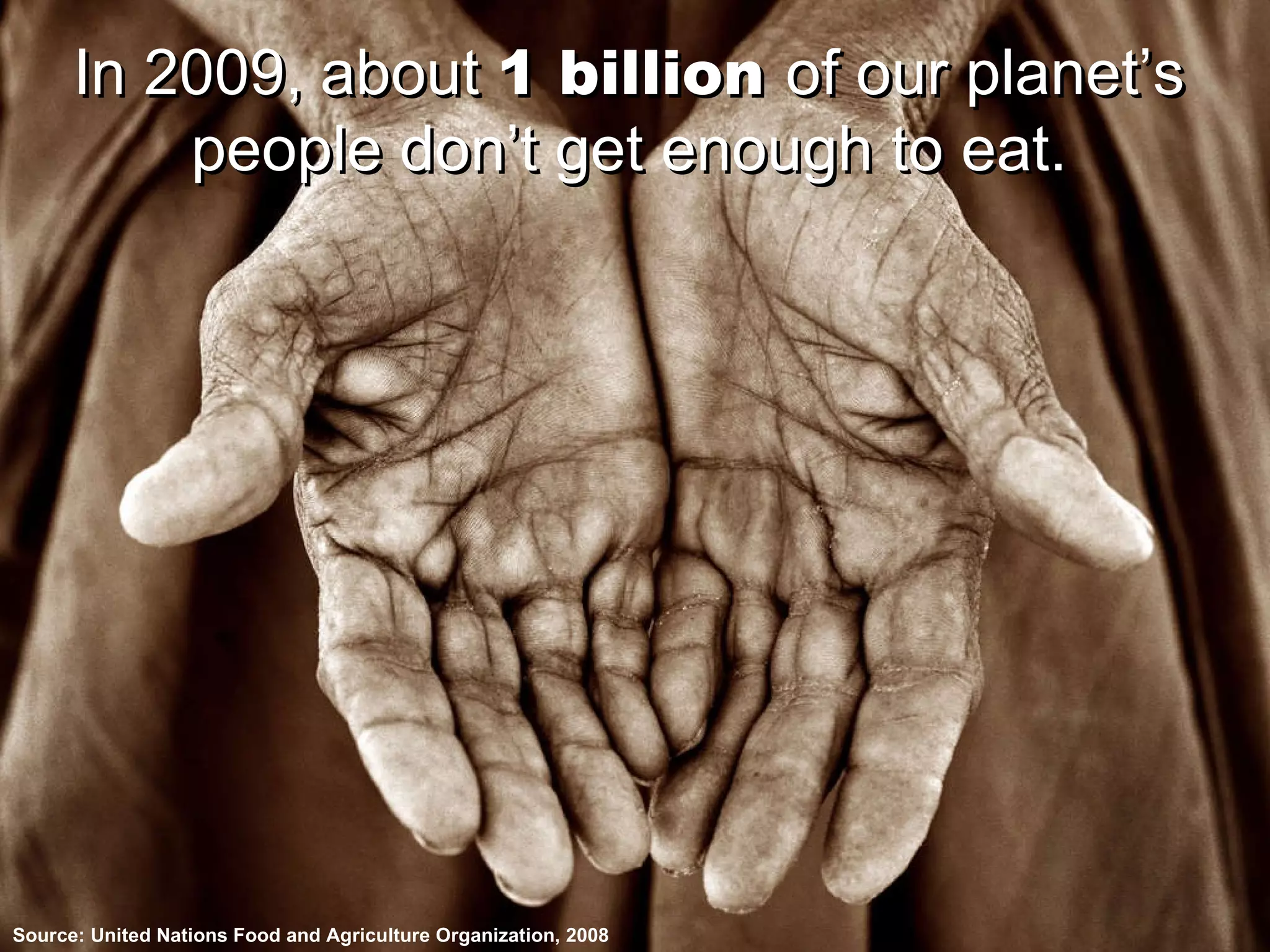
Source: United Nations Food and Agriculture Organization, 2008 In 2009, about  1 billion   of our planet’s people don’t get enough to eat. In 2009, about  1 billion   of our planet’s people don’t get enough to eat.
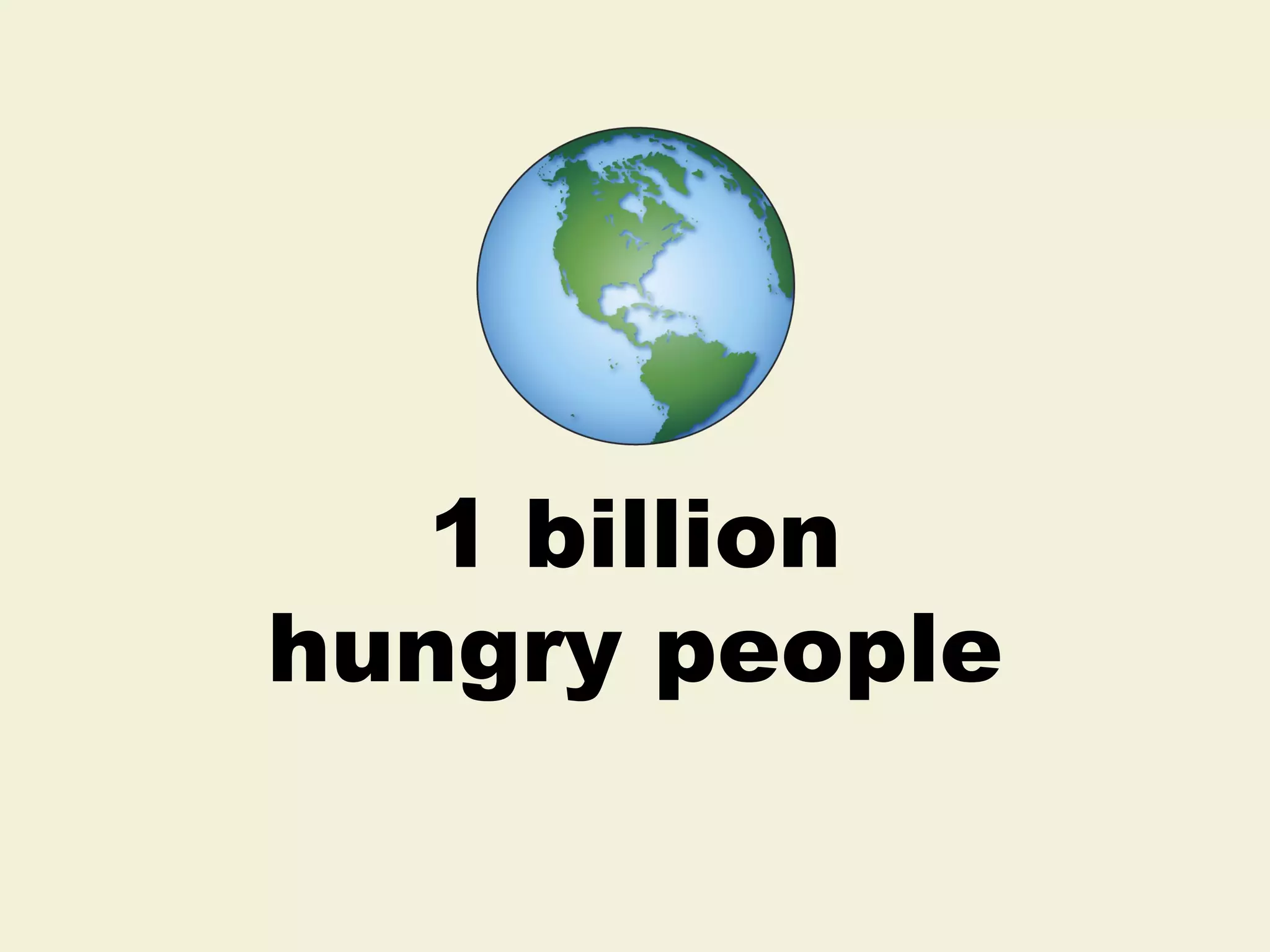
Source: United Nations Food and Agriculture Organization, 2008 1 billion 1 billion
And by mid-century, the world will be home to  3+ billion   more people. And by mid-century, the world will be home to  3+ billion   more people.
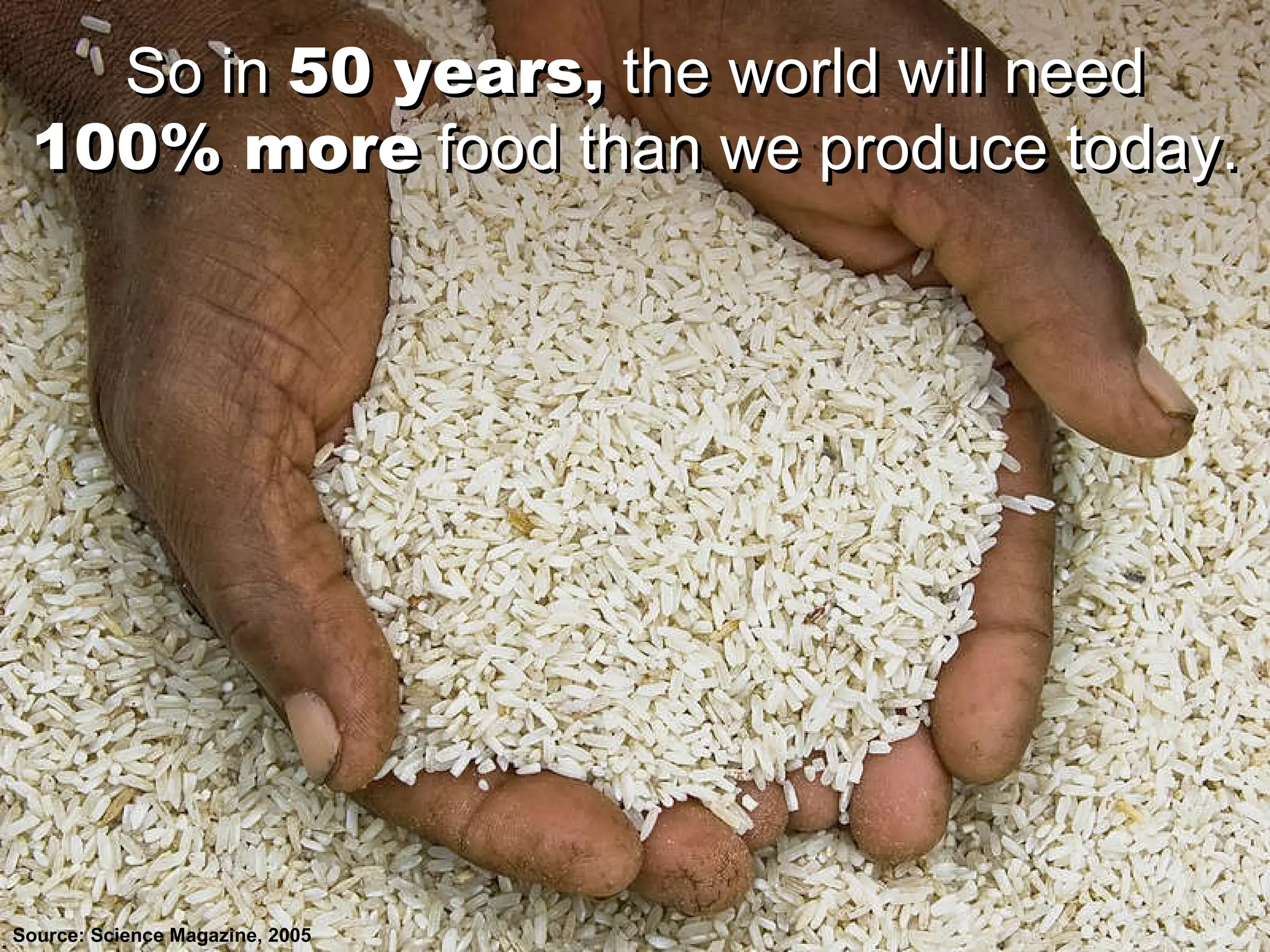
So in  50 years,  the world will need 100% more  food than we produce today. So in  50 years,  the world will need 100% more  food than we produce today. Source: Science Magazine, 2005
1 billion hungry people
50 years
100% more food
How can we address world hunger today AND double global food production for tomorrow?   How can we address world hunger today AND double global food production for tomorrow?
Farm more land? Farm more land?
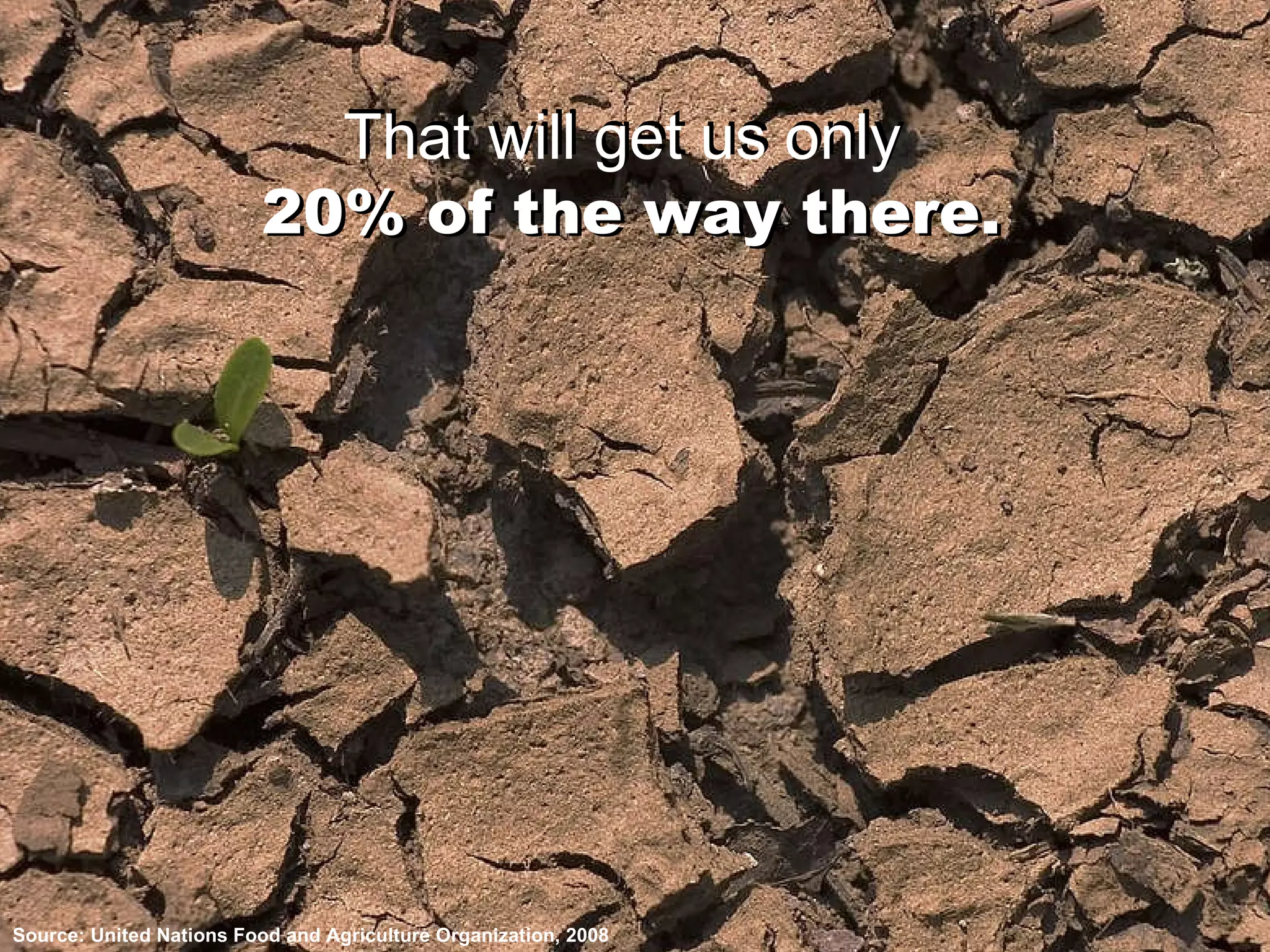
That will get us only  20% of the way there. Source: United Nations Food and Agriculture Organization, 2008 That will get us only  20% of the way there.
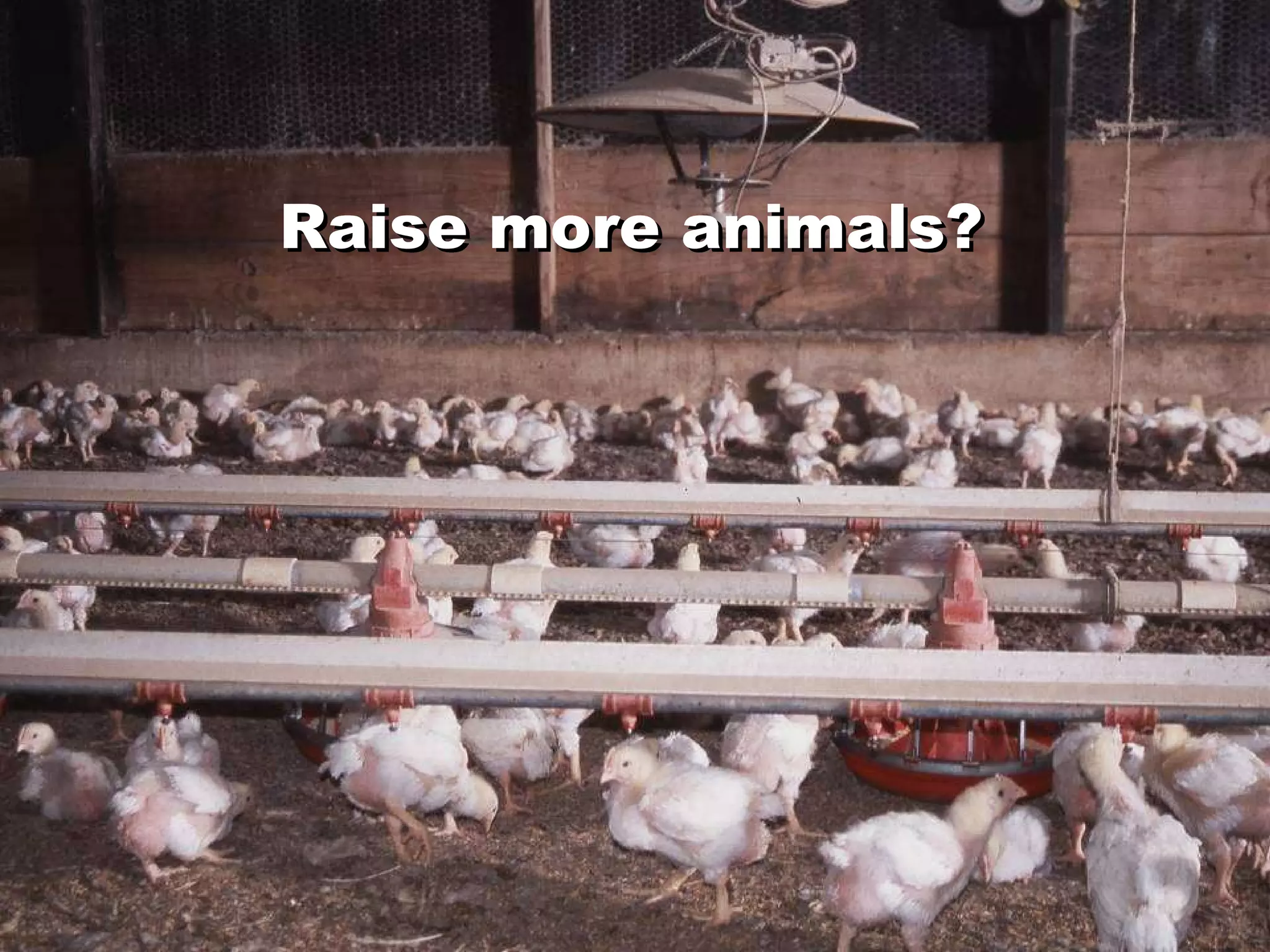
Raise more animals? Raise more animals?
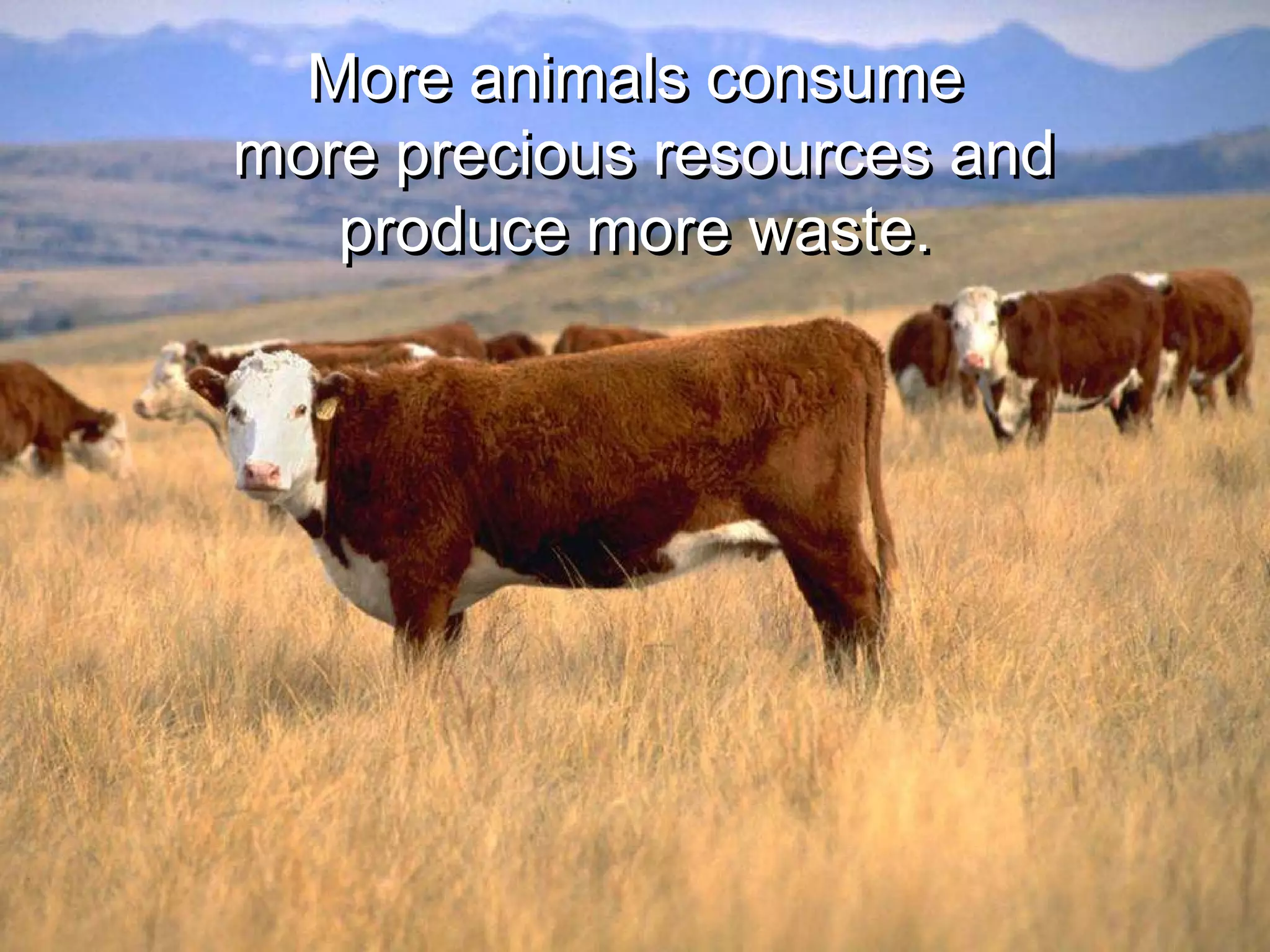
More animals consume  more precious resources and produce more waste. More animals consume  more precious resources and produce more waste.
That’s not a sustainable solution. That’s not a sustainable solution.
So what IS a sustainable solution?
With so many hungry people,  we must do something now. With so many hungry people,  we must do something now.
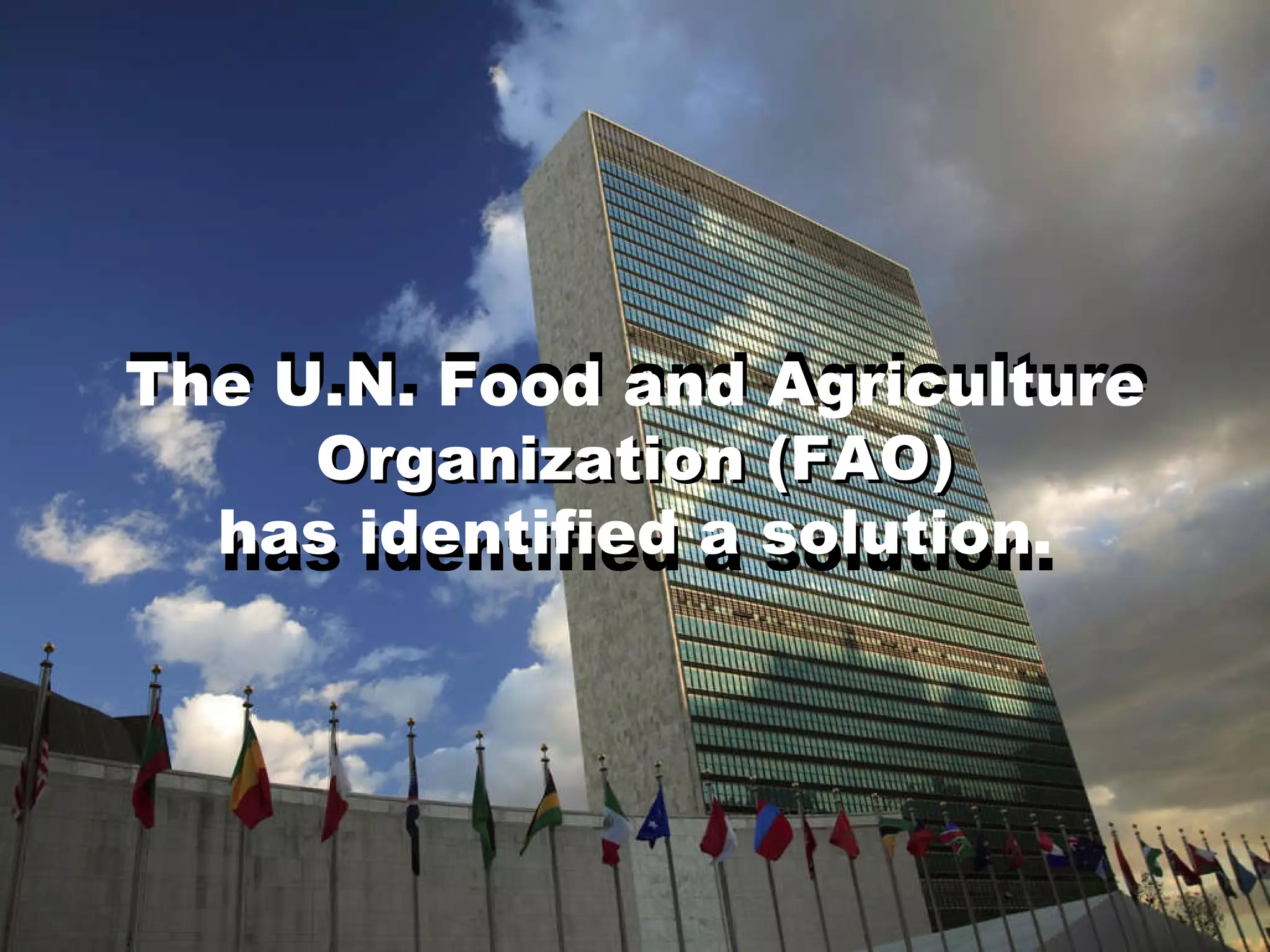
The U.N. Food and Agriculture Organization (FAO) has identified a solution. The U.N. Food and Agriculture Organization (FAO) has identified a solution.
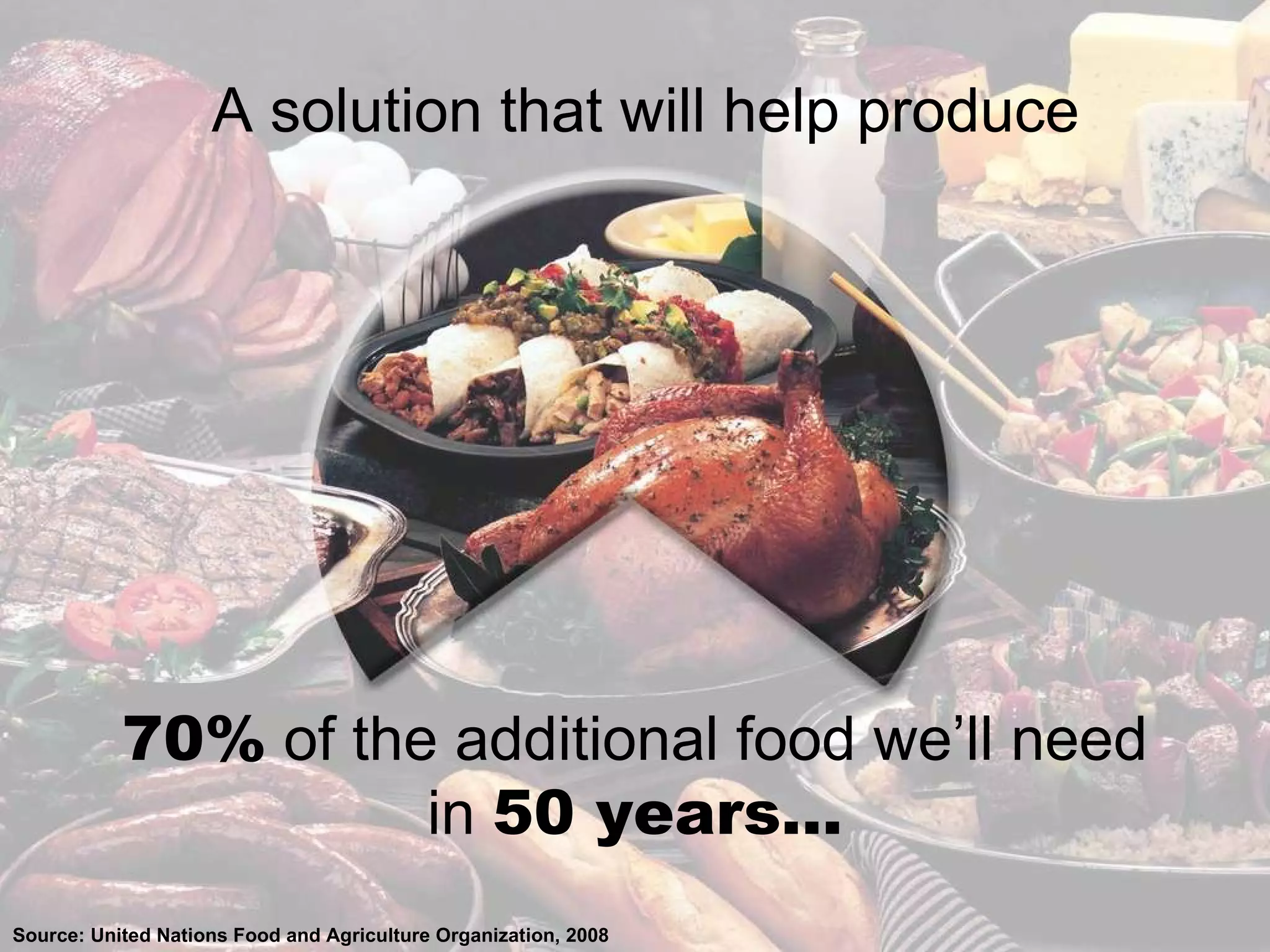
70%  of the additional food we’ll need in  50 years… Source: United Nations Food and Agriculture Organization, 2008 A solution that will help produce
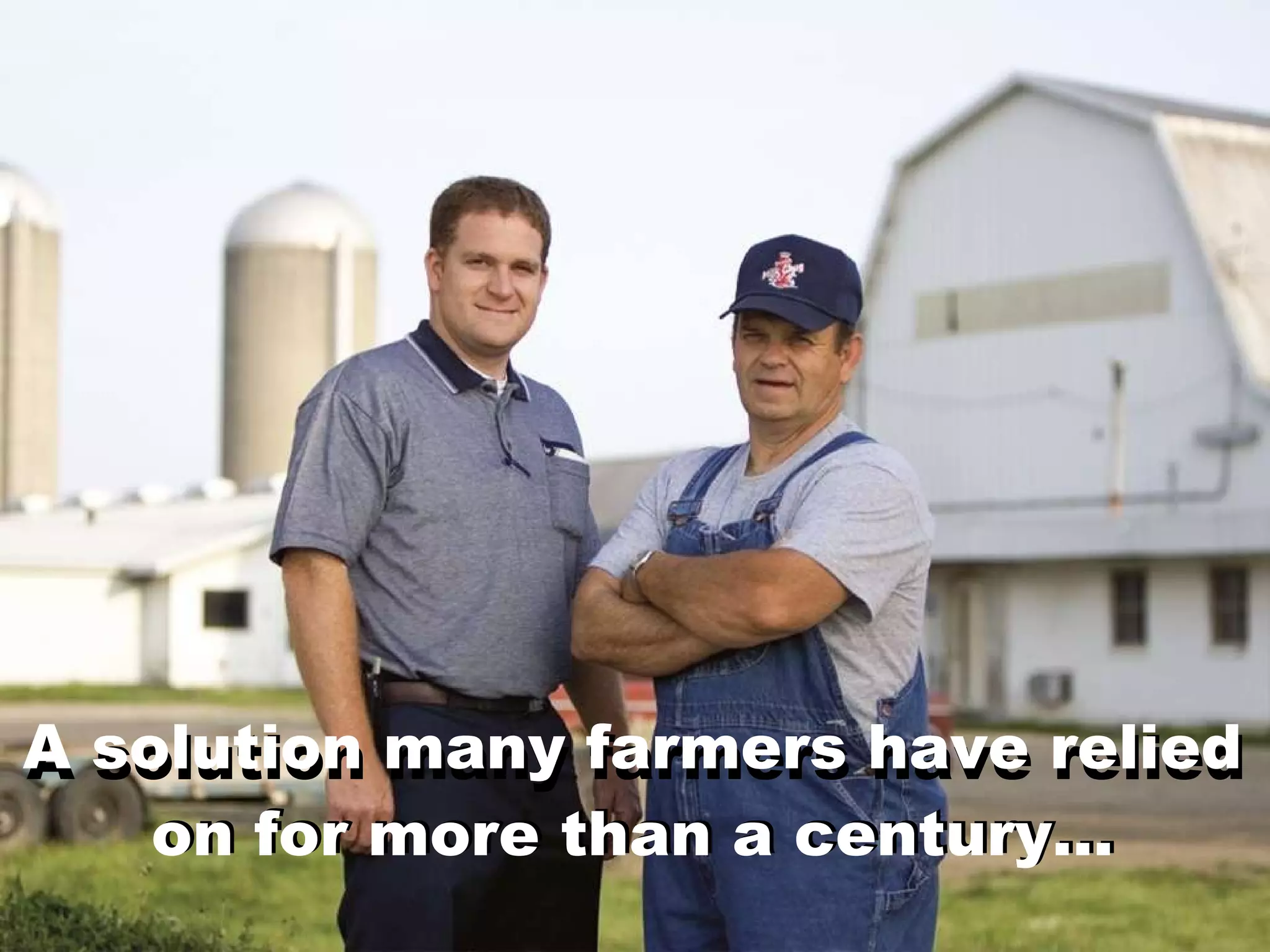
A solution many farmers have relied on for more than a century… A solution many farmers have relied on for more than a century…
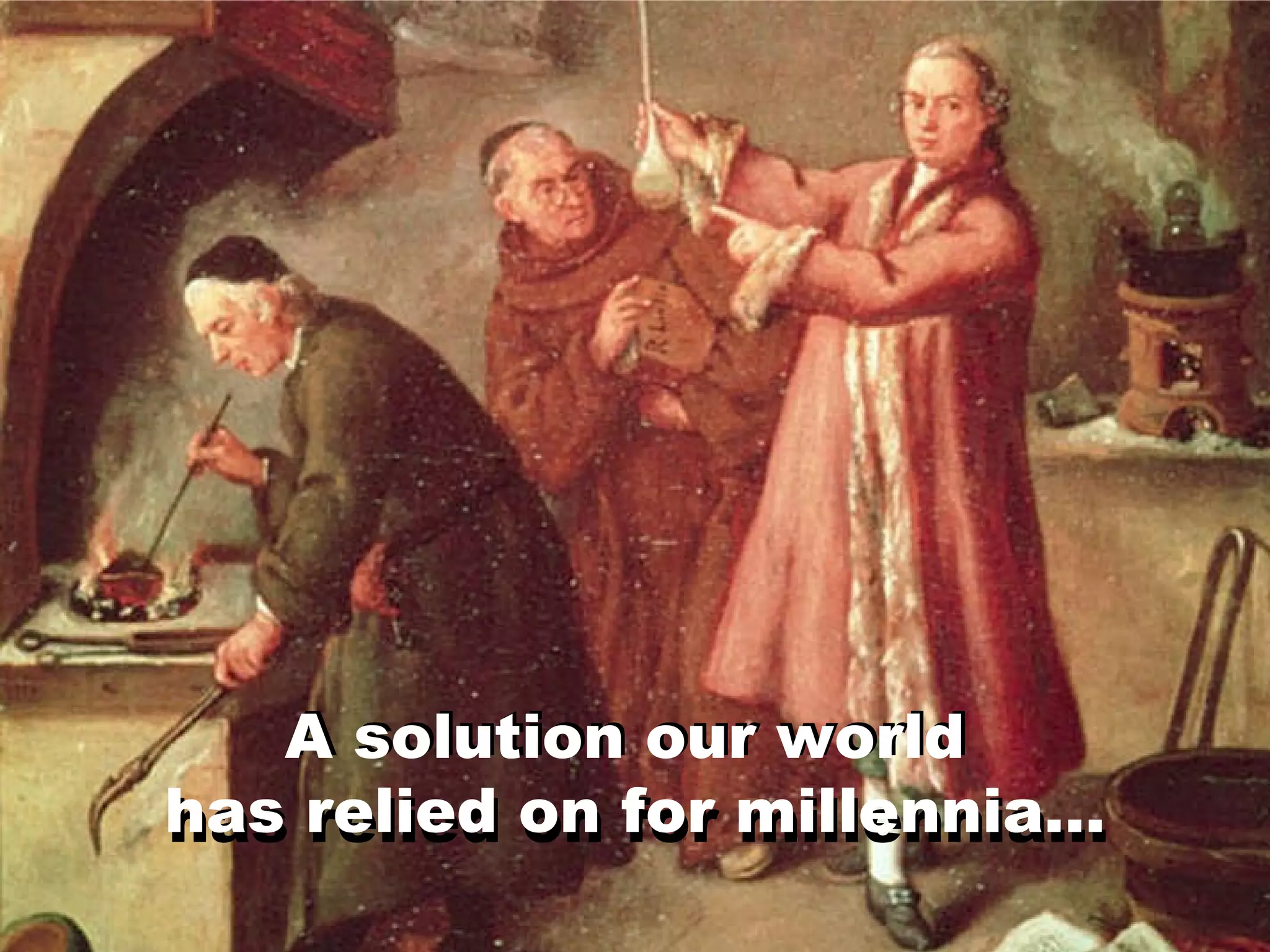
A solution our world  has relied on for millennia… A solution our world  has relied on for millennia…
A   solution that helped mankind reach the stars … A solution that helped mankind reach the stars …
That helps to keep us healthy...
To keep us safe … To keep us safe …
… and to keep us in touch with each other. … and to keep us in touch with each other.
It’s one word…
Technology. Technology.
Technology is already helping us  solve a global food crisis.
How? How?
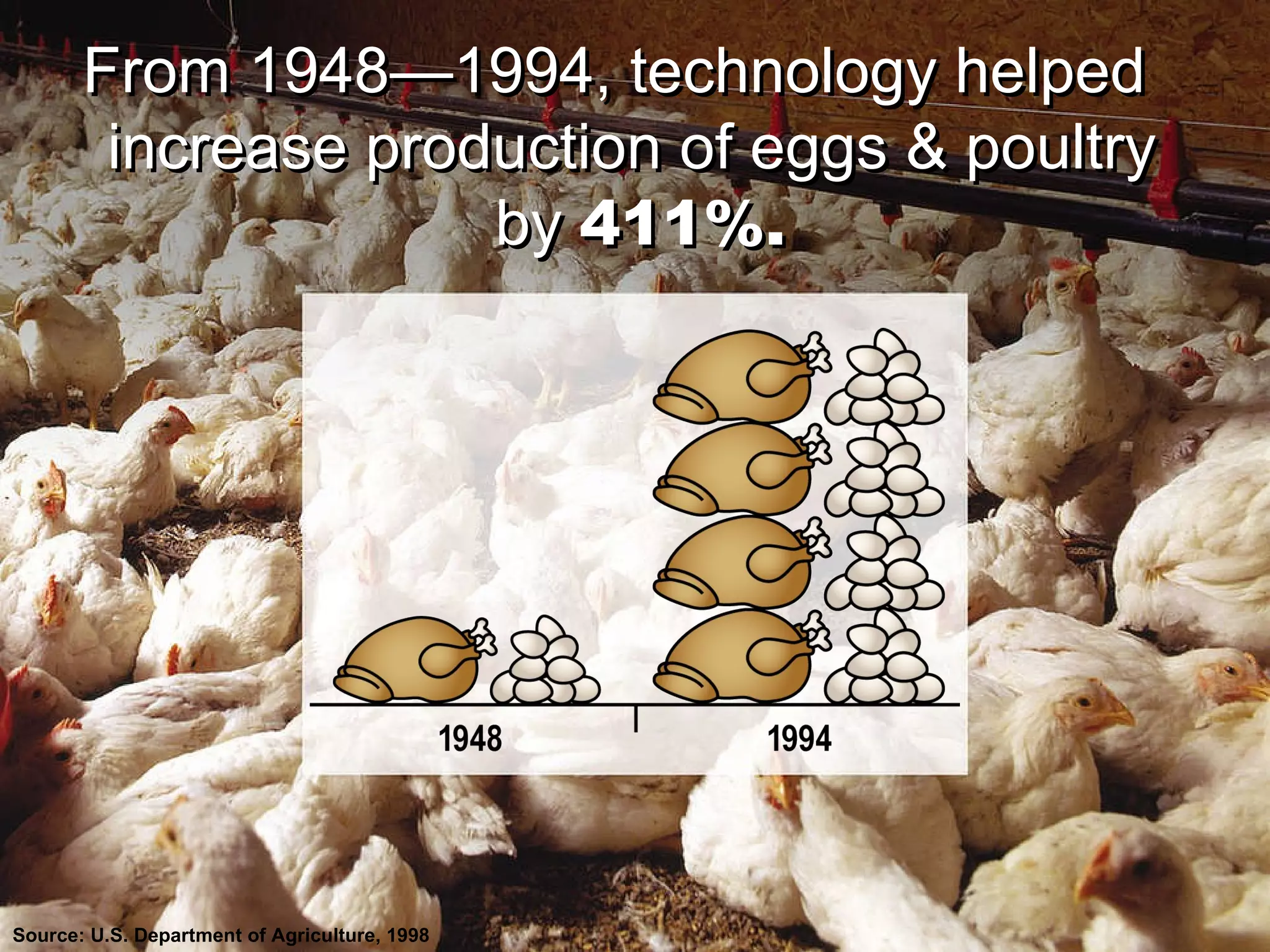
Source: U.S. Department of Agriculture, 1998 From 1948 — 1994, technology helped  increase production of eggs & poultry  by   411%. From 1948 — 1994, technology helped  increase production of eggs & poultry  by   411%.
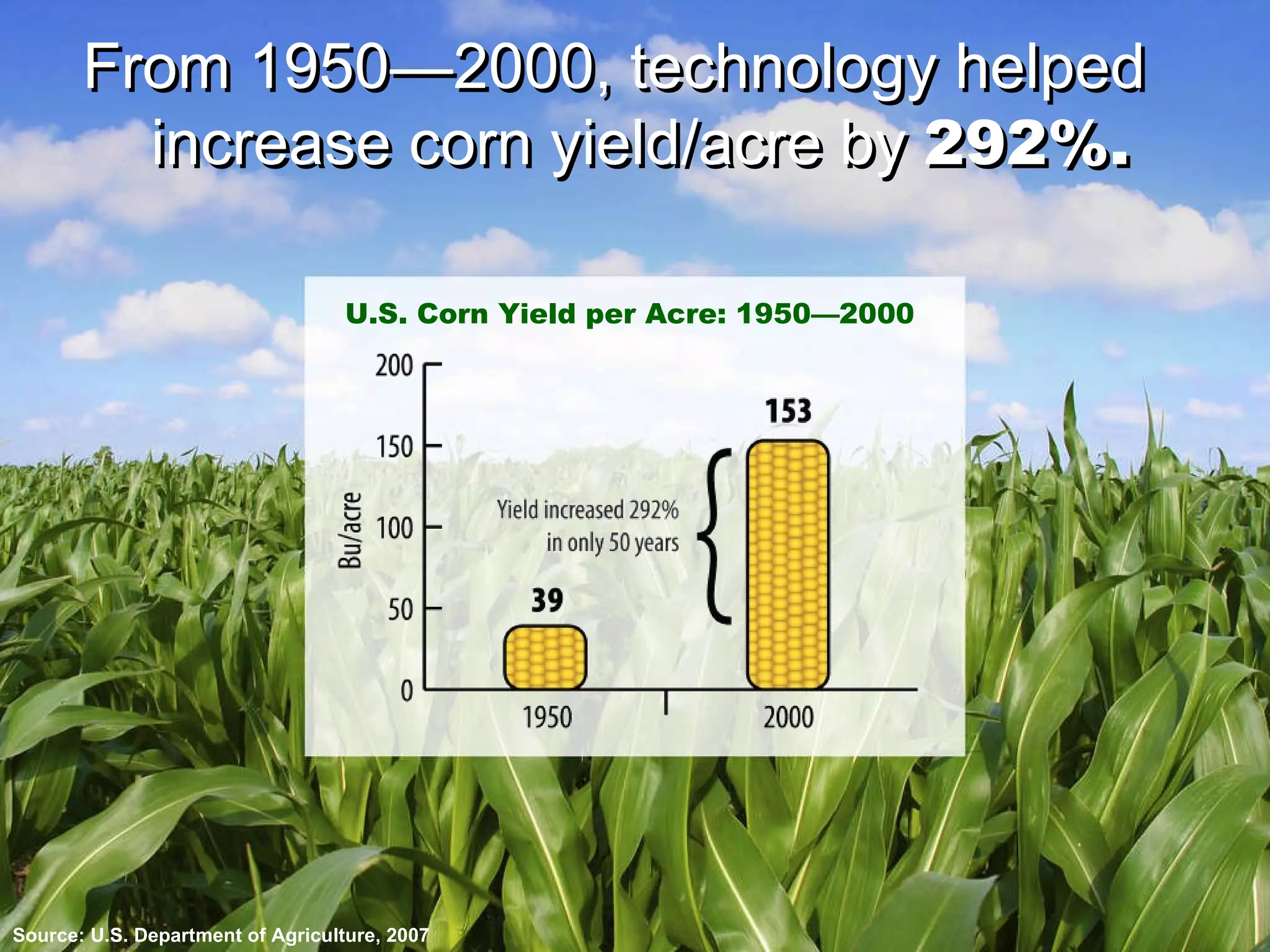
From 1950 — 2000, technology helped  increase corn yield/acre by   292%. Source: U.S. Department of Agriculture, 2007 From 1950 — 2000, technology helped  increase corn yield/acre by   292%. U.S. Corn Yield per Acre: 1950—2000
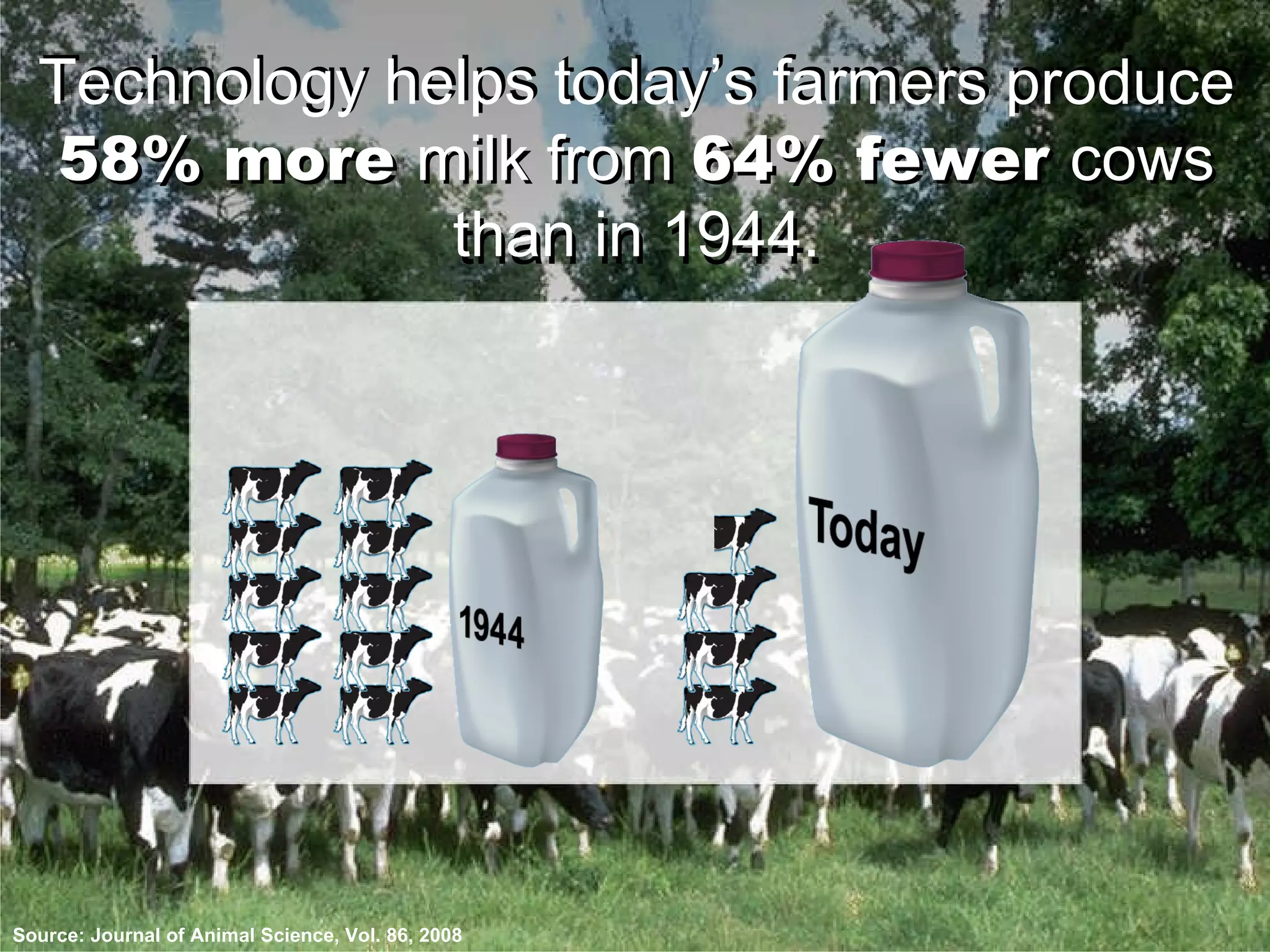
Technology helps today’s farmers produce   58% more   milk from  64% fewer   cows  than in 1944. Source: Journal of Animal Science, Vol. 86, 2008 Technology helps today’s farmers produce   58% more   milk from  64% fewer   cows  than in 1944.
And those are just a few examples of the benefits of food technology. And those are just a few examples of the benefits of food technology.
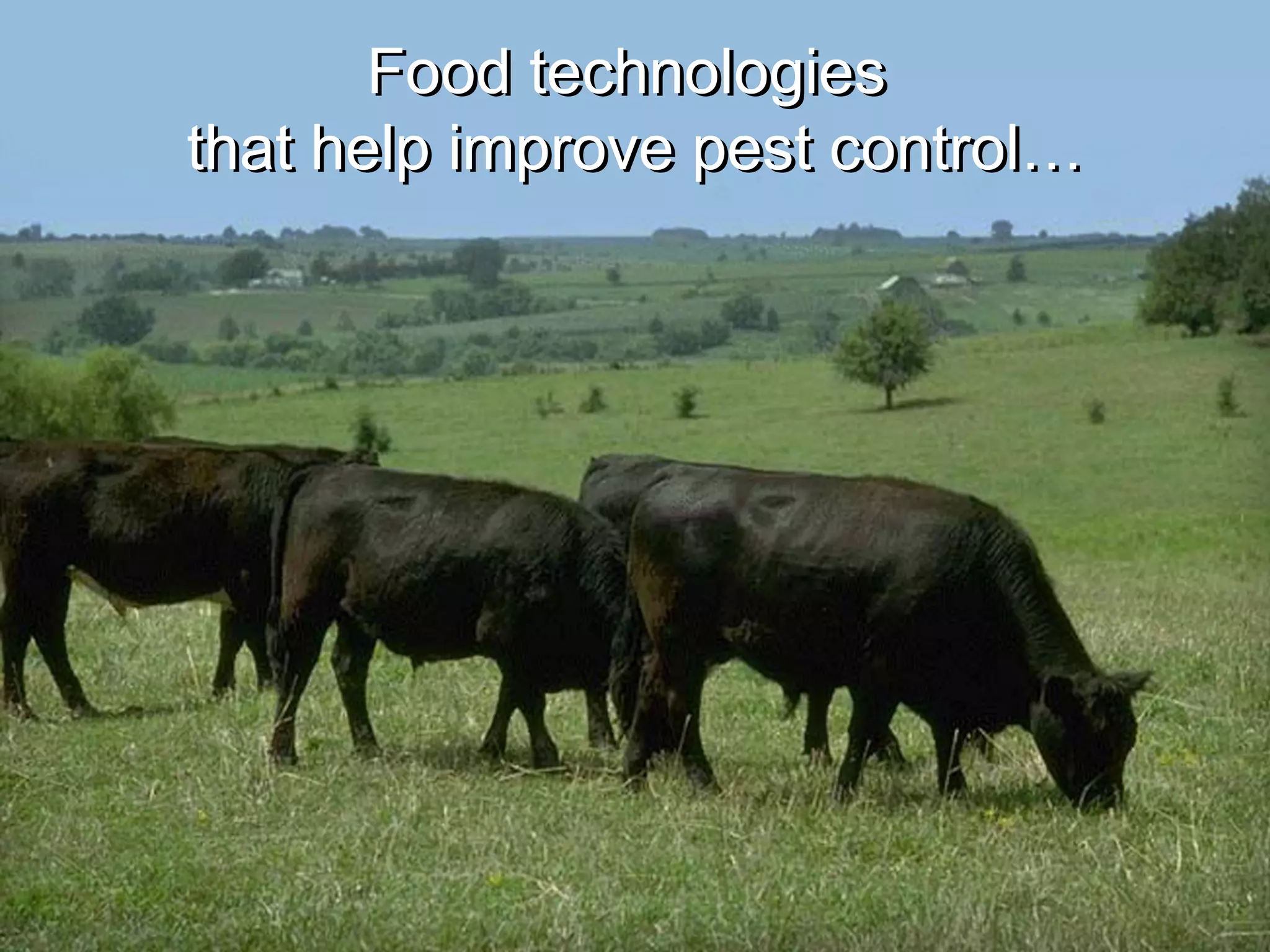
Food technologies  that help improve pest control… Food technologies  that help improve pest control…
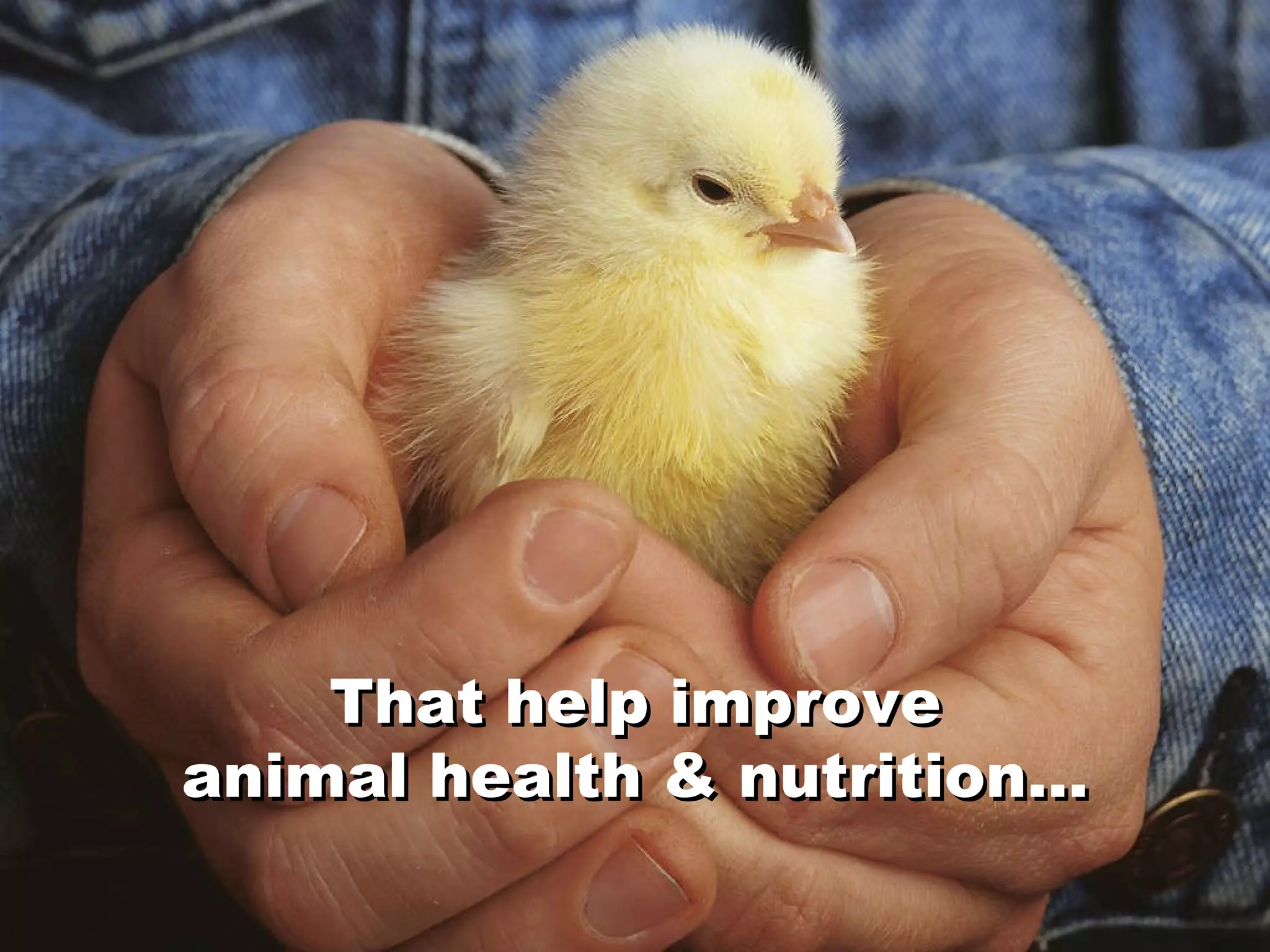
That help improve animal health & nutrition… That help improve animal health & nutrition…
And food safety. And food safety.
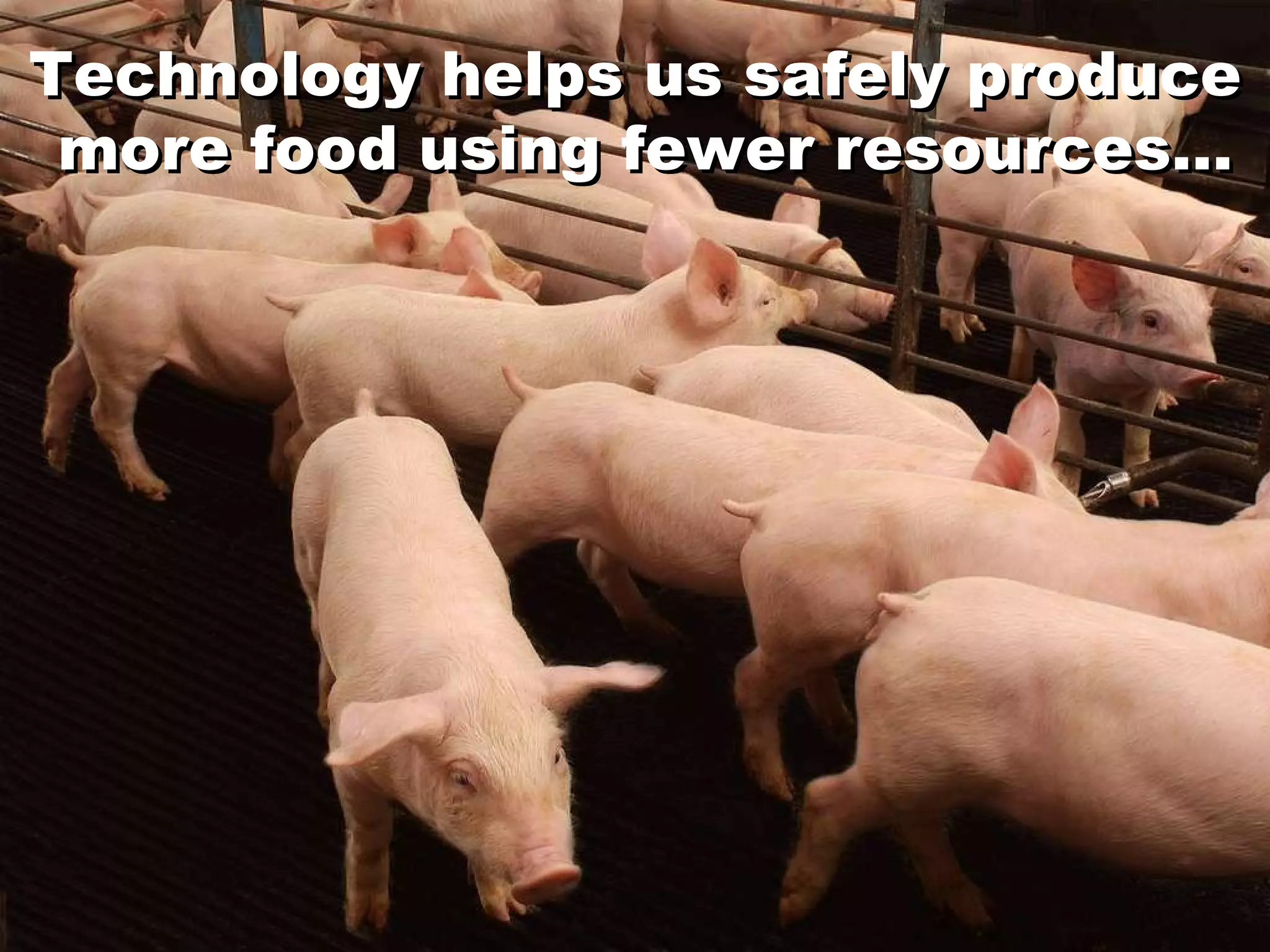
Technology helps us safely produce  more food using fewer resources… Technology helps us safely produce  more food using fewer resources…
Which helps keep food affordable. Which helps keep food affordable.
That’s good news to 60%  of people surveyed in October 2008… Source: Center for Food Integrity, 2008 That’s good news to 60%  of people surveyed in October 2008…
Source: Center for Food Integrity, 2008 Who said they were “More concerned about food costs than they were in 2007”… Who said they were “More concerned about food costs than they were in 2007”…
… but far too many people still can’t afford enough to eat. … but far too many people still can’t afford enough to eat.
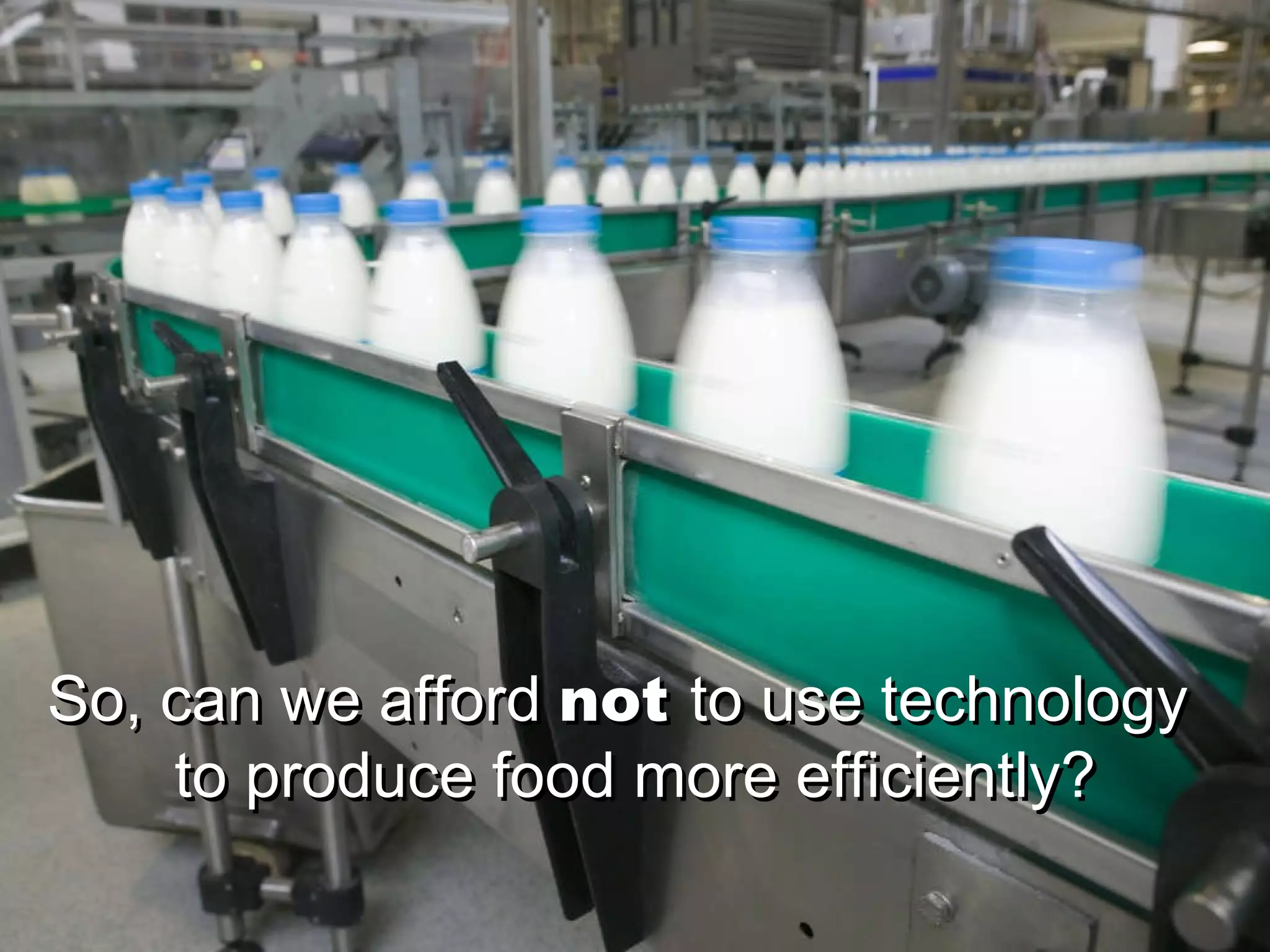
So, can we afford  not   to use technology  to produce food more efficiently? So, can we afford  not   to use technology  to produce food more efficiently?
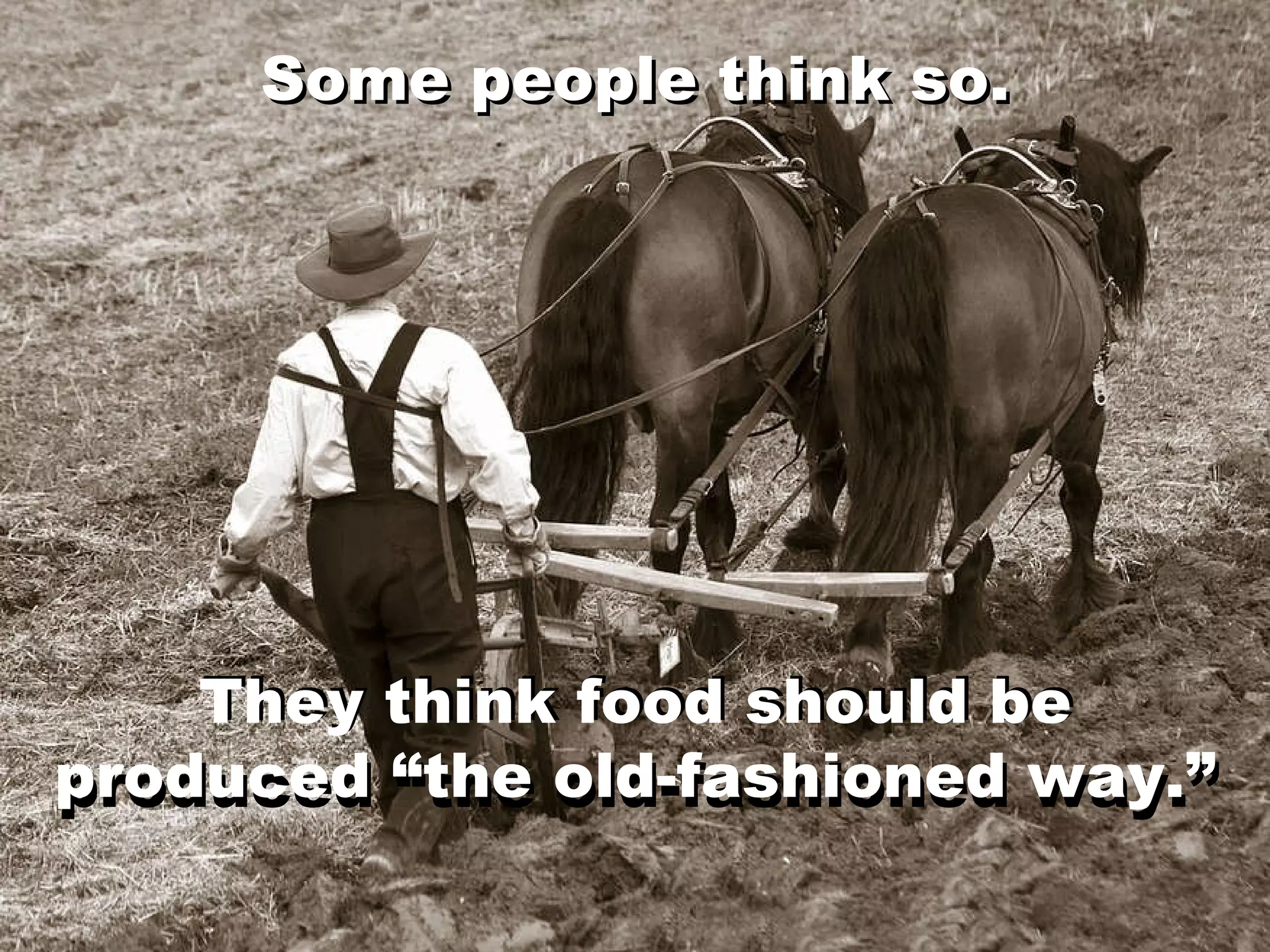
They think food should be produced “the old-fashioned way.” Some people think so. Some people think so. They think food should be produced “the old-fashioned way.”
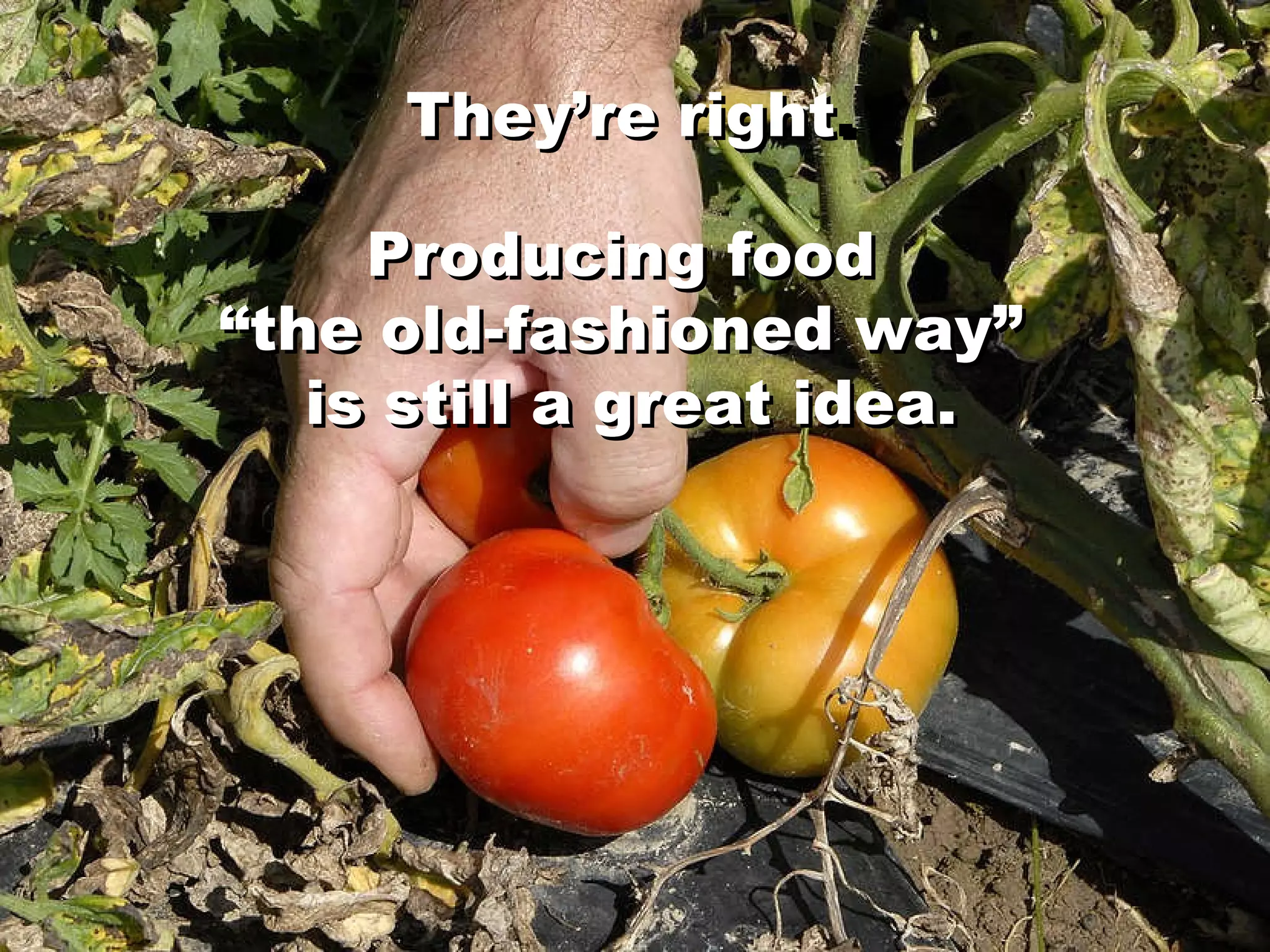
They’re right. Producing food  “the old-fashioned way”  is still a great idea. They’re right . Producing food  “the old-fashioned way”  is still a great idea.
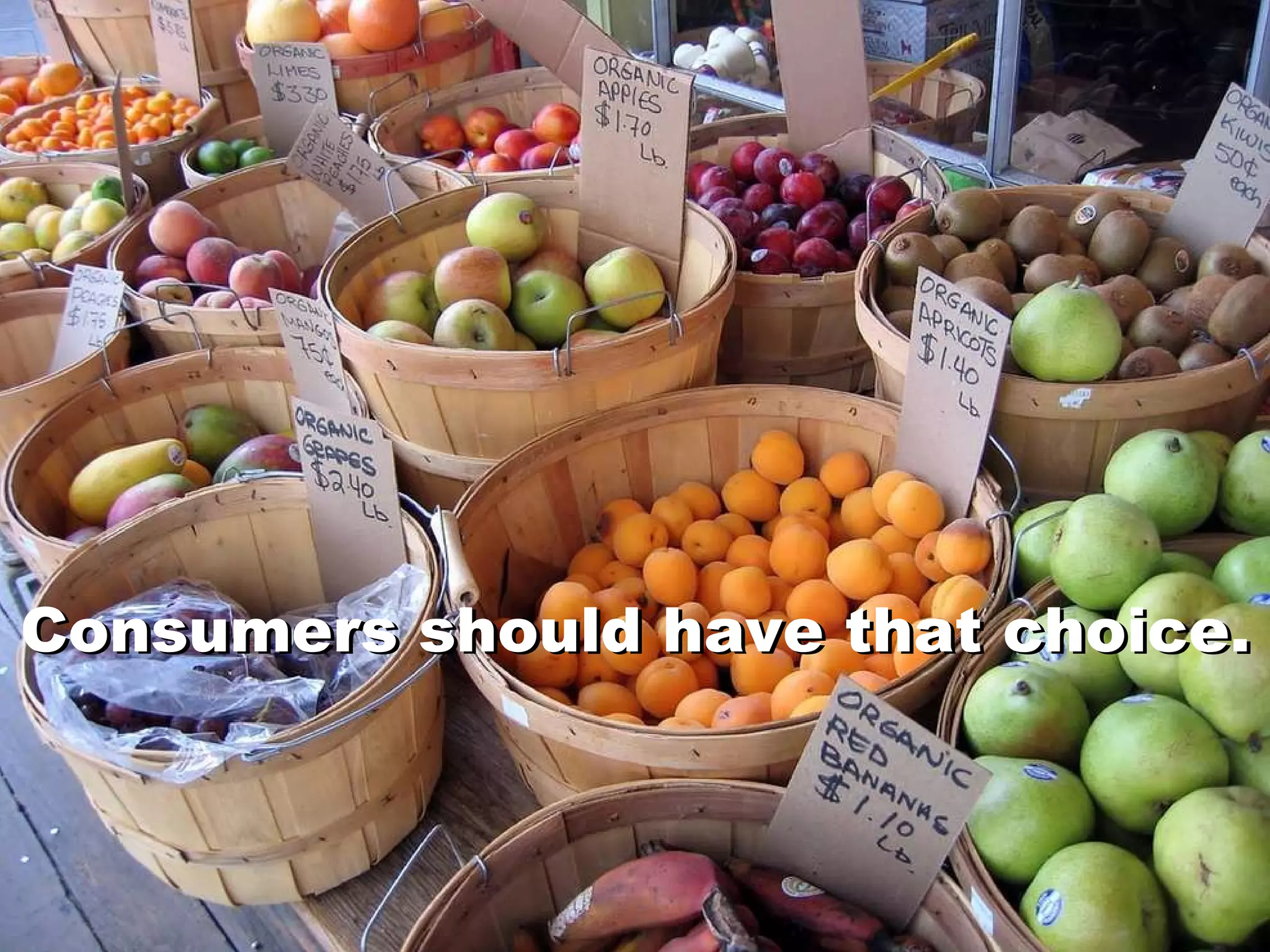
Consumers should have that choice. Consumers should have that choice.
Still…can “the old-fashioned way” help  feed  9+ billion   people in  2050? Still…can “the old-fashioned way” help  feed  9+ billion   people in  2050?
“ No,” says the United Nations’ FAO. “ No,” says the United Nations’ FAO.
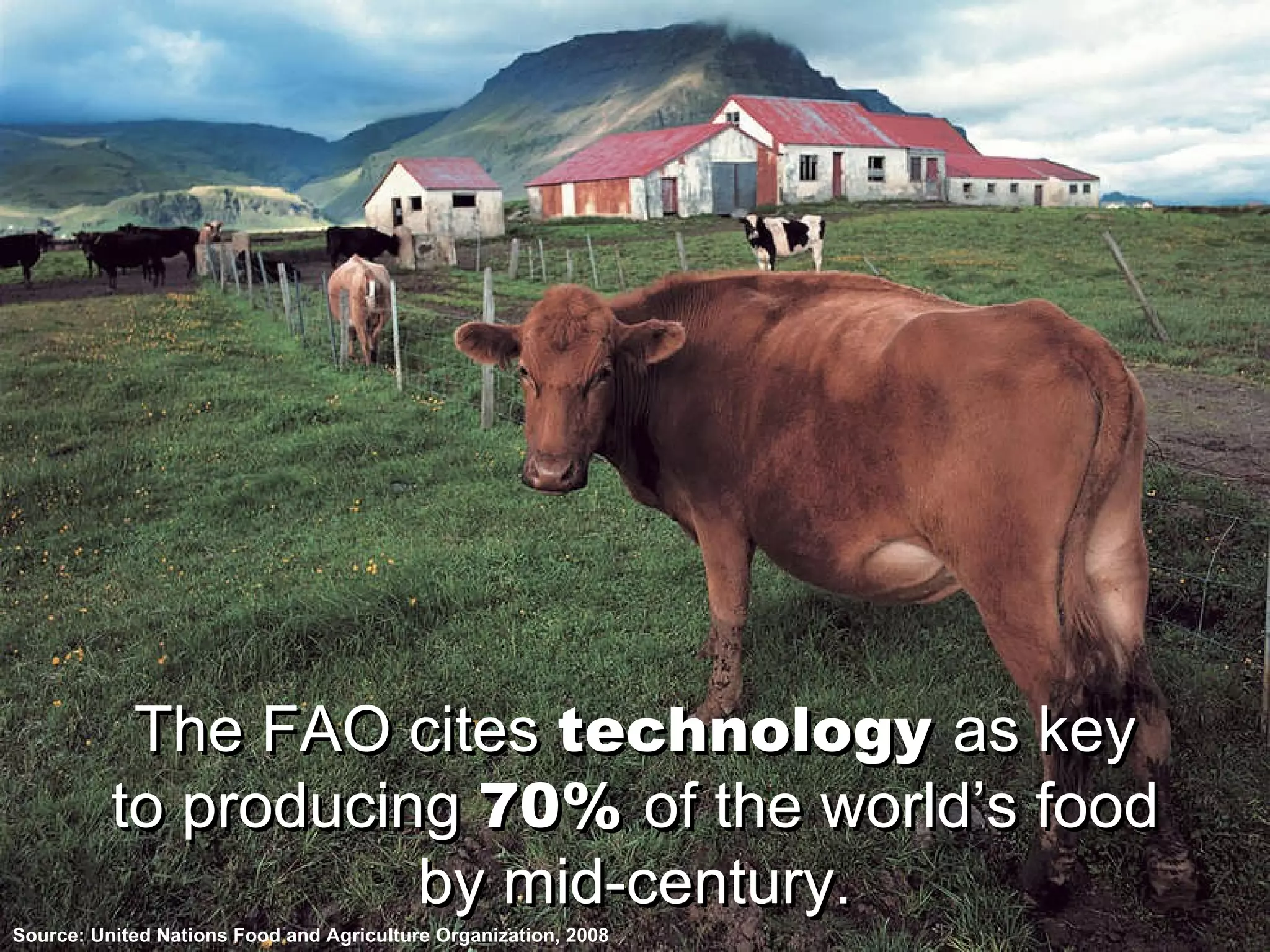
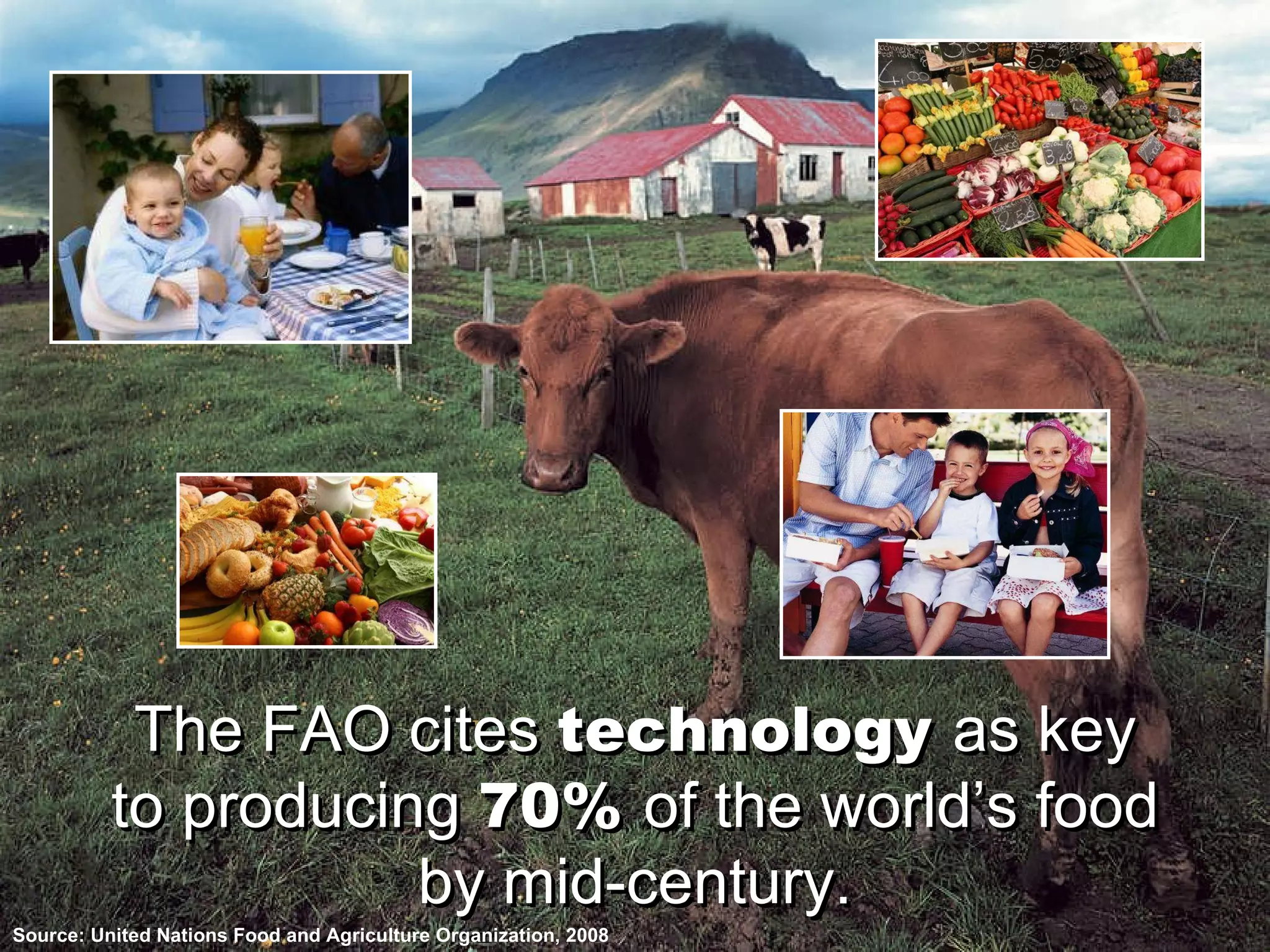
The FAO cites  technology   as key to producing  70%   of the world’s food by mid-century. Source: United Nations Food and Agriculture Organization, 2008 The FAO cites  technology   as key to producing  70%   of the world’s food by mid-century.
Again, that’s one of 3 numbers to keep in mind. 50. 100. 70.
In  50 years, Source: Science Magazine, 2005 Nature Magazine, 2002
we’ll need   100% more food Source: Science Magazine, 2005 Nature Magazine, 2002
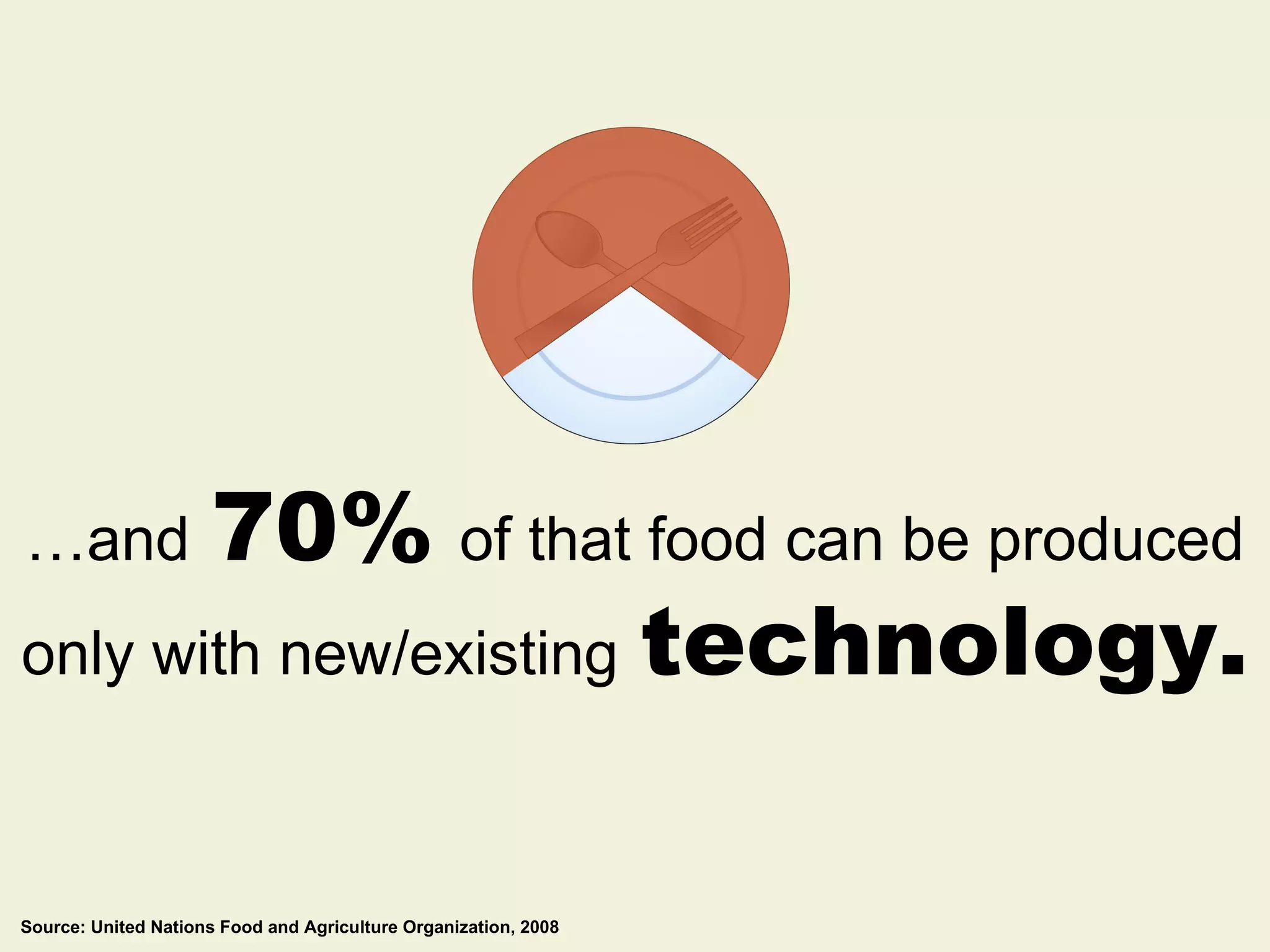
… and   70%   of that food can be produced only with new/existing   technology. Source: United Nations Food and Agriculture Organization, 2008
Technology that helps deliver an   abundance   of food choices  for a growing world… Technology that helps deliver an   abundance   of food choices  for a growing world…
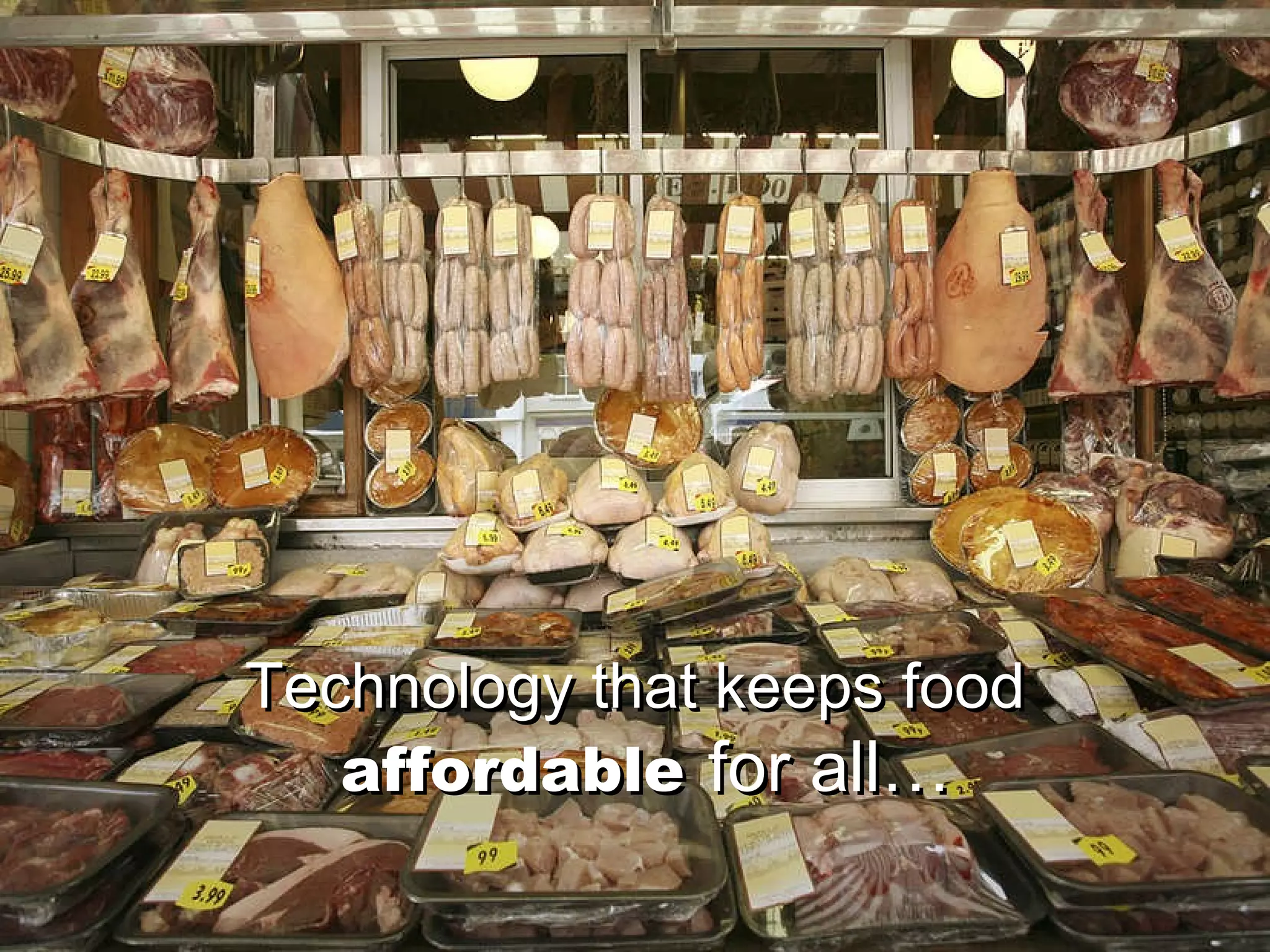
Technology that keeps food   affordable   for all… Technology that keeps food   affordable   for all…
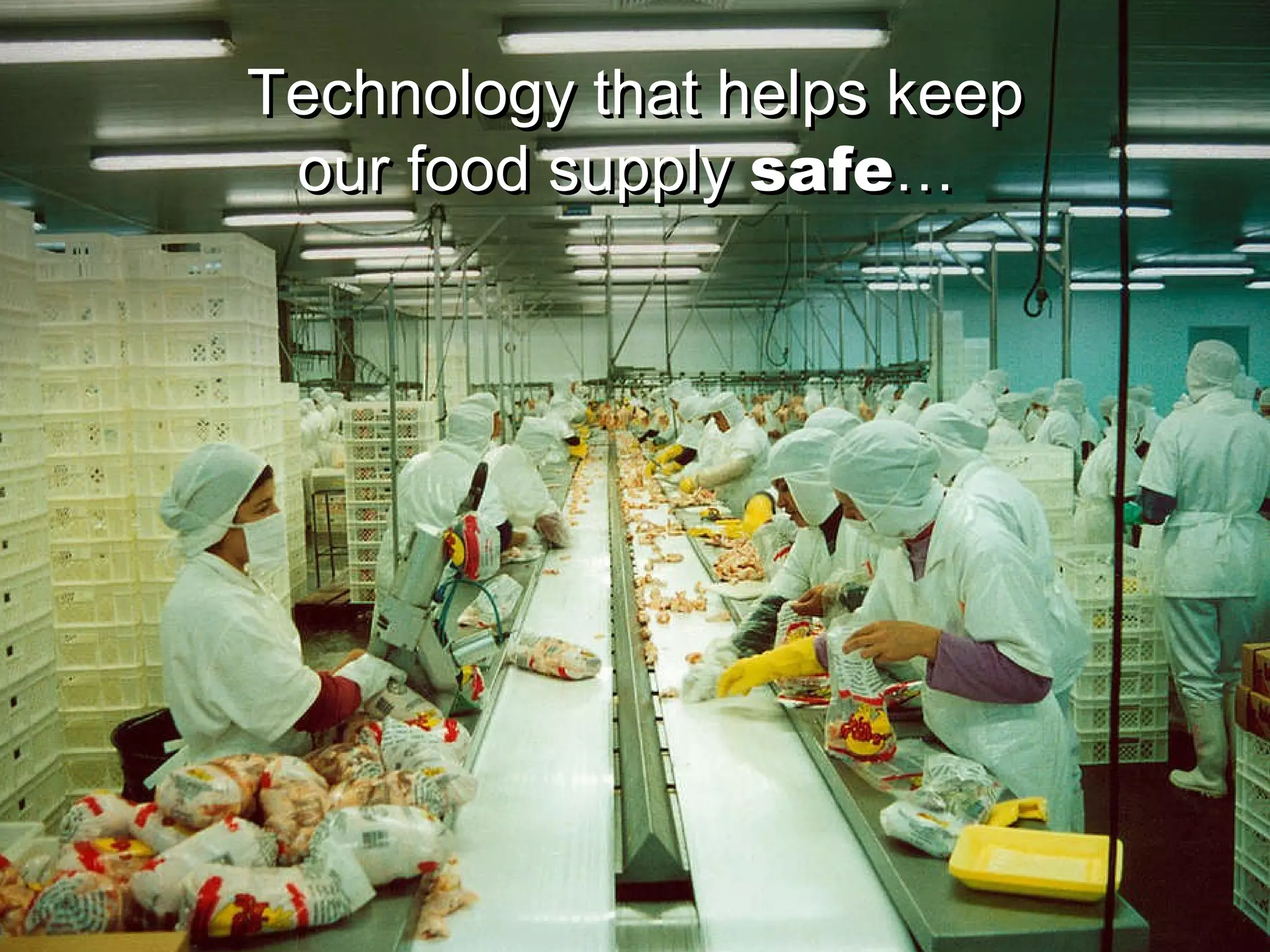
Technology that helps keep our food supply  safe …  Technology that helps keep our food supply  safe …
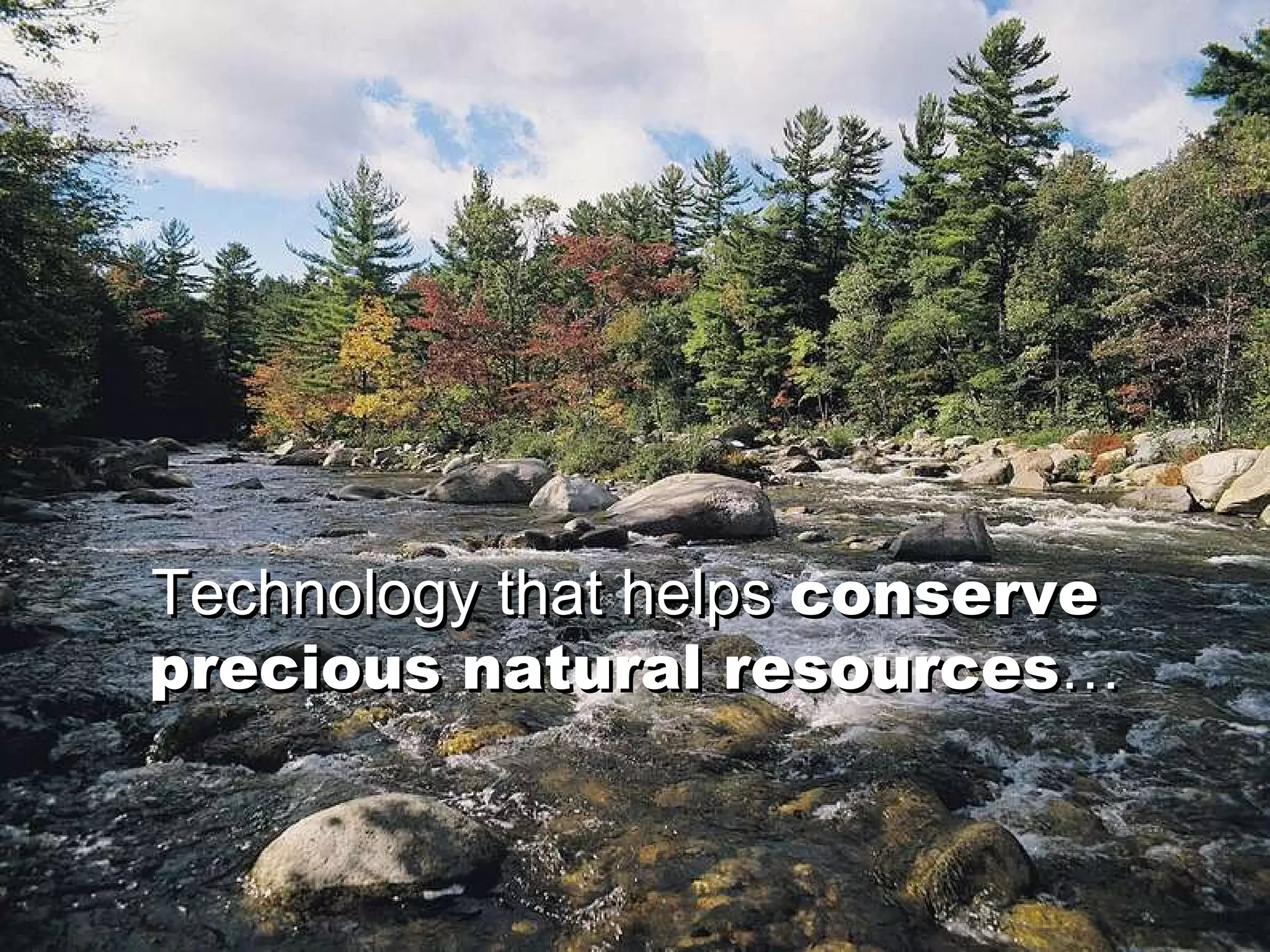
Technology that helps   conserve  precious natural resources … Technology that helps   conserve  precious natural resources …
Technology can help avert a growing food crisis. Technology can help avert a growing food crisis.
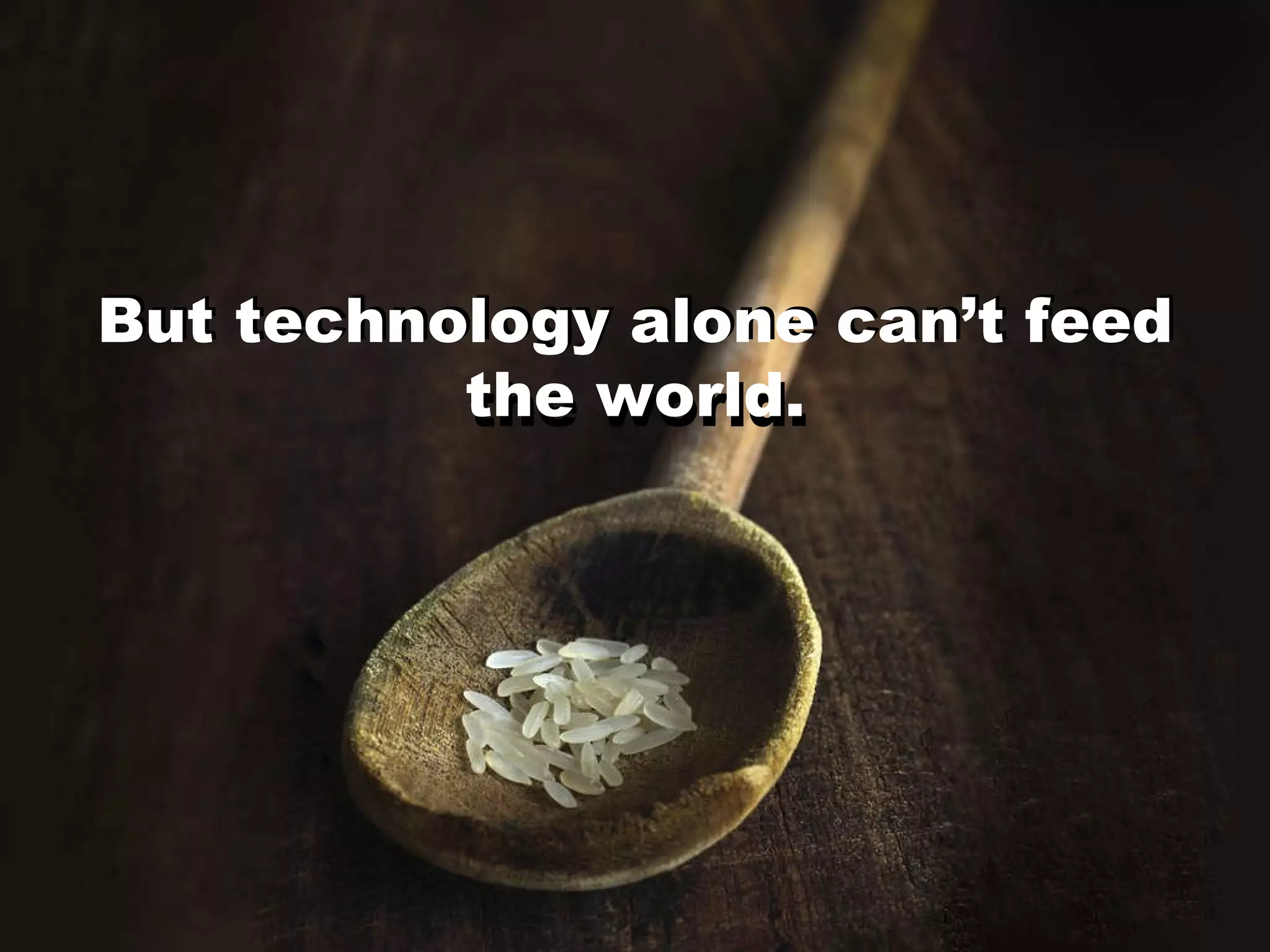
But technology alone can’t feed the world. But technology alone can’t feed the world.
We need teamwork and collaboration. We need teamwork and collaboration.
We need a   heartfelt   commitment… We need a   heartfelt   commitment…
… and a sustained effort. … and a sustained effort.
And together… And together…
… the passion in our   hearts … … the passion in our   hearts …
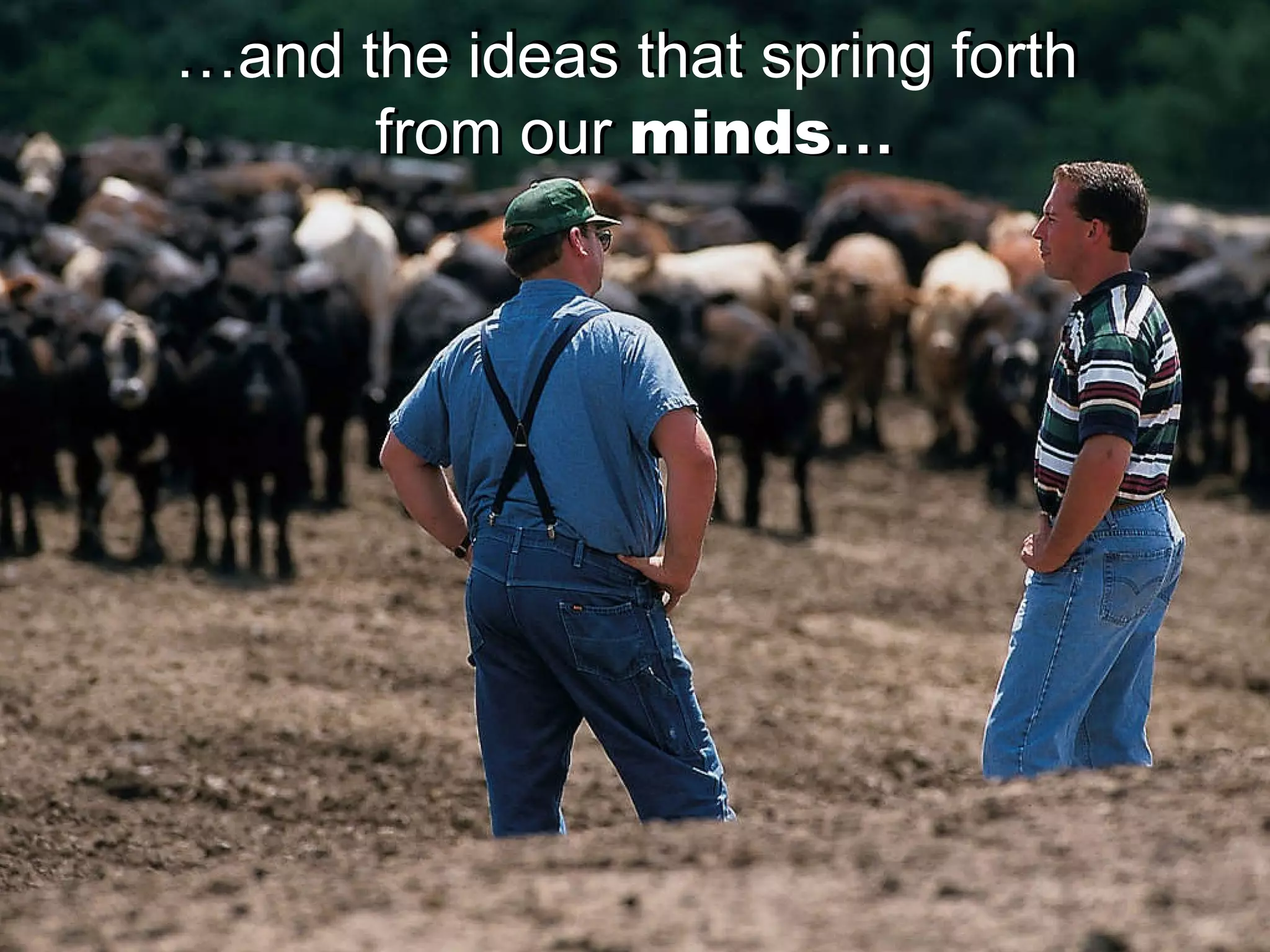
… and the ideas that spring forth  from our   minds … … and the ideas that spring forth  from our   minds …
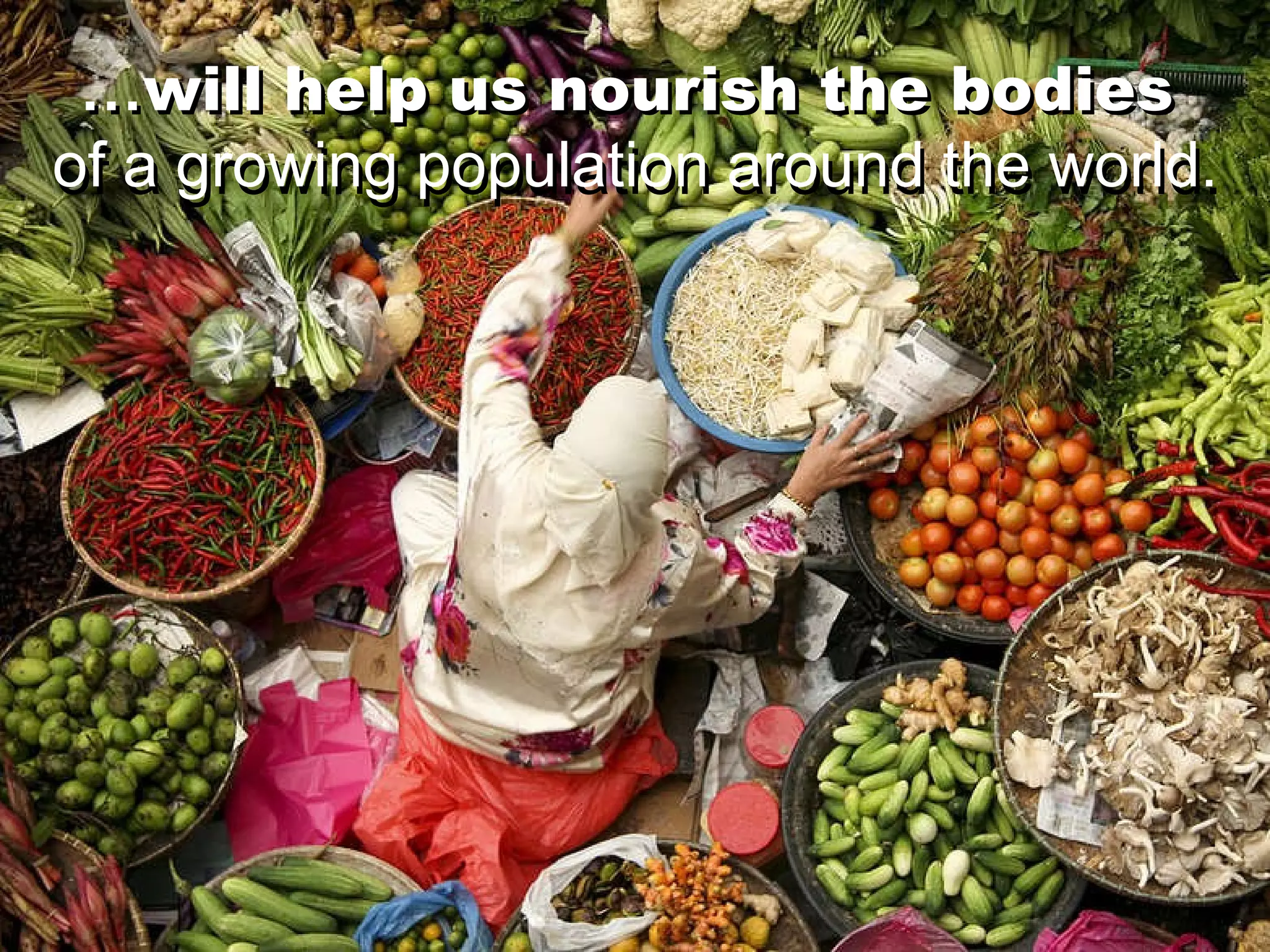
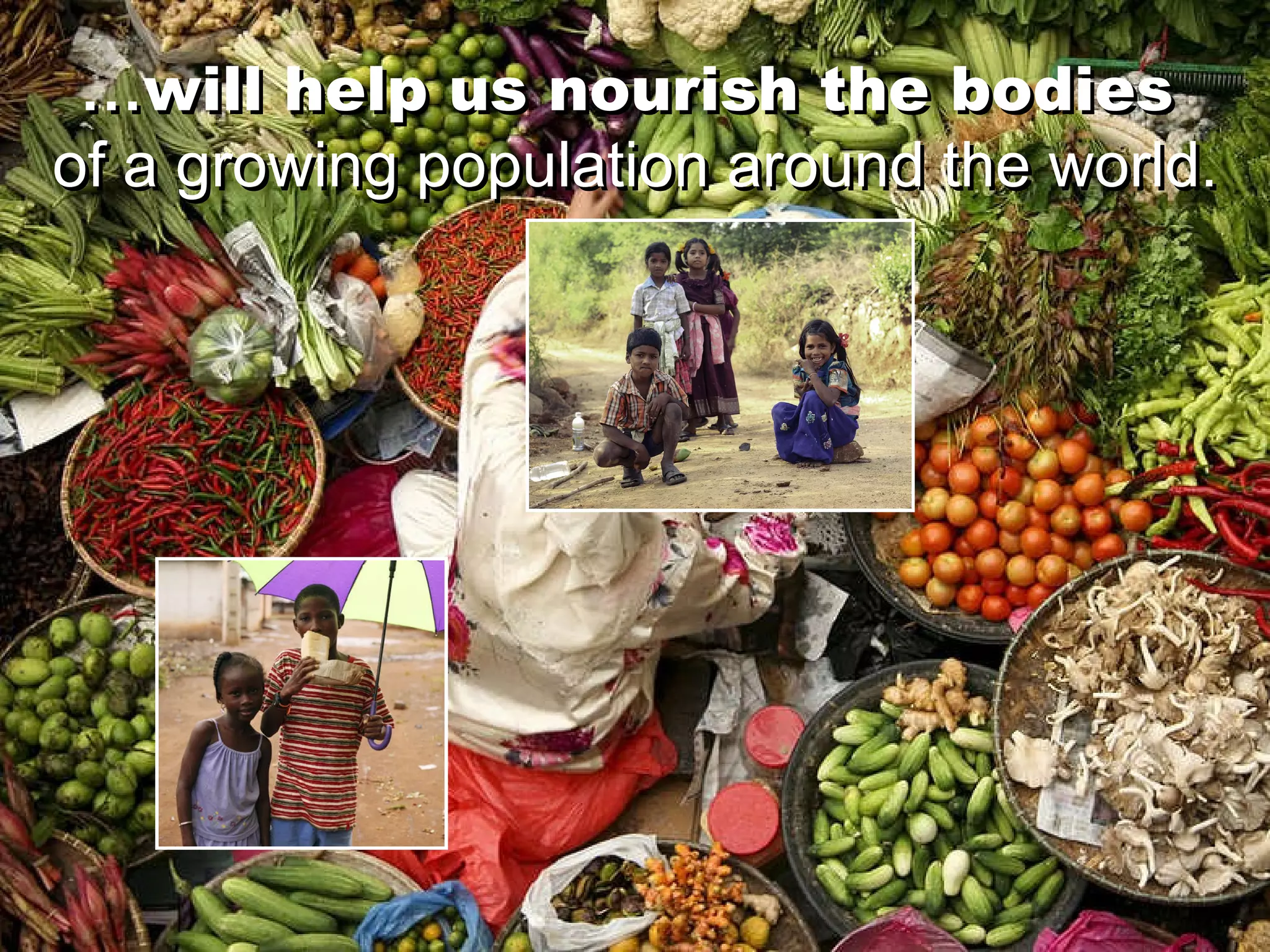
… will help us nourish the bodies   of a growing population around the world. … will help us nourish the bodies   of a growing population around the world.
Technology and Collaboration. The keys to: Technology and Collaboration. The keys to:
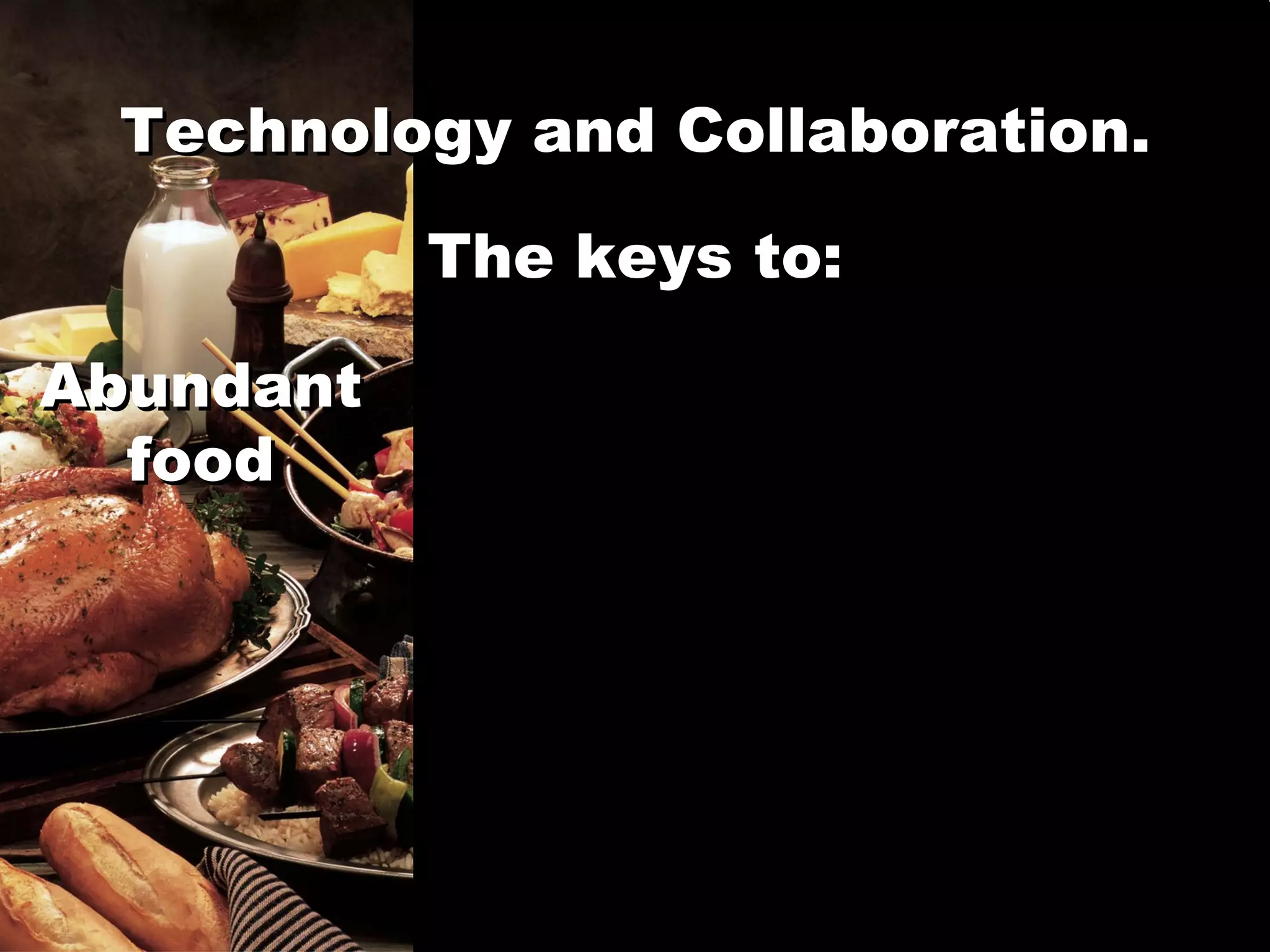
Technology and Collaboration. Abundant food The keys to: Technology and Collaboration. The keys to: Abundant food
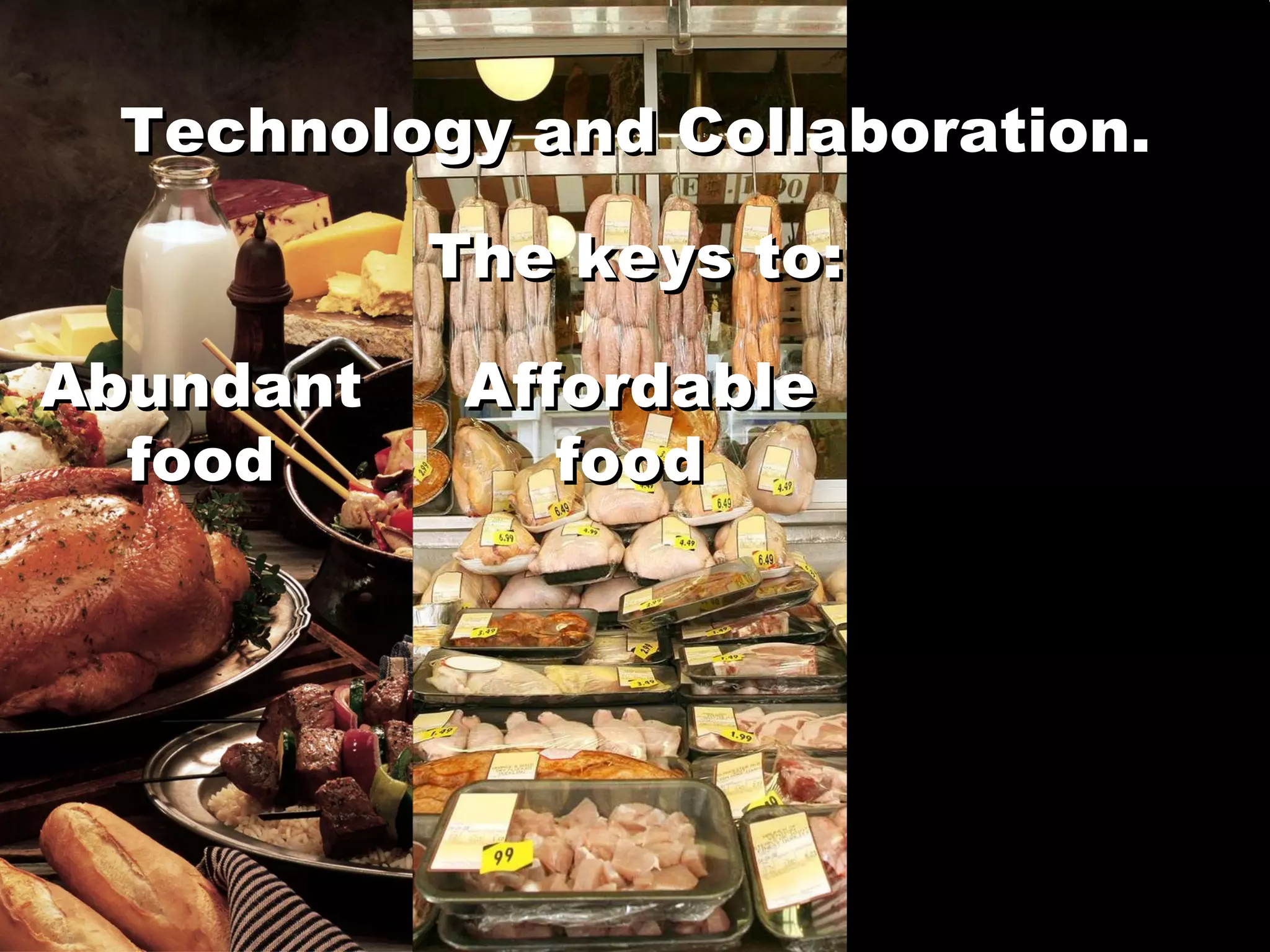
Technology and Collaboration. Abundant food The keys to: Affordable food Technology and Collaboration. The keys to: Abundant food Affordable food
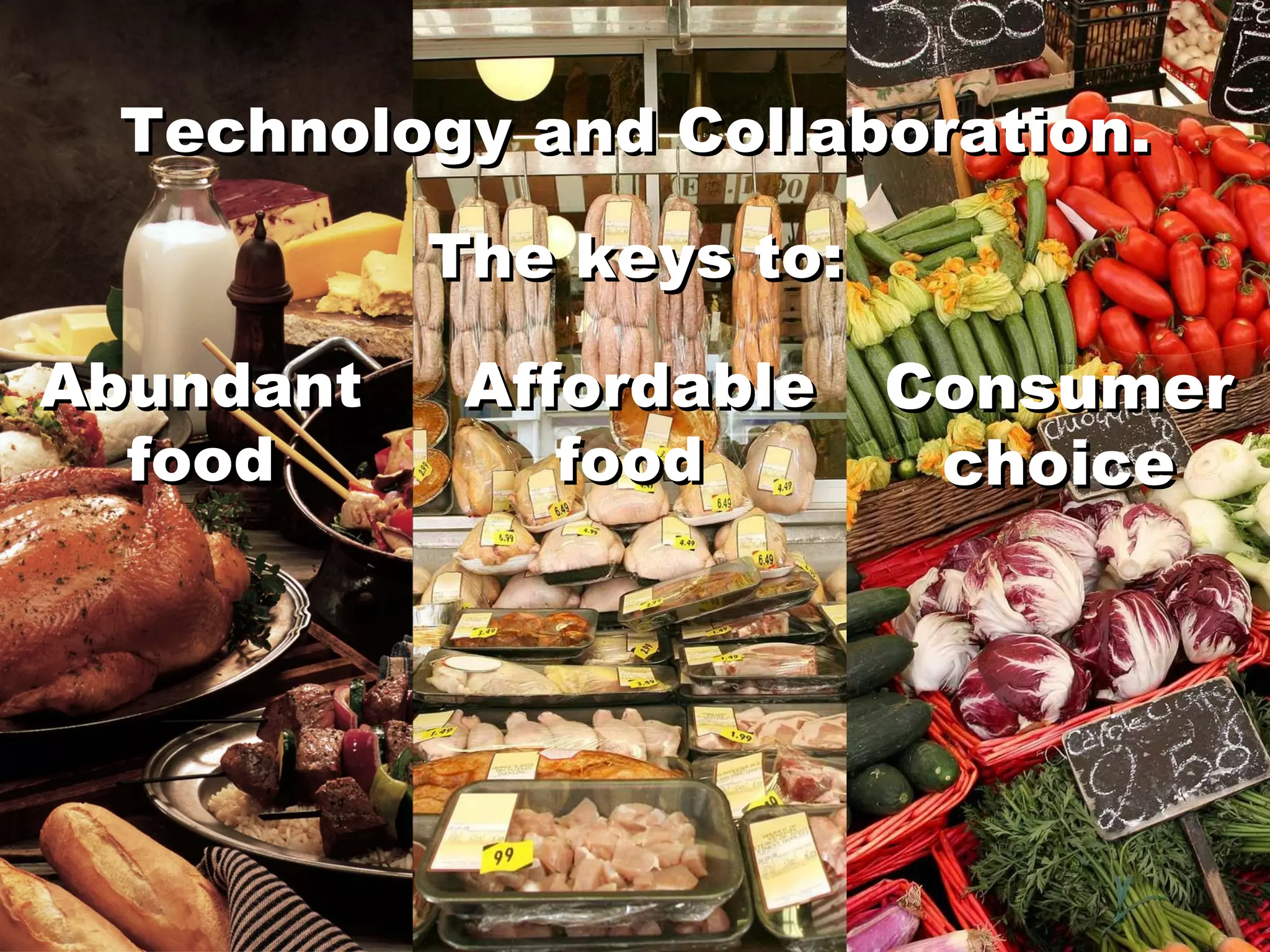
Technology and Collaboration. Abundant food The keys to: Affordable food Consumer choice Technology and Collaboration. The keys to: Abundant food Affordable food Consumer choice
To learn more, visit  www.fao.org and www.foodintegrity.org ©  2009   Joe Bannon

How Can We Feed The World?

  • 1.
  • 2.
    Source: United NationsFood and Agriculture Organization, 2008 In 2009, about 1 billion of our planet’s people don’t get enough to eat. In 2009, about 1 billion of our planet’s people don’t get enough to eat.
  • 3.
    Source: United NationsFood and Agriculture Organization, 2008 1 billion 1 billion
  • 4.
    And by mid-century,the world will be home to 3+ billion more people. And by mid-century, the world will be home to 3+ billion more people.
  • 5.
    So in 50 years, the world will need 100% more food than we produce today. So in 50 years, the world will need 100% more food than we produce today. Source: Science Magazine, 2005
  • 6.
  • 7.
  • 8.
  • 9.
    How can weaddress world hunger today AND double global food production for tomorrow? How can we address world hunger today AND double global food production for tomorrow?
  • 10.
    Farm more land?Farm more land?
  • 11.
    That will getus only 20% of the way there. Source: United Nations Food and Agriculture Organization, 2008 That will get us only 20% of the way there.
  • 12.
    Raise more animals?Raise more animals?
  • 13.
    More animals consume more precious resources and produce more waste. More animals consume more precious resources and produce more waste.
  • 14.
    That’s not asustainable solution. That’s not a sustainable solution.
  • 15.
    So what ISa sustainable solution?
  • 16.
    With so manyhungry people, we must do something now. With so many hungry people, we must do something now.
  • 17.
    The U.N. Foodand Agriculture Organization (FAO) has identified a solution. The U.N. Food and Agriculture Organization (FAO) has identified a solution.
  • 18.
    70% ofthe additional food we’ll need in 50 years… Source: United Nations Food and Agriculture Organization, 2008 A solution that will help produce
  • 19.
    A solution manyfarmers have relied on for more than a century… A solution many farmers have relied on for more than a century…
  • 20.
    A solution ourworld has relied on for millennia… A solution our world has relied on for millennia…
  • 21.
    A solution that helped mankind reach the stars … A solution that helped mankind reach the stars …
  • 22.
    That helps tokeep us healthy...
  • 23.
    To keep ussafe … To keep us safe …
  • 24.
    … and tokeep us in touch with each other. … and to keep us in touch with each other.
  • 25.
  • 26.
  • 27.
    Technology is alreadyhelping us solve a global food crisis.
  • 28.
  • 29.
    Source: U.S. Departmentof Agriculture, 1998 From 1948 — 1994, technology helped increase production of eggs & poultry by 411%. From 1948 — 1994, technology helped increase production of eggs & poultry by 411%.
  • 30.
    From 1950 —2000, technology helped increase corn yield/acre by 292%. Source: U.S. Department of Agriculture, 2007 From 1950 — 2000, technology helped increase corn yield/acre by 292%. U.S. Corn Yield per Acre: 1950—2000
  • 31.
    Technology helps today’sfarmers produce 58% more milk from 64% fewer cows than in 1944. Source: Journal of Animal Science, Vol. 86, 2008 Technology helps today’s farmers produce 58% more milk from 64% fewer cows than in 1944.
  • 32.
    And those arejust a few examples of the benefits of food technology. And those are just a few examples of the benefits of food technology.
  • 33.
    Food technologies that help improve pest control… Food technologies that help improve pest control…
  • 34.
    That help improveanimal health & nutrition… That help improve animal health & nutrition…
  • 35.
    And food safety.And food safety.
  • 36.
    Technology helps ussafely produce more food using fewer resources… Technology helps us safely produce more food using fewer resources…
  • 37.
    Which helps keepfood affordable. Which helps keep food affordable.
  • 38.
    That’s good newsto 60% of people surveyed in October 2008… Source: Center for Food Integrity, 2008 That’s good news to 60% of people surveyed in October 2008…
  • 39.
    Source: Center forFood Integrity, 2008 Who said they were “More concerned about food costs than they were in 2007”… Who said they were “More concerned about food costs than they were in 2007”…
  • 40.
    … but fartoo many people still can’t afford enough to eat. … but far too many people still can’t afford enough to eat.
  • 41.
    So, can weafford not to use technology to produce food more efficiently? So, can we afford not to use technology to produce food more efficiently?
  • 42.
    They think foodshould be produced “the old-fashioned way.” Some people think so. Some people think so. They think food should be produced “the old-fashioned way.”
  • 43.
    They’re right. Producingfood “the old-fashioned way” is still a great idea. They’re right . Producing food “the old-fashioned way” is still a great idea.
  • 44.
    Consumers should havethat choice. Consumers should have that choice.
  • 45.
    Still…can “the old-fashionedway” help feed 9+ billion people in 2050? Still…can “the old-fashioned way” help feed 9+ billion people in 2050?
  • 46.
    “ No,” saysthe United Nations’ FAO. “ No,” says the United Nations’ FAO.
  • 47.
    The FAO cites technology as key to producing 70% of the world’s food by mid-century. Source: United Nations Food and Agriculture Organization, 2008 The FAO cites technology as key to producing 70% of the world’s food by mid-century.
  • 48.
    The FAO cites technology as key to producing 70% of the world’s food by mid-century. Source: United Nations Food and Agriculture Organization, 2008 The FAO cites technology as key to producing 70% of the world’s food by mid-century.
  • 49.
    Again, that’s oneof 3 numbers to keep in mind. 50. 100. 70.
  • 50.
    In 50years, Source: Science Magazine, 2005 Nature Magazine, 2002
  • 51.
    we’ll need 100% more food Source: Science Magazine, 2005 Nature Magazine, 2002
  • 52.
    … and 70% of that food can be produced only with new/existing technology. Source: United Nations Food and Agriculture Organization, 2008
  • 53.
    Technology that helpsdeliver an abundance of food choices for a growing world… Technology that helps deliver an abundance of food choices for a growing world…
  • 54.
    Technology that keepsfood affordable for all… Technology that keeps food affordable for all…
  • 55.
    Technology that helpskeep our food supply safe … Technology that helps keep our food supply safe …
  • 56.
    Technology that helps conserve precious natural resources … Technology that helps conserve precious natural resources …
  • 57.
    Technology can helpavert a growing food crisis. Technology can help avert a growing food crisis.
  • 58.
    But technology alonecan’t feed the world. But technology alone can’t feed the world.
  • 59.
    We need teamworkand collaboration. We need teamwork and collaboration.
  • 60.
    We need a heartfelt commitment… We need a heartfelt commitment…
  • 61.
    … and asustained effort. … and a sustained effort.
  • 62.
    … and asustained effort. … and a sustained effort.
  • 63.
    … and asustained effort. … and a sustained effort.
  • 64.
  • 65.
    … the passionin our hearts … … the passion in our hearts …
  • 66.
    … and theideas that spring forth from our minds … … and the ideas that spring forth from our minds …
  • 67.
    … will helpus nourish the bodies of a growing population around the world. … will help us nourish the bodies of a growing population around the world.
  • 68.
    … will helpus nourish the bodies of a growing population around the world. … will help us nourish the bodies of a growing population around the world.
  • 69.
    … will helpus nourish the bodies of a growing population around the world. … will help us nourish the bodies of a growing population around the world.
  • 70.
    Technology and Collaboration.The keys to: Technology and Collaboration. The keys to:
  • 71.
    Technology and Collaboration.Abundant food The keys to: Technology and Collaboration. The keys to: Abundant food
  • 72.
    Technology and Collaboration.Abundant food The keys to: Affordable food Technology and Collaboration. The keys to: Abundant food Affordable food
  • 73.
    Technology and Collaboration.Abundant food The keys to: Affordable food Consumer choice Technology and Collaboration. The keys to: Abundant food Affordable food Consumer choice
  • 74.
    To learn more,visit www.fao.org and www.foodintegrity.org © 2009 Joe Bannon

Editor's Notes

  • #3 1250-19200 Food Technology PR Slide Show 09/08/09 T:Copy DeptElanco12501250-19200 Food Technology PR_v06.ppt
  • #5 1250-19200 Food Technology PR Slide Show 09/08/09 T:Copy DeptElanco12501250-19200 Food Technology PR_v06.ppt
  • #6 1250-19200 Food Technology PR Slide Show 09/08/09 T:Copy DeptElanco12501250-19200 Food Technology PR_v06.ppt
  • #7 1250-19200 Food Technology PR Slide Show 09/08/09 T:Copy DeptElanco12501250-19200 Food Technology PR_v06.ppt
  • #10 1250-19200 Food Technology PR Slide Show 09/08/09 T:Copy DeptElanco12501250-19200 Food Technology PR_v06.ppt
  • #11 1250-19200 Food Technology PR Slide Show 09/08/09 T:Copy DeptElanco12501250-19200 Food Technology PR_v06.ppt
  • #13 1250-19200 Food Technology PR Slide Show 09/08/09 T:Copy DeptElanco12501250-19200 Food Technology PR_v06.ppt
  • #14 1250-19200 Food Technology PR Slide Show 09/08/09 T:Copy DeptElanco12501250-19200 Food Technology PR_v06.ppt
  • #16 1250-19200 Food Technology PR Slide Show 09/08/09 T:Copy DeptElanco12501250-19200 Food Technology PR_v06.ppt
  • #17 1250-19200 Food Technology PR Slide Show 09/08/09 T:Copy DeptElanco12501250-19200 Food Technology PR_v06.ppt
  • #18 1250-19200 Food Technology PR Slide Show 09/08/09 T:Copy DeptElanco12501250-19200 Food Technology PR_v06.ppt
  • #20 1250-19200 Food Technology PR Slide Show 09/08/09 T:Copy DeptElanco12501250-19200 Food Technology PR_v06.ppt
  • #21 1250-19200 Food Technology PR Slide Show 09/08/09 T:Copy DeptElanco12501250-19200 Food Technology PR_v06.ppt
  • #22 1250-19200 Food Technology PR Slide Show 09/08/09 T:Copy DeptElanco12501250-19200 Food Technology PR_v06.ppt
  • #23 1250-19200 Food Technology PR Slide Show 09/08/09 T:Copy DeptElanco12501250-19200 Food Technology PR_v06.ppt
  • #24 1250-19200 Food Technology PR Slide Show 09/08/09 T:Copy DeptElanco12501250-19200 Food Technology PR_v06.ppt
  • #25 1250-19200 Food Technology PR Slide Show 09/08/09 T:Copy DeptElanco12501250-19200 Food Technology PR_v06.ppt
  • #27 1250-19200 Food Technology PR Slide Show 09/08/09 T:Copy DeptElanco12501250-19200 Food Technology PR_v06.ppt
  • #28 1250-19200 Food Technology PR Slide Show 09/08/09 T:Copy DeptElanco12501250-19200 Food Technology PR_v06.ppt
  • #29 1250-19200 Food Technology PR Slide Show 09/08/09 T:Copy DeptElanco12501250-19200 Food Technology PR_v06.ppt
  • #30 1250-19200 Food Technology PR Slide Show 09/08/09 T:Copy DeptElanco12501250-19200 Food Technology PR_v06.ppt
  • #31 1250-19200 Food Technology PR Slide Show 09/08/09 T:Copy DeptElanco12501250-19200 Food Technology PR_v06.ppt
  • #32 1250-19200 Food Technology PR Slide Show 09/08/09 T:Copy DeptElanco12501250-19200 Food Technology PR_v06.ppt
  • #33 1250-19200 Food Technology PR Slide Show 09/08/09 T:Copy DeptElanco12501250-19200 Food Technology PR_v06.ppt
  • #34 1250-19200 Food Technology PR Slide Show 09/08/09 T:Copy DeptElanco12501250-19200 Food Technology PR_v06.ppt
  • #36 1250-19200 Food Technology PR Slide Show 09/08/09 T:Copy DeptElanco12501250-19200 Food Technology PR_v06.ppt
  • #37 1250-19200 Food Technology PR Slide Show 09/08/09 T:Copy DeptElanco12501250-19200 Food Technology PR_v06.ppt
  • #38 1250-19200 Food Technology PR Slide Show 09/08/09 T:Copy DeptElanco12501250-19200 Food Technology PR_v06.ppt
  • #39 1250-19200 Food Technology PR Slide Show 09/08/09 T:Copy DeptElanco12501250-19200 Food Technology PR_v06.ppt
  • #40 1250-19200 Food Technology PR Slide Show 09/08/09 T:Copy DeptElanco12501250-19200 Food Technology PR_v06.ppt
  • #41 1250-19200 Food Technology PR Slide Show 09/08/09 T:Copy DeptElanco12501250-19200 Food Technology PR_v06.ppt
  • #42 1250-19200 Food Technology PR Slide Show 09/08/09 T:Copy DeptElanco12501250-19200 Food Technology PR_v06.ppt
  • #43 1250-19200 Food Technology PR Slide Show 09/08/09 T:Copy DeptElanco12501250-19200 Food Technology PR_v06.ppt
  • #44 1250-19200 Food Technology PR Slide Show 09/08/09 T:Copy DeptElanco12501250-19200 Food Technology PR_v06.ppt
  • #45 1250-19200 Food Technology PR Slide Show 09/08/09 T:Copy DeptElanco12501250-19200 Food Technology PR_v06.ppt
  • #46 1250-19200 Food Technology PR Slide Show 09/08/09 T:Copy DeptElanco12501250-19200 Food Technology PR_v06.ppt
  • #47 1250-19200 Food Technology PR Slide Show 09/08/09 T:Copy DeptElanco12501250-19200 Food Technology PR_v06.ppt
  • #48 1250-19200 Food Technology PR Slide Show 09/08/09 T:Copy DeptElanco12501250-19200 Food Technology PR_v06.ppt
  • #54 1250-19200 Food Technology PR Slide Show 09/08/09 T:Copy DeptElanco12501250-19200 Food Technology PR_v06.ppt
  • #55 1250-19200 Food Technology PR Slide Show 09/08/09 T:Copy DeptElanco12501250-19200 Food Technology PR_v06.ppt
  • #56 1250-19200 Food Technology PR Slide Show 09/08/09 T:Copy DeptElanco12501250-19200 Food Technology PR_v06.ppt
  • #57 1250-19200 Food Technology PR Slide Show 09/08/09 T:Copy DeptElanco12501250-19200 Food Technology PR_v06.ppt
  • #58 1250-19200 Food Technology PR Slide Show 09/08/09 T:Copy DeptElanco12501250-19200 Food Technology PR_v06.ppt
  • #59 1250-19200 Food Technology PR Slide Show 09/08/09 T:Copy DeptElanco12501250-19200 Food Technology PR_v06.ppt
  • #60 1250-19200 Food Technology PR Slide Show 09/08/09 T:Copy DeptElanco12501250-19200 Food Technology PR_v06.ppt
  • #61 1250-19200 Food Technology PR Slide Show 09/08/09 T:Copy DeptElanco12501250-19200 Food Technology PR_v06.ppt
  • #62 1250-19200 Food Technology PR Slide Show 09/08/09 T:Copy DeptElanco12501250-19200 Food Technology PR_v06.ppt
  • #65 1250-19200 Food Technology PR Slide Show 09/08/09 T:Copy DeptElanco12501250-19200 Food Technology PR_v06.ppt
  • #66 1250-19200 Food Technology PR Slide Show 09/08/09 T:Copy DeptElanco12501250-19200 Food Technology PR_v06.ppt
  • #67 1250-19200 Food Technology PR Slide Show 09/08/09 T:Copy DeptElanco12501250-19200 Food Technology PR_v06.ppt
  • #68 1250-19200 Food Technology PR Slide Show 09/08/09 T:Copy DeptElanco12501250-19200 Food Technology PR_v06.ppt
  • #75 1250-19200 Food Technology PR Slide Show 09/08/09 T:Copy DeptElanco12501250-19200 Food Technology PR_v06.ppt