Downloaded 324 times



The document explains the function and types of oxygen sensors used in vehicles, which are vital for regulating fuel supply and monitoring catalytic converter efficiency. It details the structure of the sensors, particularly the zirconia type, and how the voltage generated from the difference in oxygen concentration is used by the engine control unit (ECU) to adjust the air/fuel mixture. Overall, oxygen sensors are crucial for optimizing engine performance and reducing emissions.
Presentation by Aayushi Nanda from VIT University, Vellore.
Oxygen sensors are positioned upstream and downstream of the catalytic converter; upstream regulates fuel supply while downstream monitors catalytic efficiency.
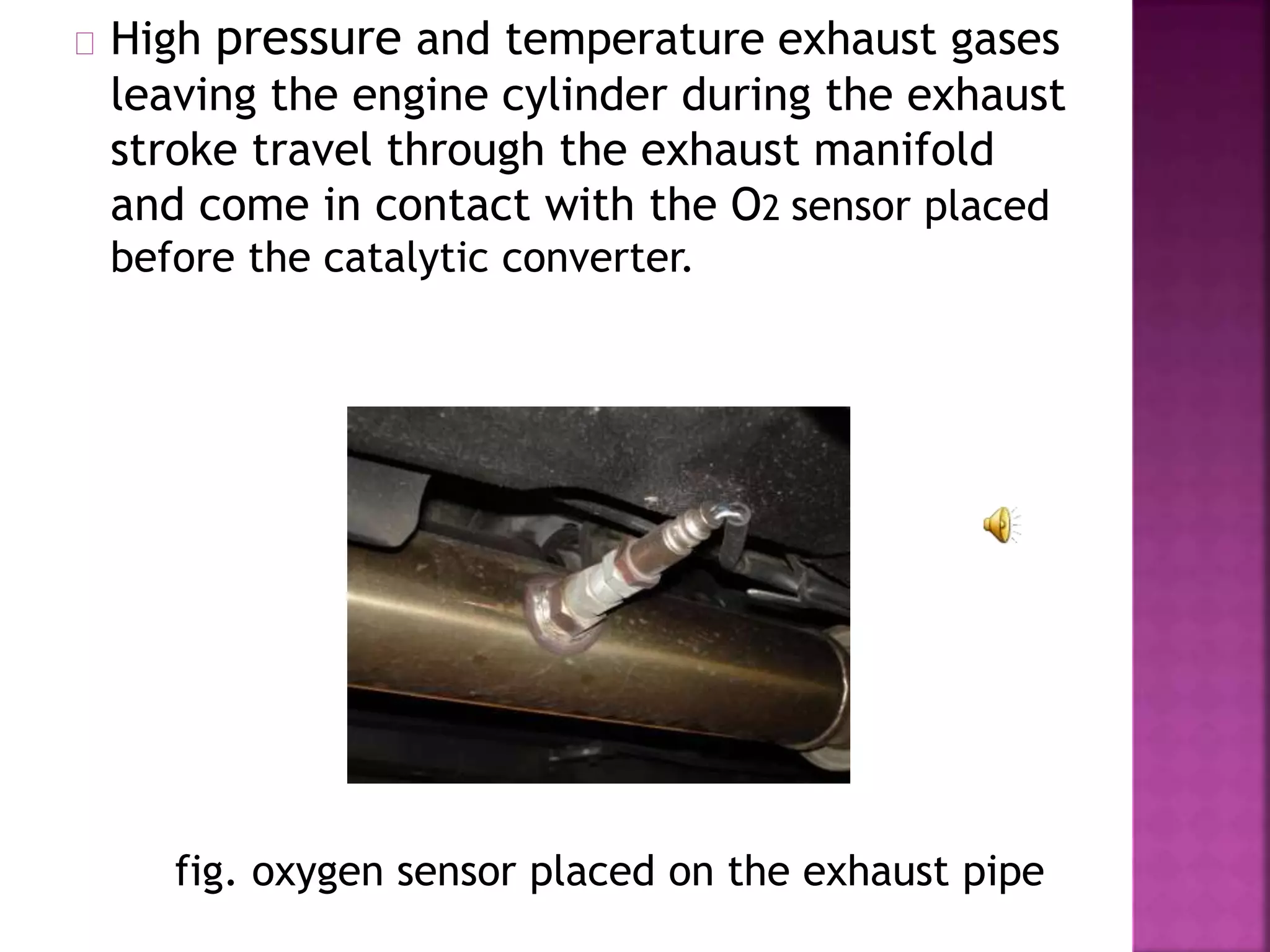
High pressure and temperature exhaust gases interact with the upstream oxygen sensor during exhaust stroke, impacting engine dynamics.
Three types of oxygen sensors mentioned: Zirconia, Titania, and Air Fuel, all critical for engine performance and emissions.
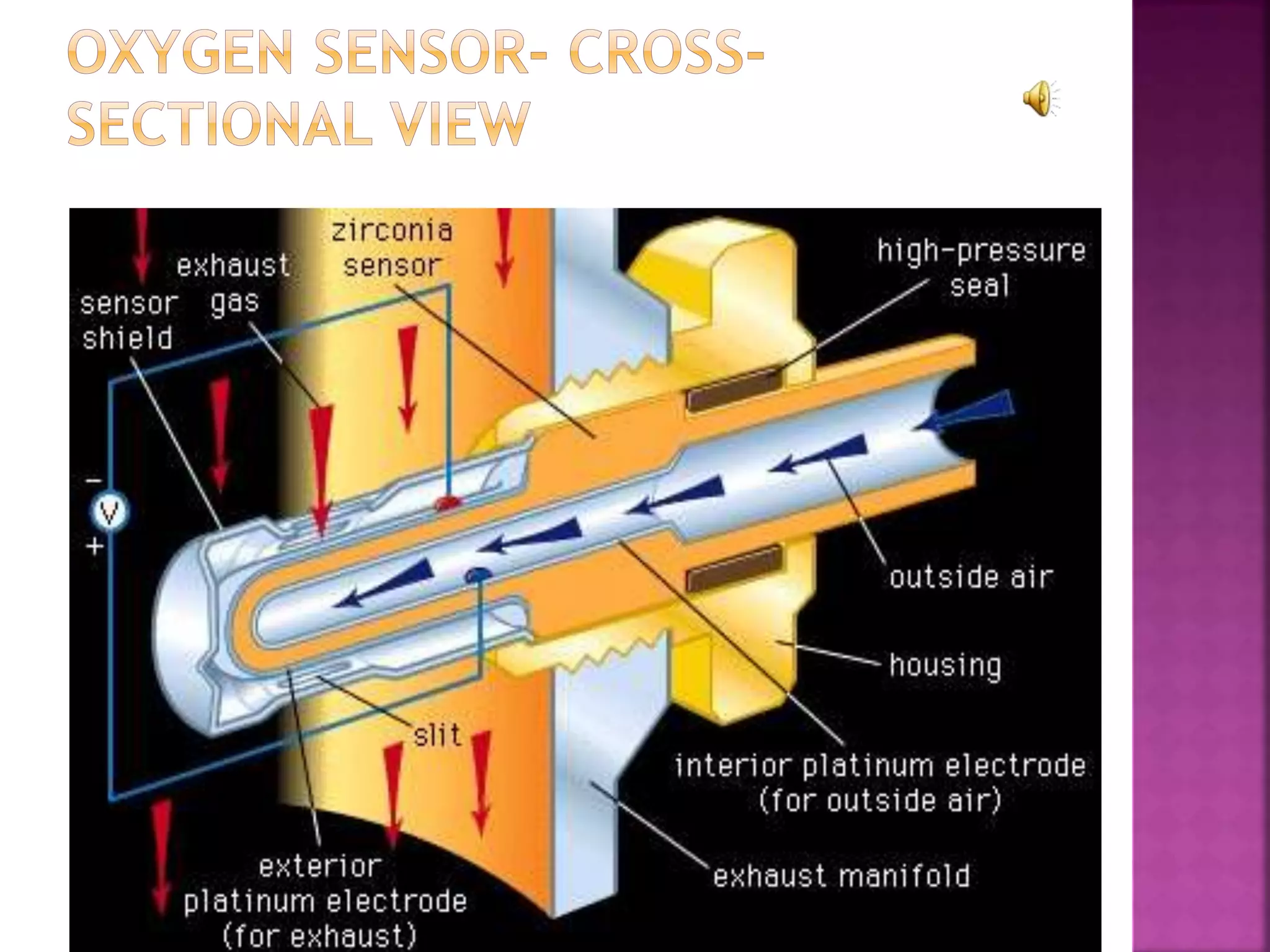
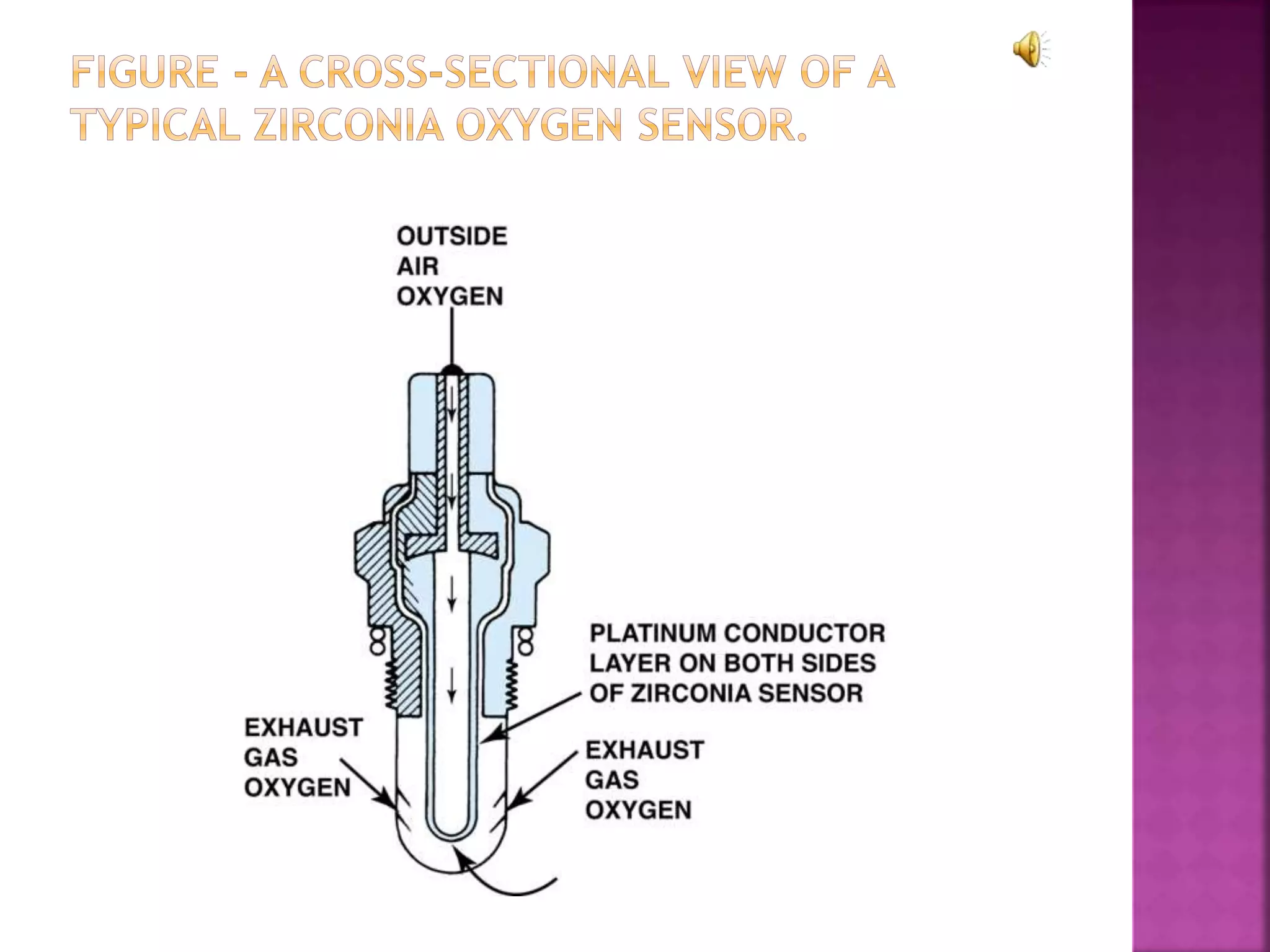
The front sensing element consists of zirconium dioxide within a steel shell connected to platinum electrodes.
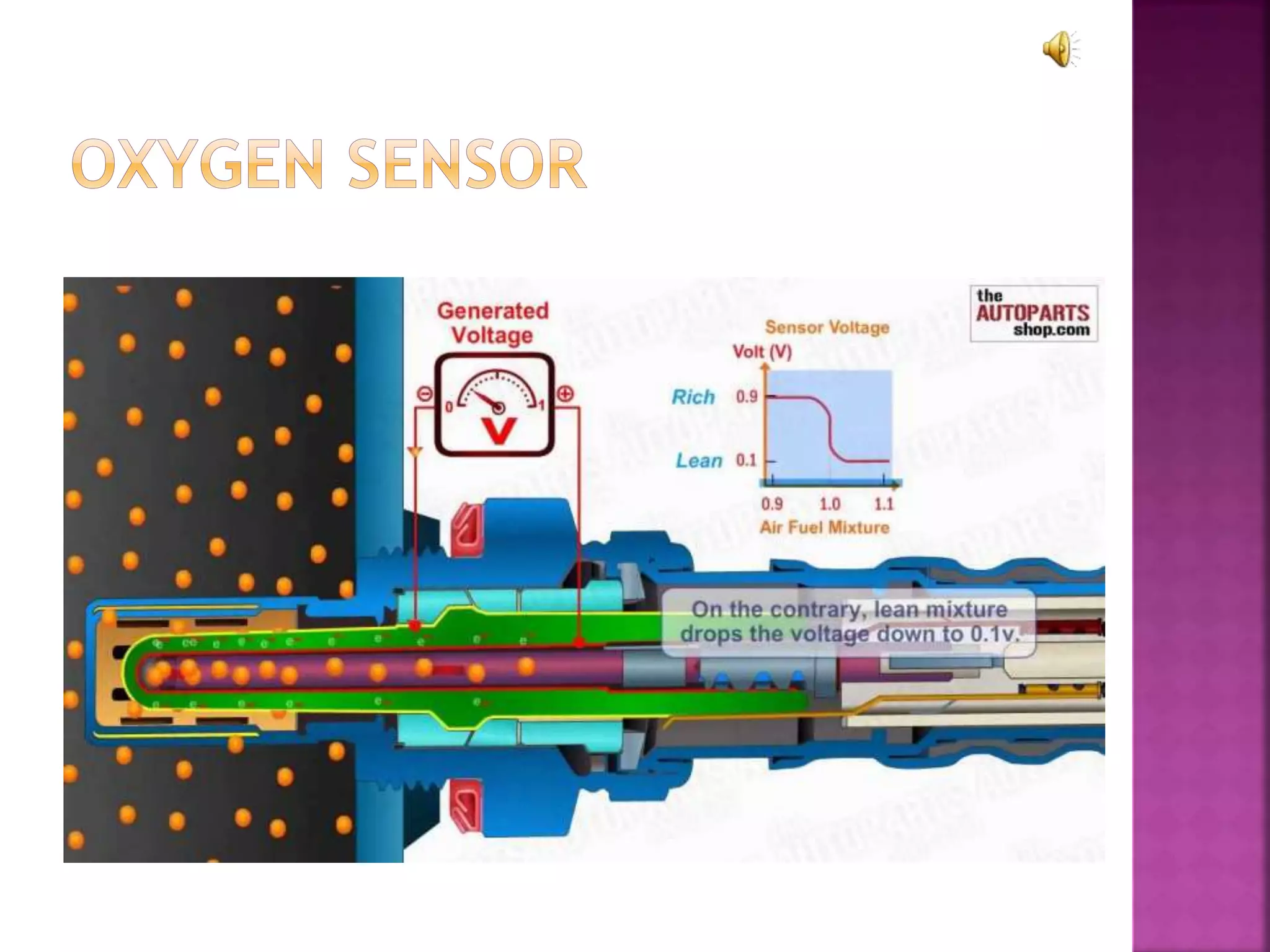
Oxygen ions create voltage differences due to concentration gradients between exhaust gases and ambient air, crucial for sensor function.
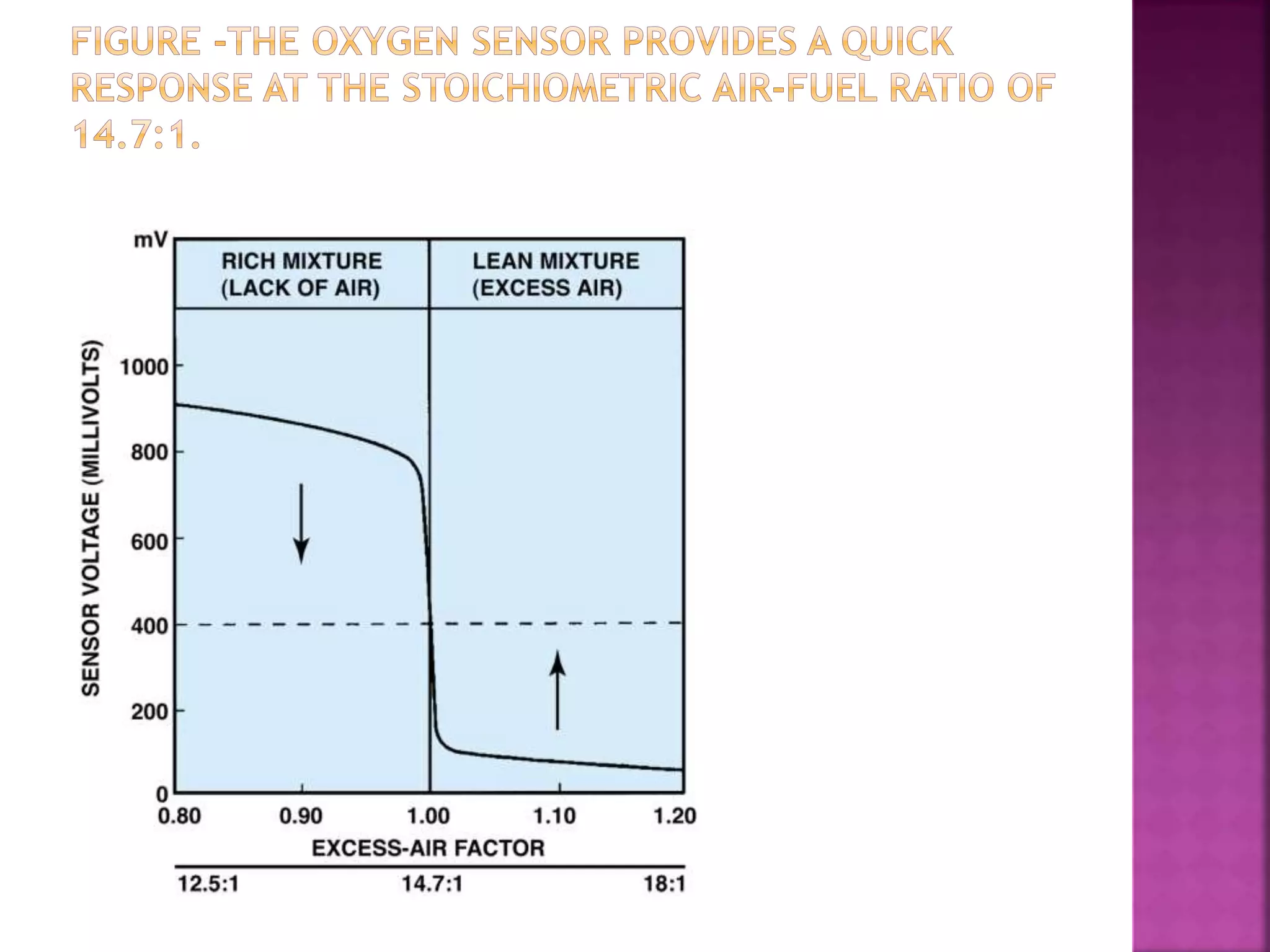
Voltage changes (0.1V for lean and 0.9V for rich mixture) inform the ECU to adjust air/fuel mixture for optimal performance.
Thank you note concluding the presentation.


![Electronic fuel injection system [EFI]](https://cdn.slidesharecdn.com/ss_thumbnails/efibilkulfinal-171227111232-thumbnail.jpg?width=640&height=640&fit=bounds)


![@&$%{<<><}{{Sensors][[[]] used in engine.ppt](https://cdn.slidesharecdn.com/ss_thumbnails/sensorsusedinefi-241005063801-504e3d07-thumbnail.jpg?width=640&height=640&fit=bounds)


