Col Zulfiquer Ahmed Amin
M Phil, MPH, PGD (Health Economics), MBBS
Armed Forces Medical Institute (AFMI)
Definition:
• Hospital waste is “Any waste which is
generated in the diagnosis, treatment or
immunization of human beings or animals or
in research” in a hospital. This is also called
‘Bio-Medical Waste’ (BMW).
• Hospital Waste Management means the
management of waste produced by hospitals
using such techniques that will help to check
the spread of diseases through.
● Developing Countries: 1-2 kg/patient/day
●
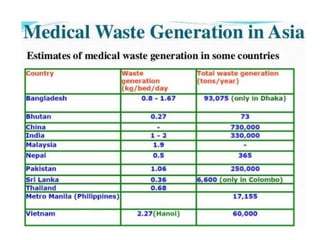
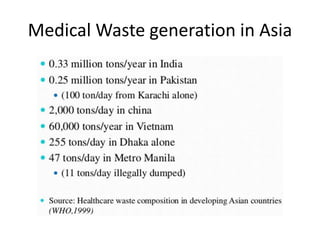
Medical Waste generation in Asia
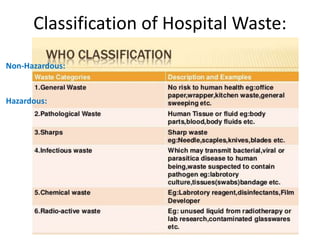
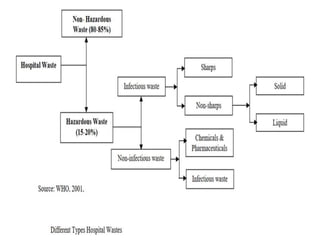
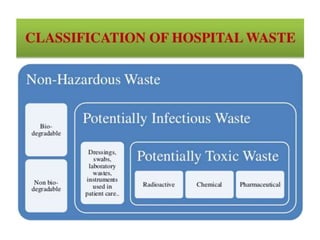
Classification of Hospital Waste:
Hazardous:
Non-Hazardous:
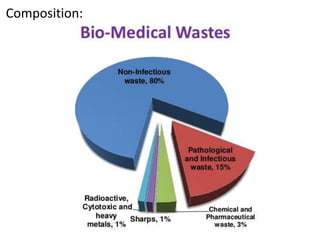
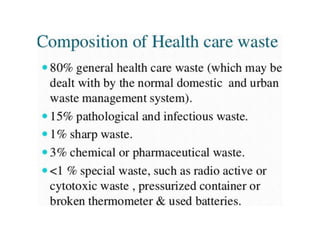
Composition:
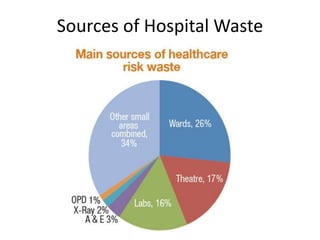
Sources of Hospital Waste
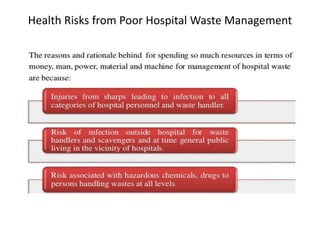
Health Risks from Poor Hospital Waste Management
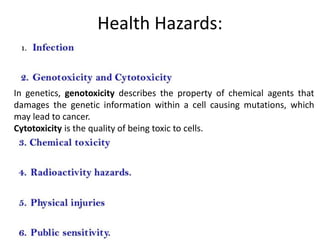
Health Hazards:
In genetics, genotoxicity describes the property of chemical agents that
damages the genetic information within a cell causing mutations, which
may lead to cancer.
Cytotoxicity is the quality of being toxic to cells.
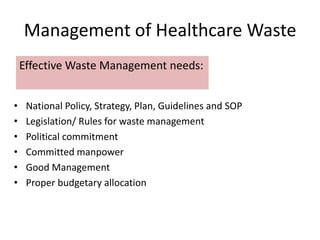
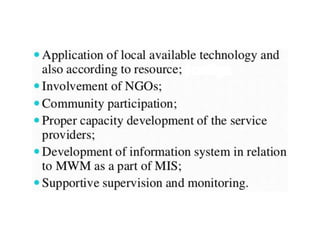
Management of Healthcare Waste
• National Policy, Strategy, Plan, Guidelines and SOP
• Legislation/ Rules for waste management
• Political commitment
• Committed manpower
• Good Management
• Proper budgetary allocation
Effective Waste Management needs:
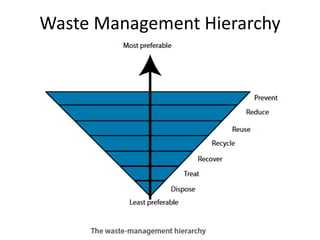
Waste Management Hierarchy
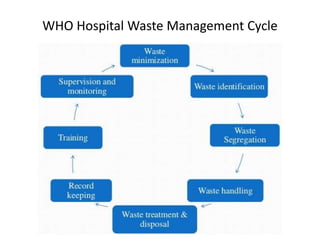
WHO Hospital Waste Management Cycle
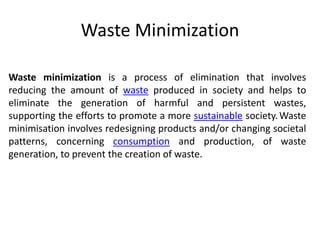
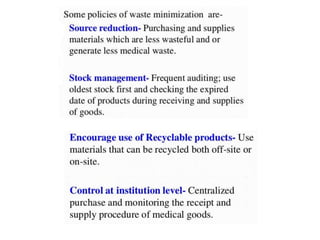
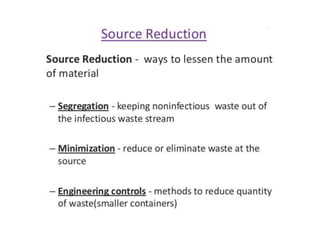
Waste Minimization
Waste minimization is a process of elimination that involves
reducing the amount of waste produced in society and helps to
eliminate the generation of harmful and persistent wastes,
supporting the efforts to promote a more sustainable society.Waste
minimisation involves redesigning products and/or changing societal
patterns, concerning consumption and production, of waste
generation, to prevent the creation of waste.
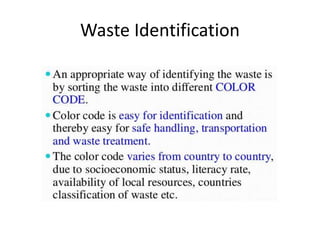
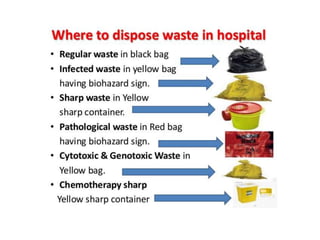
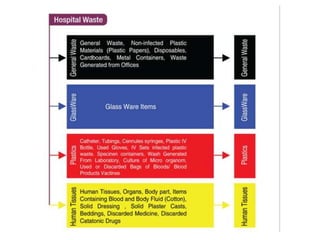
Waste Identification
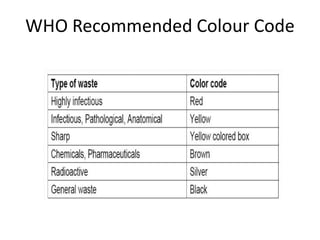
WHO Recommended Colour Code
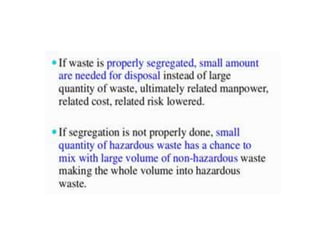
Waste Segregation
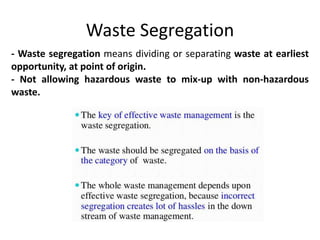
- Waste segregation means dividing or separating waste at earliest
opportunity, at point of origin.
- Not allowing hazardous waste to mix-up with non-hazardous
waste.
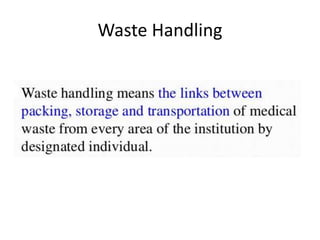
Waste Handling
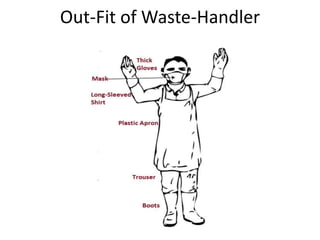
Out-Fit of Waste-Handler
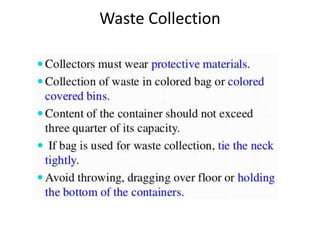
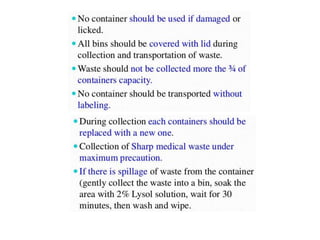
Waste Collection
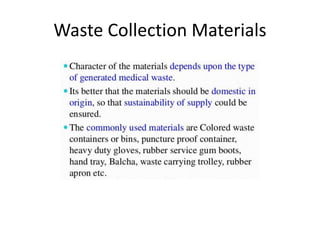
Waste Collection Materials
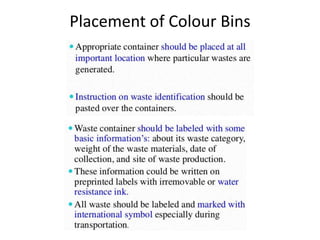
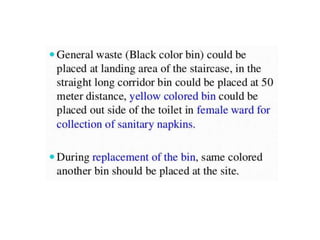
Placement of Colour Bins
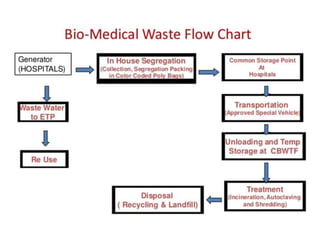
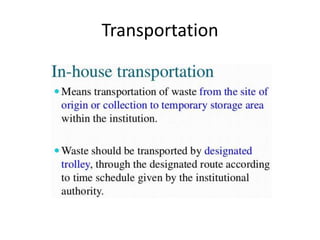
Transportation
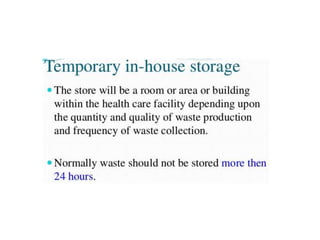
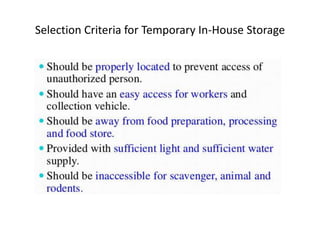
Selection Criteria for Temporary In-House Storage
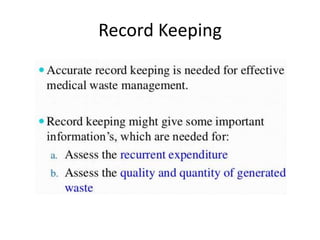
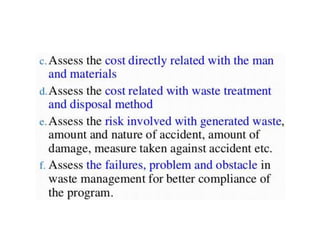
Record Keeping
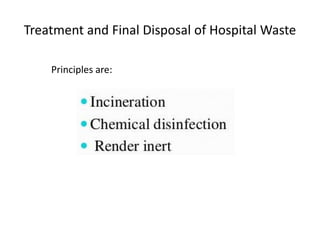
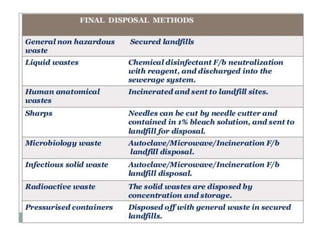
Treatment and Final Disposal of Hospital Waste
Principles are:
(Effluent Treatment Plant)
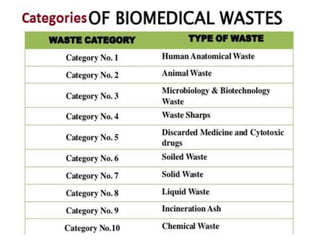
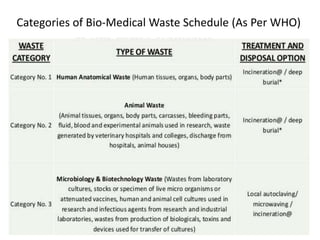
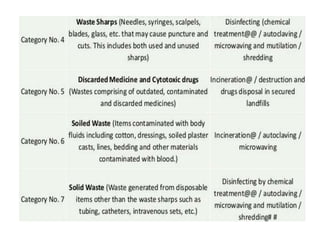
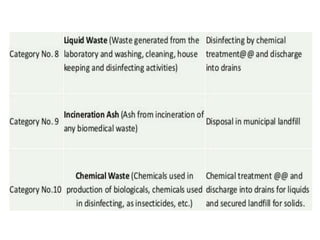
Categories of Bio-Medical Waste Schedule (As Per WHO)
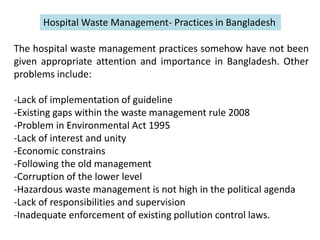
The hospital waste management practices somehow have not been
given appropriate attention and importance in Bangladesh. Other
problems include:
-Lack of implementation of guideline
-Existing gaps within the waste management rule 2008
-Problem in Environmental Act 1995
-Lack of interest and unity
-Economic constrains
-Following the old management
-Corruption of the lower level
-Hazardous waste management is not high in the political agenda
-Lack of responsibilities and supervision
-Inadequate enforcement of existing pollution control laws.
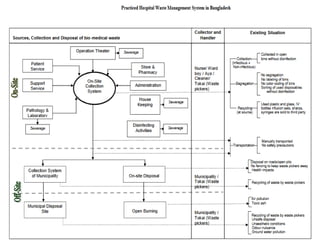
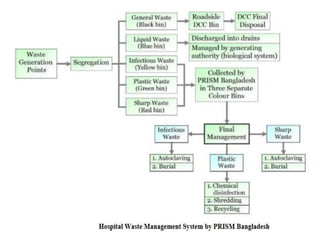
Hospital Waste Management- Practices in Bangladesh
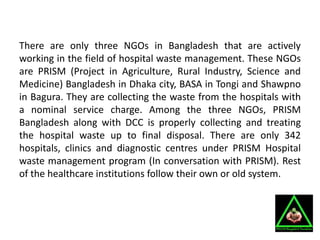
There are only three NGOs in Bangladesh that are actively
working in the field of hospital waste management. These NGOs
are PRISM (Project in Agriculture, Rural Industry, Science and
Medicine) Bangladesh in Dhaka city, BASA in Tongi and Shawpno
in Bagura. They are collecting the waste from the hospitals with
a nominal service charge. Among the three NGOs, PRISM
Bangladesh along with DCC is properly collecting and treating
the hospital waste up to final disposal. There are only 342
hospitals, clinics and diagnostic centres under PRISM Hospital
waste management program (In conversation with PRISM). Rest
of the healthcare institutions follow their own or old system.
Hospital Waste Management

Hospital Waste Management

  • 1.
    Col Zulfiquer AhmedAmin M Phil, MPH, PGD (Health Economics), MBBS Armed Forces Medical Institute (AFMI)
  • 2.
  • 3.
    • Hospital wasteis “Any waste which is generated in the diagnosis, treatment or immunization of human beings or animals or in research” in a hospital. This is also called ‘Bio-Medical Waste’ (BMW). • Hospital Waste Management means the management of waste produced by hospitals using such techniques that will help to check the spread of diseases through. ● Developing Countries: 1-2 kg/patient/day ●
  • 5.
  • 6.
    Classification of HospitalWaste: Hazardous: Non-Hazardous:
  • 10.
  • 12.
  • 13.
    Health Risks fromPoor Hospital Waste Management
  • 15.
    Health Hazards: In genetics,genotoxicity describes the property of chemical agents that damages the genetic information within a cell causing mutations, which may lead to cancer. Cytotoxicity is the quality of being toxic to cells.
  • 16.
    Management of HealthcareWaste • National Policy, Strategy, Plan, Guidelines and SOP • Legislation/ Rules for waste management • Political commitment • Committed manpower • Good Management • Proper budgetary allocation Effective Waste Management needs:
  • 18.
  • 19.
    WHO Hospital WasteManagement Cycle
  • 20.
    Waste Minimization Waste minimizationis a process of elimination that involves reducing the amount of waste produced in society and helps to eliminate the generation of harmful and persistent wastes, supporting the efforts to promote a more sustainable society.Waste minimisation involves redesigning products and/or changing societal patterns, concerning consumption and production, of waste generation, to prevent the creation of waste.
  • 23.
  • 24.
  • 27.
    Waste Segregation - Wastesegregation means dividing or separating waste at earliest opportunity, at point of origin. - Not allowing hazardous waste to mix-up with non-hazardous waste.
  • 29.
  • 30.
  • 32.
  • 34.
  • 35.
  • 38.
  • 40.
    Selection Criteria forTemporary In-House Storage
  • 41.
  • 43.
    Treatment and FinalDisposal of Hospital Waste Principles are:
  • 45.
  • 46.
    Categories of Bio-MedicalWaste Schedule (As Per WHO)
  • 49.
    The hospital wastemanagement practices somehow have not been given appropriate attention and importance in Bangladesh. Other problems include: -Lack of implementation of guideline -Existing gaps within the waste management rule 2008 -Problem in Environmental Act 1995 -Lack of interest and unity -Economic constrains -Following the old management -Corruption of the lower level -Hazardous waste management is not high in the political agenda -Lack of responsibilities and supervision -Inadequate enforcement of existing pollution control laws. Hospital Waste Management- Practices in Bangladesh
  • 50.
    There are onlythree NGOs in Bangladesh that are actively working in the field of hospital waste management. These NGOs are PRISM (Project in Agriculture, Rural Industry, Science and Medicine) Bangladesh in Dhaka city, BASA in Tongi and Shawpno in Bagura. They are collecting the waste from the hospitals with a nominal service charge. Among the three NGOs, PRISM Bangladesh along with DCC is properly collecting and treating the hospital waste up to final disposal. There are only 342 hospitals, clinics and diagnostic centres under PRISM Hospital waste management program (In conversation with PRISM). Rest of the healthcare institutions follow their own or old system.