HOSPITAL WASTE MANAGEMENT
By
CHISA NYONDO (EHT )
What is Hospital Waste
Management?
• Hospital waste management, also called medical waste
management, is a system that handles the segregation,
containment, and disposal of hazardous, hospital-
generated, infectious waste. Efficient waste
management is critical for healthcare institutions
because medical waste can be pathogenic and
environmentally hazardous.
• Non-compliance with proper hospital waste
management can lead to serious health risks, fines, and
damage to a healthcare institution’s reputation.
Best Practices for Hospital Waste
Management
• Medical waste such as infectious items,
chemicals, expired pharmaceuticals,
radioactive items, and sharps (used needles,
lancets, etc) are hazardous and, if not properly
disposed or treated, can be lethal and a threat
to the environment. To achieve safe and
sustainable management of medical waste,
consider these practices:
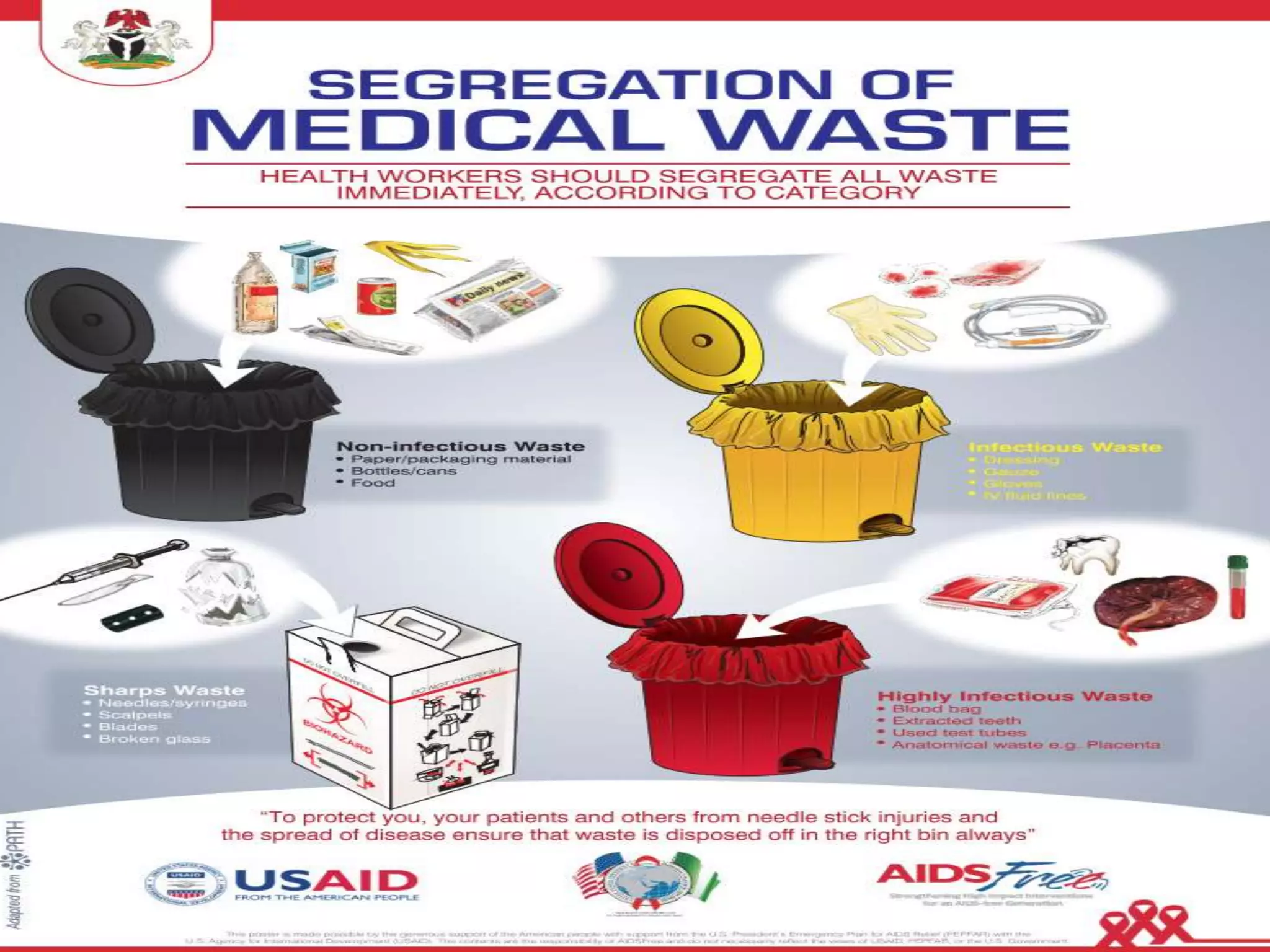
Color-code containers and waste bins
• Hospital waste disposal involves the proper
identification of the different types of medical
waste and each type of medical waste requires a
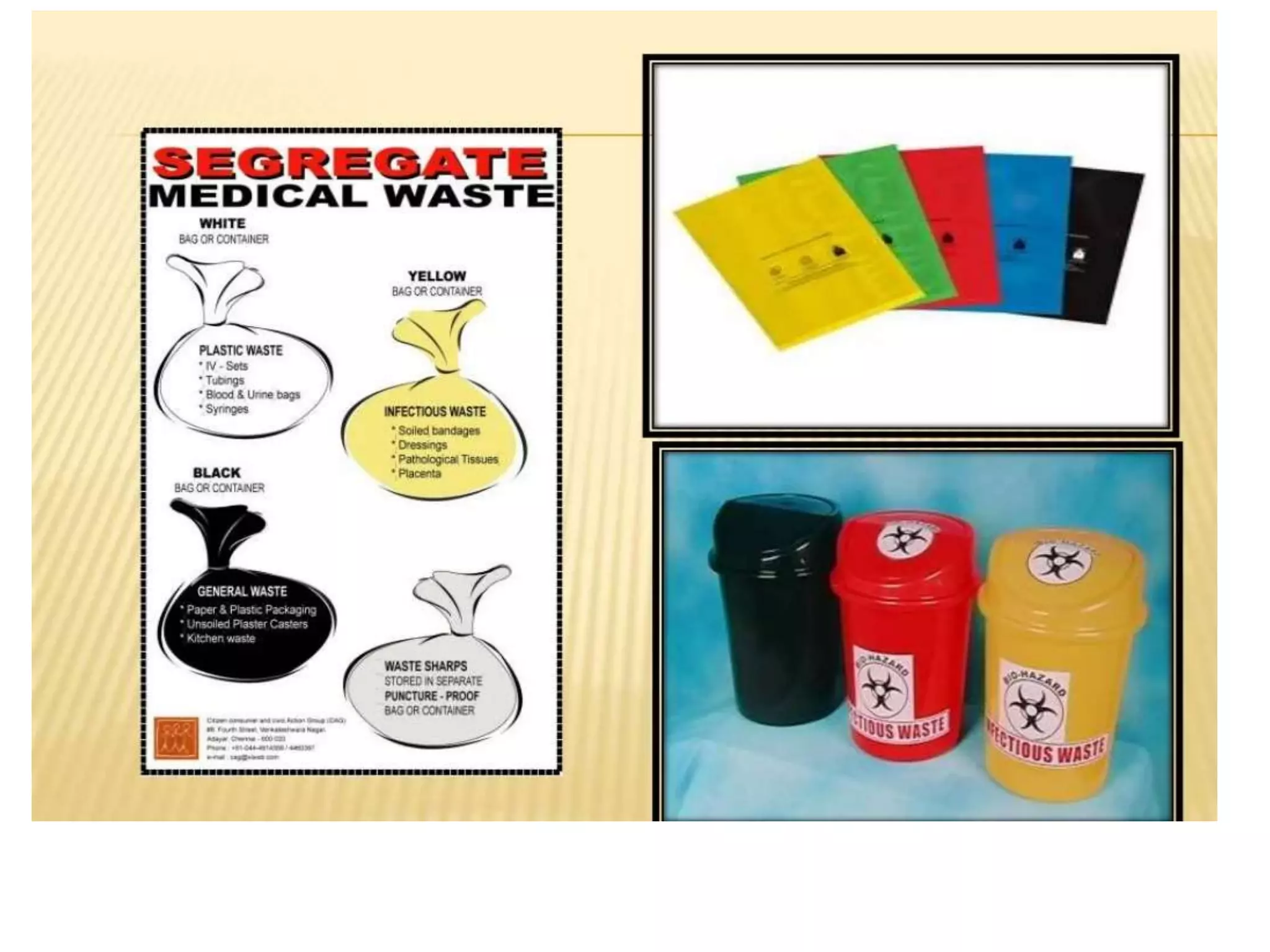
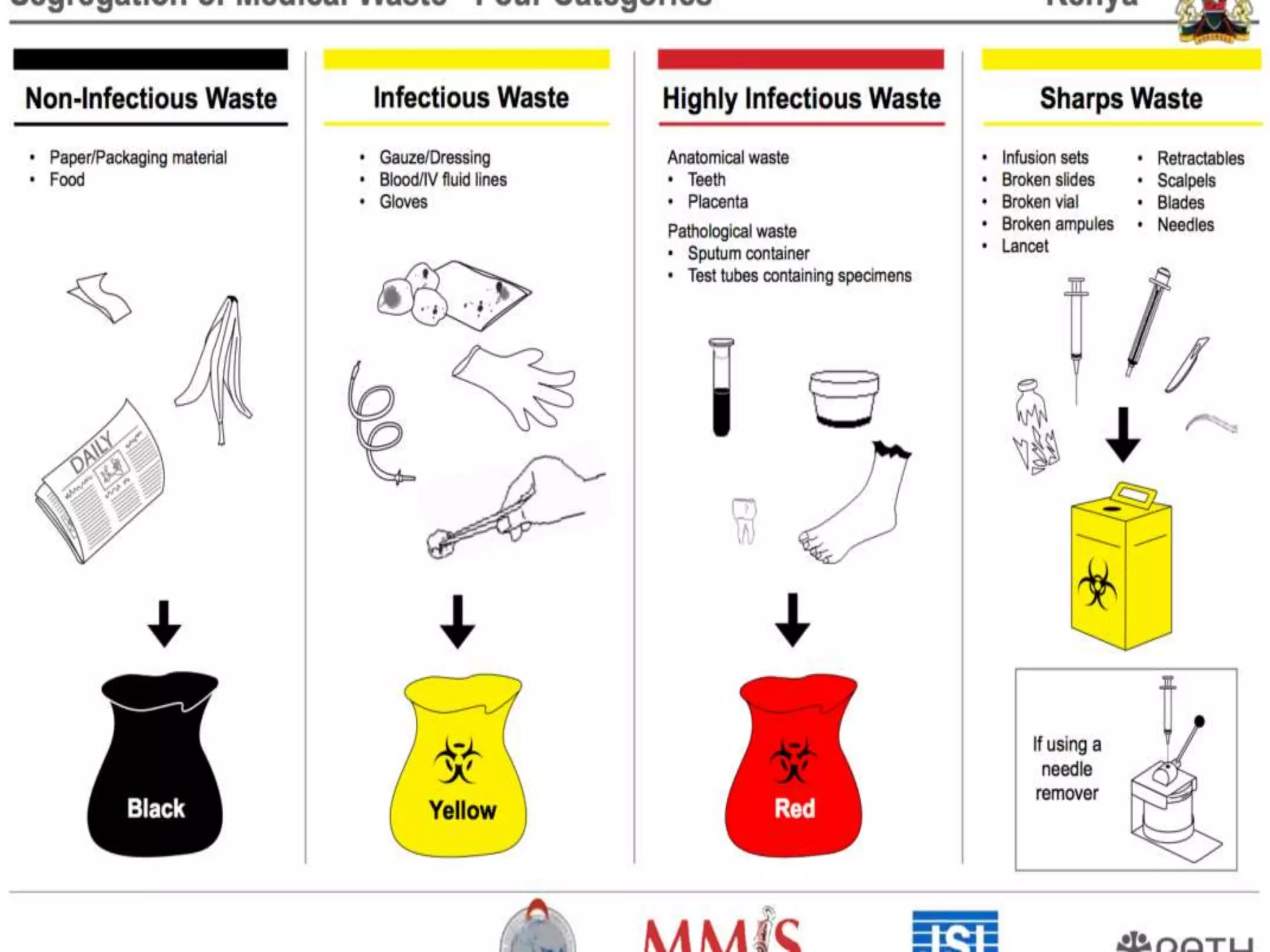
different disposal method. Segregating medical
wastes based on their type helps ensure that
each waste is discarded, transported, and
destroyed properly.
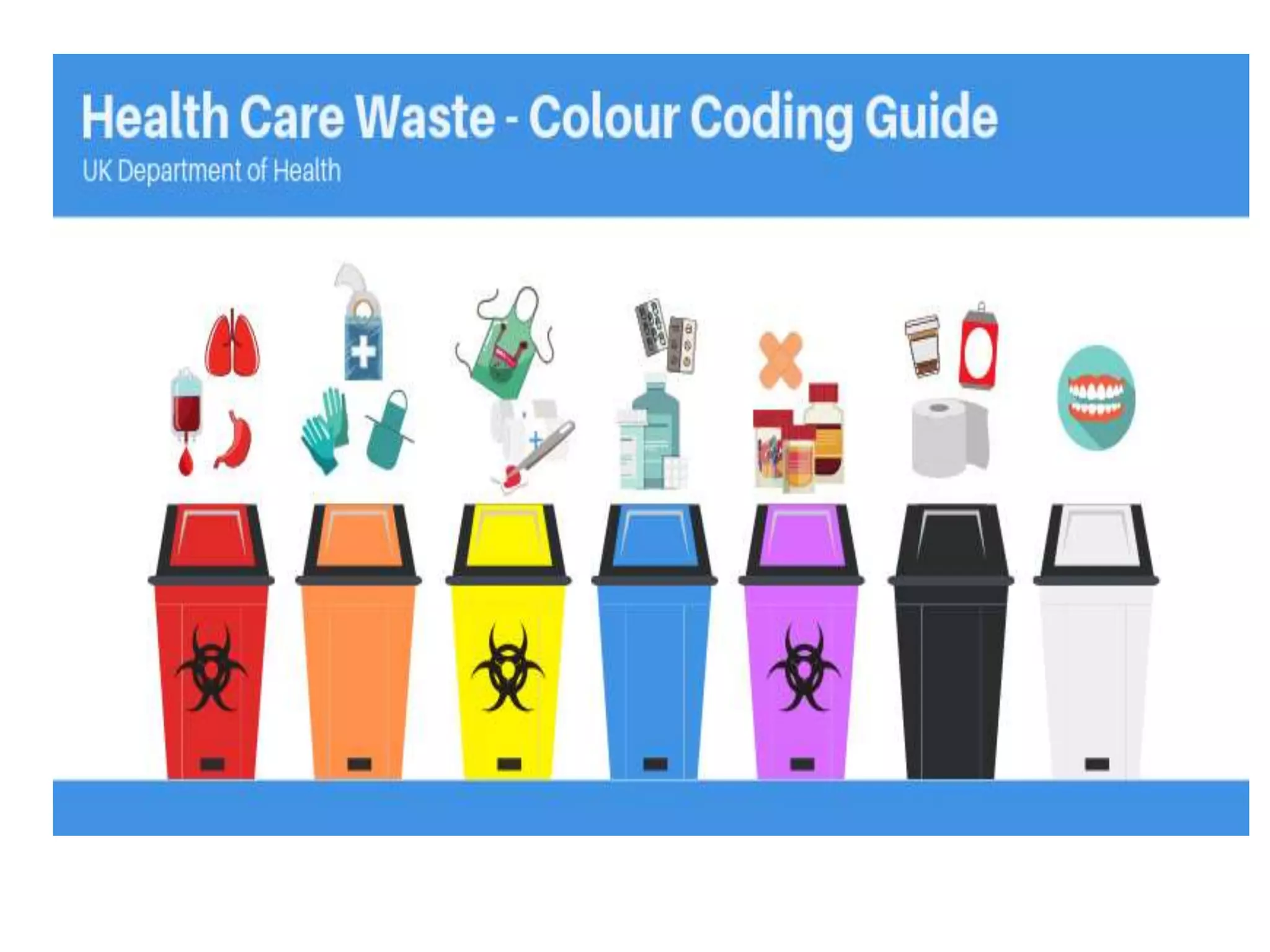
• Waste bin color coding in hospitals help
healthcare staff easily segregate waste and
identify which waste goes to which container to
help prevent issues arising from random or
improper disposal.
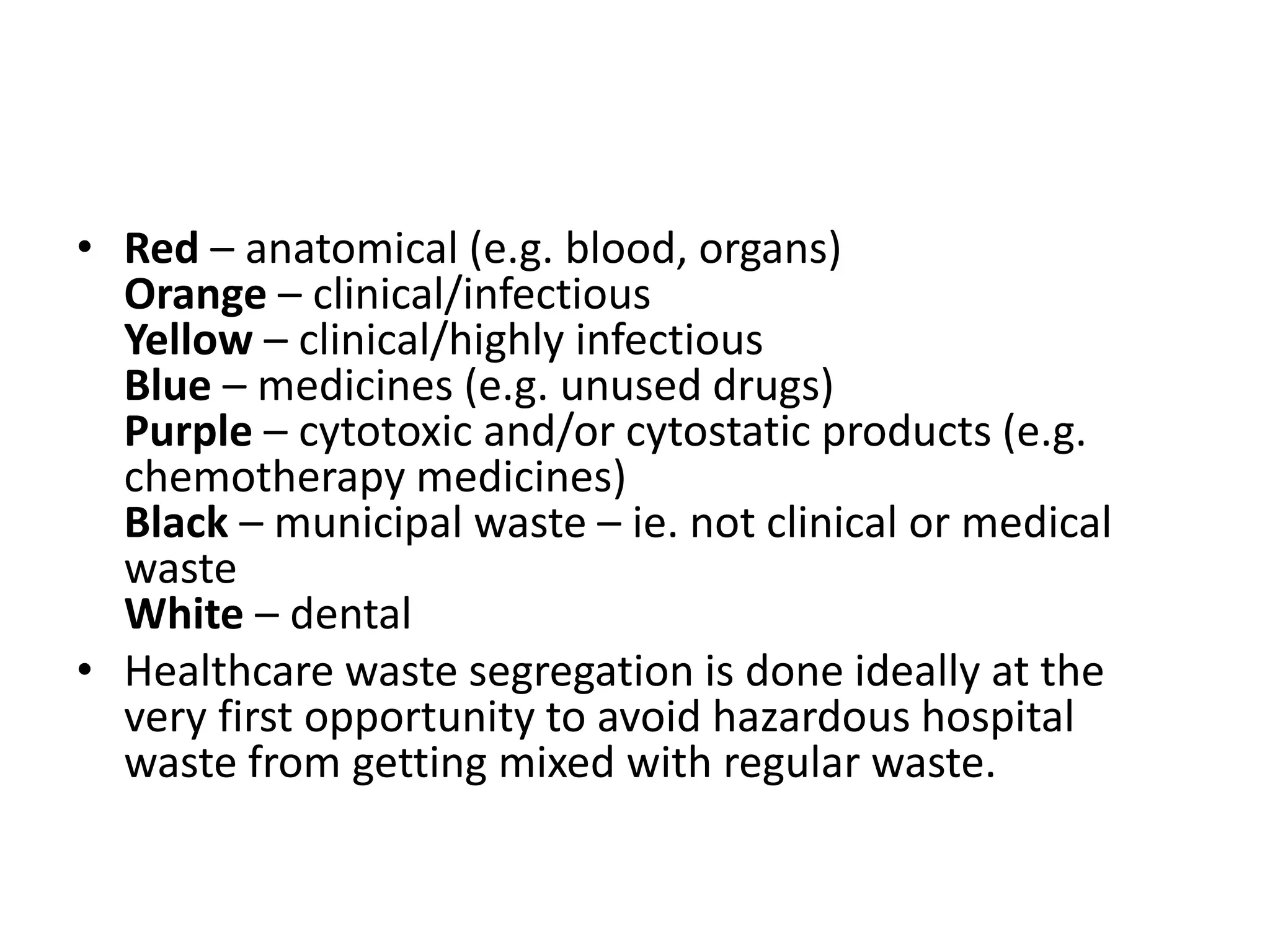
• Red – anatomical (e.g. blood, organs)
Orange – clinical/infectious
Yellow – clinical/highly infectious
Blue – medicines (e.g. unused drugs)
Purple – cytotoxic and/or cytostatic products (e.g.
chemotherapy medicines)
Black – municipal waste – ie. not clinical or medical
waste
White – dental
• Healthcare waste segregation is done ideally at the
very first opportunity to avoid hazardous hospital
waste from getting mixed with regular waste.
General waste management
cont
Infectious waste
Loopholes highlighted
• The hospital has no signage to assist in
segregation of waste at point of generation .
• Shortage of bin liners and sharp boxes
• Shortage of bin liners can lead to mishandling
of both domestic and infectious waste .
• No adequate fencing at the waste storage area
• Shortage of waste bins in critical araes
WAY-FORWARD
• Create waste bin signage to help in segregation at
points of generation
• Monitor health care providers and others working
in the hospital in collaboration with the Infection
control committee, to prevent spread of
infections from them to patients.
• raising awareness of the risks related to health-
care waste, and of safe practices;
• Have regular orientations on waste management
Any contributions ??
CONT

HOSPITAL WASTE MANAGEMENT.pptx

  • 1.
  • 2.
    What is HospitalWaste Management? • Hospital waste management, also called medical waste management, is a system that handles the segregation, containment, and disposal of hazardous, hospital- generated, infectious waste. Efficient waste management is critical for healthcare institutions because medical waste can be pathogenic and environmentally hazardous. • Non-compliance with proper hospital waste management can lead to serious health risks, fines, and damage to a healthcare institution’s reputation.
  • 4.
    Best Practices forHospital Waste Management • Medical waste such as infectious items, chemicals, expired pharmaceuticals, radioactive items, and sharps (used needles, lancets, etc) are hazardous and, if not properly disposed or treated, can be lethal and a threat to the environment. To achieve safe and sustainable management of medical waste, consider these practices:
  • 5.
    Color-code containers andwaste bins • Hospital waste disposal involves the proper identification of the different types of medical waste and each type of medical waste requires a different disposal method. Segregating medical wastes based on their type helps ensure that each waste is discarded, transported, and destroyed properly. • Waste bin color coding in hospitals help healthcare staff easily segregate waste and identify which waste goes to which container to help prevent issues arising from random or improper disposal.
  • 7.
    • Red –anatomical (e.g. blood, organs) Orange – clinical/infectious Yellow – clinical/highly infectious Blue – medicines (e.g. unused drugs) Purple – cytotoxic and/or cytostatic products (e.g. chemotherapy medicines) Black – municipal waste – ie. not clinical or medical waste White – dental • Healthcare waste segregation is done ideally at the very first opportunity to avoid hazardous hospital waste from getting mixed with regular waste.
  • 9.
  • 10.
  • 11.
  • 14.
    Loopholes highlighted • Thehospital has no signage to assist in segregation of waste at point of generation . • Shortage of bin liners and sharp boxes • Shortage of bin liners can lead to mishandling of both domestic and infectious waste . • No adequate fencing at the waste storage area • Shortage of waste bins in critical araes
  • 21.
    WAY-FORWARD • Create wastebin signage to help in segregation at points of generation • Monitor health care providers and others working in the hospital in collaboration with the Infection control committee, to prevent spread of infections from them to patients. • raising awareness of the risks related to health- care waste, and of safe practices; • Have regular orientations on waste management
  • 22.
  • 23.