WASTE MANAGEMENT
SUBMITTED TO:
 Madam Sirjana khatiwada
 Madam Sudha Bhandari
 Madam Nirupa Rimal
Nursing Instructor
PCL Nursing 3rd year
SUBMITTED BY:
 Ashu Shrestha-10
 Geeta Ghale-16
 Prabina Lama-20
 Sapana Bastola-32
 Susmita Gurung-39
 Anjali Bal-4
 Anushila Regmi-8
 Dipana Amatya-15
 Preeti Amgai-22
 Roshani Tamang-27
 Samina Malla-30
 Sumitra Shrestha-38
 Arpana Wagle-9
 Shristi Kunwar-33
Content:
 Definition of Waste management
 Definition of Hospital waste
 Purposes of waste management
 Types of biomedical waste
 Benefits from waste management
 Color coding of containers
 Approach of hospital waste management
 Medical waste treatment and disposal
 Roles and responsibilities
 Summarization
 References
DEFINITION
• The generation , prevention, characterization,
monitoring, treatment, handling, reuse and
residual disposition of solid waste.
HOSPITAL WASTE
• According to WHO, Medical waste is the waste
generated by health care activities that includes a broad
range of materials , from used needles and syringes to
soiled dressings, body parts , diagnostic samples , blood
, chemicals , pharmaceuticals , medical devices and
radioactive materials.
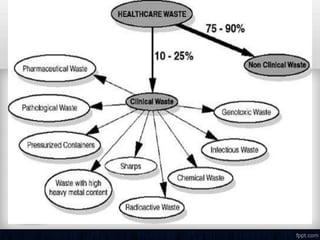
• 75 to 90% are non infectious
• 10 to 20% are infectious
• In 2000, WHO estimated contaminated injection with
contaminated syringe caused 21million Hep.B infection,2
million Hep. C infection and 260,000 HIV infection.
Purposes of waste
management
Purpose of waste management
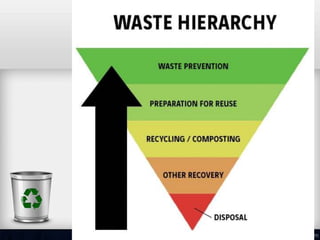
• To prevent of waste material being created.
• To prevent the injuries from sharps that may lead to infection to all
categories of hospital personnel and waste handler.
• To prevent the nosocomial infection.
• To prevent cross infection.
• To avoid the risk associated with hazards chemicals, drugs to
personnel handling waste at all level.
• To minimize the risk of air, water and soil pollution directly due to
waste or due to defective incineration emission and ash.
• To reduce waste.
• To encourage consumers to avoid using disposable product.
Types of hospital waste
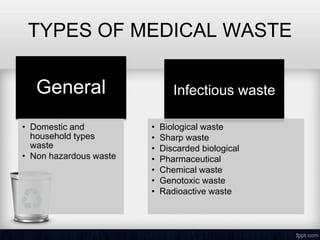
TYPES OF MEDICAL WASTE
General
• Domestic and
household types
waste
• Non hazardous waste
Infectious waste
• Biological waste
• Sharp waste
• Discarded biological
• Pharmaceutical
• Chemical waste
• Genotoxic waste
• Radioactive waste
Benefits from waste
management
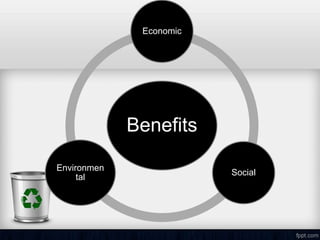
Benefits
Economic
Social
Environmen
tal
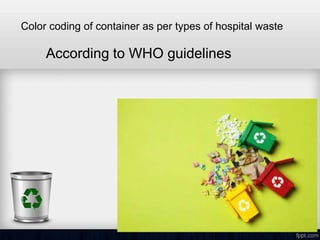
Color coding of container as per types of hospital waste
According to WHO guidelines
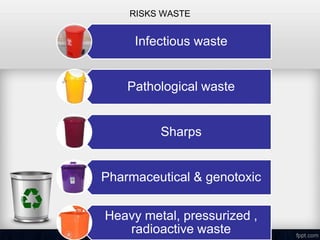
RISKS WASTE
Infectious waste
Pathological waste
Sharps
Pharmaceutical & genotoxic
Heavy metal, pressurized ,
radioactive waste
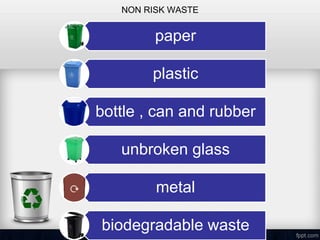
NON RISK WASTE
paper
plastic
bottle , can and rubber
unbroken glass
metal
biodegradable waste
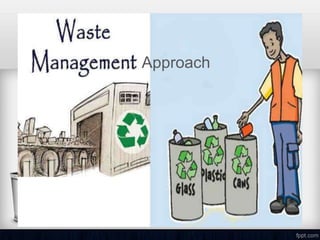
Approach
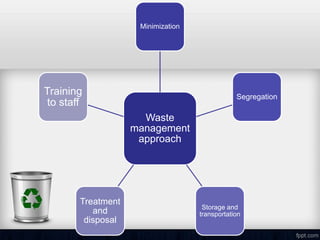
Waste
management
approach
Minimization
Segregation
Storage and
transportation
Treatment
and
disposal
Training
to staff
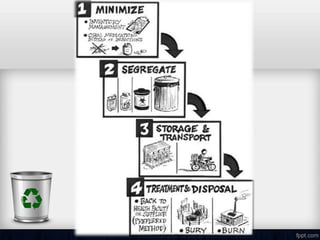
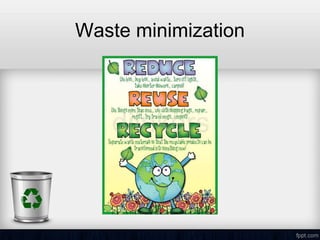
Waste minimization
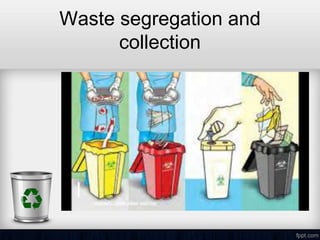
Waste segregation and
collection
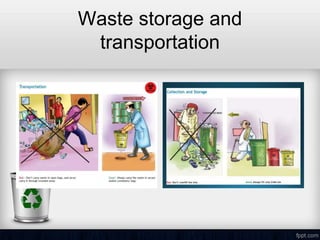
Waste storage and
transportation
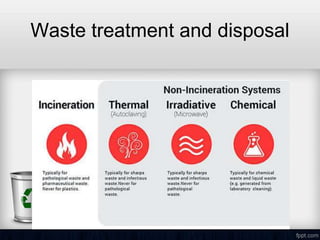
Waste treatment and disposal
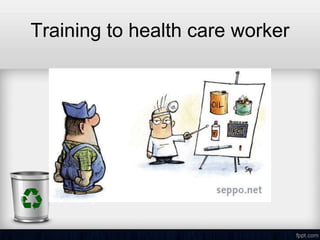
Training to health care worker
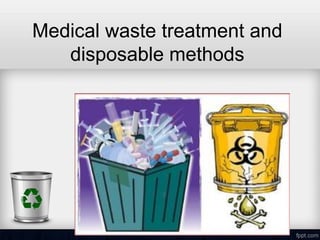
Medical waste treatment and
disposable methods
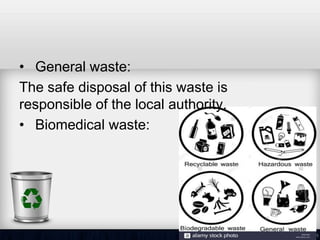
• General waste:
The safe disposal of this waste is
responsible of the local authority.
• Biomedical waste:
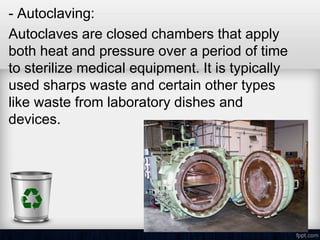
- Autoclaving:
Autoclaves are closed chambers that apply
both heat and pressure over a period of time
to sterilize medical equipment. It is typically
used sharps waste and certain other types
like waste from laboratory dishes and
devices.
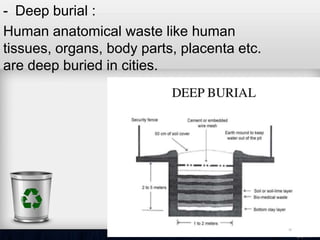
- Deep burial :
Human anatomical waste like human
tissues, organs, body parts, placenta etc.
are deep buried in cities.
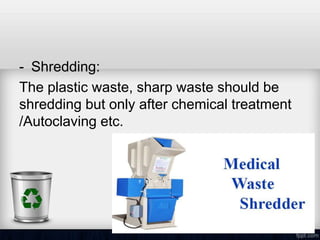
- Shredding:
The plastic waste, sharp waste should be
shredding but only after chemical treatment
/Autoclaving etc.
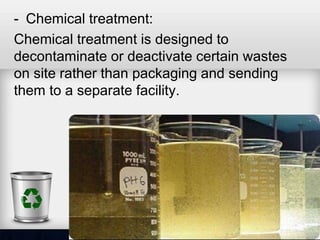
- Chemical treatment:
Chemical treatment is designed to
decontaminate or deactivate certain wastes
on site rather than packaging and sending
them to a separate facility.
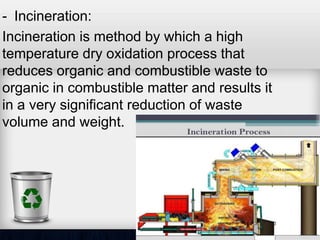
- Incineration:
Incineration is method by which a high
temperature dry oxidation process that
reduces organic and combustible waste to
organic in combustible matter and results it
in a very significant reduction of waste
volume and weight.
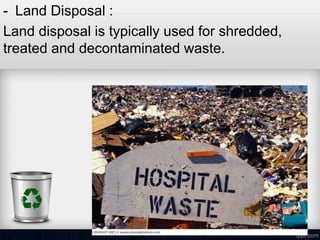
- Land Disposal :
Land disposal is typically used for shredded,
treated and decontaminated waste.
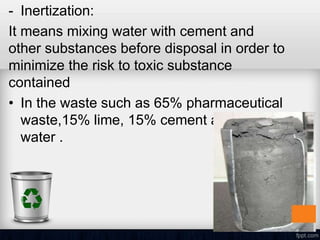
- Inertization:
It means mixing water with cement and
other substances before disposal in order to
minimize the risk to toxic substance
contained
• In the waste such as 65% pharmaceutical
waste,15% lime, 15% cement and 5%
water .
Roles and responsibilities
 Administration
 Staff nurse and other health
workers
Roles and responsibilities
Head of hospital:
o Formalizes a waste management team and work with
them to formulate a plan and policy, allocate financial
budget and manpower.
o Training conducted to all staff.
o Vaccinate worker against tetanus and hepatitis B.
o Provide PPE and instruction regarding their use.
o Supervision , monitoring & implementation of action plan.
o Annual reports, accident reports , as required submitted
to concern authority.
Roles and responsibilities
Nurse and other staff:
o Monitoring and supervising new staff.
o Collect waste when bin id 3/4th full and untreated
biomedical waste shall not be kept beyond 48 hours.
o Transport waste when visitor flow is minimum.
o Written instruction should be provided regarding color
coding and procedure to be adopted in event of spillage
and accident.
o Proper use of mask and PPE.
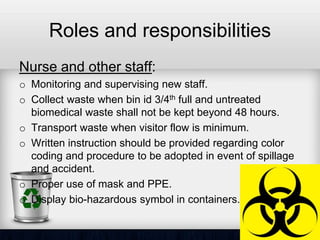
o Display bio-hazardous symbol in containers.
Summarization
References
 Pathak.S, Devkota.R(2018)”Fundamental of Nursing”2nd
Edition , Vidyarthi pustak bhandar, Bhotahity ,
Kathmandu
 Dahal.K, (2016)”Community Health Nursing”6th Edition,
Makalu Publication House , Dillibazar , Kathmandu
 www.who.int
 www.nhrc.gov.np
 www.safetyculture.com
Biomedical Waste management

Biomedical Waste management

  • 5.
    WASTE MANAGEMENT SUBMITTED TO: Madam Sirjana khatiwada  Madam Sudha Bhandari  Madam Nirupa Rimal Nursing Instructor PCL Nursing 3rd year SUBMITTED BY:  Ashu Shrestha-10  Geeta Ghale-16  Prabina Lama-20  Sapana Bastola-32  Susmita Gurung-39  Anjali Bal-4  Anushila Regmi-8  Dipana Amatya-15  Preeti Amgai-22  Roshani Tamang-27  Samina Malla-30  Sumitra Shrestha-38  Arpana Wagle-9  Shristi Kunwar-33
  • 6.
    Content:  Definition ofWaste management  Definition of Hospital waste  Purposes of waste management  Types of biomedical waste  Benefits from waste management  Color coding of containers  Approach of hospital waste management  Medical waste treatment and disposal  Roles and responsibilities  Summarization  References
  • 7.
    DEFINITION • The generation, prevention, characterization, monitoring, treatment, handling, reuse and residual disposition of solid waste.
  • 8.
    HOSPITAL WASTE • Accordingto WHO, Medical waste is the waste generated by health care activities that includes a broad range of materials , from used needles and syringes to soiled dressings, body parts , diagnostic samples , blood , chemicals , pharmaceuticals , medical devices and radioactive materials. • 75 to 90% are non infectious • 10 to 20% are infectious • In 2000, WHO estimated contaminated injection with contaminated syringe caused 21million Hep.B infection,2 million Hep. C infection and 260,000 HIV infection.
  • 9.
  • 10.
    Purpose of wastemanagement • To prevent of waste material being created. • To prevent the injuries from sharps that may lead to infection to all categories of hospital personnel and waste handler. • To prevent the nosocomial infection. • To prevent cross infection. • To avoid the risk associated with hazards chemicals, drugs to personnel handling waste at all level. • To minimize the risk of air, water and soil pollution directly due to waste or due to defective incineration emission and ash. • To reduce waste. • To encourage consumers to avoid using disposable product.
  • 11.
  • 12.
    TYPES OF MEDICALWASTE General • Domestic and household types waste • Non hazardous waste Infectious waste • Biological waste • Sharp waste • Discarded biological • Pharmaceutical • Chemical waste • Genotoxic waste • Radioactive waste
  • 14.
  • 15.
  • 16.
    Color coding ofcontainer as per types of hospital waste According to WHO guidelines
  • 17.
    RISKS WASTE Infectious waste Pathologicalwaste Sharps Pharmaceutical & genotoxic Heavy metal, pressurized , radioactive waste
  • 18.
    NON RISK WASTE paper plastic bottle, can and rubber unbroken glass metal biodegradable waste
  • 19.
  • 20.
  • 22.
  • 23.
  • 24.
  • 25.
  • 26.
    Training to healthcare worker
  • 28.
    Medical waste treatmentand disposable methods
  • 29.
    • General waste: Thesafe disposal of this waste is responsible of the local authority. • Biomedical waste:
  • 30.
    - Autoclaving: Autoclaves areclosed chambers that apply both heat and pressure over a period of time to sterilize medical equipment. It is typically used sharps waste and certain other types like waste from laboratory dishes and devices.
  • 31.
    - Deep burial: Human anatomical waste like human tissues, organs, body parts, placenta etc. are deep buried in cities.
  • 32.
    - Shredding: The plasticwaste, sharp waste should be shredding but only after chemical treatment /Autoclaving etc.
  • 33.
    - Chemical treatment: Chemicaltreatment is designed to decontaminate or deactivate certain wastes on site rather than packaging and sending them to a separate facility.
  • 34.
    - Incineration: Incineration ismethod by which a high temperature dry oxidation process that reduces organic and combustible waste to organic in combustible matter and results it in a very significant reduction of waste volume and weight.
  • 35.
    - Land Disposal: Land disposal is typically used for shredded, treated and decontaminated waste.
  • 36.
    - Inertization: It meansmixing water with cement and other substances before disposal in order to minimize the risk to toxic substance contained • In the waste such as 65% pharmaceutical waste,15% lime, 15% cement and 5% water .
  • 37.
    Roles and responsibilities Administration  Staff nurse and other health workers
  • 38.
    Roles and responsibilities Headof hospital: o Formalizes a waste management team and work with them to formulate a plan and policy, allocate financial budget and manpower. o Training conducted to all staff. o Vaccinate worker against tetanus and hepatitis B. o Provide PPE and instruction regarding their use. o Supervision , monitoring & implementation of action plan. o Annual reports, accident reports , as required submitted to concern authority.
  • 39.
    Roles and responsibilities Nurseand other staff: o Monitoring and supervising new staff. o Collect waste when bin id 3/4th full and untreated biomedical waste shall not be kept beyond 48 hours. o Transport waste when visitor flow is minimum. o Written instruction should be provided regarding color coding and procedure to be adopted in event of spillage and accident. o Proper use of mask and PPE. o Display bio-hazardous symbol in containers.
  • 40.
  • 41.
    References  Pathak.S, Devkota.R(2018)”Fundamentalof Nursing”2nd Edition , Vidyarthi pustak bhandar, Bhotahity , Kathmandu  Dahal.K, (2016)”Community Health Nursing”6th Edition, Makalu Publication House , Dillibazar , Kathmandu  www.who.int  www.nhrc.gov.np  www.safetyculture.com