HOSPITAL
PORTER
WHO IS A HOSPITAL PORTER
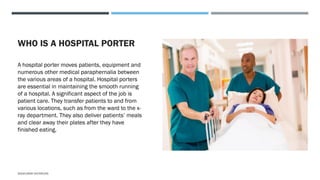
A hospital porter moves patients, equipment and
numerous other medical paraphernalia between
the various areas of a hospital. Hospital porters
are essential in maintaining the smooth running
of a hospital. A significant aspect of the job is
patient care. They transfer patients to and from
various locations, such as from the ward to the x-
ray department. They also deliver patients’ meals
and clear away their plates after they have
finished eating.
SASIKUMAR NATARAJAN
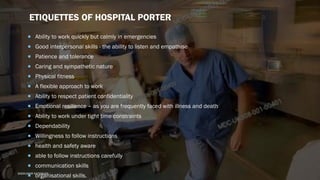
ETIQUETTES OF HOSPITAL PORTER
 Ability to work quickly but calmly in emergencies
 Good interpersonal skills - the ability to listen and empathise
 Patience and tolerance
 Caring and sympathetic nature
 Physical fitness
 A flexible approach to work
 Ability to respect patient confidentiality
 Emotional resilience – as you are frequently faced with illness and death
 Ability to work under tight time constraints
 Dependability
 Willingness to follow instructions
 health and safety aware
 able to follow instructions carefully
 communication skills
 organisational skills.SASIKUMAR NATARAJAN
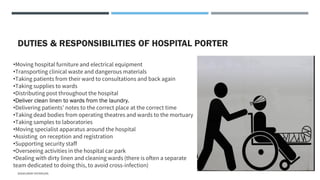
DUTIES & RESPONSIBILITIES OF HOSPITAL PORTER
•Moving hospital furniture and electrical equipment
•Transporting clinical waste and dangerous materials
•Taking patients from their ward to consultations and back again
•Taking supplies to wards
•Distributing post throughout the hospital
•Deliver clean linen to wards from the laundry.
•Delivering patients’ notes to the correct place at the correct time
•Taking dead bodies from operating theatres and wards to the mortuary
•Taking samples to laboratories
•Moving specialist apparatus around the hospital
•Assisting on reception and registration
•Supporting security staff
•Overseeing activities in the hospital car park
•Dealing with dirty linen and cleaning wards (there is often a separate
team dedicated to doing this, to avoid cross-infection)
SASIKUMAR NATARAJAN
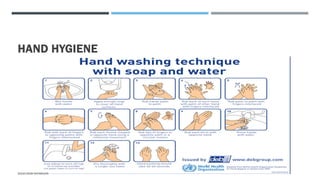
HAND HYGIENE
SASIKUMAR NATARAJAN
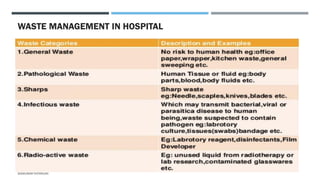
WASTE MANAGEMENT IN HOSPITAL
SASIKUMAR NATARAJAN
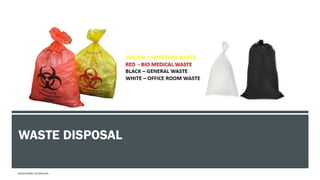
WASTE DISPOSAL
SASIKUMAR NATARAJAN
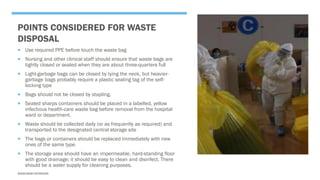
POINTS CONSIDERED FOR WASTE
DISPOSAL
 Use required PPE before touch the waste bag
 Nursing and other clinical staff should ensure that waste bags are
tightly closed or sealed when they are about three-quarters full
 Light-garbage bags can be closed by tying the neck, but heavier-
garbage bags probably require a plastic sealing tag of the self-
locking type
 Bags should not be closed by stapling.
 Sealed sharps containers should be placed in a labelled, yellow
infectious health-care waste bag before removal from the hospital
ward or department.
 Waste should be collected daily (or as frequently as required) and
transported to the designated central storage site
 The bags or containers should be replaced immediately with new
ones of the same type.
 The storage area should have an impermeable, hard-standing floor
with good drainage; it should be easy to clean and disinfect. There
should be a water supply for cleaning purposes.
SASIKUMAR NATARAJAN
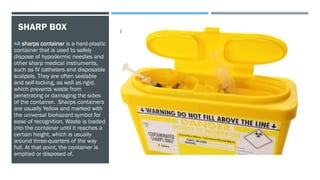
SHARP BOX
A sharps container is a hard-plastic
container that is used to safely
dispose of hypodermic needles and
other sharp medical instruments,
such as IV catheters and disposable
scalpels. They are often sealable
and self-locking, as well as rigid,
which prevents waste from
penetrating or damaging the sides
of the container. Sharps containers
are usually Yellow and marked with
the universal biohazard symbol for
ease of recognition. Waste is loaded
into the container until it reaches a
certain height, which is usually
around three-quarters of the way
full. At that point, the container is
emptied or disposed of.
SASIKUMAR NATARAJAN
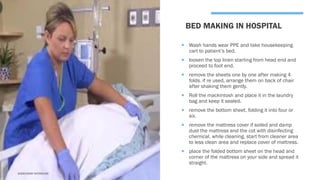
BED MAKING IN HOSPITAL
 Wash hands wear PPE and take housekeeping
cart to patient’s bed.
 loosen the top linen starting from head end and
proceed to foot end.
 remove the sheets one by one after making 4
folds. if re used, arrange them on back of chair
after shaking them gently.
 Roll the mackintosh and place it in the laundry
bag and keep it sealed.
 remove the bottom sheet, folding it into four or
six.
 remove the mattress cover if soiled and damp
dust the mattress and the cot with disinfecting
chemical. while cleaning, start from cleaner area
to less clean area and replace cover of mattress.
 place the folded bottom sheet on the head and
corner of the mattress on your side and spread it
straight.
SASIKUMAR NATARAJAN
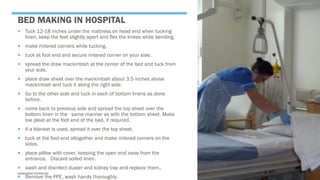
BED MAKING IN HOSPITAL
 Tuck 12-18 inches under the mattress on head end when tucking
linen, keep the feet slightly apart and flex the knees while bending.
 make mitered corners while tucking.
 tuck at foot end and secure mitered corner on your side.
 spread the draw mackintosh at the center of the bed and tuck from
your side.
 place draw sheet over the mackintosh about 3.5 inches above
mackintosh and tuck it along the right side.
 Go to the other side and tuck in each of bottom linens as done
before.
 come back to previous side and spread the top sheet over the
bottom linen in the same manner as with the bottom sheet. Make
toe pleat at the foot end of the bed, if required.
 if a blanket is used, spread it over the top sheet.
 tuck at the foot end altogether and make mitered corners on the
sides.
 place pillow with cover, keeping the open end away from the
entrance. Discard soiled linen.
 wash and disinfect duster and kidney tray and replace them..
 Remove the PPE, wash hands thoroughly.
SASIKUMAR NATARAJAN
MOBILE WARD EQUIPMENT HANDLING
• Child stroller
• Wheelchairs
• Patient Stretcher Trolley
• Portable IV poles
• Linen trolleys
• Manual handling equipment
(lifters)
• Equipment trolleys/stands
• Mobile walking aids
(walkers/fore arm support
frames)
SASIKUMAR NATARAJAN
MOBILE WARD EQUIPMENT CLEANING PROCEDURE
• Wear personal protective equipment appropriate for the procedure
• Half fill the bucket with water and disinfecting chemical at the recommended dilution rate
• Conduct an inspection of equipment prior to cleaning and report any damage or safety
hazards to the nurse/midwife in charge or supervisor, and/or tag out of order as per your
area procedure
• You may need to strip or remove equipment or stock from a trolley prior to cleaning – if
required place equipment or stock onto a clean surface, check use by date, and/or rotate
stock before it is replaced
• Rinse the cloth in disinfecting solution and squeeze dry
• Using basic cleaning principles work from high point to low point and least soiled to most
soiled, wipe over all surfaces paying particular attention to corners, crevices, grooves and
seams etc.
• Rinse the cloth after each item has been cleaned, or when visibly soiled
• Change the cleaning solution when it becomes visibly soiled
• It is important to clean the wheels and keep them free of dust
• When the procedure is completed clean equipment before storing - discard disposable
gloves and cloths, and send reusable cloths for laundering as per the local procedure
• Remove personal protective equipment, and perform hand hygiene
SASIKUMAR NATARAJAN
THANK YOU
SASIKUMAR NATARAJAN
EDUCATIONALIST & HOSPITALITY
TRAINER
SASIKUMAR NATARAJAN

Hospital porter service

  • 1.
  • 2.
    WHO IS AHOSPITAL PORTER A hospital porter moves patients, equipment and numerous other medical paraphernalia between the various areas of a hospital. Hospital porters are essential in maintaining the smooth running of a hospital. A significant aspect of the job is patient care. They transfer patients to and from various locations, such as from the ward to the x- ray department. They also deliver patients’ meals and clear away their plates after they have finished eating. SASIKUMAR NATARAJAN
  • 3.
    ETIQUETTES OF HOSPITALPORTER  Ability to work quickly but calmly in emergencies  Good interpersonal skills - the ability to listen and empathise  Patience and tolerance  Caring and sympathetic nature  Physical fitness  A flexible approach to work  Ability to respect patient confidentiality  Emotional resilience – as you are frequently faced with illness and death  Ability to work under tight time constraints  Dependability  Willingness to follow instructions  health and safety aware  able to follow instructions carefully  communication skills  organisational skills.SASIKUMAR NATARAJAN
  • 4.
    DUTIES & RESPONSIBILITIESOF HOSPITAL PORTER •Moving hospital furniture and electrical equipment •Transporting clinical waste and dangerous materials •Taking patients from their ward to consultations and back again •Taking supplies to wards •Distributing post throughout the hospital •Deliver clean linen to wards from the laundry. •Delivering patients’ notes to the correct place at the correct time •Taking dead bodies from operating theatres and wards to the mortuary •Taking samples to laboratories •Moving specialist apparatus around the hospital •Assisting on reception and registration •Supporting security staff •Overseeing activities in the hospital car park •Dealing with dirty linen and cleaning wards (there is often a separate team dedicated to doing this, to avoid cross-infection) SASIKUMAR NATARAJAN
  • 5.
  • 6.
    WASTE MANAGEMENT INHOSPITAL SASIKUMAR NATARAJAN
  • 7.
  • 8.
    POINTS CONSIDERED FORWASTE DISPOSAL  Use required PPE before touch the waste bag  Nursing and other clinical staff should ensure that waste bags are tightly closed or sealed when they are about three-quarters full  Light-garbage bags can be closed by tying the neck, but heavier- garbage bags probably require a plastic sealing tag of the self- locking type  Bags should not be closed by stapling.  Sealed sharps containers should be placed in a labelled, yellow infectious health-care waste bag before removal from the hospital ward or department.  Waste should be collected daily (or as frequently as required) and transported to the designated central storage site  The bags or containers should be replaced immediately with new ones of the same type.  The storage area should have an impermeable, hard-standing floor with good drainage; it should be easy to clean and disinfect. There should be a water supply for cleaning purposes. SASIKUMAR NATARAJAN
  • 9.
    SHARP BOX A sharpscontainer is a hard-plastic container that is used to safely dispose of hypodermic needles and other sharp medical instruments, such as IV catheters and disposable scalpels. They are often sealable and self-locking, as well as rigid, which prevents waste from penetrating or damaging the sides of the container. Sharps containers are usually Yellow and marked with the universal biohazard symbol for ease of recognition. Waste is loaded into the container until it reaches a certain height, which is usually around three-quarters of the way full. At that point, the container is emptied or disposed of. SASIKUMAR NATARAJAN
  • 10.
    BED MAKING INHOSPITAL  Wash hands wear PPE and take housekeeping cart to patient’s bed.  loosen the top linen starting from head end and proceed to foot end.  remove the sheets one by one after making 4 folds. if re used, arrange them on back of chair after shaking them gently.  Roll the mackintosh and place it in the laundry bag and keep it sealed.  remove the bottom sheet, folding it into four or six.  remove the mattress cover if soiled and damp dust the mattress and the cot with disinfecting chemical. while cleaning, start from cleaner area to less clean area and replace cover of mattress.  place the folded bottom sheet on the head and corner of the mattress on your side and spread it straight. SASIKUMAR NATARAJAN
  • 11.
    BED MAKING INHOSPITAL  Tuck 12-18 inches under the mattress on head end when tucking linen, keep the feet slightly apart and flex the knees while bending.  make mitered corners while tucking.  tuck at foot end and secure mitered corner on your side.  spread the draw mackintosh at the center of the bed and tuck from your side.  place draw sheet over the mackintosh about 3.5 inches above mackintosh and tuck it along the right side.  Go to the other side and tuck in each of bottom linens as done before.  come back to previous side and spread the top sheet over the bottom linen in the same manner as with the bottom sheet. Make toe pleat at the foot end of the bed, if required.  if a blanket is used, spread it over the top sheet.  tuck at the foot end altogether and make mitered corners on the sides.  place pillow with cover, keeping the open end away from the entrance. Discard soiled linen.  wash and disinfect duster and kidney tray and replace them..  Remove the PPE, wash hands thoroughly. SASIKUMAR NATARAJAN
  • 12.
    MOBILE WARD EQUIPMENTHANDLING • Child stroller • Wheelchairs • Patient Stretcher Trolley • Portable IV poles • Linen trolleys • Manual handling equipment (lifters) • Equipment trolleys/stands • Mobile walking aids (walkers/fore arm support frames) SASIKUMAR NATARAJAN
  • 13.
    MOBILE WARD EQUIPMENTCLEANING PROCEDURE • Wear personal protective equipment appropriate for the procedure • Half fill the bucket with water and disinfecting chemical at the recommended dilution rate • Conduct an inspection of equipment prior to cleaning and report any damage or safety hazards to the nurse/midwife in charge or supervisor, and/or tag out of order as per your area procedure • You may need to strip or remove equipment or stock from a trolley prior to cleaning – if required place equipment or stock onto a clean surface, check use by date, and/or rotate stock before it is replaced • Rinse the cloth in disinfecting solution and squeeze dry • Using basic cleaning principles work from high point to low point and least soiled to most soiled, wipe over all surfaces paying particular attention to corners, crevices, grooves and seams etc. • Rinse the cloth after each item has been cleaned, or when visibly soiled • Change the cleaning solution when it becomes visibly soiled • It is important to clean the wheels and keep them free of dust • When the procedure is completed clean equipment before storing - discard disposable gloves and cloths, and send reusable cloths for laundering as per the local procedure • Remove personal protective equipment, and perform hand hygiene SASIKUMAR NATARAJAN
  • 14.
    THANK YOU SASIKUMAR NATARAJAN EDUCATIONALIST& HOSPITALITY TRAINER SASIKUMAR NATARAJAN