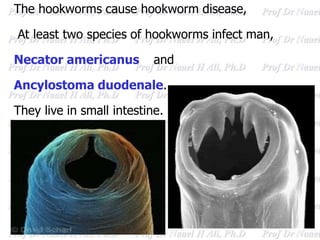
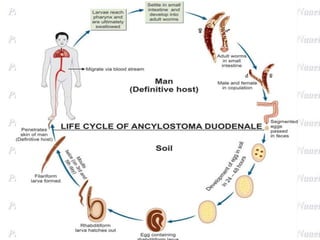
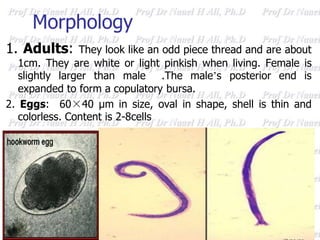
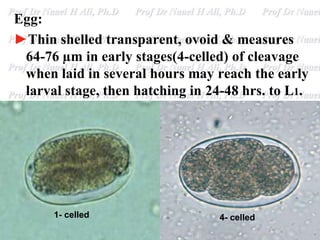
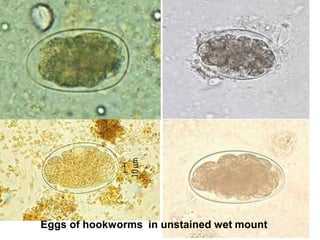
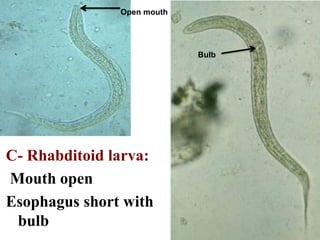
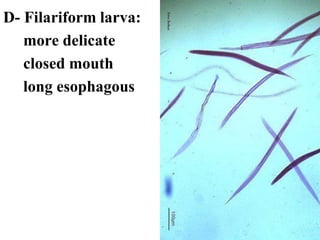
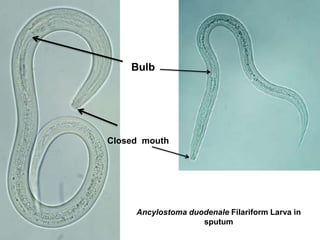
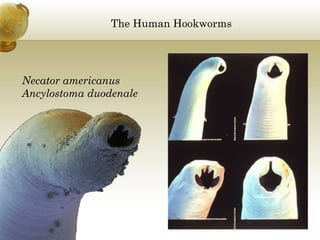
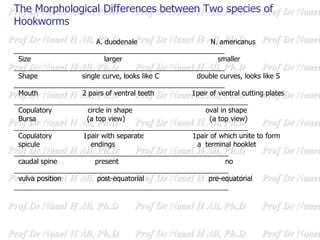
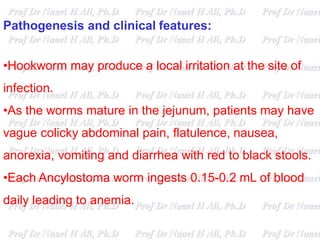
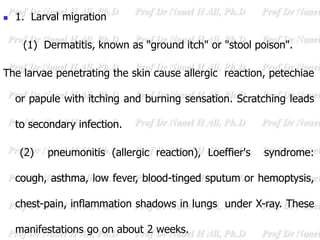
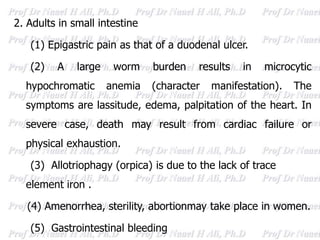
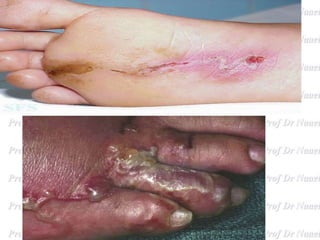
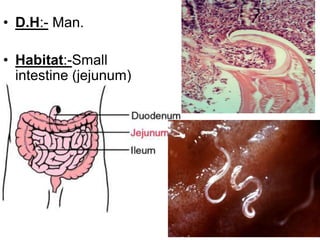
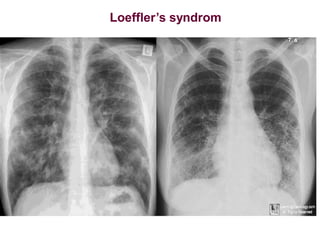
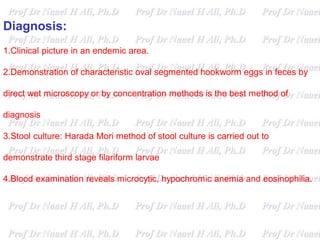
Hookworms such as Ancylostoma duodenale and Necator americanus infect humans and cause hookworm disease. They live in the small intestine where the female lays eggs that are passed in feces. When the eggs hatch in soil, they release larvae that can penetrate human skin, enter the bloodstream and mature into adult worms in the intestine. Symptoms include abdominal pain, diarrhea, and iron-deficiency anemia. Diagnosis is by finding eggs in stool samples under microscopy. Treatment involves anthelmintic drugs while prevention focuses on proper sanitation and hygiene.



![[Micro] hymenolepis nana](https://cdn.slidesharecdn.com/ss_thumbnails/3rxjz7ekrwinb1sq3uxs-signature-2127a2ca5368c7fdfd023e8d90dde3fc0b9fe7d91346a4189562c9f63dc0d19d-poli-150819190755-lva1-app6892-thumbnail.jpg?width=640&height=640&fit=bounds)


