OBJECT DETECTION
HOG AND SIFT ALGORITHM
HOG ALGORITHM
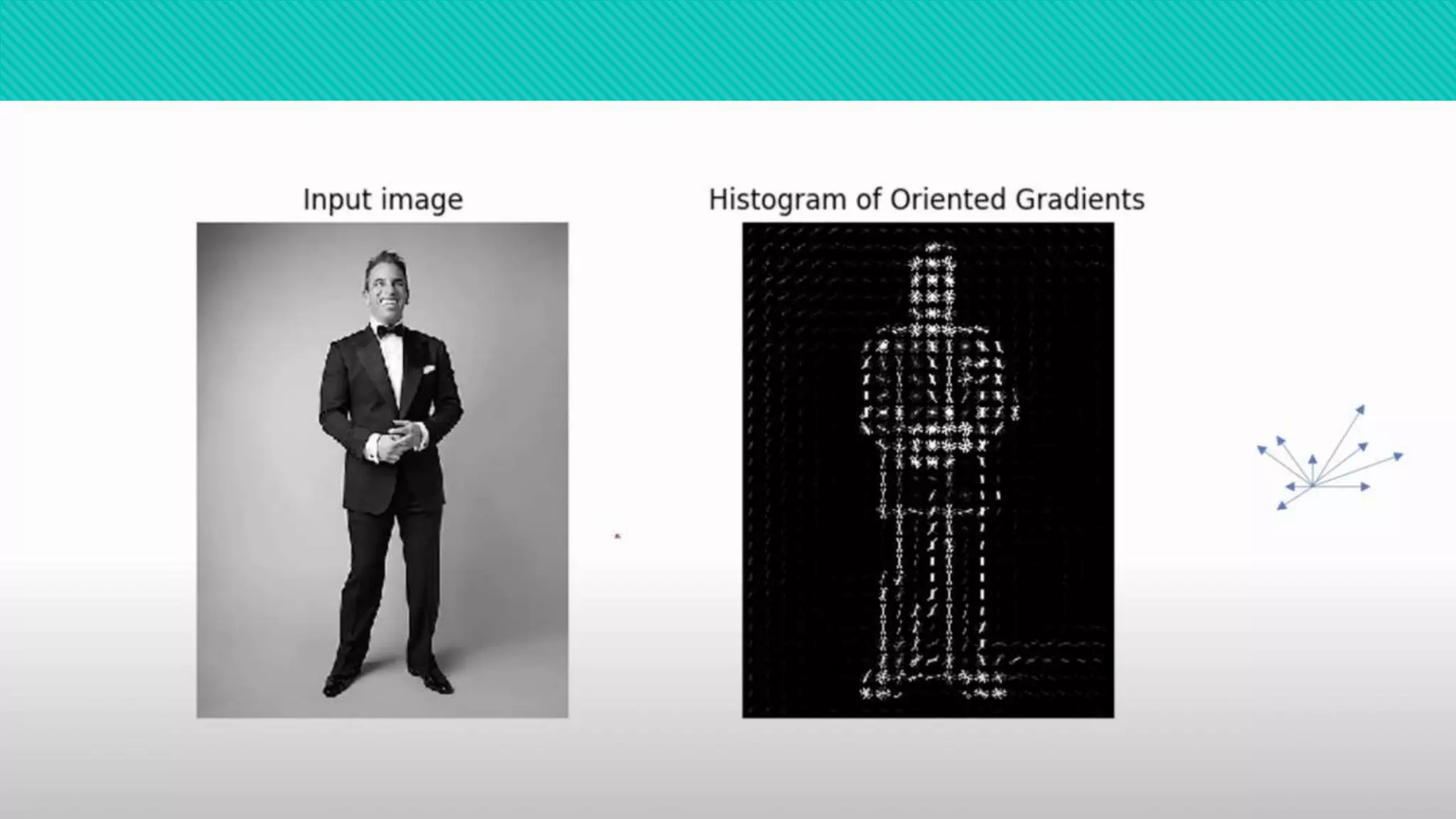
 HOG stands for histogram of oriented gradients.
 The hog descriptor focuses on structure or shape of the object.
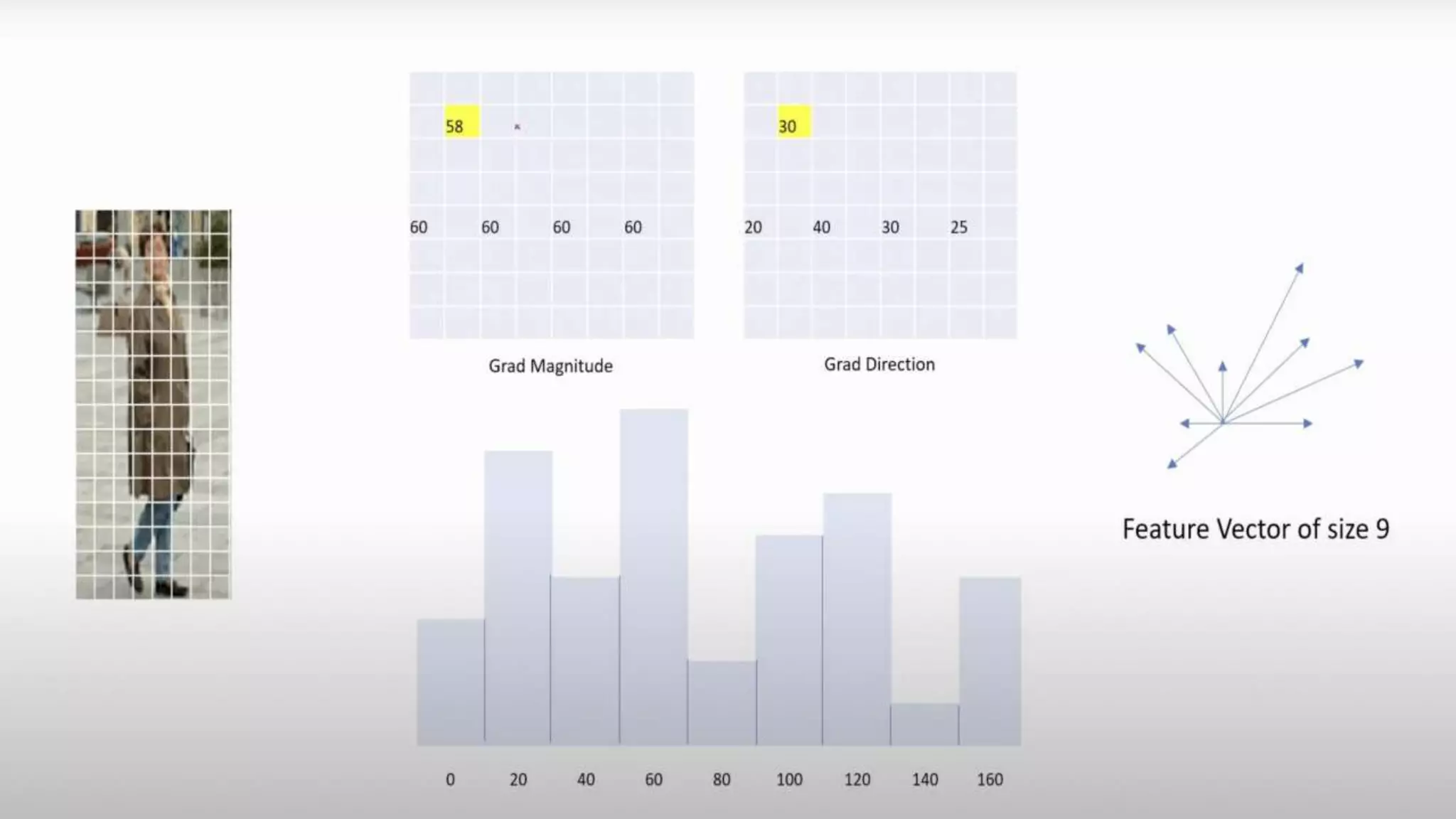
 It uses magnitude as well as direction of the gradient to compute the features.
 It generates histogram by using magnitude and direction of the gradient.
 Here we calculating gradient magnitude and direction, to calculate pixels intensity we need
 X direction=|40-70|=30
 Y direction=|20-70|=50
 By these values we are calculating magnitude and direction of the gradient
 By using magnitude and direction we calculate feature vectors
20
40 70
70
e
 Before getting the hog feature and after concatenating feature vectors we are supposed to do
normalize.
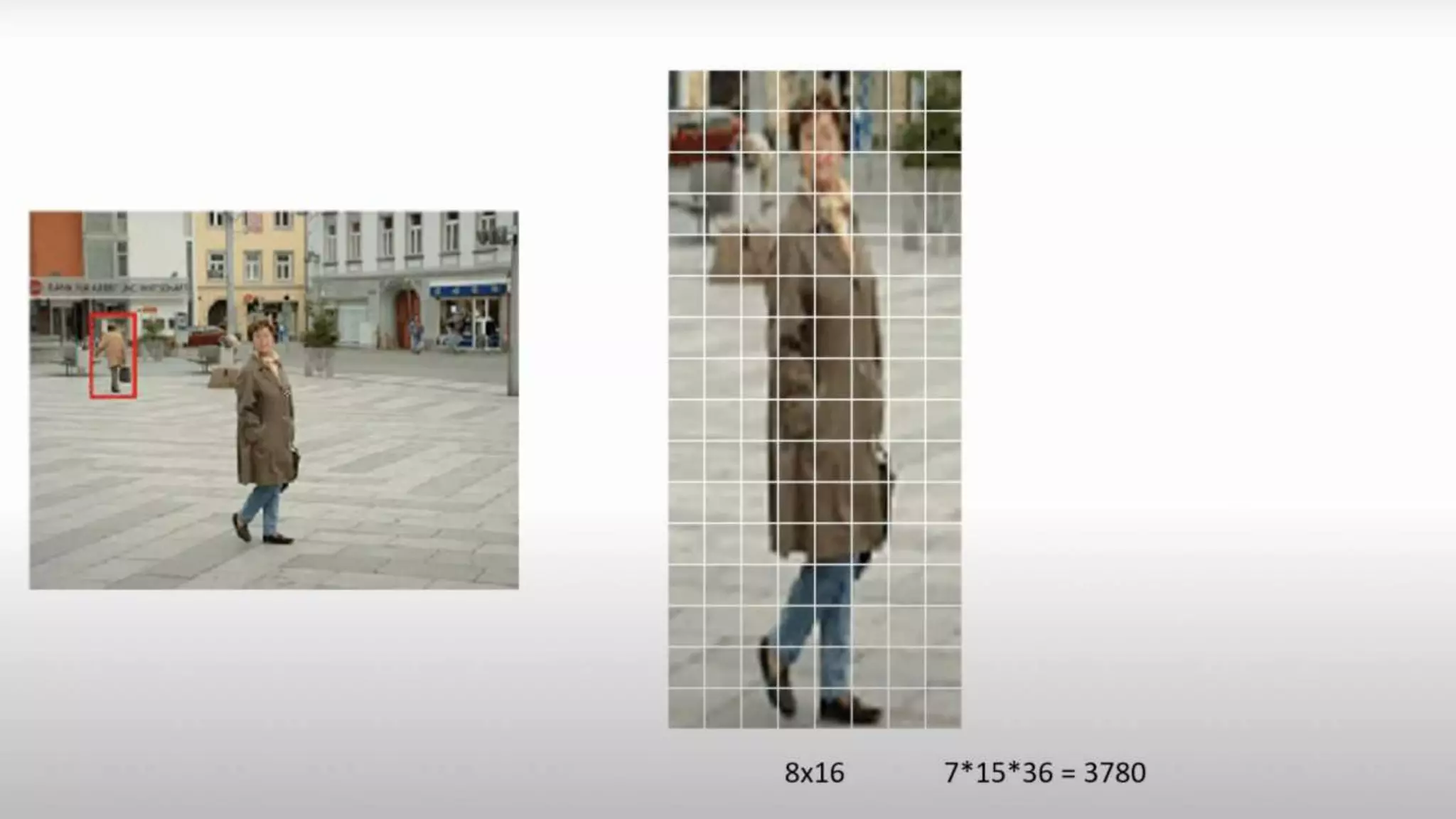
 Suppose we have taken 150*300 pixels and multiply with 2 to increase the brightness and divided
by 2 to decrease the brightness, then you cant compare two images without normalization bec’z
the pixels intensity will be changed.
 But if you normalize the feature vectors it is easy to compare
• For hog features giving human template and giving output for convolving with human model
Then it will predict whether it is human or not.
SIFT ALGORITHM
 SIFT stands for scalar invariant feature transform and was first presented in 2004, by D.Lowe,
University of British Columbia.
 It is a way to describe a local area in an image.
 In this whole image is reduced to set of points.
 SIFT is invariance to image scale and rotation.
 This algorithm is patented, so this algorithm is included in the Non-free module in OpenCV.
 Major advantages of SIFT are
 Distinctiveness: individual features can be matched to a large database of objects
 Quantity: many features can be generated for even small objects
 Efficiency: close to real-time performance
 Extensibility: can easily be extended to a wide range of different feature types, with each adding
robustness.
 The scale space of an image is a function L(x,y,σ) that is produced from the convolution of a Gaussian
kernel(Blurring) at different scales with the input image.
 Within an octave, images are progressively blurred using the Gaussian Blur operator.
 Mathematically, “blurring” is referred to as the convolution of the Gaussian operator
and the image.
 Gaussian blur has a particular expression or “operator” that is applied to each pixel.
What results is the blurred image.
gaussian blur
Gaussian blur operator
 In difference of gaussian kernel(DOG) we use those blurred images to generate another set of
images
 These dog images are used to find interesting points in the image.
 These process is done for all images in the gausian pyramid.
 After that we stack those different images on top of the each other and basically your looking
extreme points.
 In these locally distinct which stand out and those are your key points.
Hog and sift

Hog and sift

  • 1.
  • 2.
    HOG ALGORITHM  HOGstands for histogram of oriented gradients.  The hog descriptor focuses on structure or shape of the object.  It uses magnitude as well as direction of the gradient to compute the features.  It generates histogram by using magnitude and direction of the gradient.
  • 4.
     Here wecalculating gradient magnitude and direction, to calculate pixels intensity we need  X direction=|40-70|=30  Y direction=|20-70|=50  By these values we are calculating magnitude and direction of the gradient  By using magnitude and direction we calculate feature vectors 20 40 70 70
  • 7.
  • 8.
     Before gettingthe hog feature and after concatenating feature vectors we are supposed to do normalize.  Suppose we have taken 150*300 pixels and multiply with 2 to increase the brightness and divided by 2 to decrease the brightness, then you cant compare two images without normalization bec’z the pixels intensity will be changed.  But if you normalize the feature vectors it is easy to compare
  • 10.
    • For hogfeatures giving human template and giving output for convolving with human model Then it will predict whether it is human or not.
  • 11.
    SIFT ALGORITHM  SIFTstands for scalar invariant feature transform and was first presented in 2004, by D.Lowe, University of British Columbia.  It is a way to describe a local area in an image.  In this whole image is reduced to set of points.  SIFT is invariance to image scale and rotation.  This algorithm is patented, so this algorithm is included in the Non-free module in OpenCV.
  • 12.
     Major advantagesof SIFT are  Distinctiveness: individual features can be matched to a large database of objects  Quantity: many features can be generated for even small objects  Efficiency: close to real-time performance  Extensibility: can easily be extended to a wide range of different feature types, with each adding robustness.
  • 13.
     The scalespace of an image is a function L(x,y,σ) that is produced from the convolution of a Gaussian kernel(Blurring) at different scales with the input image.  Within an octave, images are progressively blurred using the Gaussian Blur operator.  Mathematically, “blurring” is referred to as the convolution of the Gaussian operator and the image.  Gaussian blur has a particular expression or “operator” that is applied to each pixel. What results is the blurred image. gaussian blur Gaussian blur operator
  • 14.
     In differenceof gaussian kernel(DOG) we use those blurred images to generate another set of images  These dog images are used to find interesting points in the image.  These process is done for all images in the gausian pyramid.  After that we stack those different images on top of the each other and basically your looking extreme points.  In these locally distinct which stand out and those are your key points.