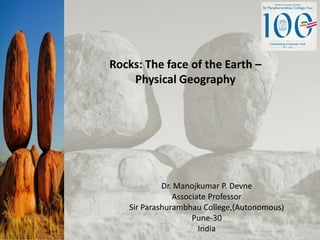


Dr. Manojkumar P. Devne
Associate Professor
Sir Parashurambhau College,(Autonomous)
Pune-30
India
Rocks: The face of the Earth –
Physical Geography
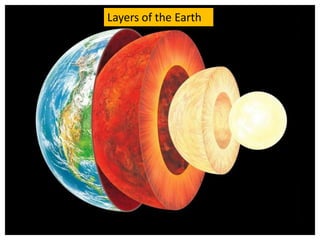
Layers of the Earth
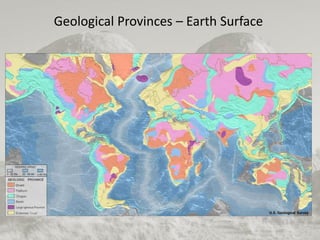
Geological Provinces – Earth Surface
Landscape is the function of Structure, Process
and Time (Stage)
W. M.Davis
A rock should be conceived as a product of its
Environment
A. K. Lobeck
Rocks are the books of earth history and fossils
are the pages
Anonymous
Rocks constitute manuscripts of past earth
history on one hand and basis of contemporary
scenery on the other
S. W. Wooldridge and R.S. Morgan
Igneous rock /Primary/Magmatic rock
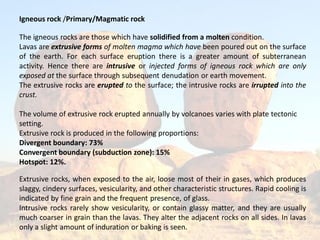
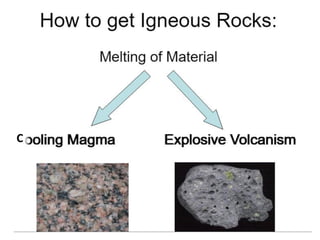
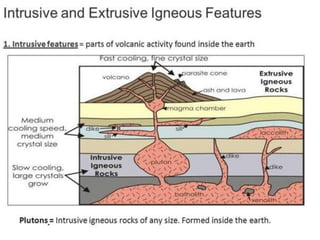
The igneous rocks are those which have solidified from a molten condition.
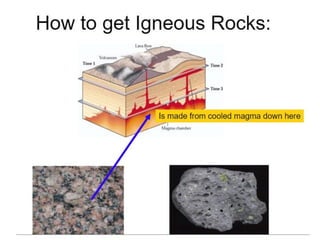
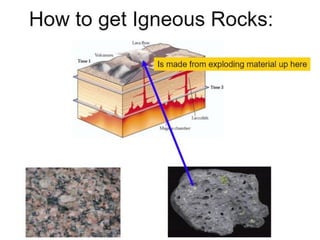
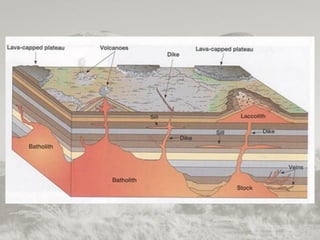
Lavas are extrusive forms of molten magma which have been poured out on the surface
of the earth. For each surface eruption there is a greater amount of subterranean
activity. Hence there are intrusive or injected forms of igneous rock which are only
exposed at the surface through subsequent denudation or earth movement.
The extrusive rocks are erupted to the surface; the intrusive rocks are irrupted into the
crust.
The volume of extrusive rock erupted annually by volcanoes varies with plate tectonic
setting.
Extrusive rock is produced in the following proportions:
Divergent boundary: 73%
Convergent boundary (subduction zone): 15%
Hotspot: 12%.
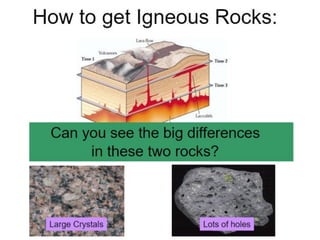
Extrusive rocks, when exposed to the air, loose most of their in gases, which produces
slaggy, cindery surfaces, vesicularity, and other characteristic structures. Rapid cooling is
indicated by fine grain and the frequent presence, of glass.
Intrusive rocks rarely show vesicularity, or contain glassy matter, and they are usually
much coarser in grain than the lavas. They alter the adjacent rocks on all sides. In lavas
only a slight amount of induration or baking is seen.
C
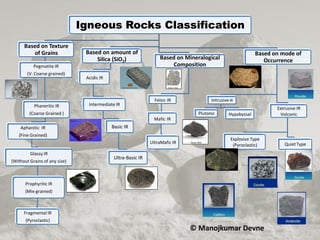
Igneous Rocks Classification
Based on amount of
Silica (SiO2)
Acidic IR
Intermediate IR
Basic IR
Ultra-Basic IR
Based on Mineralogical
Composition
Felsic IR
Mafic IR
UltraMafic IR
Based on Texture
of Grains
Pegmatite IR
(V. Coarse grained)
Phaneritic IR
(Coarse Grained )
Aphanitic IR
(Fine Grained)
Glassy IR
(Without Grains of any size)
Prophyritic IR
(Mix-grained)
Fragmental IR
(Pyroclastic)
Based on mode of
Occurrence
IntrusiveIR
Plutonic Hypabyssal
Extrusive IR
Volcanic
Explosive Type
(Pyroclastic) QuietType
© Manojkumar Devne
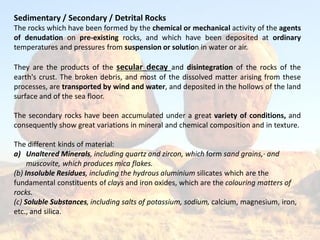
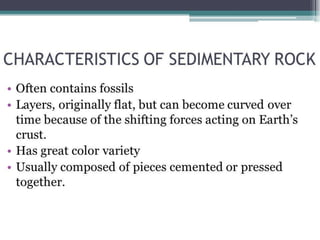
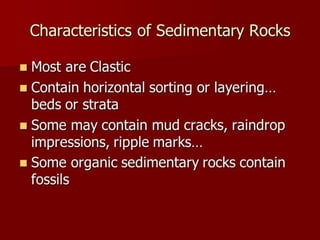
Sedimentary / Secondary / Detrital Rocks
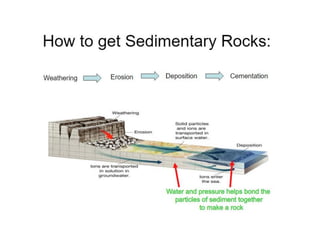
The rocks which have been formed by the chemical or mechanical activity of the agents
of denudation on pre-existing rocks, and which have been deposited at ordinary
temperatures and pressures from suspension or solution in water or air.
They are the products of the secular decay and disintegration of the rocks of the
earth's crust. The broken debris, and most of the dissolved matter arising from these
processes, are transported by wind and water, and deposited in the hollows of the land
surface and of the sea floor.
The secondary rocks have been accumulated under a great variety of conditions, and
consequently show great variations in mineral and chemical composition and in texture.
The different kinds of material:
a) Unaltered Minerals, including quartz and zircon, which form sand grains,· and
muscovite, which produces mica flakes.
(b) Insoluble Residues, including the hydrous aluminium silicates which are the
fundamental constituents of clays and iron oxides, which are the colouring matters of
rocks.
(c) Soluble Substances, including salts of potassium, sodium, calcium, magnesium, iron,
etc., and silica.
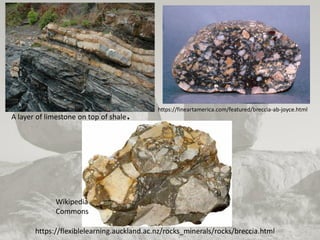
https://flexiblelearning.auckland.ac.nz/rocks_minerals/rocks/breccia.html
https://fineartamerica.com/featured/breccia-ab-joyce.html
A layer of limestone on top of shale.
Wikipedia
Commons
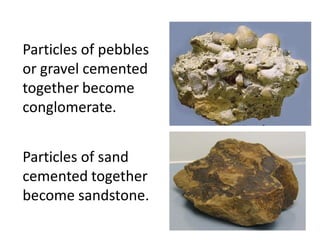
Particles of sand
cemented together
become sandstone.
Particles of pebbles
or gravel cemented
together become
conglomerate.
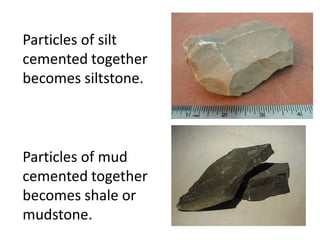
Particles of mud
cemented together
becomes shale or
mudstone.
Particles of silt
cemented together
becomes siltstone.
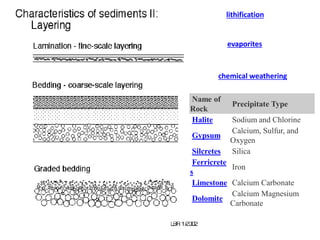
lithification
evaporites
chemical weathering
Name of
Rock
Precipitate Type
Halite Sodium and Chlorine
Gypsum
Calcium, Sulfur, and
Oxygen
Silcretes Silica
Ferricrete
s
Iron
Limestone Calcium Carbonate
Dolomite
Calcium Magnesium
Carbonate
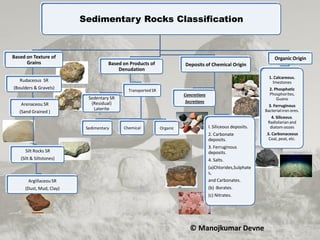
Sedimentary Rocks Classification
Based on Products of
Denudation
Sedentary SR
(Residual)
Laterite
Transported SR
Sedimentary Chemical Organic
Based on Texture of
Grains
Rudaceous SR
(Boulders & Gravels)
Arenaceou SR
(Sand Grained )
Silt Rocks SR
(Silt & Siltstones)
Argillaceou SR
(Dust, Mud, Clay)
Deposits of Chemical Origin
Concretions
Secretions
I. Siliceous deposits.
2. Carbonate
deposits.
3. Ferruginous
deposits.
4. Salts.
(a)Chlorides,Sulphate
s,
and Carbonates.
(b) ·Borates.
(c) Nitrates.
Organic Origin
1. Calcareous.
Imestones
2. Phosphatic
Phosphorites,
Guano
3. Ferruginous
Bacterialiron ores.
4. Siliceous.
Radiolarianand
diatom oozes
.S. Carbonaceous
Coal, peat, etc.
© Manojkumar Devne
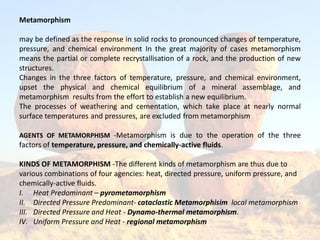
Metamorphism
may be defined as the response in solid rocks to pronounced changes of temperature,
pressure, and chemical environment In the great majority of cases metamorphism
means the partial or complete recrystallisation of a rock, and the production of new
structures.
Changes in the three factors of temperature, pressure, and chemical environment,
upset the physical and chemical equilibrium of a mineral assemblage, and
metamorphism results from the effort to establish a new equilibrium.
The processes of weathering and cementation, which take place at nearly normal
surface temperatures and pressures, are excluded from metamorphism
AGENTS OF METAMORPHISM -Metamorphism is due to the operation of the three
factors of temperature, pressure, and chemically-active fluids.
KINDS OF METAMORPHISM -The different kinds of metamorphism are thus due to
various combinations of four agencies: heat, directed pressure, uniform pressure, and
chemically-active fluids.
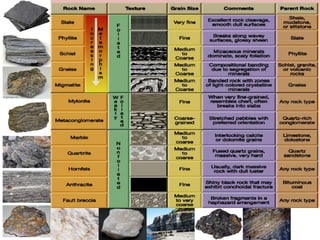
I. Heat Predominant – pyrometamorphism
II. Directed Pressure Predominant- cataclastic Metamorphisim local metamorphism
III. Directed Pressure and Heat - Dynamo-thermal metamorphism.
IV. Uniform Pressure and Heat - regional metamorphism
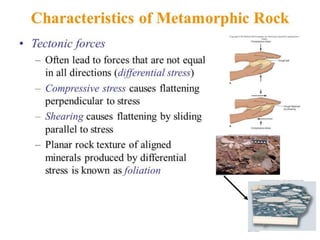
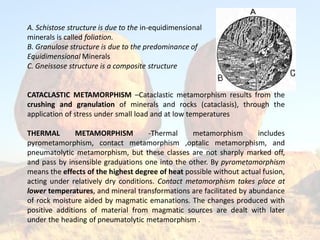
A. Schistose structure is due to the in-equidimensional
minerals is called foliation.
B. Granulose structure is due to the predominance of
Equidimensional Minerals
C. Gneissose structure is a composite structure
CATACLASTIC METAMORPHISM –Cataclastic metamorphism results from the
crushing and granulation of minerals and rocks (cataclasis), through the
application of stress under small load and at low temperatures
THERMAL METAMORPHISM -Thermal metamorphism includes
pyrometamorphism, contact metamorphism ,optalic metamorphism, and
pneumatolytic metamorphism, but these classes are not sharply marked off,
and pass by insensible graduations one into the other. By pyrometamorphism
means the effects of the highest degree of heat possible without actual fusion,
acting under relatively dry conditions. Contact metamorphism takes place at
lower temperatures, and mineral transformations are facilitated by abundance
of rock moisture aided by magmatic emanations. The changes produced with
positive additions of material from magmatic sources are dealt with later
under the heading of pneumatolytic metamorphism .
DYNAMOTHERMAL METAMORPHISM -Dynamo-thermal metamorphism is due to the
co-operation of directed pressure and heat. The heat element facilitates
recrystallisation; but the stress element not only promotes recrystallisation, but is
powerful in -deforming the rocks, and producing new structures
PLUTONIC METAMORPHISM -By plutonic metamorphism is meant the changes which
are produced in rocks by great heat and uniform pressure. These changes necessarily
take place, at depths wherein directed pressure becomes less and less pronounced,
and finally becomes a practically negligible factor in metamorphism. The high
temperature which is also a characteristic of this depth-zone is maintained by the
natural increase of heat in depth due to the temperature gradient, and by magmatic
heat.
METASOMATISM-The role of interstitial rock moisture and solutions of foreign
derivation, as the media of mineral change in metamorphism is important. This
process of mineral or rock alteration by the agency of solutions is called
metasomatism
Thank You
Dr. Manojkumar P. Devne
Mob : +91 9422 353525
Email :manojdevne10@hotmail.com
manojkumar.devne@spcollegepune.ac.in
FB : Manojkumar Devne
YouTube Channel : Dr. Manojkumar Devne