Blending Competency-Based
Education with Self-Directed
Learning in an Online Course
HICOE 2017
1
Bio
 Loren Naffziger earned a Doctor of Education
degree with a Media Studies Concentration
 Serves as an adjunct professor at three universities
 Holds a M. S. in Educational Technology and a M. A.
in Human Behavior
2
Background
 Self-directed learning in an online learning
environment is a growing phenomenon in society as
Massive Open Online Courses (MOOCS),
professional development, and competency-based
education platforms emerge (Bonk, Lee, Kou, Xu, &
Sheu, 2015; Lasse, 2012; Nemec, 2011).
3
Defining Self-Directed Learning
 “Self-directed learners take initiative related to their own
learning with or without an instructor present” (Bonk, et
al., 2015).
 The self-directed learner is empowered to make their
own decisions on what, when, and how much they want
to learn.
 Online learning allows for a global audience, which is
limited only by Internet access
4
Defining Competency-Based
Education
 CBE has been linked to long-standing efforts to identify and
achieve student outcomes for teaching and learning (Nodine,
2016)
 Outcomes-based models focus on the successful
demonstration of learning through student actions and
performances that embody and reflect competence in using
information, content, ideas, and tools
5
A Work in Progress
 There are a variety of approaches to CBE with no
widespread agreement on how to define
“competency”– as compared with “mastery” or
“learning outcome” (Nodine, 2016)
6
MOOC Example
 Subject specific skill learning as well as general skills for
career advancement are noted as positive outcomes
from MOOC participation by the respondents to a
survey (Bonk et al., 2015).
7
Self-Directed Learning Motivation
 Chou (2013) provides case study evidence which
suggests a positive relationship between self-
directed learning and academic achievement
8
Course Designer Considerations
 As a course developer in an online learning
environment, it is important to recognize the need
to differentiate instruction and assessment in a self-
directed learning environment to evaluate the
attainment of the desired competencies.
9
How?
 How can one differentiate instructional content and
assessment in a self-directed online learning
environment?
 Can the desired competencies be accurately measured
using auto-graded assessments?
 How can one incorporate a Universal Design for
Learning or similar paradigm in this environment?
10
Current Study
 A study of current work in a developing self-directed
online system of education is underway using a
mixed methods approach.
 The non-experimentally designed research will use a
survey similar to the Bonk et al. (2015) model for the
qualitative data collection.
11
Research Questions
 How can competencies be determined for the
MCWE School of Ministry?
 How will the design of self-directed learning
influence competency attainment in the Morris
Cerullo School of Ministry?
12
Research Questions
 How can auto-graded quizzes demonstrate
competencies?
 How can self-directed learners be supported in an
online learning environment?
13
Research Design
 The Moodle platform will be analyzed for time spent
in the units of instruction in the 10 core courses of
the program with successful completion of courses
and graduation rates forming the quantitative data.
14
15
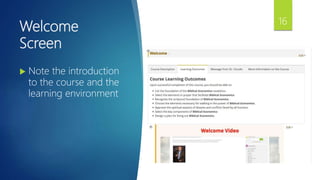
Welcome
Screen
 Note the introduction
to the course and the
learning environment
16
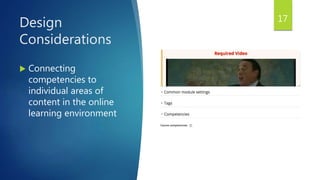
Design
Considerations
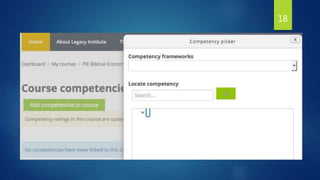
 Connecting
competencies to
individual areas of
content in the online
learning environment
17
18
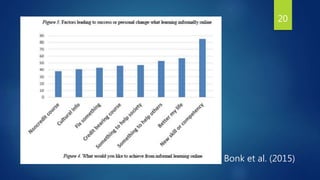
Independent Variables
 Intrinsic motivation stirred by extrinsic forces
 Technology skills
 Access to the Internet
 Self-discipline
 Time management skills
 Problem-solving skills
19
Bonk et al. (2015)
20
Proposed Data Analysis
 Descriptive statistics and MANOVA analysis will be a
part of the data analysis.
 A regression analysis of the independent variables
can provide information on the effect on the
attainment of competencies.
21
References
 Bonk, C. J., Lee, M. M., Kou, X., Xu, S., Sheu, F. (2015).
Understanding the self-directed online learning preferences,
goals, achievements, af MIT Open Course Ware subscribers.
Educational technology & society, 18(2), 349-368.
22
References
 Chou, P. (2013). Effect Of Instructor-Provided
Concept Maps And Self-Directed Learning Ability
On Students' Online Hypermedia Learning
Performance. Journal of College Teaching &
Learning (Online), 10(4), 223-233.
23
References
 Lasse, C. (2012). Close skills gaps through
personalized learning: A competency-based, self-
directed skills management system enables
employees to create personalized learning plans to
develop the skills necessary for achieving corporate
goals. T+D, 66(12), 76-77.
24
References
 Nemec, P. B. (2011). The self-directed learner.
Psychiatric Rehabilitation Journal, 35(1), 71-73.
 Nodine, T. R. (2015). How did we get here? A brief
history of competency-based higher education in
the United States. The Journal of Competency-
Based Education, 1(1) 5-11.
25

HICOE 2017

  • 1.
    Blending Competency-Based Education withSelf-Directed Learning in an Online Course HICOE 2017 1
  • 2.
    Bio  Loren Naffzigerearned a Doctor of Education degree with a Media Studies Concentration  Serves as an adjunct professor at three universities  Holds a M. S. in Educational Technology and a M. A. in Human Behavior 2
  • 3.
    Background  Self-directed learningin an online learning environment is a growing phenomenon in society as Massive Open Online Courses (MOOCS), professional development, and competency-based education platforms emerge (Bonk, Lee, Kou, Xu, & Sheu, 2015; Lasse, 2012; Nemec, 2011). 3
  • 4.
    Defining Self-Directed Learning “Self-directed learners take initiative related to their own learning with or without an instructor present” (Bonk, et al., 2015).  The self-directed learner is empowered to make their own decisions on what, when, and how much they want to learn.  Online learning allows for a global audience, which is limited only by Internet access 4
  • 5.
    Defining Competency-Based Education  CBEhas been linked to long-standing efforts to identify and achieve student outcomes for teaching and learning (Nodine, 2016)  Outcomes-based models focus on the successful demonstration of learning through student actions and performances that embody and reflect competence in using information, content, ideas, and tools 5
  • 6.
    A Work inProgress  There are a variety of approaches to CBE with no widespread agreement on how to define “competency”– as compared with “mastery” or “learning outcome” (Nodine, 2016) 6
  • 7.
    MOOC Example  Subjectspecific skill learning as well as general skills for career advancement are noted as positive outcomes from MOOC participation by the respondents to a survey (Bonk et al., 2015). 7
  • 8.
    Self-Directed Learning Motivation Chou (2013) provides case study evidence which suggests a positive relationship between self- directed learning and academic achievement 8
  • 9.
    Course Designer Considerations As a course developer in an online learning environment, it is important to recognize the need to differentiate instruction and assessment in a self- directed learning environment to evaluate the attainment of the desired competencies. 9
  • 10.
    How?  How canone differentiate instructional content and assessment in a self-directed online learning environment?  Can the desired competencies be accurately measured using auto-graded assessments?  How can one incorporate a Universal Design for Learning or similar paradigm in this environment? 10
  • 11.
    Current Study  Astudy of current work in a developing self-directed online system of education is underway using a mixed methods approach.  The non-experimentally designed research will use a survey similar to the Bonk et al. (2015) model for the qualitative data collection. 11
  • 12.
    Research Questions  Howcan competencies be determined for the MCWE School of Ministry?  How will the design of self-directed learning influence competency attainment in the Morris Cerullo School of Ministry? 12
  • 13.
    Research Questions  Howcan auto-graded quizzes demonstrate competencies?  How can self-directed learners be supported in an online learning environment? 13
  • 14.
    Research Design  TheMoodle platform will be analyzed for time spent in the units of instruction in the 10 core courses of the program with successful completion of courses and graduation rates forming the quantitative data. 14
  • 15.
  • 16.
    Welcome Screen  Note theintroduction to the course and the learning environment 16
  • 17.
    Design Considerations  Connecting competencies to individualareas of content in the online learning environment 17
  • 18.
  • 19.
    Independent Variables  Intrinsicmotivation stirred by extrinsic forces  Technology skills  Access to the Internet  Self-discipline  Time management skills  Problem-solving skills 19
  • 20.
    Bonk et al.(2015) 20
  • 21.
    Proposed Data Analysis Descriptive statistics and MANOVA analysis will be a part of the data analysis.  A regression analysis of the independent variables can provide information on the effect on the attainment of competencies. 21
  • 22.
    References  Bonk, C.J., Lee, M. M., Kou, X., Xu, S., Sheu, F. (2015). Understanding the self-directed online learning preferences, goals, achievements, af MIT Open Course Ware subscribers. Educational technology & society, 18(2), 349-368. 22
  • 23.
    References  Chou, P.(2013). Effect Of Instructor-Provided Concept Maps And Self-Directed Learning Ability On Students' Online Hypermedia Learning Performance. Journal of College Teaching & Learning (Online), 10(4), 223-233. 23
  • 24.
    References  Lasse, C.(2012). Close skills gaps through personalized learning: A competency-based, self- directed skills management system enables employees to create personalized learning plans to develop the skills necessary for achieving corporate goals. T+D, 66(12), 76-77. 24
  • 25.
    References  Nemec, P.B. (2011). The self-directed learner. Psychiatric Rehabilitation Journal, 35(1), 71-73.  Nodine, T. R. (2015). How did we get here? A brief history of competency-based higher education in the United States. The Journal of Competency- Based Education, 1(1) 5-11. 25