SUBMITTED BY
NAME- BINUKA DAHAL
ROLL NO- 11
LEVEL- PCL NURSING ,2nd
YEAR ,11th BATCH
SUBJECT- MEDICAL AND
SURGICALNURSING- I
SUBMITTEDTO
 MS. REKHA GURUNG
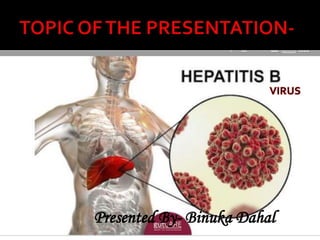
HEPATITIS BVIRUS
Presented By- Binuka Dahal
 Introduction
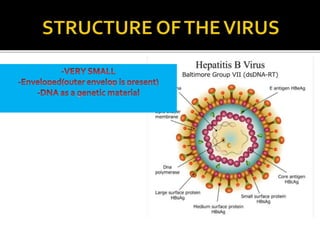
 Structure of the virus
 Epidemiology
 Type
 Pathophysiology
 Mode of transmission
 sign and symptoms
 Investigation
 Treatment
 Prevention
 Medical management
 Nursing management
 It is a viral infection of the liver caused by
hepatitis B virus.
Its incubation period is- from 30 -180 days i.e
(8-12 weeks)
 About 2 million people are infected with
HBV infection worldwide.
 Around 2 million people are living with
chronic HBV infection.
Acute hepatitis B
 Acute hepatitis B is an infectious disease caused
by HBV, which develops within 6 month after
entering virus into organism.
 Disease has symptomatic ( with jaundice or
without jaundice), asymptomatic course.
Chronic Hepatitis B
 Chronic hepatitis B is a chronic infection
caused by HBV which develops after 6 month
from acute phase of infection.
 It is characterized with non-specific clinical
features.
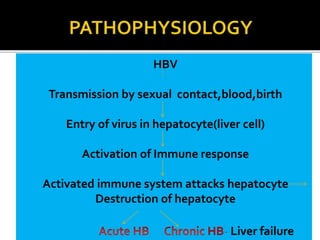
HBV
Transmission by sexual contact,blood,birth
Entry of virus in hepatocyte(liver cell)
Activation of Immune response
Activated immune system attacks hepatocyte
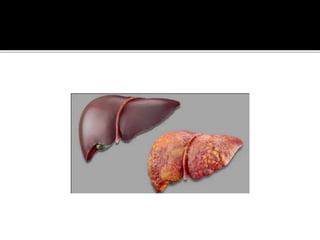
Destruction of hepatocyte
HB- Liver failure
Major transmission- Sex, Blood,perinatal
 Perinatal transmission(spread from mother to child
at birth)
 Needle stick injury
 Tattoing
 Piercing(a small hole in a part of body, typically
other than ears, nose to insert ring)
 Exposure to infected blood and bodyfluids, such as
saliva and menstrual, vaginal and seminal fluid(fluid
from prostate and sex gland that helps to transport
sperm during orgasm.
 Multiple sex partner or contact with sex
worker.
 Syringe either in health care setting.
 Note-HBV is not transmitted by air,droplets,
vectors or from animal.
 Fever
 Dark urine
 Extreme fatigue
 Nausea and vomiting
 Abdominal pain
 Loss of appetite
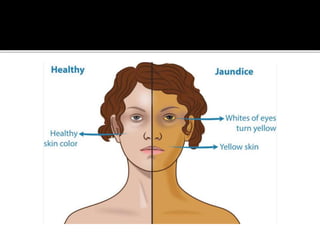
 Yellowing of the skin and eye(jaundice)
 Blood test:
HBsAg+-the person is currently infected with HBV
and is able to pass the infection to others.
HBeAg+-indicate the blood and bodyfluids of the
infected individual are highly infectious.
 Liver ultrasound-show amount of liver damage..
 Liver biopsy- remove a sample from liver to check
for a liver damage. During this test doctor insert thin
needle through skin to the liver and removes a tissue
sample for laboratory analysis.
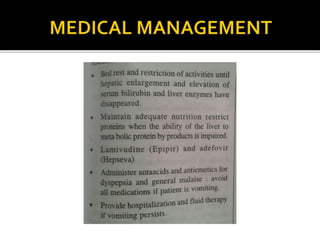
 Antiviral medications. Several antiviral medications
— including entecavir (Baraclude), tenofovir (Viread),
lamivudine (Epivir), adefovir (Hepsera) and telbivudine
(Tyzeka) — can help fight the virus and slow its ability to
damage your liver.These drugs are taken by mouth.
 Liver transplant.If liver has been severely damaged, a
liver transplant may be an option. During a liver
transplant, the surgeon removes damaged liver and
replaces it with a healthy liver.
 If you have been exposed to hepatitis B virus and
have not received the hepatitis B vaccine in the
past, you should get 1 dose of HBIg. HBIg works
best if given as soon as possible and within 14
days after exposure to the hepatitis B virus.
THANKYOU

Hepatitis b virus

  • 2.
    SUBMITTED BY NAME- BINUKADAHAL ROLL NO- 11 LEVEL- PCL NURSING ,2nd YEAR ,11th BATCH SUBJECT- MEDICAL AND SURGICALNURSING- I SUBMITTEDTO  MS. REKHA GURUNG
  • 3.
  • 4.
     Introduction  Structureof the virus  Epidemiology  Type  Pathophysiology  Mode of transmission  sign and symptoms  Investigation  Treatment  Prevention  Medical management  Nursing management
  • 5.
     It isa viral infection of the liver caused by hepatitis B virus. Its incubation period is- from 30 -180 days i.e (8-12 weeks)
  • 7.
     About 2million people are infected with HBV infection worldwide.  Around 2 million people are living with chronic HBV infection.
  • 8.
    Acute hepatitis B Acute hepatitis B is an infectious disease caused by HBV, which develops within 6 month after entering virus into organism.  Disease has symptomatic ( with jaundice or without jaundice), asymptomatic course.
  • 9.
    Chronic Hepatitis B Chronic hepatitis B is a chronic infection caused by HBV which develops after 6 month from acute phase of infection.  It is characterized with non-specific clinical features.
  • 10.
    HBV Transmission by sexualcontact,blood,birth Entry of virus in hepatocyte(liver cell) Activation of Immune response Activated immune system attacks hepatocyte Destruction of hepatocyte HB- Liver failure
  • 11.
    Major transmission- Sex,Blood,perinatal  Perinatal transmission(spread from mother to child at birth)  Needle stick injury  Tattoing  Piercing(a small hole in a part of body, typically other than ears, nose to insert ring)  Exposure to infected blood and bodyfluids, such as saliva and menstrual, vaginal and seminal fluid(fluid from prostate and sex gland that helps to transport sperm during orgasm.
  • 12.
     Multiple sexpartner or contact with sex worker.  Syringe either in health care setting.  Note-HBV is not transmitted by air,droplets, vectors or from animal.
  • 13.
     Fever  Darkurine  Extreme fatigue  Nausea and vomiting  Abdominal pain  Loss of appetite  Yellowing of the skin and eye(jaundice)
  • 16.
     Blood test: HBsAg+-theperson is currently infected with HBV and is able to pass the infection to others. HBeAg+-indicate the blood and bodyfluids of the infected individual are highly infectious.  Liver ultrasound-show amount of liver damage..  Liver biopsy- remove a sample from liver to check for a liver damage. During this test doctor insert thin needle through skin to the liver and removes a tissue sample for laboratory analysis.
  • 17.
     Antiviral medications.Several antiviral medications — including entecavir (Baraclude), tenofovir (Viread), lamivudine (Epivir), adefovir (Hepsera) and telbivudine (Tyzeka) — can help fight the virus and slow its ability to damage your liver.These drugs are taken by mouth.  Liver transplant.If liver has been severely damaged, a liver transplant may be an option. During a liver transplant, the surgeon removes damaged liver and replaces it with a healthy liver.
  • 18.
     If youhave been exposed to hepatitis B virus and have not received the hepatitis B vaccine in the past, you should get 1 dose of HBIg. HBIg works best if given as soon as possible and within 14 days after exposure to the hepatitis B virus.
  • 22.