Haematopoesis
Presented by- IPSITA SAHOO
Reg. no- 200705180160
Supervised by-
Dr. Sitaram Swain
Immunology and cancer Biology
CONTENTS
Haematopoiesis
Overview of Hematopoiesis
Site of Hematopoiesis
Hematopoietic stem cells (HSCs) and
types
Process of hematopoiesis
Regulation of Haematopoiesis
References
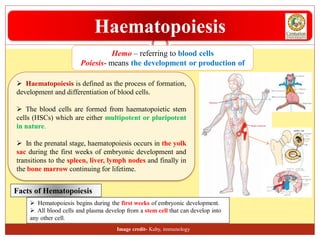
 Haematopoiesis is defined as the process of formation,
development and differentiation of blood cells.
 The blood cells are formed from haematopoietic stem
cells (HSCs) which are either multipotent or pluripotent
in nature.
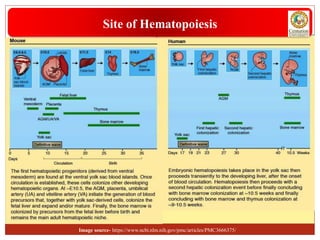
 In the prenatal stage, haematopoiesis occurs in the yolk
sac during the first weeks of embryonic development and
transitions to the spleen, liver, lymph nodes and finally in
the bone marrow continuing for lifetime.
Hemo – referring to blood cells
Poiesis- means the development or production of
Haematopoiesis
 Hematopoiesis begins during the first weeks of embryonic development.
 All blood cells and plasma develop from a stem cell that can develop into
any other cell.
Facts of Hematopoiesis
Image credit- Kuby, immunology
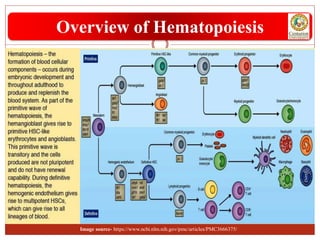
Overview of Hematopoiesis
Image source- https://www.ncbi.nlm.nih.gov/pmc/articles/PMC3666375/
Site of Hematopoiesis
Image source- https://www.ncbi.nlm.nih.gov/pmc/articles/PMC3666375/
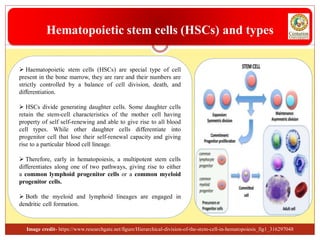
 Haematopoietic stem cells (HSCs) are special type of cell
present in the bone marrow, they are rare and their numbers are
strictly controlled by a balance of cell division, death, and
differentiation.
 HSCs divide generating daughter cells. Some daughter cells
retain the stem-cell characteristics of the mother cell having
property of self self-renewing and able to give rise to all blood
cell types. While other daughter cells differentiate into
progenitor cell that lose their self-renewal capacity and giving
rise to a particular blood cell lineage.
 Therefore, early in hematopoiesis, a multipotent stem cells
differentiates along one of two pathways, giving rise to either
a common lymphoid progenitor cells or a common myeloid
progenitor cells.
 Both the myeloid and lymphoid lineages are engaged in
dendritic cell formation.
Hematopoietic stem cells (HSCs) and types
Image credit- https://www.researchgate.net/figure/Hierarchical-division-of-the-stem-cell-in-hematopoiesis_fig1_316297048
According to the monophyletic theory of hematopoiesis, the pluripotent stem cells multiply to produce more of the
pluripotent stem cells, making sure of the steady and lasting supply of stem cells.Some of the pluripotent stem cells
now differentiate into precursor cells that are least partially dedicated to form one type of mature blood cell.
Pluripotent cells multiply at low pace into one of the five possible unipotential stem cells.
These unipotential stem cells then multiply rapidly into the precursor of the destined specific mature blood cell.
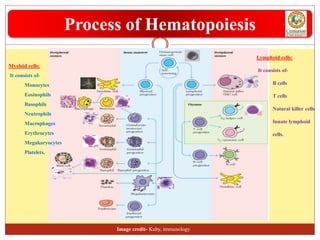
The typical process of hematopoiesis consists of the differentiation of the multipotential hematopoietic stem cell into
either the common myeloid or lymphoid progenitor.
Then, relying upon the cytokines and resulting transcription factors that are activated, the myeloid progenitor can
differentiate into a myeloblast.
This myeloblast leads to granulocyte (basophils, eosinophils, or neutrophils) or monocyte (macrophages and dendritic
cell) development.
Also, it leads to the differentiation of megakaryocytes into platelets, or erythroblasts into erythrocytes.
Lymphoid dendritic cells can form directly from the common lymphoid progenitor.
Furthermore, the differentiation of the common lymphoid progenitor into a lymphoblast results the further
development of natural killer cells or lymphocytes (T and B cells).
Once B cells get activated in secondary lymphoid organs, it further differentiate into plasma cells.
These plasma cells secrete antibodies.
Process of hematopoiesis
Process of Hematopoiesis
Myeloid cells:
It consists of-
Monocytes
Eosinophils
Basophils
Neutrophils
Macrophages
Erythrocytes
Megakaryocytes
Platelets.
Lymphoid cells:
It consists of-
B cells
T cells
Natural killer cells
Innate lymphoid
cells.
Image credit- Kuby, immunology
 Hematopoiesis is largely regulated by the presence of cytokines.
 These cytokines are responsible for regulating the differentiation of multipotential hematopoietic
stem cells into specific cell types by the activation of transcription factors.
 The cytokines is very important for differentiation of particular cell types otherwise animal dies
during embryogenesis.
Some cytokines that regulates haematopoiesis are:
A. Granulocyte macrophage-colony stimulating factor (GM-CSF):
• It enhances the myeloid lineage, finally leading to the differentiation of granulocytes and
macrophages. Such cytokines are termed as growth factors.
• These growth factors are needed throughout the process of hematopoiesis functioning in
order to activate transcription factors.
B. Transcription factor GATA-2:
• It is required for the development of all hematopoietic lineages; in its absence animals
die during embryogenesis.
C. Transcriptional regulator Bmi-1:
• It is required for the self-renewal of HSCs, and in its absence animals die within 2
months of birth because of the failure to repopulate their red and white blood.
Regulation of Haematopoiesis
References
 Jagannathan-Bogdan, M., & Zon, L. I.
(2013).Hematopoiesis. Development, 140(12), 2463-2467.
 Kuby, immunology.

Hematopoiesis

  • 1.
    Haematopoesis Presented by- IPSITASAHOO Reg. no- 200705180160 Supervised by- Dr. Sitaram Swain Immunology and cancer Biology
  • 2.
    CONTENTS Haematopoiesis Overview of Hematopoiesis Siteof Hematopoiesis Hematopoietic stem cells (HSCs) and types Process of hematopoiesis Regulation of Haematopoiesis References
  • 3.
     Haematopoiesis isdefined as the process of formation, development and differentiation of blood cells.  The blood cells are formed from haematopoietic stem cells (HSCs) which are either multipotent or pluripotent in nature.  In the prenatal stage, haematopoiesis occurs in the yolk sac during the first weeks of embryonic development and transitions to the spleen, liver, lymph nodes and finally in the bone marrow continuing for lifetime. Hemo – referring to blood cells Poiesis- means the development or production of Haematopoiesis  Hematopoiesis begins during the first weeks of embryonic development.  All blood cells and plasma develop from a stem cell that can develop into any other cell. Facts of Hematopoiesis Image credit- Kuby, immunology
  • 4.
    Overview of Hematopoiesis Imagesource- https://www.ncbi.nlm.nih.gov/pmc/articles/PMC3666375/
  • 5.
    Site of Hematopoiesis Imagesource- https://www.ncbi.nlm.nih.gov/pmc/articles/PMC3666375/
  • 6.
     Haematopoietic stemcells (HSCs) are special type of cell present in the bone marrow, they are rare and their numbers are strictly controlled by a balance of cell division, death, and differentiation.  HSCs divide generating daughter cells. Some daughter cells retain the stem-cell characteristics of the mother cell having property of self self-renewing and able to give rise to all blood cell types. While other daughter cells differentiate into progenitor cell that lose their self-renewal capacity and giving rise to a particular blood cell lineage.  Therefore, early in hematopoiesis, a multipotent stem cells differentiates along one of two pathways, giving rise to either a common lymphoid progenitor cells or a common myeloid progenitor cells.  Both the myeloid and lymphoid lineages are engaged in dendritic cell formation. Hematopoietic stem cells (HSCs) and types Image credit- https://www.researchgate.net/figure/Hierarchical-division-of-the-stem-cell-in-hematopoiesis_fig1_316297048
  • 7.
    According to themonophyletic theory of hematopoiesis, the pluripotent stem cells multiply to produce more of the pluripotent stem cells, making sure of the steady and lasting supply of stem cells.Some of the pluripotent stem cells now differentiate into precursor cells that are least partially dedicated to form one type of mature blood cell. Pluripotent cells multiply at low pace into one of the five possible unipotential stem cells. These unipotential stem cells then multiply rapidly into the precursor of the destined specific mature blood cell. The typical process of hematopoiesis consists of the differentiation of the multipotential hematopoietic stem cell into either the common myeloid or lymphoid progenitor. Then, relying upon the cytokines and resulting transcription factors that are activated, the myeloid progenitor can differentiate into a myeloblast. This myeloblast leads to granulocyte (basophils, eosinophils, or neutrophils) or monocyte (macrophages and dendritic cell) development. Also, it leads to the differentiation of megakaryocytes into platelets, or erythroblasts into erythrocytes. Lymphoid dendritic cells can form directly from the common lymphoid progenitor. Furthermore, the differentiation of the common lymphoid progenitor into a lymphoblast results the further development of natural killer cells or lymphocytes (T and B cells). Once B cells get activated in secondary lymphoid organs, it further differentiate into plasma cells. These plasma cells secrete antibodies. Process of hematopoiesis
  • 8.
    Process of Hematopoiesis Myeloidcells: It consists of- Monocytes Eosinophils Basophils Neutrophils Macrophages Erythrocytes Megakaryocytes Platelets. Lymphoid cells: It consists of- B cells T cells Natural killer cells Innate lymphoid cells. Image credit- Kuby, immunology
  • 9.
     Hematopoiesis islargely regulated by the presence of cytokines.  These cytokines are responsible for regulating the differentiation of multipotential hematopoietic stem cells into specific cell types by the activation of transcription factors.  The cytokines is very important for differentiation of particular cell types otherwise animal dies during embryogenesis. Some cytokines that regulates haematopoiesis are: A. Granulocyte macrophage-colony stimulating factor (GM-CSF): • It enhances the myeloid lineage, finally leading to the differentiation of granulocytes and macrophages. Such cytokines are termed as growth factors. • These growth factors are needed throughout the process of hematopoiesis functioning in order to activate transcription factors. B. Transcription factor GATA-2: • It is required for the development of all hematopoietic lineages; in its absence animals die during embryogenesis. C. Transcriptional regulator Bmi-1: • It is required for the self-renewal of HSCs, and in its absence animals die within 2 months of birth because of the failure to repopulate their red and white blood. Regulation of Haematopoiesis
  • 10.
    References  Jagannathan-Bogdan, M.,& Zon, L. I. (2013).Hematopoiesis. Development, 140(12), 2463-2467.  Kuby, immunology.