Hematopoietic Stem
Cell
BY S.BHARGAVI
Definition
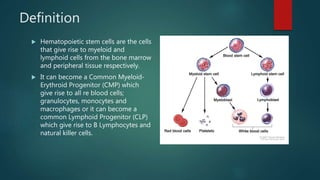
 Hematopoietic stem cells are the cells
that give rise to myeloid and
lymphoid cells from the bone marrow
and peripheral tissue respectively.
 It can become a Common Myeloid-
Erythroid Progenitor (CMP) which
give rise to all re blood cells;
granulocytes, monocytes and
macrophages or it can become a
common Lymphoid Progenitor (CLP)
which give rise to B Lymphocytes and
natural killer cells.
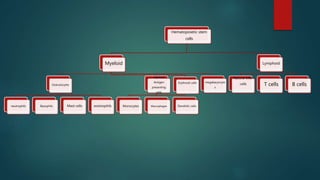
Hematopoietic stem
cells
Myeloid
Granulocytes
neutrophils Basophils Mast cells eosinophils
Myeloid
Antigen
presenting
cells
Monocytes Macrophages Dendritic cells
Erythroid cells megakaryocyte
s
Lymphoid
Natural killer
cells T cells B cells
Granulocytes
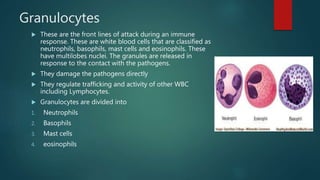
 These are the front lines of attack during an immune
response. These are white blood cells that are classified as
neutrophils, basophils, mast cells and eosinophils. These
have multilobes nuclei. The granules are released in
response to the contact with the pathogens.
 They damage the pathogens directly
 They regulate trafficking and activity of other WBC
including Lymphocytes.
 Granulocytes are divided into
1. Neutrophils
2. Basophils
3. Mast cells
4. eosinophils
Neutrophils
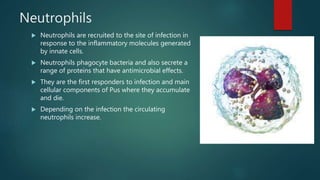
 Neutrophils are recruited to the site of infection in
response to the inflammatory molecules generated
by innate cells.
 Neutrophils phagocyte bacteria and also secrete a
range of proteins that have antimicrobial effects.
 They are the first responders to infection and main
cellular components of Pus where they accumulate
and die.
 Depending on the infection the circulating
neutrophils increase.
Basophils
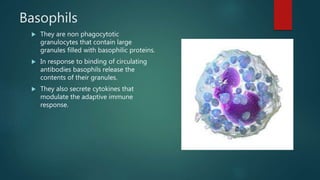
 They are non phagocytotic
granulocytes that contain large
granules filled with basophilic proteins.
 In response to binding of circulating
antibodies basophils release the
contents of their granules.
 They also secrete cytokines that
modulate the adaptive immune
response.
Mast cells
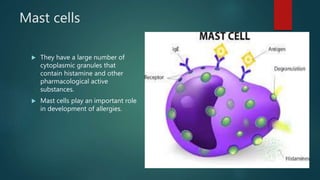
 They have a large number of
cytoplasmic granules that
contain histamine and other
pharmacological active
substances.
 Mast cells play an important role
in development of allergies.
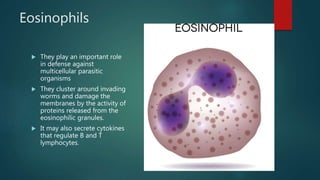
Eosinophils
 They play an important role
in defense against
multicellular parasitic
organisms
 They cluster around invading
worms and damage the
membranes by the activity of
proteins released from the
eosinophilic granules.
 It may also secrete cytokines
that regulate B and T
lymphocytes.
Myeloid Antigen presenting cells
 Myeloid APCs are considered as cellular bridges between the innate and adaptive
immune system as they make contact with the pathogen at the site of infection
and communicate this encounter to T lymphocytes in lymph nodes.
 APC secretes proteins that activates other immune cells.
 They are divided into
1. Monocytes
2. macrophages
3. Dendritic cells
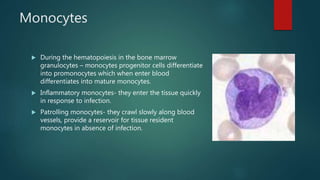
Monocytes
 During the hematopoiesis in the bone marrow
granulocytes – monocytes progenitor cells differentiate
into promonocytes which when enter blood
differentiates into mature monocytes.
 Inflammatory monocytes- they enter the tissue quickly
in response to infection.
 Patrolling monocytes- they crawl slowly along blood
vessels, provide a reservoir for tissue resident
monocytes in absence of infection.
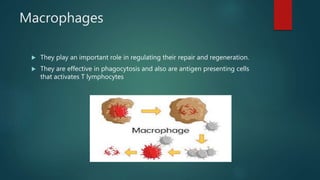
Macrophages
 They play an important role in regulating their repair and regeneration.
 They are effective in phagocytosis and also are antigen presenting cells
that activates T lymphocytes
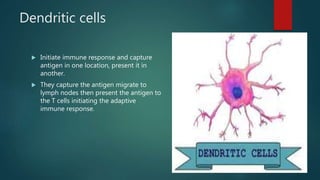
Dendritic cells
 Initiate immune response and capture
antigen in one location, present it in
another.
 They capture the antigen migrate to
lymph nodes then present the antigen to
the T cells initiating the adaptive
immune response.
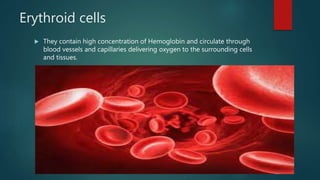
Erythroid cells
 They contain high concentration of Hemoglobin and circulate through
blood vessels and capillaries delivering oxygen to the surrounding cells
and tissues.
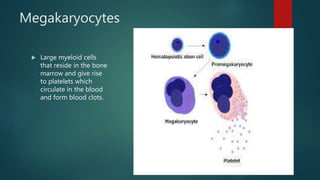
Megakaryocytes
 Large myeloid cells
that reside in the bone
marrow and give rise
to platelets which
circulate in the blood
and form blood clots.
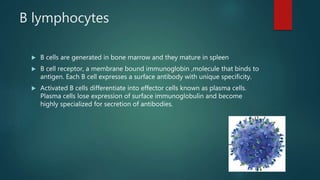
B lymphocytes
 B cells are generated in bone marrow and they mature in spleen
 B cell receptor, a membrane bound immunoglobin ,molecule that binds to
antigen. Each B cell expresses a surface antibody with unique specificity.
 Activated B cells differentiate into effector cells known as plasma cells.
Plasma cells lose expression of surface immunoglobulin and become
highly specialized for secretion of antibodies.
T cells
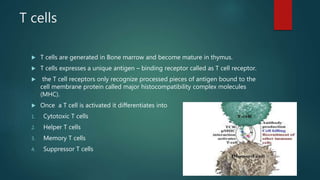
 T cells are generated in Bone marrow and become mature in thymus.
 T cells expresses a unique antigen – binding receptor called as T cell receptor.
 the T cell receptors only recognize processed pieces of antigen bound to the
cell membrane protein called major histocompatibility complex molecules
(MHC).
 Once a T cell is activated it differentiates into
1. Cytotoxic T cells
2. Helper T cells
3. Memory T cells
4. Suppressor T cells
Natural killer cells
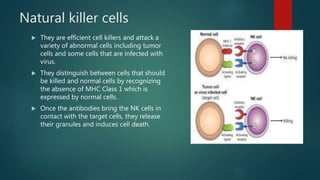
 They are efficient cell killers and attack a
variety of abnormal cells including tumor
cells and some cells that are infected with
virus.
 They distinguish between cells that should
be killed and normal cells by recognizing
the absence of MHC Class 1 which is
expressed by normal cells.
 Once the antibodies bring the NK cells in
contact with the target cells, they release
their granules and induces cell death.
Hematopoeitic stem cells

Hematopoeitic stem cells

  • 1.
  • 2.
    Definition  Hematopoietic stemcells are the cells that give rise to myeloid and lymphoid cells from the bone marrow and peripheral tissue respectively.  It can become a Common Myeloid- Erythroid Progenitor (CMP) which give rise to all re blood cells; granulocytes, monocytes and macrophages or it can become a common Lymphoid Progenitor (CLP) which give rise to B Lymphocytes and natural killer cells.
  • 3.
    Hematopoietic stem cells Myeloid Granulocytes neutrophils BasophilsMast cells eosinophils Myeloid Antigen presenting cells Monocytes Macrophages Dendritic cells Erythroid cells megakaryocyte s Lymphoid Natural killer cells T cells B cells
  • 4.
    Granulocytes  These arethe front lines of attack during an immune response. These are white blood cells that are classified as neutrophils, basophils, mast cells and eosinophils. These have multilobes nuclei. The granules are released in response to the contact with the pathogens.  They damage the pathogens directly  They regulate trafficking and activity of other WBC including Lymphocytes.  Granulocytes are divided into 1. Neutrophils 2. Basophils 3. Mast cells 4. eosinophils
  • 5.
    Neutrophils  Neutrophils arerecruited to the site of infection in response to the inflammatory molecules generated by innate cells.  Neutrophils phagocyte bacteria and also secrete a range of proteins that have antimicrobial effects.  They are the first responders to infection and main cellular components of Pus where they accumulate and die.  Depending on the infection the circulating neutrophils increase.
  • 6.
    Basophils  They arenon phagocytotic granulocytes that contain large granules filled with basophilic proteins.  In response to binding of circulating antibodies basophils release the contents of their granules.  They also secrete cytokines that modulate the adaptive immune response.
  • 7.
    Mast cells  Theyhave a large number of cytoplasmic granules that contain histamine and other pharmacological active substances.  Mast cells play an important role in development of allergies.
  • 8.
    Eosinophils  They playan important role in defense against multicellular parasitic organisms  They cluster around invading worms and damage the membranes by the activity of proteins released from the eosinophilic granules.  It may also secrete cytokines that regulate B and T lymphocytes.
  • 9.
    Myeloid Antigen presentingcells  Myeloid APCs are considered as cellular bridges between the innate and adaptive immune system as they make contact with the pathogen at the site of infection and communicate this encounter to T lymphocytes in lymph nodes.  APC secretes proteins that activates other immune cells.  They are divided into 1. Monocytes 2. macrophages 3. Dendritic cells
  • 10.
    Monocytes  During thehematopoiesis in the bone marrow granulocytes – monocytes progenitor cells differentiate into promonocytes which when enter blood differentiates into mature monocytes.  Inflammatory monocytes- they enter the tissue quickly in response to infection.  Patrolling monocytes- they crawl slowly along blood vessels, provide a reservoir for tissue resident monocytes in absence of infection.
  • 11.
    Macrophages  They playan important role in regulating their repair and regeneration.  They are effective in phagocytosis and also are antigen presenting cells that activates T lymphocytes
  • 12.
    Dendritic cells  Initiateimmune response and capture antigen in one location, present it in another.  They capture the antigen migrate to lymph nodes then present the antigen to the T cells initiating the adaptive immune response.
  • 13.
    Erythroid cells  Theycontain high concentration of Hemoglobin and circulate through blood vessels and capillaries delivering oxygen to the surrounding cells and tissues.
  • 14.
    Megakaryocytes  Large myeloidcells that reside in the bone marrow and give rise to platelets which circulate in the blood and form blood clots.
  • 15.
    B lymphocytes  Bcells are generated in bone marrow and they mature in spleen  B cell receptor, a membrane bound immunoglobin ,molecule that binds to antigen. Each B cell expresses a surface antibody with unique specificity.  Activated B cells differentiate into effector cells known as plasma cells. Plasma cells lose expression of surface immunoglobulin and become highly specialized for secretion of antibodies.
  • 16.
    T cells  Tcells are generated in Bone marrow and become mature in thymus.  T cells expresses a unique antigen – binding receptor called as T cell receptor.  the T cell receptors only recognize processed pieces of antigen bound to the cell membrane protein called major histocompatibility complex molecules (MHC).  Once a T cell is activated it differentiates into 1. Cytotoxic T cells 2. Helper T cells 3. Memory T cells 4. Suppressor T cells
  • 17.
    Natural killer cells They are efficient cell killers and attack a variety of abnormal cells including tumor cells and some cells that are infected with virus.  They distinguish between cells that should be killed and normal cells by recognizing the absence of MHC Class 1 which is expressed by normal cells.  Once the antibodies bring the NK cells in contact with the target cells, they release their granules and induces cell death.