
Muscular Dystrophy
By:
HEMANT AGGARWAL
BPT INTERN
PDUNIPPD
Introduction:
Muscular Dystrophy is a group of muscle
diseases that results in increasing weakening and
breakdown of mainly skeletal muscles over the
time
It is hereditary disease which is of progressive
nature
 Sir Charles Bell,first wrote about MD but French
Neurologist,Guillaume Duchenne gave first
discription about this disease
Definition:
Muscular Dystrophy is a collective group
of inherited non-inflammatory but
progessive muscular disorders without a
central or peripheral nerve abnormality
(Source:Medescape.com)
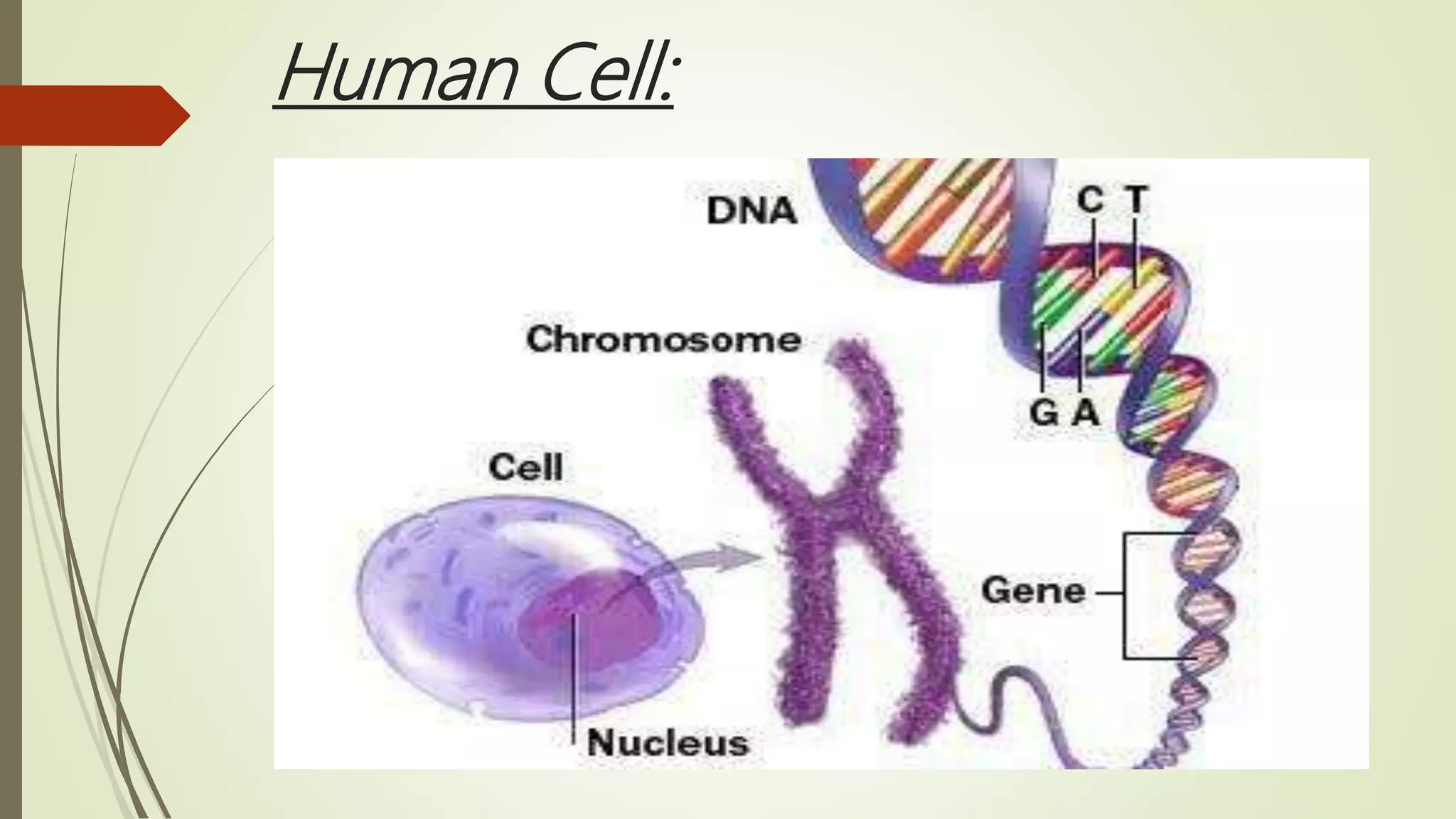
Human Cell:
Causes:
Advances in molecular biology techniques illuminate
the genetic basis underlying all MD,DEFECTS in the
genetic code for DYSTROPHIN, a 427-kd skeletal
muscle protein
This can occur due to either inheriting:
1) the defect from one's parents
2) the mutation occurring during early development.
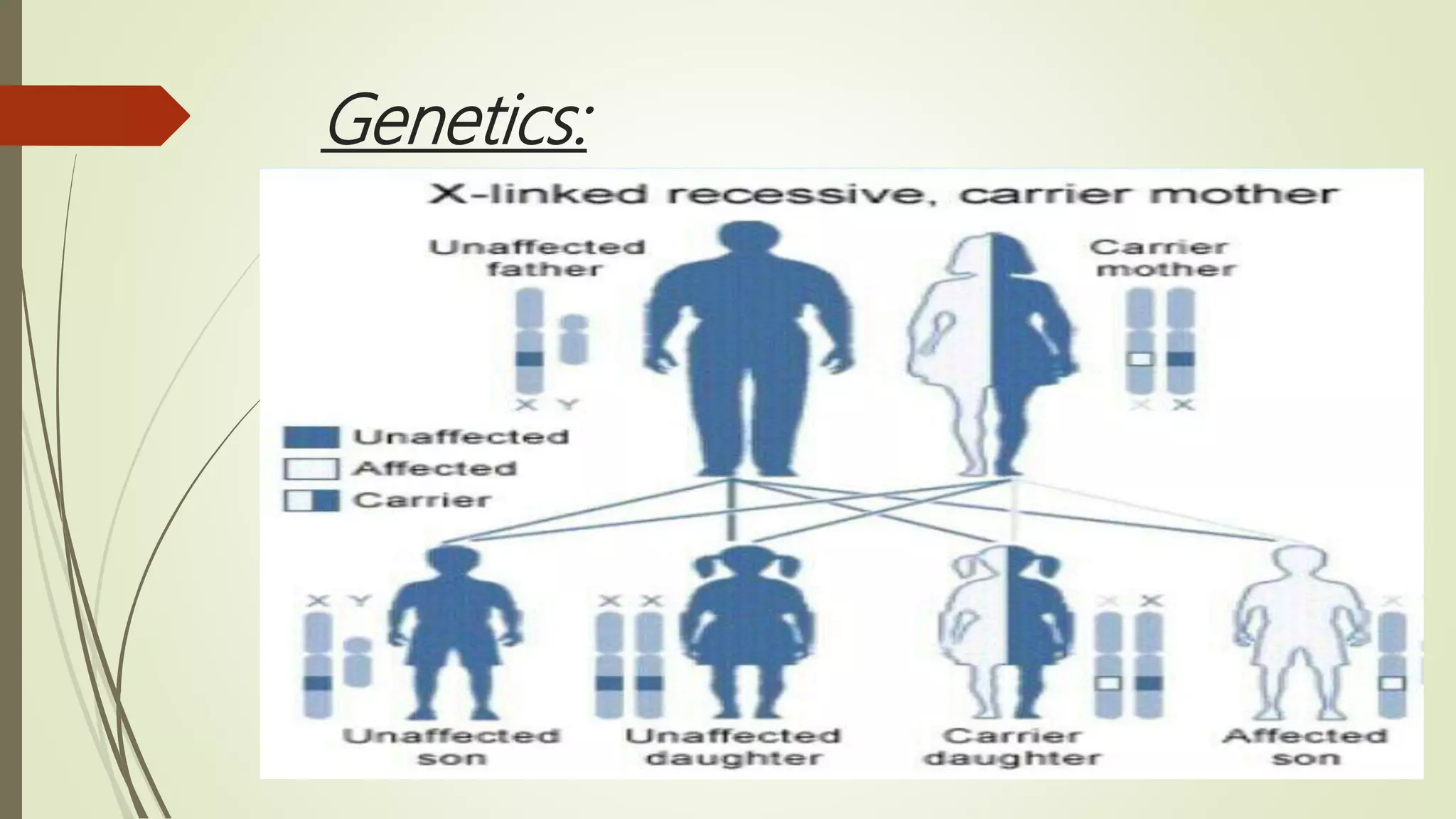
3) Disorders may be X-linked recessive, autosomal
recessive, or autosomal dominant
Genetics:
Pathophysiology :
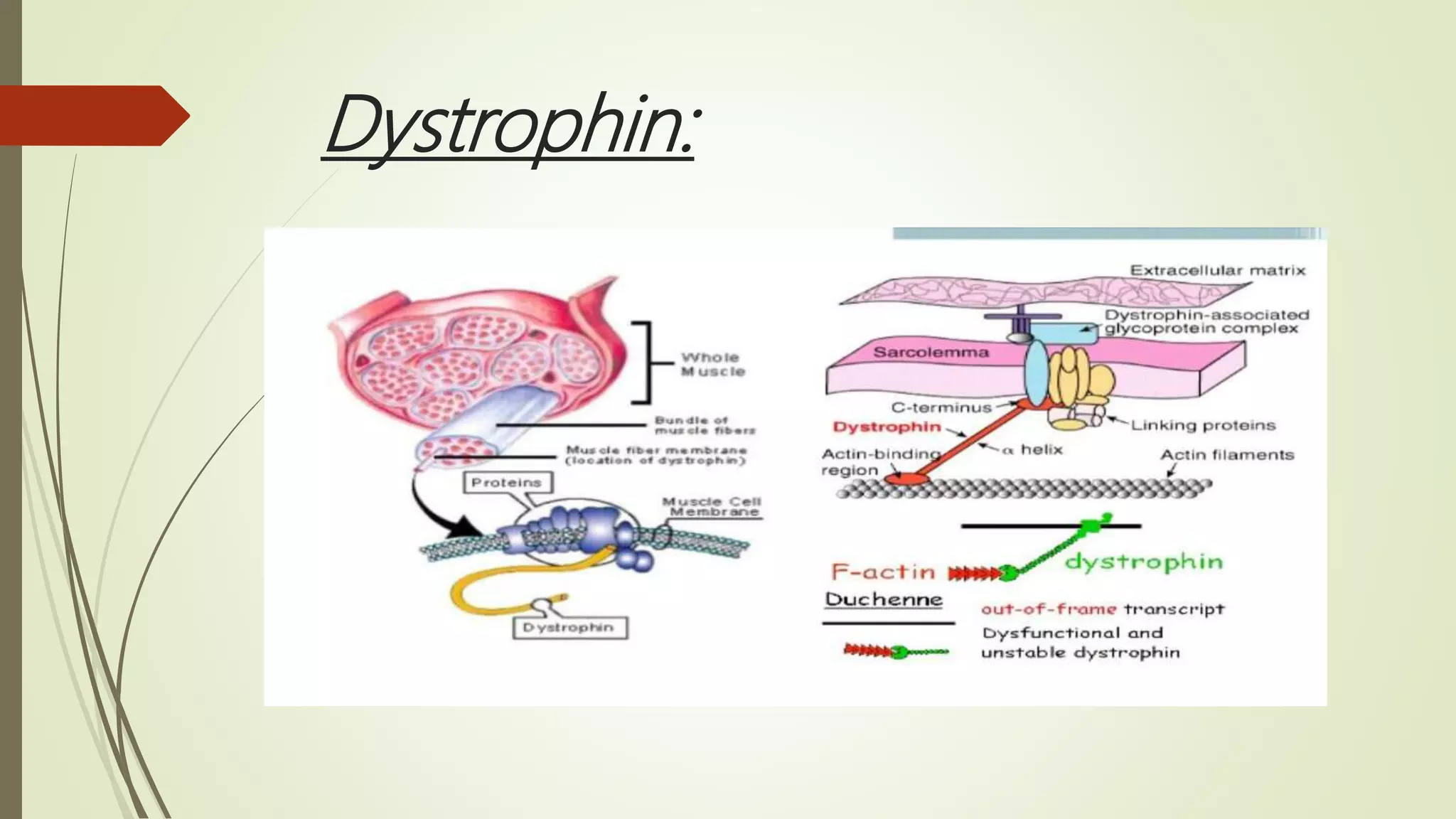
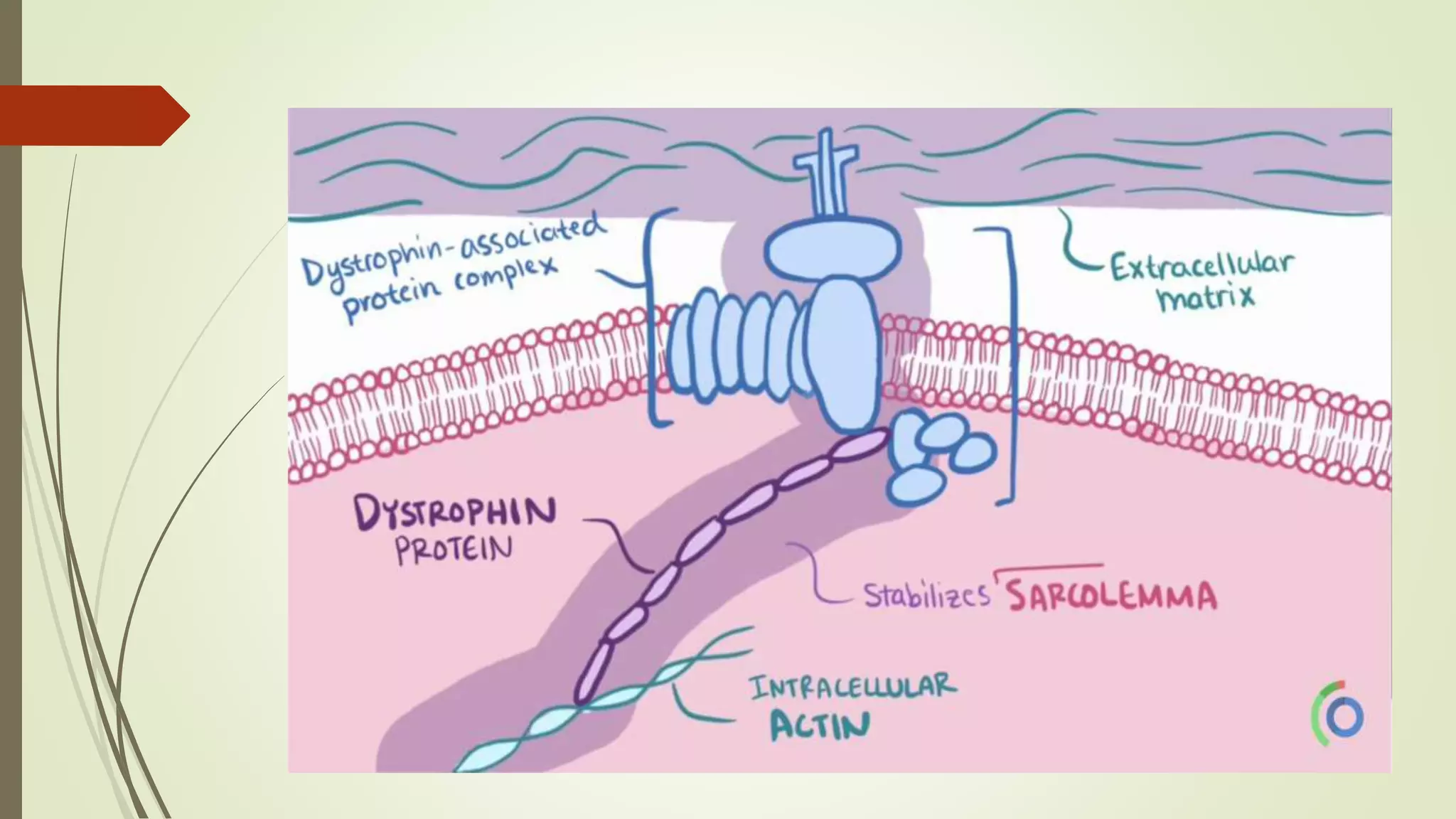
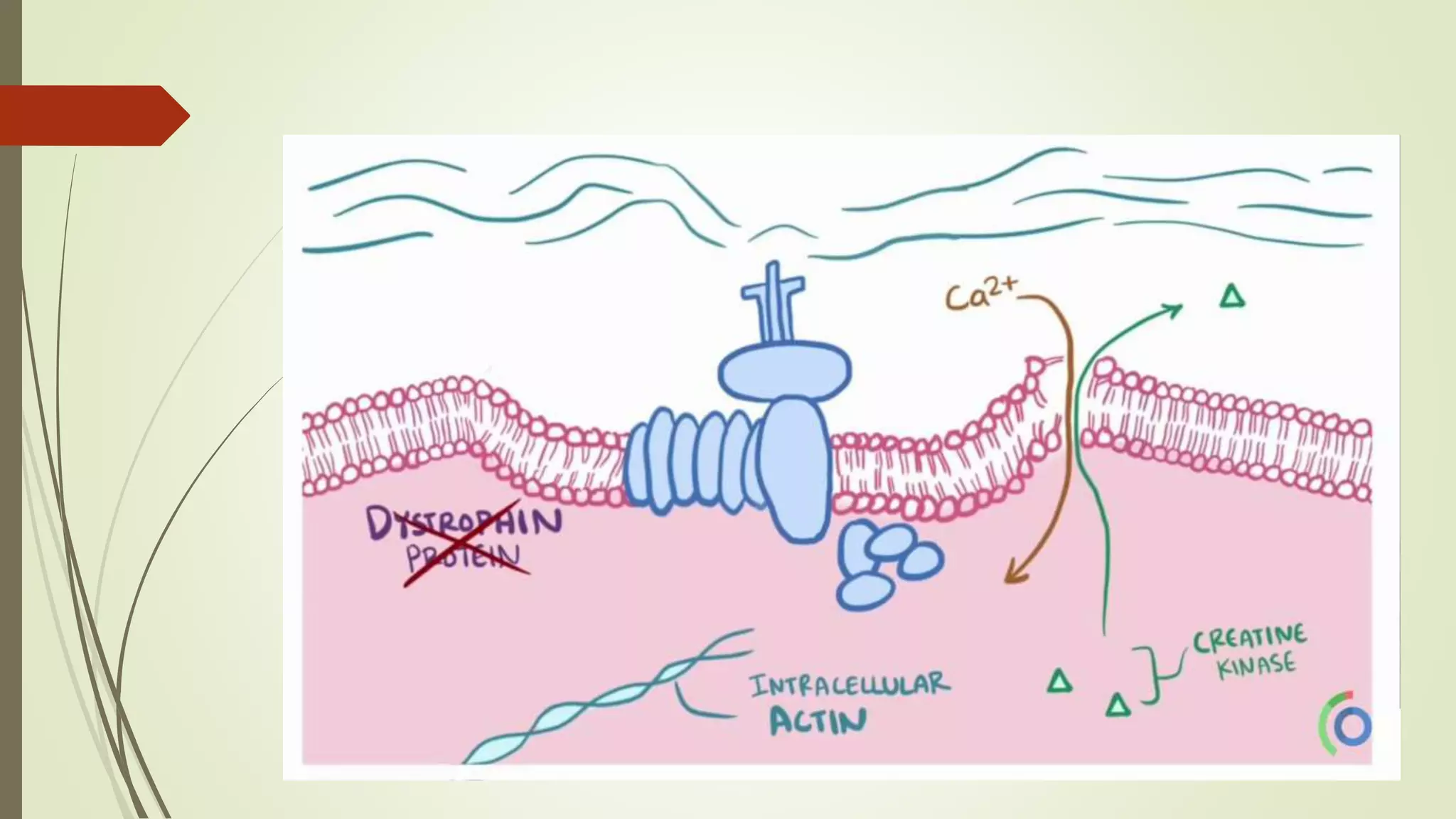
Multiple proteins are involved in the complex
interactions of the muscle membrane and
extracellular environment. For sarcolemmal
stability, dystrophin and the dystrophin-associated
glycoproteins (DAGs) are important elements
The dystrophin gene is located on the short arm
of chromosome X near the p21 locus and codes
for the large protein Dp427, which contains 3685
amino acids. Dystrophin accounts for only
approximately 0.002% of the proteins in striated
muscle, but it has obvious importance in the
maintenance of the muscle's membrane integrity
Dystrophin:
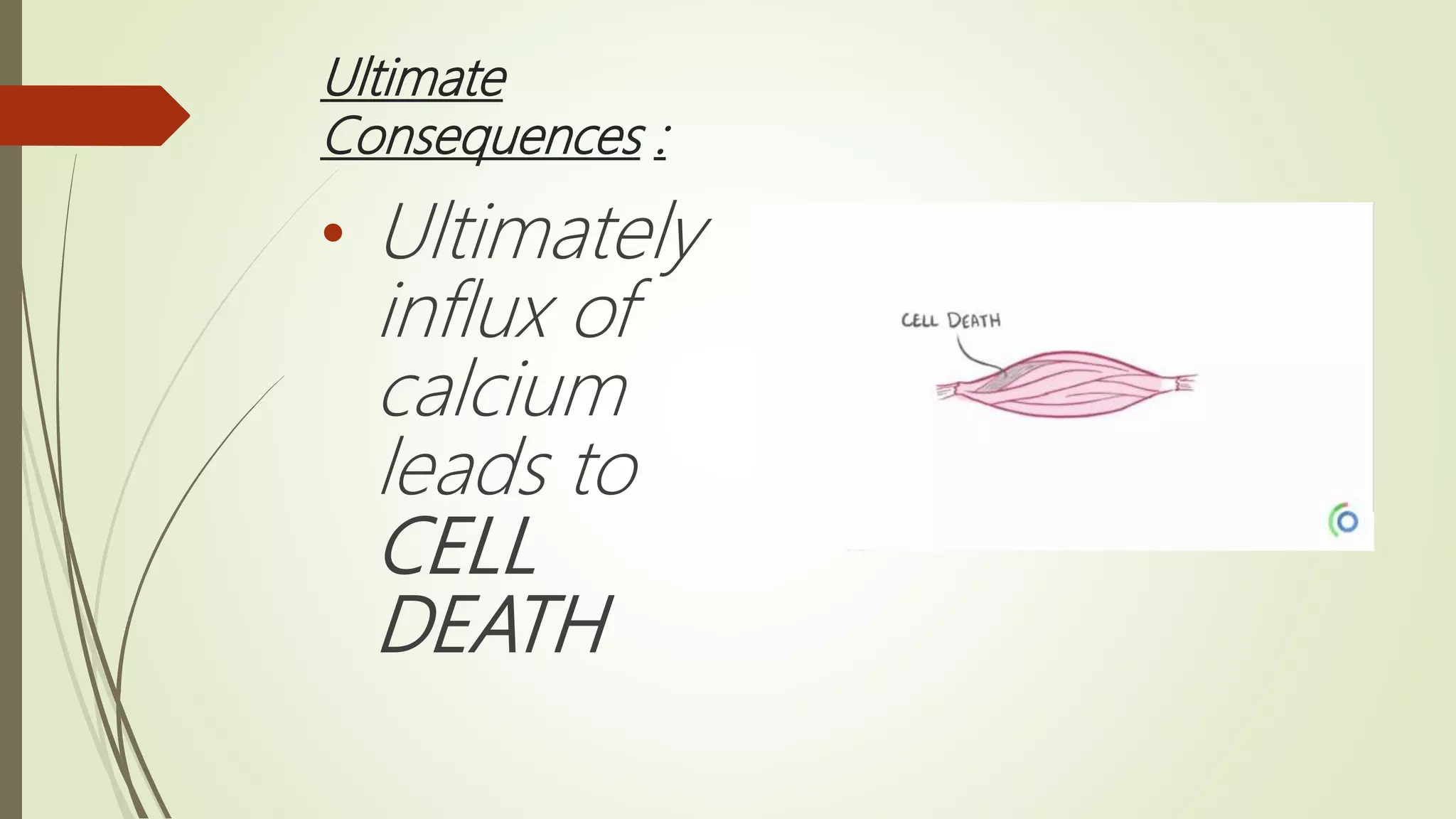
Ultimate
Consequences :
• Ultimately
influx of
calcium
leads to
CELL
DEATH
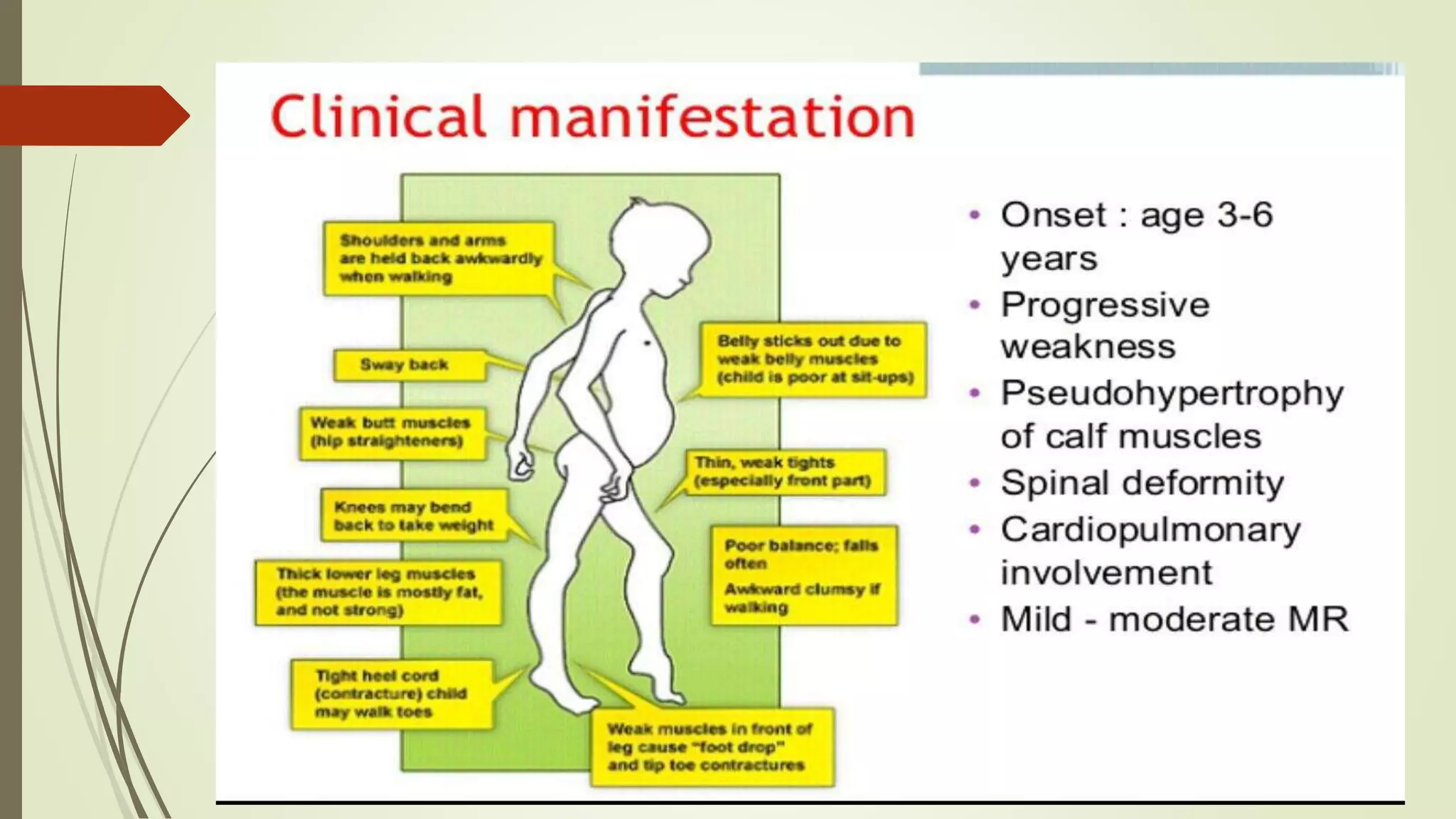
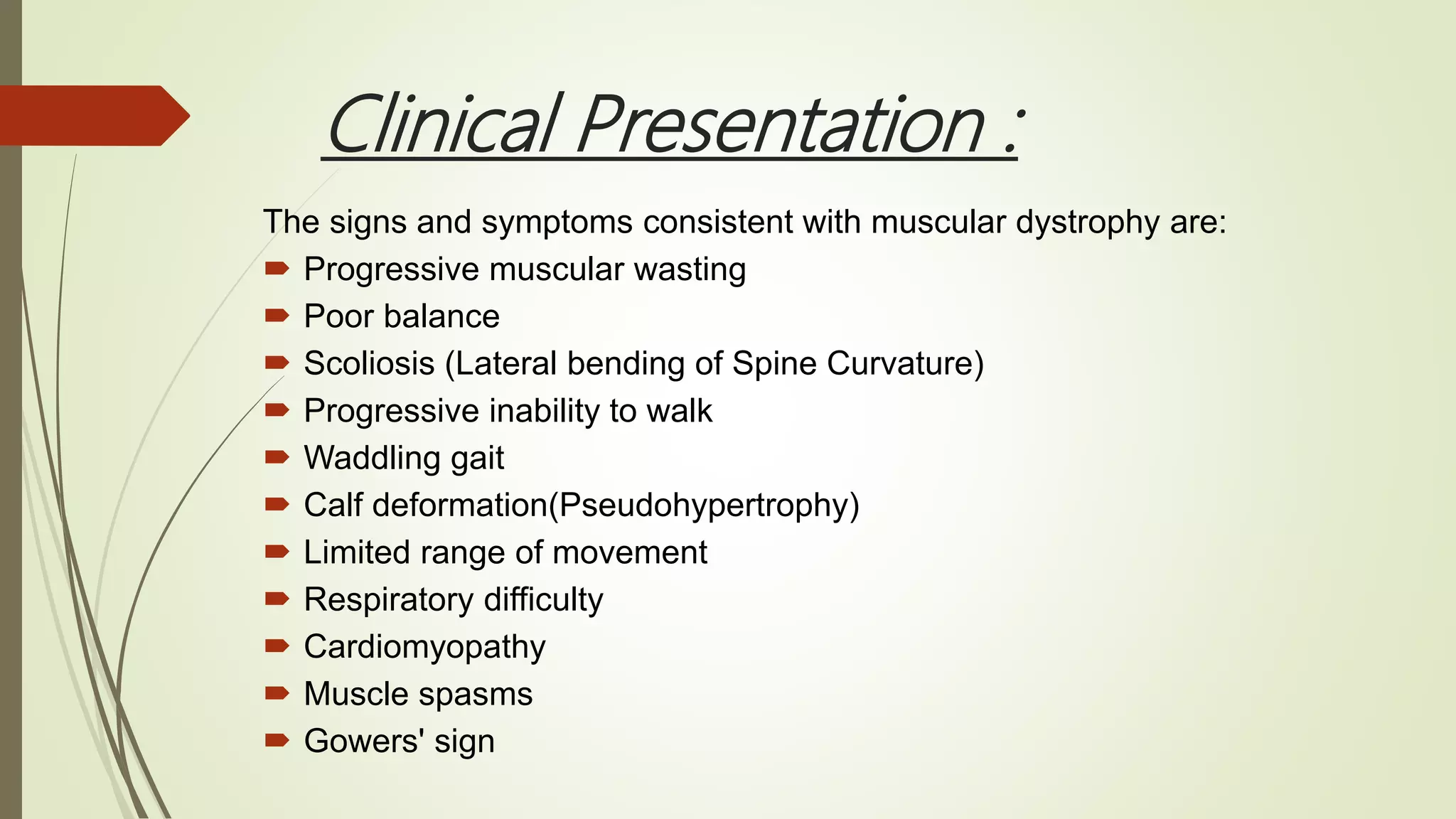
Clinical Presentation :
The signs and symptoms consistent with muscular dystrophy are:
 Progressive muscular wasting
 Poor balance
 Scoliosis (Lateral bending of Spine Curvature)
 Progressive inability to walk
 Waddling gait
 Calf deformation(Pseudohypertrophy)
 Limited range of movement
 Respiratory difficulty
 Cardiomyopathy
 Muscle spasms
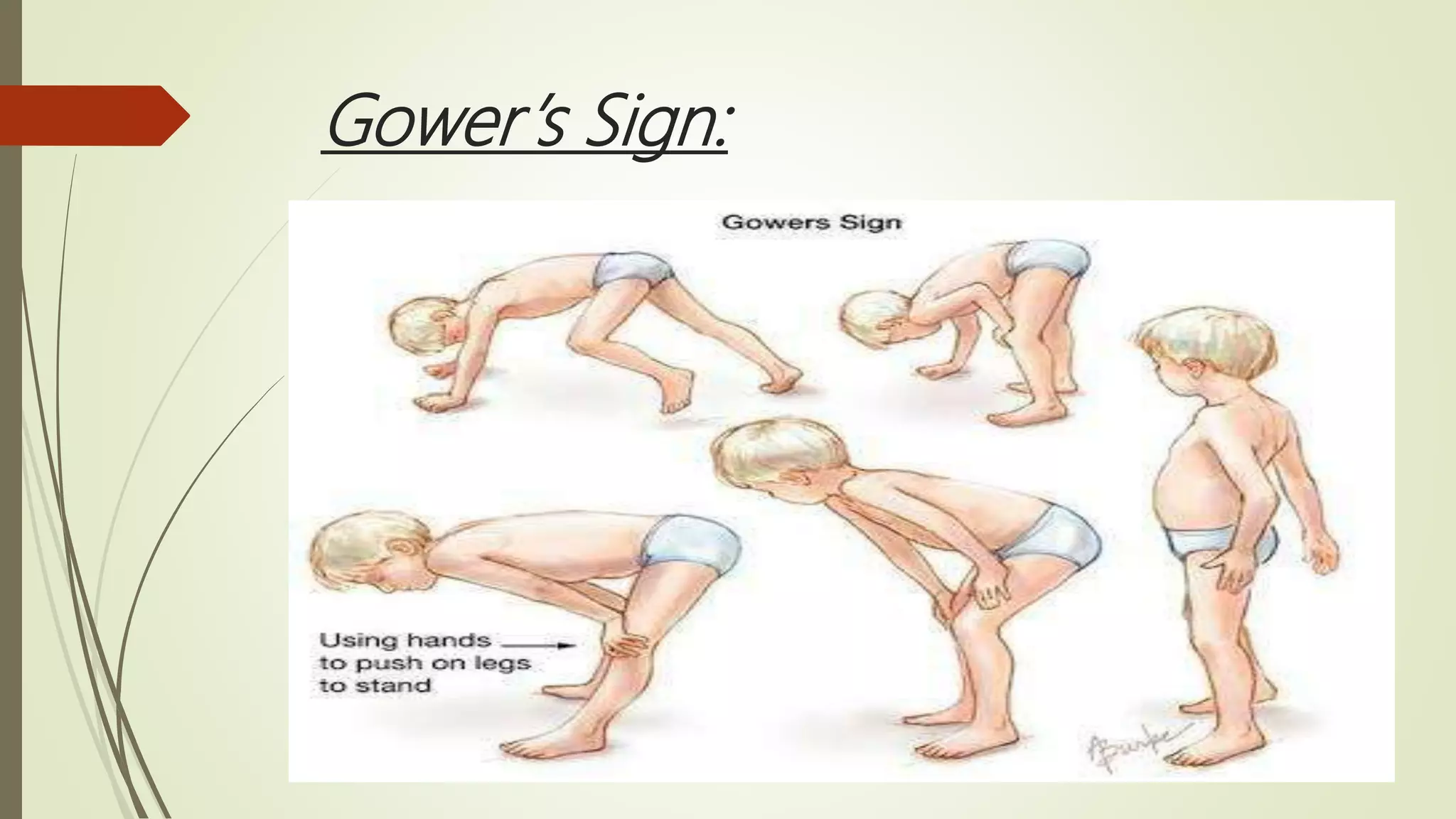
 Gowers' sign
Gower’s Sign:
Diagnosis:
Muscle Biopsy
DNA testing
Western Blot
Creatinine Phosphokinase(Normal:22 to 198
IU/L)
Other Examinations:
1) MRI 2) Chest X-ray
3) CT-Scan 4) EMG
Management:
Currently there is no cure for Muscular
Dystrophy
HELPING HANDS:
1) PHYSIOTHERAPY
2) Occupational Therapy
3) Speech Therapy
4) Orthotic Interventions
5) Medical Management: Low Intensity
Physiotherapy :
Assessment of Patient :-
1) Knowing Patient’s Needs for ADL
2) Muscle Charting(Mannual Muscle Testing)
Conditions of Joint and other Muscloskeletal
Structure
1) Respiratory Status
Cont.:
Exercises as per the muscle power
Breathing Exercises
Joint Glides
Stretching of Tighten Muscles
Weight-Bearing
Co-ordination Exercises
Hydrotherapy,etc.
Muscular Dystrophy: An Introduction

Muscular Dystrophy: An Introduction

  • 1.
  • 2.
    Introduction: Muscular Dystrophy isa group of muscle diseases that results in increasing weakening and breakdown of mainly skeletal muscles over the time It is hereditary disease which is of progressive nature  Sir Charles Bell,first wrote about MD but French Neurologist,Guillaume Duchenne gave first discription about this disease
  • 3.
    Definition: Muscular Dystrophy isa collective group of inherited non-inflammatory but progessive muscular disorders without a central or peripheral nerve abnormality (Source:Medescape.com)
  • 4.
  • 5.
    Causes: Advances in molecularbiology techniques illuminate the genetic basis underlying all MD,DEFECTS in the genetic code for DYSTROPHIN, a 427-kd skeletal muscle protein This can occur due to either inheriting: 1) the defect from one's parents 2) the mutation occurring during early development. 3) Disorders may be X-linked recessive, autosomal recessive, or autosomal dominant
  • 6.
  • 7.
    Pathophysiology : Multiple proteinsare involved in the complex interactions of the muscle membrane and extracellular environment. For sarcolemmal stability, dystrophin and the dystrophin-associated glycoproteins (DAGs) are important elements The dystrophin gene is located on the short arm of chromosome X near the p21 locus and codes for the large protein Dp427, which contains 3685 amino acids. Dystrophin accounts for only approximately 0.002% of the proteins in striated muscle, but it has obvious importance in the maintenance of the muscle's membrane integrity
  • 8.
  • 11.
    Ultimate Consequences : • Ultimately influxof calcium leads to CELL DEATH
  • 13.
    Clinical Presentation : Thesigns and symptoms consistent with muscular dystrophy are:  Progressive muscular wasting  Poor balance  Scoliosis (Lateral bending of Spine Curvature)  Progressive inability to walk  Waddling gait  Calf deformation(Pseudohypertrophy)  Limited range of movement  Respiratory difficulty  Cardiomyopathy  Muscle spasms  Gowers' sign
  • 14.
  • 15.
    Diagnosis: Muscle Biopsy DNA testing WesternBlot Creatinine Phosphokinase(Normal:22 to 198 IU/L) Other Examinations: 1) MRI 2) Chest X-ray 3) CT-Scan 4) EMG
  • 16.
    Management: Currently there isno cure for Muscular Dystrophy HELPING HANDS: 1) PHYSIOTHERAPY 2) Occupational Therapy 3) Speech Therapy 4) Orthotic Interventions 5) Medical Management: Low Intensity
  • 17.
    Physiotherapy : Assessment ofPatient :- 1) Knowing Patient’s Needs for ADL 2) Muscle Charting(Mannual Muscle Testing) Conditions of Joint and other Muscloskeletal Structure 1) Respiratory Status
  • 18.
    Cont.: Exercises as perthe muscle power Breathing Exercises Joint Glides Stretching of Tighten Muscles Weight-Bearing Co-ordination Exercises Hydrotherapy,etc.