HEAT-TRANSFER
EQUIPMENT COSTS
Dr. K. Shahzad Baig
Memorial University of Newfoundland (MUN) Canada
Heat-Transfer Equipment Cost
The basic information that should be supplied to a fabricator in order to
obtain a price estimate or firm quotation on a proposed heat exchanger:
• Process Information
• Mechanical Information
Process Information
1. Fluids to be used
Include fluid properties if they are not readily available to the fabricator.
2. Flow rates of fluid
3. Entrance and exit temperatures of fluids
4. Amount of vaporization or condensation
5. Operating pressures and allowable pressure drops
6. Fouling factors
7. Rate of heat transfer
Mechanical Information
1. Size of tube
Diameter, length, wall thickness
2. Tube lay out and pitch
Horizontal tubes, Vertical tubes, U-bends
3. Maximum and minimum temperatures and pressures
4. Necessary corrosion allowances
5. Special codes involved
6. Recommended materials of construction
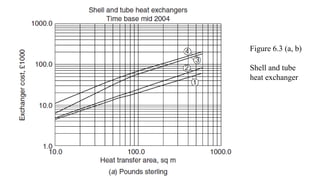
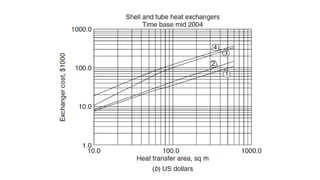
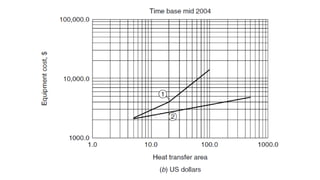
Figure 6.3 (a, b)
Shell and tube
heat exchanger
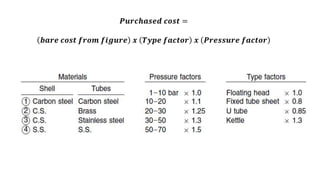
𝑷𝒖𝒓𝒄𝒉𝒂𝒔𝒆𝒅 𝒄𝒐𝒔𝒕 =
𝒃𝒂𝒓𝒆 𝒄𝒐𝒔𝒕 𝒇𝒓𝒐𝒎 𝒇𝒊𝒈𝒖𝒓𝒆 𝒙 𝑻𝒚𝒑𝒆 𝒇𝒂𝒄𝒕𝒐𝒓 𝒙 𝑷𝒓𝒆𝒔𝒔𝒖𝒓𝒆 𝒇𝒂𝒄𝒕𝒐𝒓
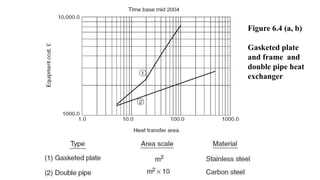
Figure 6.4 (a, b)
Gasketed plate
and frame and
double pipe heat
exchanger
Following books were used in preparation of notes
 Blank, L., Tarquin. A. 2005. Engineering Economy. 6th Edition, McGraw-Hill.
 Eschenbach, T. G. 2003. Engineering Economy”, 2nd Edition, Oxford University Press
 Riggs, J. L., Bedworth, D. D., Randhawa, S. U. 1996. Engineering Economics”, 4th Edition, Tata McGraw-Hill.
 Riggs, J. L., West. T. M. 1986. Essentials of Engineering Economics”, 2nd Edition, McGraw-Hill.
 Peter, M. S., Timmerhaus, K. D. 1991. Plant Design and Economics for Chemical Engineers. 4th Edition, McGraw-Hill.

HEAT-TRANSFER EQUIPMENT COSTS

  • 1.
    HEAT-TRANSFER EQUIPMENT COSTS Dr. K.Shahzad Baig Memorial University of Newfoundland (MUN) Canada
  • 2.
    Heat-Transfer Equipment Cost Thebasic information that should be supplied to a fabricator in order to obtain a price estimate or firm quotation on a proposed heat exchanger: • Process Information • Mechanical Information
  • 3.
    Process Information 1. Fluidsto be used Include fluid properties if they are not readily available to the fabricator. 2. Flow rates of fluid 3. Entrance and exit temperatures of fluids 4. Amount of vaporization or condensation 5. Operating pressures and allowable pressure drops 6. Fouling factors 7. Rate of heat transfer
  • 4.
    Mechanical Information 1. Sizeof tube Diameter, length, wall thickness 2. Tube lay out and pitch Horizontal tubes, Vertical tubes, U-bends 3. Maximum and minimum temperatures and pressures 4. Necessary corrosion allowances 5. Special codes involved 6. Recommended materials of construction
  • 5.
    Figure 6.3 (a,b) Shell and tube heat exchanger
  • 6.
    𝑷𝒖𝒓𝒄𝒉𝒂𝒔𝒆𝒅 𝒄𝒐𝒔𝒕 = 𝒃𝒂𝒓𝒆𝒄𝒐𝒔𝒕 𝒇𝒓𝒐𝒎 𝒇𝒊𝒈𝒖𝒓𝒆 𝒙 𝑻𝒚𝒑𝒆 𝒇𝒂𝒄𝒕𝒐𝒓 𝒙 𝑷𝒓𝒆𝒔𝒔𝒖𝒓𝒆 𝒇𝒂𝒄𝒕𝒐𝒓
  • 8.
    Figure 6.4 (a,b) Gasketed plate and frame and double pipe heat exchanger
  • 10.
    Following books wereused in preparation of notes  Blank, L., Tarquin. A. 2005. Engineering Economy. 6th Edition, McGraw-Hill.  Eschenbach, T. G. 2003. Engineering Economy”, 2nd Edition, Oxford University Press  Riggs, J. L., Bedworth, D. D., Randhawa, S. U. 1996. Engineering Economics”, 4th Edition, Tata McGraw-Hill.  Riggs, J. L., West. T. M. 1986. Essentials of Engineering Economics”, 2nd Edition, McGraw-Hill.  Peter, M. S., Timmerhaus, K. D. 1991. Plant Design and Economics for Chemical Engineers. 4th Edition, McGraw-Hill.