Downloaded 46 times

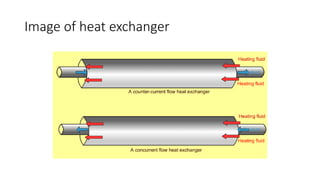
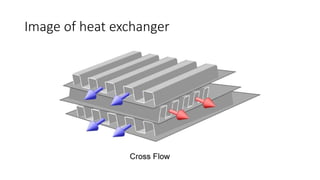
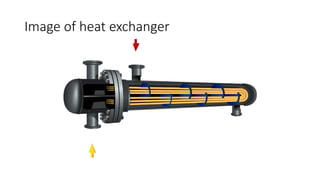
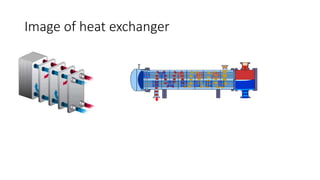
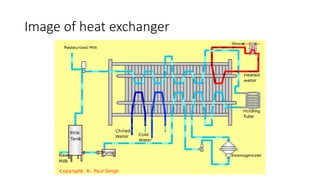
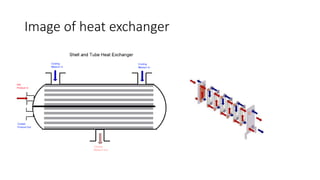
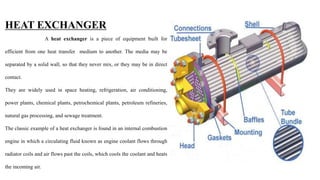
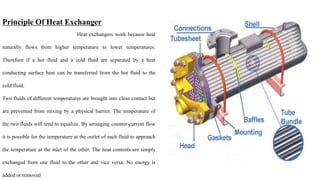
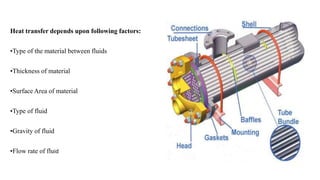
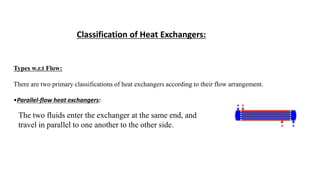
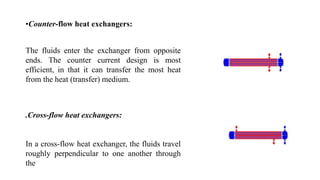
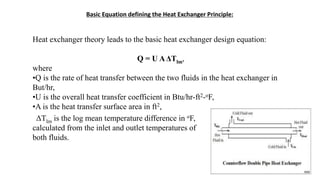
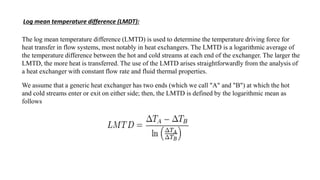
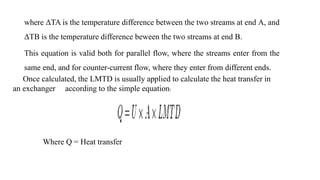


A heat exchanger transfers heat from one medium to another without allowing the two media to mix. Heat naturally flows from higher to lower temperatures, so a heat exchanger brings two fluids of different temperatures into close contact while preventing mixing. Common applications include heating, cooling, and industrial processes. Key factors that impact heat transfer include material properties, surface area, flow rates, and temperature differences of the fluids. Heat exchangers are classified based on flow patterns, such as parallel, counter, and cross flow designs. The rate of heat transfer depends on the overall heat transfer coefficient, surface area, and log mean temperature difference between the fluids.


