CURRENT TREND HEALTH SYSTEM
DEVELOPMENT AND MANAGEMENT
chuchai.s@nhso.go.th
Facebook , twitter : Morchuchai
Line : chuchai55
=
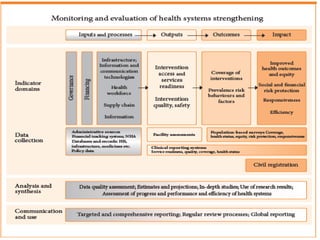
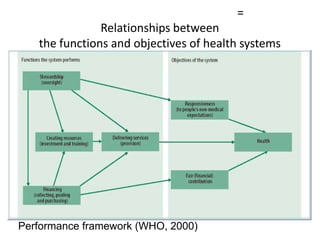
Relationships between
the functions and objectives of health systems
Performance framework (WHO, 2000)
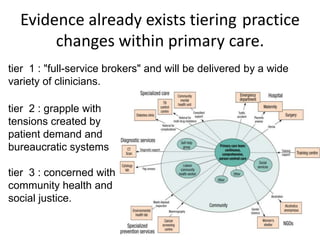
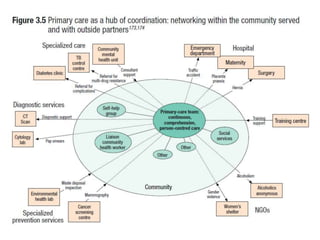
Evidence already exists tiering practice
changes within primary care.
tier 1 : "full-service brokers" and will be delivered by a wide
variety of clinicians.
tier 2 : grapple with
tensions created by
patient demand and
bureaucratic systems
tier 3 : concerned with
community health and
social justice.
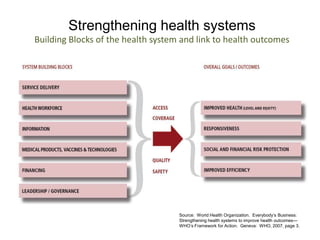
Strengthening health systems
Building Blocks of the health system and link to health outcomes
Source: World Health Organization. Everybody’s Business:
Strengthening health systems to improve health outcomes—
WHO’s Framework for Action. Geneva: WHO, 2007, page 3.
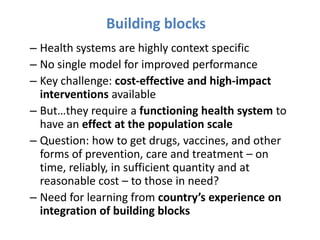
Building blocks
– Health systems are highly context specific
– No single model for improved performance
– Key challenge: cost-effective and high-impact
interventions available
– But…they require a functioning health system to
have an effect at the population scale
– Question: how to get drugs, vaccines, and other
forms of prevention, care and treatment – on
time, reliably, in sufficient quantity and at
reasonable cost – to those in need?
– Need for learning from country’s experience on
integration of building blocks
Building blocks
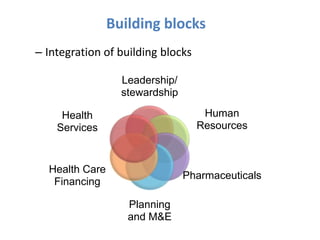
– Integration of building blocks
Leadership/
stewardship
Human
Resources
Pharmaceuticals
Planning
and M&E
Health Care
Financing
Health
Services
The World Health Report 2008
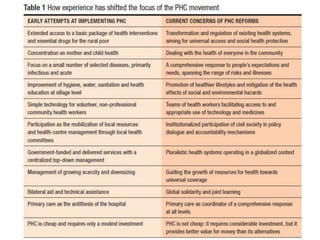
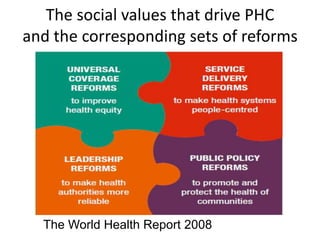
The social values that drive PHC
and the corresponding sets of reforms
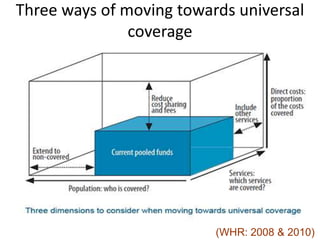
Three ways of moving towards universal
coverage
(WHR: 2008 & 2010)
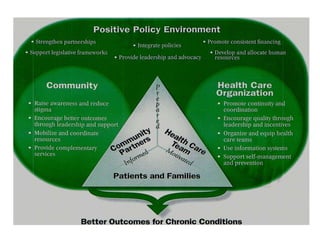
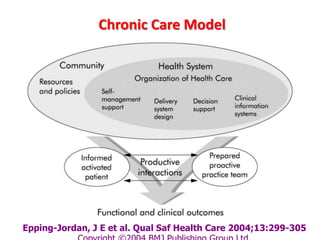
Chronic Care Model
Epping-Jordan, J E et al. Qual Saf Health Care 2004;13:299-305
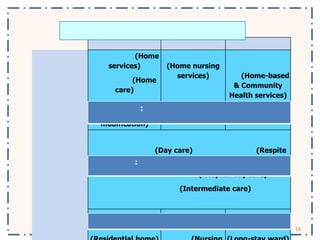
(Home
services)
(Home
care)
(Home
modification)
(Home nursing
services) (Home-based
& Community
Health services)
(Day care) (Respite
care)
(Hospital day care)
(Intermediate care)
:
:
19
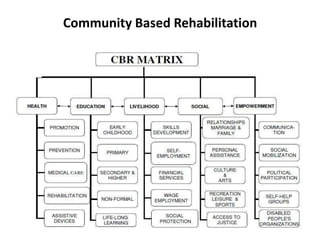
Community Based Rehabilitation
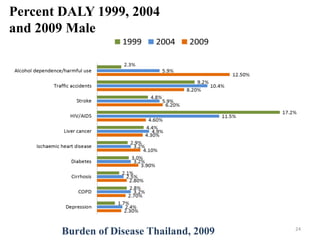
Percent DALY 1999, 2004
and 2009 Male
24
Burden of Disease Thailand, 2009
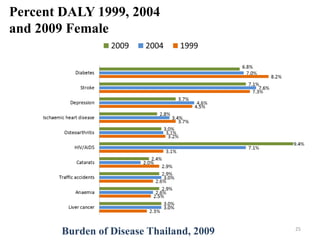
Percent DALY 1999, 2004
and 2009 Female
25
Burden of Disease Thailand, 2009
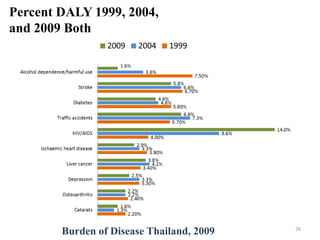
Percent DALY 1999, 2004,
and 2009 Both
26
Burden of Disease Thailand, 2009
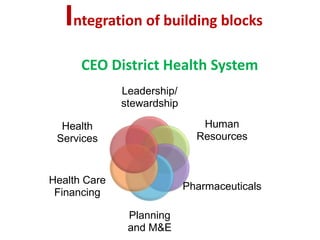
Integration of building blocks
CEO District Health System
Leadership/
stewardship
Human
Resources
Pharmaceuticals
Planning
and M&E
Health Care
Financing
Health
Services
2557-
2557
[ ]
1,056.96 1,056.96
1,018.35 1,027.94
3 281.02 271.33
4 383.61 383.61
5 14.95 14.95
6 8.19 8.19
7 128.69 128.69
8 3.32 3.32
9 - 0.10
2,895.09 2,895.09
29
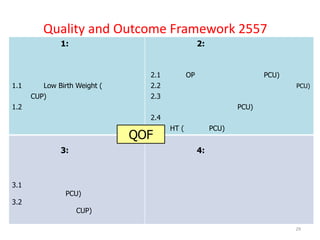
Quality and Outcome Framework 2557
Quality and Outcome Framework :QOF) 25571:
1.1 Low Birth Weight (
CUP)
1.2
2:
2.1 OP PCU)
2.2 PCU)
2.3
PCU)
2.4
HT ( PCU)
3:
3.1
PCU)
3.2
CUP)
4:
QOF
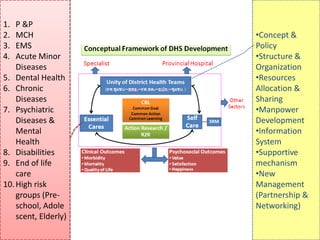
•Concept &
Policy
•Structure &
Organization
•Resources
Allocation &
Sharing
•Manpower
Development
•Information
System
•Supportive
mechanism
•New
Management
(Partnership &
Networking)
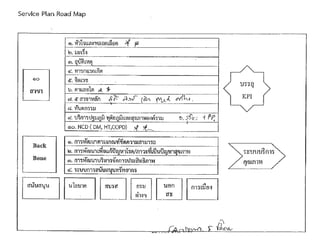
1. P &P
2. MCH
3. EMS
4. Acute Minor
Diseases
5. Dental Health
6. Chronic
Diseases
7. Psychiatric
Diseases &
Mental
Health
8. Disabilities
9. End of life
care
10.High risk
groups (Pre-
school, Adole
scent, Elderly)
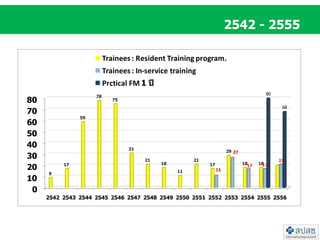
2542 - 2555
80
68
Trainees: Resident Training program.
Trainees: In-service training
Prctical FM
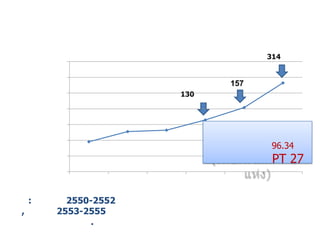
314
: 2550-2552
, 2553-2555
.
130
157
96.34
PT 27
0
2000
4000
6000
8000
10000
12000
14000
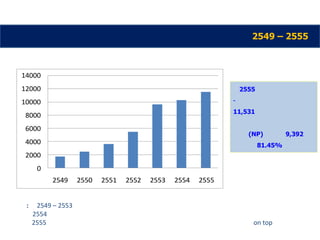
2549 2550 2551 2552 2553 2554 2555
: 2549 – 2553
2554
2555 on top
2555
-
11,531
(NP) 9,392
81.45%
2549 – 2555
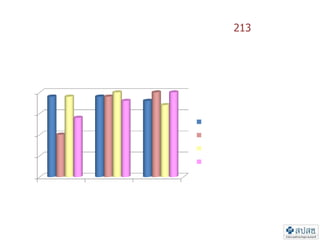
213
38
chuchai.sn@gmail.com

Health systemmn tdevelopment