āļŦāļēāļĒāđƒāļˆ
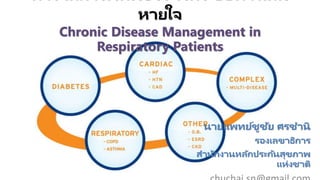
Chronic Disease Management in
Respiratory Patients
āļ™āļēāļĒāđāļžāļ—āļĒāđŒāļŠāļđāļŠāļąāļĒ āļĻāļĢāļŠāļēāļ™āļī
āļĢāļ­āļ‡āđ€āļĨāļ‚āļēāļ˜āļīāļāļēāļĢ
āļŠāļēāļ™āļąāļāļ‡āļēāļ™āļŦāļĨāļąāļāļ›āļĢāļ°āļāļąāļ™āļŠāļļāļ‚āļ āļēāļž
āđāļŦāđˆāļ‡āļŠāļēāļ•āļī
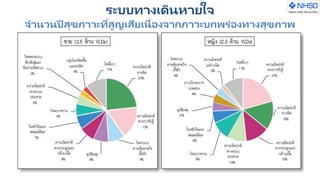
āļĢāļ°āļšāļšāļ—āļēāļ‡āđ€āļ”āļīāļ™āļŦāļēāļĒāđƒāļˆ
āļˆāļēāļ™āļ§āļ™āļ›āļĩ āļŠāļļāļ‚āļ āļēāļ§āļ°āļ—āļĩāđˆāļŠāļđāļāđ€āļŠāļĩāļĒāđ€āļ™āļ·āđˆāļ­āļ‡āļˆāļēāļāļ āļēāļ§āļ°āļšāļāļžāļĢāđˆāļ­āļ‡āļ—āļēāļ‡āļŠāļļāļ‚āļ āļēāļž
(YLD)
Years)
āļ‚āļ­āļ‡āļ›āļĢāļ°āļŠāļēāļāļĢāđ„āļ—āļĒāļāļĨāļļāđˆāļĄāļ­āļēāļĒāļļ 60 āļ›āļĩ āļ‚āļķāđ‰āļ™āđ„āļ› āļž.āļĻ. 2557 āļˆāļēāđāļ™āļ
āļ•āļēāļĄāđ€āļžāļĻ āđāļĨāļ°āļŠāļēāđ€āļŦāļ•āļļāļŦāļĨāļąāļ
āļ—āļĩāđˆāļĄāļē: āļĢāļēāļĒāļ‡āļēāļ™āļ āļēāļĢāļ°āđ‚āļĢāļ„āđāļĨāļ°āļāļēāļĢāļšāļēāļ”āđ€āļˆāđ‡āļšāļ‚āļ­āļ‡āļ›āļĢāļ°āļŠāļēāļāļĢāđ„āļ—āļĒ āļž.āļĻ. 2557
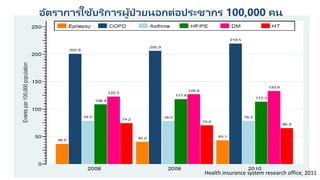
Health insurance system research office, 2011
āļ­āļąāļ•āļĢāļēāļāļēāļĢāđƒāļŠāđ‰āļšāļĢāļīāļāļēāļĢāļœāļđāđ‰āļ›āđˆ āļ§āļĒāļ™āļ­āļāļ•āđˆāļ­āļ›āļĢāļ°āļŠāļēāļāļĢ 100,000 āļ„āļ™
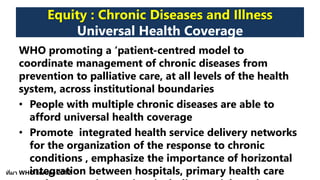
Equity : Chronic Diseases and Illness
Universal Health Coverage
WHO promoting a ‘patient-centred model to
coordinate management of chronic diseases from
prevention to palliative care, at all levels of the health
system, across institutional boundaries
â€Ē People with multiple chronic diseases are able to
afford universal health coverage
â€Ē Promote integrated health service delivery networks
for the organization of the response to chronic
conditions , emphasize the importance of horizontal
integration between hospitals, primary health careāļ—āļĩāđˆāļĄāļē WHO Europe 2012
āļ„āļēāļˆāļēāļāļąāļ”āļ„āļ§āļēāļĄ āđ‚āļĢāļ„āđ€āļĢāļ·āđ‰āļ­āļĢāļąāļ‡ Chronic disease or chronic
condition
Need to promote lifestyle changes and medical
breakthroughs
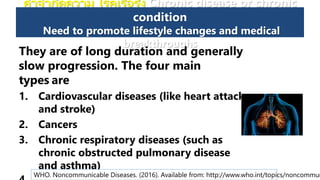
They are of long duration and generally
slow progression. The four main
types are
1. Cardiovascular diseases (like heart attacks
and stroke)
2. Cancers
3. Chronic respiratory diseases (such as
chronic obstructed pulmonary disease
and asthma)
WHO. Noncommunicable Diseases. (2016). Available from: http://www.who.int/topics/noncommun
Wagner EH. Chronic disease management: what will it take to improve care for chronic illness? Eff Clin Pract 1998;1(1):2-4.
of people
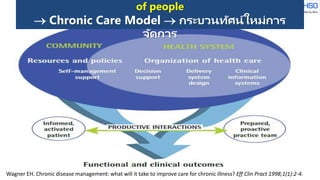
ï‚Ū Chronic Care Model ï‚Ū āļāļĢāļ°āļšāļ§āļ™āļ—āļąāļĻāļ™āđŒāđƒāļŦāļĄāđˆāļāļēāļĢ
āļˆāļąāļ”āļāļēāļĢ
Extend Your Care Beyond the Walls of the
Practice
Coordination across settings affects patients' clinical outcomes and
satisfaction with their care
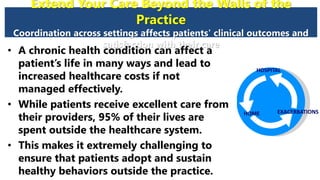
â€Ē A chronic health condition can affect a
patient’s life in many ways and lead to
increased healthcare costs if not
managed effectively.
â€Ē While patients receive excellent care from
their providers, 95% of their lives are
spent outside the healthcare system.
â€Ē This makes it extremely challenging to
ensure that patients adopt and sustain
healthy behaviors outside the practice.
HOSPITAL
HOME EXACERBATIONS
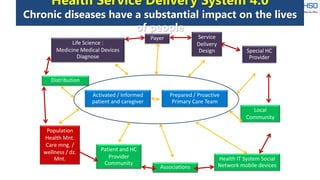
Health Service Delivery System 4.0
Chronic diseases have a substantial impact on the lives
of people
Activated / Informed
patient and caregiver
Prepared / Proactive
Primary Care Team
Payer Service
Delivery
Design Special HC
Provider
Local
Community
Health IT System Social
Network mobile devicesAssociations
Patient and HC
Provider
Community
Population
Health Mnt.
Care mng. /
wellness / dz.
Mnt.
Distribution
Life Science :
Medicine Medical Devices
Diagnose
āļāļēāļĢāļˆāļąāļ”āļāļēāļĢāđ‚āļĢāļ„āđ€āļĢāļ·āđ‰āļ­āļĢāļąāļ‡ āđ‚āļĢāļ„āļĢāļ°āļšāļšāļ—āļēāļ‡āđ€āļ”āļīāļ™āļŦāļēāļĒāđƒāļˆ
Disease-management programs may enhance the quality of care provided
to patients with chronic diseases
â€Ē COPD disease-management programs modestly
improved exercise capacity, health-related quality of
life, and hospital admissions
â€Ē The goal of a disease management programs for
patients with COPD asthma is to provide home care
to patients with continuum and to improve their
wellbeing
â€Ē Chronic disease management programs for people
with COPD involving primary care improved quality
of life
Respir Med. 2007 Nov;101(11):2233-9. Epub 2007 Sep 4.
Systematic review of the effects of chronic disease management on quality-of-life in people with chronic obstructive pulmonary disease.
Niesink A1, Trappenburg JC, de Weert-van Oene GH, Lammers JW, Verheij TJ, Schrijvers AJ.
PATIENTS NEEDING HOME CARE
Comprehensive strategies to manage chronic disease and to deliver
improved chronic disease care
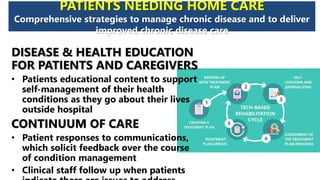
DISEASE & HEALTH EDUCATION
FOR PATIENTS AND CAREGIVERS
â€Ē Patients educational content to support
self-management of their health
conditions as they go about their lives
outside hospital
CONTINUUM OF CARE
â€Ē Patient responses to communications,
which solicit feedback over the course
of condition management
â€Ē Clinical staff follow up when patients
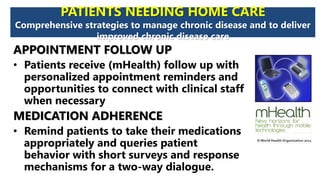
APPOINTMENT FOLLOW UP
â€Ē Patients receive (mHealth) follow up with
personalized appointment reminders and
opportunities to connect with clinical staff
when necessary
MEDICATION ADHERENCE
â€Ē Remind patients to take their medications
appropriately and queries patient
behavior with short surveys and response
mechanisms for a two-way dialogue.
PATIENTS NEEDING HOME CARE
Comprehensive strategies to manage chronic disease and to deliver
improved chronic disease care
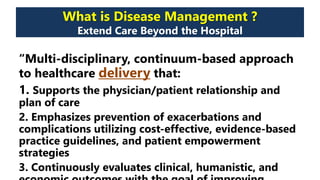
What is Disease Management ?
Extend Care Beyond the Hospital
“Multi-disciplinary, continuum-based approach
to healthcare delivery that:
1. Supports the physician/patient relationship and
plan of care
2. Emphasizes prevention of exacerbations and
complications utilizing cost-effective, evidence-based
practice guidelines, and patient empowerment
strategies
3. Continuously evaluates clinical, humanistic, and
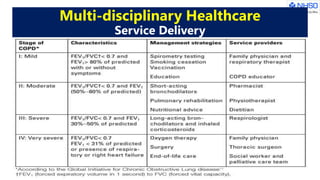
Multi-disciplinary Healthcare
Service Delivery
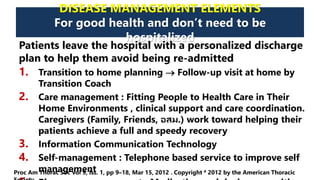
DISEASE MANAGEMENT ELEMENTS
For good health and don’t need to be
hospitalized
Patients leave the hospital with a personalized discharge
plan to help them avoid being re-admitted
1. Transition to home planning ï‚Ū Follow-up visit at home by
Transition Coach
2. Care management : Fitting People to Health Care in Their
Home Environments , clinical support and care coordination.
Caregivers (Family, Friends, āļ­āļŠāļĄ.) work toward helping their
patients achieve a full and speedy recovery
3. Information Communication Technology
4. Self-management : Telephone based service to improve self
managementProc Am Thorac Soc Vol 9, Iss. 1, pp 9–18, Mar 15, 2012 . Copyright © 2012 by the American Thoracic
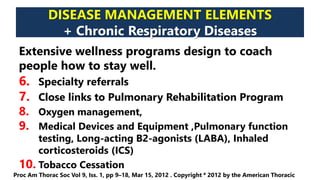
DISEASE MANAGEMENT ELEMENTS
+ Chronic Respiratory Diseases
Extensive wellness programs design to coach
people how to stay well.
6. Specialty referrals
7. Close links to Pulmonary Rehabilitation Program
8. Oxygen management,
9. Medical Devices and Equipment ,Pulmonary function
testing, Long-acting B2-agonists (LABA), Inhaled
corticosteroids (ICS)
10. Tobacco Cessation
Proc Am Thorac Soc Vol 9, Iss. 1, pp 9–18, Mar 15, 2012 . Copyright © 2012 by the American Thoracic
DISEASE MANAGEMENT ELEMENTS
Spirometry : A Key to Early Detection of Chronic
Respiratory Diseases
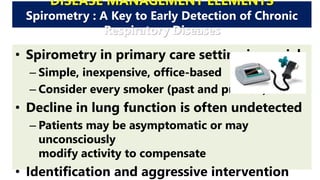
â€Ē Spirometry in primary care setting is crucial
– Simple, inexpensive, office-based
– Consider every smoker (past and present)
â€Ē Decline in lung function is often undetected
– Patients may be asymptomatic or may
unconsciously
modify activity to compensate
â€Ē Identification and aggressive intervention
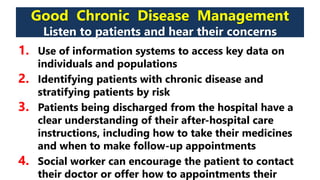
Good Chronic Disease Management
Listen to patients and hear their concerns
1. Use of information systems to access key data on
individuals and populations
2. Identifying patients with chronic disease and
stratifying patients by risk
3. Patients being discharged from the hospital have a
clear understanding of their after-hospital care
instructions, including how to take their medicines
and when to make follow-up appointments
4. Social worker can encourage the patient to contact
their doctor or offer how to appointments their
An effective COPD disease management
program
Continuum of Care
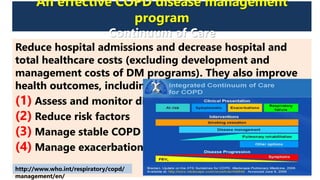
Reduce hospital admissions and decrease hospital and
total healthcare costs (excluding development and
management costs of DM programs). They also improve
health outcomes, including health-related quality of life.
(1) Assess and monitor disease
(2) Reduce risk factors
(3) Manage stable COPD
(4) Manage exacerbations
http://www.who.int/respiratory/copd/
management/en/
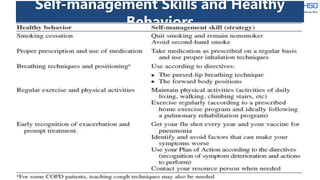
Self-management Skills and Healthy
Behaviors
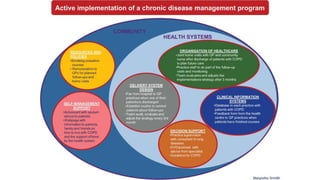
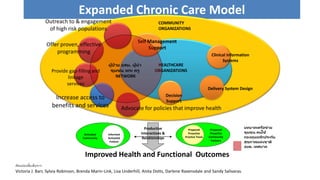
Expanded Chronic Care Model
COMMUNITY
ORGANIZATIONS
HEALTHCARE
ORGANIZATIONS
Self Management
Support
Decision
Support
Delivery System Design
Clinical Information
Systems
Informed
Activated
Patient
Activated
Community
Prepared
Proactive
Practice Team
Prepared
Proactive
Community
Partners
Productive
Interactions &
Relationships
Improved Health and Functional Outcomes
āļšāļ—āļšāļēāļ—āđ€āļ„āļĢāļ·āļ­āļ‚āđˆāļēāļĒ
āļŠāļļāļĄāļŠāļ™ āļ„āļ™āđ„āļ‚āđ‰
āļāļ­āļ‡āļ—āļļāļ™āļŦāļĨāļąāļāļ›āļĢāļ°āļāļąāļ™
āļŠāļļāļ‚āļ āļēāļžāđāļŦāđˆāļ‡āļŠāļēāļ•āļī
āļ­āļšāļ•. āđ€āļ—āļĻāļšāļēāļĨ
āļœāļđāđ‰āļ›āđˆ āļ§āļĒ āļ­āļŠāļĄ. āļœāļđāđ‰āļ™āļē
āļŠāļļāļĄāļŠāļ™ āļžāļĢāļ° āļ„āļĢāļđ
NETWORK
Offer proven, effective
programming
Outreach to & engagement
of high risk populations
Provide gap-filling and
linkage
services
Increase access to
benefits and services Advocate for policies that improve health
āļ”āļąāļ”āđāļ›āļĨāļ‡āđ€āļžāļīāđˆāļĄāđ€āļ•āļīāļĄāļˆāļēāļ
Victoria J. Barr, Sylvia Robinson, Brenda Marin-Link, Lisa Underhill, Anita Dotts, Darlene Ravensdale and Sandy Salivaras.
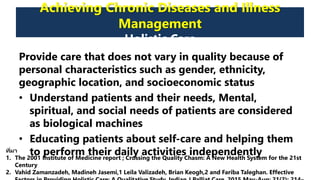
Achieving Chronic Diseases and Illness
Management
Holistic Care
Provide care that does not vary in quality because of
personal characteristics such as gender, ethnicity,
geographic location, and socioeconomic status
â€Ē Understand patients and their needs, Mental,
spiritual, and social needs of patients are considered
as biological machines
â€Ē Educating patients about self-care and helping them
to perform their daily activities independentlyāļ—āļĩāđˆāļĄāļē
1. The 2001 Institute of Medicine report ; Crossing the Quality Chasm: A New Health System for the 21st
Century
2. Vahid Zamanzadeh, Madineh Jasemi,1 Leila Valizadeh, Brian Keogh,2 and Fariba Taleghan. Effective
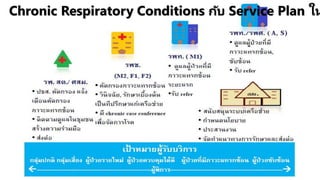
Chronic Respiratory Conditions āļāļąāļš Service Plan āđƒāļ™
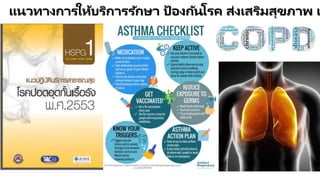
āđāļ™āļ§āļ—āļēāļ‡āļāļēāļĢāđƒāļŦāđ‰āļšāļĢāļīāļāļēāļĢāļĢāļąāļāļĐāļē āļ›āđ‰ āļ­āļ‡āļāļąāļ™āđ‚āļĢāļ„ āļŠāđˆāļ‡āđ€āļŠāļĢāļīāļĄāļŠāļļāļ‚āļ āļēāļž āđ
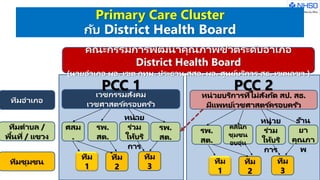
Primary Care Cluster
āļāļąāļš District Health Board
āļ„āļ“āļ°āļāļĢāļĢāļĄāļāļēāļĢāļžāļąāļ’āļ™āļēāļ„āļļāļ“āļ āļēāļžāļŠāļĩāļ§āļīāļ•āļĢāļ°āļ”āļąāļšāļ­āļēāđ€āļ āļ­
District Health Board
(āļ™āļēāļĒāļ­āļēāđ€āļ āļ­ āļœāļ­. āđ€āļ‚āļ• āļāļ—āļĄ. āļ›āļĢāļ°āļ˜āļēāļ™ āļŠāļŠāļ­. āļœāļ­. āļĻāļđāļ™āļĒāđŒāļšāļĢāļīāļāļēāļĢ āļŠāļ˜. āđ€āļ‚āļ•āđ€āļĨāļ‚āļē )
āđ€āļ§āļŠāļāļĢāļĢāļĄāļŠāļąāļ‡āļ„āļĄ
āđ€āļ§āļŠāļĻāļēāļŠāļ•āļĢ āđŒāļ„āļĢāļ­āļšāļ„āļĢāļąāļ§
āļŦāļ™āđˆāļ§āļĒāļšāļĢāļīāļāļēāļĢāļ—āļĩāđˆāđ„āļĄāđˆāļŠāļąāļ‡āļāļąāļ” āļŠāļ›. āļŠāļ˜.
āļĄāļĩāđāļžāļ—āļĒāđŒāđ€āļ§āļŠāļĻāļēāļŠāļ•āļĢ āđŒāļ„āļĢāļ­āļšāļ„āļĢāļąāļ§
āļĻāļŠāļĄ
.
āļĢāļž.
āļŠāļ•.
āļĢāļž.
āļŠāļ•.
āļĢāļž.
āļŠāļ•.
āļ„āļĨāļīāļ™āļīāļ
āļŠāļļāļĄāļŠāļ™
āļ­āļšāļ­āļļāđˆāļ™
āļĢāđ‰āļēāļ™
āļĒāļē
āļ„āļļāļ“āļ āļē
āļž
āļŦāļ™āđˆāļ§āļĒ
āļĢāđˆāļ§āļĄ
āđƒāļŦāđ‰āļšāļĢāļī
āļāļēāļĢ
āļŦāļ™āđˆāļ§āļĒ
āļĢāđˆāļ§āļĄ
āđƒāļŦāđ‰āļšāļĢāļī
āļāļēāļĢ
āļ—āļĩāļĄ
1
āļ—āļĩāļĄ
2
āļ—āļĩāļĄ
3
āļ—āļĩāļĄ
1
āļ—āļĩāļĄ
2
āļ—āļĩāļĄ
3
PCC 1 PCC 2
āļ—āļĩāļĄāļ­āļēāđ€āļ āļ­
āļ—āļĩāļĄāļ•āļēāļšāļĨ /
āļžāļ·āđ‰āļ™āļ—āļĩāđˆ / āđāļ‚āļ§āļ‡
āļ—āļĩāļĄāļŠāļļāļĄāļŠāļ™
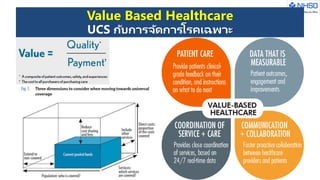
Value Based Healthcare
UCS āļāļąāļšāļāļēāļĢāļˆāļąāļ”āļāļēāļĢāđ‚āļĢāļ„āđ€āļ‰āļžāļēāļ°
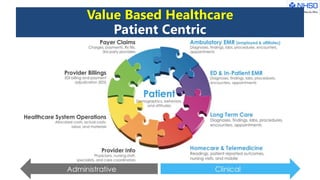
Value Based Healthcare
Patient Centric
āļ™āļēāļĒāđāļžāļ—āļĒāđŒ āļŠāļđāļŠāļąāļĒ āļĻāļĢāļŠāļēāļ™āļī
chuchai.s@nhso.go.th

ChronicDzMntRespiratoryIllness

  • 1.
    āļŦāļēāļĒāđƒāļˆ Chronic Disease Managementin Respiratory Patients āļ™āļēāļĒāđāļžāļ—āļĒāđŒāļŠāļđāļŠāļąāļĒ āļĻāļĢāļŠāļēāļ™āļī āļĢāļ­āļ‡āđ€āļĨāļ‚āļēāļ˜āļīāļāļēāļĢ āļŠāļēāļ™āļąāļāļ‡āļēāļ™āļŦāļĨāļąāļāļ›āļĢāļ°āļāļąāļ™āļŠāļļāļ‚āļ āļēāļž āđāļŦāđˆāļ‡āļŠāļēāļ•āļī
  • 2.
  • 3.
    Years) āļ‚āļ­āļ‡āļ›āļĢāļ°āļŠāļēāļāļĢāđ„āļ—āļĒāļāļĨāļļāđˆāļĄāļ­āļēāļĒāļļ 60 āļ›āļĩāļ‚āļķāđ‰āļ™āđ„āļ› āļž.āļĻ. 2557 āļˆāļēāđāļ™āļ āļ•āļēāļĄāđ€āļžāļĻ āđāļĨāļ°āļŠāļēāđ€āļŦāļ•āļļāļŦāļĨāļąāļ āļ—āļĩāđˆāļĄāļē: āļĢāļēāļĒāļ‡āļēāļ™āļ āļēāļĢāļ°āđ‚āļĢāļ„āđāļĨāļ°āļāļēāļĢāļšāļēāļ”āđ€āļˆāđ‡āļšāļ‚āļ­āļ‡āļ›āļĢāļ°āļŠāļēāļāļĢāđ„āļ—āļĒ āļž.āļĻ. 2557
  • 4.
    Health insurance systemresearch office, 2011 āļ­āļąāļ•āļĢāļēāļāļēāļĢāđƒāļŠāđ‰āļšāļĢāļīāļāļēāļĢāļœāļđāđ‰āļ›āđˆ āļ§āļĒāļ™āļ­āļāļ•āđˆāļ­āļ›āļĢāļ°āļŠāļēāļāļĢ 100,000 āļ„āļ™
  • 5.
    Equity : ChronicDiseases and Illness Universal Health Coverage WHO promoting a ‘patient-centred model to coordinate management of chronic diseases from prevention to palliative care, at all levels of the health system, across institutional boundaries â€Ē People with multiple chronic diseases are able to afford universal health coverage â€Ē Promote integrated health service delivery networks for the organization of the response to chronic conditions , emphasize the importance of horizontal integration between hospitals, primary health careāļ—āļĩāđˆāļĄāļē WHO Europe 2012
  • 6.
    āļ„āļēāļˆāļēāļāļąāļ”āļ„āļ§āļēāļĄ āđ‚āļĢāļ„āđ€āļĢāļ·āđ‰āļ­āļĢāļąāļ‡ Chronicdisease or chronic condition Need to promote lifestyle changes and medical breakthroughs They are of long duration and generally slow progression. The four main types are 1. Cardiovascular diseases (like heart attacks and stroke) 2. Cancers 3. Chronic respiratory diseases (such as chronic obstructed pulmonary disease and asthma) WHO. Noncommunicable Diseases. (2016). Available from: http://www.who.int/topics/noncommun
  • 7.
    Wagner EH. Chronicdisease management: what will it take to improve care for chronic illness? Eff Clin Pract 1998;1(1):2-4. of people ï‚Ū Chronic Care Model ï‚Ū āļāļĢāļ°āļšāļ§āļ™āļ—āļąāļĻāļ™āđŒāđƒāļŦāļĄāđˆāļāļēāļĢ āļˆāļąāļ”āļāļēāļĢ
  • 8.
    Extend Your CareBeyond the Walls of the Practice Coordination across settings affects patients' clinical outcomes and satisfaction with their care â€Ē A chronic health condition can affect a patient’s life in many ways and lead to increased healthcare costs if not managed effectively. â€Ē While patients receive excellent care from their providers, 95% of their lives are spent outside the healthcare system. â€Ē This makes it extremely challenging to ensure that patients adopt and sustain healthy behaviors outside the practice. HOSPITAL HOME EXACERBATIONS
  • 9.
    Health Service DeliverySystem 4.0 Chronic diseases have a substantial impact on the lives of people Activated / Informed patient and caregiver Prepared / Proactive Primary Care Team Payer Service Delivery Design Special HC Provider Local Community Health IT System Social Network mobile devicesAssociations Patient and HC Provider Community Population Health Mnt. Care mng. / wellness / dz. Mnt. Distribution Life Science : Medicine Medical Devices Diagnose
  • 10.
    āļāļēāļĢāļˆāļąāļ”āļāļēāļĢāđ‚āļĢāļ„āđ€āļĢāļ·āđ‰āļ­āļĢāļąāļ‡ āđ‚āļĢāļ„āļĢāļ°āļšāļšāļ—āļēāļ‡āđ€āļ”āļīāļ™āļŦāļēāļĒāđƒāļˆ Disease-management programsmay enhance the quality of care provided to patients with chronic diseases â€Ē COPD disease-management programs modestly improved exercise capacity, health-related quality of life, and hospital admissions â€Ē The goal of a disease management programs for patients with COPD asthma is to provide home care to patients with continuum and to improve their wellbeing â€Ē Chronic disease management programs for people with COPD involving primary care improved quality of life Respir Med. 2007 Nov;101(11):2233-9. Epub 2007 Sep 4. Systematic review of the effects of chronic disease management on quality-of-life in people with chronic obstructive pulmonary disease. Niesink A1, Trappenburg JC, de Weert-van Oene GH, Lammers JW, Verheij TJ, Schrijvers AJ.
  • 12.
    PATIENTS NEEDING HOMECARE Comprehensive strategies to manage chronic disease and to deliver improved chronic disease care DISEASE & HEALTH EDUCATION FOR PATIENTS AND CAREGIVERS â€Ē Patients educational content to support self-management of their health conditions as they go about their lives outside hospital CONTINUUM OF CARE â€Ē Patient responses to communications, which solicit feedback over the course of condition management â€Ē Clinical staff follow up when patients
  • 13.
    APPOINTMENT FOLLOW UP â€ĒPatients receive (mHealth) follow up with personalized appointment reminders and opportunities to connect with clinical staff when necessary MEDICATION ADHERENCE â€Ē Remind patients to take their medications appropriately and queries patient behavior with short surveys and response mechanisms for a two-way dialogue. PATIENTS NEEDING HOME CARE Comprehensive strategies to manage chronic disease and to deliver improved chronic disease care
  • 14.
    What is DiseaseManagement ? Extend Care Beyond the Hospital “Multi-disciplinary, continuum-based approach to healthcare delivery that: 1. Supports the physician/patient relationship and plan of care 2. Emphasizes prevention of exacerbations and complications utilizing cost-effective, evidence-based practice guidelines, and patient empowerment strategies 3. Continuously evaluates clinical, humanistic, and
  • 15.
  • 16.
    DISEASE MANAGEMENT ELEMENTS Forgood health and don’t need to be hospitalized Patients leave the hospital with a personalized discharge plan to help them avoid being re-admitted 1. Transition to home planning ï‚Ū Follow-up visit at home by Transition Coach 2. Care management : Fitting People to Health Care in Their Home Environments , clinical support and care coordination. Caregivers (Family, Friends, āļ­āļŠāļĄ.) work toward helping their patients achieve a full and speedy recovery 3. Information Communication Technology 4. Self-management : Telephone based service to improve self managementProc Am Thorac Soc Vol 9, Iss. 1, pp 9–18, Mar 15, 2012 . Copyright Š 2012 by the American Thoracic
  • 17.
    DISEASE MANAGEMENT ELEMENTS +Chronic Respiratory Diseases Extensive wellness programs design to coach people how to stay well. 6. Specialty referrals 7. Close links to Pulmonary Rehabilitation Program 8. Oxygen management, 9. Medical Devices and Equipment ,Pulmonary function testing, Long-acting B2-agonists (LABA), Inhaled corticosteroids (ICS) 10. Tobacco Cessation Proc Am Thorac Soc Vol 9, Iss. 1, pp 9–18, Mar 15, 2012 . Copyright © 2012 by the American Thoracic
  • 18.
    DISEASE MANAGEMENT ELEMENTS Spirometry: A Key to Early Detection of Chronic Respiratory Diseases â€Ē Spirometry in primary care setting is crucial – Simple, inexpensive, office-based – Consider every smoker (past and present) â€Ē Decline in lung function is often undetected – Patients may be asymptomatic or may unconsciously modify activity to compensate â€Ē Identification and aggressive intervention
  • 19.
    Good Chronic DiseaseManagement Listen to patients and hear their concerns 1. Use of information systems to access key data on individuals and populations 2. Identifying patients with chronic disease and stratifying patients by risk 3. Patients being discharged from the hospital have a clear understanding of their after-hospital care instructions, including how to take their medicines and when to make follow-up appointments 4. Social worker can encourage the patient to contact their doctor or offer how to appointments their
  • 20.
    An effective COPDdisease management program Continuum of Care Reduce hospital admissions and decrease hospital and total healthcare costs (excluding development and management costs of DM programs). They also improve health outcomes, including health-related quality of life. (1) Assess and monitor disease (2) Reduce risk factors (3) Manage stable COPD (4) Manage exacerbations http://www.who.int/respiratory/copd/ management/en/
  • 21.
    Self-management Skills andHealthy Behaviors
  • 22.
    Expanded Chronic CareModel COMMUNITY ORGANIZATIONS HEALTHCARE ORGANIZATIONS Self Management Support Decision Support Delivery System Design Clinical Information Systems Informed Activated Patient Activated Community Prepared Proactive Practice Team Prepared Proactive Community Partners Productive Interactions & Relationships Improved Health and Functional Outcomes āļšāļ—āļšāļēāļ—āđ€āļ„āļĢāļ·āļ­āļ‚āđˆāļēāļĒ āļŠāļļāļĄāļŠāļ™ āļ„āļ™āđ„āļ‚āđ‰ āļāļ­āļ‡āļ—āļļāļ™āļŦāļĨāļąāļāļ›āļĢāļ°āļāļąāļ™ āļŠāļļāļ‚āļ āļēāļžāđāļŦāđˆāļ‡āļŠāļēāļ•āļī āļ­āļšāļ•. āđ€āļ—āļĻāļšāļēāļĨ āļœāļđāđ‰āļ›āđˆ āļ§āļĒ āļ­āļŠāļĄ. āļœāļđāđ‰āļ™āļē āļŠāļļāļĄāļŠāļ™ āļžāļĢāļ° āļ„āļĢāļđ NETWORK Offer proven, effective programming Outreach to & engagement of high risk populations Provide gap-filling and linkage services Increase access to benefits and services Advocate for policies that improve health āļ”āļąāļ”āđāļ›āļĨāļ‡āđ€āļžāļīāđˆāļĄāđ€āļ•āļīāļĄāļˆāļēāļ Victoria J. Barr, Sylvia Robinson, Brenda Marin-Link, Lisa Underhill, Anita Dotts, Darlene Ravensdale and Sandy Salivaras.
  • 23.
    Achieving Chronic Diseasesand Illness Management Holistic Care Provide care that does not vary in quality because of personal characteristics such as gender, ethnicity, geographic location, and socioeconomic status â€Ē Understand patients and their needs, Mental, spiritual, and social needs of patients are considered as biological machines â€Ē Educating patients about self-care and helping them to perform their daily activities independentlyāļ—āļĩāđˆāļĄāļē 1. The 2001 Institute of Medicine report ; Crossing the Quality Chasm: A New Health System for the 21st Century 2. Vahid Zamanzadeh, Madineh Jasemi,1 Leila Valizadeh, Brian Keogh,2 and Fariba Taleghan. Effective
  • 24.
    Chronic Respiratory Conditionsāļāļąāļš Service Plan āđƒāļ™
  • 25.
  • 26.
    Primary Care Cluster āļāļąāļšDistrict Health Board āļ„āļ“āļ°āļāļĢāļĢāļĄāļāļēāļĢāļžāļąāļ’āļ™āļēāļ„āļļāļ“āļ āļēāļžāļŠāļĩāļ§āļīāļ•āļĢāļ°āļ”āļąāļšāļ­āļēāđ€āļ āļ­ District Health Board (āļ™āļēāļĒāļ­āļēāđ€āļ āļ­ āļœāļ­. āđ€āļ‚āļ• āļāļ—āļĄ. āļ›āļĢāļ°āļ˜āļēāļ™ āļŠāļŠāļ­. āļœāļ­. āļĻāļđāļ™āļĒāđŒāļšāļĢāļīāļāļēāļĢ āļŠāļ˜. āđ€āļ‚āļ•āđ€āļĨāļ‚āļē ) āđ€āļ§āļŠāļāļĢāļĢāļĄāļŠāļąāļ‡āļ„āļĄ āđ€āļ§āļŠāļĻāļēāļŠāļ•āļĢ āđŒāļ„āļĢāļ­āļšāļ„āļĢāļąāļ§ āļŦāļ™āđˆāļ§āļĒāļšāļĢāļīāļāļēāļĢāļ—āļĩāđˆāđ„āļĄāđˆāļŠāļąāļ‡āļāļąāļ” āļŠāļ›. āļŠāļ˜. āļĄāļĩāđāļžāļ—āļĒāđŒāđ€āļ§āļŠāļĻāļēāļŠāļ•āļĢ āđŒāļ„āļĢāļ­āļšāļ„āļĢāļąāļ§ āļĻāļŠāļĄ . āļĢāļž. āļŠāļ•. āļĢāļž. āļŠāļ•. āļĢāļž. āļŠāļ•. āļ„āļĨāļīāļ™āļīāļ āļŠāļļāļĄāļŠāļ™ āļ­āļšāļ­āļļāđˆāļ™ āļĢāđ‰āļēāļ™ āļĒāļē āļ„āļļāļ“āļ āļē āļž āļŦāļ™āđˆāļ§āļĒ āļĢāđˆāļ§āļĄ āđƒāļŦāđ‰āļšāļĢāļī āļāļēāļĢ āļŦāļ™āđˆāļ§āļĒ āļĢāđˆāļ§āļĄ āđƒāļŦāđ‰āļšāļĢāļī āļāļēāļĢ āļ—āļĩāļĄ 1 āļ—āļĩāļĄ 2 āļ—āļĩāļĄ 3 āļ—āļĩāļĄ 1 āļ—āļĩāļĄ 2 āļ—āļĩāļĄ 3 PCC 1 PCC 2 āļ—āļĩāļĄāļ­āļēāđ€āļ āļ­ āļ—āļĩāļĄāļ•āļēāļšāļĨ / āļžāļ·āđ‰āļ™āļ—āļĩāđˆ / āđāļ‚āļ§āļ‡ āļ—āļĩāļĄāļŠāļļāļĄāļŠāļ™
  • 27.
    Value Based Healthcare UCSāļāļąāļšāļāļēāļĢāļˆāļąāļ”āļāļēāļĢāđ‚āļĢāļ„āđ€āļ‰āļžāļēāļ°
  • 28.
  • 29.

Editor's Notes

  • #23 The Expanded Chronic Care Model: An Integration of Concepts and Strategies from Population Health Promotion and the Chronic Care Model. Healthcare Quarterly, 7(1) November 2003: 73-82.doi:10.12927/hcq.2003.16763