Health Informatics An Interprofessional Approach 2nd Edition Ramona Nelson
Health Informatics An Interprofessional Approach 2nd Edition Ramona Nelson
Health Informatics An Interprofessional Approach 2nd Edition Ramona Nelson
Health Informatics An Interprofessional Approach 2nd Edition Ramona Nelson
Health Informatics An Interprofessional Approach 2nd Edition Ramona Nelson
1.
Health Informatics AnInterprofessional Approach
2nd Edition Ramona Nelson download
https://ebookbell.com/product/health-informatics-an-
interprofessional-approach-2nd-edition-ramona-nelson-32908818
Explore and download more ebooks at ebookbell.com
2.
Here are somerecommended products that we believe you will be
interested in. You can click the link to download.
Health Informatics An Interprofessional Approach 2nd Edition Nelson
Phd Rnbc Anef Faan
https://ebookbell.com/product/health-informatics-an-interprofessional-
approach-2nd-edition-nelson-phd-rnbc-anef-faan-27425232
Health Informatics An Interprofessional Approach 2nd Edition Ramona
Nelson Nancy Staggers
https://ebookbell.com/product/health-informatics-an-interprofessional-
approach-2nd-edition-ramona-nelson-nancy-staggers-32908786
Biomedical Informatics An Introduction To Information Systems And
Software In Medicine And Health 1st Edition David J Lubliner Author
https://ebookbell.com/product/biomedical-informatics-an-introduction-
to-information-systems-and-software-in-medicine-and-health-1st-
edition-david-j-lubliner-author-11966404
Oncology Informatics Using Health Information Technology To Improve
Processes And Outcomes In Cancer 1st Edition Ahern
https://ebookbell.com/product/oncology-informatics-using-health-
information-technology-to-improve-processes-and-outcomes-in-
cancer-1st-edition-ahern-5432606
3.
Todays Health InformationManagement An Integrated Approach Third
Edition Dana C Mcway
https://ebookbell.com/product/todays-health-information-management-an-
integrated-approach-third-edition-dana-c-mcway-43326932
Health Information Management Technology An Applied Approach 4th
Edition Nanette B Sayles
https://ebookbell.com/product/health-information-management-
technology-an-applied-approach-4th-edition-nanette-b-sayles-4633200
Ehealth Care Information Systems An Introduction For Students And
Professionals 1st Edition Joseph Tan
https://ebookbell.com/product/ehealth-care-information-systems-an-
introduction-for-students-and-professionals-1st-edition-joseph-
tan-998348
Health Information Management Technology With Online Access An Applied
Approach 6th Edition Nanette B Sayles
https://ebookbell.com/product/health-information-management-
technology-with-online-access-an-applied-approach-6th-edition-nanette-
b-sayles-34385226
An Introduction To Health Information Technology In Ltpac Settings
Alexander
https://ebookbell.com/product/an-introduction-to-health-information-
technology-in-ltpac-settings-alexander-7159672
6.
Health Informatics
An InterprofessionalApproach
SECOND EDITION
Ramona Nelson, PhD, RN-BC,
ANEF, FAAN
Professor Emerita, Slippery Rock University, Slippery Rock, Pennsylvania
President, Ramona Nelson Consulting, Allison Park, Pennsylvania
Nancy Staggers, PhD, RN, FAAN
President, Summit Health Informatics; Adjunct Professor, College of
Nursing and Department of Biomedical Informatics, University of Utah,
Salt Lake City, Utah
8.
Table of Contents
Coverimage
Title page
Copyright
Dedication
About the Authors
Contributors
Reviewers and Ancillary Writers
Acknowledgments
Preface
Uses of the book
Vendors, applications, foundations and institutions
Organization of the book
Teaching and learning package
9.
Unit 1: FoundationalInformation in Health
Informatics
1: An Introduction to Health Informatics
Abstract
Introduction
Definition of health informatics
Topics and areas of study in informatics
Conclusion and future directions
Discussion Questions
Case Study
Case Study Questions
2: Theoretical Foundations of Health Informatics
Abstract
Introduction
Understanding theories and models
Additional informatics-related models
Conclusion and future directions
Discussion questions
Case study
Discussion Questions
3: Evidence-Based Practice, Practice-Based Evidence, and Health
Informatics
10.
Abstract
Introduction
Evidence-based practice
Evidence-based practicemodels
Stevens star model of knowledge transformation
Informatics and evidence-based practice
Relationship of EBP and PBE
Practice-based evidence
Informatics and practice-based evidence
Conclusion and future directions
Discussion questions
EBP case study
Discussion Questions
PBE Case study
Pressure Ulcer Case Study
Negative Association With Likelihood of Developing a Pressure Ulcer (Less
Likely)
Positive Association With Likelihood of Developing a Pressure Ulcer (More
Likely)
Discussion Questions
4: Models, Theories, and Research for Program Evaluation
Abstract
Introduction
Purposes of evaluation
11.
Theories and frameworks
Methods,tools, and techniques
Conclusion and future directions
Discussion questions
Case study
Discussion Questions
5: Technical Infrastructure to Support Healthcare
Abstract
Introduction
Electronic health record component model
System integration and interoperability
Networking systems
Other infrastructure models
Current challenges
Conclusion and future directions
Discussion questions
Case study
Discussion Questions
Unit 2: Information Systems and Applications for
the Delivery of Healthcare
6: Electronic Health Records and Applications for Managing Patient
Care
Abstract
12.
Introduction
Electronic health recordcomponents, functions, and attributes
Sociotechnical perspectives
Electronic health record applications used in the clinical setting
Electronic health record benefits
Stakeholder perspectives
Key issues
Conclusion and future directions
Discussion questions
Case study
Discussion Questions
7: Administrative Applications Supporting Healthcare Delivery
Abstract
Introduction
Major Types of Applications
Conclusion and Future Directions
Discussion questions
Case Study
Michael H. Kennedy, Kim Crickmore, and Lynne Miles
Discussion Questions
8: Telehealth and Applications for Delivering Care at a Distance
Abstract
Introduction
13.
Telehealth technologies
Telehealth clinicalpractice considerations for healthcare professionals
Telehealth operational and organizational success factors and barriers
Telehealth challenges: licensure and regulatory issues for healthcare
professionals
Telehealth and direct patient health services
Conclusion and future directions
Discussion questions
Case Study
Discussion Questions
9: Home Health and Related Community-Based Systems
Abstract
Introduction
Evolution and milestones
Practice models
Standardized datasets
Supporting home health with electronic health records and health information
technology
Standardized terminologies
Omaha system
Conclusion and future directions
Discussion questions
Case Study
Discussion Questions
14.
10: Clinical DecisionSupport Systems in Healthcare
Abstract
Introduction
Clinical decision support types and examples
Clinical decision support impact
Clinical decision support best practices
Recent progress toward disseminating clinical decision support on a national
level
Research challenges
Conclusion and future directions
Discussion questions
Case study
Discussion Questions
11: Public Health Informatics
Abstract
Introduction
Public health: A population perspective
The value of informatics for the domain of public health
Conclusions and future public health informatics strategies
Discussion questions
Case study
Discussion Questions
Unit 3: Participatory Healthcare Informatics
15.
12: The EngagedePatient
Abstract
Historical background and drivers of the epatient evolution
Convergence of epatients, clinicians, patient-centered models of care, and
informatics
Health 3.0 emerges
Conclusion and future directions
Discussion questions
Case study
Discussion Questions
13: Social Media Tools for Practice and Education
Abstract
What is social media?
Social media tools
Social media statistics
Benefits of social media
Challenges of social media
Social media in education
Policy
Conclusion and future directions
Discussion questions
Case study
Social Media in Education and Healthcare
Discussion Questions
16.
14: Personal HealthRecords
Abstract
Definitions of the personal health record
The development of the electronic personal health record
Principles of an ideal personal health record
Examples of existing personal health records
Current evidence of benefits of personal health records
Current use of personal health records
Barriers to personal health record adoption
The future of personal health records
Discussion questions
Case study
Discussion Questions
15: mHealth: The Intersection of Mobile Technology and Health
Abstract
Introduction
Driving forces of mobile health
Mobile health benefits and challenges
Future directions of mobile health and conclusions
Discussion questions
Case study
Discussion Questions
17.
Unit 4: Managingthe Life Cycle of a Health
Information System
16: Strategic Planning and Selecting an Information System
Abstract
Introduction
Strategic vision and alignment
Systems life cycle
Conclusion and future directions
Discussion questions
Case study
Key Considerations for System Selection
17: Project Management Principles for Health Informatics
Abstract
Introduction
The need for project management in healthcare organizations
Project, program, and portfolio management
Roles and responsibilities: project, program, and portfolio managers
Project management tools
Project and portfolio management software selection
Conclusions and future directions
Discussion questions
Case study
Discussion Questions
18.
18: Contract Negotiationsand Software Licensing
Abstract
Introduction
Overview of licensing agreements
Major steps or stages in the performance of a license agreement
Specific components of the licensing agreement
Conclusions and future directions
Discussion questions
Case study
Discussion Questions
19: Implementing and Upgrading an Information System
Abstract
Introduction
Reasons to implement or upgrade a healthcare information system
New implementation versus an upgrade
Implementation and the systems life cycle
Preparing for go-live
Go-live
Post-live maintenance
Conclusion and future directions
Discussion questions
Case study
Discussion Questions
19.
Case Study Follow-Up
DiscussionQuestions
20: Downtime and Disaster Recovery for Health Information
Systems
Abstract
Introduction
Downtime risk assessment
Downtime And Response Planning
Downtime policies and procedures
Information technology impact and planning
Disaster planning
Conclusion and future directions
Discussion Questions
Case Study
Discussion Questions
Unit 5: User Experience, Standards, Safety, and
Analytics in Health Informatics
21: Improving the User Experience for Health Information
Technology
Abstract
Introduction to improving the user experience
Definitions of terms and their relationships
The goals of usability
20.
User-centered design
Human-computer interactionframeworks for health informatics
Selecting methods to improve the user experience
Formal user testing
Selecting a type of usability test
Conclusion and future directions
Discussion questions
Case study
Discussion Questions
22: Informatics-Related Standards and Standards-Se ing
Organizations
Abstract
Introduction
Standardized healthcare terminologies relevant to patient care
Healthcare data standardization
Data exchange efforts
Application of standardized terminologies
Conclusion and future directions
Discussion questions
Case study
Discussion Questions
23: Data Science and Analytics in Healthcare
Abstract
21.
Introduction
Data science inhealthcare
Characteristics of big data
Data science for clinical and translational research
Benefits of data science
Approaches to analyses
Knowledge discovery and data mining
Conclusions and future directions
Discussion questions
Case study
24: Patient Safety and Quality Initiatives in Health Informatics
Abstract
Introduction
Definitions
National initiatives driving adoption and use of health it
National efforts related to quality data standards
Evaluating quality and patient safety
Success factors and lessons learned
Conclusion and future directions
Discussion questions
Case study
Discussion Questions
22.
Unit 6: GovernanceStructures, Legal, and
Regulatory Issues in Health Informatics
25: Legal Issues, Federal Regulations, and Accreditation
Abstract
Introduction
Legal system
Fraud and abuse and billing issues related to electronic health record use
Accreditation
The intersection of new technology and regulation
Conclusion and future directions
Discussion questions
Case study
Discussion Questions
26: Privacy and Security
Abstract
Introduction
Definitions and concepts
Legal and historical context
Principles, laws, and regulations guiding practice
The importance of information security
Current security vulnerabilities
Current security challenges
Managing security risks with security controls
23.
Resources
Conclusions and futuredirections
Discussion questions
Case study
Discussion Questions
27: The Health Information Technology for Education and Clinical
Health Act, Meaningful Use, and Medicare Access and CHIP
Reauthorization Act of 2015
Abstract
Introduction
Federal initiatives to drive health information technology
Conclusion and future directions
Discussion questions
Case study
Discussion Questions
28: Health Policy and Health Informatics
Abstract
Introduction
Developing and implementing health information technology policy
Driving forces for creating health information technology policy
Leadership competencies for developing and implementing health information
technology policies
Leading policy activities through organizational work and leadership
Discipline-specific policies: nursing
24.
Conclusion and futuredirections
Discussion Questions
Case Study
Discussion Questions
29: Health Information Technology Governance
Abstract
Introduction
Health information technology governance: need and core components
Key insights
Recommendations
Conclusion and future directions
Discussion Questions
Case study
Discussion Questions
Unit 7: Education and Health Informatics
30: Informatics in the Curriculum for Healthcare Professionals
Abstract
Introduction and background
Teaching and learning in an evolving healthcare and technology environment
Framework for informatics curriculum
It takes a village: roles and competencies
Conclusion and future directions
25.
Discussion questions
Case study
DiscussionQuestions
31: Distance Education: Applications, Techniques, and Issues
Abstract
Introduction
Historical development
Terminology
Course delivery systems: course management systems
Instructional design for distance education and learning
Student (learner) support services
Issues
Conclusion and future directions
Discussion Questions
Case Study
Discussion Questions
32: Informatics Tools for Educating Healthcare Professionals
Abstract
Introduction
Comprehensive education information system
Computerized teaching tools
Impact on the teaching and learning process
Impact on the faculty role
26.
Conclusion and futuredirections
Discussion Questions
Case study
Discussion Questions
33: Simulation in Healthcare Education
Abstract
Introduction
The simulation process
Application of simulation
Conclusion and future directions
Discussion questions
Case study
Discussion Questions
Unit 8: International Health Informatics Efforts
34: International Efforts, Issues, and Innovations
Abstract
Introduction
Key initiatives in world regions
International organizations with ehealth involvement
International standards efforts
Global challenges to ehealth
Conclusion and future directions
27.
Discussion questions
Case study
DiscussionQuestions
Unit 9: Historical Implications and Future
Directions in Health Informatics
35: The Evolution of Health Informatics
Abstract
Introduction
The roots of informatics within the computer and information sciences
Establishing the specialty of health informatics
Recognition of the specialty
Naming the specialty—naming the discipline
Conclusion and future directions
Discussion questions
Case study
Discussion Questions
36: Future Directions and Future Research in Health Informatics
Abstract
Introduction
Futures research (futurology)
The future of health informatics
Clinical informatics
Improving the user experience for health information technology
28.
Analytics (big data)and data visualization
Predictive analytics
Data visualization
Conclusion and future directions
Discussion questions
Case study
Discussion Questions
Glossary
Index
Practitioners and researchersmust always rely on their own
experience and knowledge in evaluating and using any information,
methods, compounds, or experiments described herein. In using such
information or methods they should be mindful of their own safety
and the safety of others, including parties for whom they have a
professional responsibility.
With respect to any drug or pharmaceutical products identified,
readers are advised to check the most current information provided
(i) on procedures featured or (ii) by the manufacturer of each product
to be administered, to verify the recommended dose or formula, the
method and duration of administration, and contraindications. It is
the responsibility of practitioners, relying on their own experience
and knowledge of their patients, to make diagnoses, to determine
dosages and the best treatment for each individual patient, and to
take all appropriate safety precautions.
To the fullest extent of the law, neither the Publisher nor the authors,
contributors, or editors, assume any liability for any injury and/or
damage to persons or property as a ma er of products liability,
negligence or otherwise, or from any use or operation of any
methods, products, instructions, or ideas contained in the material
herein.
Previous edition copyrighted 2014.
International Standard Book Number: 978-0-323-40231-6
Executive Content Strategist: Kellie White
Content Development Manager: Lisa Newton
Senior Content Development Specialist: Danielle M. Frazier
Publishing Services Manager: Jeff Pa erson
Senior Project Manager: Jodi M. Willard
Design Direction: Ryan Cook
Printed in China
Last digit is the print number: 9 8 7 6 5 4 3 2 1
34.
Dedication
To my husband,Glenn M. Nelson, who always manages
to be there
To my daughters, who managed to pick wonderful
husbands,
Dorianne & Michael Hollis and Leslie-Ann & Kristopher
Bidelson
and
To my grandchildren, who are today’s joy and tomorrow's
hope,
Mackenzie, Hope, Ella, and Molly
Ramona Nelson
To my father, Forest Thorpe, who supported education for
women
during an age when it was deemed superfluous
and
35.
To my husband,Bob Staggers, who has always been a
champion of strong women
Nancy Staggers
37.
About the Authors
RamonaNelson holds a baccalaureate degree in nursing from
Duquesne University and a master's degree in both nursing and
information science and a PhD in education from the University of
Pi sburgh. In addition, she completed a postdoctoral fellowship at
the University of Utah. Prior to her current position as president of
her own consulting company, Ramona was a Professor of Nursing
and Chair of the Department of Nursing at Slippery Rock University.
Today Ramona continues her association with Slippery Rock
University in the role of Professor Emerita. Her primary areas of
interest include informatics education for health professionals, social
media and empowered patients, and the application of theoretical
concepts in health informatics practice.
Her past publications include textbooks, monographs, book
chapters, journal articles, World Wide Web publications, abstracts,
and newsle ers. She has been recognized as a Nursing Informatics
Pioneer by the American Medical Informatics Association. In
addition, she was named a fellow in the American Academy of
Nursing in 2004 and in the National League for Nursing Academy of
Nursing Education Fellows.
Nancy Staggers is a nursing informatics pioneer who is actively
involved in informatics user experience research. Her education was
at the University of Wyoming and the University of Maryland
School of Nursing, culminating in a PhD with a concentration on
informatics and research. Her background includes both health
informatics practice and academia. She was a health informatics
executive in the Department of Defense and elsewhere, leading
enterprise acquisitions and installations of inpatient electronic health
records. Her academic career includes professorships at both the
University of Utah and the University of Maryland. Nancy’s
academic work began with developing nursing informatics
competencies and later leading teams to revise the American Nurses’
38.
Association document onthe scope and practice of nursing
informatics in the United States in 2002 and 2008. Her research
program focuses health IT support and redesign for complex
activities such as electronic medication administration records and
handoffs/care transitions. Recently she led a team on the user
experience community at the Healthcare Information and
Management Systems Society to identify nursing user experience
issues and solutions for nurses’ interactions with health IT. She was
elected as a fellow in the American Academy of Nursing in 1999 and
received the American Medical Informatics Association Virginia K.
Saba nursing informatics award in 2013 for her contributions to
informatics. She owns her own health informatics company, which
focuses on research consultations and international collaborations.
She is also adjunct professor of informatics at the Department of
Biomedical Informatics and College of Nursing, University of Utah,
and she teaches user experience research methods for the Health
Informatics program at the University of Alabama Birmingham.
Nancy publishes widely on health informatics topics, concentrating
on user experience research.
40.
Contributors
Antonia Arnaert, RN,MPH, MPA, PhD Associate Professor,
Ingram School of Nursing, McGill University Montreal, Quebec,
Canada
Nancy C. Brazelton, RN, MS Application Service Director,
Information Technology Services, University of Utah Health Care,
Salt Lake City, Utah
Christine A. Caligtan, RN, MSN Health Data and Patient Safety
Clinical Specialist, Health Data Integrity, PatientsLikeMe,
Cambridge, Massachuse s
Robin L. Canowi , AB, JD Senior A orney, Vorys, Sater,
Seymour and Pease, LLP, Columbus, Ohio
Heather Carter-Templeton, PhD, RN-BC
Assistant Professor, Capstone College of Nursing, The University of
Alabama, Tuscaloosa, Alabama
Associate Professor and Reference Librarian, Health Sciences
Library, University of Tennessee Health Science Center, Memphis,
Tennessee
Diane Castelli, RN, MS, MSN Adjunct Clinical Nursing
Instructor Cape Cod Community College West Barnstable,
Massachuse s
Kathleen G. Charters, PhD, RN, CPHIMS Clinical Information
Systems Specialist, Defense Health Agency Healthcare Operations
Directorate, Clinical Support Division, Integrated System Support,
Measurements & Clinical Reporting, Falls Church, Virginia
41.
Jon C. Christiansen,BS, JD A orney, TechLaw Ventures, PLLC,
Salt Lake City, Utah
Helen B. Connors, PhD, RN, DrPS (Hon), FAAN,
ANEF Executive Director, Center for Health Informatics; Associate
Dean, University of Kansas School of Nursing, Kansas City, Kansas
Vicky Elfrink Cordi, PhD, RN Clinical Associate Professor
Emeritus, The Ohio State University, Columbus, Ohio
Mollie R. Cummins, PhD, RN, FAAN Associate Dean for
Research and the PhD Program; Associate Professor, College of
Nursing; Adjunct Associate Professor, Department of Biomedical
Informatics, University of Utah, Salt Lake City, Utah
Andrea Day, RN, MS, PMP Informatics Nurse Consultant New
Market, Maryland
Mical DeBrow, PhD, RN Associate Director, Health Economics
and Outcomes Research, Boehringer Ingelheim Pharmaceuticals,
Houston, Texas
Guilherme Del Fiol, MD, PhD Assistant Professor, Department of
Biomedical Informatics, University of Utah, Salt Lake City, Utah
Vikrant G. Deshmukh, PhD, MS, MSc Adjunct Assistant
Professor, Population Health Sciences, University of Utah School of
Medicine; Adjunct Assistant Professor, College of Nursing,
University of Utah; Lead Principal Data Warehouse Architect,
Enterprise Data Warehouse, University of Utah Health Care, Salt
Lake City, Utah
Patricia C. Dykes, PhD, RN, FAAN, FACMI Senior Nurse
Scientist, Program Director, Center for Patient Safety Research and
Practice, Program Director, Center for Nursing Excellence, Brigham
and Women's Hospital, Boston, Massachuse s
William Sco Erdley, DNS, RN, CHSE
42.
Simulation Education Specialist,The Behling Simulation Center,
Jacobs School of Medicine and Biomedical Sciences, University at
Buffalo, Buffalo, NY
Adjunct Professor, School of Nursing, Niagara University, Niagara
University, New York
David L. Gibbs, PhD, CPHIMS, CHPS, CISSP Assistant
Professor, Department of Health Information Management, Texas
State University, San Marcos, Texas
Bryan Gibson, DPT, PhD Assistant Professor, Department of
Biomedical Informatics, University of Utah, Salt Lake City, Utah
Teresa Gore, PhD, DNP, FNP-BC, NP-C, CHSE-A
Associate Professor and Director of Experiential Learning College of
Nursing, University of South Florida, Tampa, Florida
President, International Nursing Association for Clinical Simulation
and Learning (INACSL), Morrisville, North Carolina
Nicholas R. Hardiker, PhD, RN, FACMI
Professor of Nursing and Health Informatics, School of Nursing,
Midwifery, Social Work & Social Sciences, University of Salford,
Salford, England
Director, eHealth Programme, International Council of Nurses,
Geneva, Swi erland
Adjunct Professor, College of Nursing, University of Colorado,
Denver, Colorado
Angel Hoffman, MSN, RN Principal/Owner, Advanced Partners
in Health Care Compliance, Pi sburgh, Pennsylvania
Susan D. Horn, PhD Adjunct Professor, University of Utah School
of Medicine, Health System Innovation and Research Program, Salt
Lake City, Utah
Valerie M. Howard, EdD, MSN, RN Dean and University
Professor, School of Nursing and Health Sciences, Robert Morris
University, Moon Township, Pennsylvania
43.
Sarah J. Iribarren,PhD, RN Postdoctoral Research Fellow, School
of Nursing, Columbia University, New York City, New York
Jonathan M. Ishee, JD, MPH, MS, LLM Assistant Professor,
School of Biomedical Informatics, University of Texas Health Science
Center; Partner, Vorys, Sater, Seymour and Pease, LLP, Houston,
Texas
David E. Jones, PhD Applied Public Health Informatics Fellow,
Utah Department of Health, Salt Lake City, Utah
Irene Joos, PhD, MSIS, MN, BSN, RN Professor & Former
Director, Online Learning, Department of Information Technology;
Adjunct Faculty, Department of Nursing, La Roche College,
Pi sburgh, Pennsylvania
Kensaku Kawamoto, MD, PhD, MHS Associate Chief Medical
Information Officer, University of Utah Health Care; Assistant
Professor, Department of Biomedical Informatics, University of
Utah, Salt Lake City, Utah
Jacob Kean, PhD, MA, BS Research Speech-Language Pathologist,
VA Salt Lake City Health Care System; Associate Professor,
Population Health Sciences, University of Utah School of Medicine,
Salt Lake City, Utah
Michael H. Kennedy, PhD, MHA, FACHE Associate Professor,
Department of Health Services and Information Management, East
Carolina University, Greenville, North Carolina
Tae Youn Kim, PhD, RN Associate Professor, Be y Irene Moore
School of Nursing, University of California, Davis, Sacramento,
California
Gerald R. Ledlow, PhD, MHA, FACHE Chair and Professor,
Department of Health Policy and Management, Jiann-Ping Hsu
College of Public Health, Georgia Southern University, Statesboro,
Georgia
44.
Kim Leighton, PhD,RN, ANEF Assistant Dean, Research &
Simulation Faculty, Development, Institute for Research & Clinical
Strategy, DeVry Medical International, Iselin, New Jersey
Louis Luangkesorn, PhD Research Assistant Professor, Industrial
Engineering, University of Pi sburgh, Pi sburgh, Pennsylvania
Ann M. Lyons, PhD, RN Medical Informaticist, Data Science
Service, University of Utah, Salt Lake City, Utah
Kathleen MacMahon, RN, MS, CNP Telehealth Nurse
Practitioner, American Telecare, Minneapolis, Minnesota
Michele P. Madison, JD Partner, Morris, Manning and Martin,
LLP, Atlanta, Georgia
Shannon Majoras, JD Associate, Vorys, Sater, Seymour and Pease,
LLP, Cleveland, Ohio
E. LaVerne Manos, DNP, RN-BC Faculty, School of Nursing,
University of Kansas; Program Director, Interprofessional Master of
Science in Health Informatics and Post-Master's, Interprofessional
Certificate in Informatics Center for Health Informatics, University
of Kansas; Director of Nursing Informatics, Center for Health
Informatics, University of Kansas, Kansas City, Kansas
Karen S. Martin, RN, MSN, FAAN Health Care Consultant,
Martin Associates, Omaha, Nebraska
Cynthia M. Mascara, RN, MSN, MBA Principal Clinical
Consultant, Strategic Clinical Consulting, Cerner Corporation,
Kansas City, Missouri
Susan A. Matney, PhD, RN-C, FAAN Medical Informaticist,
Healthcare Data Dictionary (HDD) Team, 3M Health Information
Systems, Salt Lake City, Utah
45.
Christine D. Meyer,PhD, RN Healthcare IT, Independent
Consultant, Bridgeville, Pennsylvania
Michele Mills, MBA.PM, PMP, CPHIMS, FHIMSS Director,
Information Technology Services, University of Utah Health Care,
Salt Lake City, Utah
Sandra A. Mitchell, PhD, CRNP, FAAN Research Scientist,
Outcomes Research Branch, National Cancer Institute, Rockville,
Maryland
Judy Murphy, RN, BSN, FACMI, FHIMSS, FAAN Chief Nursing
Officer, Global Healthcare & Life Sciences, IBM, Washington, DC
Daniel A. Nagel, RN, BScN, MSN, PhD(c) Lecturer, Department
of Nursing & Health Sciences, University of New Brunswick, Saint
John, New Brunswick, Canada
Sco P. Narus, PhD Medical Informatics Director, Intermountain
Healthcare Associates; Professor, Department of Biomedical
Informatics, University of Utah, Salt Lake City, Utah
Ramona Nelson, PhD, RN-BC, ANEF, FAAN
Professor Emerita, Slippery Rock University, Slippery Rock,
Pennsylvania
President, Ramona Nelson Consulting, Allison Park, Pennsylvania
Sally Okun, RN, MMHS Vice President, Advocacy, Policy, and
Patient Safety, PatientsLikeMe, Cambridge, Massachuse s
Hyeoun-Ae Park, PhD Professor, College of Nursing, Seoul
National University, Seoul, South Korea
Mitra Rocca, Dipl. Inform. Med. Senior Medical Informatician,
Center for Drug Evaluation and Research U.S. Food and Drug
Administration, Silver Spring, Maryland
46.
Kay M. Sacke-Fi gerald, BSN, RN, MEd, MSN, EdD Fi gerald
Consulting, Jenkintown, Pennsylvania
Lore a Schlachta-Fairchild, RN, PhD, FACHE, LTC (Ret.) U.S.
Army Nurse Corps Health Information Sciences Research
Program Manager, Joint Program Commi ee-1 (JPC-1), U.S. Army
Medical Research and Materiel Command/Department of Defense
Health Agency, Fort Detrick, Maryland
Rebecca Schnall, PhD, MPH, RN-BC Assistant Professor, School
of Nursing, Columbia University, New York, New York
Kumiko O. Schnock, PhD, RN Research Fellow, Division of
General Internal Medicine and Primary Care, Brigham and Women's
Hospital, Boston, Massachuse s
Charlo e A. Seckman, PhD, RN-BC, CNE Assistant Professor,
Course Director, Organizational Systems and Adult Health, School
of Nursing University of Maryland, Baltimore, Maryland
Joyce Sensmeier, MS, RN-BC, CPHIMS, FHIMSS, FAAN Vice
President, Informatics, Healthcare Information and Management
Systems Society, Chicago, Illinois
Catherine Janes Staes, BSN, MPH, PhD Assistant Professor,
Department of Biomedical Informatics, University of Utah School of
Medicine, Salt Lake City, Utah
Nancy Staggers, PhD, RN, FAAN President, Summit Health
Informatics; Adjunct Professor, College of Nursing and Department
of Biomedical Informatics, University of Utah, Salt Lake City, Utah
Teresa Stenner, MA Program Manager, Center for Health
Informatics, University of Kansas Medical Center, Kansas City,
Kansas
Kathleen R. Stevens, RN, MS, EdD, ANEF, FAAN Professor and
Director, Improvement Science Research Network, School of
47.
Nursing, University ofTexas Health Science Center, San Antonio,
Texas
Jim Turnbull, DHA, MBA, BA Chief Information Officer,
University of Utah Health Care, Salt Lake City, Utah
Karen B. U erback, MSN, RN Independent Consultant,
Homecare, Mitre, Ha iesburg, Mississippi
Dianna Vice-Pasch, MSN, RN, CCM, CTCP Associate Degree
Nursing Faculty Kentucky Community and Technical College
Systems Lexington, Kentucky
Judith J. Warren, PhD, RN, FAAN, FACMI Professor Emeritus,
School of Nursing, University of Kansas Medical Center, Kansas
City, Kansas
Charlene R. Weir, PhD, RN Associate Professor, Department of
Biomedical Informatics, University of Utah School of Medicine;
Associate Director, IDEAS Center of Innovation, Veterans Affairs
Salt Lake City, Salt Lake City, Utah
Kathy H. Wood, PhD, FHFMA, CHFP Assistant Professor,
College of Health, Human Services, and Science, Ashford University,
San Diego, California
49.
Reviewers and ancillarywriters
Reviewers
Joanna V. Bachour, MSN, RN Assistant Professor and Lab
Manager, MCPHS University, School of Nursing, Worcester,
Massachuse s
Carol J. Bickford, PhD, RN-BC, CPHIMS, FHIMSS,
FAAN Senior Policy Advisor, Department of Nursing Practice &
Work Environment, American Nurses Association, Silver Spring,
Maryland
Connie B. Bishop, DNP, MBA, RN-BC Clinical Assistant
Professor, College of Health and Human Services, School of
Nursing, North Carolina A&T State University, Greensboro, North
Carolina
Barbara Blackwell, EdD, RN-BC Director, School of Nursing (RN
and LPN School), Holy Name Medical Center School of Nursing,
Teaneck, New Jersey
Mary T. Boylston, RN, MSN, EdD, AHN-BC Professor of
Nursing, Nursing Department, Eastern University, St. Davids,
Pennsylvania
Kathleen M. Burke, PhD, RN Assistant Dean in Charge of
Nursing, Professor of Nursing, Adler Center for Nursing Excellence,
Ramapo College of New Jersey, Mahwah, New Jersey
Pat Callard, DNP, RN, CNL Associate Professor of Nursing,
College of Graduate Nursing, Western University of Health Sciences,
Pomona, California
50.
Karen Chang, PhD,RN Associate Professor, School of Nursing,
College of Health and Human Services, Purdue University, West
Lafaye e, Indiana
Amanda Dorsey, MSHI, FHIMSS Assistant Professor, UAB MS in
Health Informatics Program, University of Alabama at Birmingham,
Birmingham, Alabama
Judith A. E en, PhD, RN, FACMI, FAAN Professor Emerita,
College of Nursing, The University of Arizona, Tucson, Arizona
Ma hew J. Fox, MSN, RN-BC Assistant Professor of Nursing,
Ohio University-Zanesville, Zanesville, Ohio
Robert L. Garrie, MPA, RHIA Associate Professor, Health
Services Administration, University of Alabama at Birmingham,
Birmingham, Alabama
Lynda R. Hardy, PhD, RN Associate Dean for Research, College
of Nursing, University of Tennessee, Knoxville, Knoxville, Tennessee
Gayle McGinty, MSN, RN Assistant Professor of Nursing,
MCPHS University, School of Nursing, Worcester, Massachuse s
Carol M. Pa on, PhD, FNP-BC, CRNP, CNE Informatics Health
Certificate, CNE, Associate Clinical Professor, Drexel University,
Philadelphia, Pennsylvania
Alison Pi man, RN, MSN, CPN Clinical Assistant Professor,
Texas A&M Health Science Center, College of Nursing, Bryan, Texas
Teresa L. Scherer, MS, RN Clinical Instructor, School of Nursing,
Idaho State University, College of Technology, Pocatello, Idaho
M. Kathleen Smith, MScEd, RN-BC, FHIMSS Managing Partner,
Informatics Consulting and Continuing Education, L.L.C., Weeki
Wachee, Florida
51.
Nadia Sultana, MBA,RN, BC Clinical Assistant Professor,
College of Nursing, New York University, New York, New York
Lindsay Tucker, BA, AAA, CPC Training and Education
Manager, Moses Cone Health System, Adjunct Professor, Guilford
Technical Community College, Greensboro, North Carolina
Dorothea M. Winter, PhD, RN Professor of Nursing, Nursing
Department, Salisbury University, Salisbury, Maryland
ANCILLARY WRITER
Jane M. Brokel, PhD, RN, FNI Adjunct Faculty, College of
Nursing, University of Iowa, Iowa City, Iowa; Section Instructor,
School of Nursing and Health Sciences, Simmons College, Boston,
Massachuse s
53.
Acknowledgments
Ramona Nelson; NancyStaggers
First, we would like to acknowledge Kellie White, Executive Content
Strategist, whose overview and coordination of this second edition is
greatly appreciated. We also thank Danielle Frazier, Senior Content
Development Specialist, who was responsible for providing support
during the process of writing and editing; and especially Jodi
Willard, Senior Project Manager, whose a ention to detail was
invaluable during the editing process. Finally, we would like to
acknowledge Jeff Pa erson, Publishing Services Manager, and Ryan
Cook, Designer. Their expertise was imperative for developing a
polished and professional product.
Each chapter of this book is supported with Evolve resources. We
also wish to acknowledge the support of Umarani Natarajan, Senior
Project Manager, and Hariprasad Maniyaan, Multimedia Producer,
for the Evolve resources, as well as ancillary writer Jane Brokel and
various content experts for their development of these resources.
Finally, we would like to acknowledge the reviewers. Their many
suggestions, tips, and comments were invaluable in creating this
book.
“But peaceful wasthe night,
Wherein the Prince of light
His reign of peace upon earth began:
The winds with wonder whist,
Smoothly the waters kist,
Whispering new joys to the mild ocean,
Who now hath quite forgot to rave,
While birds of calm sit brooding on the charmèd wave.
“The stars, with deep amaze,
Stand fix’d in steadfast gaze,
Bending one way their precious influence;
And will not take their flight,
For all the morning light
Of Lucifer, that often warn’d them thence;
But in their glimmering orbs did glow,
Until their Lord Himself bespake, and bid them go.”
199. I should also only weary you if I attempted to give you any
interpretation of the much-entangled web of Greek fables connected
with the story of Halcyone. You observe that in all these passages I
have said “King of Trachis” instead of Ceyx. That is partly because I
don’t know how to pronounce Ceyx either in Greek or English; but it
is chiefly to make you observe that this story of the sea-mew and
Halcyon, now known through all the world, like the sea-mew’s cry,
has its origin in the “Rough country,” or crag-country, under Mount
Œta, made sacred to the Greek mind by the death of Heracles; and
observe what strange connection that death has with the Halcyon’s
story. Heracles goes to this “Rough country” to seek for rest; all the
waves and billows of his life having—as he thinks now—gone over
him. But he finds death.
As far as I can form any idea of this “rough, or torn, country” from
the descriptions of Colonel Leake or any other traveller, it must
resemble closely the limestone cliffs just above Altorf, which break
down to the valley from the ridge of the Windgelle, and give source,
at their foot, to faultlessly clear streams,—green-blue among the
grass.
57.
You will findPausanias noting the springs of Thermopylæ as of the
bluest water he ever saw; and if you fancy the Lake Lucerne to be
the sea bay running inland from Artemisium, you will have a clear
and useful, nor in any serious way, inaccurate, image of the scene
where the Greeks thought their best hero should die. You may
remember also, with advantage, that Morgarten—the Thermopylæ of
Switzerland—lies by the little lake of Egeri, not ten miles from this
bay of Altorf; and that the Heracles of Switzerland is born under
those Trachinian crags.
If, farther, you remember that the Halcyon would actually be seen
flitting above the blue water of the springs, like one of their waves
caught up and lighted by the sun; and the sea-mews haunting the
cliffs, you will see how physical circumstances modify the under-tone
of the words of every mythic tradition.
I cannot express to you how strange—how more and more strange
every day—it seems to me, that I cannot find a single drawing, nor
definite account, of scenes so memorable as this, to point you to;
but must guess and piece their image together for you as best I can
from their Swiss similitudes. No English gentleman can pass through
public school-life without knowing his Trachiniæ; yet I believe,
literally, we could give better account of the forms of the mountains
in the moon, than we could of Œta. And what has art done to help
us? How many Skiddaws or Benvenues, for one Œta,—if one! And
when the English gentleman becomes an art-patron, he employs his
painter-servant only to paint himself and his house; and when
Turner was striving, in his youth, to enforce the mythology, and
picture these very scenes in Greece, and putting his whole strength
into the endeavour to conceive them, the noble pictures remained in
his gallery; and for bread, he had to paint —— Hall, the seat of ——,
Esquire, with the carriage drive, the summer-house, and the squire
going out hunting.
If, indeed, the squire would make his seat worth painting, and would
stay there, and would make the seats, or, shall we call them, forms,
58.
of his peasantry,worth painting too, he would be interpreting the
fable of the Halcyon to purpose.
But you must, at once, and without any interpreter, feel for
yourselves how much is implied in those wonderful words of
Simonides—written six hundred years before Christ;—“when in the
wild winter months, Zeus gives the wisdom of calm;” and how much
teaching there is for us in the imagination of past days,—this dream-
picture of what is true in days that are, and are to come,—that
perfect domestic love not only makes its nest upon the waves, but
that the waves will be calm that it may.
200. True, I repeat, for all ages, and all people, that, indeed, are
desirous of peace, and loving in trouble! But what fable shall we
invent, what creature on earth or sea shall we find, to symbolize this
state of ours in modern England? To what sorrowful birds shall we
be likened, who make the principal object of our lives dispeace, and
unrest; and turn our wives and daughters out of their nests, to work
for themselves?
Nay, strictly speaking, we have not even got so much as nests to
turn them out of. I was infinitely struck, only the other day, by the
saying of a large landed proprietor (a good man, who was doing all
he could for his tenantry, and building new cottages for them), that
the best he could do for them, under present conditions of wages,
and the like, was, to give them good drainage and bare walls.
“I am obliged,” he said to me, “to give up all thought of anything
artistic, and even then, I must lose a considerable sum on every
cottage I build.”
201. Now, there is no end to the confused states of wrong and
misery which that landlord’s experience signifies. In the first place,
no landlord has any business with building cottages for his people.
Every peasant should be able to build his own cottage,—to build it to
his mind; and to have a mind to build it too. In the second place,
note the unhappy notion which has grown up in the modern English
59.
mind, that wholesomeand necessary delight in what is pleasant to
the eye, is artistic affectation. You have the exponent of it all in the
central and mighty affectation of the Houses of Parliament. A
number of English gentlemen get together to talk; they have no
delight whatever in any kind of beauty; but they have a vague
notion that the appointed place for their conversation should be
dignified and ornamental; and they build over their combined heads
the absurdest and emptiest piece of filigree,—and, as it were,
eternal foolscap in freestone,—which ever human beings disgraced
their posterity by. Well, all that is done, partly, and greatly, in mere
jobbery; but essentially also in a servile imitation of the Hôtel-de-
Ville builders of old time; but the English gentleman has not the
remotest idea that when Hôtels-de-Ville were built, the ville enjoyed
its hotel;—the town had a real pride in its town hall, and place of
council, and the sculptures of it had precious meaning for all the
populace.
202. And in like manner, if cottages are ever to be wisely built again,
the peasant must enjoy his cottage, and be himself its artist, as a
bird is. Shall cock-robins and yellow-hammers have wit enough to
make themselves comfortable, and bullfinches peck a Gothic tracery
out of dead clematis,—and your English yeoman be fitted by his
landlord with four dead walls and a drain-pipe? That is the result of
your spending 300,000l. a year at Kensington in science and art,
then? You have made beautiful machines, too, wherewith you save
the peasant the trouble of ploughing and reaping, and threshing;
and after being saved all that time and toil, and getting, one would
think, leisure enough for his education, you have to lodge him also,
as you drop a puppet into a deal box, and you lose money in doing
it! and two hundred years ago, without steam, without electricity,
almost without books, and altogether without help from “Cassell’s
Educator” or the morning newspapers, the Swiss shepherd could
build himself a châlet, daintily carved, and with flourished
inscriptions, and with red and blue and white ποικιλία; and the
burgess of Strasburg could build himself a house like this I showed
you, and a spire such as all men know; and keep a precious book or
60.
two in hispublic library, and praise God for all: while we,—what are
we good for, but to damage the spire, knock down half the houses,
and burn the library,—and declare there is no God but Chemistry?
203. What are we good for? Are even our machines of destruction
useful to us? Do they give us real power? Once, indeed, not like
halcyons, but like sea-eagles, we had our homes upon the sea;
fearless alike of storm or enemy, winged like the wave petrel; and as
Arabs of an indeed pathless desert, we dwelt in the presence of all
our brethren. Our pride is fallen; no reed shaken with the wind, near
the little singing halcyon’s nest, is more tremulous than we are now;
though we have built iron nests on the sea, with walls impregnable.
We have lost our pride—but have we gained peace? Do we even
care to seek it, how much less strive to make it?
204. Have you ever thought seriously of the meaning of that
blessing given to the peace-makers? People are always expecting to
get peace in heaven; but you know whatever peace they get there
will be ready made. Whatever making of peace they can be blest for,
must be on the earth here: not the taking of arms against, but the
building of nests amidst, its ”sea of troubles.“ Difficult enough, you
think? Perhaps so, but I do not see that any of us try. We complain
of the want of many things—we want votes, we want liberty, we
want amusement, we want money. Which of us feels, or knows, that
he wants peace?
205. There are two ways of getting it, if you do want it. The first is
wholly in your own power; to make yourselves nests of pleasant
thoughts. Those are nests on the sea indeed, but safe beyond all
others; only they need much art in the building. None of us yet
know, for none of us have yet been taught in early youth, what fairy
palaces we may build of beautiful thought—proof against all
adversity. Bright fancies, satisfied memories, noble histories, faithful
sayings, treasure-houses of precious and restful thoughts, which
care cannot disturb, nor pain make gloomy, nor poverty take away
from us—houses built without hands, for our souls to live in.
61.
206. And inactual life, let me assure you, in conclusion, the first
‘wisdom of calm,’ is to plan, and resolve to labour for, the comfort
and beauty of a home such as, if we could obtain it, we would quit
no more. Not a compartment of a model lodging-house, not the
number so-and-so of Paradise Row; but a cottage all of our own,
with its little garden, its pleasant view, its surrounding fields, its
neighbouring stream, its healthy air, and clean kitchen, parlours, and
bedrooms. Less than this, no man should be content with for his
nest; more than this few should seek: but if it seem to you
impossible, or wildly imaginary, that such houses should ever be
obtained for the greater part of the English people, again believe
me, the obstacles which are in the way of our obtaining them are
the things which it must be the main object now of all true science,
true art, and true literature to overcome. Science does its duty, not
in telling us the causes of spots in the sun; but in explaining to us
the laws of our own life, and the consequences of their violation. Art
does its duty, not in filling monster galleries with frivolous, or
dreadful, or indecent pictures; but in completing the comforts and
refining the pleasures of daily occurrence, and familiar service: and
literature does its duty, not in wasting our hours in political
discussion, or in idle fiction; but in raising our fancy to the height of
what may be noble, honest, and felicitous in actual life;—in giving
us, though we may ourselves be poor and unknown, the
companionship of the wisest fellow-spirits of every age and country,
—and in aiding the communication of clear thoughts and faithful
purposes, among distant nations, which will at last breathe calm
upon the sea of lawless passion, and change into such halcyon days
the winter of the world, that the birds of the air may have their nests
in peace, and the Son of Man, where to lay His head.
62.
LECTURE X.
THE HERALDICORDINARIES.
March 9th, 1872.
207. In my last lecture, I endeavoured to illustrate to you the use of
art to the science of physiology. I am to-day to introduce to you its
elementary forms as an exponent of the science of history. Which,
speaking with perfect accuracy, we ought to call, also, “physiology,”
or natural history of man; for it ought to be in truth the history of his
Nature; and not merely of the accidents which have befallen him. Do
we not too much confuse the important part of the science with the
unimportant?
In giving the natural history of the lion, you do not care materially
where such and such a lion was trapped, or how many sheep it had
eaten. You want to know what sort of a minded and shaped creature
it is, or ought to be. But in all our books of human history we only
care to tell what has happened to men, and how many of each other
they have, in a manner, eaten, when they are, what Homer calls
δημοβόροι, people-eaters; and we scarcely understand, even to this
day, how they are truly minded. Nay, I am not sure that even this art
of heraldry, which has for its main object the telling and
proclamation of our chief minds and characters to each other, and
keeping record of descent by race, as far as it is possible, (or, under
the present aspect of Darwinism, pleasant,) to trace it;—I am not
sure that even heraldry has always understood clearly what it had to
tell. But I am very sure it has not been understood in the telling.
208. Some of you have, I hope, looked at this book[I] of Arthur
Helps, on ‘War and Culture,’ about which I cannot now say what I
63.
would, because hehas done me the grace of dedicating it to me;
but you will find in it, directly bearing on our present subject, this
story about heraldry:
“A friend of mine, a physician, became entangled in the crowd at
Kennington on that memorable evening when a great Chartist row
was expected, and when Louis Napoleon armed himself with a
constable’s staff to support the cause of order. My friend observed a
young man of pleasant appearance, who was very busy in the
crowd, and appeared to be a leader amongst them. Gradually, by the
pressure of the crowd, the two were brought near together, and the
good doctor had some talk with this fiery partisan. They exchanged
confidences; and to his astonishment, the doctor found that this
furious young Chartist gained his livelihood, and a very good
livelihood too, by heraldic painting—by painting the coats-of-arms
upon carriages. Now, if you can imagine this young man’s darling
enterprise to have been successful, if Chartism had prevailed, what
would have become of the painting of arms upon carriage-panels? I
believe that my good doctor insinuated this suggestion to the young
man, and that it was received with disdain. I must own, therefore,
that the utile, even when brought home to a man’s self, has much
less to do with people’s political opinions and desires, than might at
first be supposed. Indeed, I would venture to maintain, that no
great change has ever been produced in the world by motives of
self-interest. Sentiment, that thing which many wise people affect to
despise, is the commanding thing as regards popular impulses and
popular action.”
209. This last sentence would have been wholly true, had Mr. Helps
written ‘no great living change.’ The changes of Dissolution are
continually produced by self-interest,—for instance, a great number
of the changes in your methods of life in England just now, and
many of those in your moral temper, are produced by the
percentage on the sale of iron. And I should have otherwise
interpreted the heroism of the young Chartist, and said that he was
moved on the 10th of April, by a deep under-current of self-interest;
64.
that by overthrowingLordship, he expected to get much more for
himself than his salary as an heraldic painter; and that he had not,
in painting his carriage-panels, sentiment enough, or even sentiment
at all.
“Paint me my arms,—” said Giotto, as the youth threw him his white
shield with that order—“he speaks as if he were one of the Bardi!”
Our English panel-painter had lost the consciousness that there yet
remained above him, so much as one, of the Bardi.
May not that be somewhat the Bardi’s fault? in that they have not
taught their Giottos, lately, the function of heraldry, or of any other
higher historical painting.
We have, especially, to-day, to consider what that function is.
210. I said that the function of historical painting, in representing
animals, is to discern and record what is best and most beautiful in
their ways of life, and their forms; so also, in representing man, it is
to record of man what has been best in his acts and way of life, and
fairest in his form.
But this way of the life of man has been a long one. It is difficult to
know it—more difficult to judge; to do either with complete equity is
impossible; but it is always possible to do it with the charity which
does not rejoice in iniquity.
211. Among the many mistakes we have lately fallen into, touching
that same charity, one of the worst is our careless habit of always
thinking of her as pitiful, and to be concerned only with miserable
and wretched persons; whereas her chief joy is in being reverent,
and concerned mainly with noble and venerable persons. Her
poorest function is the giving of pity; her highest is the giving of
praise. For there are many men, who, however fallen, do not like to
be pitied; but all men, however far risen, like to be praised.
212. I had occasion in my last lecture to express my regret that the
method of education in this country has become so distinctly
65.
competitive. It isnecessary, however, to distinguish carefully
between the competition which is for the means of existence, and
that which is for the praise of learning. For my own part, so far as
they affect our studies here, I equally regret both: but competition
for money I regret absolutely; competition for praise, only when it
sets the reward for too short and narrow a race. I want you to
compete, not for the praise of what you know, but for the praise of
what you become; and to compete only in that great school, where
death is the examiner, and God the judge. For you will find, if you
look into your own hearts, that the two great delights, in loving and
praising, and the two great thirsts, to be loved and praised, are the
roots of all that is strong in the deeds of men, and happy in their
repose. We yet, thank Heaven, are not ashamed to acknowledge the
power of love; but we confusedly and doubtfully allege that of
honour; and though we cannot but instinctively triumph still, over a
won boat-race, I suppose the best of us would shrink somewhat
from declaring that the love of praise was to be one of the chief
motives of their future lives.
213. But I believe you will find it, if you think, not only one of the
chief, but absolutely the chief, motive of human action; nay, that
love itself is, in its highest state, the rendering of an exquisite praise
to body and soul; and our English tongue is very sacred in this; for
its Saxon word, love, is connected, through the old French verb, loer,
(whence louange), with the Latin, ‘laus,’ not ‘amor.’
And you may sum the duty of your life in the giving of praise
worthily, and being yourselves worthy of it.
214. Therefore in the reading of all history, your first purpose must
be to seek what is to be praised; and disdain the rest: and in doing
so, remember always that the most important part of the history of
man is that of his imagination. What he actually does, is always in
great part accidental; it is at best a partial fulfilment of his purpose;
and what we call history is often, as I said, merely a record of the
external accidents which befall men getting together in large crowds.
The real history of mankind is that of the slow advance of resolved
66.
deed following laboriouslyjust thought: and all the greatest men live
in their purpose and effort more than it is possible for them to live in
reality. If you would praise them more worthily, it is for what they
conceived and felt; not merely for what they have done.
215. It is therefore a true historian’s work diligently to separate the
deed from the imagination; and when these become inconsistent, to
remember that the imagination, if precious at all, is indeed the most
precious. It is no matter how much, or how little of the two first
books of Livy may be literally true. The history of the Romans is the
history of the nation which could conceive the battle of the Lake
Regillus. I have rowed in rough weather on the Lake of the four
cantons often enough to know that the legend of Tell is, in literal
detail, absurd: but the history of Switzerland is that of the people
who expressed their imagination of resistance to injustice by that
legend, so as to animate their character vitally to this day.
216. But in no part of history does the ideal separate itself so far
from the reality; and in no part of it is the ideal so necessary and
noble, as in your own inherited history—that of Christian Chivalry.
For all English gentlemen this is the part of the tale of the race of
man which it is most essential for them to know. They may be proud
that it is also the greatest part. All that hitherto has been achieved
of best,—all that has been in noble preparation instituted,—is begun
in the period, and rooted in the conception, of Chivalry.
You must always carefully distinguish that conception from the base
strength of the resultless passions which distort and confuse it.
Infinitely weaker, the ideal is eternal and creative; the clamorous
rages pass away,—ruinous it may be, prosperous it may be, for their
time;—but insignificant for ever. You find kings and priests alike,
always inventing expedients to get money; you find kings and priests
alike, always inventing pretexts to gain power. If you want to write a
practical history of the Middle Ages, and to trace the real reasons of
the things that actually happened, investigate first the history of the
money; and then of the quarrels for office and territory. But the
67.
things that actuallyhappened were of small consequence—the
thoughts that were developed are of infinite consequence.
217. As I was walking back from Hincksey last evening, somewhat
discomfited by the look of bad weather, and more in myself, as I
thought over this closing lecture, wondering how far you thought I
had been talking idly to you, instead of teaching you to draw,
through this term, I stopped before Messrs. Wyatt’s window; caught
—as it was intended every one should be—by this display of
wonderful things. And I was very unhappy as I looked, for it seemed
to me you could not but think the little I could show you how to do
quite valueless; while here were produced, by mysteries of craft
which you might expect me at once to explain, brilliant water-colours
in purple and gold, and photographs of sea-waves, and
chromolithotints of beautiful young ladies, and exquisitely finished
engravings of all sorts of interesting scenes, and sublime
personages: patriots, saints, martyrs, penitents, and who not! and
what not! all depicted with a dexterity which it has cost the
workmen their life’s best energy to learn, and requires great
cleverness thus to apply. While, in your room for study, there are
only ugly photographs of Dürers and Holbeins, and my rude outlines
from leaves, and you scarcely ever hear me say anything in praise of
that delightful and elaborate modern art at all.
218. So I bought this Madonna,[J] which was the prettiest thing I
saw: and it will enable me to tell you why this modern art is, indeed,
so little to be studied, even at its best. I think you will all like the
plate, and you ought to like it; but observe in what its beauty
consists. First, in very exquisite line engraving: against that I have
nothing to say, feeling the greatest respect for the industry and skill
it requires. Next, in a grace and severity of action which we all are
ready to praise; but this is not the painter’s own bestowing; the trick
of it is learned from Memling and Van Eyck, and other men of the
northern religious school. The covering of the robe with jewels is
pleasing to you; but that is learned from Angelico and John Bellini;
and if you will compare the jewel-painting in the John Bellini
68.
(Standard No. 5),you will find this false and formal in comparison.
Then the face is much dignified by having a crown set on it—which
is copied from the ordinary thirteenth century form, and ill done. The
face itself is studied from a young German mother’s, and is only by
the painter’s want of skill made conventional in expression, and
formal in feature. It would have been wiser and more difficult to
have painted her as Raphael or Reynolds would, with true personal
resemblance, perfected in expression.
219. Nevertheless, in its derivative way, this is very lovely. But I wish
you to observe that it is derivative in all things. The dress is
derivative; the action, derivative: above all, the conception is
derivative altogether, from that great age of Christian chivalry, which,
in art and thought alike, surpassed the Greek chivalry, because it
added to their enthusiasm of patriotism the enthusiasm of
imaginative love, sanctified by this ruling vision of the Madonna, as
at once perfect maid and perfect mother.
And your study of the art of the middle ages must begin in your
understanding how the men of them looked on Love as the source
of all honour, as of life; and how, from the least thing to the
greatest, the honouring of father and mother, the noble esteem of
children, and the sincere respect for race, and for the courtesies and
prides that graced and crowned its purity, were the sources of all
their virtue, and all their joy.
220. From the least things, I say, to the greatest. I am to speak to-
day of one of, apparently, the least things; which is, indeed, one of
the greatest. How much of the dignity of this Madonna, do you
suppose, depends on the manner she bears her dress, her crown,
her jewels, and her sceptre?
In peasant and prince alike, you will find that, ultimately, character is
truly heralded in dress; and that splendour in dress is as necessary
to man as colour to birds and flowers, but splendour with more
meaning. Splendour observe, however, in the true Latin sense of the
word; brightness of colour; not gaudiness: what I have been telling
69.
you of colourin pictures will apply equally to colour in dress:
vulgarity consists in the insolence and discord of it, not in
brightness.
221. For peasant and prince alike, in healthy national order,
brightness of dress and beautiful arrangement of it are needful. No
indication of moral decline is more sure than the squalor of dress
among the lower orders, and the fear or shame of the higher classes
to bear their proper insignia.
Such fear and shame are singularly expressed, here in Oxford, at
this hour. The nobleman ceases to wear the golden tassel in his cap,
so accepting, and publicly heralding his acceptance of, the popular
opinion of him that he has ceased to be a nobleman, or noteworthy
person.[K] And the members of the University, generally, shrink from
wearing their academical dress, so accepting, and publicly heralding
their acceptance of, the popular opinion that everybody else may be
as good scholars as they. On the other hand, I see continually in the
streets young men in bright costumes of blue and white; in such
evidently proud heraldry proclaiming their conviction that the chief
object of residence in Oxford is learning to row; the rowing itself
being, I imagine, not for real boat service, but for purposes of
display.
222. All dress is thus heraldic; a soldier’s dress only more definitely
so, in proclaiming the thing he means to die as well as to live for;
but all is heraldic, from the beggar’s rag to the king’s diadem; it may
be involuntarily, it may be, insolently; but when the characters of
men are determined, and wise, their dress becomes heraldic
reverently, and in order. “Togam e tugurio proferre uxorem Raciliam
jubet;” and Edie Ochiltree’s blue gown is as honourably heraldic as a
knight’s ermine.
223. The beginning of heraldry, and of all beautiful dress, is,
however, simply in the wearing of the skins of slain animals. You
may discredit, as much as you choose, the literal meaning of that
earliest statement, “Unto Adam also, and to his wife, did the Lord
70.
God make coatsof skin, and clothed them:” but the figurative
meaning of it only becomes the stronger. For if you think of the skins
of animals as giving the four great materials of dress—leather, fur,
wool, and down, you will see in this verse the summary of what has
ever since taken place in the method of the providence of the Maker
of Man and beast, for the clothing of the naked creature who was to
rule over the rest.
224. The first practical and savage use of such dress was that the
skin of the head of the beast became a covering for the head of its
slayer; the skin of its body his coat; the skin of the fore legs was
knotted in front, and the skin of the hind legs and tail became
tassels, the jags of the cut edges forming a kind of fringe here and
there.
You have thus the first conception of a helmet with the mane of the
animal for its crest or plume, and the first conception of a cuirass
variously fringed, striped, or spotted; in complete accoutrement for
war, you have to add spear, (or arrow), and shield. The spear is
properly a beam of wood, iron pointed; the shield a disk of leather,
iron fronted.
And armed strength for conflict is symbolized for all future time by
the Greeks, under the two types of Heracles and Athena; the one
with the low lion’s crest and the arrow, the other with the high
horse’s crest, and the spear; one with the lion-skin, the other with
the goat-skin;—both with the round shield.
225. The nebris of Dionusos and leopard-skin of the priests of Egypt
relate to astronomy, not war; and the interest in their spots and
bars, as variously symbolic, together with real pleasure in their
grotesqueness, greatly modified the entire system of Egyptian
colour-decoration. On the earliest Greek vases, also, the spots and
bars of the animals are carried out in spots or chequers upon the
ground, (sometimes representing flowers), and the delight in “divers
colours of needlework,” and in fantasy of embroidery, gradually
refine and illumine the design of Eastern dress. But only the patterns
71.
derived from thecolours of animals become classical in heraldry
under the general name of “furres,” one of them “vaire” or verrey
(“the variegated fur,”) rudely figuring the material composed of the
skins of small animals sewn together, alternately head to tail; the
other, ermine, peculiarly honourable, from the costliness, to southern
nations, of the fur it represents.
226. The name of the principal heraldic colour has a similar origin:
the “rams’ skins dyed red” which were used for the curtains of the
Jewish tabernacle, were always one of the principal articles of
commerce between the east and west: in mediæval Latin they were
called “gulae,” and in the French plural “gules,” so that to be dressed
in “gules” came gradually to mean being dressed in the particular
red of those skins, which was a full soft scarlet, not dazzling, but
warm and glowing. It is used, in opposition to darker purple, in large
masses in the fresco painting of later Rome;—is the dominant colour
of ornamental writing in the middle ages (giving us the ecclesiastical
term “rubric”), and asserts itself finally, and most nobly, in the fresco
paintings of Ghirlandajo and Luini. I have tried to represent very
closely the tint of it Luini has given to St. Catherine’s mantle, in my
study in your schools. Titian keeps it also as the keynote of his
frescoes; so also Tintoret; but Raphael, Correggio, and Michael
Angelo, all substituted orange for it in opposition to purple; and the
entire scheme of colour in the Vatican frescoes is of orange and
purple, broken by green and white, on a ground of grey. This orange
and purple opposition in meaner hands became gaudy and feeble,
and the system of mediæval colour was at last totally destroyed by
it; the orange remaining to this day the favourite, and most
distinctive, hue in bad glass painting.
227. The forms of dress, however, derived from the skins of animals
are of much more importance than the colours. Of these the
principal is the crest, which is properly the mane of lion or horse.
The skin of the horse was neither tough, nor of convenient size for
wearing; but the classical Greek helmet is only an adaptation of the
outline of its head, with the mane floating behind: many Etruscan
72.
helmets have earsalso, while in mediæval armour, light plates, cut
into the shape of wings of birds, are often placed on each side of the
crest, which then becomes not the mane of the animal merely, but
the image of the entire creature which the warrior desires to be
renowned for having slain.
228. The Heraldic meaning of the crest is accordingly, first, that the
Knight asserts himself to have prevailed over the animal it
represents; and to be stronger than such a creature would be,
therefore, against his human enemies. Hence, gradually, he
considers himself invested with the power and character of the slain
creature itself; and, as it were, to have taken from it, for his spoil,
not its skin only but its strength. The crest, therefore, is the heraldic
indication of personality, and is properly to be distinguished from the
bearing on the shield, because that indicated race; but the crest,
personal character and valour.
229. I have traced the practical truth which is the foundation of this
idea of the transmitted strength of the slain creature becoming the
inheritance of its victor, in the account given of the coins of
Camarina, in “The Queen of the Air.“ But it is strange and sad to
reflect how much misery has resulted, in the history of man, from
the imaginative excuse for cruelty afforded by the adopted character
of savage animals; and how many wolves, bears, lions, and eagles,
have been national symbols, instead of gentler creatures. Even the
heraldic symbol of Christ is in Italy oftener the lion than the lamb:
and among the innumerable painters of his Desert Prophet, only
Filippo Lippi understood the full meaning of the raiment of camel’s
hair, and made him wear the camel’s skin, as Heracles the Lion’s.
230. Although the crest is thus essentially an expression of personal
character, it practically becomes hereditary; and the sign on shield
and helmet is commonly the same. But the shield has a system of
bearings peculiar to itself, to which I wish especially to direct your
attention to-day.
73.
Our word ‘shield’and the German ‘schild’ mean ‘the covering thing,’
that behind which you are sheltered, but you must be careful to
distinguish it from the word shell, which means properly a scale or
plate, developed like a fish’s scale, for the protection of the body.
There are properly only two kinds of shields, one round and the
other square, passing into oval and oblong; the round one being for
use in free action, the square one for adjustment to ground or walls;
but, on horseback, the lower part of the shield must be tapered off,
in order to fall conveniently on the left side of the horse.
And, therefore, practically you have two great forms of shield; the
Greek round one, for fighting on foot, or in the chariot, and the
Gothic pointed one, for fighting on horseback. The oblong one for
motionless defence is, however, almost always given to the mythic
figure of Fortitude, and the bearings of the Greek and Gothic shields
are always designed with reference to the supposed figures of the
circle and square.
The Greek word for the round shield is ‘aspis.’ I have no doubt,
merely a modification, of ‘apsis,’ the potter’s wheel; the proper word
for the Gothic shield is ‘ecu,’ from the Latin ‘scutum,’ meaning a
shield covered with leather. From ‘ecu’ you have ‘ecuyer;’—from
scutum ‘scutiger,’ both passing into our English ‘squire.’
231. The aspis of the Greeks might be much heavier than the Gothic
shield, because a Greek never rode fully armed; his object was to
allow both to his horse and to himself the most perfect command of
limb compatible with protection; if, therefore, he was in full armour,
and wanted his horse to carry him, he put a board upon wheels, and
stood on that, harnessing sometimes to it four horses of the highest
breed abreast. Of all hitherto practised exertions of manual dexterity,
the driving thus at full speed over rough ground, standing in the
chariot, is, as far as I know, the greatest ever attained by general
military discipline.
74.
It is truethat to do anything perfectly well is about equally difficult;
and I suppose that in a chariot race, a tournament, or a modern
game at cricket, the manual art of the most highly-trained men
would be almost equally fine; still, practically, in Gothic chivalry, the
knight trusted more to his weight and less to his skill than a Greek
did; nor could a horse’s pace under armour ever render precision of
aim so difficult as at unarmed speed.
232. Another great difference of a parallel kind exists in the knight’s
body armour. A Greek never hopes to turn a lance by his cuirass, nor
to be invulnerable except by enchantment, in his body-armour,
because he will not have it cumbrous enough to impede his
movements; but he makes his shield, if possible, strong enough to
stop a lance, and carries it as he would a piece of wall: a Gothic
knight, on the contrary, endeavoured to make his coat armour
invulnerable, and carried the shield merely to ward thrusts on the
left side, never large enough to encumber the arm that held the
reins. All fine design in Gothic heraldry is founded, therefore, on the
form of a short, but pointed shield, convex enough to throw the
point of a spear aside easily; a form roughly extending from the
beginning of the twelfth to the middle of the fifteenth century, but of
which the most beautiful types are towards the end of the
thirteenth.
233. The difference in method of device between the Gothic and
classic shields resulted partly from this essential difference in form.
The pointed shield, having definitely two sides, like a pointed arch,
and a determined position, naturally suggested an arrangement of
bearings definitely on one side or the other, or above, or below the
centre, while the Greek shield had its boss, or its main bearing, in
the centre always, with subordinate decoration round. Farther, the
Gothic fineness of colour-instinct seized at once on this division of
parts as an opportunity for inlaying or counterchanging colours; and
finally, the respect for race, carried out by registry of the remotest
branches of noble families, compelled the Gothic heralds of later
75.
times to usethese methods of dividing or quartering in continually
redoubled complexity.
234. Essentially, therefore, as distinguished from the classic shield,
the Gothic one is particoloured beneath its definite bearings, or
rather, bi-coloured; for the tinctures are never more than two in the
main design of them; and the specific methods of arrangement of
these two masses of colour have deeper and more ancient heraldic
significance than, with few exceptions, their superimposed bearings.
I have arranged the twelve principal ones[L] in the 7th of your
rudimentary exercises, and they will be entirely fixed in your minds
by once drawing it.
“They have also the title of honourable ordinaries in that the court
armour is much honoured thereby.“ The French call them “pièces
honorables.”
235. Observe respecting them.
1. The Chiefe; a bar of colour across the upper part of the shield,
signifies authority or chief-dom, as the source of all order, power,
and peace.
2. The cross, as an ordinary, distinguished from the cross as a
bearing, consists simply of two bars dividing the shield into four
quarters; and, I believe, that it does not in this form stand properly
as a symbol of Christian faith, but only as one of Christian patience
and fortitude. The cross as a symbol of faith is terminated within the
field.
3. The Fesse, a horizontal bar across the middle of the shield,
represents the knight’s girdle, or anything that binds and secures, or
continues. The word is a corruption of fascia. Sir Francis Drake
received for arms from Queen Elizabeth a Fesse waved between two
pole-stars, where it stands for the waved surface of the sea, and
partly, also, to signify that Sir Francis put a girdle round the earth;
and the family of Drummond carries three diminutive Fesses, or
76.
bars, waved, becausetheir ancestor brought Queen Margaret safe
through many storms.
4. The Bend, an oblique bar descending from right to left of the
holder of the shield, represents the sword belt. The Latin balteus
and balteum are, I believe, the origin of the word. They become
bendellus and bendellum; then bandeau and bande. Benda is the
word used for the riband round the neck of St. Etheldreda, in the
account of her death quoted by Du Cange. I believe, also, the fesse
stands often for the cross-bar of the castle gate, and the bend for its
very useful diagonal bar: this is only a conjecture, but I believe as
likely to be true as the idea, certainly admitted in heraldry, that the
bend sometimes stands for a scaling ladder: so also the next four
most important ordinaries have all an architectural significance.
5. The Pale, an upright bar dividing the shield in half, is simply an
upright piece of timber in a palisade. It signifies either defence or
enclosure.
6. The Pile, a wedge-shaped space of colour with the point
downwards, represents what we still call a pile; a piece of timber
driven into moist ground to secure the foundation of any building.
7. The Canton, a square space of colour in either of the upper
corners of the shield, signifies the corner-stone of a building. The
origin and various use of this word are very interesting. The Greek
κανθός, used by Aristotle for the corner of the eyes, becomes canto,
and then cantonus. The French coin (corner), is usually derived from
the Latin cuneus; but I have no doubt it is one corruption of canton:
the mediæval-Latin cantonus is either an angle or recess, or a four-
square corner-stone. The heraldic canton is the corner-stone of a
building, and the French cantonnier is a road-mender, because the
essential thing in repairing a road is to get its corner or edge firm.
8. The Chevron, a band bent at an angle (properly a right angle),
with its point upwards, represents the gable or roof of a house. Thus
the four last-named ordinaries represent the four essentials of a
77.
fixed habitation: thepale, its enclosure within a given space of
ground; the pile, its foundation; the canton, its wall, and the chevron
its roof.
9. The Orle, a narrow band following the outline of the shield
midway between its edge and centre, is a more definite expression
of enclosure or fortification by moat or rampart. The relations of this
word, no less than that of the canton, are singular, and worth
remembering. Du Cange quotes under it an order of the municipality
of Piacenza, that always, in the custom-house where the salt-tax
was taken, “a great orled disk” should be kept; “dischus magnus
orlatus,” i.e., a large plate, with a rim, in which every day fresh salt
should be placed. Then note that the word disk is used in the Middle
Ages, either for a plate, or a table, (the “holy disk” is the patina of
the sacrament), but most generally for a table, whence you get the
old German disch; our dish, the French disner, diner; and our dinner.
The disk cut out into a ring becomes a quoit, which is the simplest
form of orle. The word ‘orle’ itself comes, I believe, from ora, in old
Latin, which took a diminutive, orula; or perhaps the ‘l’ was put in
merely to distinguish, to the ear, a margined thing, ‘orlatus,’ from a
gilded thing, ‘auratus.’ It stands for the hem of a robe, or the fillet of
a crown, as well as for any margin; and it is given as an ordinary to
such as have afforded protection and defence, because it defends
what is within it. Reduced to a narrow band, it becomes a ‘Tressure.’
If you have a sovereign of 1860 to 1870 in your pocket, and look at
the right hand upper corner of the Queen’s arms, you will see the
Scottish Lion within the tressure decorated with fleur-de-lys, which
Scotland bears in memory of her treaty with Charlemagne.
10. The Gyron, a triangular space of colour with its point in the
centre of the shield, derives its name from the old Latin gyro, a fold,
“pars vestis quâ laxior fit, et in superiori parte contracta, in largiorem
formam in imo se explicat.“ The heraldic ‘gyron,’ however, also has a
collateral reference to, and root in, the word ‘gremium,’ bosom or
lap; and it signifies properly the chief fold or fall of the dress either
over the bosom, or between the knees; and has whatever symbolic
78.
expression may beattributed to that fold, as a sign of kindness or
protection. The influence of the lines taken by softly falling drapery
in giving gentleness to the action of figures was always felt by the
Gothic artists as one of the chief elements of design; and the two
constantly repeated figures of Christ holding souls in the ‘gremium’
of His robe, and of the Madonna casting hers over suppliants, gave
an inevitably recognised association to them.
11. The Flasque, a space of colour terminated by a curved line on
each flank of the shield, derives its name from the Latin flecto, and
is the bearing of honour given for successful embassy. It must be
counted among the ordinaries, but is of rare occurrence in what
groups of authentic bearings I have examined.
12. The Saltire, from salir, represents the securest form of machine
for mounting walls; it has partly the same significance as the ladder
of the Scaligers, but, being properly an ordinary, and not a bearing,
has the wider general meaning of successful ascent, not that of
mere local attack. As a bearing, it is the St. Andrew’s Cross.
236. These twelve forms of ordinary then, or first colour divisions of
the shield, represent symbolically the establishment, defence, and
exaltation of the Knight’s house by his Christian courage; and are in
this symbolism, different from all other military bearings. They are
throughout essentially founded on the “quartering” or division of the
field into four spaces by the sign of the Cross: and the history of the
chivalry of Europe is absolutely that of the connection of domestic
honour with Christian faith, and of the exaltation of these two
sentiments into the highest enthusiasm by cultivated imagination.
The means of this culture by the finer arts; the errors, or falls, of the
enthusiasm so excited; its extinction by avarice, pride, and lust, in
the period of the (so called) Renaissance, and the possibility of a
true Renaissance, or Restoration, of courage and pure hope to
Christian men in their homes and industries, must form the general
subject of the study into which I have henceforth to lead you. In a
future course of lectures it will be my endeavour to show you, in the
79.
elementary forms ofChristian architecture, the evidence of such
mental development and decline in Europe from the tenth to the
seventeenth century; but remember that my power or any one
else’s, to show you truths of this kind, must depend entirely on the
degree of sympathy you have in yourselves with what is decorous
and generous. I use both these words advisedly, and distinctively, for
every high quality of art consists either in some expression of what
is decent,—becoming,—or disciplined in character, or of what is
bright and generous in the forces of human life.
I need not say that I fear no want of such sympathy in you; yet the
circumstances in which you are placed are in many respects adverse
to it.
237. I find, on returning to the University after a period of thirty
years, the scope of its teaching greatly extended, the zeal of its
masters certainly undiminished; and, as far as I can judge, the
feeling of the younger members of the University better, and their
readiness to comply with all sound advice, greater, than in my time.
What scandals there have been among us, I think have been in
great part accidental, and consequent chiefly on the intense need for
excitement of some trivial kind, which is provoked by our restless
and competitive work. In temper, in general amenability to right
guidance, and in their sense of the advantages open to them, more
may now be hoped than ever yet from the students of Oxford—one
thing only I find wanting to them altogether—distinctness of aim.
238. In their new schools of science they learn the power of
machinery and of physical elements, but not that of the soul; I am
afraid, in our new schools of liberal religion they learn rather to
doubt their own faiths than to look with patience or respect on those
of others; and in our new schools of policy, to efface the canons of
the past, without having formed any distinct conception of those
which must regulate the institutions of the future.
239. It is therefore a matter of very deep rejoicing to me that, in
bringing before your examination the best forms of English art, I am
80.
necessarily leading youto take interest in the history of your country
at the time when, so to speak, it became England. You see how, in
every college which is now extending or renewing its buildings, the
adopted style is approximately that of the thirteenth century;—it
being felt, and rightly felt, by a continually-extending instinct, that
only then the national mind had unimpaired power of ideal
conception. Whatever else we may have advanced in, there is no
dispute that, in the great arts, we have steadily, since that thirteenth
century, declined: and I have, therefore, since accepting this
professorship, partly again taken up my abandoned idea of writing
the story of that century, at least in England; of writing it, or, at all
events, collecting it, with the help of my pupils, if they care to help
me. By myself, I can do nothing; yet I should not ask them to help
me if I were not certain that at this crisis of our national existence
the fixing the minds of young and old upon the customs and
conception of chivalry is the best of all moral education. One thing I
solemnly desire to see all children taught—obedience; and one to all
persons entering into life—the power of unselfish admiration.
240. The incident which I have related in my fourth lecture on
sculpture, seen by me last year on the bridge of Wallingford, is a
sufficient example of the courtesies in which we are now bringing up
our peasant children. Do you think that any science or art we can
teach them will make them happy under such conditions? Nay, in
what courtesy or in what affection are we even now carefully
training ourselves;—above all, in what form of duty or reverence to
those to whom we owe all our power of understanding even what
duty or reverence means? I warned you in my former lecture against
the base curiosity of seeking for the origin of life in the dust; in earth
instead of heaven: how much more must I warn you against
forgetting the true origin of the life that is in your own souls, of that
good which you have heard with your ears, and your fathers have
told you. You buy the picture of the Virgin as furniture for your
rooms; but you despise the religion, and you reject the memory, of
those who have taught you to love the aspect of whatsoever things
and creatures are good and pure: and too many of you, entering
81.
into life, areready to think, to feel, to act, as the men bid you who
are incapable of worship, as they are of creation;—whose power is
only in destruction: whose gladness only in disdain; whose glorying
is in their shame. You know well, I should think, by this time, that I
am not one to seek to conceal from you any truth of nature, or
superstitiously decorate for you any form of faith; but I trust deeply
—(and I will strive, for my poor part, wholly, so to help you in
steadfastness of heart)—that you, the children of the Christian
chivalry which was led in England by the Lion-Heart, and in France
by Roland, and in Spain by the Cid, may not stoop to become as
these, whose thoughts are but to invent new foulness with which to
blaspheme the story of Christ, and to destroy the noble works and
laws that have been founded in His name.
Will you not rather go round about this England and tell the towers
thereof, and mark well her bulwarks, and consider her palaces, that
you may tell it to the generation following? Will you not rather
honour with all your strength, with all your obedience, with all your
holy love and never-ending worship, the princely sires, and pure
maids, and nursing mothers, who have bequeathed and blest your
life?—that so, for you also, and for your children, the days of
strength, and the light of memory, may be long in this lovely land
which the Lord your God has given you.
FOOTNOTES:
[A]The proper titles of these lectures, too long for page-headings,
are given in the Contents.
[B]Educational Series, No. 8, E.
[C]If the English reader will pronounce the o in this word as in
fold, and in sophia as in sop, but accenting the o, not the i, I
need not any more disturb my pages with Greek types.
[D]“Pall Mall Gazette,” January 29th, 1869.
82.
[E] I usethis word always meaning it to be understood literally,
and in its full force.
[F] Rubens’ rainbow, in the Loan Exhibition this year, was of dull
blue, darker than the sky, in a scene lighted from the side of the
rainbow. Rubens is not to be blamed for ignorance of optics, but
for never having so much as looked at a rainbow carefully: and I
do not believe that my friend Mr. Alfred Hunt, whose study of
rainbow, in the rooms of the Water Colour Society last year, was
unrivalled, for vividness and truth, by any I know, learned how to
paint it by studying optics.
[G]I have not seen the picture: in the engraving the tint of the
eyes would properly represent grey or blue.
[H]Note this sentence respecting the power of the creative
Athena.
[I]Conversations on War and General Culture.
[J]Now, Ref. 104.
[K]“Another stride that has been taken appears in the perishing of
heraldry. Whilst the privileges of nobility are passing to the middle
class, the badge is discredited, and the titles of lordship are
getting musty and cumbersome. I wonder that sensible men have
not been already impatient of them. They belong, with wigs,
powder, and scarlet coats, to an earlier age, and may be
advantageously consigned, with paint and tattoo, to the
dignitaries of Australia and Polynesia.”—R.W. Emerson (English
Traits).
[L]Charges which “doe peculiarly belong to this art, and are of
ordinary use therein, in regard whereof they are called
‘ordinaries.’”—See Guillim, sect. ii. chap. iii. (Ed. 1638.)
83.
INDEX.
[The references arenot to the page, but to the numbered
paragraphs, common to all the editions of this work].
84.
Welcome to ourwebsite – the perfect destination for book lovers and
knowledge seekers. We believe that every book holds a new world,
offering opportunities for learning, discovery, and personal growth.
That’s why we are dedicated to bringing you a diverse collection of
books, ranging from classic literature and specialized publications to
self-development guides and children's books.
More than just a book-buying platform, we strive to be a bridge
connecting you with timeless cultural and intellectual values. With an
elegant, user-friendly interface and a smart search system, you can
quickly find the books that best suit your interests. Additionally,
our special promotions and home delivery services help you save time
and fully enjoy the joy of reading.
Join us on a journey of knowledge exploration, passion nurturing, and
personal growth every day!
ebookbell.com



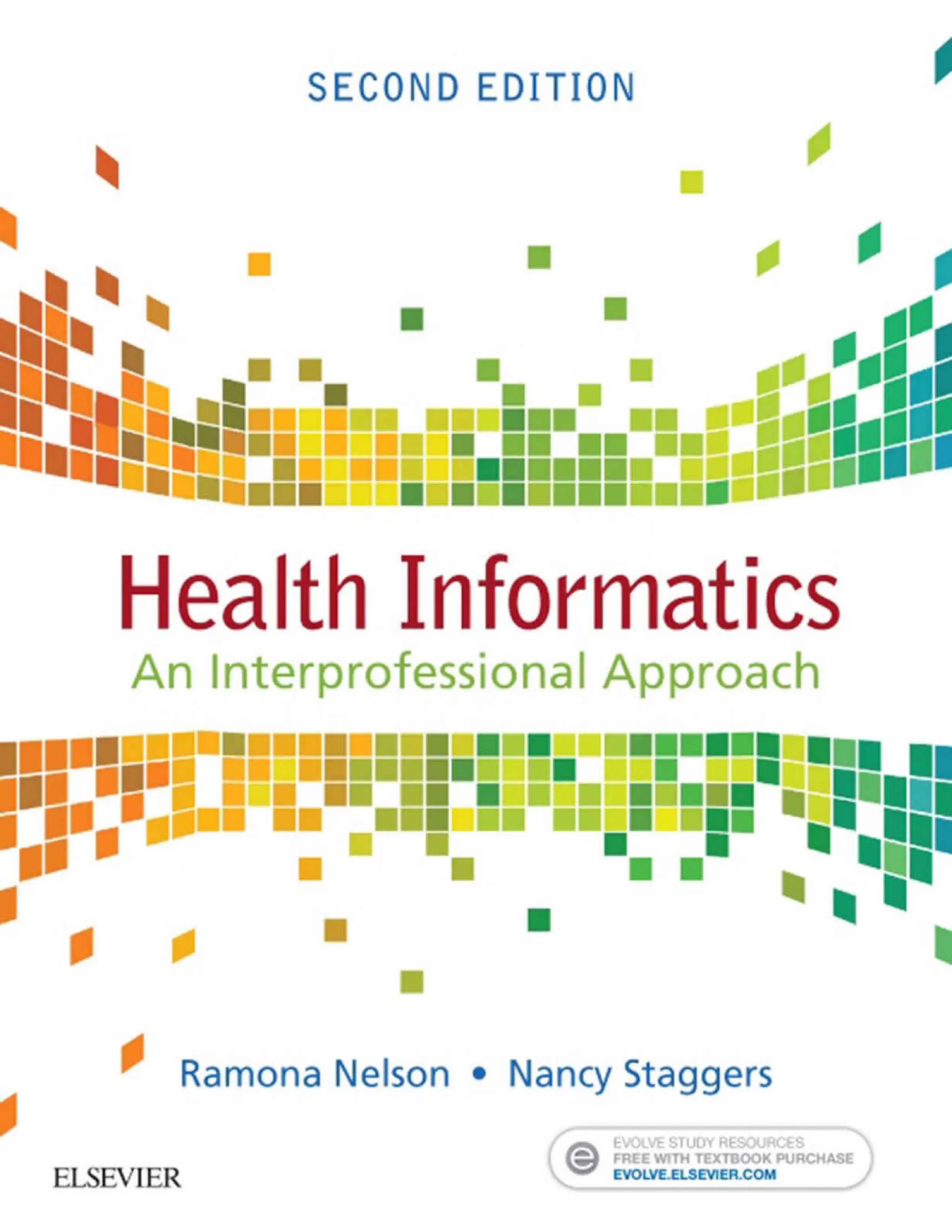


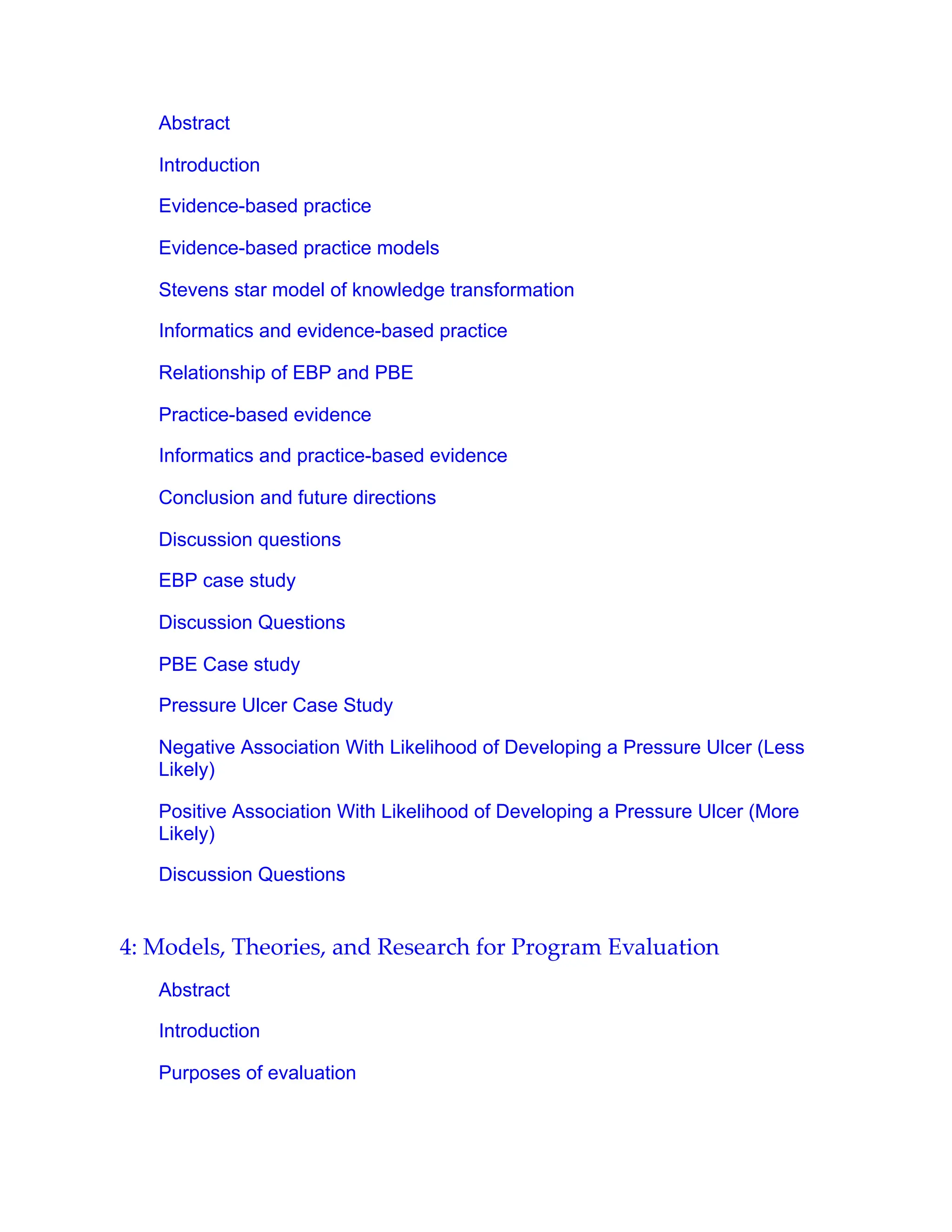



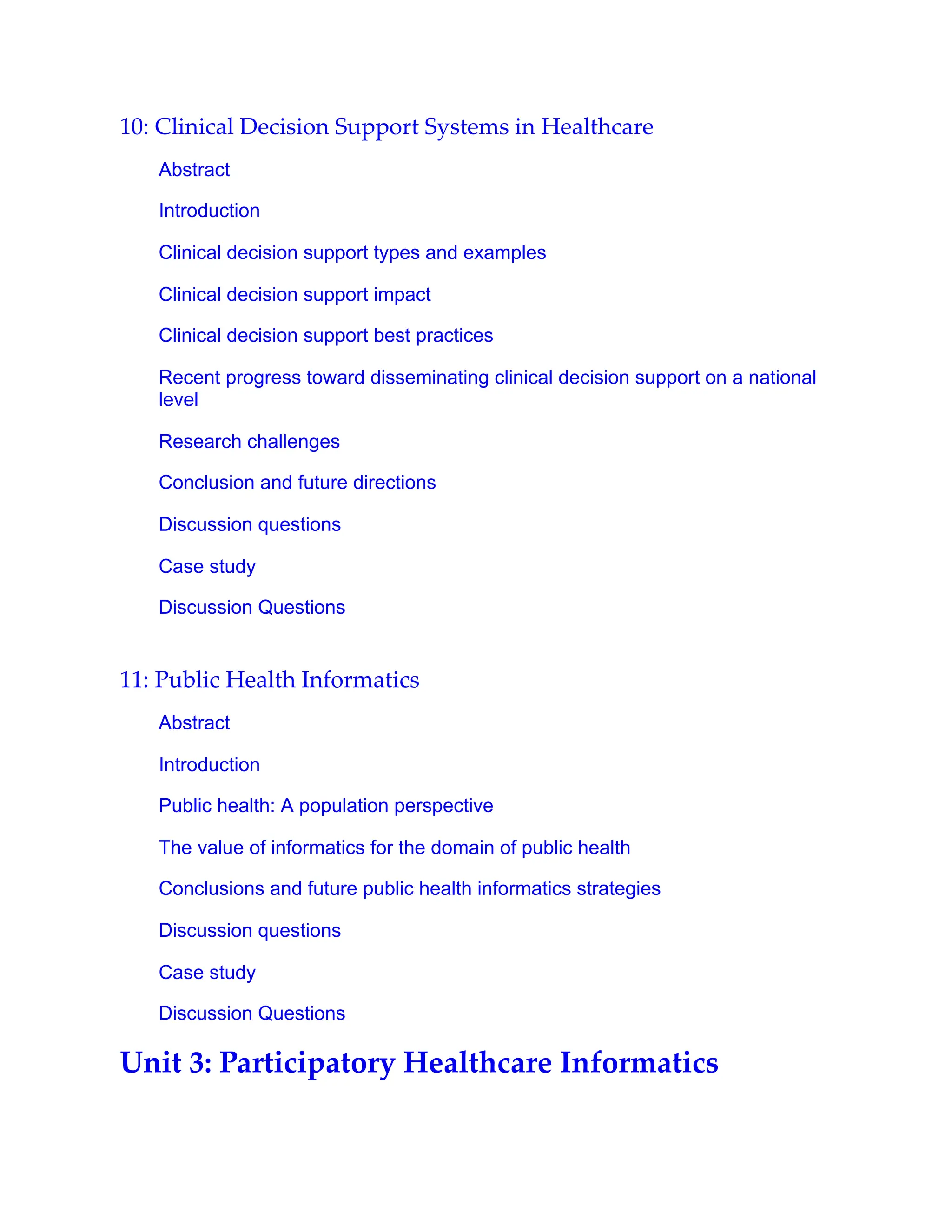
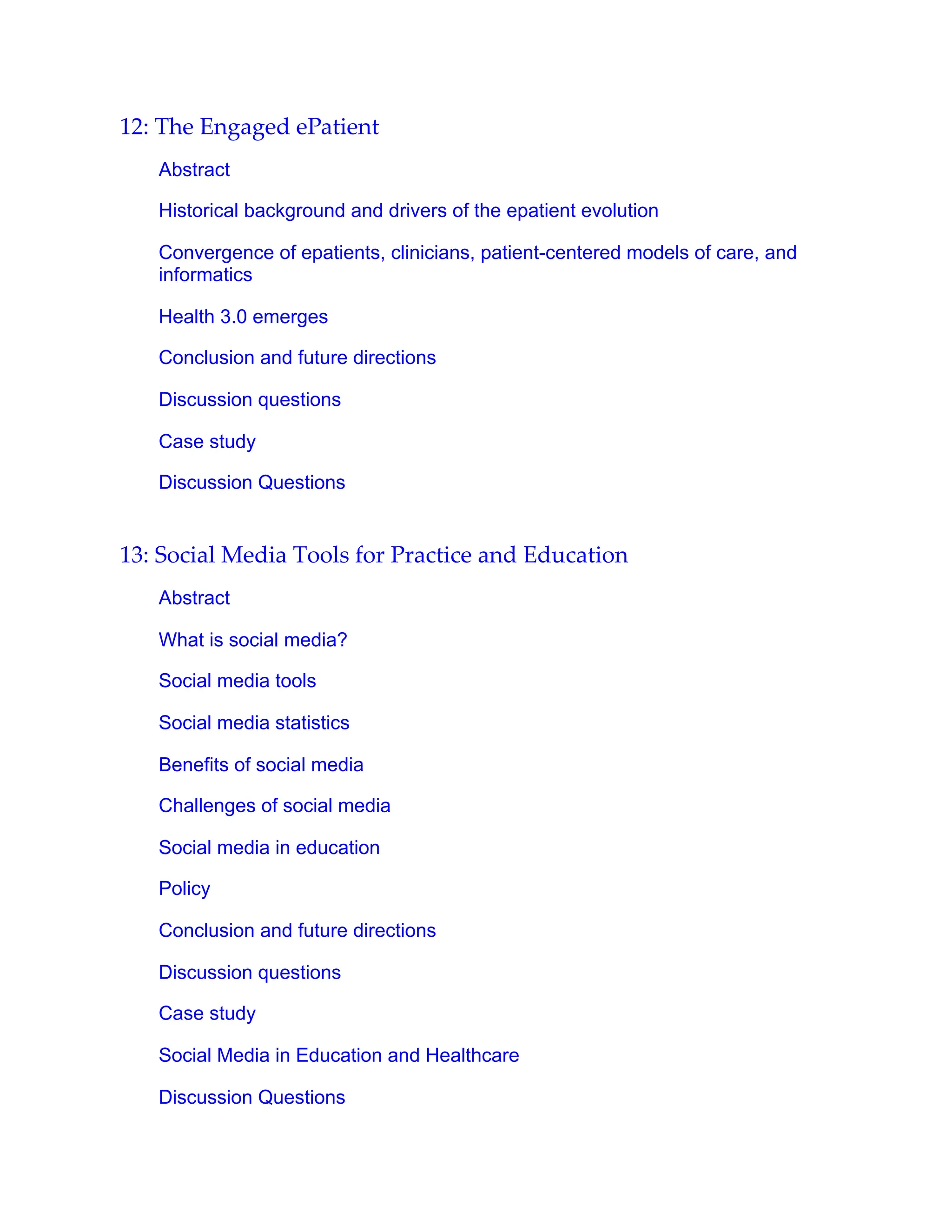
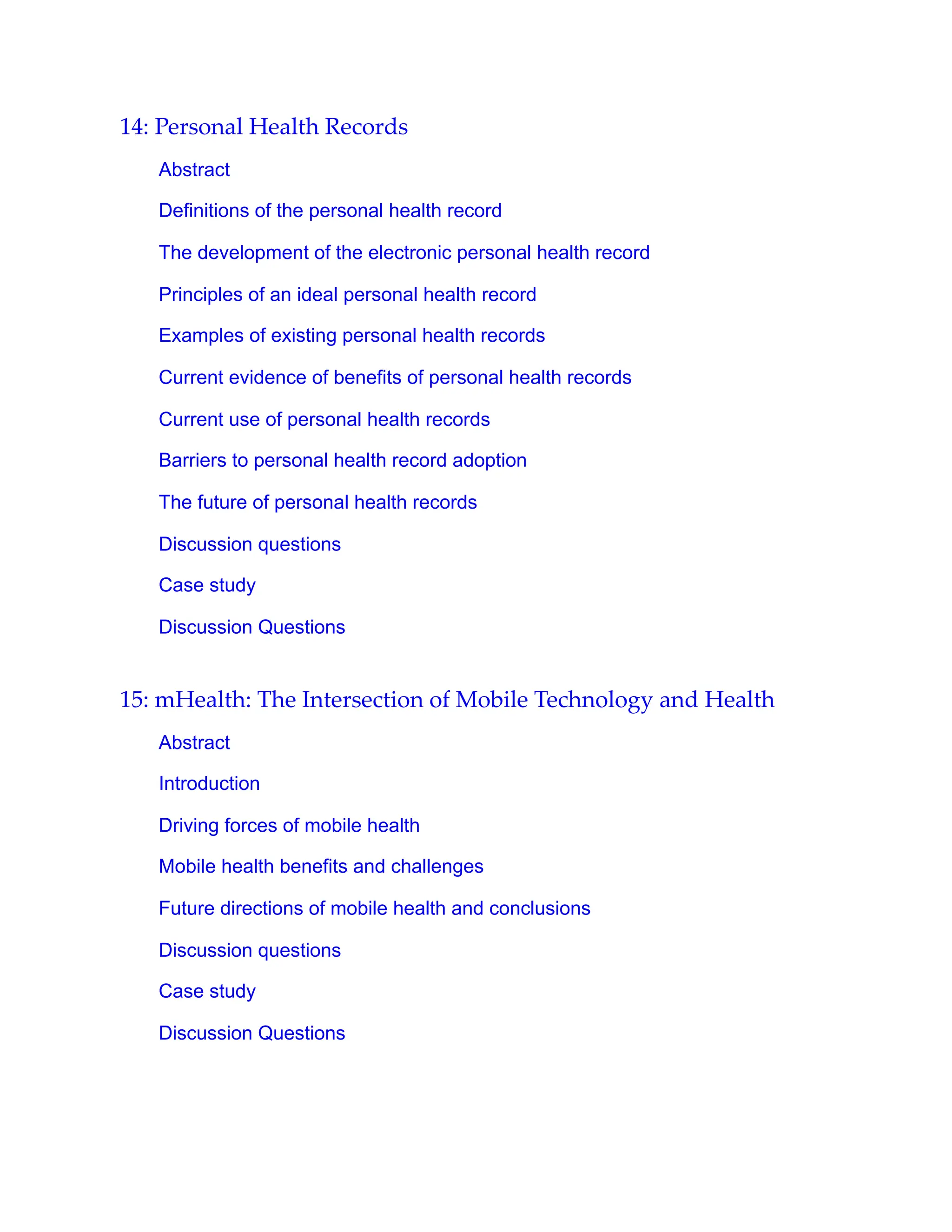


































![LECTURE X.
THE HERALDIC ORDINARIES.
March 9th, 1872.
207. In my last lecture, I endeavoured to illustrate to you the use of
art to the science of physiology. I am to-day to introduce to you its
elementary forms as an exponent of the science of history. Which,
speaking with perfect accuracy, we ought to call, also, “physiology,”
or natural history of man; for it ought to be in truth the history of his
Nature; and not merely of the accidents which have befallen him. Do
we not too much confuse the important part of the science with the
unimportant?
In giving the natural history of the lion, you do not care materially
where such and such a lion was trapped, or how many sheep it had
eaten. You want to know what sort of a minded and shaped creature
it is, or ought to be. But in all our books of human history we only
care to tell what has happened to men, and how many of each other
they have, in a manner, eaten, when they are, what Homer calls
δημοβόροι, people-eaters; and we scarcely understand, even to this
day, how they are truly minded. Nay, I am not sure that even this art
of heraldry, which has for its main object the telling and
proclamation of our chief minds and characters to each other, and
keeping record of descent by race, as far as it is possible, (or, under
the present aspect of Darwinism, pleasant,) to trace it;—I am not
sure that even heraldry has always understood clearly what it had to
tell. But I am very sure it has not been understood in the telling.
208. Some of you have, I hope, looked at this book[I] of Arthur
Helps, on ‘War and Culture,’ about which I cannot now say what I](https://image.slidesharecdn.com/16454409-250525154926-de1a4d1a/75/Health-Informatics-An-Interprofessional-Approach-2nd-Edition-Ramona-Nelson-62-2048.jpg)
![things that actually happened were of small consequence—the
thoughts that were developed are of infinite consequence.
217. As I was walking back from Hincksey last evening, somewhat
discomfited by the look of bad weather, and more in myself, as I
thought over this closing lecture, wondering how far you thought I
had been talking idly to you, instead of teaching you to draw,
through this term, I stopped before Messrs. Wyatt’s window; caught
—as it was intended every one should be—by this display of
wonderful things. And I was very unhappy as I looked, for it seemed
to me you could not but think the little I could show you how to do
quite valueless; while here were produced, by mysteries of craft
which you might expect me at once to explain, brilliant water-colours
in purple and gold, and photographs of sea-waves, and
chromolithotints of beautiful young ladies, and exquisitely finished
engravings of all sorts of interesting scenes, and sublime
personages: patriots, saints, martyrs, penitents, and who not! and
what not! all depicted with a dexterity which it has cost the
workmen their life’s best energy to learn, and requires great
cleverness thus to apply. While, in your room for study, there are
only ugly photographs of Dürers and Holbeins, and my rude outlines
from leaves, and you scarcely ever hear me say anything in praise of
that delightful and elaborate modern art at all.
218. So I bought this Madonna,[J] which was the prettiest thing I
saw: and it will enable me to tell you why this modern art is, indeed,
so little to be studied, even at its best. I think you will all like the
plate, and you ought to like it; but observe in what its beauty
consists. First, in very exquisite line engraving: against that I have
nothing to say, feeling the greatest respect for the industry and skill
it requires. Next, in a grace and severity of action which we all are
ready to praise; but this is not the painter’s own bestowing; the trick
of it is learned from Memling and Van Eyck, and other men of the
northern religious school. The covering of the robe with jewels is
pleasing to you; but that is learned from Angelico and John Bellini;
and if you will compare the jewel-painting in the John Bellini](https://image.slidesharecdn.com/16454409-250525154926-de1a4d1a/75/Health-Informatics-An-Interprofessional-Approach-2nd-Edition-Ramona-Nelson-67-2048.jpg)
![you of colour in pictures will apply equally to colour in dress:
vulgarity consists in the insolence and discord of it, not in
brightness.
221. For peasant and prince alike, in healthy national order,
brightness of dress and beautiful arrangement of it are needful. No
indication of moral decline is more sure than the squalor of dress
among the lower orders, and the fear or shame of the higher classes
to bear their proper insignia.
Such fear and shame are singularly expressed, here in Oxford, at
this hour. The nobleman ceases to wear the golden tassel in his cap,
so accepting, and publicly heralding his acceptance of, the popular
opinion of him that he has ceased to be a nobleman, or noteworthy
person.[K] And the members of the University, generally, shrink from
wearing their academical dress, so accepting, and publicly heralding
their acceptance of, the popular opinion that everybody else may be
as good scholars as they. On the other hand, I see continually in the
streets young men in bright costumes of blue and white; in such
evidently proud heraldry proclaiming their conviction that the chief
object of residence in Oxford is learning to row; the rowing itself
being, I imagine, not for real boat service, but for purposes of
display.
222. All dress is thus heraldic; a soldier’s dress only more definitely
so, in proclaiming the thing he means to die as well as to live for;
but all is heraldic, from the beggar’s rag to the king’s diadem; it may
be involuntarily, it may be, insolently; but when the characters of
men are determined, and wise, their dress becomes heraldic
reverently, and in order. “Togam e tugurio proferre uxorem Raciliam
jubet;” and Edie Ochiltree’s blue gown is as honourably heraldic as a
knight’s ermine.
223. The beginning of heraldry, and of all beautiful dress, is,
however, simply in the wearing of the skins of slain animals. You
may discredit, as much as you choose, the literal meaning of that
earliest statement, “Unto Adam also, and to his wife, did the Lord](https://image.slidesharecdn.com/16454409-250525154926-de1a4d1a/75/Health-Informatics-An-Interprofessional-Approach-2nd-Edition-Ramona-Nelson-69-2048.jpg)
![times to use these methods of dividing or quartering in continually
redoubled complexity.
234. Essentially, therefore, as distinguished from the classic shield,
the Gothic one is particoloured beneath its definite bearings, or
rather, bi-coloured; for the tinctures are never more than two in the
main design of them; and the specific methods of arrangement of
these two masses of colour have deeper and more ancient heraldic
significance than, with few exceptions, their superimposed bearings.
I have arranged the twelve principal ones[L] in the 7th of your
rudimentary exercises, and they will be entirely fixed in your minds
by once drawing it.
“They have also the title of honourable ordinaries in that the court
armour is much honoured thereby.“ The French call them “pièces
honorables.”
235. Observe respecting them.
1. The Chiefe; a bar of colour across the upper part of the shield,
signifies authority or chief-dom, as the source of all order, power,
and peace.
2. The cross, as an ordinary, distinguished from the cross as a
bearing, consists simply of two bars dividing the shield into four
quarters; and, I believe, that it does not in this form stand properly
as a symbol of Christian faith, but only as one of Christian patience
and fortitude. The cross as a symbol of faith is terminated within the
field.
3. The Fesse, a horizontal bar across the middle of the shield,
represents the knight’s girdle, or anything that binds and secures, or
continues. The word is a corruption of fascia. Sir Francis Drake
received for arms from Queen Elizabeth a Fesse waved between two
pole-stars, where it stands for the waved surface of the sea, and
partly, also, to signify that Sir Francis put a girdle round the earth;
and the family of Drummond carries three diminutive Fesses, or](https://image.slidesharecdn.com/16454409-250525154926-de1a4d1a/75/Health-Informatics-An-Interprofessional-Approach-2nd-Edition-Ramona-Nelson-75-2048.jpg)

![into life, are ready to think, to feel, to act, as the men bid you who
are incapable of worship, as they are of creation;—whose power is
only in destruction: whose gladness only in disdain; whose glorying
is in their shame. You know well, I should think, by this time, that I
am not one to seek to conceal from you any truth of nature, or
superstitiously decorate for you any form of faith; but I trust deeply
—(and I will strive, for my poor part, wholly, so to help you in
steadfastness of heart)—that you, the children of the Christian
chivalry which was led in England by the Lion-Heart, and in France
by Roland, and in Spain by the Cid, may not stoop to become as
these, whose thoughts are but to invent new foulness with which to
blaspheme the story of Christ, and to destroy the noble works and
laws that have been founded in His name.
Will you not rather go round about this England and tell the towers
thereof, and mark well her bulwarks, and consider her palaces, that
you may tell it to the generation following? Will you not rather
honour with all your strength, with all your obedience, with all your
holy love and never-ending worship, the princely sires, and pure
maids, and nursing mothers, who have bequeathed and blest your
life?—that so, for you also, and for your children, the days of
strength, and the light of memory, may be long in this lovely land
which the Lord your God has given you.
FOOTNOTES:
[A]The proper titles of these lectures, too long for page-headings,
are given in the Contents.
[B]Educational Series, No. 8, E.
[C]If the English reader will pronounce the o in this word as in
fold, and in sophia as in sop, but accenting the o, not the i, I
need not any more disturb my pages with Greek types.
[D]“Pall Mall Gazette,” January 29th, 1869.](https://image.slidesharecdn.com/16454409-250525154926-de1a4d1a/75/Health-Informatics-An-Interprofessional-Approach-2nd-Edition-Ramona-Nelson-81-2048.jpg)
![[E] I use this word always meaning it to be understood literally,
and in its full force.
[F] Rubens’ rainbow, in the Loan Exhibition this year, was of dull
blue, darker than the sky, in a scene lighted from the side of the
rainbow. Rubens is not to be blamed for ignorance of optics, but
for never having so much as looked at a rainbow carefully: and I
do not believe that my friend Mr. Alfred Hunt, whose study of
rainbow, in the rooms of the Water Colour Society last year, was
unrivalled, for vividness and truth, by any I know, learned how to
paint it by studying optics.
[G]I have not seen the picture: in the engraving the tint of the
eyes would properly represent grey or blue.
[H]Note this sentence respecting the power of the creative
Athena.
[I]Conversations on War and General Culture.
[J]Now, Ref. 104.
[K]“Another stride that has been taken appears in the perishing of
heraldry. Whilst the privileges of nobility are passing to the middle
class, the badge is discredited, and the titles of lordship are
getting musty and cumbersome. I wonder that sensible men have
not been already impatient of them. They belong, with wigs,
powder, and scarlet coats, to an earlier age, and may be
advantageously consigned, with paint and tattoo, to the
dignitaries of Australia and Polynesia.”—R.W. Emerson (English
Traits).
[L]Charges which “doe peculiarly belong to this art, and are of
ordinary use therein, in regard whereof they are called
‘ordinaries.’”—See Guillim, sect. ii. chap. iii. (Ed. 1638.)](https://image.slidesharecdn.com/16454409-250525154926-de1a4d1a/75/Health-Informatics-An-Interprofessional-Approach-2nd-Edition-Ramona-Nelson-82-2048.jpg)
![INDEX.
[The references are not to the page, but to the numbered
paragraphs, common to all the editions of this work].](https://image.slidesharecdn.com/16454409-250525154926-de1a4d1a/75/Health-Informatics-An-Interprofessional-Approach-2nd-Edition-Ramona-Nelson-83-2048.jpg)