High Cholesterol
WHAT ARE THE CAUSES, RISK FACTORS, AND SOLUTIONS?
Pathophysiology of Hypercholesterolemia
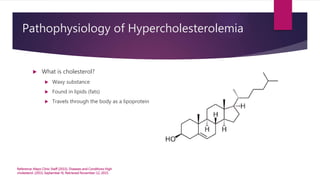
 What is cholesterol?
 Waxy substance
 Found in lipids (fats)
 Travels through the body as a lipoprotein
Reference: Mayo Clinic Staff (2015). Diseases and Conditions High
cholesterol. (2015, September 4). Retrieved November 12, 2015.
Pathophysiology of Hypercholesterolemia
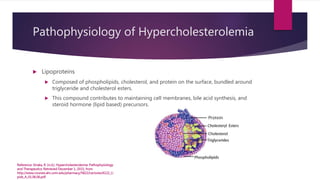
 Lipoproteins
 Composed of phospholipids, cholesterol, and protein on the surface, bundled around
triglyceride and cholesterol esters.
 This compound contributes to maintaining cell membranes, bile acid synthesis, and
steroid hormone (lipid based) precursors.
Reference: Straka, R. (n.d.). Hypercholesterolemia: Pathophysiology
and Therapeutics. Retrieved December 1, 2015, from
http://www.courses.ahc.umn.edu/pharmacy/5822/Lectures/6122_Li
pids_A_01.06.06.pdf
Pathophysiology of Hypercholesterolemia
 Cholesterol is not always bad! It depends on the amount and type.
 Common types of cholesterol:
 Low – density lipoprotein (LDL)
 Very – low – density lipoprotein (VLDL)
 High – density lipoprotein (HDL)
Reference: Mayo Clinic Staff (2015). Diseases and Conditions High
cholesterol. (2015, September 4). Retrieved November 12, 2015.
Pathophysiology of Hypercholesterolemia
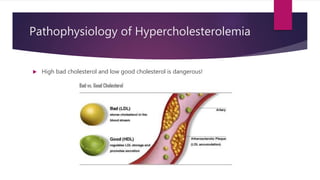
 High bad cholesterol and low good cholesterol is dangerous!
Pathophysiology of Hypercholesterolemia
 High cholesterol can lead to bigger problems, such as hypertension and heart
disease.
 A study of the endothelium of blood vessels and cholesterol’s effect on their
function
Reference: Landmesser, U., Hornig, B., & Drexler, H. (2000).
Endothelial dysfunction in hypercholesterolemia: Mechanisms,
pathophysiological importance, and therapeutic interventions.
Retrieved December 1, 2015.
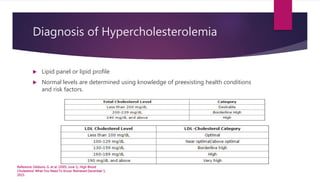
Diagnosis of Hypercholesterolemia
 Lipid panel or lipid profile
 Normal levels are determined using knowledge of preexisting health conditions
and risk factors.
Reference: Gibbons, G. et al. (2005, June 1). High Blood
Cholesterol: What You Need To Know. Retrieved December 1,
2015.
Dietary Risk Factors
 A risk factor is “a condition that increases your chance of getting a disease”
(Gibbons et al. 2005).
 Can include many things, within and outside the control of the individual.
Reference: Gibbons, G. et al. (2005, June 1). High Blood
Cholesterol: What You Need To Know. Retrieved December 1,
2015.
Dietary Risk Factors
 Some risk factors affecting high cholesterol are beyond the individual’s control.
 Age
 Gender
 Heredity
Reference: Gibbons, G. et al. (2005, June 1). High Blood
Cholesterol: What You Need To Know. Retrieved December 1,
2015.
Dietary Risk Factors
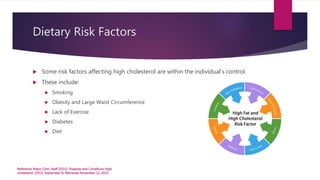
 Some risk factors affecting high cholesterol are within the individual’s control.
 These include:
 Smoking
 Obesity and Large Waist Circumference
 Lack of Exercise
 Diabetes
 Diet
Reference: Mayo Clinic Staff (2015). Diseases and Conditions High
cholesterol. (2015, September 4). Retrieved November 12, 2015.
Managing High Cholesterol: Making the
necessary changes
 High cholesterol can be managed by making changes to your lifestyle and diet.
 Some ways to do this are:
 Drop excess weight
 Exercise
 Quit smoking
 Eat a heart healthy diet
Reference: Mayo Clinic Staff (2015). Diseases and Conditions High
cholesterol. (2015, September 4). Retrieved November 12, 2015.
Managing High Cholesterol: Eating a
Heart Healthy Diet
1. Eat more fiber
2. Eat more healthy fats and less unhealthy fats
3. NO trans fats!
4. Restrict your intake of dietary cholesterol
5. Eat more whole grains
6. Eat more fruits and vegetables
7. Substitute heart-healthy fish for other meats
8. Strictly limit alcohol consumption
Reference: Mayo Clinic Staff (2015). Diseases and Conditions High
cholesterol. (2015, September 4). Retrieved November 12, 2015.
References
Gibbons, G. et al. (2005, June 1). High Blood Cholesterol: What You Need To Know. Retrieved
December 1, 2015.
Landmesser, U., Hornig, B., & Drexler, H. (2000). Endothelial dysfunction in hypercholesterolemia:
Mechanisms, pathophysiological importance, and therapeutic interventions. Retrieved December 1,
2015.
Martini, Ph.D., F., Ober, M.D., W., Nath, Ph.D., J., Bartholomew, M.S., E., & Petti, Ph.D., K. (2011). Tissue
Level of Organization. In Visual Anatomy and Physiology (2nd ed., p. 142). Upper Saddle River, New
Jersey: Pearson Education.
Mayo Clinic Staff (2015). Diseases and Conditions High cholesterol. (2015, September 4). Retrieved
November 12, 2015.
Straka, R. (n.d.). Hypercholesterolemia: Pathophysiology and Therapeutics. Retrieved December 1,
2015, from http://www.courses.ahc.umn.edu/pharmacy/5822/Lectures/6122_Lipids_A_01.06.06.pdf

Hlth onlinepresentation

  • 1.
    High Cholesterol WHAT ARETHE CAUSES, RISK FACTORS, AND SOLUTIONS?
  • 2.
    Pathophysiology of Hypercholesterolemia What is cholesterol?  Waxy substance  Found in lipids (fats)  Travels through the body as a lipoprotein Reference: Mayo Clinic Staff (2015). Diseases and Conditions High cholesterol. (2015, September 4). Retrieved November 12, 2015.
  • 3.
    Pathophysiology of Hypercholesterolemia Lipoproteins  Composed of phospholipids, cholesterol, and protein on the surface, bundled around triglyceride and cholesterol esters.  This compound contributes to maintaining cell membranes, bile acid synthesis, and steroid hormone (lipid based) precursors. Reference: Straka, R. (n.d.). Hypercholesterolemia: Pathophysiology and Therapeutics. Retrieved December 1, 2015, from http://www.courses.ahc.umn.edu/pharmacy/5822/Lectures/6122_Li pids_A_01.06.06.pdf
  • 4.
    Pathophysiology of Hypercholesterolemia Cholesterol is not always bad! It depends on the amount and type.  Common types of cholesterol:  Low – density lipoprotein (LDL)  Very – low – density lipoprotein (VLDL)  High – density lipoprotein (HDL) Reference: Mayo Clinic Staff (2015). Diseases and Conditions High cholesterol. (2015, September 4). Retrieved November 12, 2015.
  • 5.
    Pathophysiology of Hypercholesterolemia High bad cholesterol and low good cholesterol is dangerous!
  • 6.
    Pathophysiology of Hypercholesterolemia High cholesterol can lead to bigger problems, such as hypertension and heart disease.  A study of the endothelium of blood vessels and cholesterol’s effect on their function Reference: Landmesser, U., Hornig, B., & Drexler, H. (2000). Endothelial dysfunction in hypercholesterolemia: Mechanisms, pathophysiological importance, and therapeutic interventions. Retrieved December 1, 2015.
  • 7.
    Diagnosis of Hypercholesterolemia Lipid panel or lipid profile  Normal levels are determined using knowledge of preexisting health conditions and risk factors. Reference: Gibbons, G. et al. (2005, June 1). High Blood Cholesterol: What You Need To Know. Retrieved December 1, 2015.
  • 8.
    Dietary Risk Factors A risk factor is “a condition that increases your chance of getting a disease” (Gibbons et al. 2005).  Can include many things, within and outside the control of the individual. Reference: Gibbons, G. et al. (2005, June 1). High Blood Cholesterol: What You Need To Know. Retrieved December 1, 2015.
  • 9.
    Dietary Risk Factors Some risk factors affecting high cholesterol are beyond the individual’s control.  Age  Gender  Heredity Reference: Gibbons, G. et al. (2005, June 1). High Blood Cholesterol: What You Need To Know. Retrieved December 1, 2015.
  • 10.
    Dietary Risk Factors Some risk factors affecting high cholesterol are within the individual’s control.  These include:  Smoking  Obesity and Large Waist Circumference  Lack of Exercise  Diabetes  Diet Reference: Mayo Clinic Staff (2015). Diseases and Conditions High cholesterol. (2015, September 4). Retrieved November 12, 2015.
  • 11.
    Managing High Cholesterol:Making the necessary changes  High cholesterol can be managed by making changes to your lifestyle and diet.  Some ways to do this are:  Drop excess weight  Exercise  Quit smoking  Eat a heart healthy diet Reference: Mayo Clinic Staff (2015). Diseases and Conditions High cholesterol. (2015, September 4). Retrieved November 12, 2015.
  • 12.
    Managing High Cholesterol:Eating a Heart Healthy Diet 1. Eat more fiber 2. Eat more healthy fats and less unhealthy fats 3. NO trans fats! 4. Restrict your intake of dietary cholesterol 5. Eat more whole grains 6. Eat more fruits and vegetables 7. Substitute heart-healthy fish for other meats 8. Strictly limit alcohol consumption Reference: Mayo Clinic Staff (2015). Diseases and Conditions High cholesterol. (2015, September 4). Retrieved November 12, 2015.
  • 13.
    References Gibbons, G. etal. (2005, June 1). High Blood Cholesterol: What You Need To Know. Retrieved December 1, 2015. Landmesser, U., Hornig, B., & Drexler, H. (2000). Endothelial dysfunction in hypercholesterolemia: Mechanisms, pathophysiological importance, and therapeutic interventions. Retrieved December 1, 2015. Martini, Ph.D., F., Ober, M.D., W., Nath, Ph.D., J., Bartholomew, M.S., E., & Petti, Ph.D., K. (2011). Tissue Level of Organization. In Visual Anatomy and Physiology (2nd ed., p. 142). Upper Saddle River, New Jersey: Pearson Education. Mayo Clinic Staff (2015). Diseases and Conditions High cholesterol. (2015, September 4). Retrieved November 12, 2015. Straka, R. (n.d.). Hypercholesterolemia: Pathophysiology and Therapeutics. Retrieved December 1, 2015, from http://www.courses.ahc.umn.edu/pharmacy/5822/Lectures/6122_Lipids_A_01.06.06.pdf