HDTV
(HIGH DEFINITION TELEVISION)
WHY HIGH DEFINITION TV?
 HDTV-is one of the most talked about topics today
 It has twice the vertical and horizontal resolution of
standard television
 Thereby producing a picture with six times the number
of picture element
 This makes HDTV’s picture quality ten times better than
regular television
 HDTV-produces a much-improved color rendition
compared to present television systems.
WHAT IS HDTV
 HDTV- is high-resolution digital television with
Dolby Digital surround sound.
HDTV-is the highest digital television there is.
 This allows HDTV to have extraordinary images with stunning
sound
This requires new production and transmission equipment at
the HDTV stations.
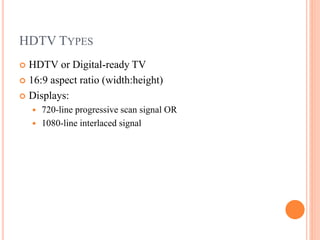
HDTV TYPES
 HDTV or Digital-ready TV
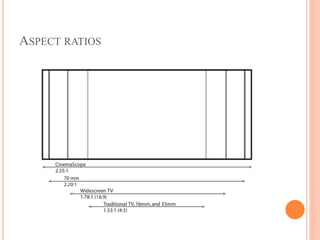
 16:9 aspect ratio (width:height)
 Displays:
 720-line progressive scan signal OR
 1080-line interlaced signal
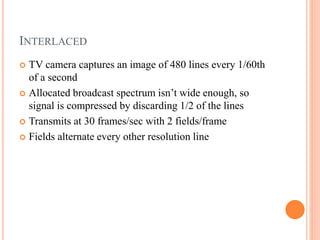
INTERLACED
 TV camera captures an image of 480 lines every 1/60th
of a second
 Allocated broadcast spectrum isn’t wide enough, so
signal is compressed by discarding 1/2 of the lines
 Transmits at 30 frames/sec with 2 fields/frame
 Fields alternate every other resolution line
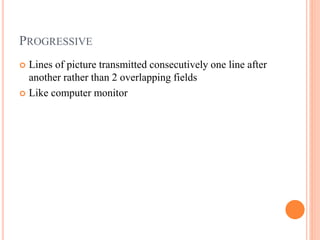
PROGRESSIVE
 Lines of picture transmitted consecutively one line after
another rather than 2 overlapping fields
 Like computer monitor
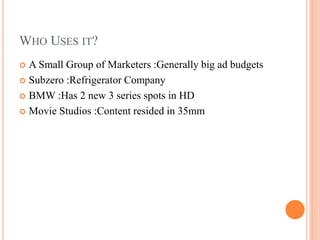
WHO USES IT?
 A Small Group of Marketers :Generally big ad budgets
 Subzero :Refrigerator Company
 BMW :Has 2 new 3 series spots in HD
 Movie Studios :Content resided in 35mm
CHANNELS THAT USE IT
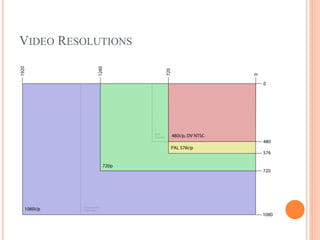
VIDEO RESOLUTIONS
SOURCES FOR HDTV
 Digital cable
 Video player with DVI, HDMI input
 Digital satellite receivers
 Video game systems with HDMI input XBOX 360 and
Playstation 3
 Windows Media High Definition
 Video imaging processors
ASPECT RATIOS
CONCLUSION
• As NTSC retires, HDTV programming, products, and
production services will continue to grow
exponentially.
• Move will be cheaper, quicker, and easier as products
and services become more widespread and people grow
accustomed to the new technology.
• HDTV has brought a more cinematic experience into
viewer’s homes and with digital cinema, delivered the
film industry a few of the benefits of television.
However, HDTV still has much lower resolution than
70mm film. It’s a matter of time before some will begin
pressuring for another increase in quality.

Hd tv

  • 1.
  • 2.
    WHY HIGH DEFINITIONTV?  HDTV-is one of the most talked about topics today  It has twice the vertical and horizontal resolution of standard television  Thereby producing a picture with six times the number of picture element  This makes HDTV’s picture quality ten times better than regular television  HDTV-produces a much-improved color rendition compared to present television systems.
  • 3.
    WHAT IS HDTV HDTV- is high-resolution digital television with Dolby Digital surround sound. HDTV-is the highest digital television there is.  This allows HDTV to have extraordinary images with stunning sound This requires new production and transmission equipment at the HDTV stations.
  • 4.
    HDTV TYPES  HDTVor Digital-ready TV  16:9 aspect ratio (width:height)  Displays:  720-line progressive scan signal OR  1080-line interlaced signal
  • 5.
    INTERLACED  TV cameracaptures an image of 480 lines every 1/60th of a second  Allocated broadcast spectrum isn’t wide enough, so signal is compressed by discarding 1/2 of the lines  Transmits at 30 frames/sec with 2 fields/frame  Fields alternate every other resolution line
  • 6.
    PROGRESSIVE  Lines ofpicture transmitted consecutively one line after another rather than 2 overlapping fields  Like computer monitor
  • 7.
    WHO USES IT? A Small Group of Marketers :Generally big ad budgets  Subzero :Refrigerator Company  BMW :Has 2 new 3 series spots in HD  Movie Studios :Content resided in 35mm
  • 8.
  • 9.
  • 10.
    SOURCES FOR HDTV Digital cable  Video player with DVI, HDMI input  Digital satellite receivers  Video game systems with HDMI input XBOX 360 and Playstation 3  Windows Media High Definition  Video imaging processors
  • 11.
  • 12.
    CONCLUSION • As NTSCretires, HDTV programming, products, and production services will continue to grow exponentially. • Move will be cheaper, quicker, and easier as products and services become more widespread and people grow accustomed to the new technology. • HDTV has brought a more cinematic experience into viewer’s homes and with digital cinema, delivered the film industry a few of the benefits of television. However, HDTV still has much lower resolution than 70mm film. It’s a matter of time before some will begin pressuring for another increase in quality.