Human-computer Trust
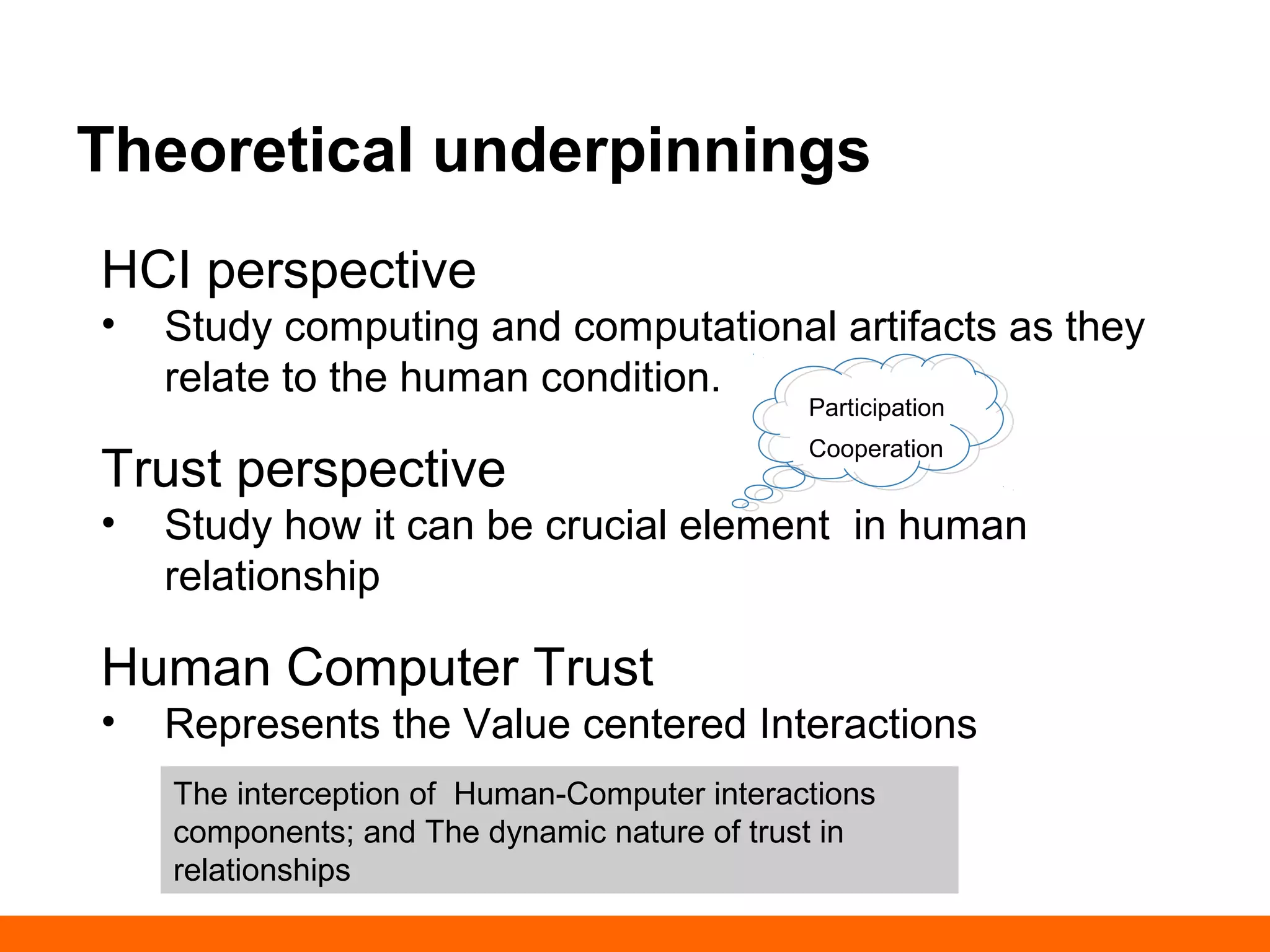
Theoretical underpinnings 
HCI perspective 
• Study computing and computational artifacts as they 
relate to the human condition. 
Participation 
Cooperation 
Trust perspective 
• Study how it can be crucial element in human 
relationship 
Human Computer Trust 
• Represents the Value centered Interactions 
The interception of Human-Computer interactions 
components; and The dynamic nature of trust in 
relationships
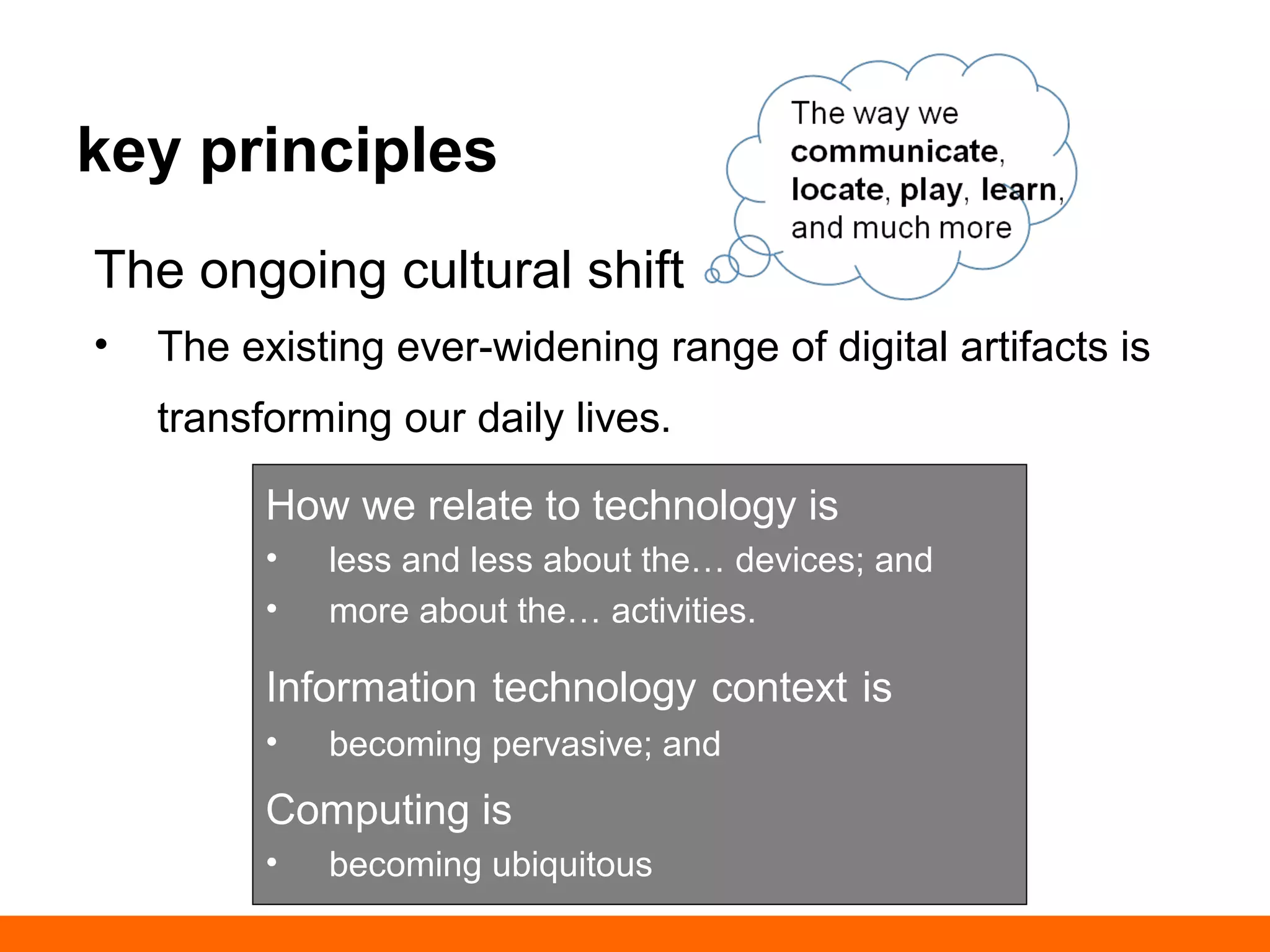
key principles 
The ongoing cultural shift 
• a ever-widening range of digital artifacts is 
transforming our daily lives. 
The way we 
communicate, 
locate, play, learn, 
and much more 
How we relate to technology is 
• less and less about the… devices; and 
• more about the… activities. 
Information technology context is 
• becoming pervasive; and 
Computing is 
• becoming ubiquitous
WHY TRUST….
Contextual aim 
Trust contemplates 
• Social phenomena 
• A complex two-way relationship 
Trust emerges from 
• An interpersonal organization 
• A specific social situation 
• A specific social context 
• Positive experiences 
• Interactions 
• Active participation 
• Cooperative relations 
SUPPORT 
& 
SUSTAIN
Contextual aim 
Trusting represents 
• A reinsurance element 
Trusting comes associated 
• With certain properties that help to support 
users intended behaviours 
Trusting relies on 
• The identification of trustworthy making 
qualities 
What underlies 
people's beliefs
The research…
The research contemplates 
A need for identify 
1. trust social values (qualities) that underlies 
people’s trust beliefs 
1. The reliability of those trustworthy making 
qualities 
1. How those (trustworthy making qualities) 
are represented in today’s ongoing cultural 
shift
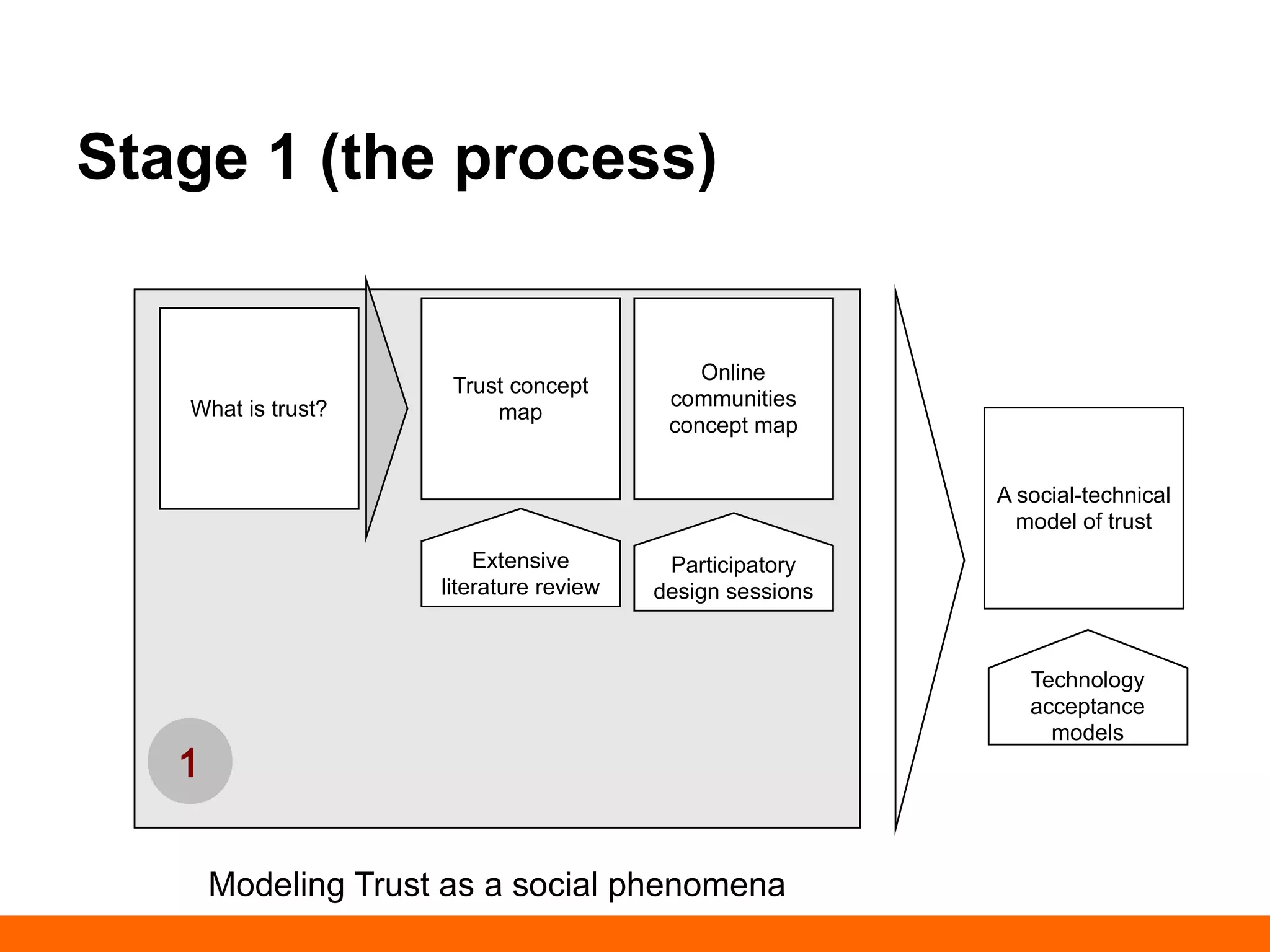
Stage 1 (the process) 
What is trust 
social 
phenomena? 
Trust concept 
map 
Extensive 
literature review 
Online 
communities 
concept map 
Participatory 
design sessions 
Modeling Trust as a social phenomena 
A social-technical 
model of trust 
Technology 
acceptance 
models 
1
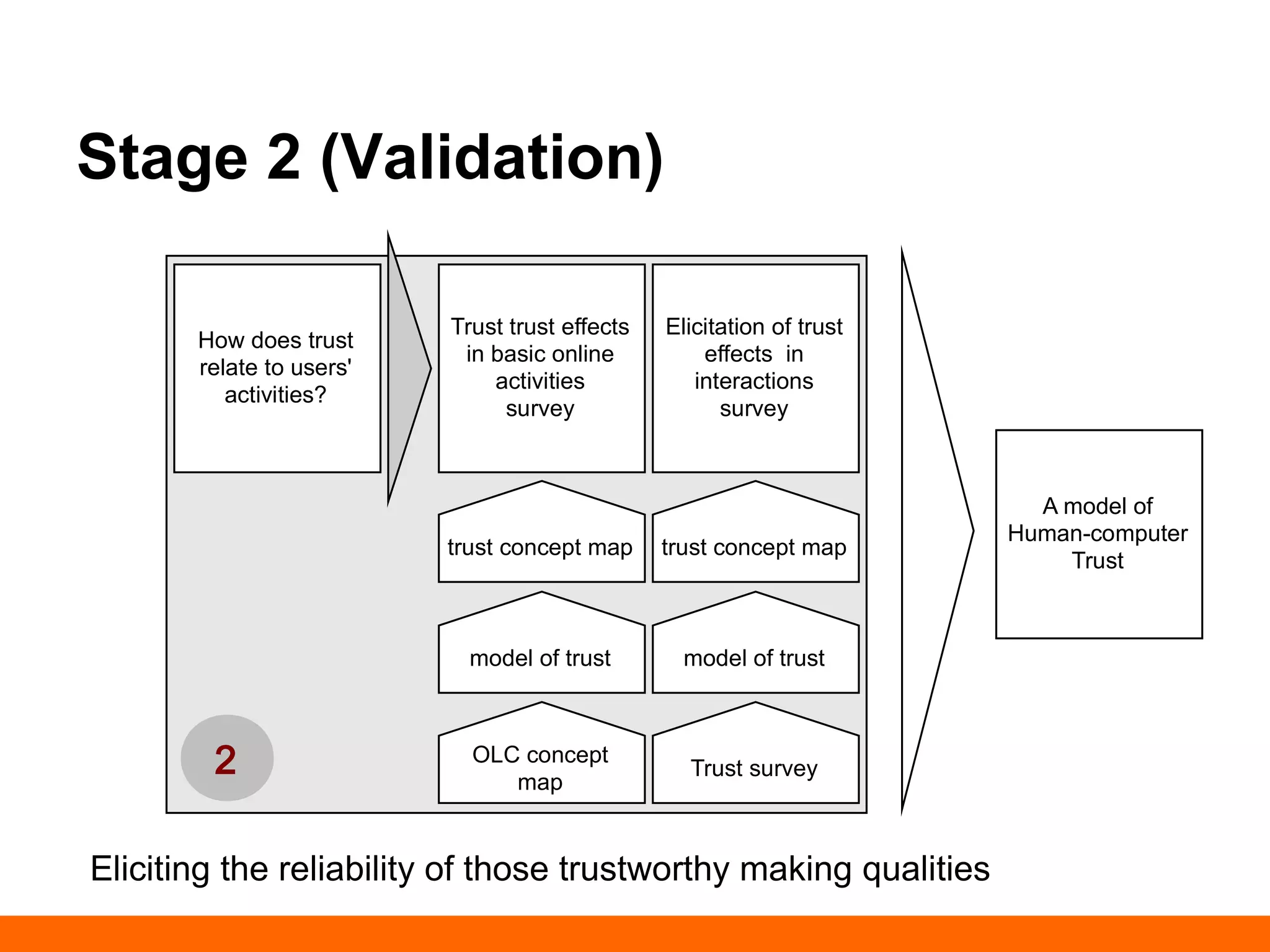
Stage 2 (Validation) 
How does trust 
relate to users' 
activities? 
Trust trust effects 
in basic online 
activities 
survey 
Elicitation of trust 
effects in 
interactions 
survey 
trust concept map 
model of trust 
Trust survey 
trust concept map 
model of trust 
OLC concept 
map 
Eliciting the reliability of those trustworthy making qualities 
A model of 
Human-computer 
Trust 
2
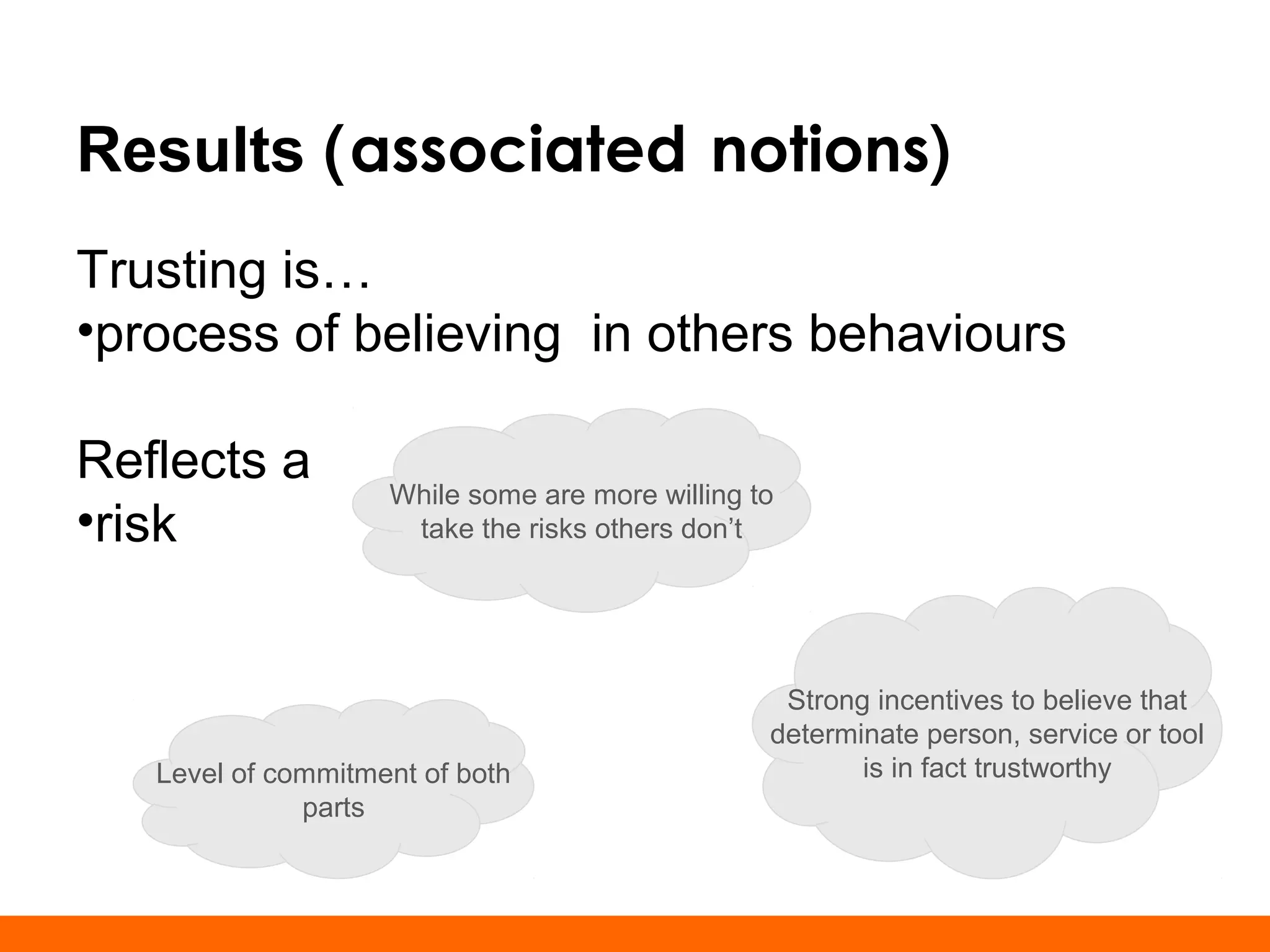
Results (associated notions) 
Trusting is… 
• process of believing in others behaviours 
Reflects a 
• risk 
While some are more 
willing to take the 
risks others don’t 
Level of 
commitment of 
both parts 
Strong incentives to 
believe that 
determinate person, 
service or tool is in 
fact trustworthy
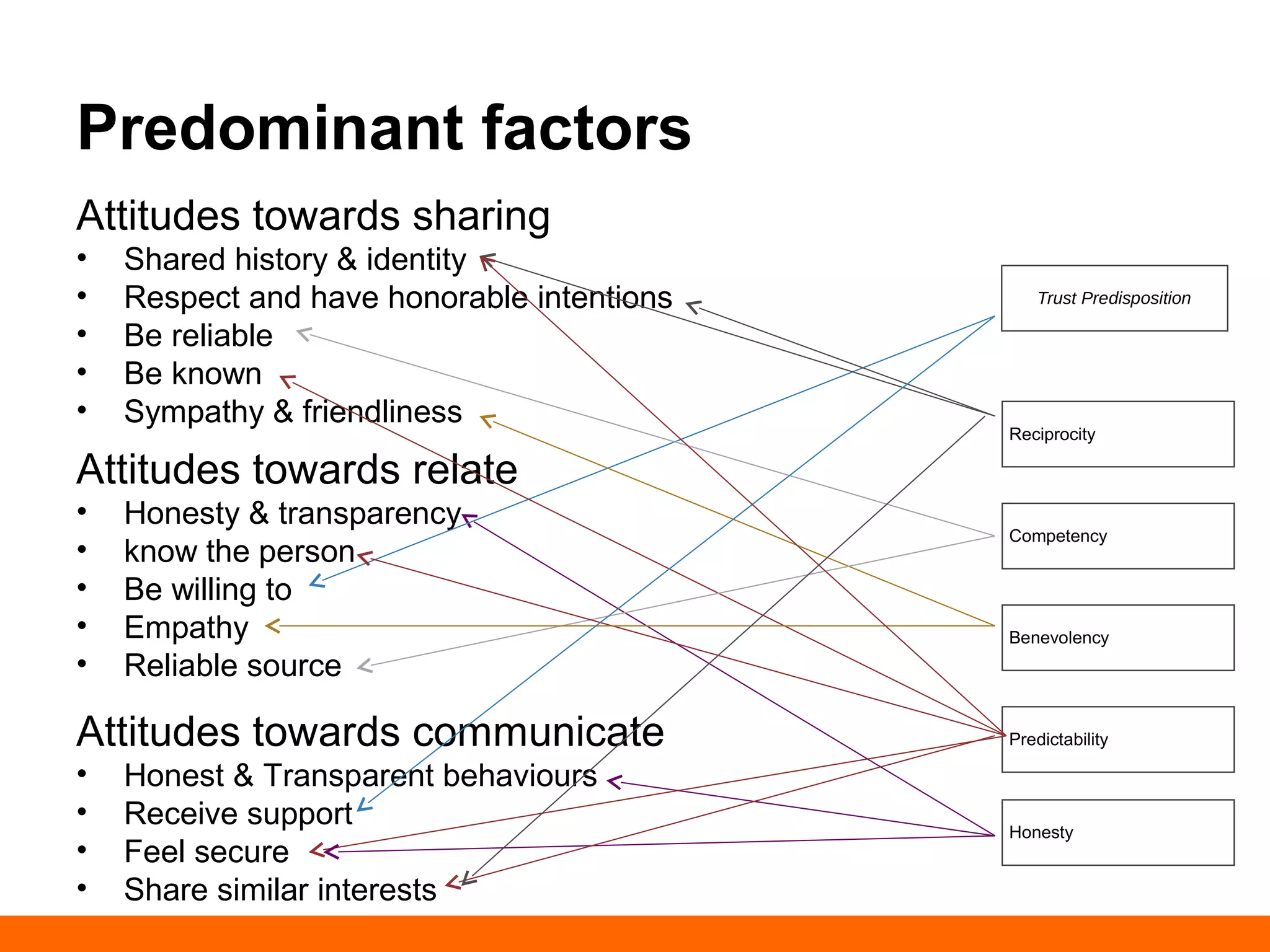
Predominant factors 
Attitudes towards sharing 
• Shared history & identity 
• Respect and have honorable intentions 
• Be reliable 
• Be known 
• Sympathy & friendliness 
Attitudes towards relate 
• Honesty & transparency 
• know the person 
• Be willing to 
• Empathy 
• Reliable source 
Attitudes towards communicate 
• Honest & Transparent behaviours 
• Receive support 
• Feel secure 
• Share similar interests 
Trust Predisposition 
Reciprocity 
Competency 
Benevolency 
Predictability 
Honesty
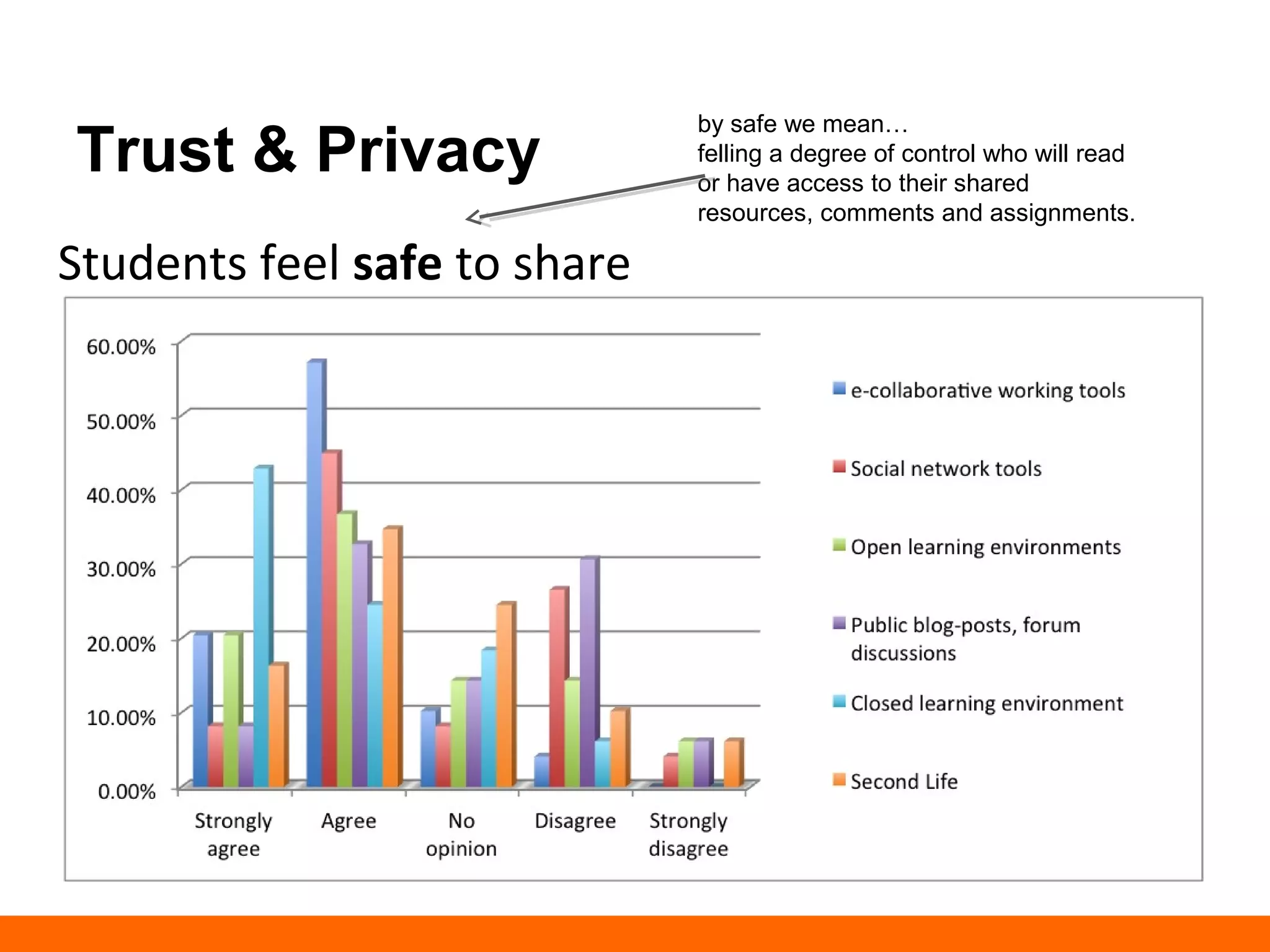
Trust & Privacy by safe we mean… 
felling a degree of control who will read 
or have access to their shared 
resources, comments and assignments. 
Students feel safe to share
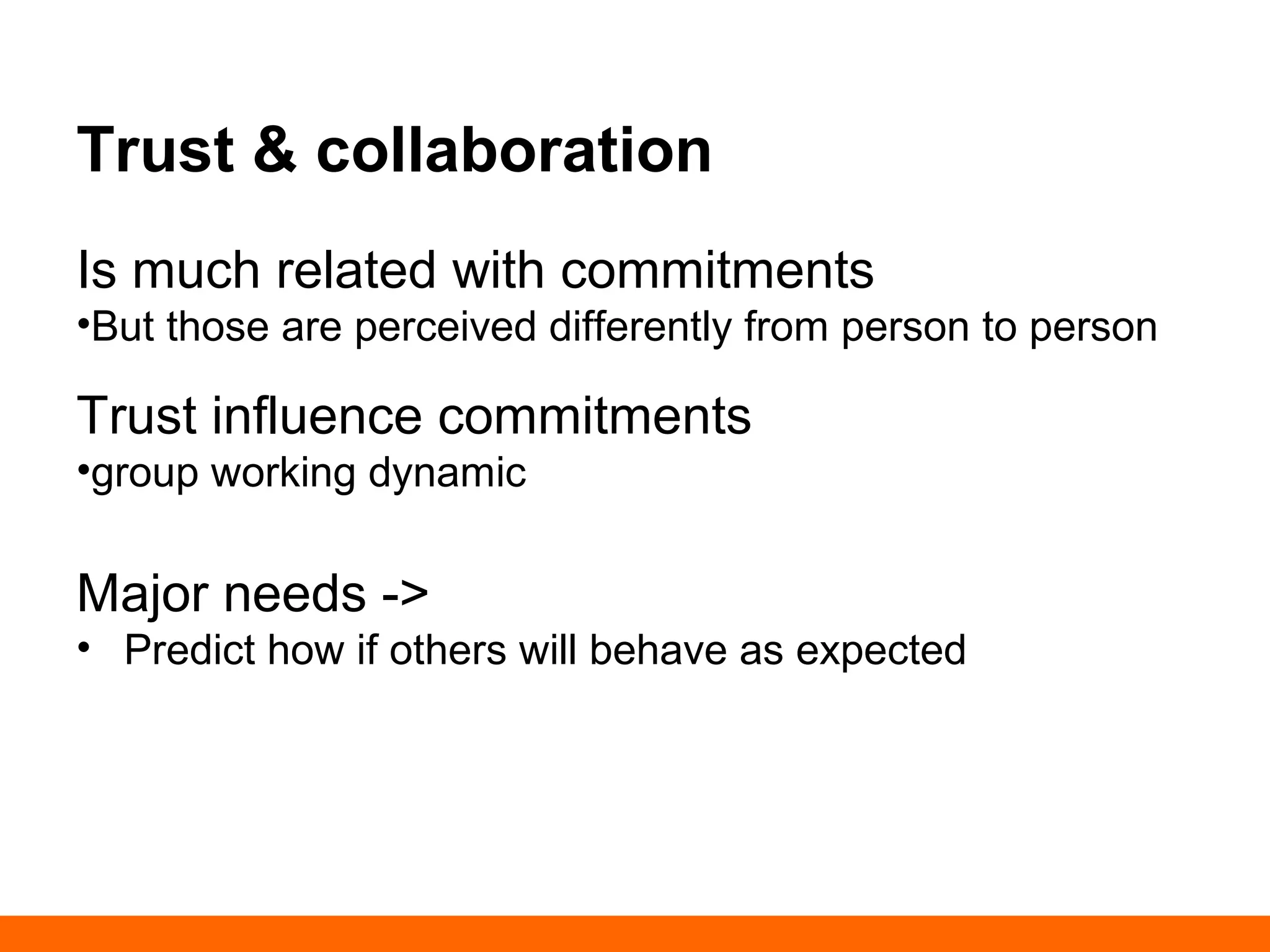
Trust & collaboration 
Is much related with commitments 
• But those are perceived differently from person to 
person 
Trust influence commitments 
• group working dynamic 
Major needs -> 
• Predict how if others will behave as expected
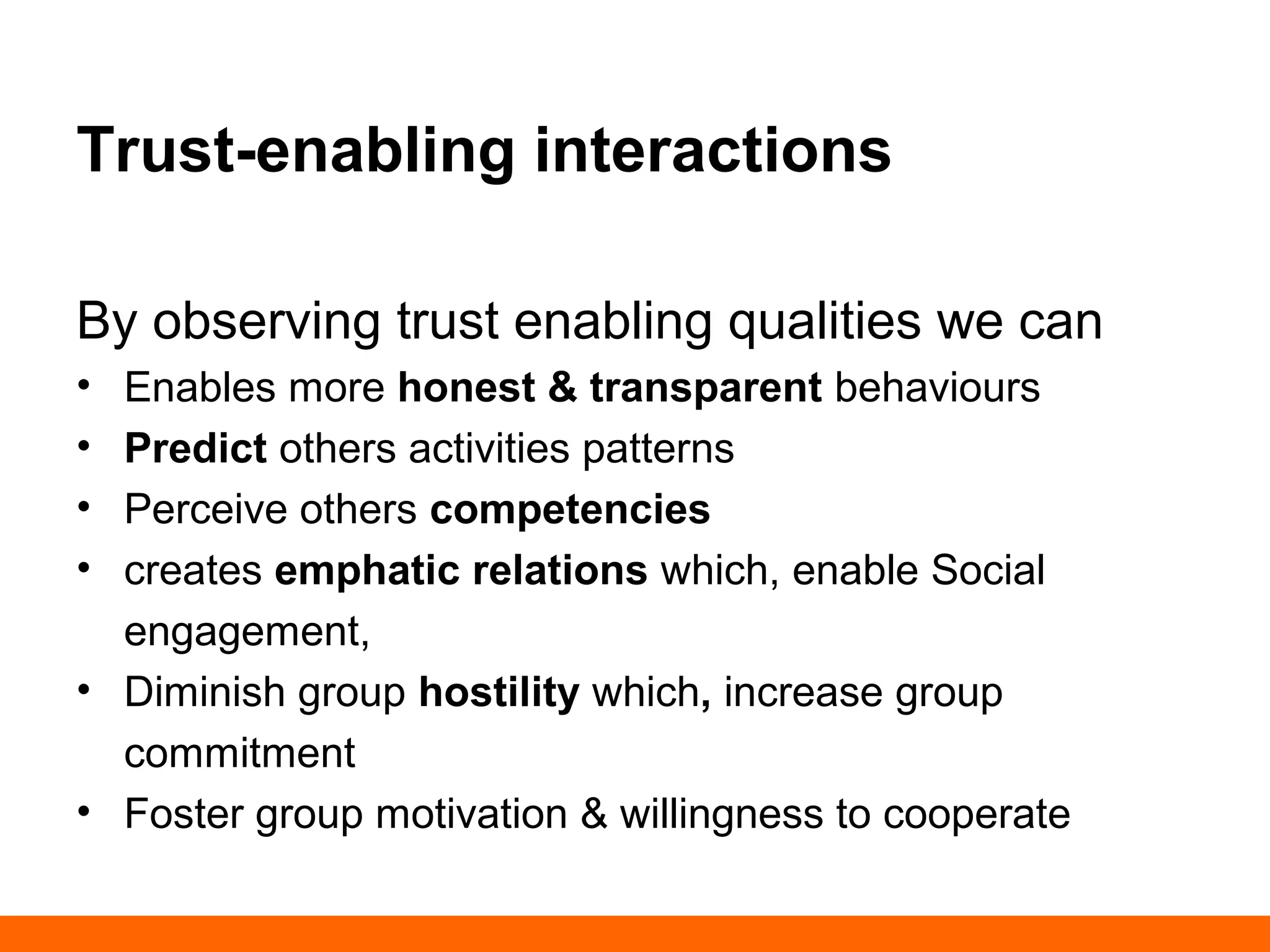
Trust-enabling interactions 
By observing trust enabling qualities we can 
• Enables more honest & transparent behaviours 
• Predict others activities patterns 
• Perceive others competencies 
• creates emphatic relations which, enable Social 
engagement, 
• Diminish group hostility which, increase group 
commitment 
• Foster group motivation & willingness to cooperate
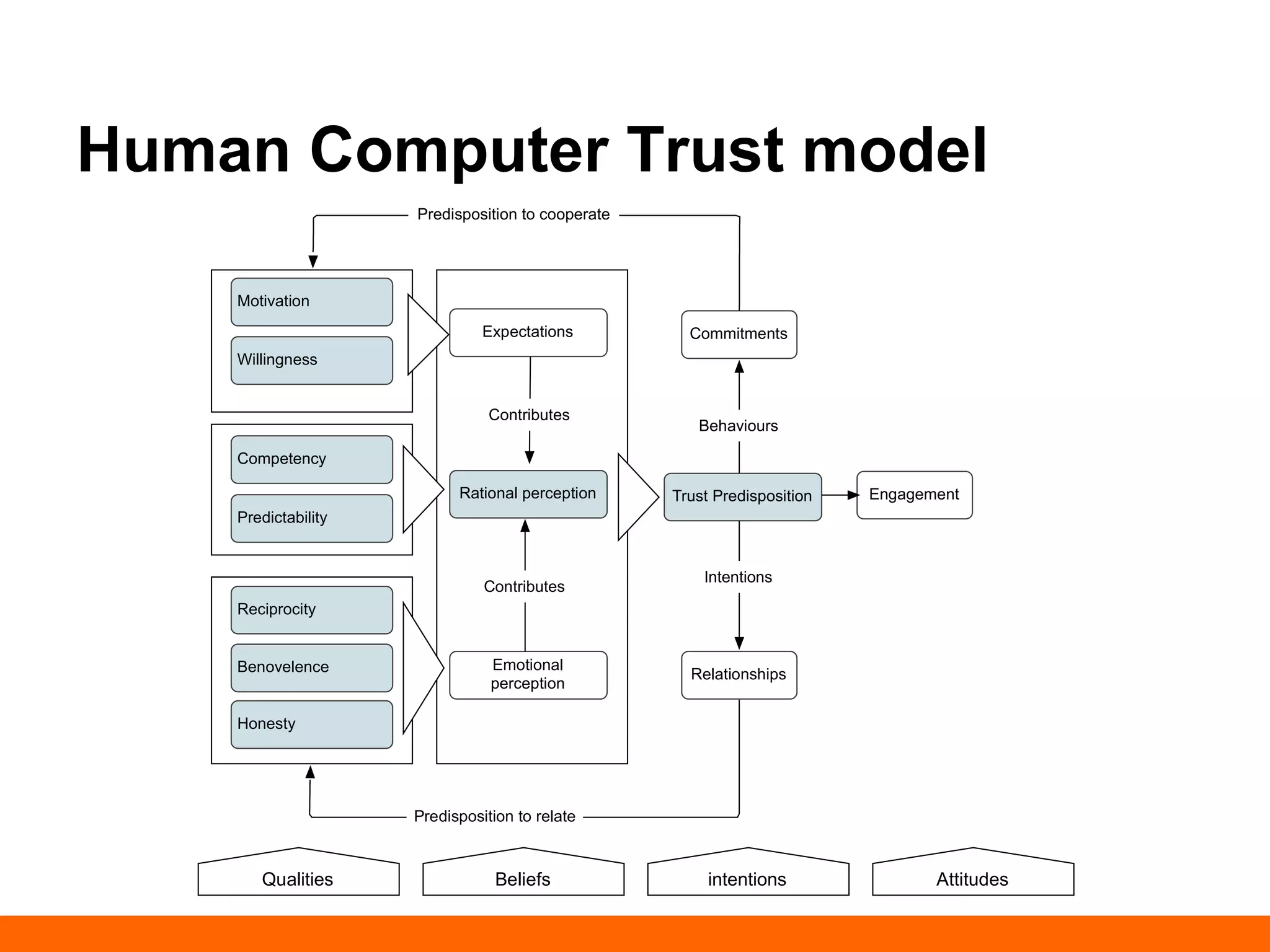
Human Computer Trust model 
Trust Predisposition 
Motivation 
Willingness 
Competency 
Predictability 
Reciprocity 
Benovelence 
Honesty 
Expectations 
Contributes 
Rational perception 
Emotional 
perception 
Relationships 
Contributes 
Commitments 
Intentions 
Predisposition to cooperate 
Predisposition to relate 
Behaviours 
Engagement 
Qualities Beliefs intentions Attitudes
Application 
Support the design of a instrument to Assess/ 
evaluate trust-enabling interaction design 
qualities 
Sousa, S., Lamas, D.; 
Shmorgun, I.; Arakelyan, A. 
(2014). 
A design space for trust 
enabling interaction design. 
In MIDI 2014, ACM (2014) 
This toolset provides 
designers lenses to 
assess the act of 
design for trust-enable 
interactions and further 
evaluate if their design 
propositions have 
been reflected in the 
design outcome.
Thank you!

A key contribution for leveraging trustful interactions

  • 1.
  • 2.
    Theoretical underpinnings HCIperspective • Study computing and computational artifacts as they relate to the human condition. Participation Cooperation Trust perspective • Study how it can be crucial element in human relationship Human Computer Trust • Represents the Value centered Interactions The interception of Human-Computer interactions components; and The dynamic nature of trust in relationships
  • 3.
    key principles Theongoing cultural shift • a ever-widening range of digital artifacts is transforming our daily lives. The way we communicate, locate, play, learn, and much more How we relate to technology is • less and less about the… devices; and • more about the… activities. Information technology context is • becoming pervasive; and Computing is • becoming ubiquitous
  • 4.
  • 5.
    Contextual aim Trustcontemplates • Social phenomena • A complex two-way relationship Trust emerges from • An interpersonal organization • A specific social situation • A specific social context • Positive experiences • Interactions • Active participation • Cooperative relations SUPPORT & SUSTAIN
  • 6.
    Contextual aim Trustingrepresents • A reinsurance element Trusting comes associated • With certain properties that help to support users intended behaviours Trusting relies on • The identification of trustworthy making qualities What underlies people's beliefs
  • 7.
  • 8.
    The research contemplates A need for identify 1. trust social values (qualities) that underlies people’s trust beliefs 1. The reliability of those trustworthy making qualities 1. How those (trustworthy making qualities) are represented in today’s ongoing cultural shift
  • 9.
    Stage 1 (theprocess) What is trust social phenomena? Trust concept map Extensive literature review Online communities concept map Participatory design sessions Modeling Trust as a social phenomena A social-technical model of trust Technology acceptance models 1
  • 10.
    Stage 2 (Validation) How does trust relate to users' activities? Trust trust effects in basic online activities survey Elicitation of trust effects in interactions survey trust concept map model of trust Trust survey trust concept map model of trust OLC concept map Eliciting the reliability of those trustworthy making qualities A model of Human-computer Trust 2
  • 11.
    Results (associated notions) Trusting is… • process of believing in others behaviours Reflects a • risk While some are more willing to take the risks others don’t Level of commitment of both parts Strong incentives to believe that determinate person, service or tool is in fact trustworthy
  • 12.
    Predominant factors Attitudestowards sharing • Shared history & identity • Respect and have honorable intentions • Be reliable • Be known • Sympathy & friendliness Attitudes towards relate • Honesty & transparency • know the person • Be willing to • Empathy • Reliable source Attitudes towards communicate • Honest & Transparent behaviours • Receive support • Feel secure • Share similar interests Trust Predisposition Reciprocity Competency Benevolency Predictability Honesty
  • 13.
    Trust & Privacyby safe we mean… felling a degree of control who will read or have access to their shared resources, comments and assignments. Students feel safe to share
  • 14.
    Trust & collaboration Is much related with commitments • But those are perceived differently from person to person Trust influence commitments • group working dynamic Major needs -> • Predict how if others will behave as expected
  • 15.
    Trust-enabling interactions Byobserving trust enabling qualities we can • Enables more honest & transparent behaviours • Predict others activities patterns • Perceive others competencies • creates emphatic relations which, enable Social engagement, • Diminish group hostility which, increase group commitment • Foster group motivation & willingness to cooperate
  • 16.
    Human Computer Trustmodel Trust Predisposition Motivation Willingness Competency Predictability Reciprocity Benovelence Honesty Expectations Contributes Rational perception Emotional perception Relationships Contributes Commitments Intentions Predisposition to cooperate Predisposition to relate Behaviours Engagement Qualities Beliefs intentions Attitudes
  • 17.
    Application Support thedesign of a instrument to Assess/ evaluate trust-enabling interaction design qualities Sousa, S., Lamas, D.; Shmorgun, I.; Arakelyan, A. (2014). A design space for trust enabling interaction design. In MIDI 2014, ACM (2014) This toolset provides designers lenses to assess the act of design for trust-enable interactions and further evaluate if their design propositions have been reflected in the design outcome.
  • 18.