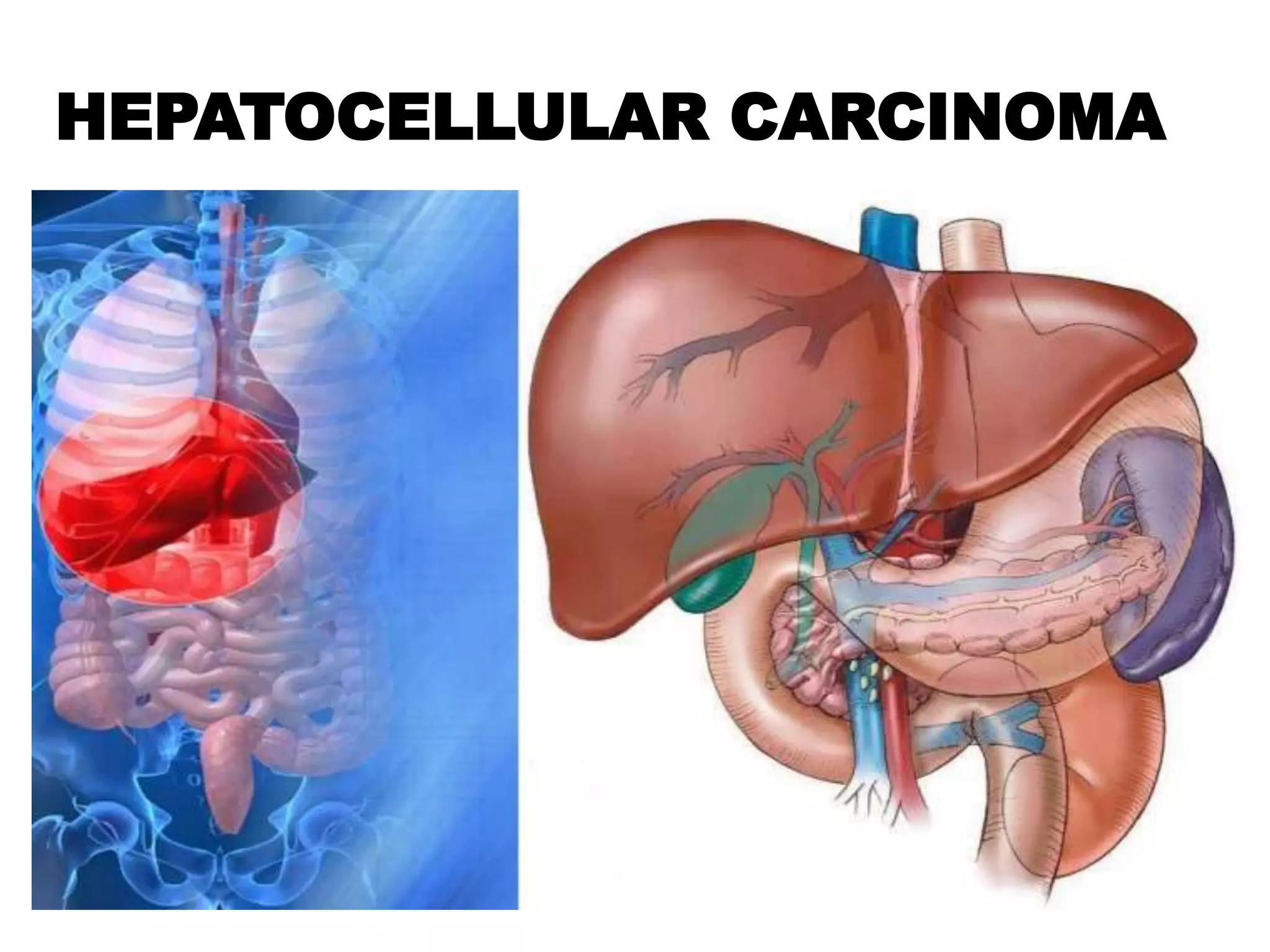
HEPATOCELLULAR CARCINOMA
OutLine
 Introduction
 Causes
 PATHOPHYSIOLOGY
 The classic features
• Diagnosis
 Treatment
 Prevention
Definition
• Hepatocellular carcinoma (HCC) is the most frequent
primary solid tumor of the liver.
• Malignant neoplasm's of the liver that arise from
parenchyma cells are called HEPATOCELLULAR
CARCINOMA
• HCC is the sixth most common neoplasm and the
third leading cause of cancer-related death in the
world
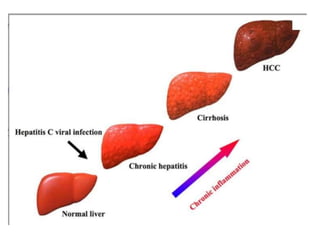
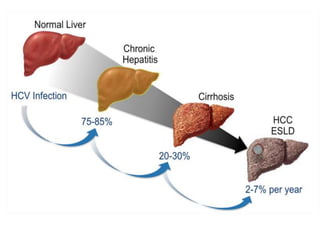
• Almost 80% cases are due to underlying
liver cirrhosis (chronic HBV or HCV
infection)
• HCC is typically diagnosed late and the
median survival following diagnosis is
approximately 6-20 months
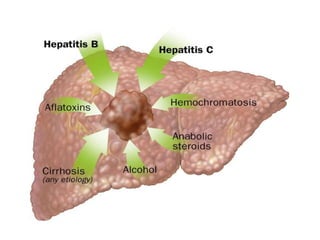
ETIOLOGY
Hepatitis B & C viruses –Chronic viral infection
Cirrhosis-excessive alcohol consumption
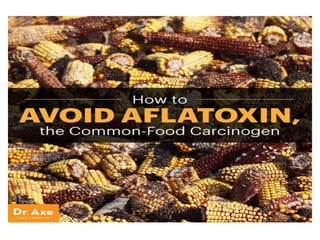
Ingestion of Aflatoxins contaminated food
Metabolic disease – Hemochromatosis
Androgenic steroids
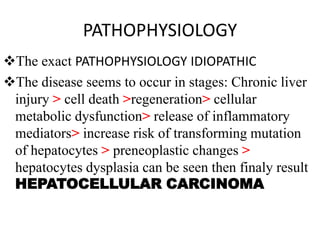
PATHOPHYSIOLOGY
The exact PATHOPHYSIOLOGY IDIOPATHIC
The disease seems to occur in stages: Chronic liver
injury > cell death >regeneration> cellular
metabolic dysfunction> release of inflammatory
mediators> increase risk of transforming mutation
of hepatocytes > preneoplastic changes >
hepatocytes dysplasia can be seen then finaly result
HEPATOCELLULAR CARCINOMA
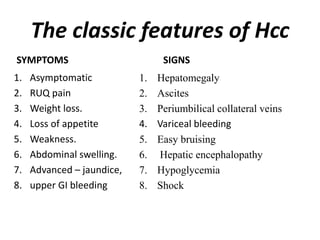
The classic features of Hcc
SYMPTOMS
1. Asymptomatic
2. RUQ pain
3. Weight loss.
4. Loss of appetite
5. Weakness.
6. Abdominal swelling.
7. Advanced – jaundice,
8. upper GI bleeding
SIGNS
1. Hepatomegaly
2. Ascites
3. Periumbilical collateral veins
4. Variceal bleeding
5. Easy bruising
6. Hepatic encephalopathy
7. Hypoglycemia
8. Shock
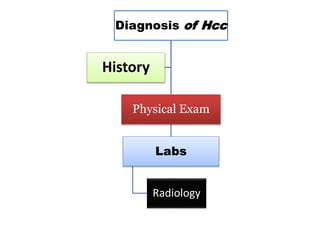
Diagnosis of Hcc
Physical Exam
Labs
Radiology
History
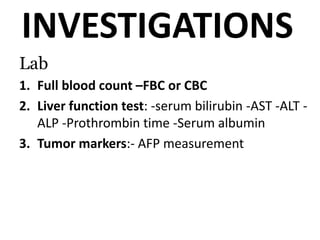
INVESTIGATIONS
Lab
1. Full blood count –FBC or CBC
2. Liver function test: -serum bilirubin -AST -ALT -
ALP -Prothrombin time -Serum albumin
3. Tumor markers:- AFP measurement
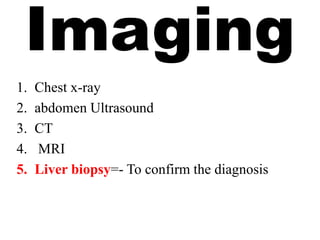
Imaging
1. Chest x-ray
2. abdomen Ultrasound
3. CT
4. MRI
5. Liver biopsy=- To confirm the diagnosis
MANAGEMENT
OF HCC
Non surgical
management
surgical
management
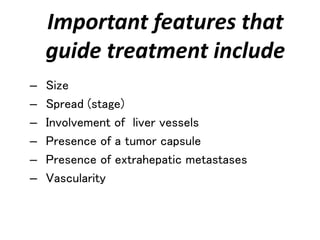
Important features that
guide treatment include
– Size
– Spread (stage)
– Involvement of liver vessels
– Presence of a tumor capsule
– Presence of extrahepatic metastases
– Vascularity
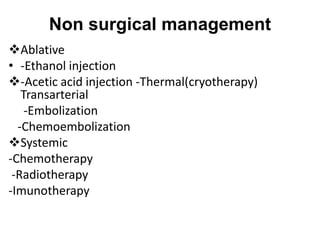
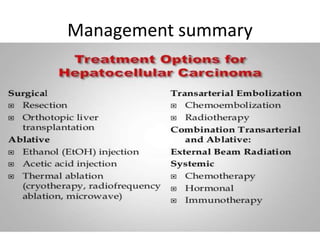
Non surgical management
Ablative
• -Ethanol injection
-Acetic acid injection -Thermal(cryotherapy)
Transarterial
-Embolization
-Chemoembolization
Systemic
-Chemotherapy
-Radiotherapy
-Imunotherapy
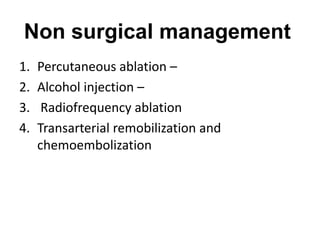
Non surgical management
1. Percutaneous ablation –
2. Alcohol injection –
3. Radiofrequency ablation
4. Transarterial remobilization and
chemoembolization
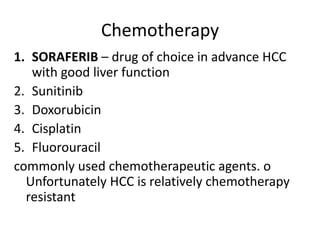
Chemotherapy
1. SORAFERIB – drug of choice in advance HCC
with good liver function
2. Sunitinib
3. Doxorubicin
4. Cisplatin
5. Fluorouracil
commonly used chemotherapeutic agents. o
Unfortunately HCC is relatively chemotherapy
resistant
Surgical management
1. Segmental or local resection
2. Lobectomy or partial hepatectomy
3. Extended lobectomy
4. Liver transplantation
Management summary
Prognosis after treatment
1. 5 year survival rate:- 30-40% after liver resection
2. 5year survival rate:- 75% in liver transplantation
3. 2 year survival rate :- 60% in transarterial
chemoembolization
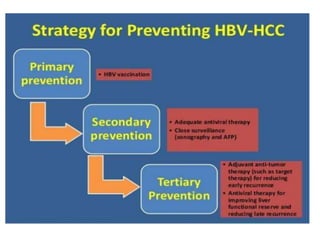
CONCLUSION for Hcc is preventing and treating viral
hepatitis may help to reduce the risk of developing
liver cancer. Childhood hepatitis vaccination of
hepatitis B may reduce risk of it.Proper
nutrition,rest,good habits(avoid alcohol) and safer
practises makes a man healthy.
Thank you for your
attention

Hepatocellular carcinoma Dr.MASHA

  • 1.
  • 9.
    OutLine  Introduction  Causes PATHOPHYSIOLOGY  The classic features • Diagnosis  Treatment  Prevention
  • 10.
    Definition • Hepatocellular carcinoma(HCC) is the most frequent primary solid tumor of the liver. • Malignant neoplasm's of the liver that arise from parenchyma cells are called HEPATOCELLULAR CARCINOMA • HCC is the sixth most common neoplasm and the third leading cause of cancer-related death in the world
  • 11.
    • Almost 80%cases are due to underlying liver cirrhosis (chronic HBV or HCV infection) • HCC is typically diagnosed late and the median survival following diagnosis is approximately 6-20 months
  • 12.
    ETIOLOGY Hepatitis B &C viruses –Chronic viral infection Cirrhosis-excessive alcohol consumption Ingestion of Aflatoxins contaminated food Metabolic disease – Hemochromatosis Androgenic steroids
  • 14.
    PATHOPHYSIOLOGY The exact PATHOPHYSIOLOGYIDIOPATHIC The disease seems to occur in stages: Chronic liver injury > cell death >regeneration> cellular metabolic dysfunction> release of inflammatory mediators> increase risk of transforming mutation of hepatocytes > preneoplastic changes > hepatocytes dysplasia can be seen then finaly result HEPATOCELLULAR CARCINOMA
  • 18.
    The classic featuresof Hcc SYMPTOMS 1. Asymptomatic 2. RUQ pain 3. Weight loss. 4. Loss of appetite 5. Weakness. 6. Abdominal swelling. 7. Advanced – jaundice, 8. upper GI bleeding SIGNS 1. Hepatomegaly 2. Ascites 3. Periumbilical collateral veins 4. Variceal bleeding 5. Easy bruising 6. Hepatic encephalopathy 7. Hypoglycemia 8. Shock
  • 19.
    Diagnosis of Hcc PhysicalExam Labs Radiology History
  • 20.
    INVESTIGATIONS Lab 1. Full bloodcount –FBC or CBC 2. Liver function test: -serum bilirubin -AST -ALT - ALP -Prothrombin time -Serum albumin 3. Tumor markers:- AFP measurement
  • 21.
    Imaging 1. Chest x-ray 2.abdomen Ultrasound 3. CT 4. MRI 5. Liver biopsy=- To confirm the diagnosis
  • 22.
  • 23.
    Important features that guidetreatment include – Size – Spread (stage) – Involvement of liver vessels – Presence of a tumor capsule – Presence of extrahepatic metastases – Vascularity
  • 24.
    Non surgical management Ablative •-Ethanol injection -Acetic acid injection -Thermal(cryotherapy) Transarterial -Embolization -Chemoembolization Systemic -Chemotherapy -Radiotherapy -Imunotherapy
  • 25.
    Non surgical management 1.Percutaneous ablation – 2. Alcohol injection – 3. Radiofrequency ablation 4. Transarterial remobilization and chemoembolization
  • 26.
    Chemotherapy 1. SORAFERIB –drug of choice in advance HCC with good liver function 2. Sunitinib 3. Doxorubicin 4. Cisplatin 5. Fluorouracil commonly used chemotherapeutic agents. o Unfortunately HCC is relatively chemotherapy resistant
  • 27.
    Surgical management 1. Segmentalor local resection 2. Lobectomy or partial hepatectomy 3. Extended lobectomy 4. Liver transplantation
  • 28.
  • 29.
    Prognosis after treatment 1.5 year survival rate:- 30-40% after liver resection 2. 5year survival rate:- 75% in liver transplantation 3. 2 year survival rate :- 60% in transarterial chemoembolization CONCLUSION for Hcc is preventing and treating viral hepatitis may help to reduce the risk of developing liver cancer. Childhood hepatitis vaccination of hepatitis B may reduce risk of it.Proper nutrition,rest,good habits(avoid alcohol) and safer practises makes a man healthy.
  • 32.
    Thank you foryour attention