


Improving Handoffs in the
Emergency Department
  Ann Emerg Med. 2010;55:171-180.
INTRODUCTION AND BACKGROUND

Patient handoffs at shift change are a ubiquitous and
 potentially hazardous process in emergency care.
The purpose of this article is to provide the most up-
 to-date evidence and collective thinking about the
 process and safety of handoffs between physicians
 in the ED.
To Err Is Human: Building a Safer Health System

 EDs are susceptible to “high error
  rates with serious consequences.”
 When sentinel events occur,
  communication errors are deemed
    to be the root cause in about 70%
    of cases.
   84% of treatment delays are later
    judged to be due to mis-
    communication. Of these, 62%
    are continuum-of-care issues
    associated with shift changes.
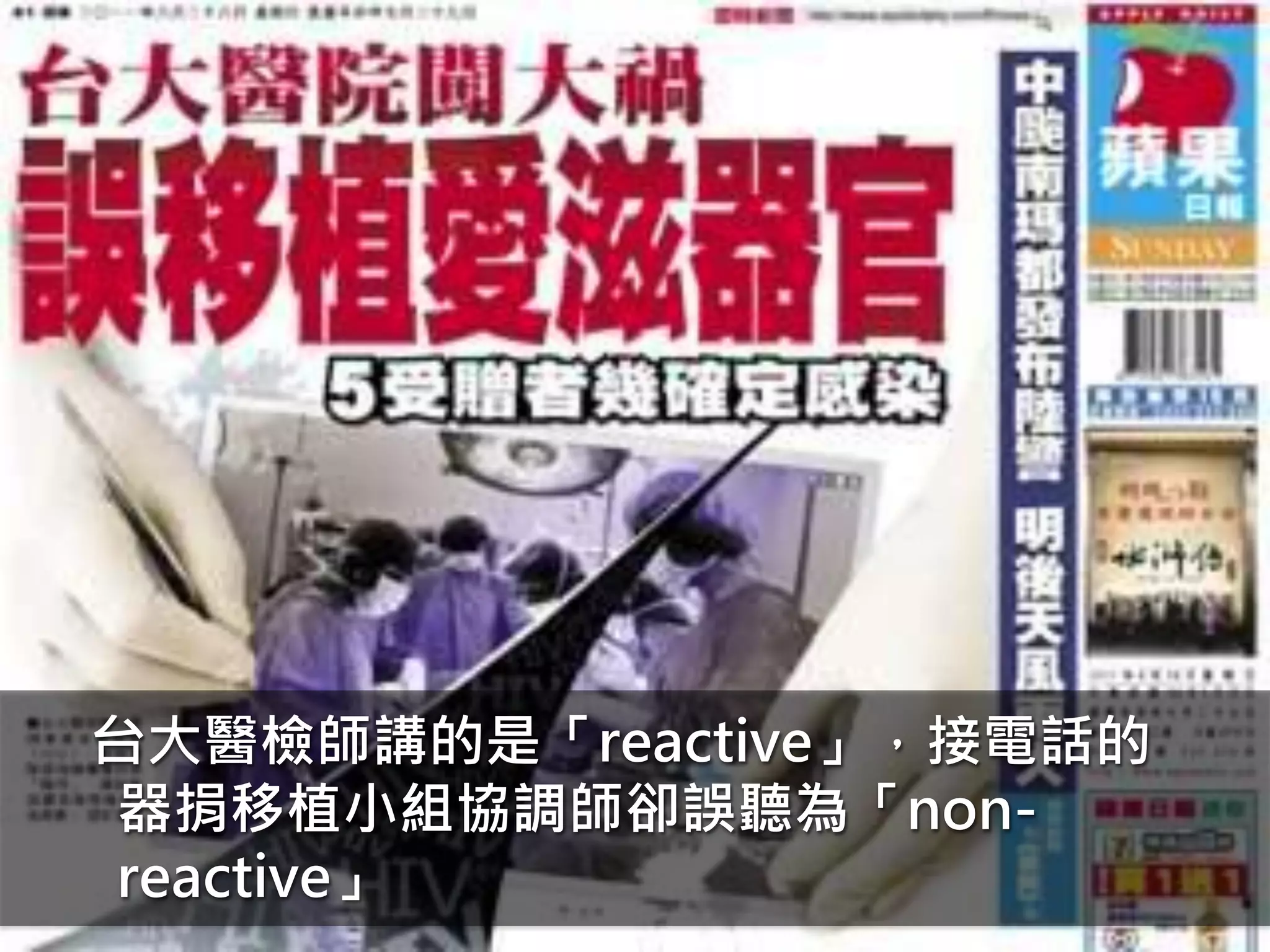
台大醫檢師講的是「reactive」,接電話的
器捐移植小組協調師卻誤聽為「non-
reactive」
Handoff Definition

A transition occurs when 2 or more workers
 exchange mission-specific information,
 responsibility, and authority for an operation.
Shift changes at the NASA Administration’s
 Johnson Space Center highlight the
 importance of a “question and answer period”
 to detect errors in assessments and plans.
Los Angeles–class nuclear submariners are
 trained to use “precise, unambiguous,
 impersonal and efficient” language to navigate
 safely.
Handoffs can be a source of liability and error but
 also an opportunity for rescue when the re-
 evaluation of a case from a fresh perspective may
 result in preventing or recovering from an adverse
 event.
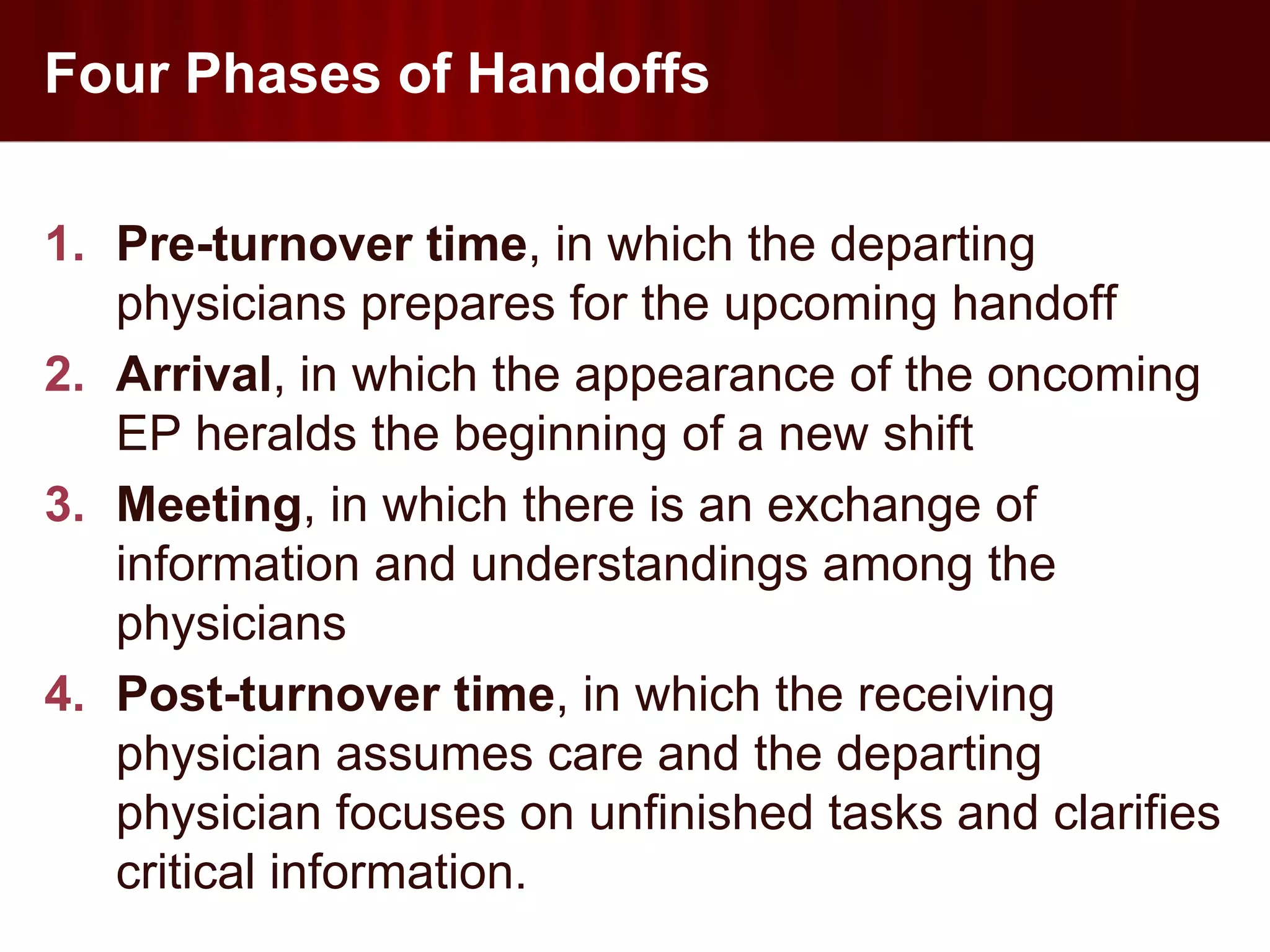
Four Phases of Handoffs

1. Pre-turnover time, in which the departing
   physicians prepares for the upcoming handoff
2. Arrival, in which the appearance of the oncoming
   EP heralds the beginning of a new shift
3. Meeting, in which there is an exchange of
   information and understandings among the
   physicians
4. Post-turnover time, in which the receiving
   physician assumes care and the departing
   physician focuses on unfinished tasks and clarifies
   critical information.
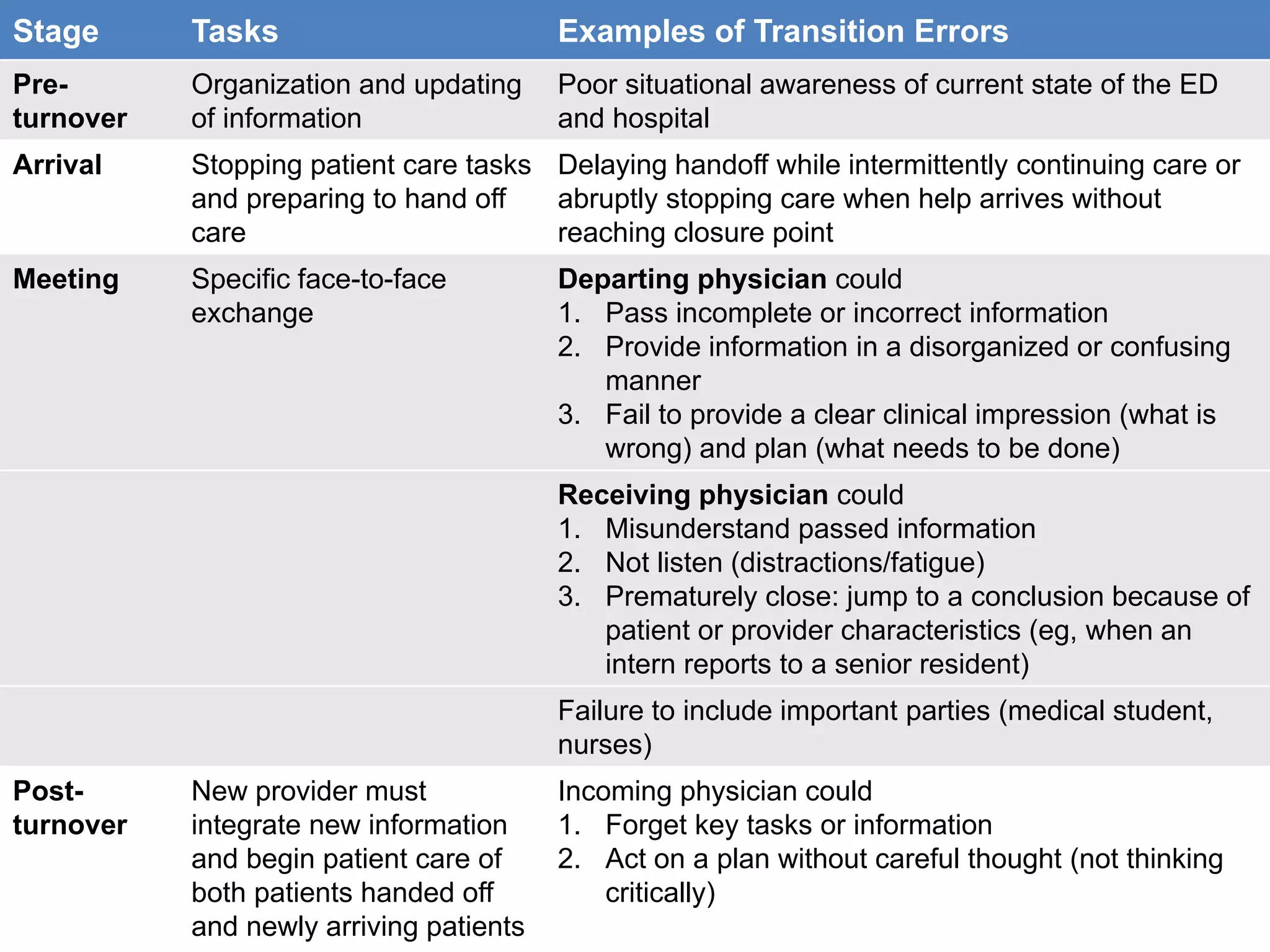
Stage      Tasks                         Examples of Transition Errors
Pre-       Organization and updating     Poor situational awareness of current state of the ED
turnover   of information                and hospital
Arrival    Stopping patient care tasks Delaying handoff while intermittently continuing care or
           and preparing to hand off   abruptly stopping care when help arrives without
           care                        reaching closure point
Meeting    Specific face-to-face         Departing physician could
           exchange                      1. Pass incomplete or incorrect information
                                         2. Provide information in a disorganized or confusing
                                            manner
                                         3. Fail to provide a clear clinical impression (what is
                                            wrong) and plan (what needs to be done)
                                         Receiving physician could
                                         1. Misunderstand passed information
                                         2. Not listen (distractions/fatigue)
                                         3. Prematurely close: jump to a conclusion because of
                                            patient or provider characteristics (eg, when an
                                            intern reports to a senior resident)
                                         Failure to include important parties (medical student,
                                         nurses)
Post-      New provider must             Incoming physician could
turnover   integrate new information     1. Forget key tasks or information
           and begin patient care of     2. Act on a plan without careful thought (not thinking
           both patients handed off          critically)
           and newly arriving patients
Providers use handoffs to develop a shared
 understanding among caregivers, which includes the
 patient’s clinical picture, his or her recent course,
 therapies administered, rationale for pending
 diagnostic tests and therapies, and likely disposition.
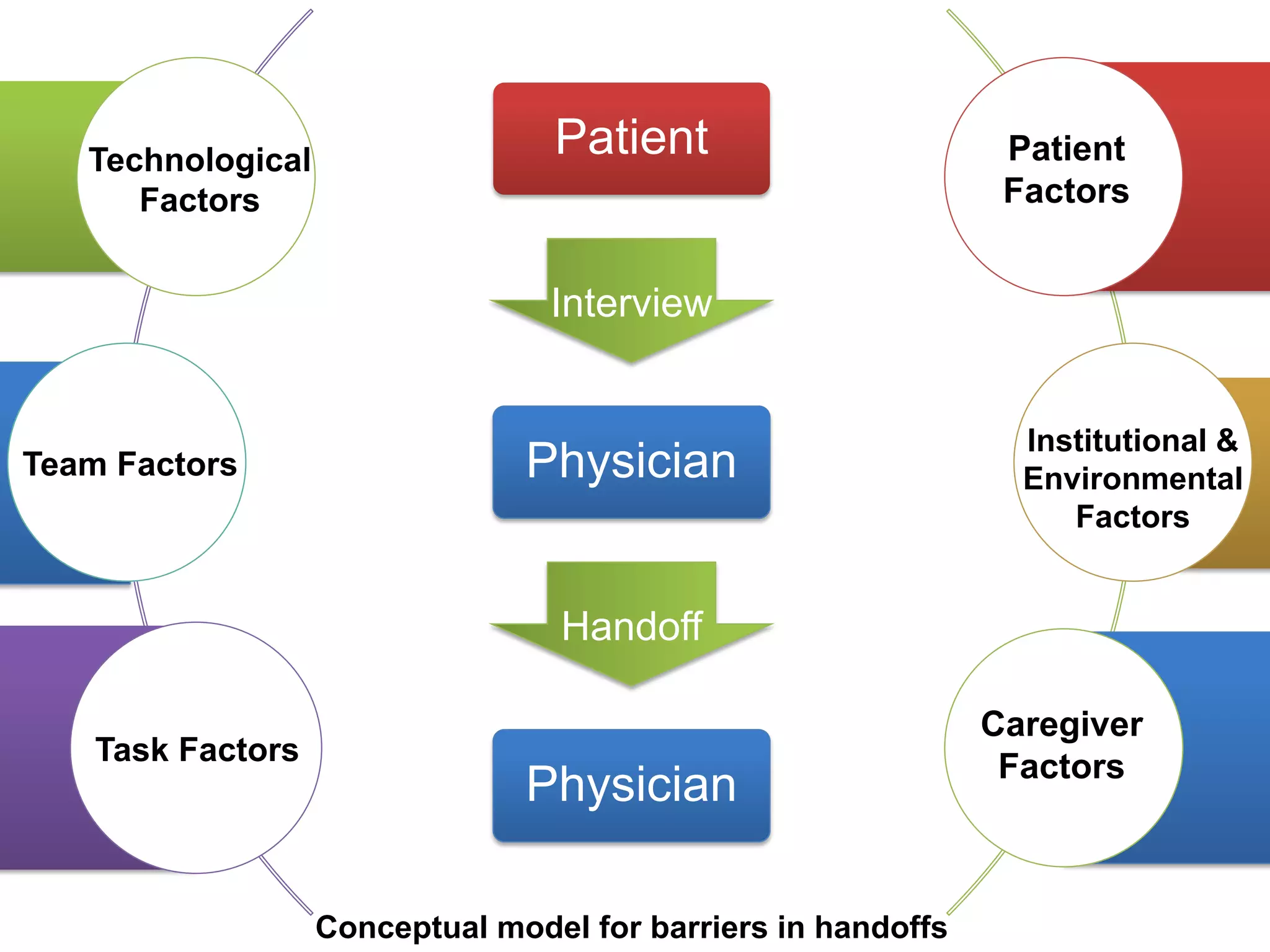
•
                                                                                   •
   Technological
                                  Patient                       Patient            •
      Factors                                                   Factors            •
                                                                                   •
                                                                                   •
                                  Interview


                                                                 Institutional &
Team Factors                    Physician                        Environmental
                                                                    Factors


                                  Handoff                                          •
                                                                                   •
                                                                                   •
                                                               Caregiver
    Task Factors                                                                   •
                                                                Factors
                                Physician                                          •
                                                                                   •
                                                                                   •


                   Conceptual model for barriers in handoffs
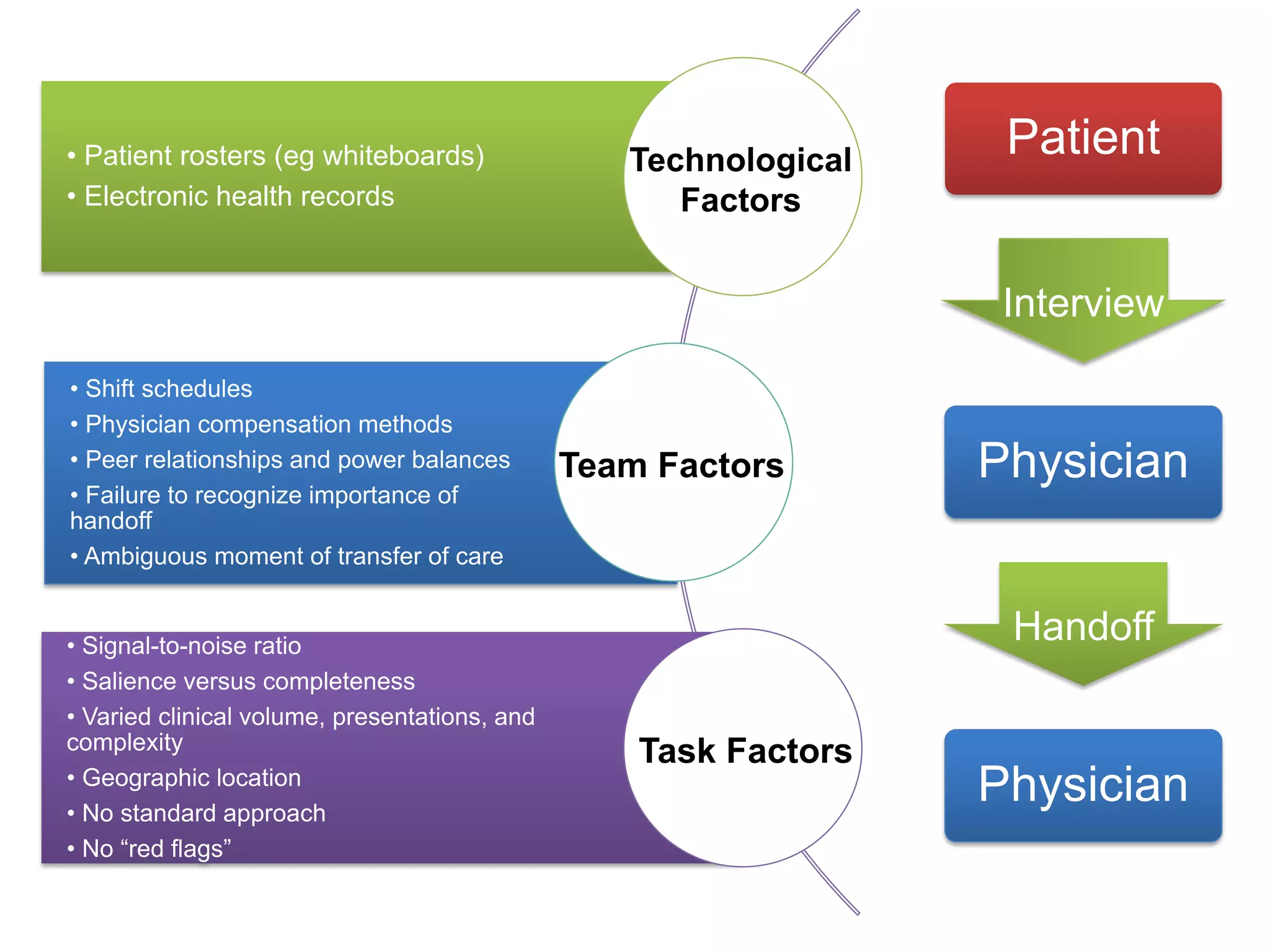
• Patient rosters (eg whiteboards)                Technological
                                                                   Patient
• Electronic health records                          Factors


                                                                   Interview
• Shift schedules
• Physician compensation methods
• Peer relationships and power balances        Team Factors       Physician
• Failure to recognize importance of
handoff
• Ambiguous moment of transfer of care


• Signal-to-noise ratio
                                                                   Handoff
• Salience versus completeness
• Varied clinical volume, presentations, and
complexity
                                                   Task Factors
• Geographic location
• No standard approach
                                                                  Physician
• No “red flags”
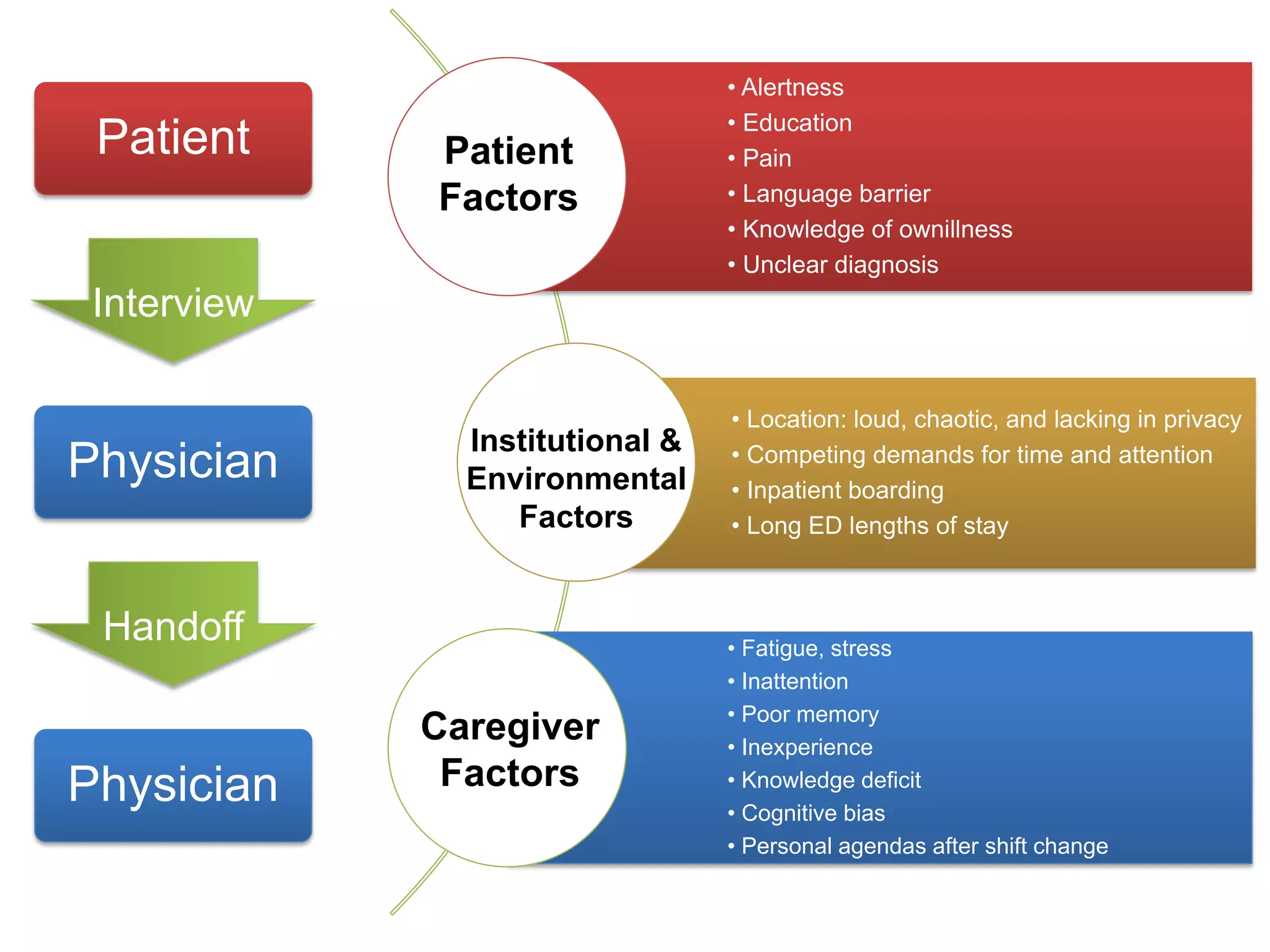
• Alertness
                                 • Education
 Patient     Patient             • Pain
             Factors             • Language barrier
                                 • Knowledge of ownillness
                                 • Unclear diagnosis
 Interview

                                 • Location: loud, chaotic, and lacking in privacy
               Institutional &   • Competing demands for time and attention
Physician      Environmental     • Inpatient boarding
                  Factors        • Long ED lengths of stay


 Handoff                         • Fatigue, stress
                                 • Inattention
                                 • Poor memory
             Caregiver           • Inexperience

Physician     Factors            • Knowledge deficit
                                 • Cognitive bias
                                 • Personal agendas after shift change
Signal-to-Noise Ratio

Staff interruptions, ongoing patient concerns, EMS
 radio calls, temporal pressures, and the routine
 chaos of the work environment can all overwhelm
 the few moments of directed attention required for
 safe and effective handoffs.
Disorganized handoffs themselves can add to the
 distractions because extraneous data may drown
 out essential messages and details.
Conciseness Versus Completeness

An adequate handoff can be limited to a short
 phrase with a working diagnosis and a disposition in
 stable patient.
No Standard Approach

The content, location, style, and length of handoffs
 can be inconsistent and unpredictable.
This lack of standardization can make it difficult for
 both the departing and receiving physician to
 communicate effectively.
Ambiguous Moment of Transition of Care

ED staff may be confused about which physician is
 in charge of the patients who were handed off.
No Clear High-Risk Triggers for the
Dangerous Handoffs

“Red flags” may include an uncertain diagnosis, an
 unstable patient, an unclear disposition, a
 consultant-driven evaluation, a pending imaging
 study, deviations from a typical diagnosis or
 treatment plan, a patient with a psychiatric illness,
 and a prolonged stay in the ED.
Cognitive Bias

In the transfer of care, the receiving physician
 usually relies on the clinical acumen and recall of the
 departing colleague.
When the receiving physician assumes the
 interpretation of the initial physician, based on
 erroneous information or a faulty clinical impression,
 adverse outcomes may result.
Economic Construct of the ED Group

Productivity based systems tend to discourage
 handoffs in patient care and may financially motivate
 the initiating physician to continue patient care to
 disposition.
In hourly pay system, the receiving physician may
 inherit multiple patients and must assume
 responsibility for making the appropriate disposition
 of patients in whose treatment they were not initially
 involved.
Blended systems may enhance the advantages of
 each while minimizing the barriers to effective
 handoffs.
Single Versus Multidisciplinary Handoff

Single-disciplinary team
 The advantage of this model is that it is efficient and focused:
 physicians hear what physicians need and nurses hear what
 nurses need.
Multi-disciplinary team
 Different team members (eg, nurses, physicians, midlevel
 providers, pharmacists) contribute to and participate in the
 handoff.
 The advantage of this model is that it integrates viewpoints of
 different providers, builds a team approach, and enables
 participants to serve as a “check and balance” for one
 another.
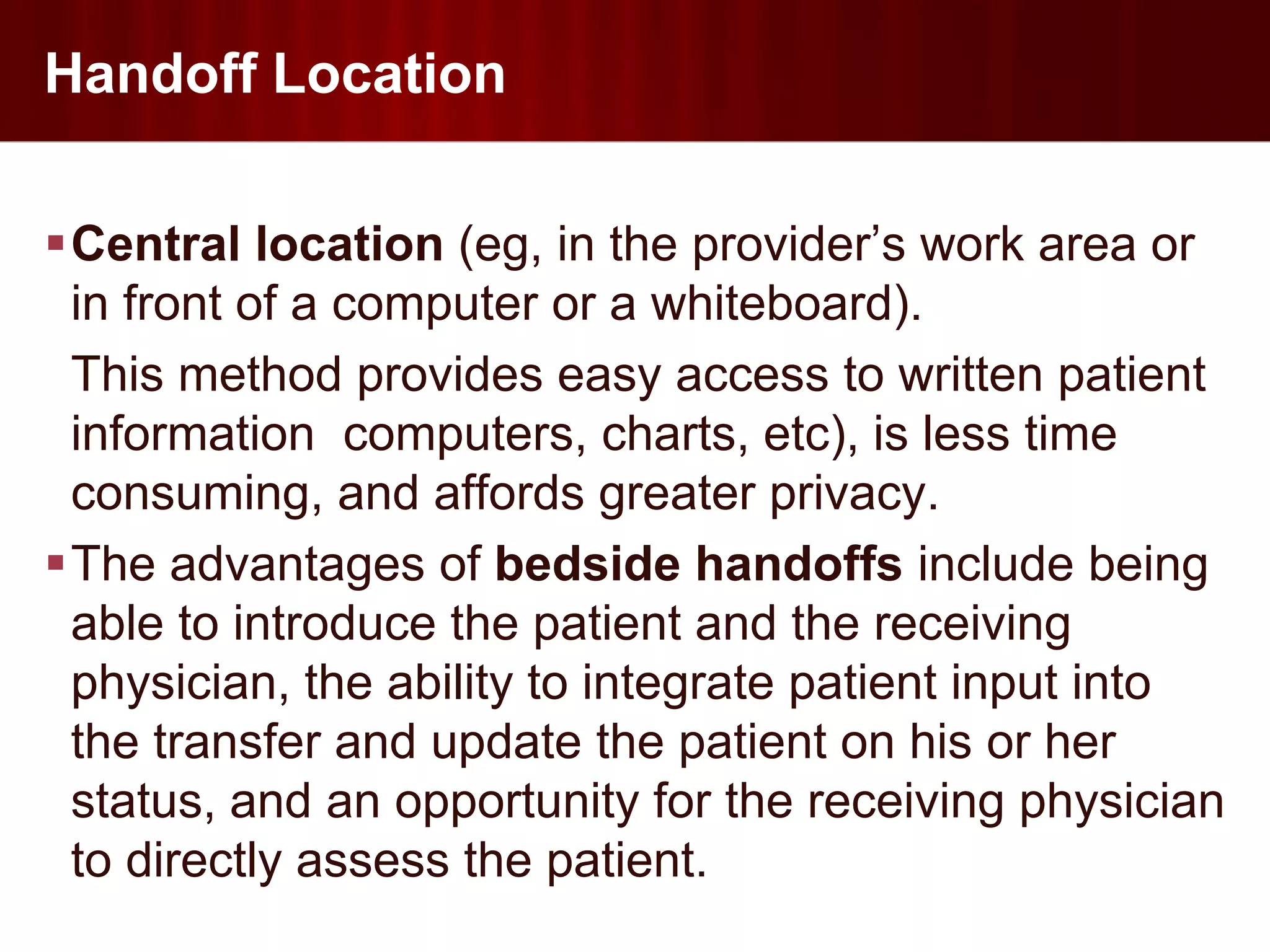
Handoff Location

Central location (eg, in the provider’s work area or
 in front of a computer or a whiteboard).
 This method provides easy access to written patient
 information computers, charts, etc), is less time
 consuming, and affords greater privacy.
The advantages of bedside handoffs include being
 able to introduce the patient and the receiving
 physician, the ability to integrate patient input into
 the transfer and update the patient on his or her
 status, and an opportunity for the receiving physician
 to directly assess the patient.
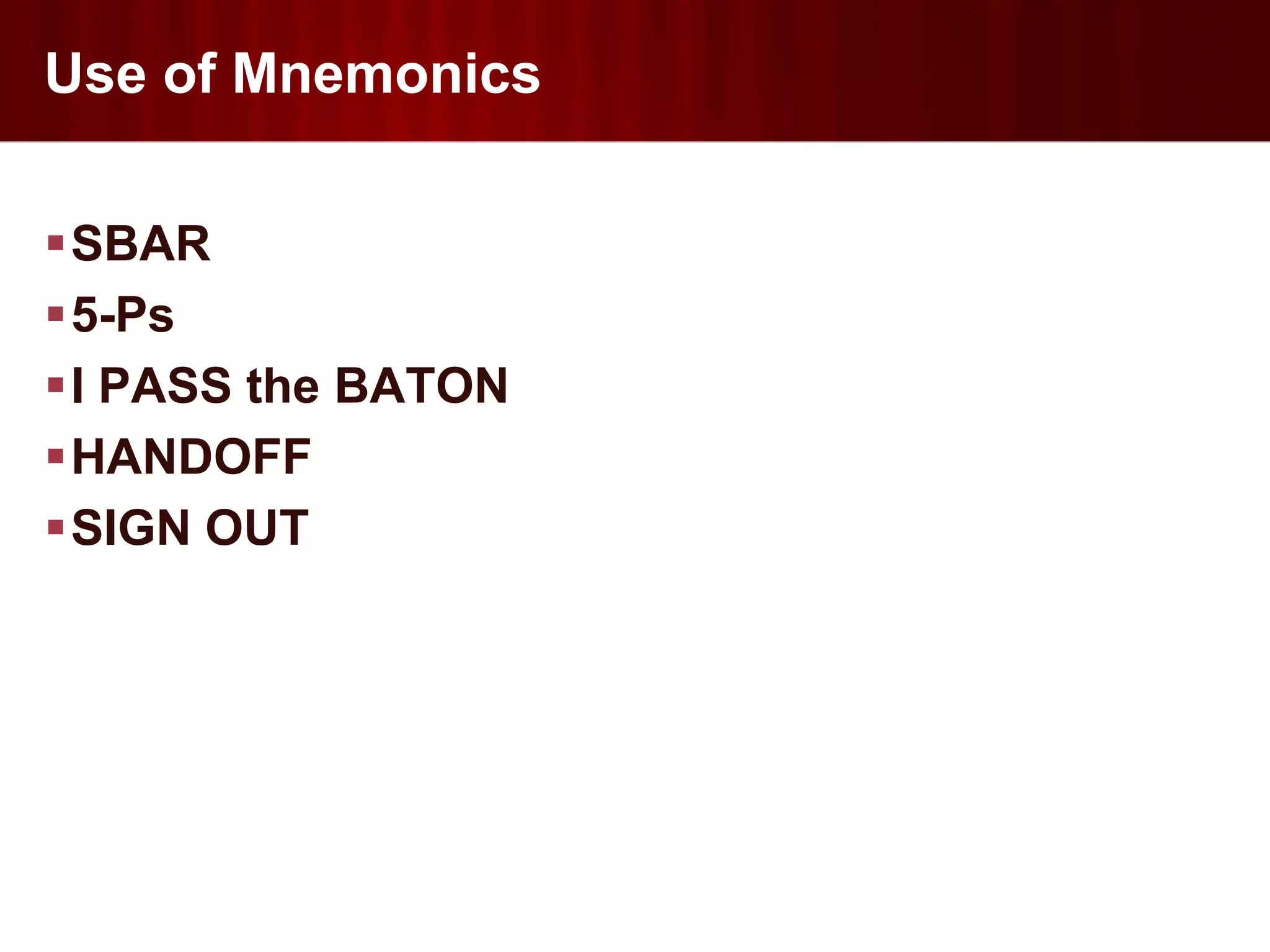
Use of Mnemonics

SBAR
5-Ps
I PASS the BATON
HANDOFF
SIGN OUT
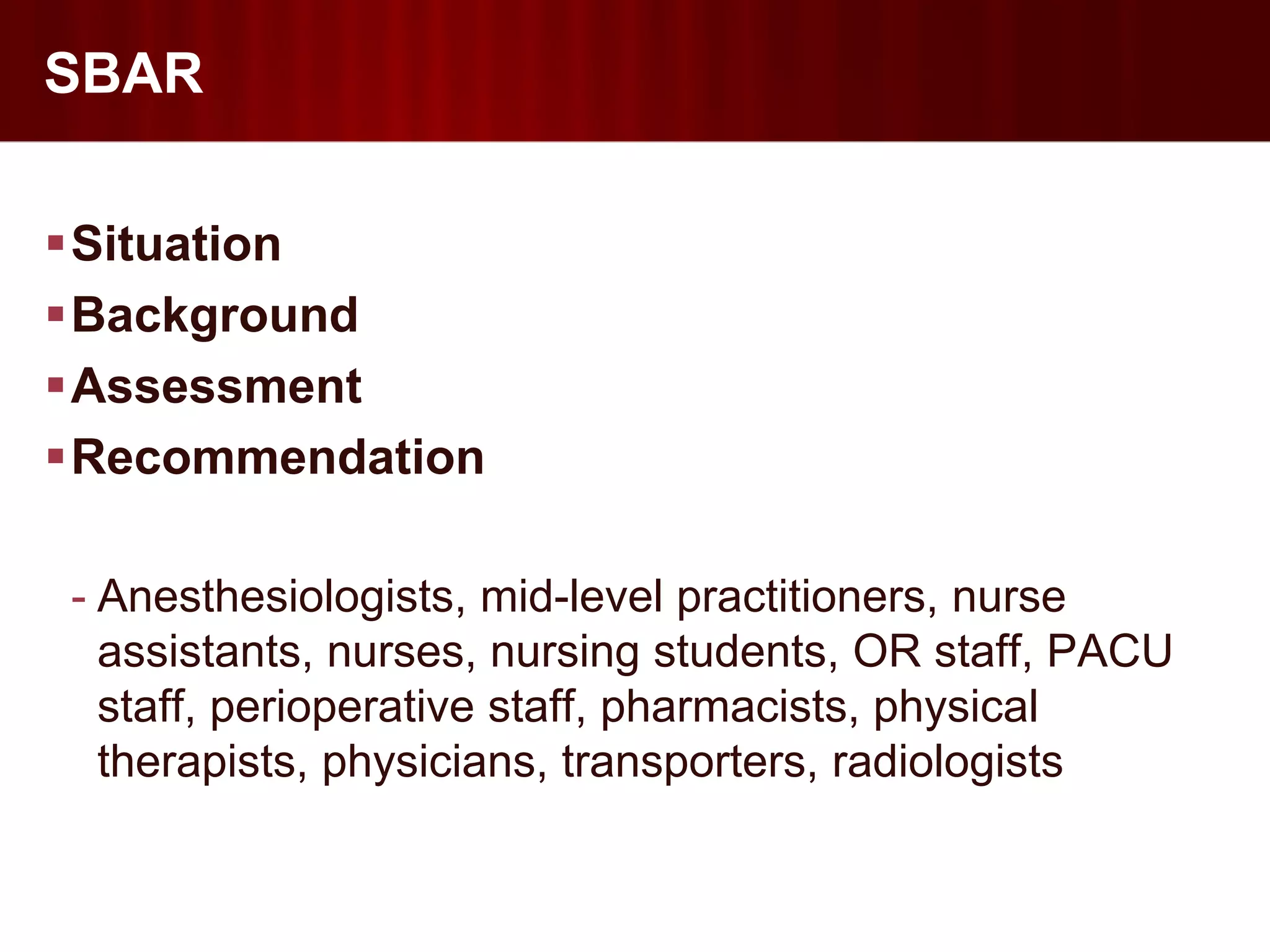
SBAR

Situation
Background
Assessment
Recommendation

- Anesthesiologists, mid-level practitioners, nurse
  assistants, nurses, nursing students, OR staff, PACU
  staff, perioperative staff, pharmacists, physical
  therapists, physicians, transporters, radiologists
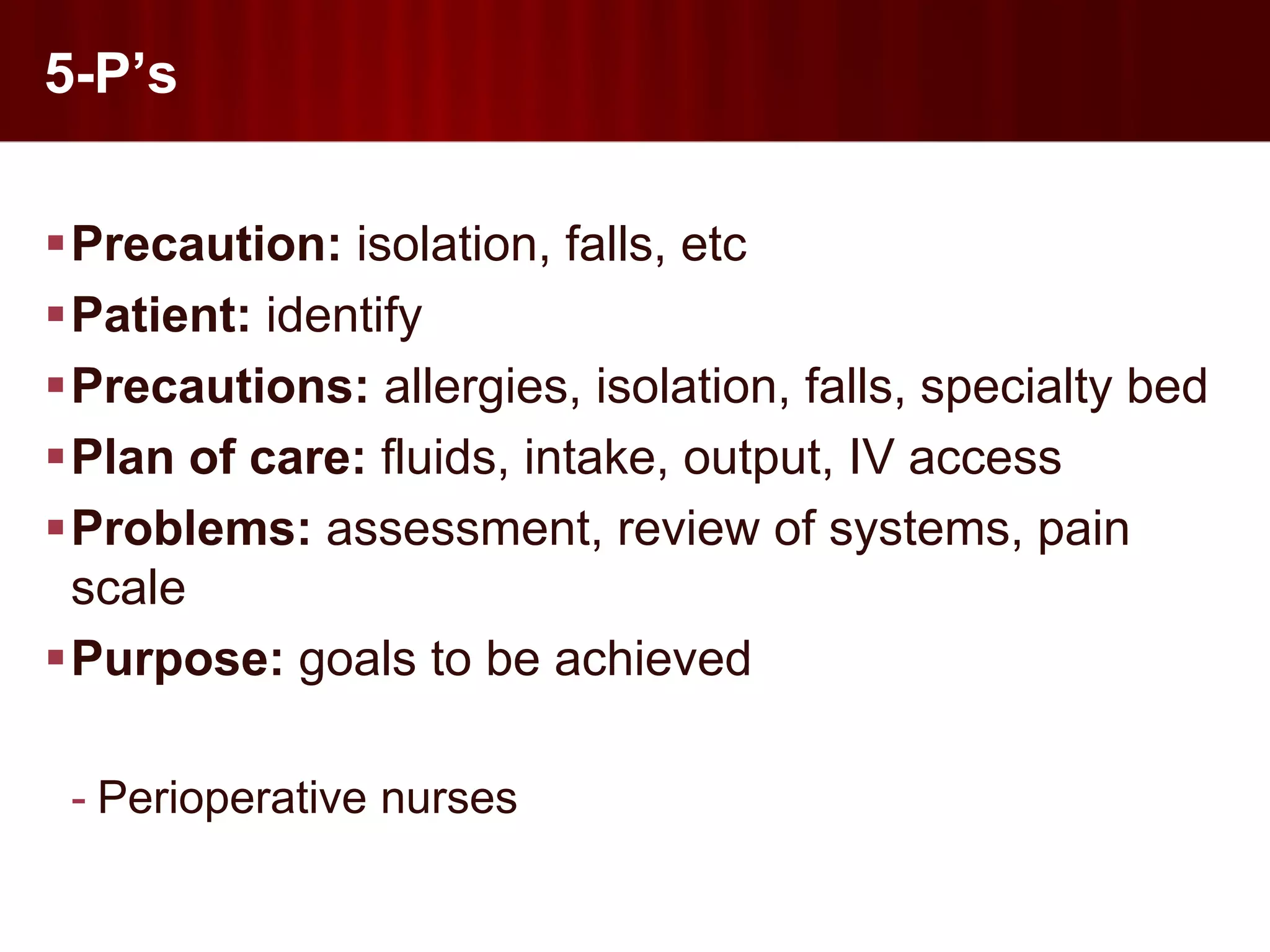
5-P’s

Precaution: isolation, falls, etc
Patient: identify
Precautions: allergies, isolation, falls, specialty bed
Plan of care: fluids, intake, output, IV access
Problems: assessment, review of systems, pain
 scale
Purpose: goals to be achieved

 - Perioperative nurses
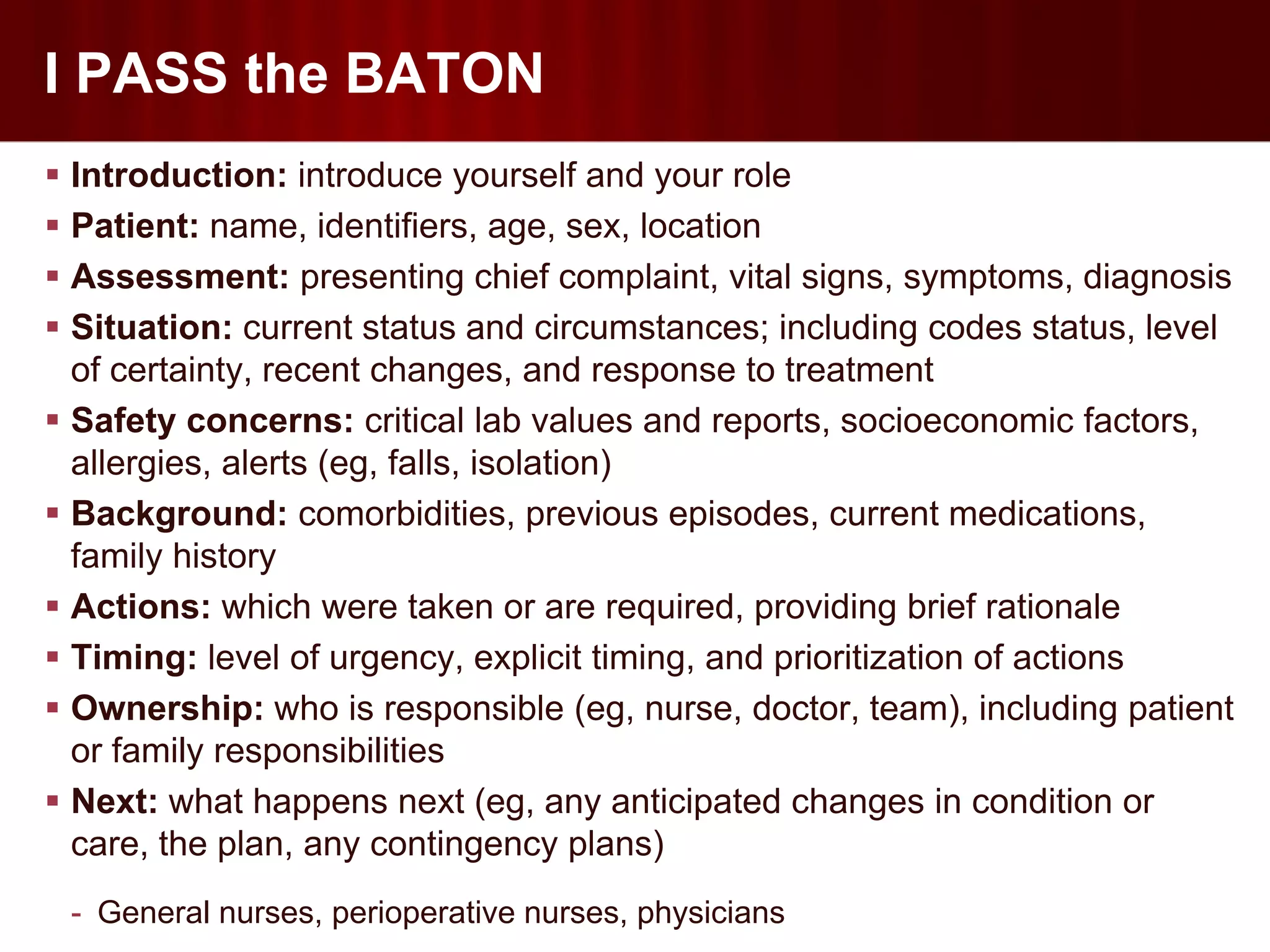
I PASS the BATON
 Introduction: introduce yourself and your role
 Patient: name, identifiers, age, sex, location
 Assessment: presenting chief complaint, vital signs, symptoms, diagnosis
 Situation: current status and circumstances; including codes status, level
  of certainty, recent changes, and response to treatment
 Safety concerns: critical lab values and reports, socioeconomic factors,
  allergies, alerts (eg, falls, isolation)
 Background: comorbidities, previous episodes, current medications,
  family history
 Actions: which were taken or are required, providing brief rationale
 Timing: level of urgency, explicit timing, and prioritization of actions
 Ownership: who is responsible (eg, nurse, doctor, team), including patient
  or family responsibilities
 Next: what happens next (eg, any anticipated changes in condition or
  care, the plan, any contingency plans)
 - General nurses, perioperative nurses, physicians
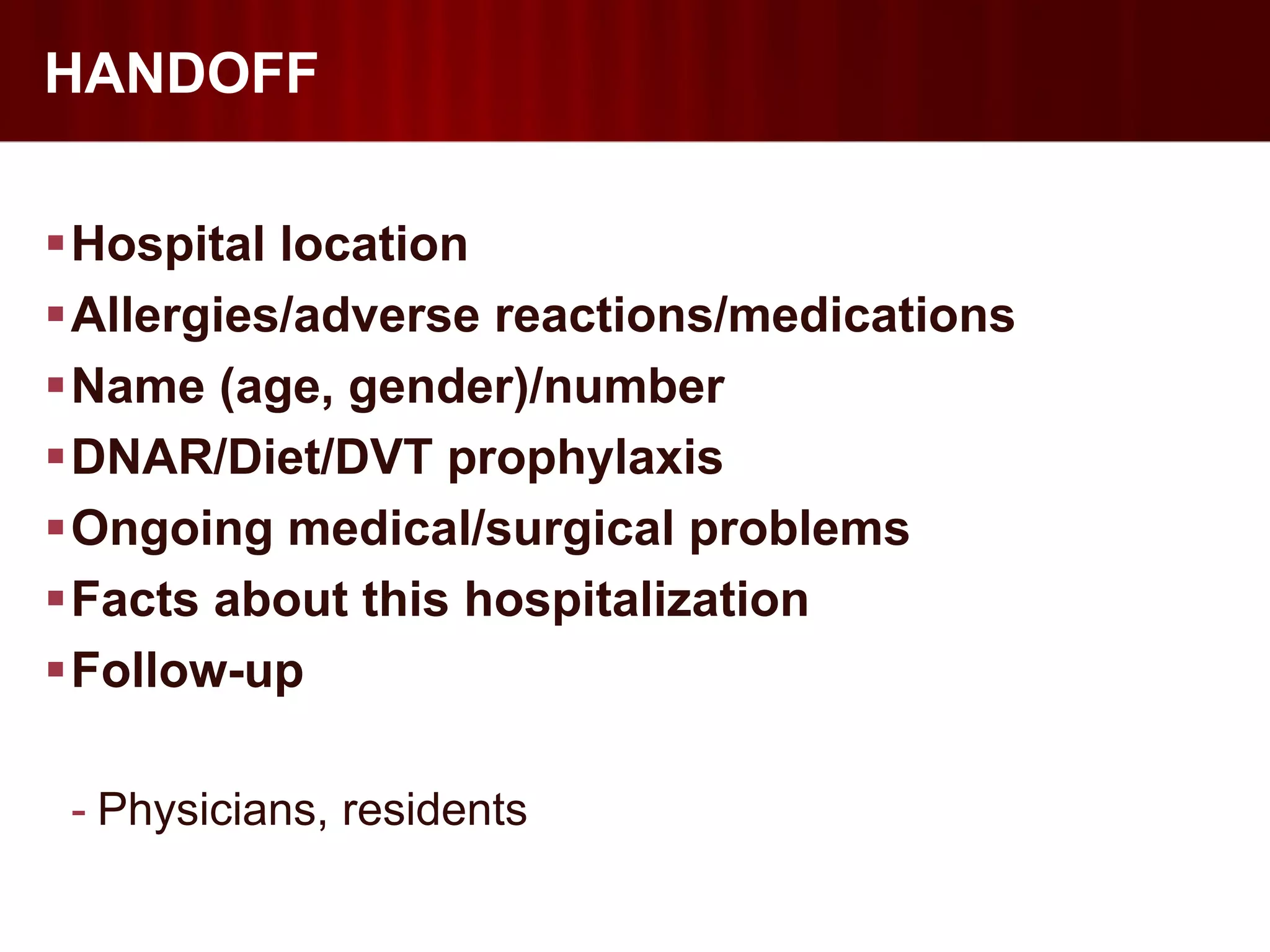
HANDOFF

Hospital location
Allergies/adverse reactions/medications
Name (age, gender)/number
DNAR/Diet/DVT prophylaxis
Ongoing medical/surgical problems
Facts about this hospitalization
Follow-up

 - Physicians, residents
SIGNOUT

Sick or DNR? (highlight sick or unstable patients,
 identify DNR/DNI patients)
Identifying data (name, age, gender, diagnosis)
General hospital course
New events of the day
Overall health status/clinical condition
Upcoming possibilities with plan, rationale
Tasks to complete overnight with plan, rationale

 - Internal medicine residents, medical students
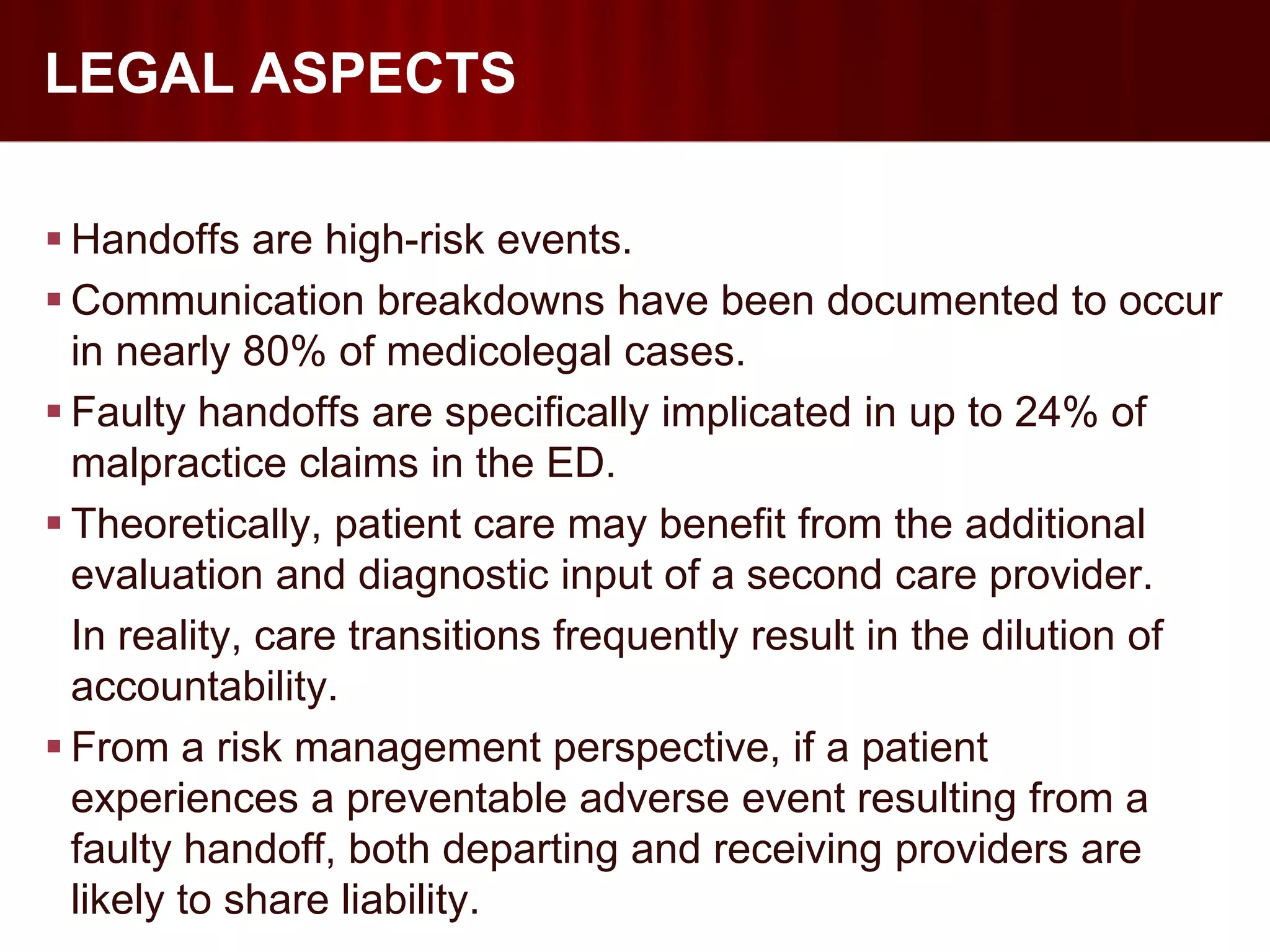
LEGAL ASPECTS

 Handoffs are high-risk events.
 Communication breakdowns have been documented to occur
  in nearly 80% of medicolegal cases.
 Faulty handoffs are specifically implicated in up to 24% of
  malpractice claims in the ED.
 Theoretically, patient care may benefit from the additional
  evaluation and diagnostic input of a second care provider.
  In reality, care transitions frequently result in the dilution of
  accountability.
 From a risk management perspective, if a patient
  experiences a preventable adverse event resulting from a
  faulty handoff, both departing and receiving providers are
  likely to share liability.
STRATEGIES TO IMPROVE HANDOFFS

1. Reduce the Number of Unnecessary Handoffs
2. Limit Interruptions and Distractions as much as is
   Practicable
3. Provide a Succinct Overview
4. Communicate Outstanding Tasks, Anticipate Changes,
   and have a Clear Plan
5. Make Information Readily Available for Direct Review
6. Encourage Questioning and Discussion of
   Assessments
7. Account for All Patients
8. Signal a Clear Moment in Transition of Care
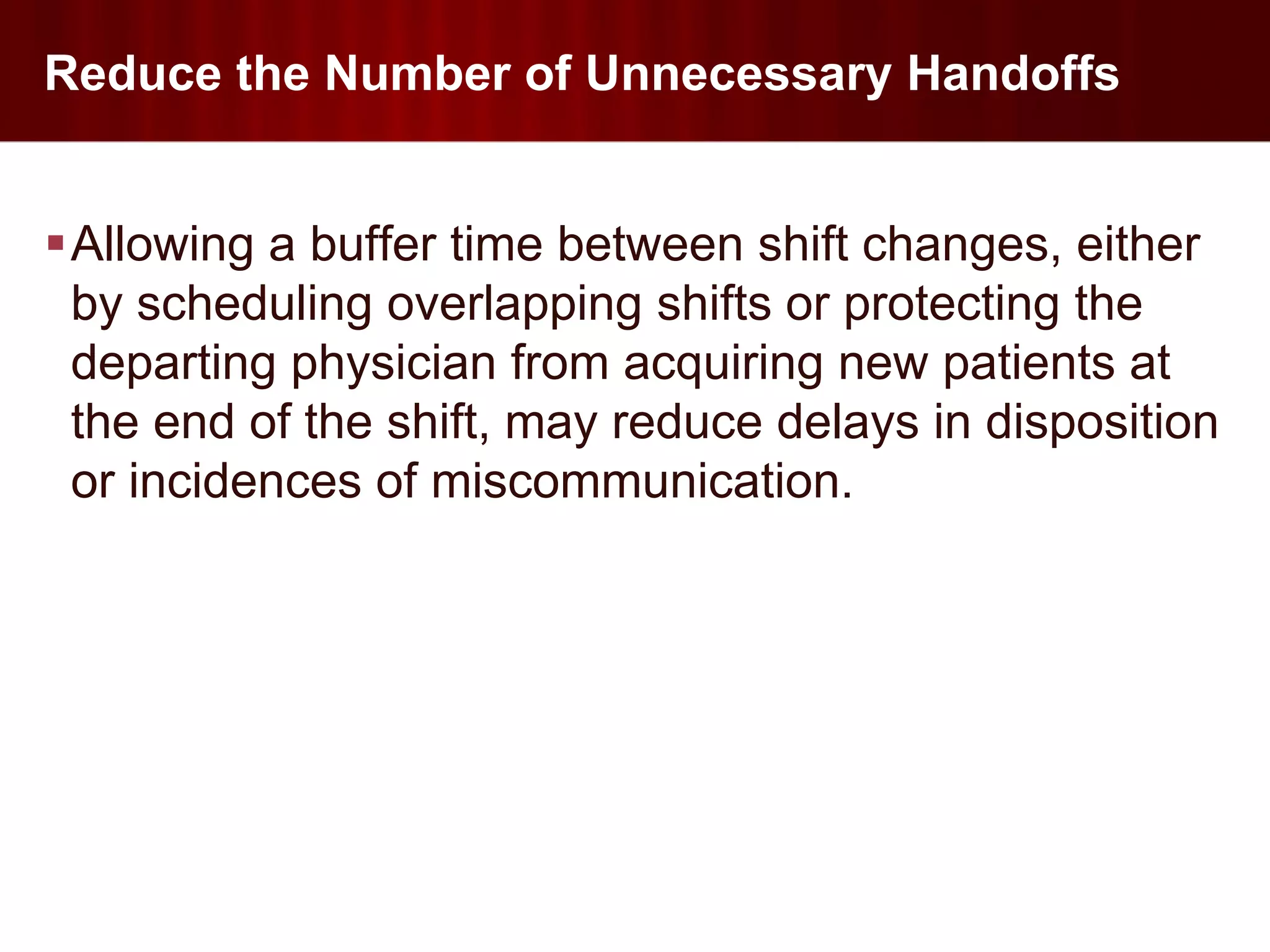
Reduce the Number of Unnecessary Handoffs


Allowing a buffer time between shift changes, either
 by scheduling overlapping shifts or protecting the
 departing physician from acquiring new patients at
 the end of the shift, may reduce delays in disposition
 or incidences of miscommunication.
Limit Interruptions and Distractions as much as is
Practicable

The integrity of the handoff process is compromised
 in loud and chaotic EDs in which the departing
 provider is anxious to leave and the attention of the
 receiving provider is diverted.
Choosing a quiet and dedicated space will help
 protect the sanctity of the handoff process.
Provide a Succinct Overview


A major goal of the handoff is to encapsulate and
 provide a clear summary of the patient’s visit.
Begin the presentation of each patient with a chief
 complaint, followed by an assessment, plan, and
 disposition, if possible.
Communicate Outstanding Tasks, Anticipate
Changes, and have a Clear Plan

Patients whose diagnosis or disposition is unclear
 represent a population that is particularly at risk for
 an adverse event from a handoff.
Departing physicians should communicate all
 outstanding studies, consultations, or other
 information that is still pending.
 - for example, “if the repeat cardiac markers are increasing,
   notify the admitting physician and redirect the patient to the
   ICU”.
Make Information Readily Available for Direct
Review

Laboratory and imaging studies should be available
 for independent review by the receiving team.
Encourage Questioning and Discussion of
Assessments

The receiving physician should be encouraged to
 clarify issues and, if possible, discuss the rationale
 behind clinical impressions.
Account for All Patients


Ensure that a handoff is given on every patient for
 whom the receiving physician will be responsible.
If a patient has temporarily left the department (eg,
 to go to dialysis), the receiving physician should be
 given the same handoff as if the patient were still
 physically present in the ED.
Signal a Clear Moment in Transition of Care


The receiving provider should take full responsibility
 for the patients who were handed off and resist the
 temptation to avoid getting involved.
To be safe, care must be seamless
           為了病患安全,照護必須無接縫

              http://decode-medicine.blogspot.com/

Improving Handoffs in ER

  • 1.
    Improving Handoffs inthe Emergency Department Ann Emerg Med. 2010;55:171-180.
  • 2.
    INTRODUCTION AND BACKGROUND Patienthandoffs at shift change are a ubiquitous and potentially hazardous process in emergency care. The purpose of this article is to provide the most up- to-date evidence and collective thinking about the process and safety of handoffs between physicians in the ED.
  • 3.
    To Err IsHuman: Building a Safer Health System  EDs are susceptible to “high error rates with serious consequences.”  When sentinel events occur, communication errors are deemed to be the root cause in about 70% of cases.  84% of treatment delays are later judged to be due to mis- communication. Of these, 62% are continuum-of-care issues associated with shift changes.
  • 4.
  • 5.
    Handoff Definition A transitionoccurs when 2 or more workers exchange mission-specific information, responsibility, and authority for an operation.
  • 6.
    Shift changes atthe NASA Administration’s Johnson Space Center highlight the importance of a “question and answer period” to detect errors in assessments and plans.
  • 7.
    Los Angeles–class nuclearsubmariners are trained to use “precise, unambiguous, impersonal and efficient” language to navigate safely.
  • 8.
    Handoffs can bea source of liability and error but also an opportunity for rescue when the re- evaluation of a case from a fresh perspective may result in preventing or recovering from an adverse event.
  • 9.
    Four Phases ofHandoffs 1. Pre-turnover time, in which the departing physicians prepares for the upcoming handoff 2. Arrival, in which the appearance of the oncoming EP heralds the beginning of a new shift 3. Meeting, in which there is an exchange of information and understandings among the physicians 4. Post-turnover time, in which the receiving physician assumes care and the departing physician focuses on unfinished tasks and clarifies critical information.
  • 10.
    Stage Tasks Examples of Transition Errors Pre- Organization and updating Poor situational awareness of current state of the ED turnover of information and hospital Arrival Stopping patient care tasks Delaying handoff while intermittently continuing care or and preparing to hand off abruptly stopping care when help arrives without care reaching closure point Meeting Specific face-to-face Departing physician could exchange 1. Pass incomplete or incorrect information 2. Provide information in a disorganized or confusing manner 3. Fail to provide a clear clinical impression (what is wrong) and plan (what needs to be done) Receiving physician could 1. Misunderstand passed information 2. Not listen (distractions/fatigue) 3. Prematurely close: jump to a conclusion because of patient or provider characteristics (eg, when an intern reports to a senior resident) Failure to include important parties (medical student, nurses) Post- New provider must Incoming physician could turnover integrate new information 1. Forget key tasks or information and begin patient care of 2. Act on a plan without careful thought (not thinking both patients handed off critically) and newly arriving patients
  • 11.
    Providers use handoffsto develop a shared understanding among caregivers, which includes the patient’s clinical picture, his or her recent course, therapies administered, rationale for pending diagnostic tests and therapies, and likely disposition.
  • 12.
    • Technological Patient Patient • Factors Factors • • • Interview Institutional & Team Factors Physician Environmental Factors Handoff • • • Caregiver Task Factors • Factors Physician • • • Conceptual model for barriers in handoffs
  • 13.
    • Patient rosters(eg whiteboards) Technological Patient • Electronic health records Factors Interview • Shift schedules • Physician compensation methods • Peer relationships and power balances Team Factors Physician • Failure to recognize importance of handoff • Ambiguous moment of transfer of care • Signal-to-noise ratio Handoff • Salience versus completeness • Varied clinical volume, presentations, and complexity Task Factors • Geographic location • No standard approach Physician • No “red flags”
  • 14.
    • Alertness • Education Patient Patient • Pain Factors • Language barrier • Knowledge of ownillness • Unclear diagnosis Interview • Location: loud, chaotic, and lacking in privacy Institutional & • Competing demands for time and attention Physician Environmental • Inpatient boarding Factors • Long ED lengths of stay Handoff • Fatigue, stress • Inattention • Poor memory Caregiver • Inexperience Physician Factors • Knowledge deficit • Cognitive bias • Personal agendas after shift change
  • 15.
    Signal-to-Noise Ratio Staff interruptions,ongoing patient concerns, EMS radio calls, temporal pressures, and the routine chaos of the work environment can all overwhelm the few moments of directed attention required for safe and effective handoffs. Disorganized handoffs themselves can add to the distractions because extraneous data may drown out essential messages and details.
  • 16.
    Conciseness Versus Completeness Anadequate handoff can be limited to a short phrase with a working diagnosis and a disposition in stable patient.
  • 17.
    No Standard Approach Thecontent, location, style, and length of handoffs can be inconsistent and unpredictable. This lack of standardization can make it difficult for both the departing and receiving physician to communicate effectively.
  • 18.
    Ambiguous Moment ofTransition of Care ED staff may be confused about which physician is in charge of the patients who were handed off.
  • 19.
    No Clear High-RiskTriggers for the Dangerous Handoffs “Red flags” may include an uncertain diagnosis, an unstable patient, an unclear disposition, a consultant-driven evaluation, a pending imaging study, deviations from a typical diagnosis or treatment plan, a patient with a psychiatric illness, and a prolonged stay in the ED.
  • 20.
    Cognitive Bias In thetransfer of care, the receiving physician usually relies on the clinical acumen and recall of the departing colleague. When the receiving physician assumes the interpretation of the initial physician, based on erroneous information or a faulty clinical impression, adverse outcomes may result.
  • 21.
    Economic Construct ofthe ED Group Productivity based systems tend to discourage handoffs in patient care and may financially motivate the initiating physician to continue patient care to disposition. In hourly pay system, the receiving physician may inherit multiple patients and must assume responsibility for making the appropriate disposition of patients in whose treatment they were not initially involved. Blended systems may enhance the advantages of each while minimizing the barriers to effective handoffs.
  • 22.
    Single Versus MultidisciplinaryHandoff Single-disciplinary team The advantage of this model is that it is efficient and focused: physicians hear what physicians need and nurses hear what nurses need. Multi-disciplinary team Different team members (eg, nurses, physicians, midlevel providers, pharmacists) contribute to and participate in the handoff. The advantage of this model is that it integrates viewpoints of different providers, builds a team approach, and enables participants to serve as a “check and balance” for one another.
  • 23.
    Handoff Location Central location(eg, in the provider’s work area or in front of a computer or a whiteboard). This method provides easy access to written patient information computers, charts, etc), is less time consuming, and affords greater privacy. The advantages of bedside handoffs include being able to introduce the patient and the receiving physician, the ability to integrate patient input into the transfer and update the patient on his or her status, and an opportunity for the receiving physician to directly assess the patient.
  • 24.
    Use of Mnemonics SBAR 5-Ps IPASS the BATON HANDOFF SIGN OUT
  • 25.
    SBAR Situation Background Assessment Recommendation - Anesthesiologists, mid-levelpractitioners, nurse assistants, nurses, nursing students, OR staff, PACU staff, perioperative staff, pharmacists, physical therapists, physicians, transporters, radiologists
  • 26.
    5-P’s Precaution: isolation, falls,etc Patient: identify Precautions: allergies, isolation, falls, specialty bed Plan of care: fluids, intake, output, IV access Problems: assessment, review of systems, pain scale Purpose: goals to be achieved - Perioperative nurses
  • 27.
    I PASS theBATON  Introduction: introduce yourself and your role  Patient: name, identifiers, age, sex, location  Assessment: presenting chief complaint, vital signs, symptoms, diagnosis  Situation: current status and circumstances; including codes status, level of certainty, recent changes, and response to treatment  Safety concerns: critical lab values and reports, socioeconomic factors, allergies, alerts (eg, falls, isolation)  Background: comorbidities, previous episodes, current medications, family history  Actions: which were taken or are required, providing brief rationale  Timing: level of urgency, explicit timing, and prioritization of actions  Ownership: who is responsible (eg, nurse, doctor, team), including patient or family responsibilities  Next: what happens next (eg, any anticipated changes in condition or care, the plan, any contingency plans) - General nurses, perioperative nurses, physicians
  • 28.
    HANDOFF Hospital location Allergies/adverse reactions/medications Name(age, gender)/number DNAR/Diet/DVT prophylaxis Ongoing medical/surgical problems Facts about this hospitalization Follow-up - Physicians, residents
  • 29.
    SIGNOUT Sick or DNR?(highlight sick or unstable patients, identify DNR/DNI patients) Identifying data (name, age, gender, diagnosis) General hospital course New events of the day Overall health status/clinical condition Upcoming possibilities with plan, rationale Tasks to complete overnight with plan, rationale - Internal medicine residents, medical students
  • 30.
    LEGAL ASPECTS  Handoffsare high-risk events.  Communication breakdowns have been documented to occur in nearly 80% of medicolegal cases.  Faulty handoffs are specifically implicated in up to 24% of malpractice claims in the ED.  Theoretically, patient care may benefit from the additional evaluation and diagnostic input of a second care provider. In reality, care transitions frequently result in the dilution of accountability.  From a risk management perspective, if a patient experiences a preventable adverse event resulting from a faulty handoff, both departing and receiving providers are likely to share liability.
  • 31.
    STRATEGIES TO IMPROVEHANDOFFS 1. Reduce the Number of Unnecessary Handoffs 2. Limit Interruptions and Distractions as much as is Practicable 3. Provide a Succinct Overview 4. Communicate Outstanding Tasks, Anticipate Changes, and have a Clear Plan 5. Make Information Readily Available for Direct Review 6. Encourage Questioning and Discussion of Assessments 7. Account for All Patients 8. Signal a Clear Moment in Transition of Care
  • 32.
    Reduce the Numberof Unnecessary Handoffs Allowing a buffer time between shift changes, either by scheduling overlapping shifts or protecting the departing physician from acquiring new patients at the end of the shift, may reduce delays in disposition or incidences of miscommunication.
  • 33.
    Limit Interruptions andDistractions as much as is Practicable The integrity of the handoff process is compromised in loud and chaotic EDs in which the departing provider is anxious to leave and the attention of the receiving provider is diverted. Choosing a quiet and dedicated space will help protect the sanctity of the handoff process.
  • 34.
    Provide a SuccinctOverview A major goal of the handoff is to encapsulate and provide a clear summary of the patient’s visit. Begin the presentation of each patient with a chief complaint, followed by an assessment, plan, and disposition, if possible.
  • 35.
    Communicate Outstanding Tasks,Anticipate Changes, and have a Clear Plan Patients whose diagnosis or disposition is unclear represent a population that is particularly at risk for an adverse event from a handoff. Departing physicians should communicate all outstanding studies, consultations, or other information that is still pending. - for example, “if the repeat cardiac markers are increasing, notify the admitting physician and redirect the patient to the ICU”.
  • 36.
    Make Information ReadilyAvailable for Direct Review Laboratory and imaging studies should be available for independent review by the receiving team.
  • 37.
    Encourage Questioning andDiscussion of Assessments The receiving physician should be encouraged to clarify issues and, if possible, discuss the rationale behind clinical impressions.
  • 38.
    Account for AllPatients Ensure that a handoff is given on every patient for whom the receiving physician will be responsible. If a patient has temporarily left the department (eg, to go to dialysis), the receiving physician should be given the same handoff as if the patient were still physically present in the ED.
  • 39.
    Signal a ClearMoment in Transition of Care The receiving provider should take full responsibility for the patients who were handed off and resist the temptation to avoid getting involved.
  • 40.
    To be safe,care must be seamless 為了病患安全,照護必須無接縫 http://decode-medicine.blogspot.com/