BestCare Laboratory Services


       HAND HYGIENE
        SAVES LIVES
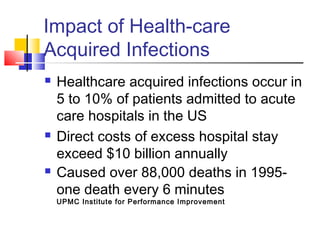
Impact of Health-care
Acquired Infections
   Healthcare acquired infections occur in
    5 to 10% of patients admitted to acute
    care hospitals in the US
   Direct costs of excess hospital stay
    exceed $10 billion annually
   Caused over 88,000 deaths in 1995-
    one death every 6 minutes
    UPMC Institute for Performance Improvement
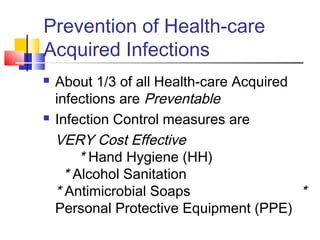
Prevention of Health-care
Acquired Infections
   About 1/3 of all Health-care Acquired
    infections are Preventable
   Infection Control measures are
    VERY Cost Effective
         * Hand Hygiene (HH)
      * Alcohol Sanitation
    * Antimicrobial Soaps                 *
    Personal Protective Equipment (PPE)
Benefits of Hand Hygiene
   can decrease infection rates
   is the most important procedure for
    preventing health-care acquired
    infections
   can prevent transmission of bacteria to
    other Health Care Workers and their
    families
    Bryan, Infection Control in Critical Care, 1996:7:617
    MMWR, 1987:37:24 – Copyright UPMC Institute for
    Performance Improvement
CDC Recommendations for
Alcohol Based Hand Rub
   If hands are not visibly soiled, use an
    alcohol based hand rub
              * apply golf ball size portion to
    palm of one hand and rub hands
    together, covering all surfaces of hands
    and fingers until hands are dry.
CDC Recommendations for
Hand Washing (Soap &
Water)
   If hands are visibly soiled or
    contaminated with proteinaceous
    material, blood or other body fluids:
    wash hands with either a non-microbial
    soap and water or an antimicrobial soap
    and water for at least 15 seconds.
   Soap and Water must if patient is
    diagnosed with C. difficile.
Hand Washing Technique
   Avoid hot water – hot water may increase the
    risk of dermatitis
   Wet hands with water
   Apply soap
   Rub hands together for at least 15 seconds
   Rinse hands
   Dry thoroughly with a disposable towel
   Use towel to turn off the faucet
When To Perform Hand
Hygiene - THE BEFORES

   Before having direct patient contact.

   Before donning gloves when performing
    phlebotomy.

NOTE: Always dispose of gloves
 before   leaving the patient’s room.
When To Perform Hand
Hygiene – THE AFTERS
   After contact with patient’s intact skin.
   After contact with bodily fluids or
    excretions, mucous membranes, non-
    intact skin or wound dressings.
   After contact with inanimate objects
    (i.e., medical equipment) in the
    immediate vicinity of the patient.
   After removing gloves.
Making a Difference
   It is estimated that in US hospitals, appropriate
    hand hygiene only occurs about 50% of the time.
   Some ICU’s rates have been reported as low as 17%
   Most attempts to improve hand hygiene are only
    associated with a short lived improvement.
   CHANGING THE CULTURE IS THE ONLY
    WAY TO MAKE A DIFFERENCE.
   CHANGING THE CULTURE REQUIRES
    ACTIVE INVOLVEMENT FROM ALL WITH A
    COMMITMENT TO PERFORM
    APPROPRIATE HAND HYGIENE 100% OF
    THE TIME.
Thank you for visiting.
   For more details log onto:
http://bestcarelab.blogspot.com/

Hand hygiene

  • 1.
    BestCare Laboratory Services HAND HYGIENE SAVES LIVES
  • 2.
    Impact of Health-care AcquiredInfections  Healthcare acquired infections occur in 5 to 10% of patients admitted to acute care hospitals in the US  Direct costs of excess hospital stay exceed $10 billion annually  Caused over 88,000 deaths in 1995- one death every 6 minutes UPMC Institute for Performance Improvement
  • 3.
    Prevention of Health-care AcquiredInfections  About 1/3 of all Health-care Acquired infections are Preventable  Infection Control measures are VERY Cost Effective * Hand Hygiene (HH) * Alcohol Sanitation * Antimicrobial Soaps * Personal Protective Equipment (PPE)
  • 4.
    Benefits of HandHygiene  can decrease infection rates  is the most important procedure for preventing health-care acquired infections  can prevent transmission of bacteria to other Health Care Workers and their families Bryan, Infection Control in Critical Care, 1996:7:617 MMWR, 1987:37:24 – Copyright UPMC Institute for Performance Improvement
  • 5.
    CDC Recommendations for AlcoholBased Hand Rub  If hands are not visibly soiled, use an alcohol based hand rub * apply golf ball size portion to palm of one hand and rub hands together, covering all surfaces of hands and fingers until hands are dry.
  • 6.
    CDC Recommendations for HandWashing (Soap & Water)  If hands are visibly soiled or contaminated with proteinaceous material, blood or other body fluids: wash hands with either a non-microbial soap and water or an antimicrobial soap and water for at least 15 seconds.  Soap and Water must if patient is diagnosed with C. difficile.
  • 7.
    Hand Washing Technique  Avoid hot water – hot water may increase the risk of dermatitis  Wet hands with water  Apply soap  Rub hands together for at least 15 seconds  Rinse hands  Dry thoroughly with a disposable towel  Use towel to turn off the faucet
  • 8.
    When To PerformHand Hygiene - THE BEFORES  Before having direct patient contact.  Before donning gloves when performing phlebotomy. NOTE: Always dispose of gloves before leaving the patient’s room.
  • 9.
    When To PerformHand Hygiene – THE AFTERS  After contact with patient’s intact skin.  After contact with bodily fluids or excretions, mucous membranes, non- intact skin or wound dressings.  After contact with inanimate objects (i.e., medical equipment) in the immediate vicinity of the patient.  After removing gloves.
  • 10.
    Making a Difference  It is estimated that in US hospitals, appropriate hand hygiene only occurs about 50% of the time.  Some ICU’s rates have been reported as low as 17%  Most attempts to improve hand hygiene are only associated with a short lived improvement.  CHANGING THE CULTURE IS THE ONLY WAY TO MAKE A DIFFERENCE.  CHANGING THE CULTURE REQUIRES ACTIVE INVOLVEMENT FROM ALL WITH A COMMITMENT TO PERFORM APPROPRIATE HAND HYGIENE 100% OF THE TIME.
  • 11.
    Thank you forvisiting. For more details log onto: http://bestcarelab.blogspot.com/

Editor's Notes

  • #7 Only vigorous washing with soap and water can get rid of the spores from C difficile (a spore forming microbe). C difficile is highly contagious and can be passed from patient to patient if hands are not properly washed.