Siti Chumaeroh
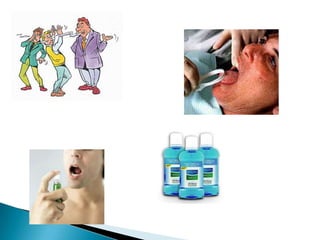
Halitosis from the Latin halitus for breath
= malodour = foetor ex ore
- unpleasent odors in breathing
- mainly in adult  30% over 60 year
- psichogenic basis
- to be the third most frequent reason for
seeking dental aid
- 85-90% orginates in the mouth itself
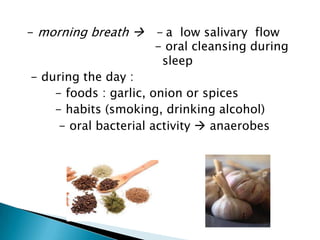
- morning breath  - a low salivary flow
- oral cleansing during
sleep
- during the day :
- foods : garlic, onion or spices
- habits (smoking, drinking alcohol)
- oral bacterial activity  anaerobes
 Oral bacterial activity arising from :
 * poor oral hygiene
 * gingivitis (especially necrotizing gingivitis)
 * periodontitis
 * pericoronitis
 * infected extraction sockets
 * residual blood postoperatively
 * debris under bridges or appliances
 * ulcers
 * dry mouth
 Porphyromonas gingivalis
 Prevotella intermedia
 Fusobacterium nucleatum
 Bacteriodes forsythus
 Treponema denticola
produce the chemicals that cause malodour
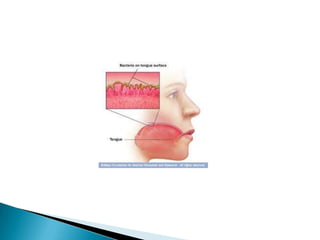
The tongue is the location of organisms above
 The chemicals include:
* volatile sulphur compounds (VSC’s) mainly:
- methyl mercaptan
- hydrogen sulphide
- dimethyl sulphide
* polyamines : - putrescine
- cadaverine
* short-chain fatty acids :
- butyric acids
- valeric acids
- propionic acids
 Odors are due to the breakdown of certain
proteinsindividual amino acids
 Certain aminoacids  foul gases
 Forexamples : breakdown cystein &
methionine  hidogen sulfide
 methyl mercaptan
 Volatile sulfur compounds stastically
associated with malodour
 Starvation
 Drugs : - amphetamines
- chloral hydrate
- cytotoxic agents
- dimethyl sulphoxide (DMSCO)
- disulfiram
- nitrates and nitrites
- phenothiazines
- solvent abuse
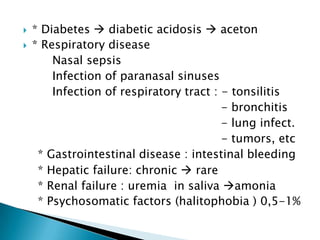
 * Diabetes  diabetic acidosis  aceton
 * Respiratory disease
Nasal sepsis
Infection of paranasal sinuses
Infection of respiratory tract : - tonsilitis
- bronchitis
- lung infect.
- tumors, etc
* Gastrointestinal disease : intestinal bleeding
* Hepatic failure: chronic  rare
* Renal failure : uremia in saliva amonia
* Psychosomatic factors (halitophobia ) 0,5-1%
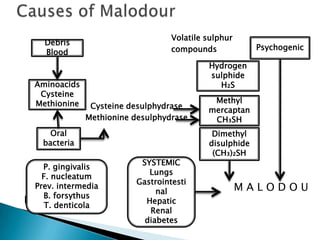
Volatile sulphur
compounds
Cysteine desulphydrase
Methionine desulphydrase
M A L O D O U
R URu R
Debris
Blood
Aminoacids
Cysteine
Methionine
Oral
bacteria
P. gingivalis
F. nucleatum
Prev. intermedia
B. forsythus
T. denticola
SYSTEMIC
Lungs
Gastrointesti
nal
Hepatic
Renal
diabetes
Dimethyl
disulphide
(CH₃)₂SH
Methyl
mercaptan
CH₃SH
Hydrogen
sulphide
H₂S
Psychogenic
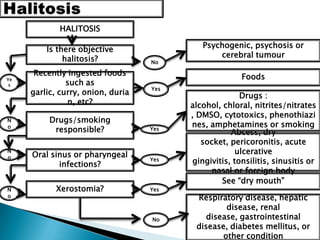
HALITOSIS
Is there objective
halitosis?
Recently ingested foods
such as
garlic, curry, onion, duria
n, etc?
Drugs :
alcohol, chloral, nitrites/nitrates
, DMSO, cytotoxics, phenothiazi
nes, amphetamines or smoking
Foods
Psychogenic, psychosis or
cerebral tumour
Drugs/smoking
responsible?
Oral sinus or pharyngeal
infections?
Xerostomia?
Respiratory disease, hepatic
disease, renal
disease, gastrointestinal
disease, diabetes mellitus, or
other condition
See “dry mouth”
Abcess, dry
socket, pericoronitis, acute
ulcerative
gingivitis, tonsilitis, sinusitis or
nasal or foreign body
No
Yes
Yes
Yes
Yes
No
Ye
s
N
o
N
o
N
o
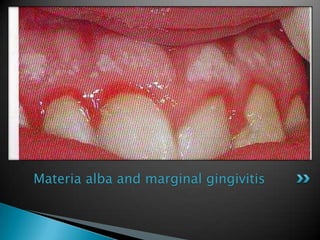
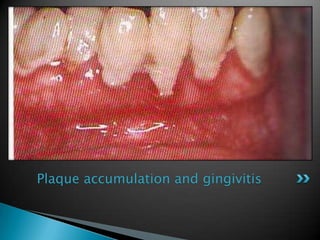
Materia alba and marginal gingivitis
Plaque accumulation and gingivitis
 Dentures can produce accumulation of
microbial plaque ( bacteria and/or yeast)
on and in the fitting surfaces of the
denture and underlying mucosa
 The plaque undergoes sequential development
 is colonized by organisms
 The decreased salivary flow
 A low PH under the denture
inflammation  denture –related
stomatitis
 - full history
 - examination
 - assessment of halitosis
 - volatile sulphur compounds  halimeter
 - oral flora
Hand held halimeter
- Patient education
- Treating the cause
- Avoiding smoking, foods such as
onion, garlic etc
- Good oral hygiene : tooth
brushing, flossing, tongue cleaning (before
going to bed)
- Oral antiseptics
- Denture care
 Wearing a denture encourage food
accumulation , the denture plaque and
fitting surface  be infected with
microorganism usually C. albican
 - Keep as clean as natural teeth
 - Clean both surfaces inside and outside
after meal and at night using washing
up liquid , toothbrush and warm
water hold it over a basin
containing water
- should be left out overnight and keep
them in water  it may distort if
allowed to dry out
- An infection are increased if the
denture are worn 24 hours a day
 If the denture is infested with microorg
  should be removed
  Denture left out the mouth at night
  Clean , disinfected
  Stored in an antiseptic denture cleanser
 Denture soak solutions containing
benzoic acid eradicate C albicans from
denture surface internal surface of
prosthesis
 Chlorhexidine : reduction palatinal infection
 Mucosal infection  by brushing the palate
 using antifungal for 4 weeks
TERIMA KASIH

Halitosis

  • 1.
  • 2.
    Halitosis from theLatin halitus for breath = malodour = foetor ex ore - unpleasent odors in breathing - mainly in adult  30% over 60 year - psichogenic basis - to be the third most frequent reason for seeking dental aid - 85-90% orginates in the mouth itself
  • 3.
    - morning breath - a low salivary flow - oral cleansing during sleep - during the day : - foods : garlic, onion or spices - habits (smoking, drinking alcohol) - oral bacterial activity  anaerobes
  • 4.
     Oral bacterialactivity arising from :  * poor oral hygiene  * gingivitis (especially necrotizing gingivitis)  * periodontitis  * pericoronitis  * infected extraction sockets  * residual blood postoperatively  * debris under bridges or appliances  * ulcers  * dry mouth
  • 5.
     Porphyromonas gingivalis Prevotella intermedia  Fusobacterium nucleatum  Bacteriodes forsythus  Treponema denticola produce the chemicals that cause malodour The tongue is the location of organisms above
  • 7.
     The chemicalsinclude: * volatile sulphur compounds (VSC’s) mainly: - methyl mercaptan - hydrogen sulphide - dimethyl sulphide * polyamines : - putrescine - cadaverine * short-chain fatty acids : - butyric acids - valeric acids - propionic acids
  • 8.
     Odors aredue to the breakdown of certain proteinsindividual amino acids  Certain aminoacids  foul gases  Forexamples : breakdown cystein & methionine  hidogen sulfide  methyl mercaptan  Volatile sulfur compounds stastically associated with malodour
  • 9.
     Starvation  Drugs: - amphetamines - chloral hydrate - cytotoxic agents - dimethyl sulphoxide (DMSCO) - disulfiram - nitrates and nitrites - phenothiazines - solvent abuse
  • 10.
     * Diabetes diabetic acidosis  aceton  * Respiratory disease Nasal sepsis Infection of paranasal sinuses Infection of respiratory tract : - tonsilitis - bronchitis - lung infect. - tumors, etc * Gastrointestinal disease : intestinal bleeding * Hepatic failure: chronic  rare * Renal failure : uremia in saliva amonia * Psychosomatic factors (halitophobia ) 0,5-1%
  • 11.
    Volatile sulphur compounds Cysteine desulphydrase Methioninedesulphydrase M A L O D O U R URu R Debris Blood Aminoacids Cysteine Methionine Oral bacteria P. gingivalis F. nucleatum Prev. intermedia B. forsythus T. denticola SYSTEMIC Lungs Gastrointesti nal Hepatic Renal diabetes Dimethyl disulphide (CH₃)₂SH Methyl mercaptan CH₃SH Hydrogen sulphide H₂S Psychogenic
  • 12.
    HALITOSIS Is there objective halitosis? Recentlyingested foods such as garlic, curry, onion, duria n, etc? Drugs : alcohol, chloral, nitrites/nitrates , DMSO, cytotoxics, phenothiazi nes, amphetamines or smoking Foods Psychogenic, psychosis or cerebral tumour Drugs/smoking responsible? Oral sinus or pharyngeal infections? Xerostomia? Respiratory disease, hepatic disease, renal disease, gastrointestinal disease, diabetes mellitus, or other condition See “dry mouth” Abcess, dry socket, pericoronitis, acute ulcerative gingivitis, tonsilitis, sinusitis or nasal or foreign body No Yes Yes Yes Yes No Ye s N o N o N o
  • 13.
    Materia alba andmarginal gingivitis
  • 14.
  • 15.
     Dentures canproduce accumulation of microbial plaque ( bacteria and/or yeast) on and in the fitting surfaces of the denture and underlying mucosa  The plaque undergoes sequential development  is colonized by organisms  The decreased salivary flow  A low PH under the denture inflammation  denture –related stomatitis
  • 16.
     - fullhistory  - examination  - assessment of halitosis  - volatile sulphur compounds  halimeter  - oral flora
  • 17.
  • 18.
    - Patient education -Treating the cause - Avoiding smoking, foods such as onion, garlic etc - Good oral hygiene : tooth brushing, flossing, tongue cleaning (before going to bed) - Oral antiseptics - Denture care
  • 20.
     Wearing adenture encourage food accumulation , the denture plaque and fitting surface  be infected with microorganism usually C. albican  - Keep as clean as natural teeth  - Clean both surfaces inside and outside after meal and at night using washing up liquid , toothbrush and warm water hold it over a basin containing water
  • 21.
    - should beleft out overnight and keep them in water  it may distort if allowed to dry out - An infection are increased if the denture are worn 24 hours a day
  • 22.
     If thedenture is infested with microorg   should be removed   Denture left out the mouth at night   Clean , disinfected   Stored in an antiseptic denture cleanser  Denture soak solutions containing benzoic acid eradicate C albicans from denture surface internal surface of prosthesis  Chlorhexidine : reduction palatinal infection  Mucosal infection  by brushing the palate  using antifungal for 4 weeks
  • 23.