   PRESENTATION TOPIC:
               HARBOUR DOCK
    ENGINEERING

   GROUP MEMBERS:
              KASHIF ALI KHAN
             IZHAR AHMAD
             SEYED BAKTH JAMAL SHAH
HARBOUR:
 › SHELTERED AREA
 › FOR LOADING AND UNLOADING OF CARGO
 › VESSELS ARE ALSO BUILT, REPAIR, AND
  LAUNCH
 CLASSIFICATION:


          1. NATURAL HARBOUR
          2. SEMI NATURAL HARBOUR
          3. ARTIFICIAL HARBOUR
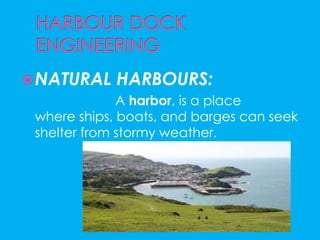
 NATURAL    HARBOURS:
              A harbor, is a place
 where ships, boats, and barges can seek
 shelter from stormy weather.
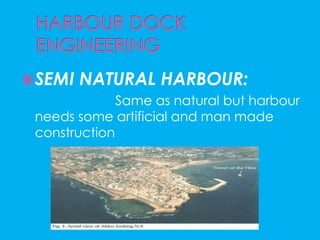
 SEMI   NATURAL HARBOUR:
              Same as natural but harbour
 needs some artificial and man made
 construction
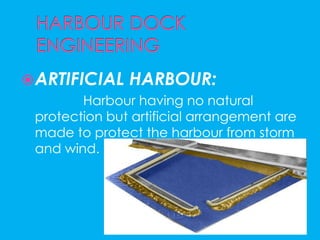
 ARTIFICIAL   HARBOUR:
        Harbour having no natural
 protection but artificial arrangement are
 made to protect the harbour from storm
 and wind.
 REQUIREMENTS          OF A GOOD
 HARBOR:
 › The depth of a harbor should be sufficient for
   every type of visiting ships.
 › The bottom of harbor should provide secured
   anchorage to hold the ships against high winds.
 › To prevent destructive wave action, break water
   are provided.
 › The entrance of a harbor should be wide
   enough to provide the easy passage of ships.
 DEFECTS     IN HARBOR:
 › Depth of water is found insufficient for
   different ships.
 › The size of harbor is found insufficient to
   accommodate the increased traffic.
 › Obstruction
 › These defects can easily be avoided at the
   time of planning and designing.
SIZE   OF A HARBOUR
    Size depends upon:
    # of ships
     length:275m-300m
     width:30m
 HARBOUR       PLANNING

  It should be carried out after collecting
 necessary information of the existing
 features at the proposed site.
 Following important facts should be
 studied.
 A thorough survey of the neighborhood
  including the foreshore & depths of
  water is necessary
 Nature of a harbor wether sheltered or
  not, be studied
 The existance of sea insects & various
  animals residing at site.
 Natural phenomena’s concerning
  planning of a harbour are:
 Storms
 Rainfall
 Range of tides
 Maximum & minimum temperatures
 Direction & intensity of wind etc
 SITE   SELECTION:
                Following factors play a
  great role in the choice of site of a
  harbour.
 1.Availability of cheap land &
  contruction material.
 2.Natural protection from waves & winds
 3.transport & communication facilities
 4.industrial development of the locality
 5.Sea bed,sub soil & foundation
  conditions
 6.Avaibility of electrical energy
 7.Defence & strategic aspects
 8.trafic potentiality of harbour
 FUNCTIONAL    CLASSIFICATION:
 1. HARBOR OF REFUGE
 2. COMMERCIAL HARBOR
 3. FISHRY HARBOR
 4. MILLITARY HARBOR OR NAVEL BASE
 HARBOR     OF REFUGE:
             The harbor used for ships in
 storms or emergency condition.
    good anchorage and safe and easy
 access from the sea.
    e.g: DOVER IN ENGLAND
 COMMERCIAL        HARBOR:
              Facilities for loading and
 unloading of cargo are provided.
   The may be:
        1. Part of bigger complex harbor
        2. Independent unit or single
             commodity harbor.
        3. Terminal as oil terminal, coal
           port.
 FISHRY HARBOR:
     Provided for fishing crafts and
      trawlers.
 MILLITARY    HARBOR:
         This harbor is meant for
 accommodating naval crafts and serves
 as a supply deport.
         The layout of this type of harbor is
 greatly influenced by its location.
 FEATURES OF A HARBOR:
  1. Entrance Channels
  2. Berthing Basin
  3. Break Water
  4. Turning Basin
  5. Pier Head
  6. Wharves
  7. Jetties
 ENTRANCE      CHANNEL:
 › Depth and width are kept more at entrance
 › Width depends upon density of traffic and
  no: of entrances
 BERTHING       AND TURNING
 BASINS:
 › Berthing basins are used for the parking of
   ships
 › While turning for the turning of ships
 BREAK   WATER:
 › The structure constructed to protect harbor
   from storm waves
 › They are generally stone masonry
   PIER HEAD:
    › The structure provided at the tip of break
      water
    › Such as light house
   WHARVES:
    › The structure constructed parallel to the
      shore or break water, having wide plate form
      at the top
    › Function is to permit berthing of vessel along
      side for cargo working
   JETTIES:
    › Same as wharves
    › Used for loading and unloading of cargo
    › Made usually from shore towards sea water
      to prevent silting and dredging to allow free
      flow of tidal currents
 DOCK:
 › A dock is dug out and usually has gates so
   that the water level is kept up even though
   the tide has gone out.
 › A dock is for mooring ships for cargo or
   passenger exchange, or sometimes repair.
 HARBOR:
 › A harbour may be natural or partly dug out,
   or even made with floating materials. It
   doesn't have gates, but may have a narrow
   entrance.
 › Provides safe anchoring or mooring for ships
 PORTS:
 › A port is a location on a coast or shore
   containing one or more harbors where ships
   can dock and transfer people or cargo to or
   from land.
THANK YOU

Habour and dock engineering

  • 2.
    PRESENTATION TOPIC: HARBOUR DOCK ENGINEERING  GROUP MEMBERS: KASHIF ALI KHAN IZHAR AHMAD SEYED BAKTH JAMAL SHAH
  • 3.
    HARBOUR: › SHELTEREDAREA › FOR LOADING AND UNLOADING OF CARGO › VESSELS ARE ALSO BUILT, REPAIR, AND LAUNCH
  • 4.
     CLASSIFICATION: 1. NATURAL HARBOUR 2. SEMI NATURAL HARBOUR 3. ARTIFICIAL HARBOUR
  • 5.
     NATURAL HARBOURS: A harbor, is a place where ships, boats, and barges can seek shelter from stormy weather.
  • 7.
     SEMI NATURAL HARBOUR: Same as natural but harbour needs some artificial and man made construction
  • 8.
     ARTIFICIAL HARBOUR: Harbour having no natural protection but artificial arrangement are made to protect the harbour from storm and wind.
  • 10.
     REQUIREMENTS OF A GOOD HARBOR: › The depth of a harbor should be sufficient for every type of visiting ships. › The bottom of harbor should provide secured anchorage to hold the ships against high winds. › To prevent destructive wave action, break water are provided. › The entrance of a harbor should be wide enough to provide the easy passage of ships.
  • 12.
     DEFECTS IN HARBOR: › Depth of water is found insufficient for different ships. › The size of harbor is found insufficient to accommodate the increased traffic. › Obstruction › These defects can easily be avoided at the time of planning and designing.
  • 13.
    SIZE OF A HARBOUR Size depends upon: # of ships  length:275m-300m  width:30m
  • 14.
     HARBOUR PLANNING  It should be carried out after collecting necessary information of the existing features at the proposed site.  Following important facts should be studied.
  • 15.
     A thoroughsurvey of the neighborhood including the foreshore & depths of water is necessary  Nature of a harbor wether sheltered or not, be studied  The existance of sea insects & various animals residing at site.
  • 16.
     Natural phenomena’sconcerning planning of a harbour are:  Storms  Rainfall  Range of tides  Maximum & minimum temperatures  Direction & intensity of wind etc
  • 17.
     SITE SELECTION:  Following factors play a great role in the choice of site of a harbour.  1.Availability of cheap land & contruction material.  2.Natural protection from waves & winds  3.transport & communication facilities  4.industrial development of the locality
  • 18.
     5.Sea bed,subsoil & foundation conditions  6.Avaibility of electrical energy  7.Defence & strategic aspects  8.trafic potentiality of harbour
  • 19.
     FUNCTIONAL CLASSIFICATION: 1. HARBOR OF REFUGE 2. COMMERCIAL HARBOR 3. FISHRY HARBOR 4. MILLITARY HARBOR OR NAVEL BASE
  • 20.
     HARBOR OF REFUGE: The harbor used for ships in storms or emergency condition. good anchorage and safe and easy access from the sea. e.g: DOVER IN ENGLAND
  • 22.
     COMMERCIAL HARBOR: Facilities for loading and unloading of cargo are provided. The may be: 1. Part of bigger complex harbor 2. Independent unit or single commodity harbor. 3. Terminal as oil terminal, coal port.
  • 27.
     FISHRY HARBOR: Provided for fishing crafts and trawlers.
  • 28.
     MILLITARY HARBOR: This harbor is meant for accommodating naval crafts and serves as a supply deport. The layout of this type of harbor is greatly influenced by its location.
  • 31.
     FEATURES OFA HARBOR: 1. Entrance Channels 2. Berthing Basin 3. Break Water 4. Turning Basin 5. Pier Head 6. Wharves 7. Jetties
  • 32.
     ENTRANCE CHANNEL: › Depth and width are kept more at entrance › Width depends upon density of traffic and no: of entrances
  • 34.
     BERTHING AND TURNING BASINS: › Berthing basins are used for the parking of ships › While turning for the turning of ships
  • 35.
     BREAK WATER: › The structure constructed to protect harbor from storm waves › They are generally stone masonry
  • 37.
    PIER HEAD: › The structure provided at the tip of break water › Such as light house
  • 38.
    WHARVES: › The structure constructed parallel to the shore or break water, having wide plate form at the top › Function is to permit berthing of vessel along side for cargo working
  • 39.
    JETTIES: › Same as wharves › Used for loading and unloading of cargo › Made usually from shore towards sea water to prevent silting and dredging to allow free flow of tidal currents
  • 41.
     DOCK: ›A dock is dug out and usually has gates so that the water level is kept up even though the tide has gone out. › A dock is for mooring ships for cargo or passenger exchange, or sometimes repair.
  • 42.
     HARBOR: ›A harbour may be natural or partly dug out, or even made with floating materials. It doesn't have gates, but may have a narrow entrance. › Provides safe anchoring or mooring for ships
  • 43.
     PORTS: ›A port is a location on a coast or shore containing one or more harbors where ships can dock and transfer people or cargo to or from land.
  • 44.