MOBILE NETWORK ARCHITECTURE
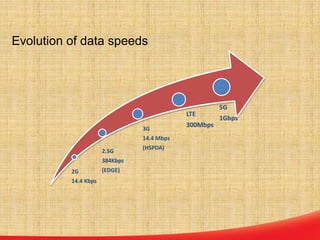
2G
14.4 Kbps
2.5G
384Kbps
(EDGE)
3G
14.4 Mbps
(HSPDA)
LTE
300Mbps
5G
1Gbps
Evolution of data speeds
3
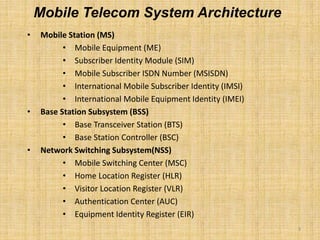
• Mobile Station (MS)
• Mobile Equipment (ME)
• Subscriber Identity Module (SIM)
• Mobile Subscriber ISDN Number (MSISDN)
• International Mobile Subscriber Identity (IMSI)
• International Mobile Equipment Identity (IMEI)
• Base Station Subsystem (BSS)
• Base Transceiver Station (BTS)
• Base Station Controller (BSC)
• Network Switching Subsystem(NSS)
• Mobile Switching Center (MSC)
• Home Location Register (HLR)
• Visitor Location Register (VLR)
• Authentication Center (AUC)
• Equipment Identity Register (EIR)
Mobile Telecom System Architecture
11/21/2023 4
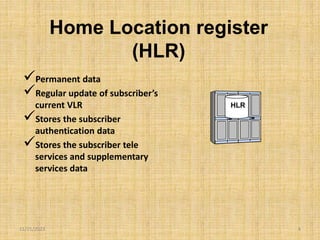
Permanent data
Regular update of subscriber’s
current VLR
Stores the subscriber
authentication data
Stores the subscriber tele
services and supplementary
services data
HLR
Home Location register
(HLR)
11/21/2023 5
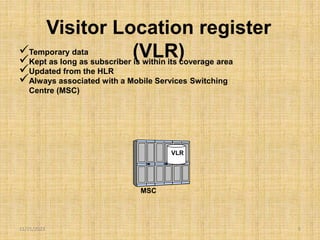
Temporary data
Kept as long as subscriber is within its coverage area
Updated from the HLR
Always associated with a Mobile Services Switching
Centre (MSC)
VLR
MSC
Visitor Location register
(VLR)
6
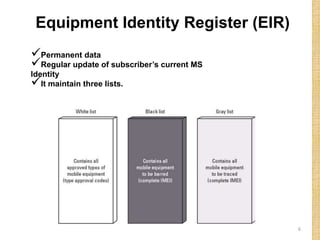
Equipment Identity Register (EIR)
Permanent data
Regular update of subscriber’s current MS
Identity
It maintain three lists.
7
SS7
BTS
BSC
MSC
VLR
HLR
AuC
GMSC
BSS
PSTN
NSS
A
E
C
D
PSTN
Abis
B
H
MS
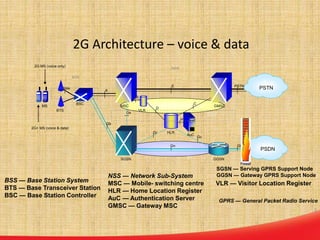
BSS — Base Station System
BTS — Base Transceiver Station
BSC — Base Station Controller
NSS — Network Sub-System
MSC — Mobile- switching centre VLR — Visitor Location Register
HLR — Home Location Register
AuC — Authentication Server
GMSC — Gateway MSC
2G Architecture – voice & data
SGSN — Serving GPRS Support Node
GGSN — Gateway GPRS Support Node
GPRS — General Packet Radio Service
IP
2G+ MS (voice & data)
PSDN
Gi
SGSN
Gr
Gb
Gs
GGSN
Gc
Gn
2G MS (voice only)
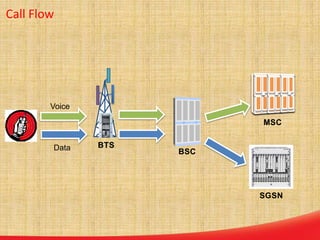
Call Flow
BSC
MSC
SGSN
Voice
Data BTS
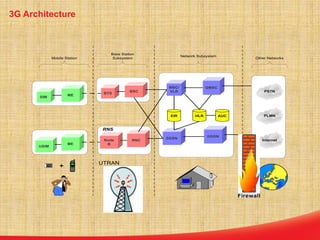
3G Architecture
SD
Mobile Station
MSC/
VLR
Base Station
Subsystem
GMSC
Network Subsystem
AUC
EIR HLR
Other Networks
Note: Interfaces have been omitted for clarity purposes.
GGSN
SGSN
BTS
BSC
Node
B
RNC
RNS
UTRAN
SIM
ME
USIM
ME
+
PSTN
PLMN
Internet
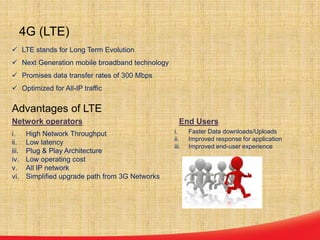
 LTE stands for Long Term Evolution
 Next Generation mobile broadband technology
 Promises data transfer rates of 300 Mbps
 Optimized for All-IP traffic
Advantages of LTE
4G (LTE)
i. High Network Throughput
ii. Low latency
iii. Plug & Play Architecture
iv. Low operating cost
v. All IP network
vi. Simplified upgrade path from 3G Networks
i. Faster Data downloads/Uploads
ii. Improved response for application
iii. Improved end-user experience
Network operators End Users
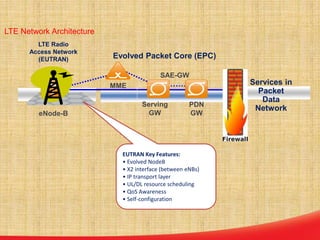
Evolved Packet Core (EPC)
LTE Radio
Access Network
(EUTRAN)
MME
Serving
GW
PDN
GW
Services in
Packet
Data
Network
eNode-B
SAE-GW
EUTRAN Key Features:
• Evolved NodeB
• X2 interface (between eNBs)
• IP transport layer
• UL/DL resource scheduling
• QoS Awareness
• Self-configuration
LTE Network Architecture
What is VoLTE
• VoLTE stands for
• It is voice calls over a 4G LTE network.
• Based on IP Core network, rather than traditional circuit
switched Core networks.
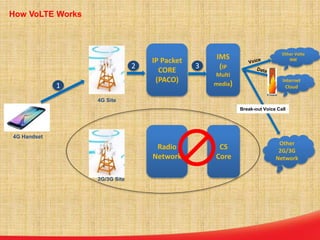
How VoLTE Works
IMS
(IP
Multi
media)
Radio
Network
CS
Core
Other
2G/3G
Network
4G Site
2G/3G Site
1
2 3
4G Handset
IP Packet
CORE
(PACO) Internet
Cloud
Other Volte
NW
Break-out Voice Call
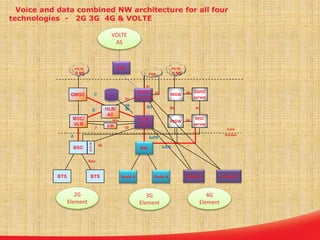
Voice and data combined NW architecture for all four
technologies - 2G 3G 4G & VOLTE
Node B
RNC
Node B
P
C
U
Gb
SGs
Gi
Gc
GGSN
Gr
Gn
Gp
Core
Access
EIR
A
BTS
BTS
MSC/
VLR
GMSC
HLR/
AC
Abis
C
D
F Gf
GMSC
server
MSC
server
MGW
MGW Mc
Mc
Nc
Nb
IuCS
IuPS
PDN
PSTN
PLMN
PSTN
PLMN
BSC
3G
Element
2G
Element
4G
Element
SGSN
SGSN
MME
HSS
eNode B eNode B
GGSN
SAE GW
S6
IMS
VOLTE
AS
Steps taken for secure mobile data network
 Deployment Firewalls (L7-NG ) and IPS devices with stringent rulebases at the perimeter level
 VLAN / zoning implementation on L3 devices of IP data network
 Replacing vulnerable protocols like http, telnet, ftp with https, SSH , SFTP
 Periodic security scans (NessusScan) to detect the IP device vulnerability (VA score management)
 Disable of ICMP protocol in NW to prevent ping and traceroute commands from external sources
 External Peneration Tests (PT ) to check the security of internal network of IP devices
 ISO27001 Certfication through external audits at periodic intervals in data centres
 Information Security trainings among all individuals within the organisation
THANK YOU

GSM-CallFlowAndSecurity Features (2G-3G-4G).pptx

  • 1.
  • 2.
  • 3.
    3 • Mobile Station(MS) • Mobile Equipment (ME) • Subscriber Identity Module (SIM) • Mobile Subscriber ISDN Number (MSISDN) • International Mobile Subscriber Identity (IMSI) • International Mobile Equipment Identity (IMEI) • Base Station Subsystem (BSS) • Base Transceiver Station (BTS) • Base Station Controller (BSC) • Network Switching Subsystem(NSS) • Mobile Switching Center (MSC) • Home Location Register (HLR) • Visitor Location Register (VLR) • Authentication Center (AUC) • Equipment Identity Register (EIR) Mobile Telecom System Architecture
  • 4.
    11/21/2023 4 Permanent data Regularupdate of subscriber’s current VLR Stores the subscriber authentication data Stores the subscriber tele services and supplementary services data HLR Home Location register (HLR)
  • 5.
    11/21/2023 5 Temporary data Keptas long as subscriber is within its coverage area Updated from the HLR Always associated with a Mobile Services Switching Centre (MSC) VLR MSC Visitor Location register (VLR)
  • 6.
    6 Equipment Identity Register(EIR) Permanent data Regular update of subscriber’s current MS Identity It maintain three lists.
  • 7.
    7 SS7 BTS BSC MSC VLR HLR AuC GMSC BSS PSTN NSS A E C D PSTN Abis B H MS BSS — BaseStation System BTS — Base Transceiver Station BSC — Base Station Controller NSS — Network Sub-System MSC — Mobile- switching centre VLR — Visitor Location Register HLR — Home Location Register AuC — Authentication Server GMSC — Gateway MSC 2G Architecture – voice & data SGSN — Serving GPRS Support Node GGSN — Gateway GPRS Support Node GPRS — General Packet Radio Service IP 2G+ MS (voice & data) PSDN Gi SGSN Gr Gb Gs GGSN Gc Gn 2G MS (voice only)
  • 8.
  • 11.
    3G Architecture SD Mobile Station MSC/ VLR BaseStation Subsystem GMSC Network Subsystem AUC EIR HLR Other Networks Note: Interfaces have been omitted for clarity purposes. GGSN SGSN BTS BSC Node B RNC RNS UTRAN SIM ME USIM ME + PSTN PLMN Internet
  • 12.
     LTE standsfor Long Term Evolution  Next Generation mobile broadband technology  Promises data transfer rates of 300 Mbps  Optimized for All-IP traffic Advantages of LTE 4G (LTE) i. High Network Throughput ii. Low latency iii. Plug & Play Architecture iv. Low operating cost v. All IP network vi. Simplified upgrade path from 3G Networks i. Faster Data downloads/Uploads ii. Improved response for application iii. Improved end-user experience Network operators End Users
  • 13.
    Evolved Packet Core(EPC) LTE Radio Access Network (EUTRAN) MME Serving GW PDN GW Services in Packet Data Network eNode-B SAE-GW EUTRAN Key Features: • Evolved NodeB • X2 interface (between eNBs) • IP transport layer • UL/DL resource scheduling • QoS Awareness • Self-configuration LTE Network Architecture
  • 14.
    What is VoLTE •VoLTE stands for • It is voice calls over a 4G LTE network. • Based on IP Core network, rather than traditional circuit switched Core networks.
  • 15.
    How VoLTE Works IMS (IP Multi media) Radio Network CS Core Other 2G/3G Network 4GSite 2G/3G Site 1 2 3 4G Handset IP Packet CORE (PACO) Internet Cloud Other Volte NW Break-out Voice Call
  • 16.
    Voice and datacombined NW architecture for all four technologies - 2G 3G 4G & VOLTE Node B RNC Node B P C U Gb SGs Gi Gc GGSN Gr Gn Gp Core Access EIR A BTS BTS MSC/ VLR GMSC HLR/ AC Abis C D F Gf GMSC server MSC server MGW MGW Mc Mc Nc Nb IuCS IuPS PDN PSTN PLMN PSTN PLMN BSC 3G Element 2G Element 4G Element SGSN SGSN MME HSS eNode B eNode B GGSN SAE GW S6 IMS VOLTE AS
  • 17.
    Steps taken forsecure mobile data network  Deployment Firewalls (L7-NG ) and IPS devices with stringent rulebases at the perimeter level  VLAN / zoning implementation on L3 devices of IP data network  Replacing vulnerable protocols like http, telnet, ftp with https, SSH , SFTP  Periodic security scans (NessusScan) to detect the IP device vulnerability (VA score management)  Disable of ICMP protocol in NW to prevent ping and traceroute commands from external sources  External Peneration Tests (PT ) to check the security of internal network of IP devices  ISO27001 Certfication through external audits at periodic intervals in data centres  Information Security trainings among all individuals within the organisation
  • 18.