Presented by:
Abhishek Agarwal
Aditya Rana
Sakshi Gupta
Shreya Chaturvedi
Shipra Pareek
Competition Act 2002
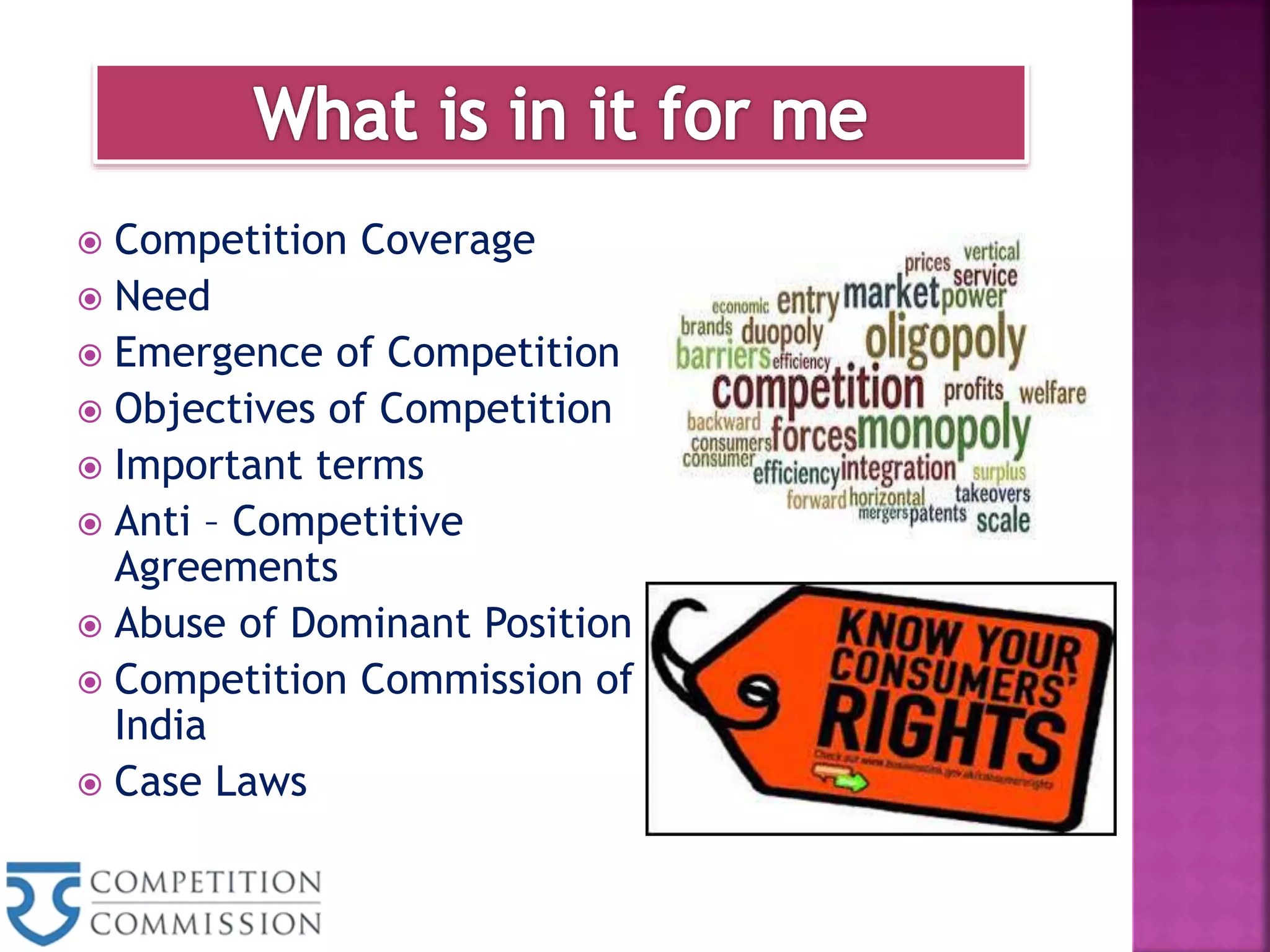
 Competition Coverage
 Need
 Emergence of Competition
 Objectives of Competition
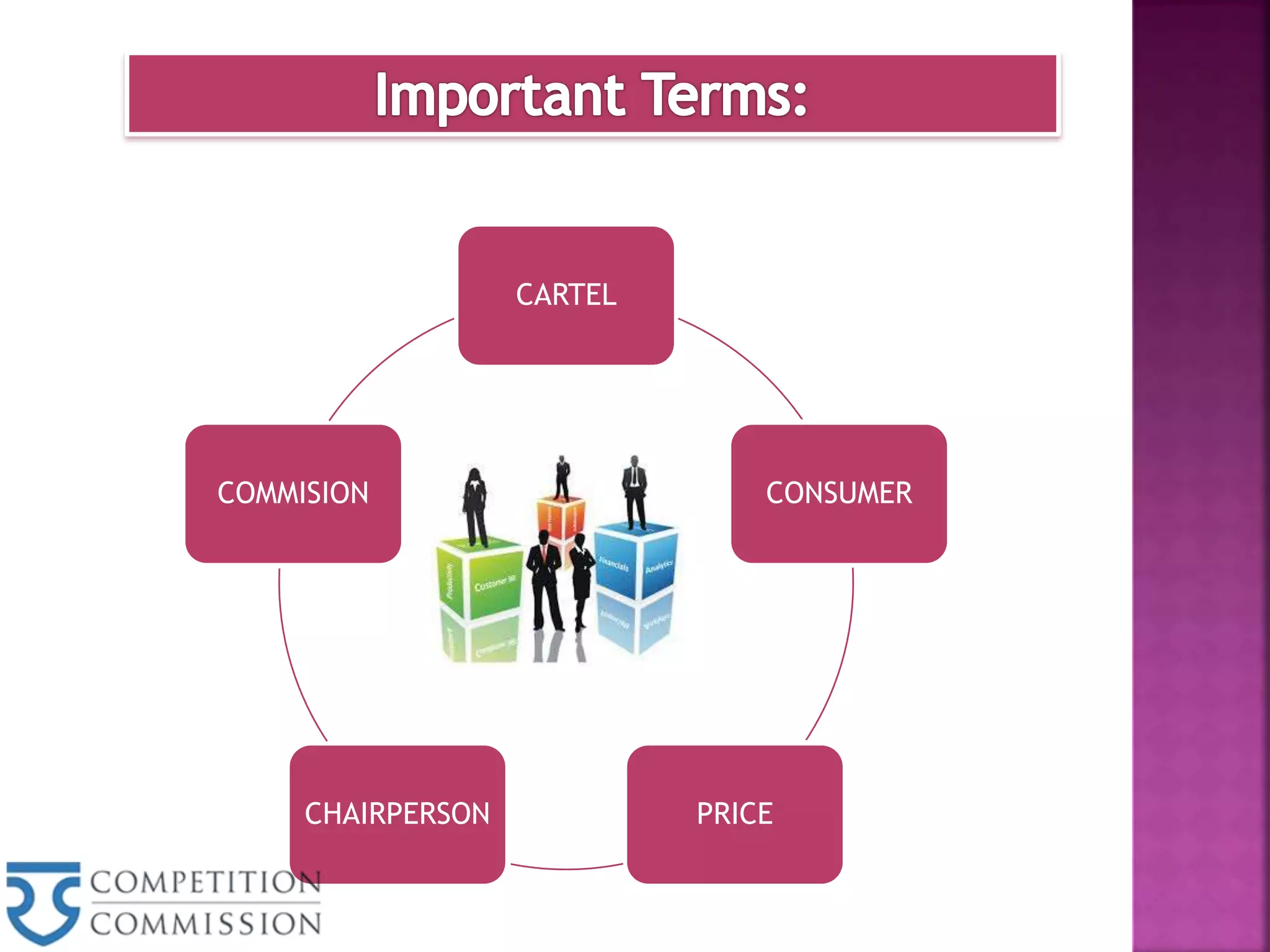
 Important terms
 Anti – Competitive
Agreements
 Abuse of Dominant Position
 Competition Commission of
India
 Case Laws
 Means sellers striving
independently for buyer’s
patronage to maximize
profit. A buyer prefer to buy
a product to maximize his
benefits where as seller
prefer to sell the product to
maximize its profits.
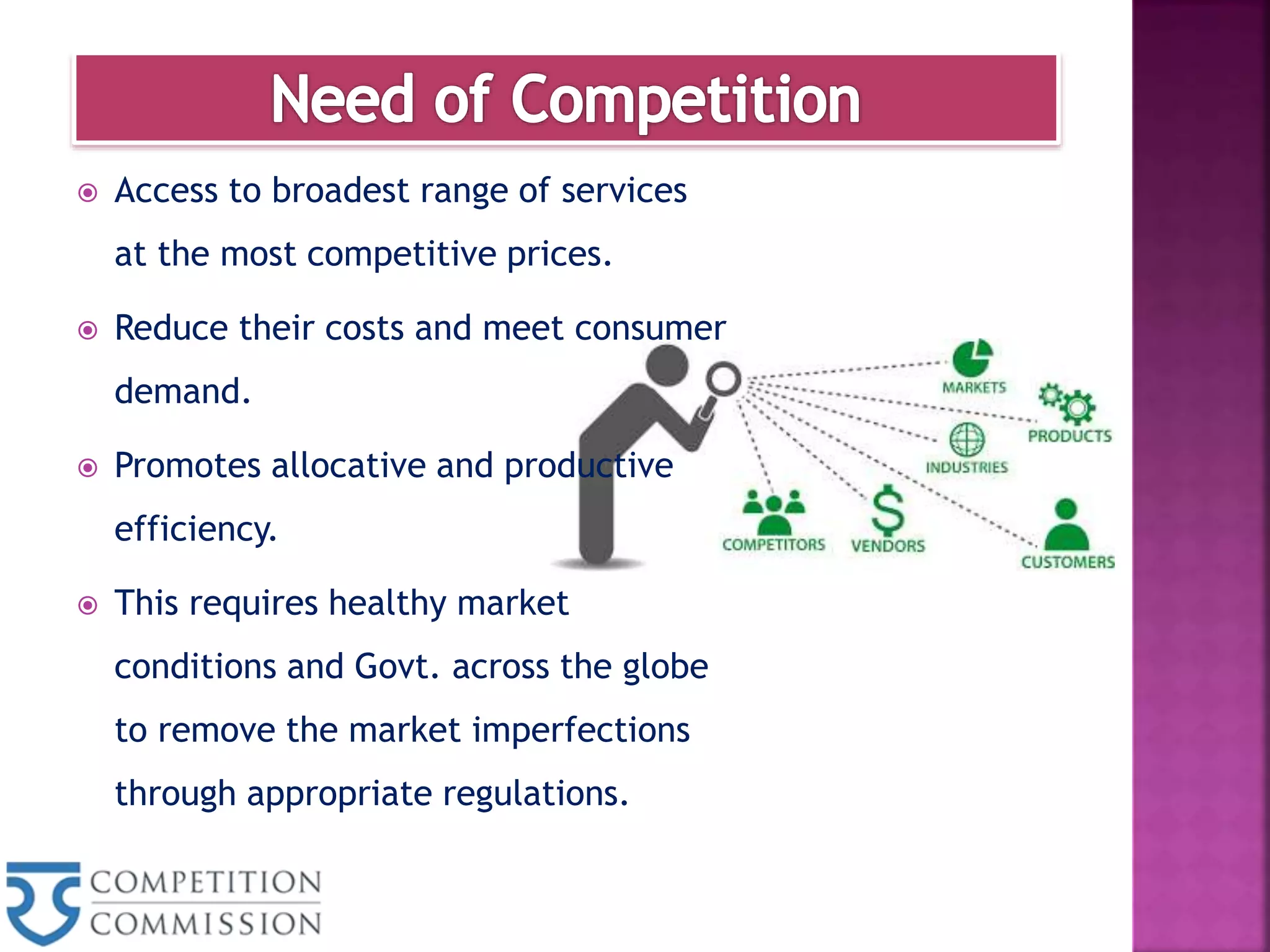
 Access to broadest range of services
at the most competitive prices.
 Reduce their costs and meet consumer
demand.
 Promotes allocative and productive
efficiency.
 This requires healthy market
conditions and Govt. across the globe
to remove the market imperfections
through appropriate regulations.
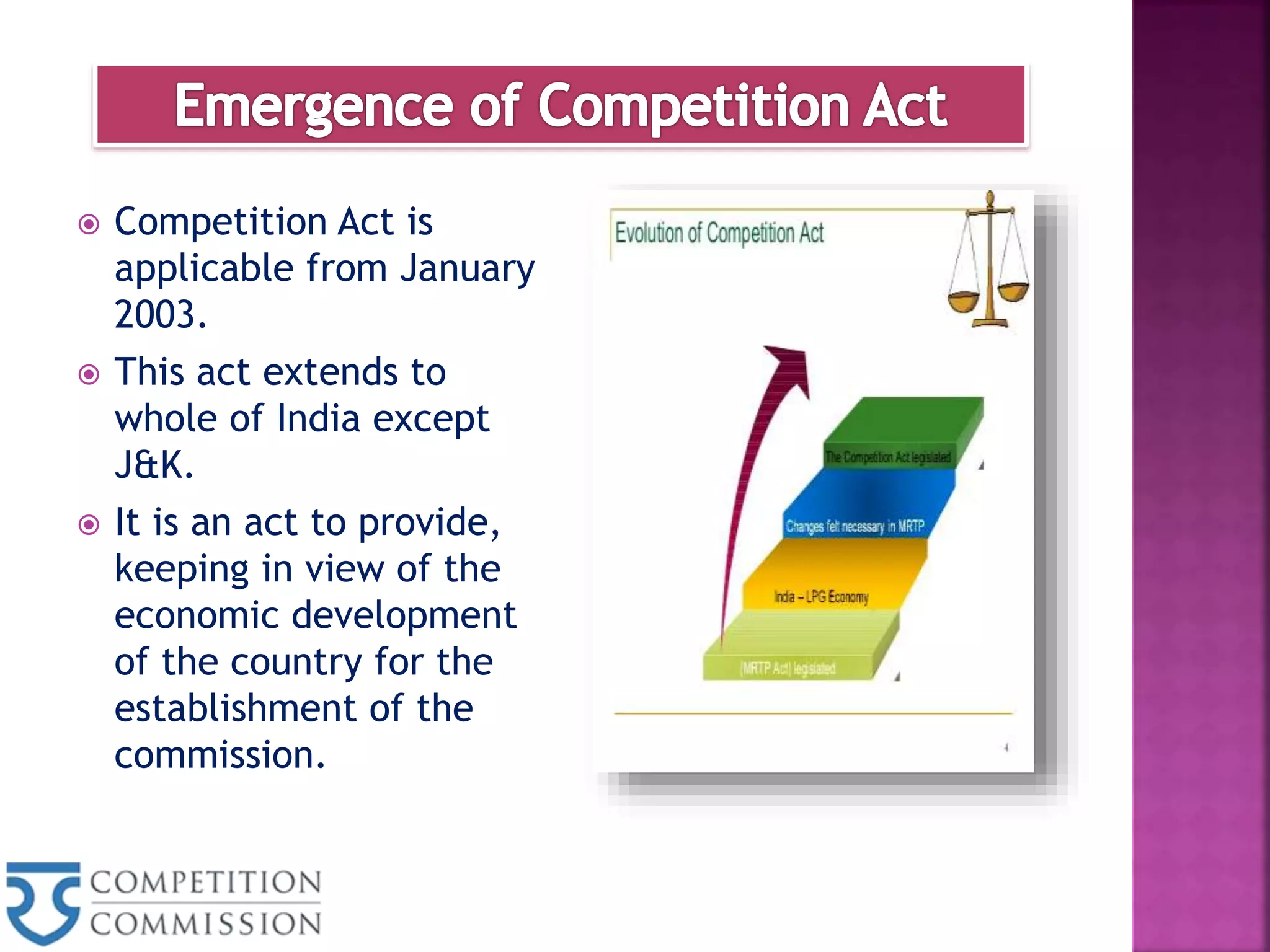
 Competition Act is
applicable from January
2003.
 This act extends to
whole of India except
J&K.
 It is an act to provide,
keeping in view of the
economic development
of the country for the
establishment of the
commission.
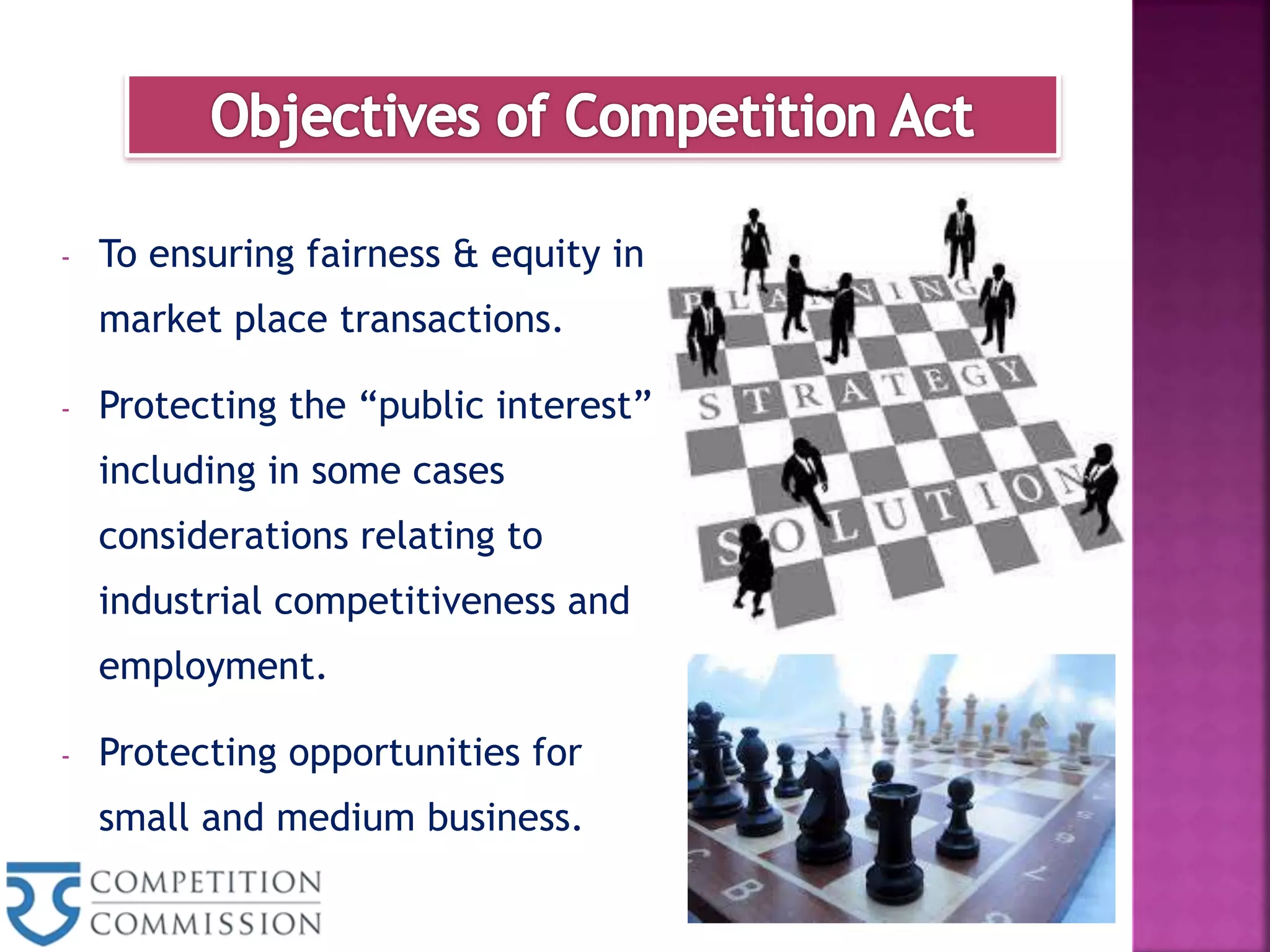
- To ensuring fairness & equity in
market place transactions.
- Protecting the “public interest”
including in some cases
considerations relating to
industrial competitiveness and
employment.
- Protecting opportunities for
small and medium business.
CARTEL
CONSUMER
PRICECHAIRPERSON
COMMISION
U/S 3 of the Act, no
enterprises or association
of enterprises or person or
association of persons shall
enter into any agreement
in respect of production,
supply, distribution of
goods which directly or
indirectly causes an
adverse effect on the
competition in India.
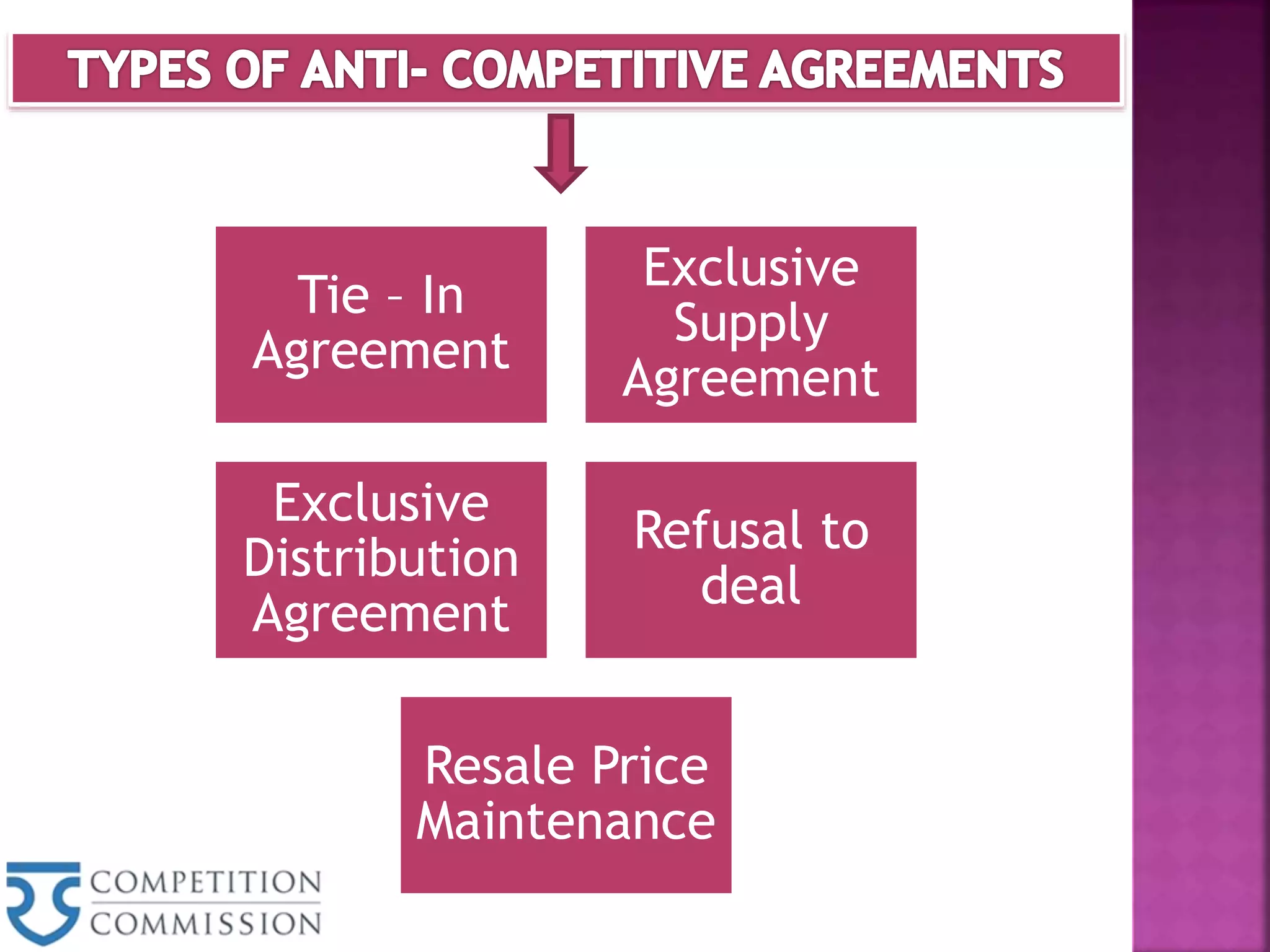
Tie – In
Agreement
Exclusive
Supply
Agreement
Exclusive
Distribution
Agreement
Refusal to
deal
Resale Price
Maintenance
 U/S 4 No enterprise or group shall abuse its
dominant position.
(a) “dominant position” means a position of strength,
enjoyed by an enterprise, in the relevant market, in India,
which enables it to-
(i) operate independently of competitive forces
prevailing in the relevant market; or
(ii) affect its competitors or consumers or the relevant
market in its favour;
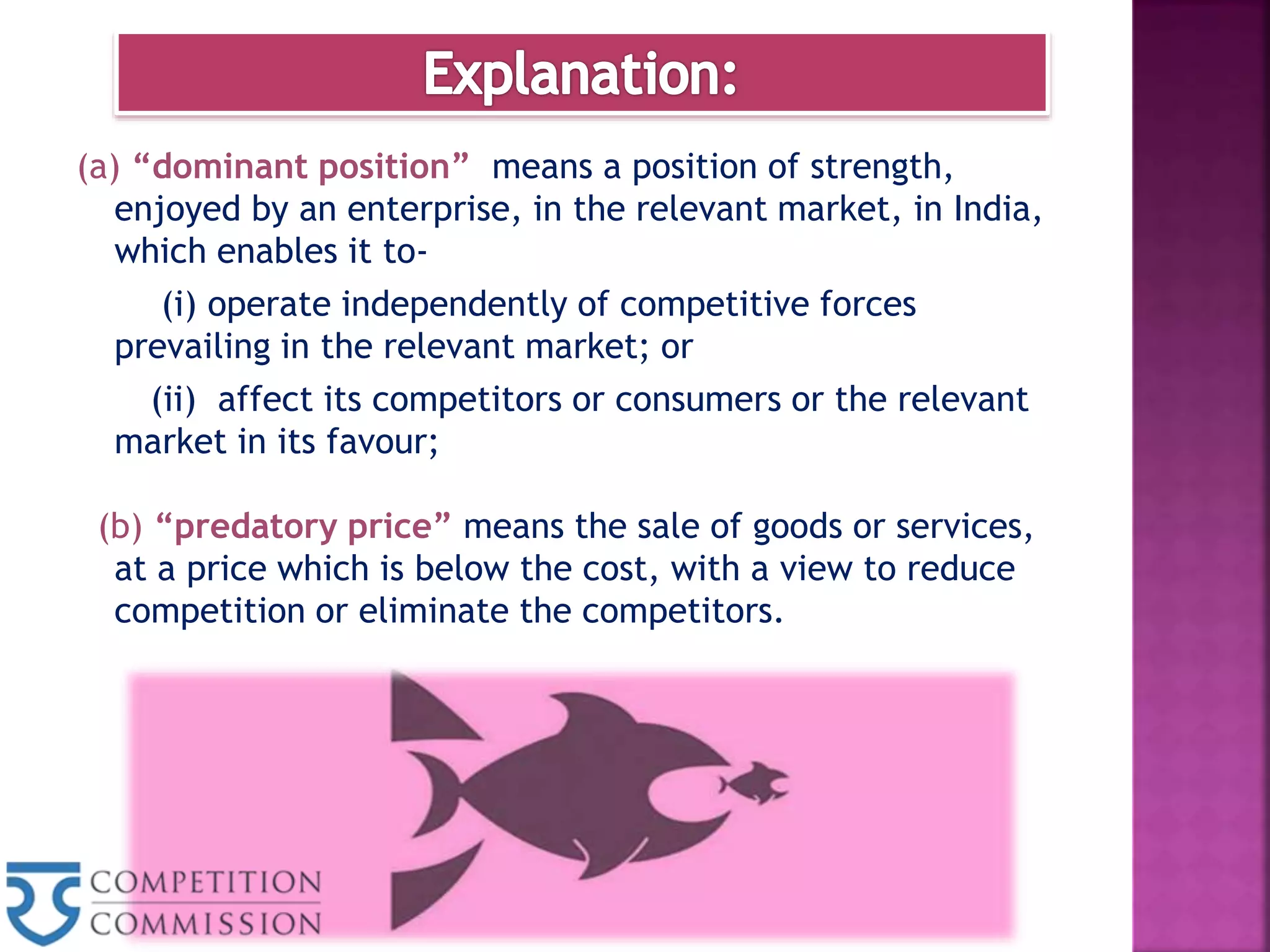
(b) “predatory price” means the sale of goods or services,
at a price which is below the cost, with a view to reduce
competition or eliminate the competitors.
 CCI is an autonomous body established by
Central Government controls and regulates the
competition in Indian economy and market.
 Competition Commission of India established
on 14th October, 2003 by Central Government.
 CCI consists of a Chairperson and not less than
two and not more than six other members
appointed by the Central Government.
 To eliminate practices having adverse effect
on competition.
 To promote and sustain competition.
 To promote interest of consumers.
 To ensure freedom of trade carried on by
other participants, in market in India.
 Conduct enquiry into cases of abuse of
dominant position and combinations.
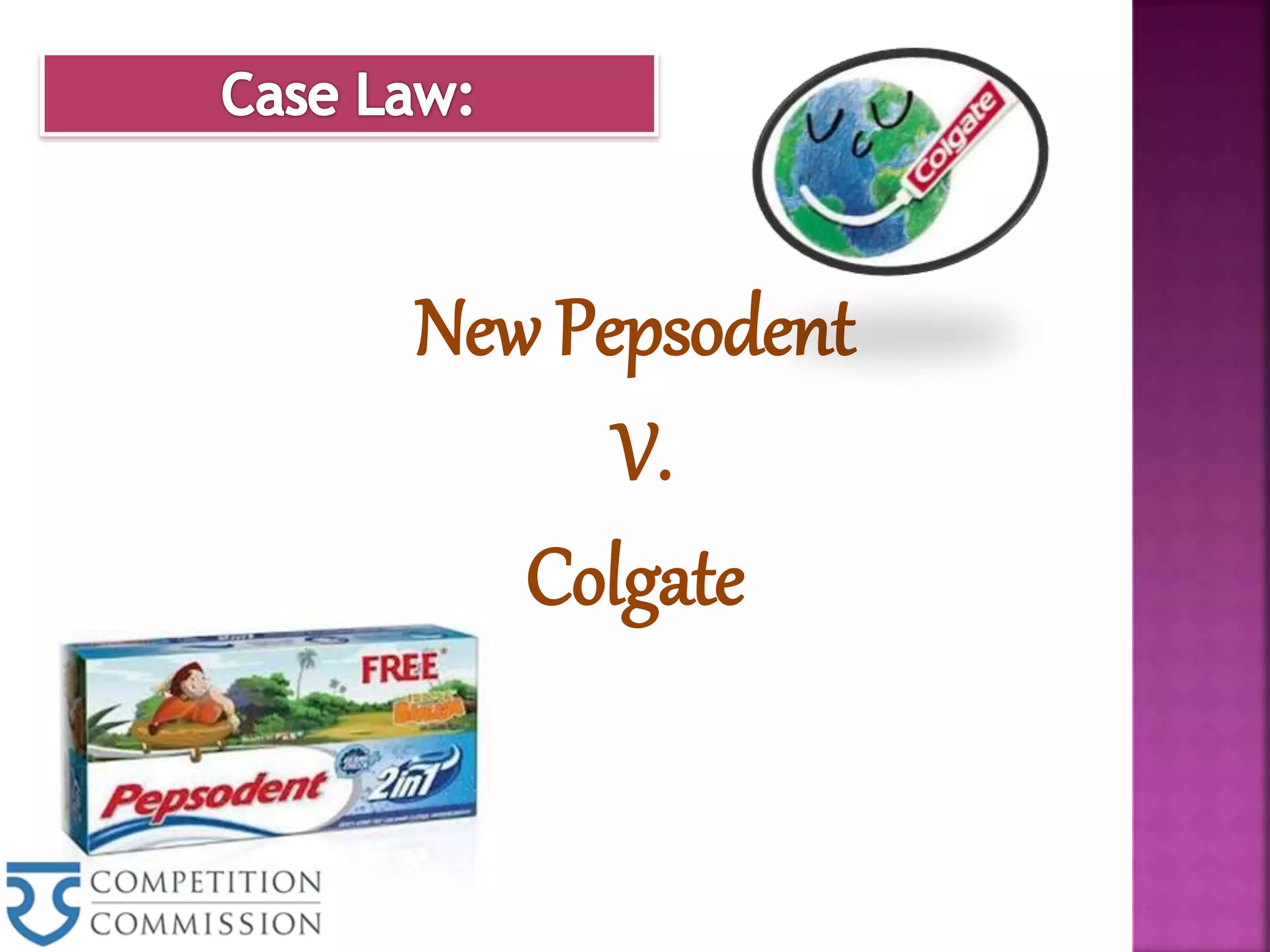
New Pepsodent
V.
Colgate
Grp 4 competition act, 2002.ppt (2)

Grp 4 competition act, 2002.ppt (2)

  • 1.
    Presented by: Abhishek Agarwal AdityaRana Sakshi Gupta Shreya Chaturvedi Shipra Pareek Competition Act 2002
  • 2.
     Competition Coverage Need  Emergence of Competition  Objectives of Competition  Important terms  Anti – Competitive Agreements  Abuse of Dominant Position  Competition Commission of India  Case Laws
  • 3.
     Means sellersstriving independently for buyer’s patronage to maximize profit. A buyer prefer to buy a product to maximize his benefits where as seller prefer to sell the product to maximize its profits.
  • 4.
     Access tobroadest range of services at the most competitive prices.  Reduce their costs and meet consumer demand.  Promotes allocative and productive efficiency.  This requires healthy market conditions and Govt. across the globe to remove the market imperfections through appropriate regulations.
  • 6.
     Competition Actis applicable from January 2003.  This act extends to whole of India except J&K.  It is an act to provide, keeping in view of the economic development of the country for the establishment of the commission.
  • 7.
    - To ensuringfairness & equity in market place transactions. - Protecting the “public interest” including in some cases considerations relating to industrial competitiveness and employment. - Protecting opportunities for small and medium business.
  • 8.
  • 9.
    U/S 3 ofthe Act, no enterprises or association of enterprises or person or association of persons shall enter into any agreement in respect of production, supply, distribution of goods which directly or indirectly causes an adverse effect on the competition in India.
  • 10.
  • 11.
     U/S 4No enterprise or group shall abuse its dominant position.
  • 12.
    (a) “dominant position”means a position of strength, enjoyed by an enterprise, in the relevant market, in India, which enables it to- (i) operate independently of competitive forces prevailing in the relevant market; or (ii) affect its competitors or consumers or the relevant market in its favour; (b) “predatory price” means the sale of goods or services, at a price which is below the cost, with a view to reduce competition or eliminate the competitors.
  • 13.
     CCI isan autonomous body established by Central Government controls and regulates the competition in Indian economy and market.  Competition Commission of India established on 14th October, 2003 by Central Government.  CCI consists of a Chairperson and not less than two and not more than six other members appointed by the Central Government.
  • 14.
     To eliminatepractices having adverse effect on competition.  To promote and sustain competition.  To promote interest of consumers.  To ensure freedom of trade carried on by other participants, in market in India.  Conduct enquiry into cases of abuse of dominant position and combinations.
  • 15.