





Growth and Development of Infants
Physical Growth & DevelopmentBaby grows more while he is an infant than at any other time. Caregivers keep a record of how your baby is growing on a "growth chart" during your baby's regular check-ups.
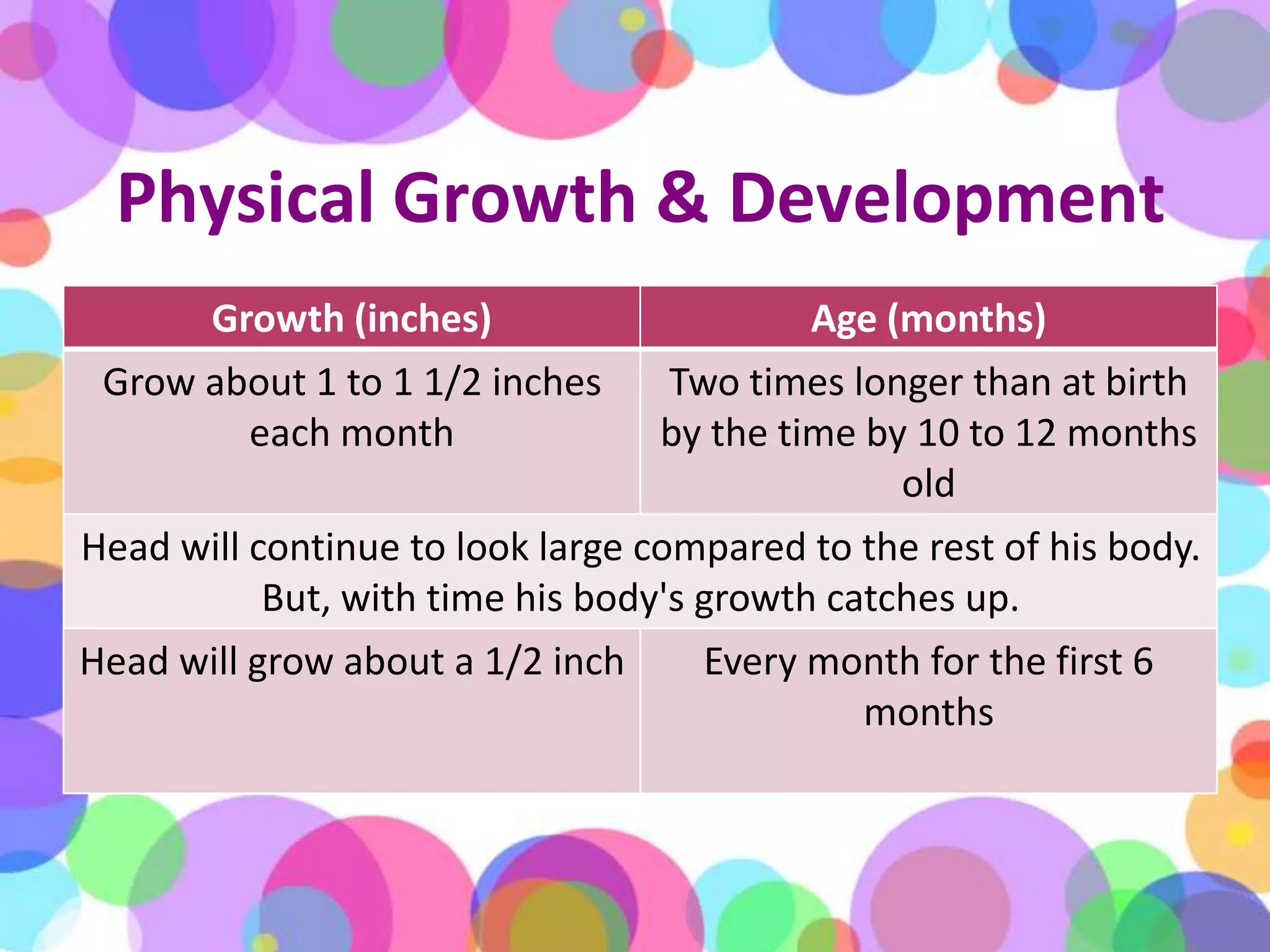
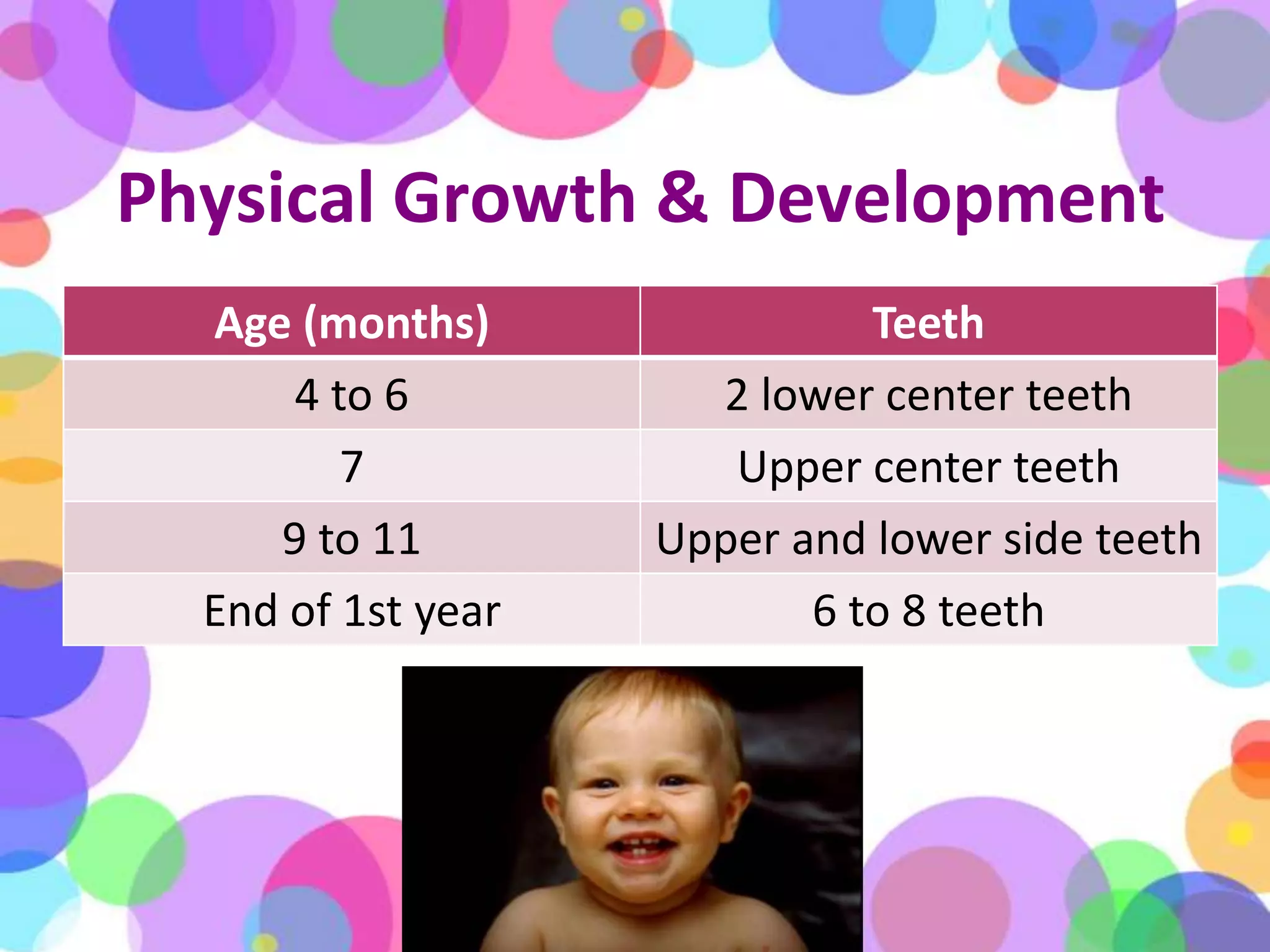
Physical Growth & Development
Physical Growth & DevelopmentYou will begin to see a pattern (schedule) of having BMs and urinating. Not yet ready for potty training.
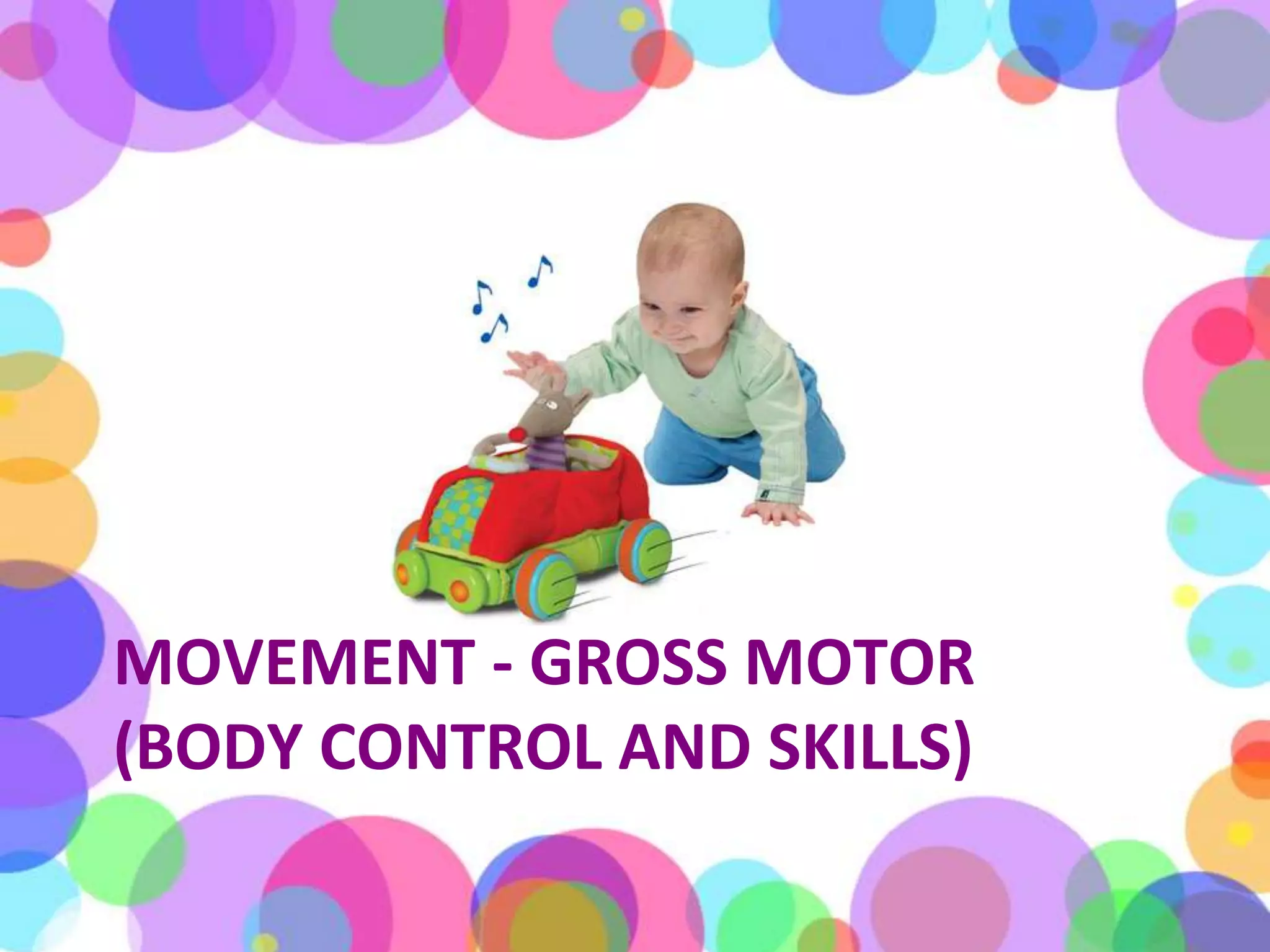
Movement - Gross Motor(Body Control and Skills)
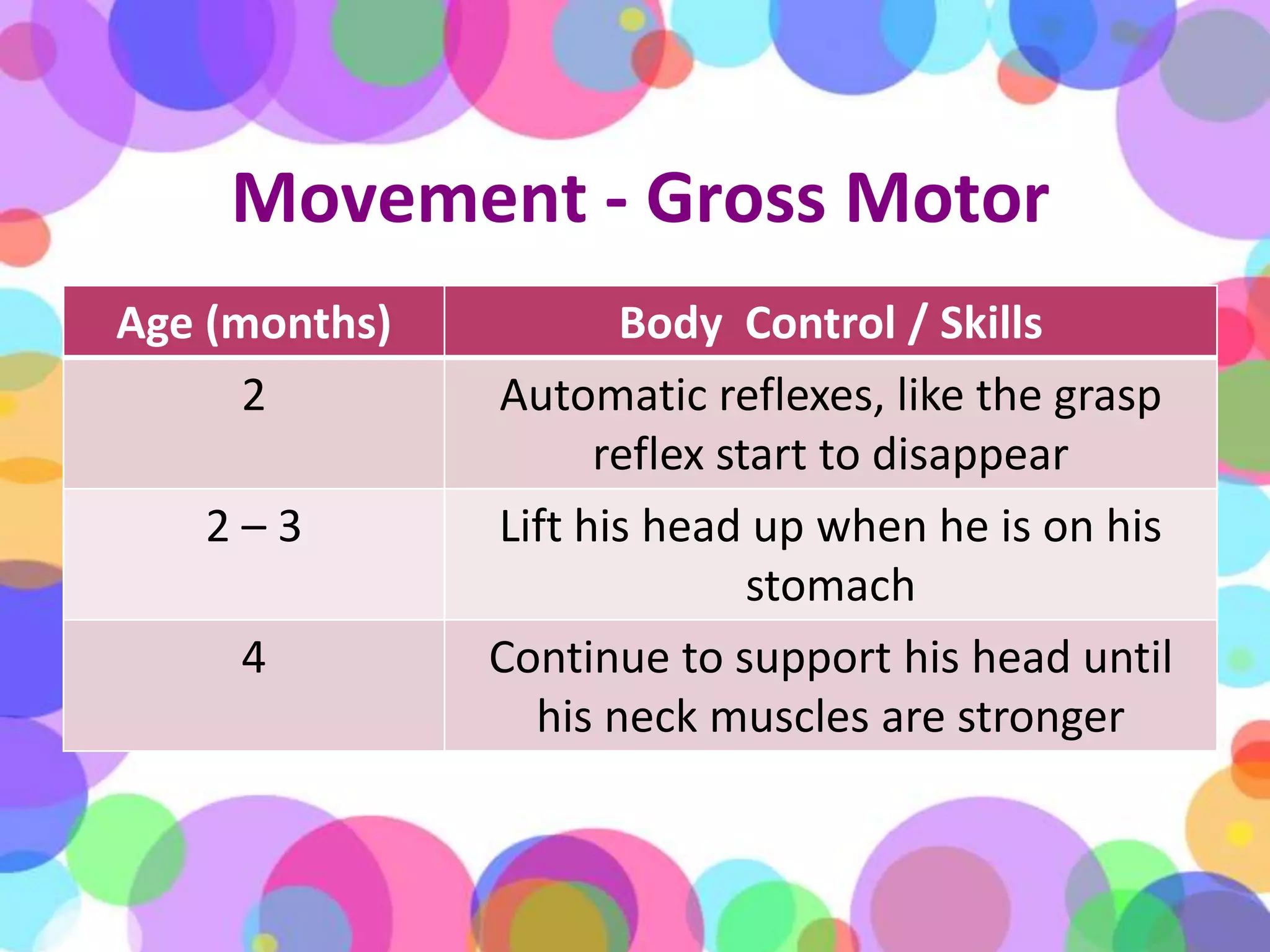
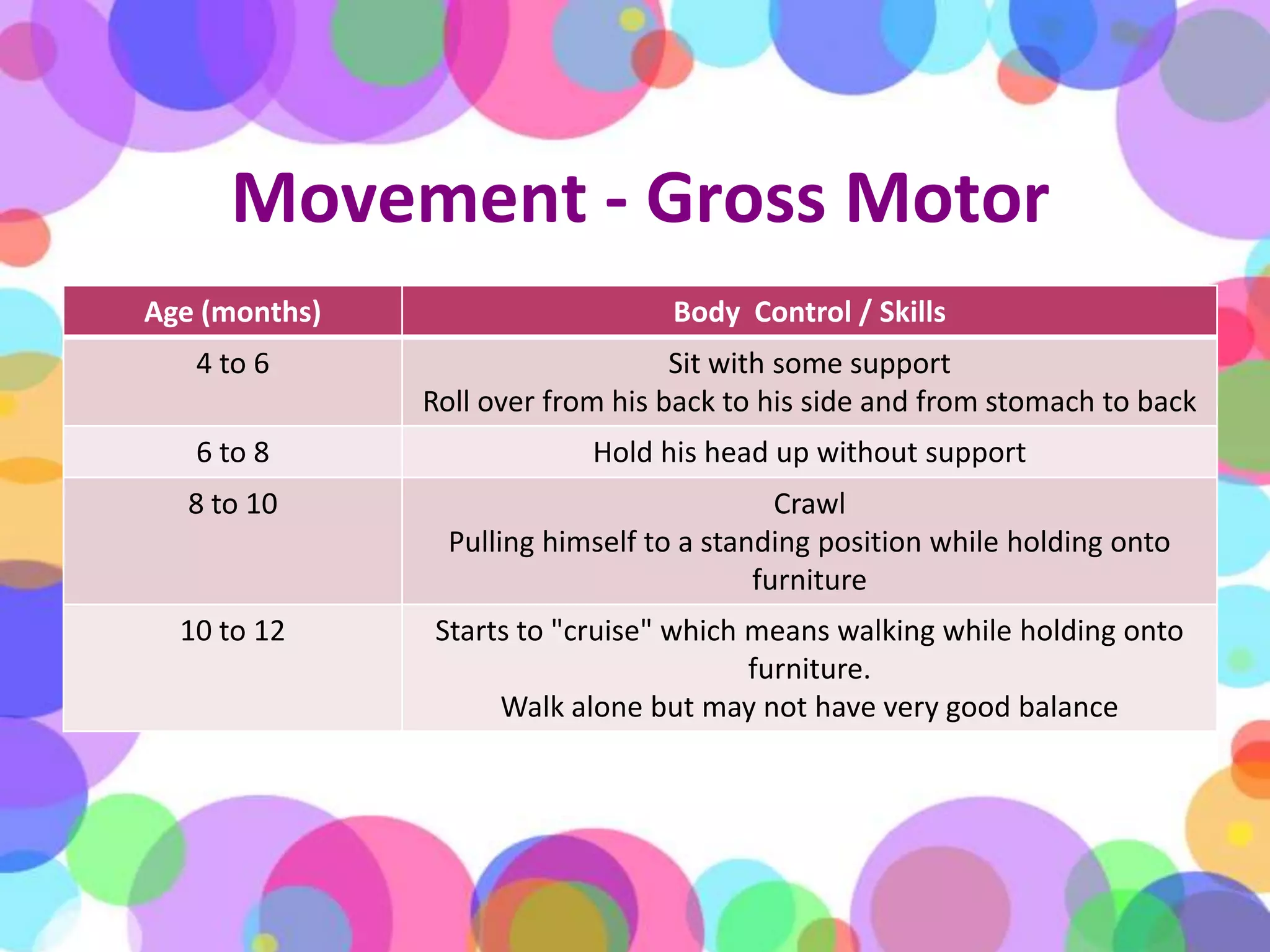
Movement - Gross Motor
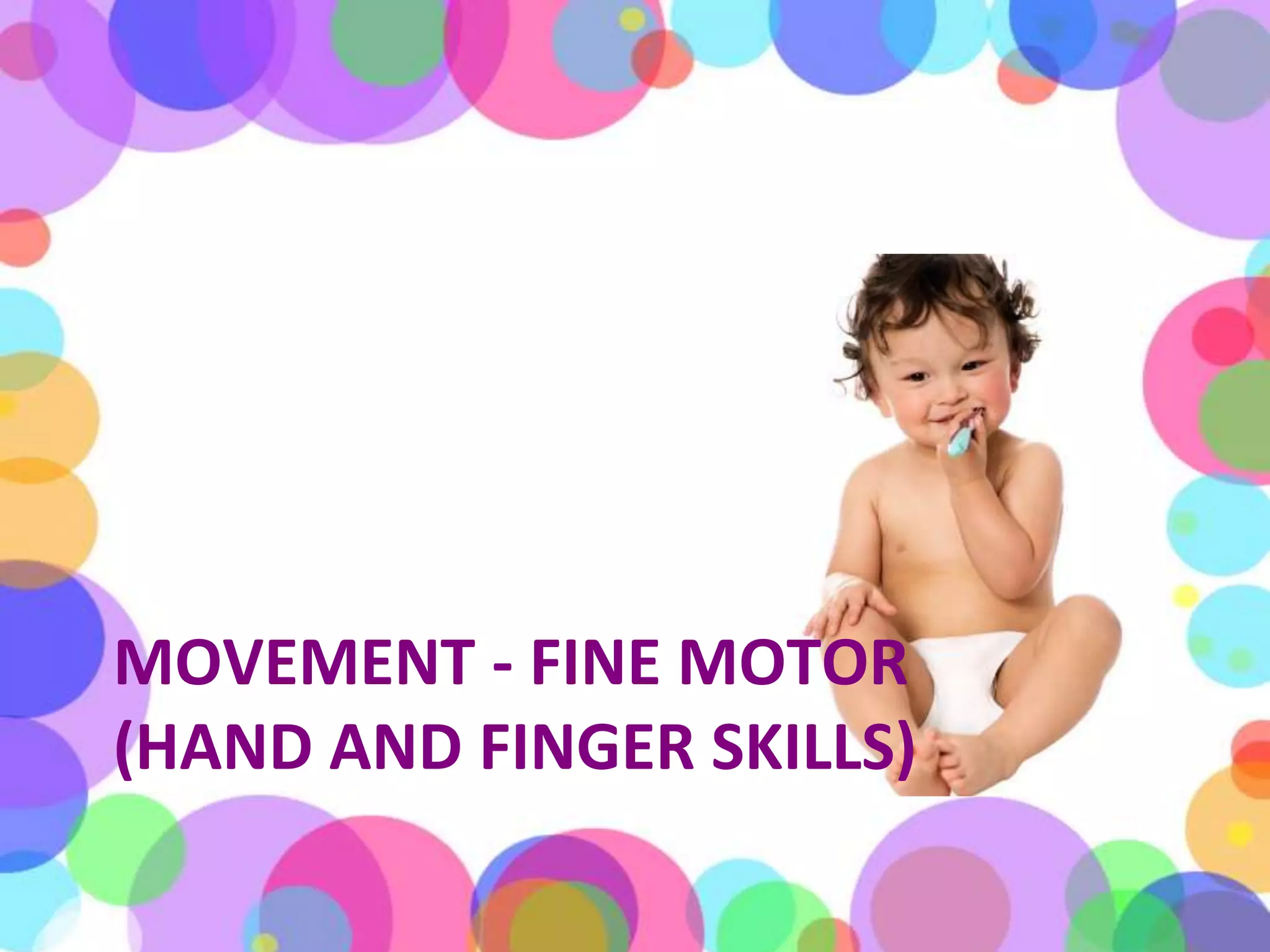
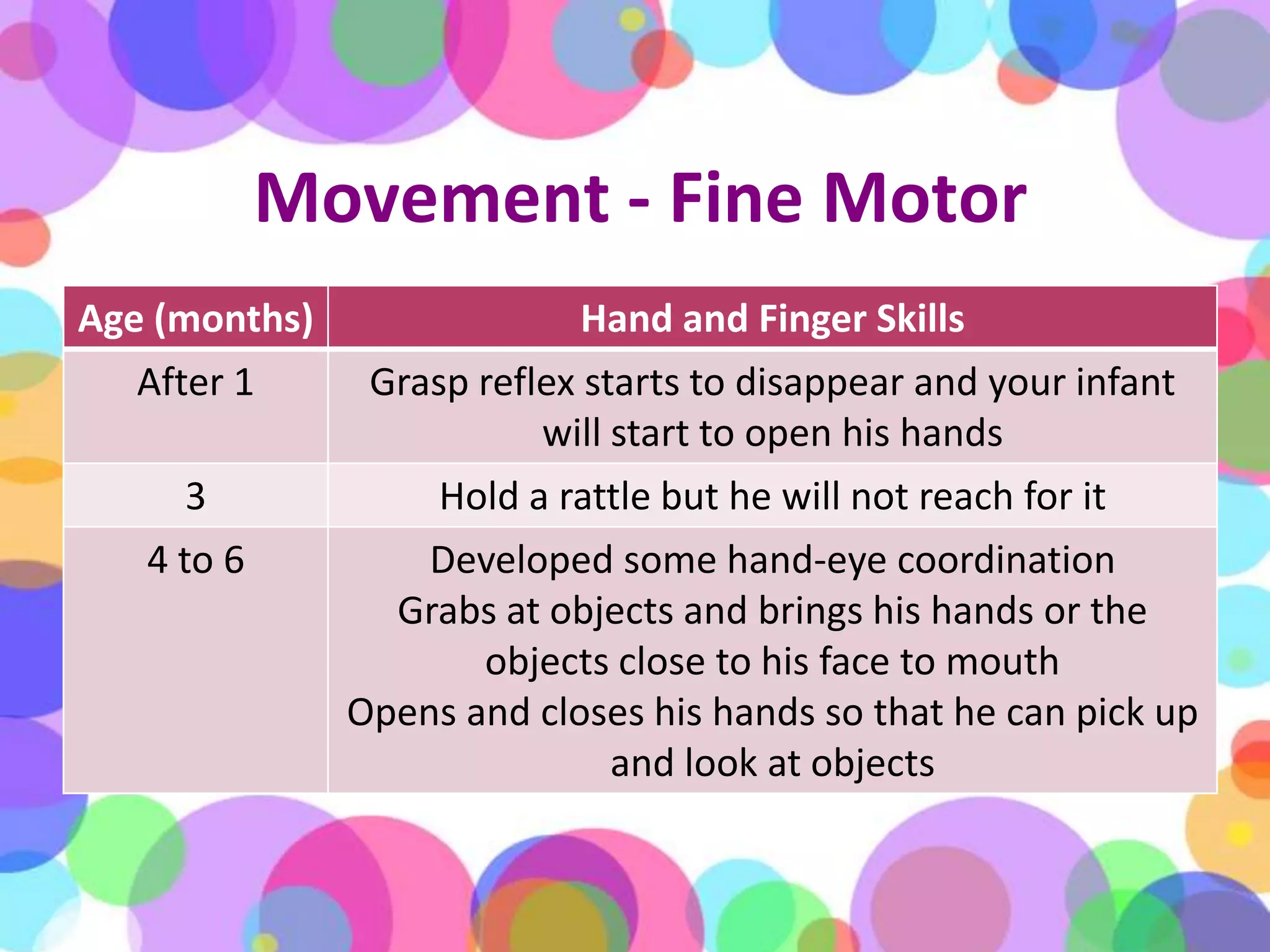
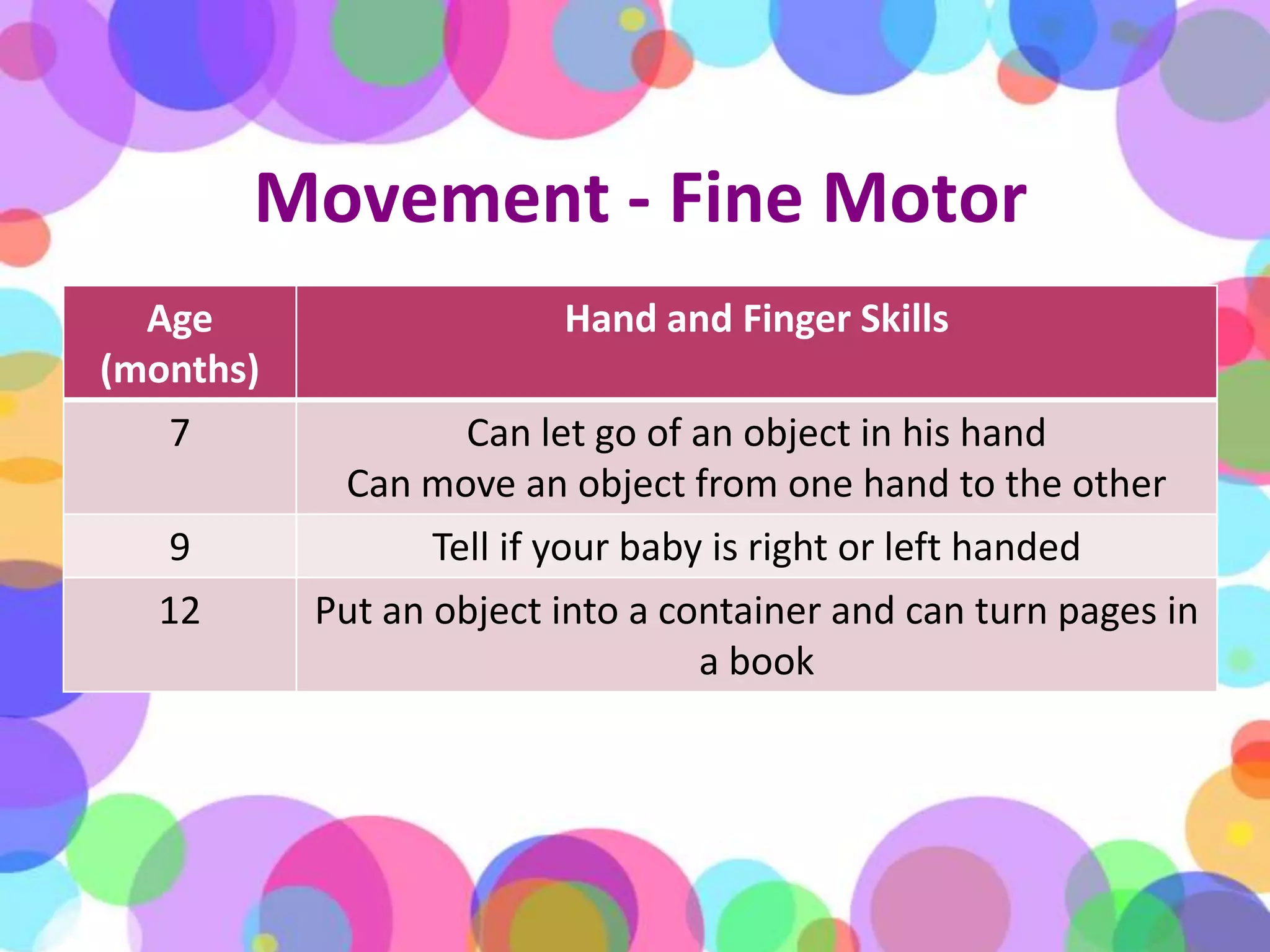
Movement - Fine Motor (Hand and Finger Skills)
Movement - Fine MotorFine motor movements are when your baby can control his fingers with purpose.
Movement - Fine Motor
Daily Living Activities
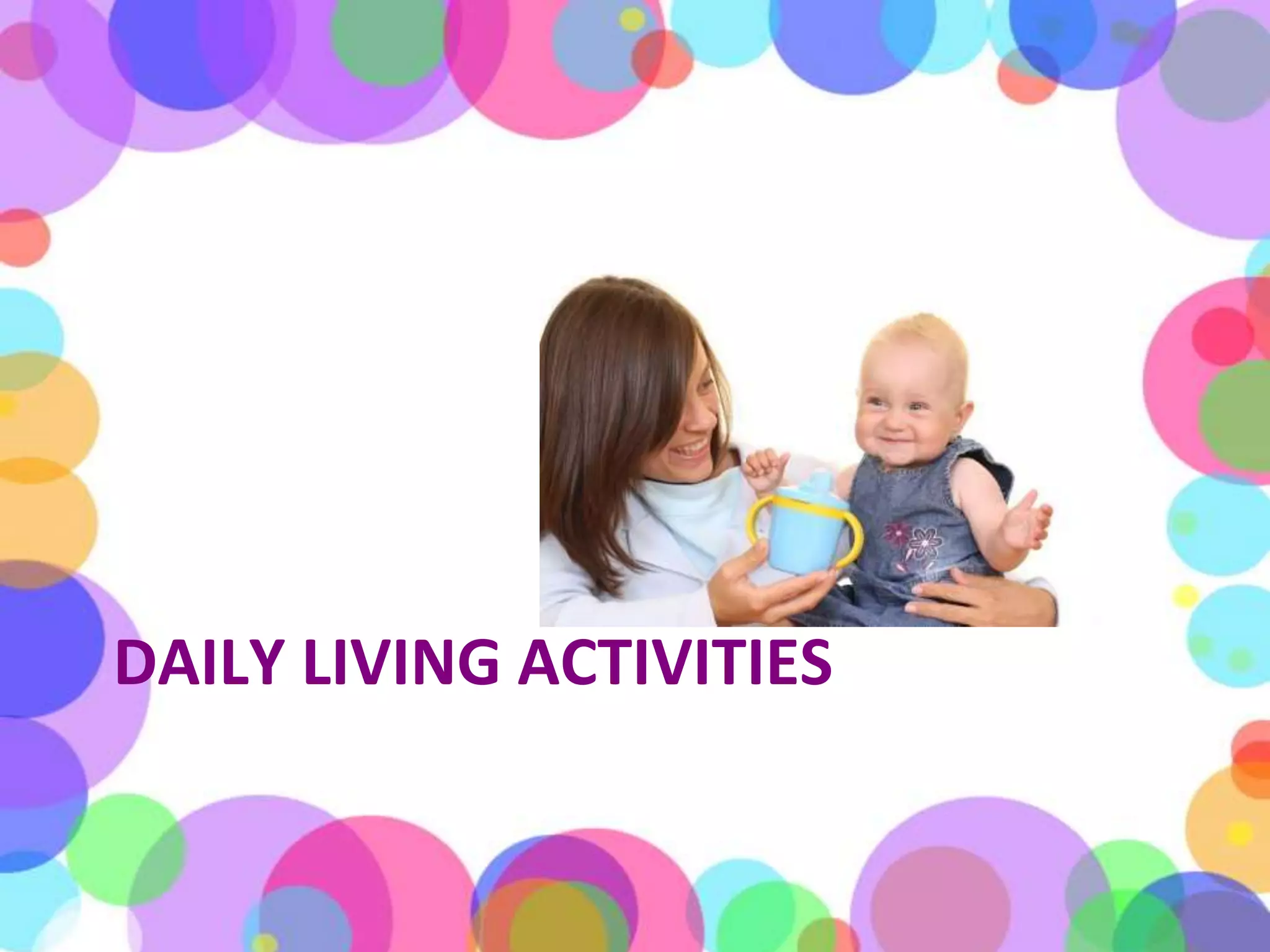
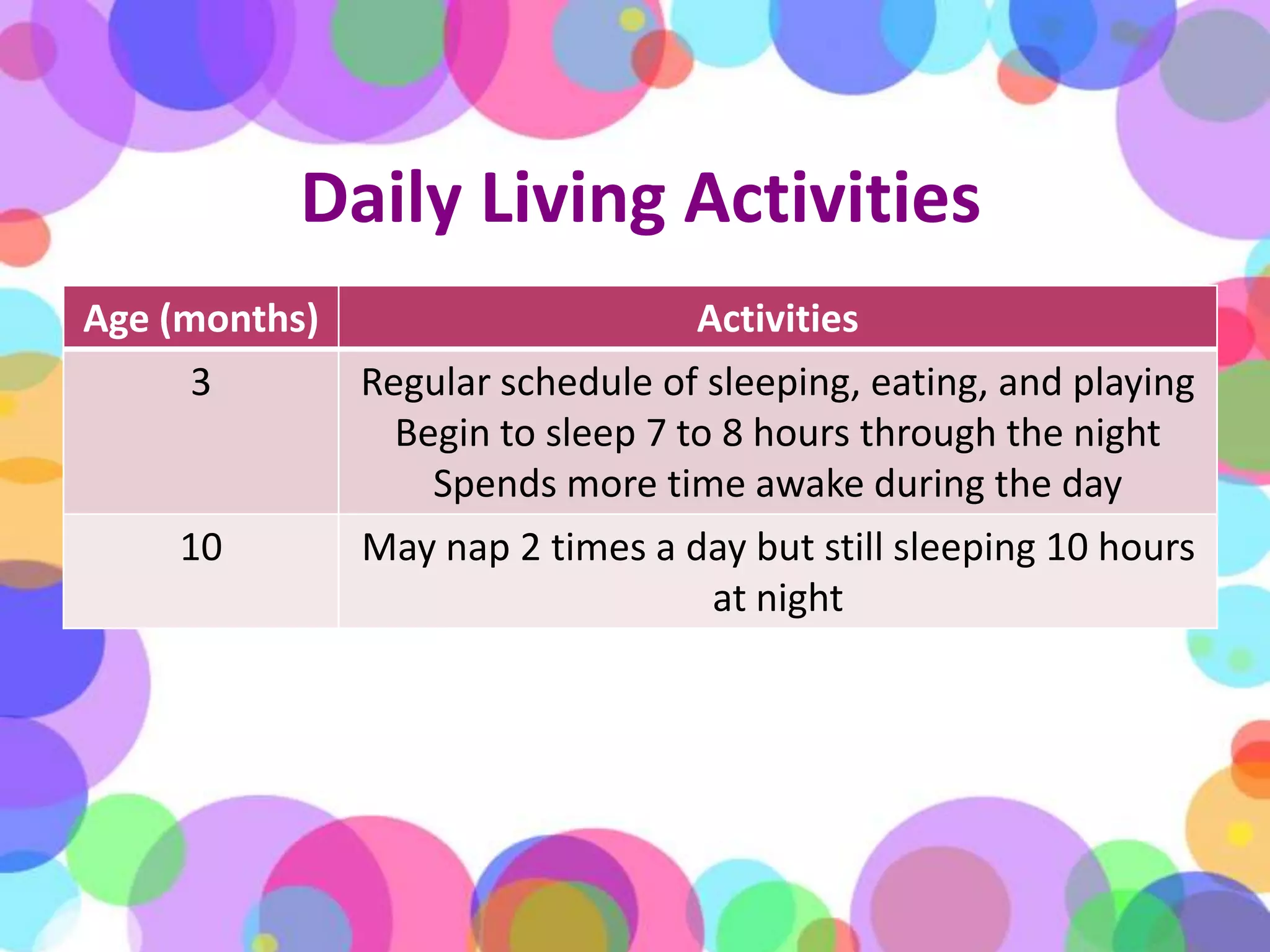
Daily Living ActivitiesSet up a routine (regular schedule) of sleeping and eating. A routine is very important to make sure you and your baby get enough rest and sleep.
Daily Living Activities
Daily Living ActivitiesHabits and rituals, like reading a story or bathing before bed, are important. These rituals help your baby feel safe and let him know what should happen. Having rituals may help your baby if he has a hard time going to sleep.
Daily Living Activities
Language Development
Language DevelopmentLearns to talk by copying the words and sounds you make. Talk, read, and sing to your baby using a soft, gentle voice. Use different tones of voice also. Learned some basic language skills by the end of his 1st year. Speak few simple words.
Language Development
Intellectual Development
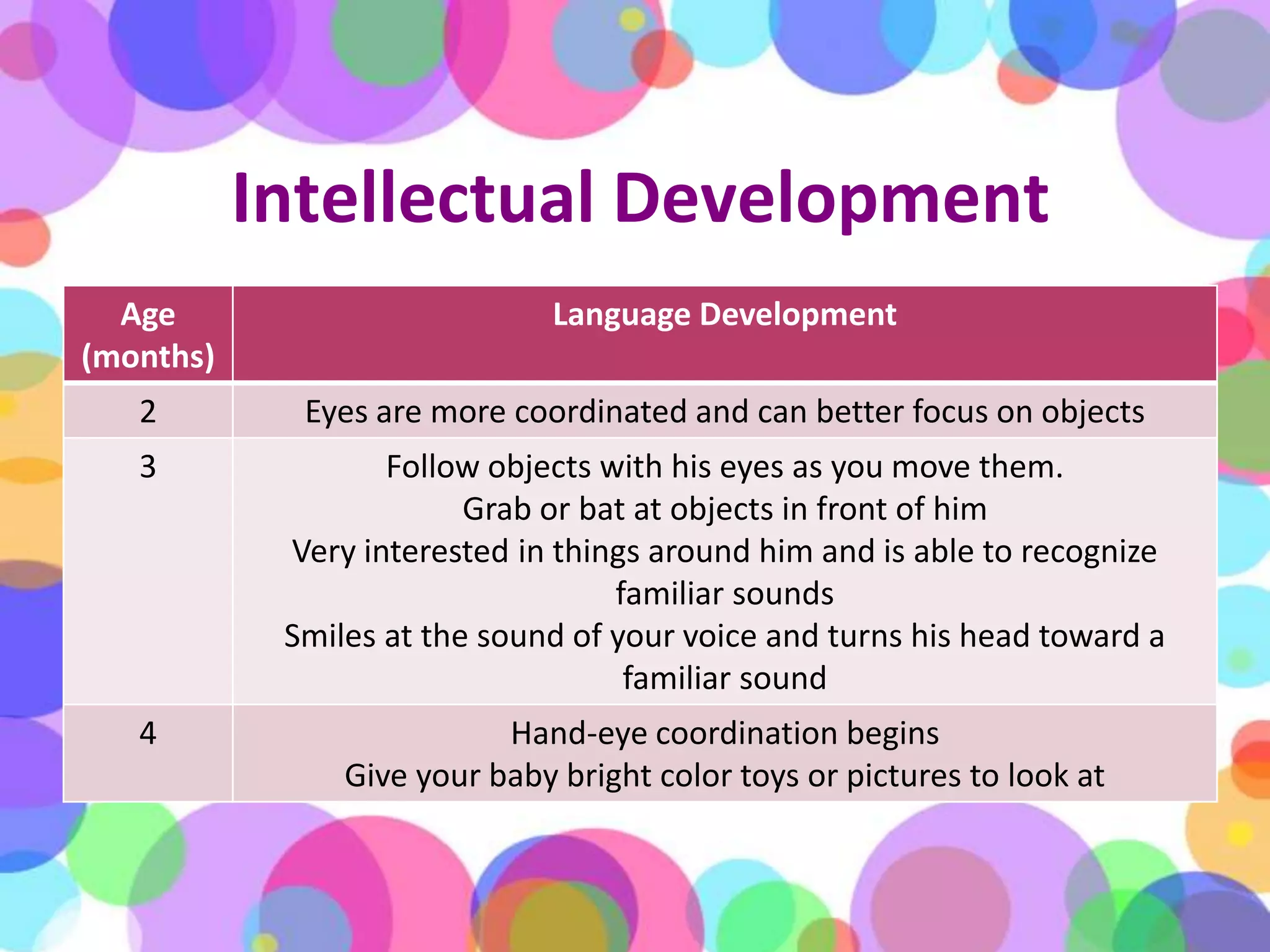
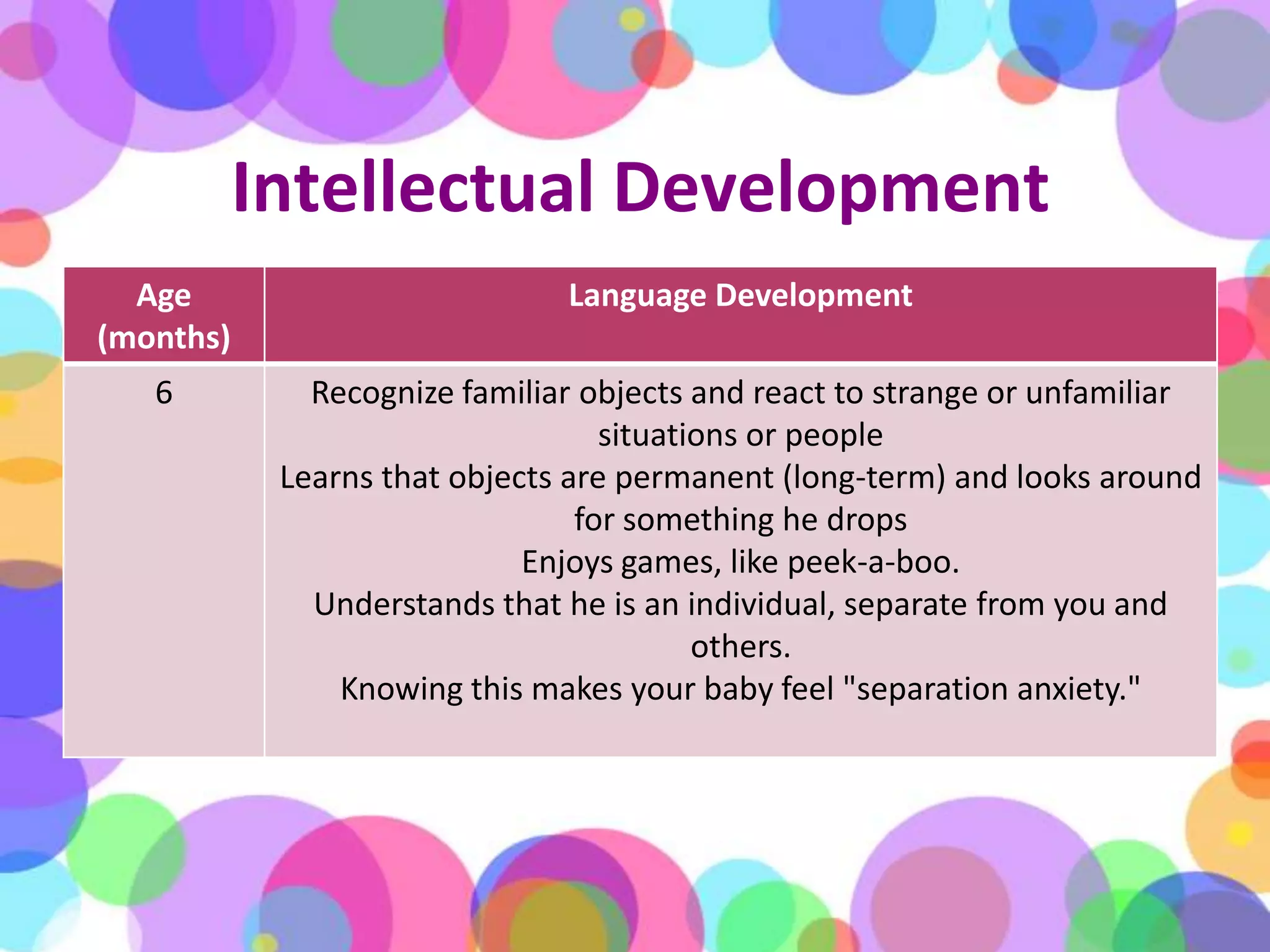
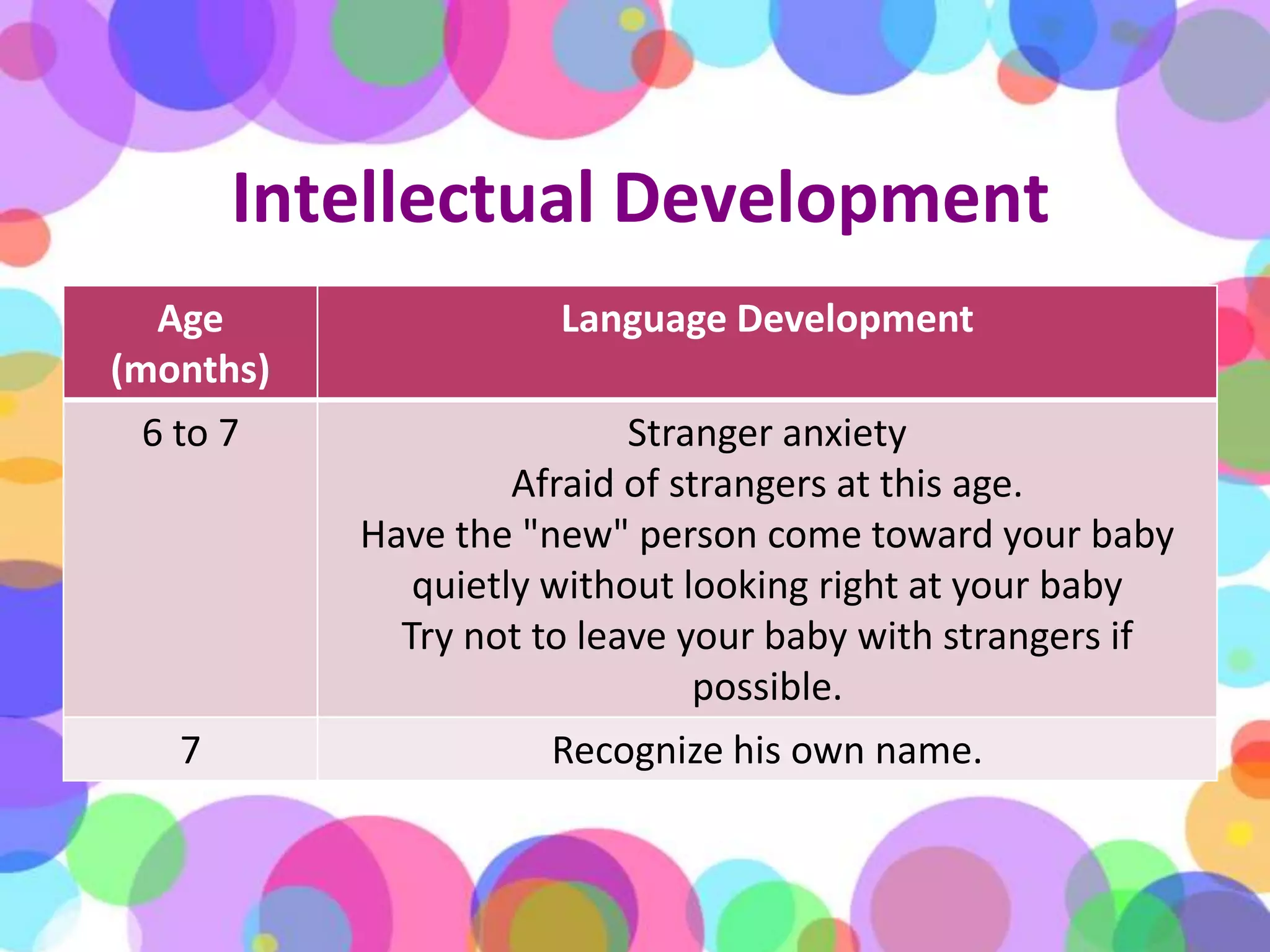
Intellectual DevelopmentYour baby's brain grows and develops faster during this 1st year than at any other time. Give your baby different things to look at, listen to, and feel. Make eye contact when your are talking to your baby. Limit how much time you put your infant in front of the TV.
Intellectual DevelopmentPlaying with and reading to your baby is a much better way to help him learn than staring at a TV. Try playing with your baby by showing him a toy, hiding it, and then helping him find it. Or, show him how a toy works.Your baby should be able to do the following things by the end of his 1st year.
Intellectual Development
Personality and Emotional Development
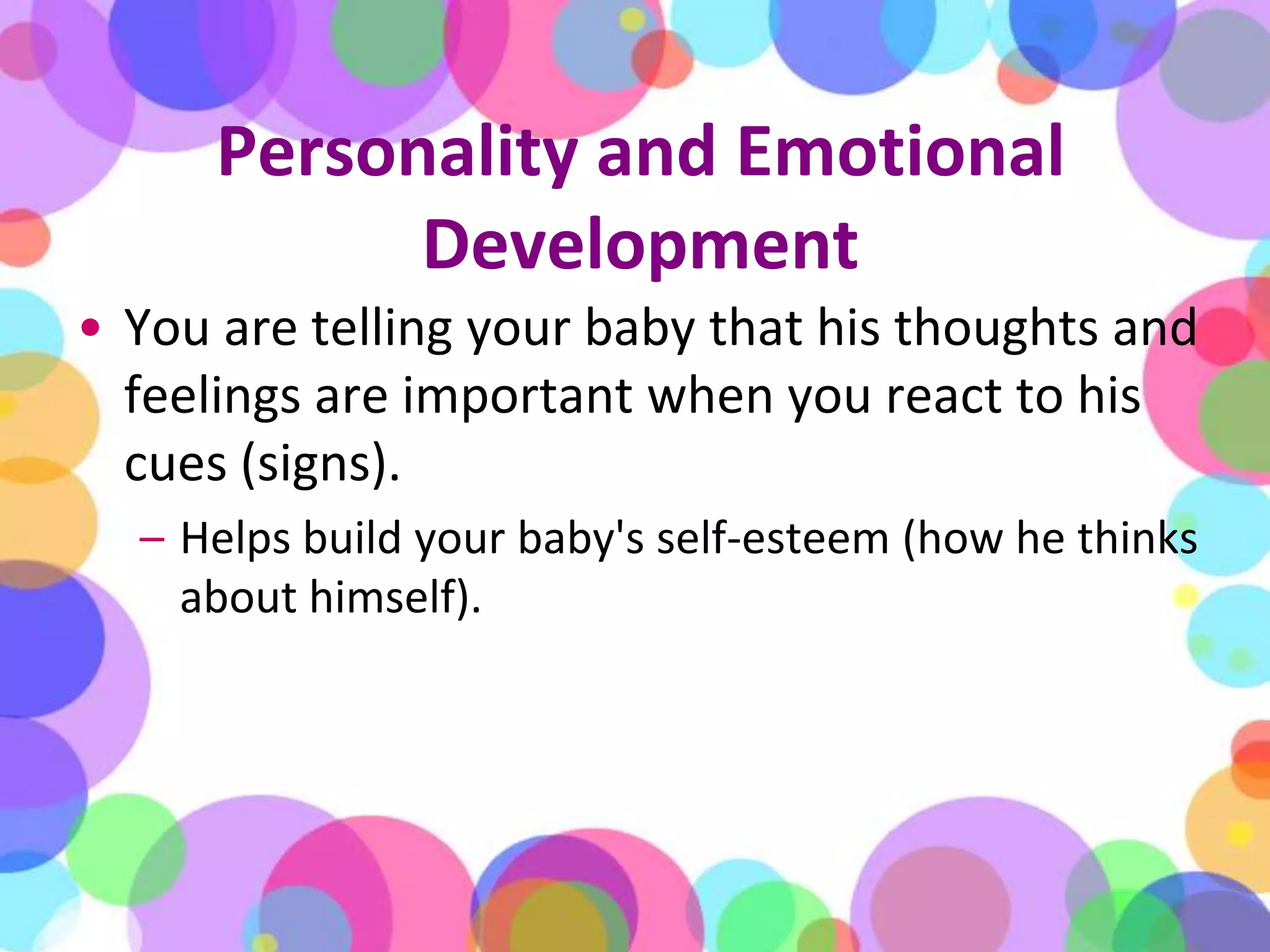
Personality and Emotional DevelopmentYou are telling your baby that his thoughts and feelings are important when you react to his cues (signs). Helps build your baby's self-esteem (how he thinks about himself).
Personality and Emotional DevelopmentDo not worry about spoiling your baby by giving him too much attention. Give your baby a feeling of safety and trust when you quickly and consistently comfort your baby when "demanded.“
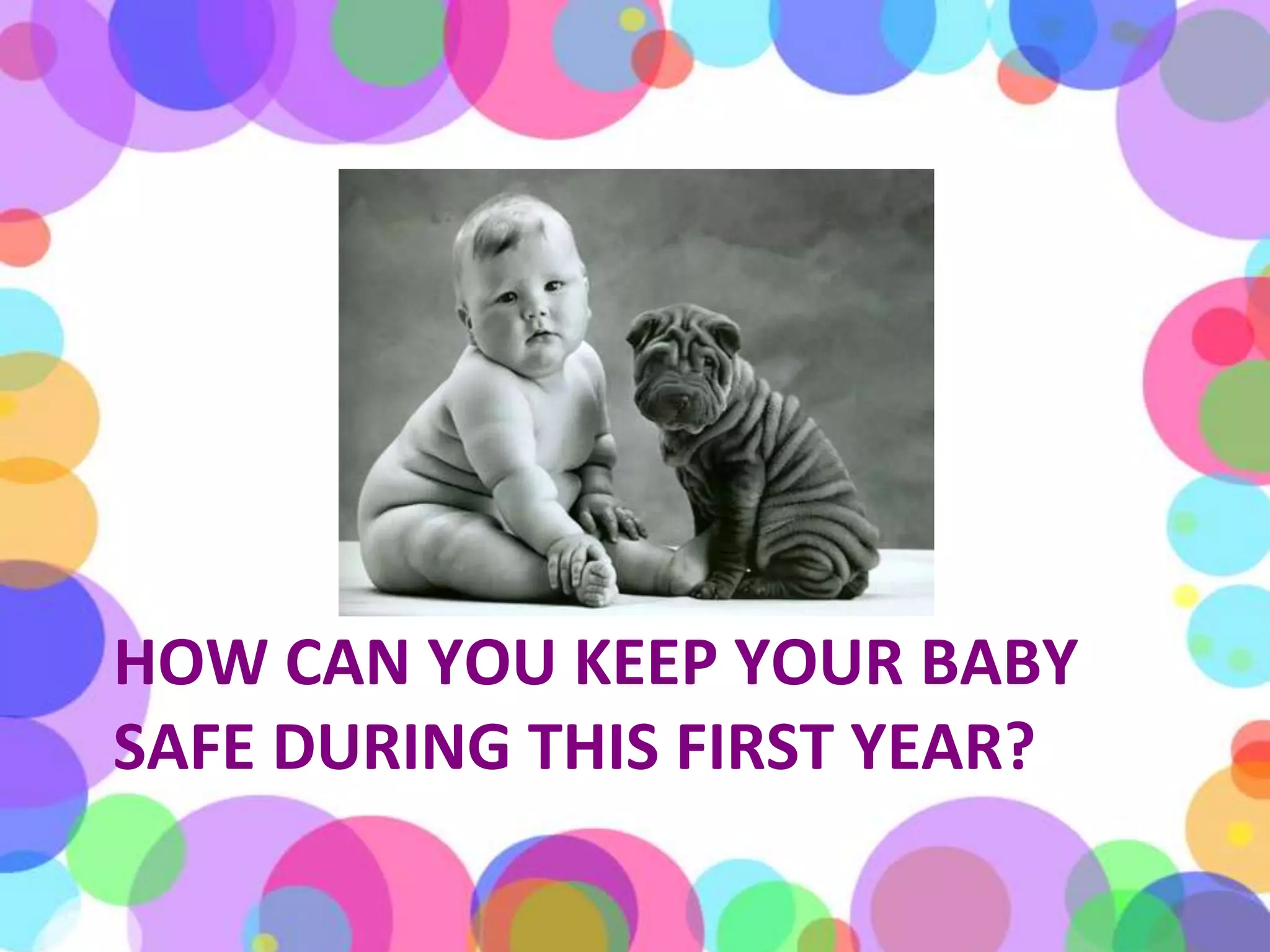
How can you keep your baby safe during this first year?
Safety FirstBe sure to make and keep appointments with your child's caregivers for routine medical checkups and vaccinations.Put your baby on his back for sleeping.Keep all medicines, cleaning products and other household chemicals locked and out of reach.
Safety FirstKeep small objects that may cause choking away from your child. This includes food, such as hot-dogs, whole grapes, whole raw carrots, raw celery, peanuts, popcorn, chips or candy. Cut all foods into small size bites.
Safety FirstKeep matches, cigarette lighters, and guns locked and out of reach.Never leave your child home alone. Never leave your baby alone in the car. The temperature inside the car can change a lot. Neverleave your toddler alone near water.
Safety FirstNever leave your baby alone up high like on a changing table, the couch, a chair, or the bed.Always keep a hand on your baby and never walk away when your baby is on a high place.Do not use walkers. They are dangerous and have caused serious injuries and even death when they fall down stairs.
Safety FirstUse approved car seats correctly. Before you choose a child safety seat for your child, check the age and weight limits for the seat.
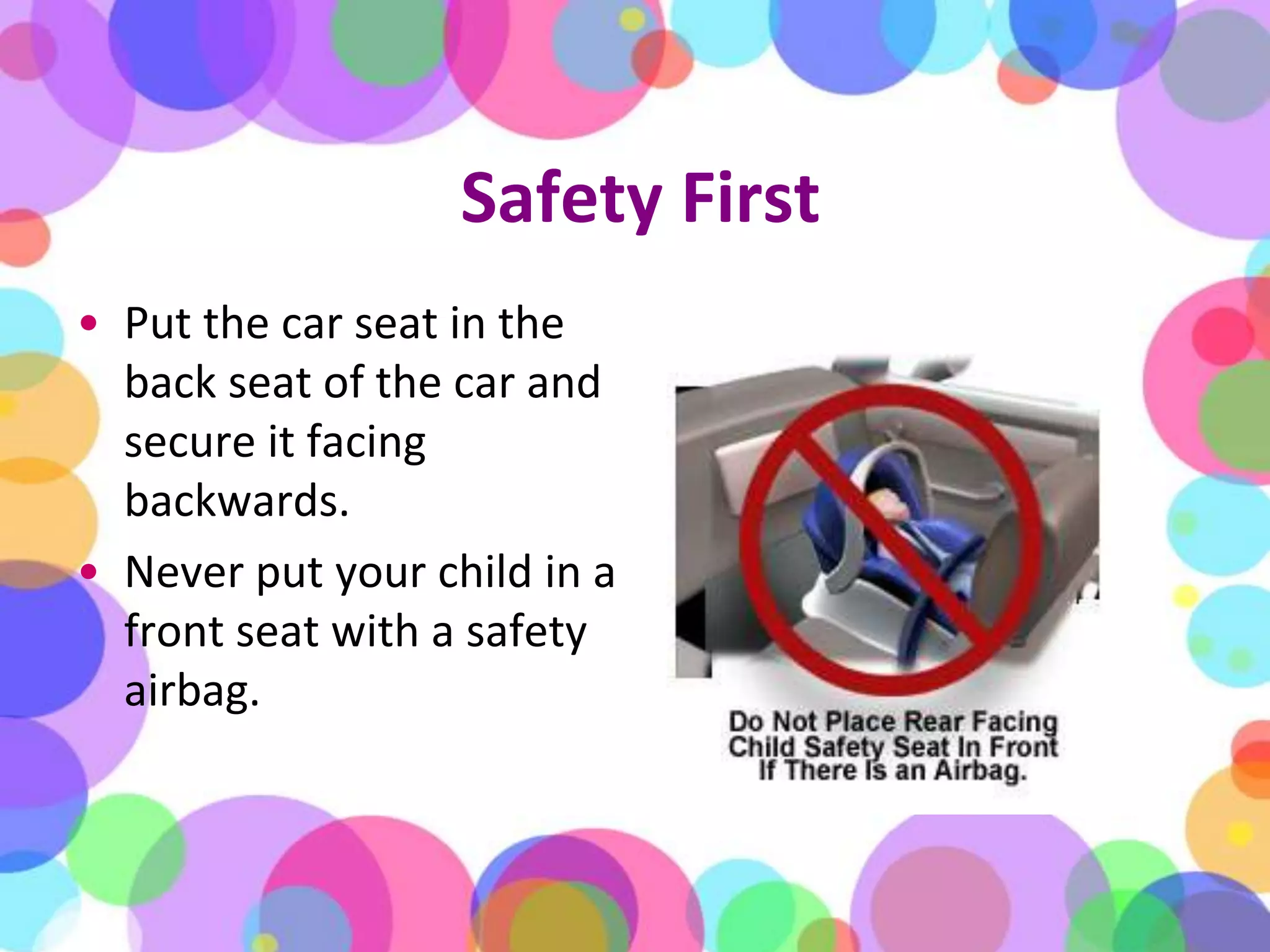
Safety FirstPut the car seat in the back seat of the car and secure it facing backwards. Never put your child in a front seat with a safety airbag.
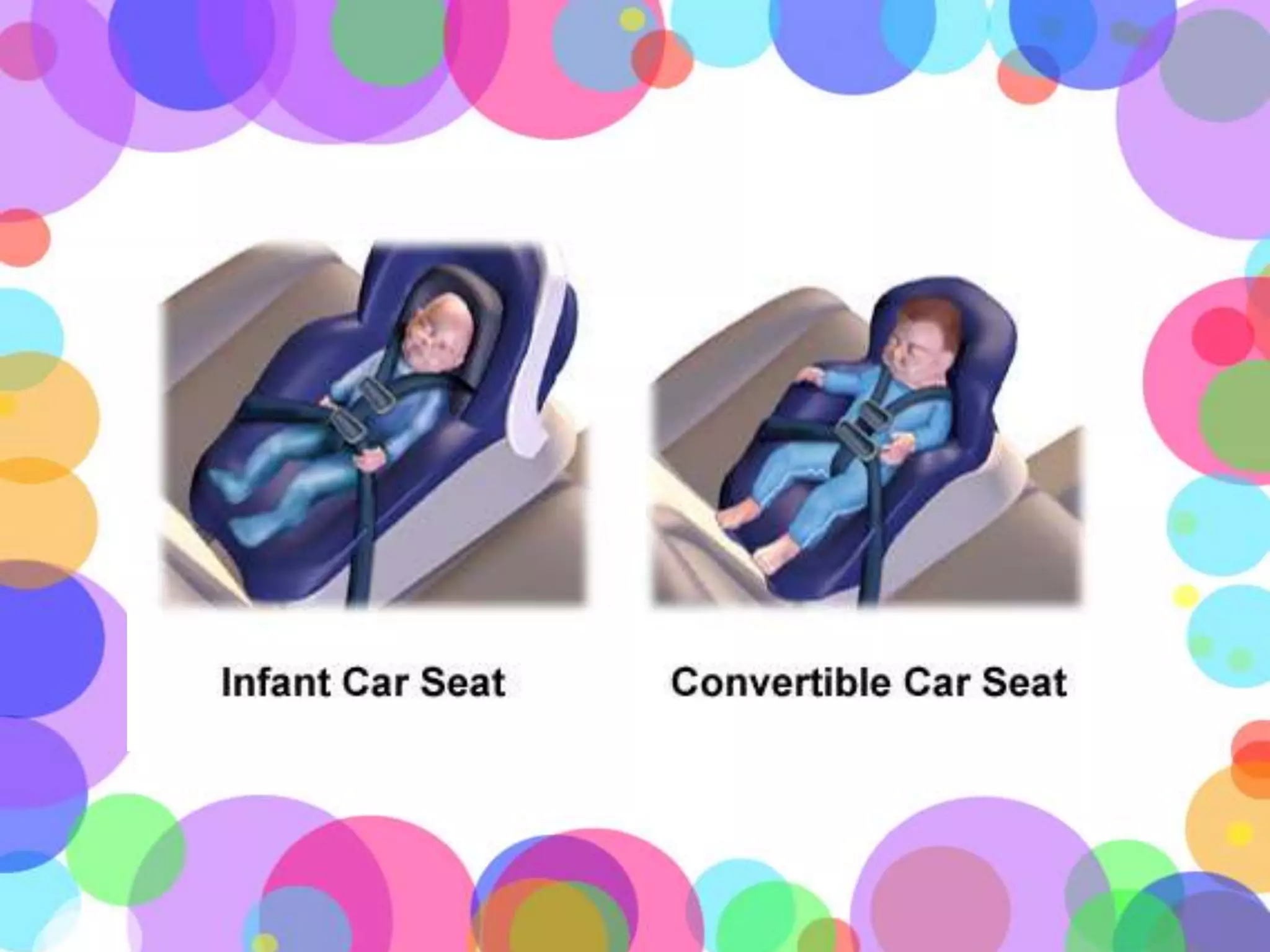
Rear-Facing Infant SeatUse this child safety seat from birth up to 20 to 22 pounds. Baby must be rear-facing until 1 year old AND at least 20 pounds. Some seats of this type can hold babies up to 30 or 35 pounds.
Convertible (Rear-Facing and Forward-Facing)Baby must be rear-facing from birth up to at least 1 year old. Use this seat until your baby weighs 20 to 35 pounds. Safest to keep your baby rear-facing as long as possible.
Safety First: Prevent ChokingDo not attach pacifiers or other objects to the crib or body with a string or cord. Keep small objects away from your baby. This includes toys or stuff animals that have small breakaway parts. Baby's can suffocate if they play with plastic bags. Never leave plastic bags or wrappings where your baby can reach them.
Safety FirstAlways keep your baby in a smoke-free area. Do not allow people to smoke around your baby.
Safety First: Prevent BurnsDo not hold your baby when smoking, drink hot liquids or when cooking. Do not heat formula or breast milk in the microwave. Your baby skin is also very sensitive to the sun.Keep your baby out of direct sunlight to prevent sunburn.
Safety First: Prevent BurnsCheck the water temperature before putting your child in the tub. Have your water heater set to less than 120° F to lessen the chance of an accidental burning. Never leave your baby alone in the water.
Safety FirstDo not leave your baby to answer the phone or doorbell. Either let it ring or wrap your baby in a towel and take your baby with you.
Safety FirstKeep anyone with a cough, cold, or infectious disease (spreadable illness) away from your newborn.
Safety FirstCall caregivers if your baby seems sick. Fever, refusing to eat, vomiting (throwing up), or diarrhea (runny, watery BMs) are good reasons to call. Also call if your baby is more fussy or quieter than usual or looks jaundiced (yellow skin and eyes).
Safety FirstAnd, call your baby's caregiver if you are worried or have questions about your baby's growth or development.
How do infants react to being sick or in the hospital?
Infants React to Being Sick or in the HospitalSeparation and stranger anxiety are very strong by the time your baby is 6 months. Your baby cannot describe his pain, like where it is and how bad it hurts
Infants React to Being Sick or in the HospitalBreathing and heartbeat are very fast.Eating poorly or regurgitation (food keeps coming up and vomiting).Does not look at you or he keeps looking away and doesn't want to be touched.Fussier than normal or listlessness (not moving much at all).Hiccoughs, sneezing, and yawning a lot.Shaking.Skin changes from his normal color to red, pale, gray or blue.
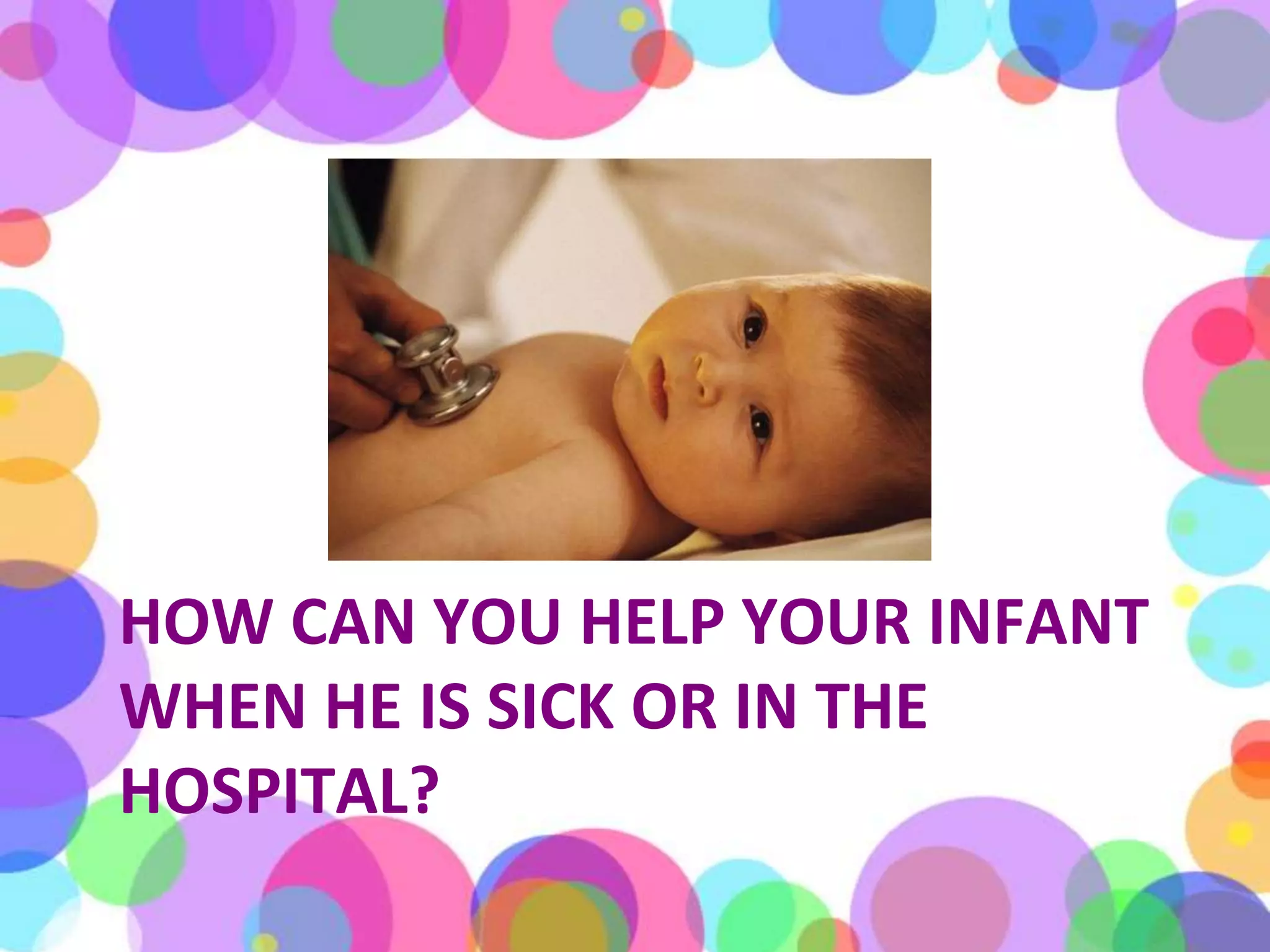
How can you help your infant when he is sick or in the hospital?
Help your infant when he is sick or in the hospitalBe involved in caring for baby each day, like helping with feedings, baths, dressing, and diapering. Try to keep your baby's schedule as much like it is at home as possible.Ask for the same caregiver to lessen the number of people caring for your baby. Soon your baby will recognize his caregivers and won't be so afraid.
Help your infant when he is sick or in the hospitalAlways try to be present when your baby is getting medical care. Hold your baby in your lap during procedures if at all possible. This helps calm your baby and make him feel safe. Comfort your baby and provide support by stroking (touch) your baby and talking in a soothing way.
Help your infant when he is sick or in the hospitalMake sure your baby has things that remind him of you and make him feel safe, like his blanket. Leave a picture of you or a recording of your voice to be played if you can't be with him.Praise your baby as often as possible.
Referenceshttp://www.drugs.com/cg/normal-growth-and-development-of-infants.html

Growth And Development Of Infants

  • 1.
  • 2.
    Physical Growth &DevelopmentBaby grows more while he is an infant than at any other time. Caregivers keep a record of how your baby is growing on a "growth chart" during your baby's regular check-ups.
  • 3.
  • 4.
  • 5.
  • 6.
    Physical Growth &DevelopmentYou will begin to see a pattern (schedule) of having BMs and urinating. Not yet ready for potty training.
  • 7.
    Movement - GrossMotor(Body Control and Skills)
  • 8.
  • 9.
  • 10.
    Movement - FineMotor (Hand and Finger Skills)
  • 11.
    Movement - FineMotorFine motor movements are when your baby can control his fingers with purpose.
  • 12.
  • 13.
  • 14.
  • 15.
    Daily Living ActivitiesSetup a routine (regular schedule) of sleeping and eating. A routine is very important to make sure you and your baby get enough rest and sleep.
  • 16.
  • 17.
    Daily Living ActivitiesHabitsand rituals, like reading a story or bathing before bed, are important. These rituals help your baby feel safe and let him know what should happen. Having rituals may help your baby if he has a hard time going to sleep.
  • 18.
  • 19.
  • 20.
    Language DevelopmentLearns totalk by copying the words and sounds you make. Talk, read, and sing to your baby using a soft, gentle voice. Use different tones of voice also. Learned some basic language skills by the end of his 1st year. Speak few simple words.
  • 21.
  • 22.
  • 23.
    Intellectual DevelopmentYour baby'sbrain grows and develops faster during this 1st year than at any other time. Give your baby different things to look at, listen to, and feel. Make eye contact when your are talking to your baby. Limit how much time you put your infant in front of the TV.
  • 24.
    Intellectual DevelopmentPlaying withand reading to your baby is a much better way to help him learn than staring at a TV. Try playing with your baby by showing him a toy, hiding it, and then helping him find it. Or, show him how a toy works.Your baby should be able to do the following things by the end of his 1st year.
  • 25.
  • 26.
  • 27.
  • 28.
  • 29.
    Personality and EmotionalDevelopmentYou are telling your baby that his thoughts and feelings are important when you react to his cues (signs). Helps build your baby's self-esteem (how he thinks about himself).
  • 30.
    Personality and EmotionalDevelopmentDo not worry about spoiling your baby by giving him too much attention. Give your baby a feeling of safety and trust when you quickly and consistently comfort your baby when "demanded.“
  • 31.
    How can youkeep your baby safe during this first year?
  • 32.
    Safety FirstBe sureto make and keep appointments with your child's caregivers for routine medical checkups and vaccinations.Put your baby on his back for sleeping.Keep all medicines, cleaning products and other household chemicals locked and out of reach.
  • 33.
    Safety FirstKeep smallobjects that may cause choking away from your child. This includes food, such as hot-dogs, whole grapes, whole raw carrots, raw celery, peanuts, popcorn, chips or candy. Cut all foods into small size bites.
  • 34.
    Safety FirstKeep matches,cigarette lighters, and guns locked and out of reach.Never leave your child home alone. Never leave your baby alone in the car. The temperature inside the car can change a lot. Neverleave your toddler alone near water.
  • 35.
    Safety FirstNever leaveyour baby alone up high like on a changing table, the couch, a chair, or the bed.Always keep a hand on your baby and never walk away when your baby is on a high place.Do not use walkers. They are dangerous and have caused serious injuries and even death when they fall down stairs.
  • 36.
    Safety FirstUse approvedcar seats correctly. Before you choose a child safety seat for your child, check the age and weight limits for the seat.
  • 37.
    Safety FirstPut thecar seat in the back seat of the car and secure it facing backwards. Never put your child in a front seat with a safety airbag.
  • 38.
    Rear-Facing Infant SeatUsethis child safety seat from birth up to 20 to 22 pounds. Baby must be rear-facing until 1 year old AND at least 20 pounds. Some seats of this type can hold babies up to 30 or 35 pounds.
  • 39.
    Convertible (Rear-Facing andForward-Facing)Baby must be rear-facing from birth up to at least 1 year old. Use this seat until your baby weighs 20 to 35 pounds. Safest to keep your baby rear-facing as long as possible.
  • 41.
    Safety First: PreventChokingDo not attach pacifiers or other objects to the crib or body with a string or cord. Keep small objects away from your baby. This includes toys or stuff animals that have small breakaway parts. Baby's can suffocate if they play with plastic bags. Never leave plastic bags or wrappings where your baby can reach them.
  • 42.
    Safety FirstAlways keepyour baby in a smoke-free area. Do not allow people to smoke around your baby.
  • 43.
    Safety First: PreventBurnsDo not hold your baby when smoking, drink hot liquids or when cooking. Do not heat formula or breast milk in the microwave. Your baby skin is also very sensitive to the sun.Keep your baby out of direct sunlight to prevent sunburn.
  • 44.
    Safety First: PreventBurnsCheck the water temperature before putting your child in the tub. Have your water heater set to less than 120° F to lessen the chance of an accidental burning. Never leave your baby alone in the water.
  • 45.
    Safety FirstDo notleave your baby to answer the phone or doorbell. Either let it ring or wrap your baby in a towel and take your baby with you.
  • 46.
    Safety FirstKeep anyonewith a cough, cold, or infectious disease (spreadable illness) away from your newborn.
  • 47.
    Safety FirstCall caregiversif your baby seems sick. Fever, refusing to eat, vomiting (throwing up), or diarrhea (runny, watery BMs) are good reasons to call. Also call if your baby is more fussy or quieter than usual or looks jaundiced (yellow skin and eyes).
  • 48.
    Safety FirstAnd, callyour baby's caregiver if you are worried or have questions about your baby's growth or development.
  • 49.
    How do infantsreact to being sick or in the hospital?
  • 50.
    Infants React toBeing Sick or in the HospitalSeparation and stranger anxiety are very strong by the time your baby is 6 months. Your baby cannot describe his pain, like where it is and how bad it hurts
  • 51.
    Infants React toBeing Sick or in the HospitalBreathing and heartbeat are very fast.Eating poorly or regurgitation (food keeps coming up and vomiting).Does not look at you or he keeps looking away and doesn't want to be touched.Fussier than normal or listlessness (not moving much at all).Hiccoughs, sneezing, and yawning a lot.Shaking.Skin changes from his normal color to red, pale, gray or blue.
  • 52.
    How can youhelp your infant when he is sick or in the hospital?
  • 53.
    Help your infantwhen he is sick or in the hospitalBe involved in caring for baby each day, like helping with feedings, baths, dressing, and diapering. Try to keep your baby's schedule as much like it is at home as possible.Ask for the same caregiver to lessen the number of people caring for your baby. Soon your baby will recognize his caregivers and won't be so afraid.
  • 54.
    Help your infantwhen he is sick or in the hospitalAlways try to be present when your baby is getting medical care. Hold your baby in your lap during procedures if at all possible. This helps calm your baby and make him feel safe. Comfort your baby and provide support by stroking (touch) your baby and talking in a soothing way.
  • 55.
    Help your infantwhen he is sick or in the hospitalMake sure your baby has things that remind him of you and make him feel safe, like his blanket. Leave a picture of you or a recording of your voice to be played if you can't be with him.Praise your baby as often as possible.
  • 56.