
Changing the Channel:
A better way to do Trade Promotions
Presented by : Group 2
Akshat| Piyush| Rohit| Susmita
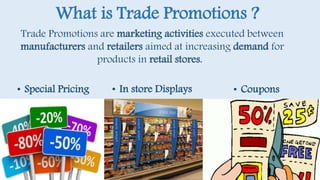
What is Trade Promotions ?
Trade Promotions are marketing activities executed between
manufacturers and retailers aimed at increasing demand for
products in retail stores.
• Special Pricing • In store Displays • Coupons
• Trade
promotions are
viewed with
great suspicion.
• Each party
believes that the
other party in
trying to get an
upper hand.
• Trade promotions
should be based
on a transparent
system that
generates
mutual trust.
• There should be
Win-Win for
both retailers &
manufacturers.
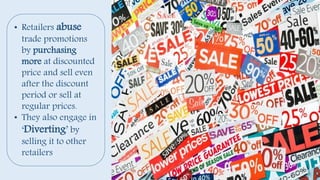
• Retailers abuse
trade promotions
by purchasing
more at discounted
price and sell even
after the discount
period or sell at
regular prices.
• They also engage in
‘Diverting’ by
selling it to other
retailers
• To counter
retailers, tactics,
manufacturers
use ‘Pay for
Performance’
trade promotion
– to reward on
the basis of how
much they sell
rather than how
much they buy.
• Pay for Performance
benefits all
• Manufacturers –
Boost Bottom line
• Retailers – Increased
concentration on
marketing than
buying
• Consumers – Lower
prices of Trusted
brands
Redesigning
the
Trade Deal
What are
the
options?
• Scan Back
• Identical Deals
• The Mimic Scan Back
• Scan-Back variations
Scan Back, a.k.a Pay-for-
Performance
• Eliminates Forward-
buying
• Eliminates diverting
• Limit the duration of
promotion
• Helps predict real
consumer demand
• Retailers are reluctant
due to the low pay-off
Mimic- scan back
• Average cost of promoted
and non-promoted goods
are identical to off-
invoice trade deal
• Retailer makes profits
similar to off-invoice
deal
• Avoids forward buying and
diverting
• 3 main variables: the
regular wholesale price,
length of deal and depth
of the discount
Slide-Back Variations
• Retailer revenue and
profit is as high as off-
invoice deal
• Manufacturer numbers
improve as well
• The manufacturer can
tweak any of the 3
variables
• the regular wholesale price
• length of deal and
• depth of the discount
Does Scan-Back really work?
• Statistical Analysis
demonstrates efficacy of
scan back
• Greater pass on of deals to
customers (75% v/s 20-30% in
off-invoice deals)
• Higher sales generated in an
experiment with beverage
company
• Simplified judgement of pay-
for0performance
• Eliminates purchase
distortions inherent in off-
invoice deals
Implementation Challenges
• Higher retailer
allegiance to off-invoice
method
• Distrust between
retailers and
manufacturers
• Prima facie higher
incentive to retailer in
this setup
Can an auditor help?
• High instances of
retailer manipulation
• Scam Down
• Auditor can verify sales
with stocks to bring down
‘scam down’
• Well established auditors
can pay retailers for
discount and collect from
manufacturer later
• Over see implementation
of scan backs
Manufacturer Problems
•Tied up in Admin tasks
•Complicated negotiations
•Prisoner’s dilemma
•Uncertainty over pass
through rates
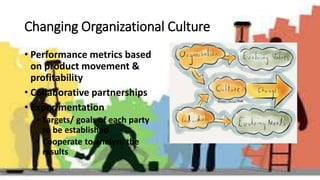
Changing Organizational Culture
• Performance metrics based
on product movement &
profitability
• Collaborative partnerships
• Experimentation
• Targets/ goals of each party
to be established
• Cooperate to analyze the
results
Seeking Peace & Profits
• Changes In culture to be
supported by tangible
marketing initiatives
• Software solutions are
important for merchandising
response analysis 
attitudinal & organizational
changes are even more
important
• Manufacturer & retailer
should develop close relations
to better understand the roles
in channel
Results achieved
• Pay for performance
• Assurance that dollars
reach customers
• Cut costs for retailers
• Experiment, Collect Data,
Cooperate
Group2 hbr article 2 submission1

Group2 hbr article 2 submission1

  • 1.
    Changing the Channel: Abetter way to do Trade Promotions Presented by : Group 2 Akshat| Piyush| Rohit| Susmita
  • 2.
    What is TradePromotions ? Trade Promotions are marketing activities executed between manufacturers and retailers aimed at increasing demand for products in retail stores. • Special Pricing • In store Displays • Coupons
  • 3.
    • Trade promotions are viewedwith great suspicion. • Each party believes that the other party in trying to get an upper hand.
  • 4.
    • Trade promotions shouldbe based on a transparent system that generates mutual trust. • There should be Win-Win for both retailers & manufacturers.
  • 5.
    • Retailers abuse tradepromotions by purchasing more at discounted price and sell even after the discount period or sell at regular prices. • They also engage in ‘Diverting’ by selling it to other retailers
  • 6.
    • To counter retailers,tactics, manufacturers use ‘Pay for Performance’ trade promotion – to reward on the basis of how much they sell rather than how much they buy.
  • 7.
    • Pay forPerformance benefits all • Manufacturers – Boost Bottom line • Retailers – Increased concentration on marketing than buying • Consumers – Lower prices of Trusted brands
  • 8.
  • 9.
  • 10.
    • Scan Back •Identical Deals • The Mimic Scan Back • Scan-Back variations
  • 11.
    Scan Back, a.k.aPay-for- Performance • Eliminates Forward- buying • Eliminates diverting • Limit the duration of promotion • Helps predict real consumer demand • Retailers are reluctant due to the low pay-off
  • 12.
    Mimic- scan back •Average cost of promoted and non-promoted goods are identical to off- invoice trade deal • Retailer makes profits similar to off-invoice deal • Avoids forward buying and diverting • 3 main variables: the regular wholesale price, length of deal and depth of the discount
  • 13.
    Slide-Back Variations • Retailerrevenue and profit is as high as off- invoice deal • Manufacturer numbers improve as well • The manufacturer can tweak any of the 3 variables • the regular wholesale price • length of deal and • depth of the discount
  • 14.
    Does Scan-Back reallywork? • Statistical Analysis demonstrates efficacy of scan back • Greater pass on of deals to customers (75% v/s 20-30% in off-invoice deals) • Higher sales generated in an experiment with beverage company • Simplified judgement of pay- for0performance • Eliminates purchase distortions inherent in off- invoice deals
  • 15.
    Implementation Challenges • Higherretailer allegiance to off-invoice method • Distrust between retailers and manufacturers • Prima facie higher incentive to retailer in this setup
  • 16.
    Can an auditorhelp? • High instances of retailer manipulation • Scam Down • Auditor can verify sales with stocks to bring down ‘scam down’ • Well established auditors can pay retailers for discount and collect from manufacturer later • Over see implementation of scan backs
  • 17.
    Manufacturer Problems •Tied upin Admin tasks •Complicated negotiations •Prisoner’s dilemma •Uncertainty over pass through rates
  • 18.
    Changing Organizational Culture •Performance metrics based on product movement & profitability • Collaborative partnerships • Experimentation • Targets/ goals of each party to be established • Cooperate to analyze the results
  • 19.
    Seeking Peace &Profits • Changes In culture to be supported by tangible marketing initiatives • Software solutions are important for merchandising response analysis  attitudinal & organizational changes are even more important • Manufacturer & retailer should develop close relations to better understand the roles in channel
  • 20.
    Results achieved • Payfor performance • Assurance that dollars reach customers • Cut costs for retailers • Experiment, Collect Data, Cooperate