CROSS-LINGUISTIC
INFLUENCE, L1
and PAST INTERFERENCE
SECOND LANGUAGE
ACQUISITION
Content
Table of
• Introduction to Cross-Linguistic Influence
• Definition of L1 influences
• Explanation of Past L1 Interference
• Types of Past L1 Interference
• Examples of L1 interference in language learning
• Impact of L1 interference on second language
acquisition
• Strategies to overcome L1 interference
• Role of Teachers in Addressing L1 Interference
• Research findings on L1 influences in language learning
I n t r o d u c t i o n t o C r o ss -
L i n g u i s t i c I n f l u e n c e
Cross-linguistic influence refers to the impact of one language
on the learning and use of another language.
This phenomenon occurs when the knowledge of one's native
language influences the acquisition and production of a second
language.
It can manifest in various ways, such as grammar, vocabulary,
and pronunciation.
Definition of L1 influences
•L1 influences: Refers to the impact of a person's
first language on their acquisition and use of a
second language.
•Transfer effects: Occur when features of the first
language are transferred to the second language.
•Cognitive processes: L1 influences are rooted in
the cognitive processes involved in bilingual
language processing.
Past L1 Interference
Past L1 interference refers to the
influence of a learner's first language on
the acquisition of a second language. It
encompasses transfer effects where the
structures, sounds, or meanings of the
native language affect the learning of the
target language.
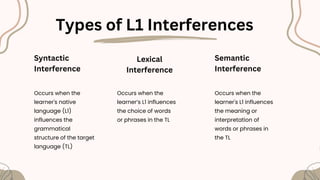
Occurs when the
learner's native
language (L1)
influences the
grammatical
structure of the target
language (TL)
Syntactic
Interference
Lexical
Interference
Semantic
Interference
Occurs when the
learner’s L1 influences
the choice of words
or phrases in the TL
Occurs when the
learner's L1 influences
the meaning or
interpretation of
words or phrases in
the TL
Types of L1 Interferences
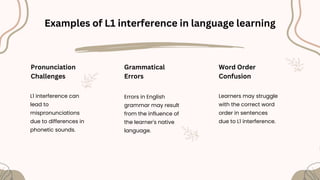
Examples of L1 interference in language learning
Pronunciation
Challenges
L1 interference can
lead to
mispronunciations
due to differences in
phonetic sounds.
Grammatical
Errors
Errors in English
grammar may result
from the influence of
the learner's native
language.
Word Order
Confusion
Learners may struggle
with the correct word
order in sentences
due to L1 interference.
Impact of L1 interference on second
language acquisition
L1 interference can lead to grammatical
errors and mispronunciations in the target
language.
Learners may use L1 vocabulary
inappropriately, affecting their fluency and
accuracy in the second language.
L1 interference can create cultural
misunderstandings and hinder the
acquisition of idiomatic expressions in the
second language.
It may also impact the pragmatic use of
language, affecting social interactions in
the target language community.
Challenges in Language Transfer Cultural and Linguistic Barriers
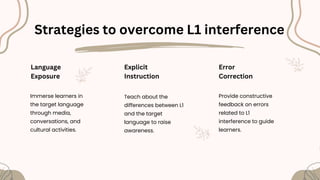
Strategies to overcome L1 interference
Language
Exposure
Immerse learners in
the target language
through media,
conversations, and
cultural activities.
Explicit
Instruction
Teach about the
differences between L1
and the target
language to raise
awareness.
Error
Correction
Provide constructive
feedback on errors
related to L1
interference to guide
learners.
Teachers must raise students' awareness of
language transfer from their first language to
the target language.
Language Awareness Cultural Sensitivity
Role of Teachers in Addressing L1
Interference
Teachers should provide cultural context
to help students understand differences
between languages.
Explicitly teach language structures that may
cause interference based on students' L1.
Explicit Instruction Correction Strategies
Implement effective correction strategies
to address and minimize L1 influence in
language production.
Research findings on L1 influences
in language learning
Transfer of Language Features
Research indicates that learners often transfer grammar and
syntax from their L1 to their L2.
1
3
2
Lexical Influences
Studies have shown that vocabulary and word order from the L1
can influence the acquisition of the L2.
Phonological Impact
Evidence suggests that pronunciation and intonation patterns
are affected by L1 influences.
EXAMPLE :
1.Phonological Influence:
1.Indonesian lacks certain English phonemes, such as the "th" sound. Indonesian speakers might
substitute it with a similar phoneme or omit it altogether when speaking English. For instance,
they might say "tanks" instead of "thanks."
2.Additionally, the Indonesian language has a syllable-timed rhythm, while English has a stress-
timed rhythm, which can affect the naturalness of English speech for Indonesian learners.
2.Lexical Influence:
1.Indonesian speakers might directly translate Indonesian words into English. For example, they
might say "I am coming from office" instead of "I am coming from the office."
2.Loanwords from Indonesian, such as "angkot" (public minivan) or "warung" (small shop), might
be used by Indonesian learners when speaking English in an informal context.
3.Grammatical Influence:
1.Indonesian does not have verb conjugation for tense or number agreement, whereas English
does. Indonesian learners might struggle with using the correct verb forms in English
sentences, such as saying "I go to school yesterday" instead of "I went to school yesterday."
2.The absence of articles (a, an, the) in Indonesian might lead Indonesian speakers to omit them
or use them incorrectly in English sentences.
CLI research sheds light on how learners transfer their first language grammatical
structures to their second language during acquisition. By recognizing the potential
impact of CLI educators can develop strategies to mitigate negative influences and
enhance positive transfer in the language learning process. Understanding the CLI like
L1 and past interference is important for optimizing SLA outcomes and tailoring
effective teaching approaches to support learners in acquiring a new language
successfully.
Conclusion
GROUP 1 SLA - CROSSLINGUISTIC INFLUENCE (PAST INTERFERENCE).pptx

GROUP 1 SLA - CROSSLINGUISTIC INFLUENCE (PAST INTERFERENCE).pptx

  • 1.
    CROSS-LINGUISTIC INFLUENCE, L1 and PASTINTERFERENCE SECOND LANGUAGE ACQUISITION
  • 2.
    Content Table of • Introductionto Cross-Linguistic Influence • Definition of L1 influences • Explanation of Past L1 Interference • Types of Past L1 Interference • Examples of L1 interference in language learning • Impact of L1 interference on second language acquisition • Strategies to overcome L1 interference • Role of Teachers in Addressing L1 Interference • Research findings on L1 influences in language learning
  • 3.
    I n tr o d u c t i o n t o C r o ss - L i n g u i s t i c I n f l u e n c e Cross-linguistic influence refers to the impact of one language on the learning and use of another language. This phenomenon occurs when the knowledge of one's native language influences the acquisition and production of a second language. It can manifest in various ways, such as grammar, vocabulary, and pronunciation.
  • 4.
    Definition of L1influences •L1 influences: Refers to the impact of a person's first language on their acquisition and use of a second language. •Transfer effects: Occur when features of the first language are transferred to the second language. •Cognitive processes: L1 influences are rooted in the cognitive processes involved in bilingual language processing.
  • 5.
    Past L1 Interference PastL1 interference refers to the influence of a learner's first language on the acquisition of a second language. It encompasses transfer effects where the structures, sounds, or meanings of the native language affect the learning of the target language.
  • 6.
    Occurs when the learner'snative language (L1) influences the grammatical structure of the target language (TL) Syntactic Interference Lexical Interference Semantic Interference Occurs when the learner’s L1 influences the choice of words or phrases in the TL Occurs when the learner's L1 influences the meaning or interpretation of words or phrases in the TL Types of L1 Interferences
  • 7.
    Examples of L1interference in language learning Pronunciation Challenges L1 interference can lead to mispronunciations due to differences in phonetic sounds. Grammatical Errors Errors in English grammar may result from the influence of the learner's native language. Word Order Confusion Learners may struggle with the correct word order in sentences due to L1 interference.
  • 8.
    Impact of L1interference on second language acquisition L1 interference can lead to grammatical errors and mispronunciations in the target language. Learners may use L1 vocabulary inappropriately, affecting their fluency and accuracy in the second language. L1 interference can create cultural misunderstandings and hinder the acquisition of idiomatic expressions in the second language. It may also impact the pragmatic use of language, affecting social interactions in the target language community. Challenges in Language Transfer Cultural and Linguistic Barriers
  • 9.
    Strategies to overcomeL1 interference Language Exposure Immerse learners in the target language through media, conversations, and cultural activities. Explicit Instruction Teach about the differences between L1 and the target language to raise awareness. Error Correction Provide constructive feedback on errors related to L1 interference to guide learners.
  • 10.
    Teachers must raisestudents' awareness of language transfer from their first language to the target language. Language Awareness Cultural Sensitivity Role of Teachers in Addressing L1 Interference Teachers should provide cultural context to help students understand differences between languages. Explicitly teach language structures that may cause interference based on students' L1. Explicit Instruction Correction Strategies Implement effective correction strategies to address and minimize L1 influence in language production.
  • 11.
    Research findings onL1 influences in language learning Transfer of Language Features Research indicates that learners often transfer grammar and syntax from their L1 to their L2. 1 3 2 Lexical Influences Studies have shown that vocabulary and word order from the L1 can influence the acquisition of the L2. Phonological Impact Evidence suggests that pronunciation and intonation patterns are affected by L1 influences.
  • 12.
    EXAMPLE : 1.Phonological Influence: 1.Indonesianlacks certain English phonemes, such as the "th" sound. Indonesian speakers might substitute it with a similar phoneme or omit it altogether when speaking English. For instance, they might say "tanks" instead of "thanks." 2.Additionally, the Indonesian language has a syllable-timed rhythm, while English has a stress- timed rhythm, which can affect the naturalness of English speech for Indonesian learners. 2.Lexical Influence: 1.Indonesian speakers might directly translate Indonesian words into English. For example, they might say "I am coming from office" instead of "I am coming from the office." 2.Loanwords from Indonesian, such as "angkot" (public minivan) or "warung" (small shop), might be used by Indonesian learners when speaking English in an informal context. 3.Grammatical Influence: 1.Indonesian does not have verb conjugation for tense or number agreement, whereas English does. Indonesian learners might struggle with using the correct verb forms in English sentences, such as saying "I go to school yesterday" instead of "I went to school yesterday." 2.The absence of articles (a, an, the) in Indonesian might lead Indonesian speakers to omit them or use them incorrectly in English sentences.
  • 13.
    CLI research shedslight on how learners transfer their first language grammatical structures to their second language during acquisition. By recognizing the potential impact of CLI educators can develop strategies to mitigate negative influences and enhance positive transfer in the language learning process. Understanding the CLI like L1 and past interference is important for optimizing SLA outcomes and tailoring effective teaching approaches to support learners in acquiring a new language successfully. Conclusion