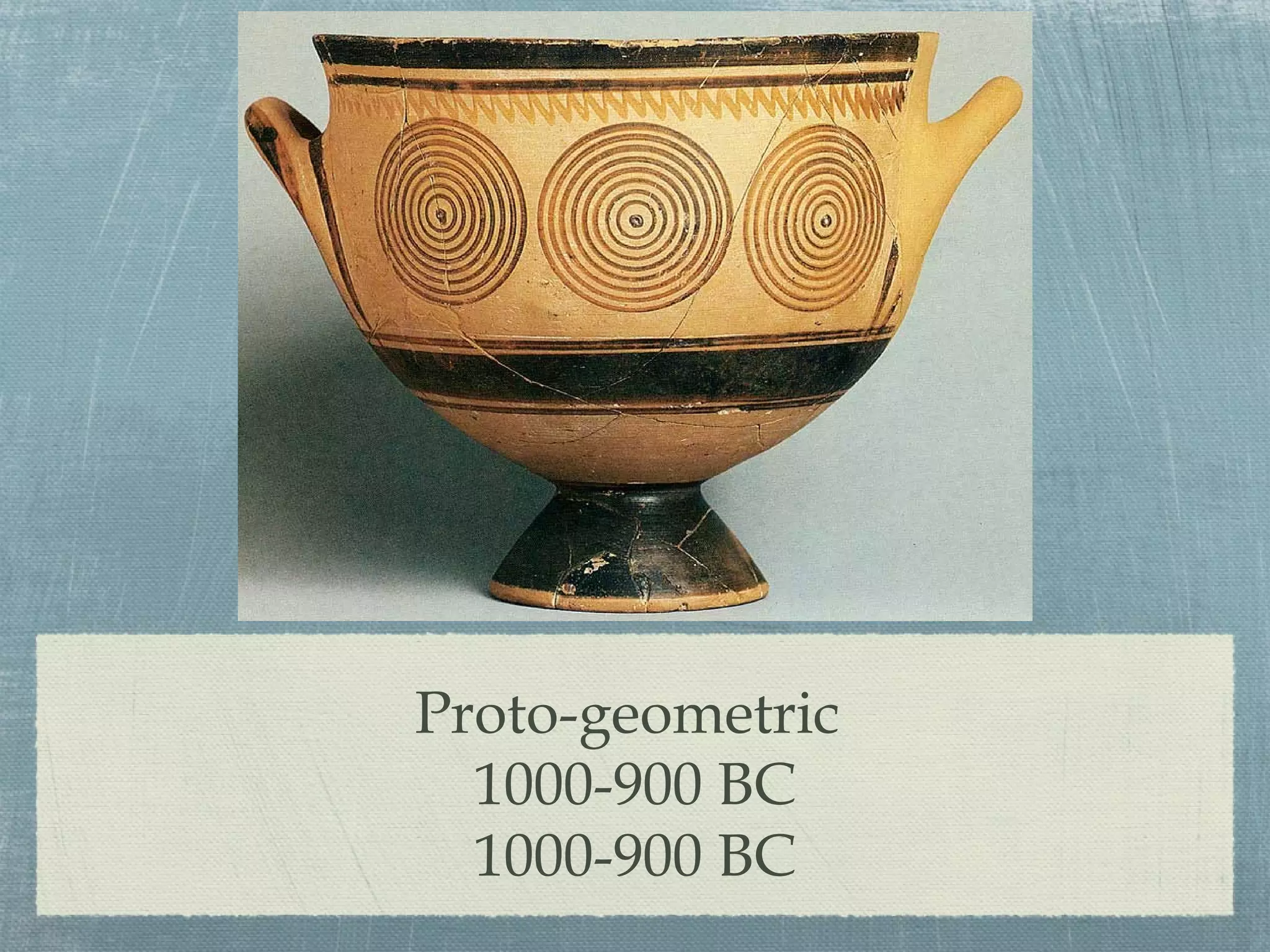
Proto-geometric
1000-900 BC
1000-900 BC
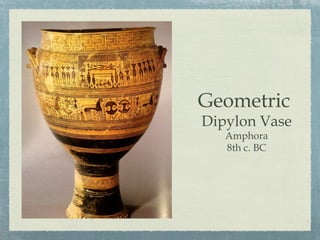
Geometric
Dipylon Vase
Amphora
8th c. BC
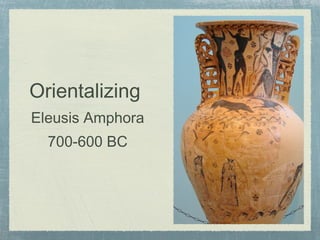
Orientalizing
Eleusis Amphora
700-600 BC
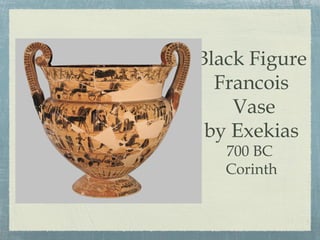
Black Figure
Francois
Vase
by Exekias
700 BC
Corinth
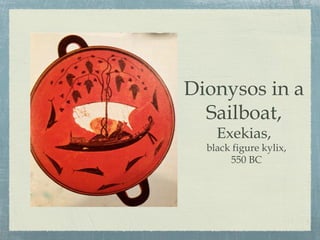
Dionysos in a
Sailboat,
Exekias,
black figure kylix,
550 BC
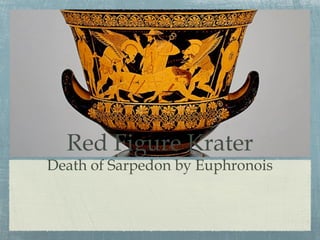
Red Figure Krater
Death of Sarpedon by Euphronois
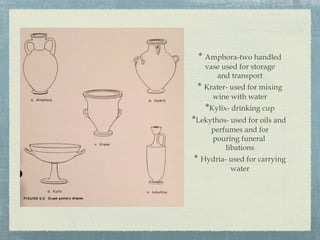
* Amphora-two handled
vase used for storage
and transport
* Krater- used for mixing
wine with water
*Kylix- drinking cup
*Lekythos- used for oils and
perfumes and for
pouring funeral
libations
* Hydria- used for carrying
water
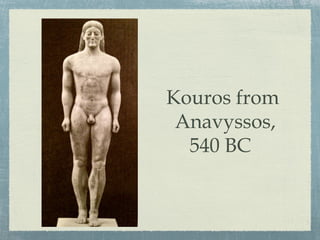
Kouros from
Anavyssos,
540 BC
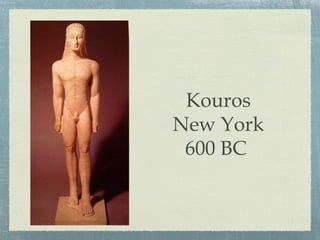
Kouros
New York
600 BC
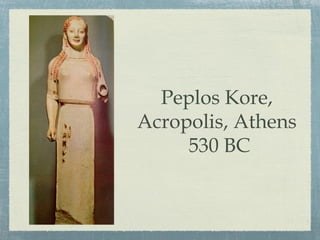
Peplos Kore,
Acropolis, Athens
530 BC
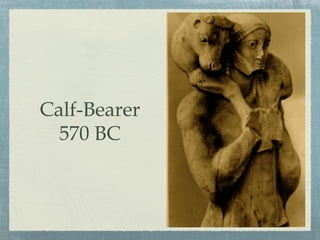
Calf-Bearer
570 BC
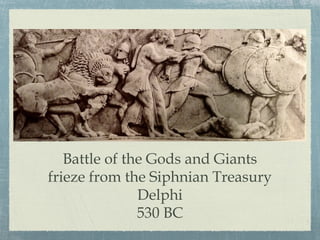
Battle of the Gods and Giants
frieze from the Siphnian Treasury
Delphi
530 BC
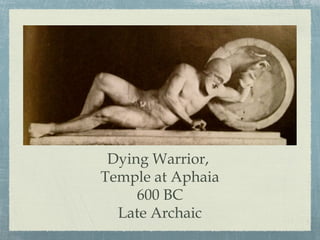
Dying Warrior,
Temple at Aphaia
600 BC
Late Archaic
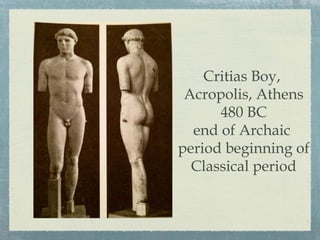
Critias Boy,
Acropolis, Athens
480 BC
end of Archaic
period beginning of
Classical period
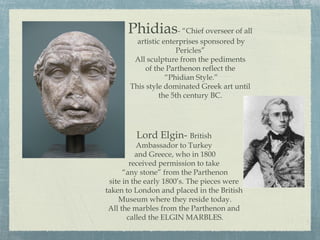
Phidias- “Chief overseer of all
artistic enterprises sponsored by
Pericles”
All sculpture from the pediments
of the Parthenon reflect the
“Phidian Style.”
This style dominated Greek art until
the 5th century BC.
Lord Elgin- British
Ambassador to Turkey
and Greece, who in 1800
received permission to take
“any stone” from the Parthenon
site in the early 1800’s. The pieces were
taken to London and placed in the British
Museum where they reside today.
All the marbles from the Parthenon and
called the ELGIN MARBLES.
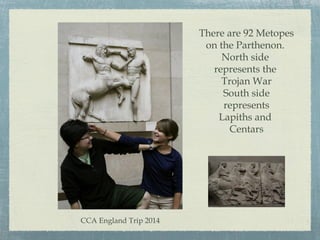
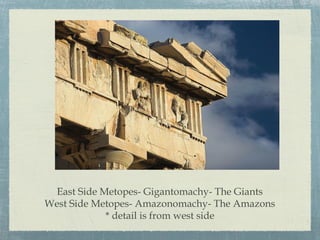
There are 92 Metopes
on the Parthenon.
North side
represents the
Trojan War
South side
represents
Lapiths and
Centars
CCA England Trip 2014
East Side Metopes- Gigantomachy- The Giants
West Side Metopes- Amazonomachy- The Amazons
* detail is from west side
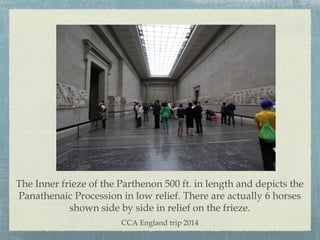
The Inner frieze of the Parthenon 500 ft. in length and depicts the
Panathenaic Procession in low relief. There are actually 6 horses
shown side by side in relief on the frieze.
CCA England trip 2014
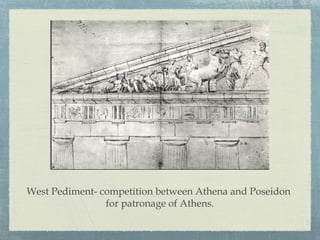
West Pediment- competition between Athena and Poseidon
for patronage of Athens.
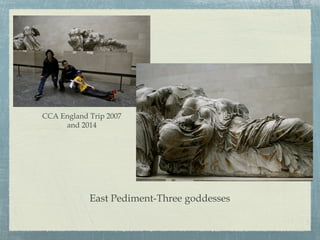
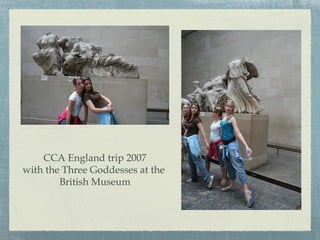
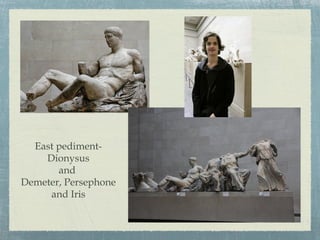
East Pediment-Three goddesses
CCA England Trip 2007
and 2014
CCA England trip 2007
with the Three Goddesses at the
British Museum
East pediment-
Dionysus
and
Demeter, Persephone
and Iris
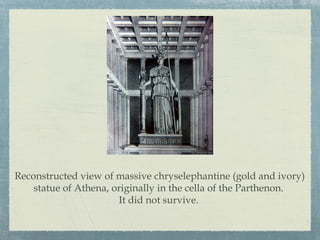
Reconstructed view of massive chryselephantine (gold and ivory)
statue of Athena, originally in the cella of the Parthenon.
It did not survive.
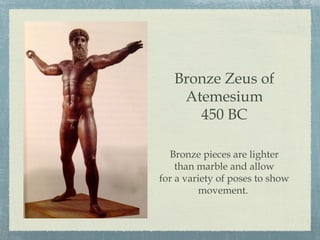
Bronze Zeus of
Atemesium
450 BC
Bronze pieces are lighter
than marble and allow
for a variety of poses to show
movement.
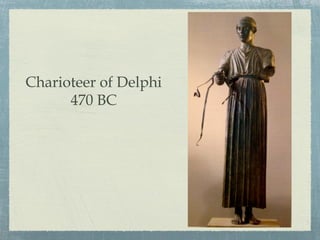
Charioteer of Delphi
470 BC
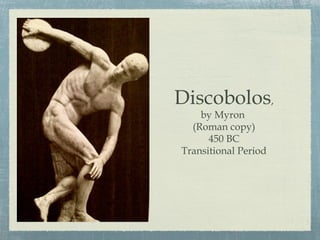
Discobolos,
by Myron
(Roman copy)
450 BC
Transitional Period
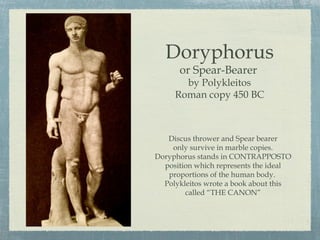
Doryphorus
or Spear-Bearer
by Polykleitos
Roman copy 450 BC
Discus thrower and Spear bearer
only survive in marble copies.
Doryphorus stands in CONTRAPPOSTO
position which represents the ideal
proportions of the human body.
Polykleitos wrote a book about this
called “THE CANON”
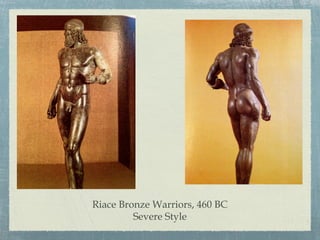
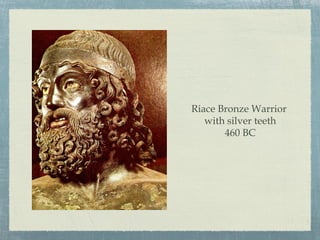
Riace Bronze Warriors, 460 BC
Severe Style
Riace Bronze Warrior
with silver teeth
460 BC
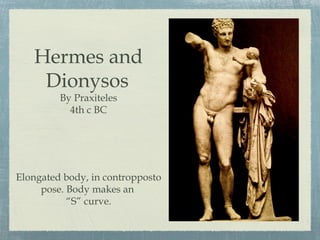
Hermes and
Dionysos
By Praxiteles
4th c BC
Elongated body, in contropposto
pose. Body makes an
“S” curve.
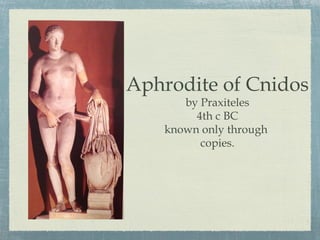
Aphrodite of Cnidos
by Praxiteles
4th c BC
known only through
copies.
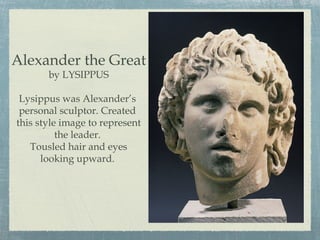
Alexander the Great
by LYSIPPUS
Lysippus was Alexander’s
personal sculptor. Created
this style image to represent
the leader.
Tousled hair and eyes
looking upward.
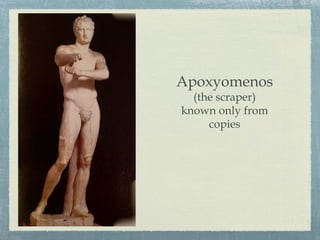
Apoxyomenos
(the scraper)
known only from
copies
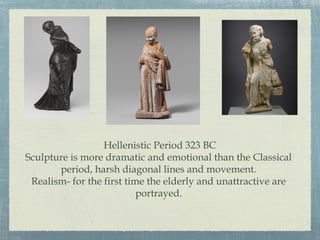
Hellenistic Period 323 BC
Sculpture is more dramatic and emotional than the Classical
period, harsh diagonal lines and movement.
Realism- for the first time the elderly and unattractive are
portrayed.
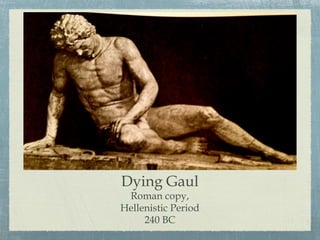
Dying Gaul
Roman copy,
Hellenistic Period
240 BC
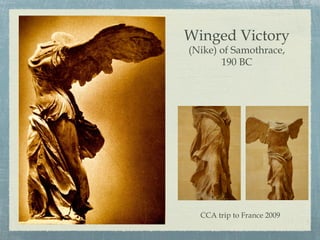
Winged Victory
(Nike) of Samothrace,
190 BC
CCA trip to France 2009
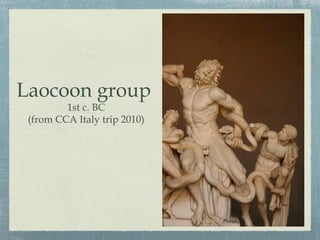
Laocoon group
1st c. BC
(from CCA Italy trip 2010)

Greece Pottery and Sculpture